How We Created a Tanjore Painting of Adiyogi for Isha Foundation

Written by
Swathi Katta
When Isha Foundation requested a Tanjore-style painting of Adiyogi with process documentation, the team embraced the creative challenge. The brief offered complete creative freedom for a spiritually significant subject.
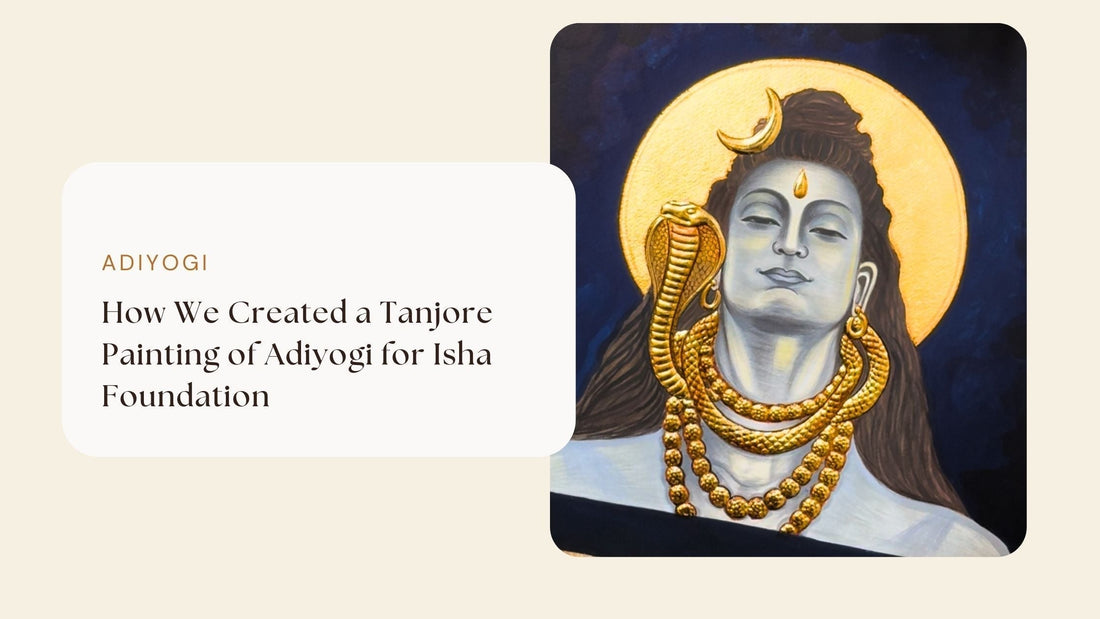
When Isha Foundation contacted us with a request for a Tanjore-style painting of Adiyogi—along with a reel documenting the process—the entire team was genuinely thrilled. The brief came with complete creative freedom, an exciting prospect when the subject carries such profound cultural and spiritual significance. It was both a privilege and an opportunity to explore how the traditional language of Tanjore art could engage with a contemporary icon.
As we prepared to begin, one key artistic decision emerged:
Should we recreate the visual presence of the Adiyogi statue in Coimbatore, or interpret Adiyogi as a painted form shaped by the expressive possibilities of Tanjore art?
This question became the foundation of our exploration and ultimately shaped the direction the artwork would take.
Adiyogi: A Presence Beyond Form
Before we began sketching or planning techniques, the essence of Adiyogi guided us. As expressed in our reel narration:
“Before there was sadhana, before the practice of spirituality, there was Adiyogi. Shiva, the first yogi—not a god seated on a throne, but a presence immersed in stillness. In absolute silence, he explored the inner sciences: the breath, body, mind, and what lies beyond. He shared his wisdom not through words but through transmission. In stillness he waits, as he always has.”
Adiyogi is understood less as a figure and more as a presence—calm, expansive, and inward. This perspective gently informed every artistic choice that followed.
Defining Our Approach to Adiyogi
The Adiyogi statue in Coimbatore is designed to appear monolithic—vast, seamless, and stone-like in its presence. This distinctive visual identity brought us to a creative crossroad: should we replicate the statue exactly as it appears, or paint Adiyogi in a way that allows the expressive nuances of Tanjore art to come through?
Our initial approach was to fully emboss the entire figure, hoping to recreate the sculptural surface in relief. But this method made it difficult to add detailing to the jewellery, led to uneven drying and cracking, and left little room for the shading and refinement needed to bring out Adiyogi’s expression. It became clear that a literal imitation of the statue would restrict both technique and artistic depth.
The artwork needed interpretation, not replication—an approach that honoured Adiyogi’s presence while remaining true to the strengths of Tanjore tradition.
Experimentation: Testing the First Approach
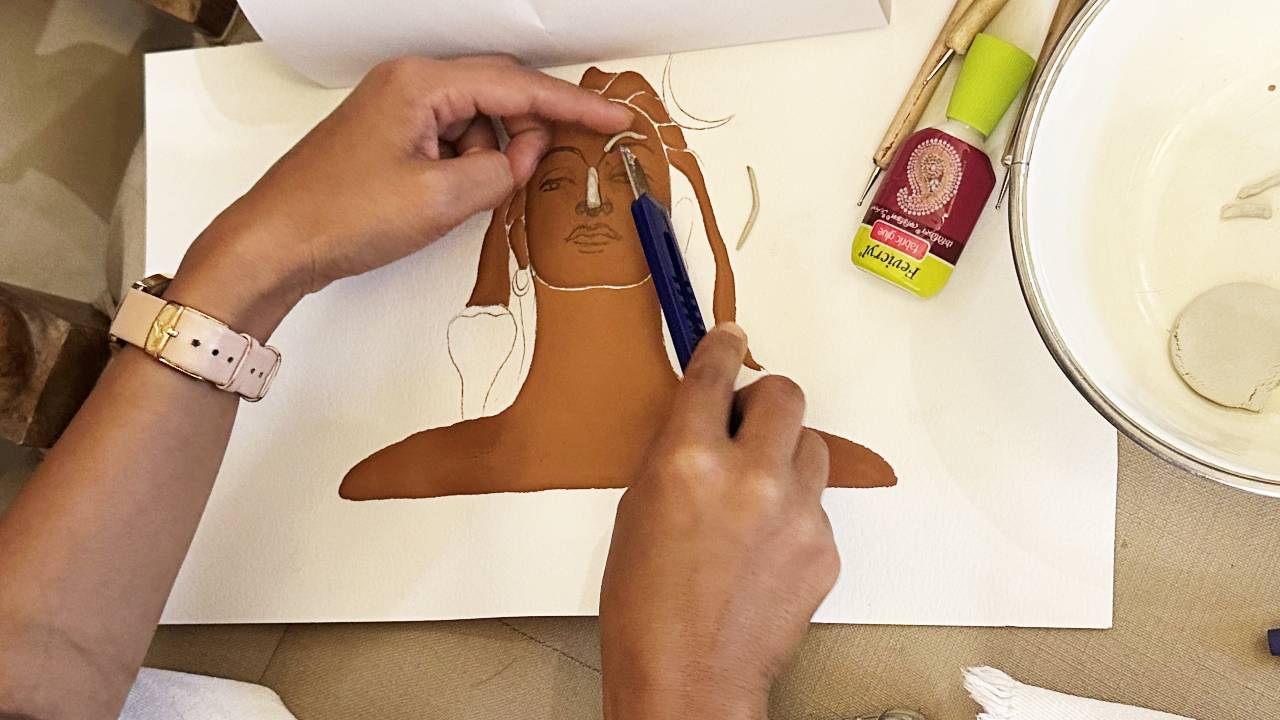
The team initially explored ways to recreate the stone-like surface of the Adiyogi statue. We discussed how to sketch the figure to reflect its sculptural presence, considered fully embossing the form with gesso, and explored whether layered relief could replicate the statue’s seamless structure. To evaluate this direction, we tested the idea on a smaller figure, building a semi-embossed surface to see how the materials would behave.
The test immediately revealed significant challenges. The gesso dried unevenly and developed cracks, the gold foil did not adhere well to the embossed surface, and the thickness of the relief made shading nearly impossible. The resulting texture lacked the refinement required to capture Adiyogi’s expression and presence.
It became clear that replicating the statue’s physical surface using Tanjore techniques was not sustainable. This realisation brought us back to our core question and ultimately led to the creative breakthrough that shaped the rest of the artwork.
A New Direction: Painting Adiyogi, Not Replicating the Statue
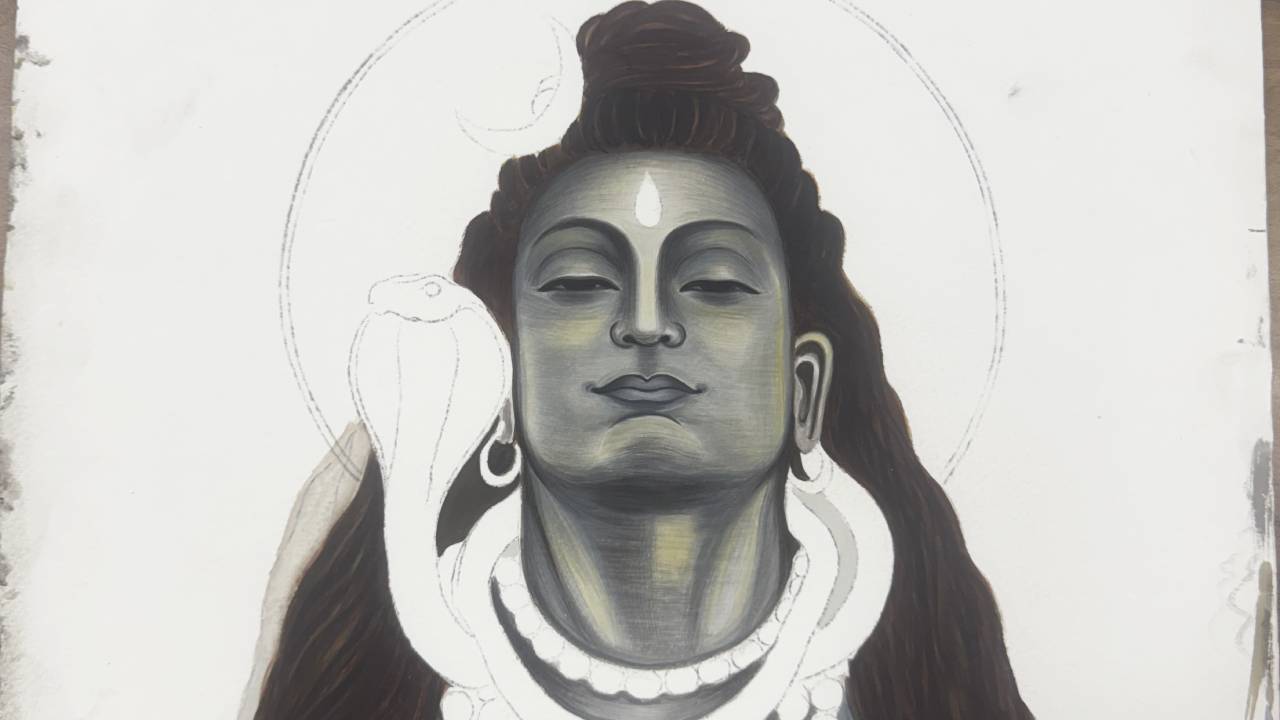
At this point, Vibha guided the team toward a renewed way of thinking. Rather than attempting to mirror the stone surface of the Coimbatore statue, we chose to paint Adiyogi—allowing his calm presence, depth, and expression to emerge through colour, form, and shading. Select Tanjore elements would be woven in thoughtfully, adding richness without overwhelming the figure.
This shift allowed us to honour Adiyogi with an approach that felt intimate, intentional, and true to the strengths of Tanjore craftsmanship. It created space for interpretation rather than replication, enabling the artwork to breathe with meaning.
Shaping the Artwork Step by Step
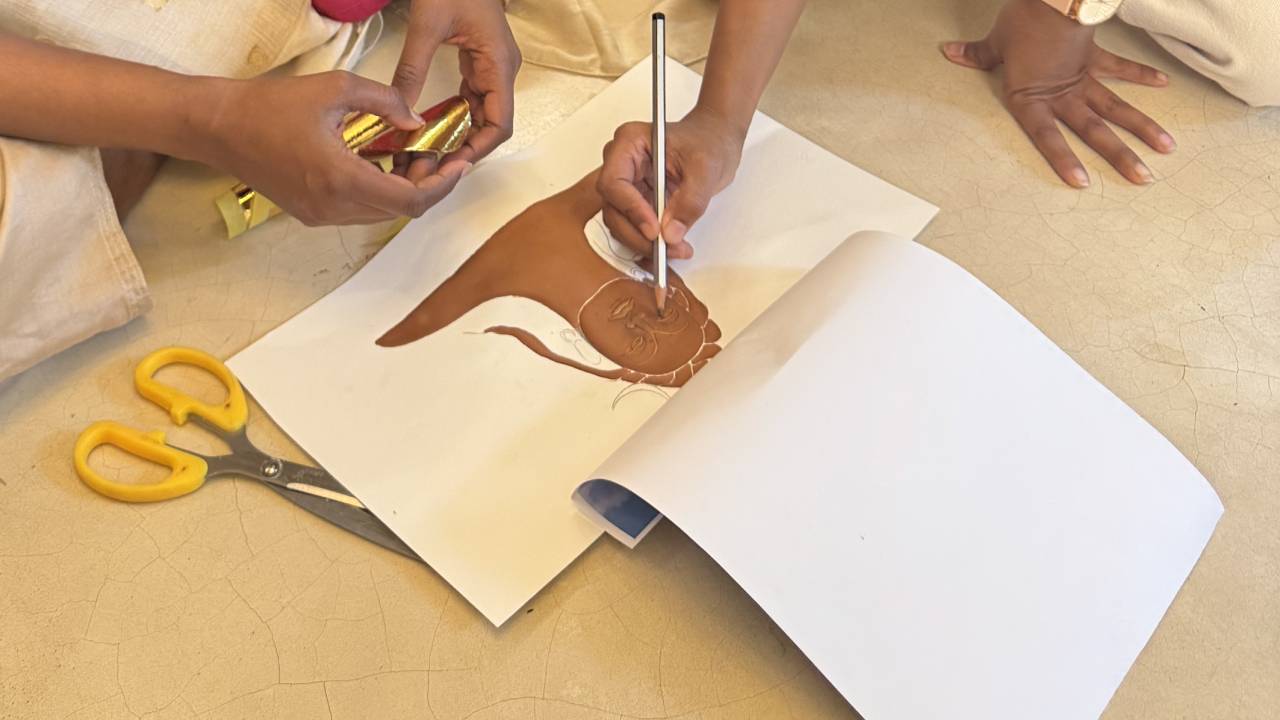
Vibha began with a carefully composed sketch that placed Adiyogi at the centre as a painted form, while reserving the jewellery, snake, rudraksh, and crescent moon for Tanjore-style embellishment. The aura was introduced gently behind the figure, offering radiance without overwhelming the calm expression.
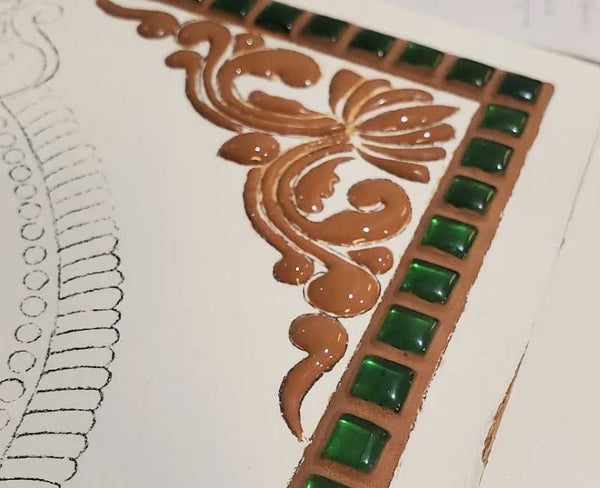
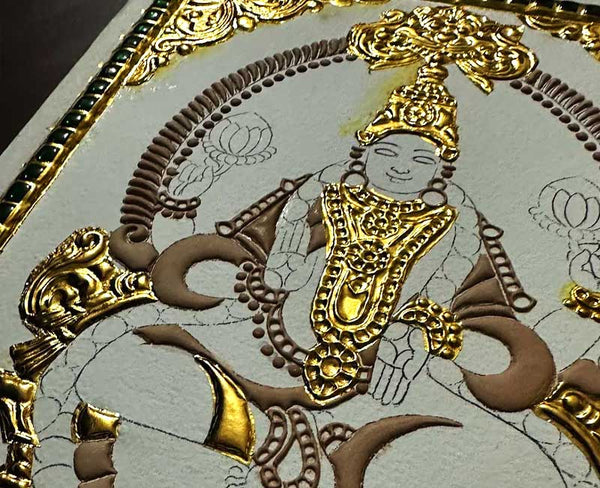
The embossing that followed was applied with purpose—just enough to give character to the raised elements. A second layer was added where depth mattered most, allowing the details to catch light and create subtle texture once the gold was applied.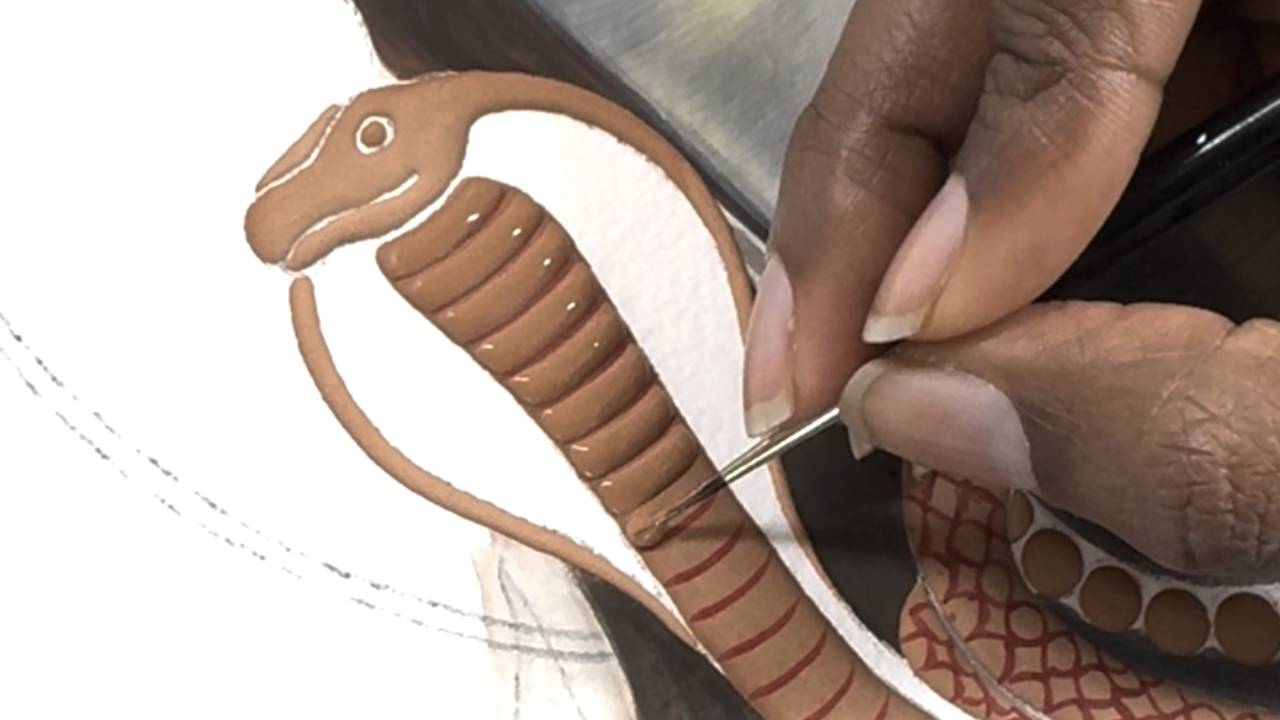
Gold work brought the piece to life. Traditional Tanjore foil enriched the ornaments, while the delicate Mysore gold—used for the aura—demanded slow, patient application. Its softness added a luminous quality that suited the composition perfectly.
Once the gold settled, fine black linework was added. These lines didn’t simply outline; they elevated the details, making the curves sharper and the nuances more pronounced. With each stroke, the gold gained clarity and presence.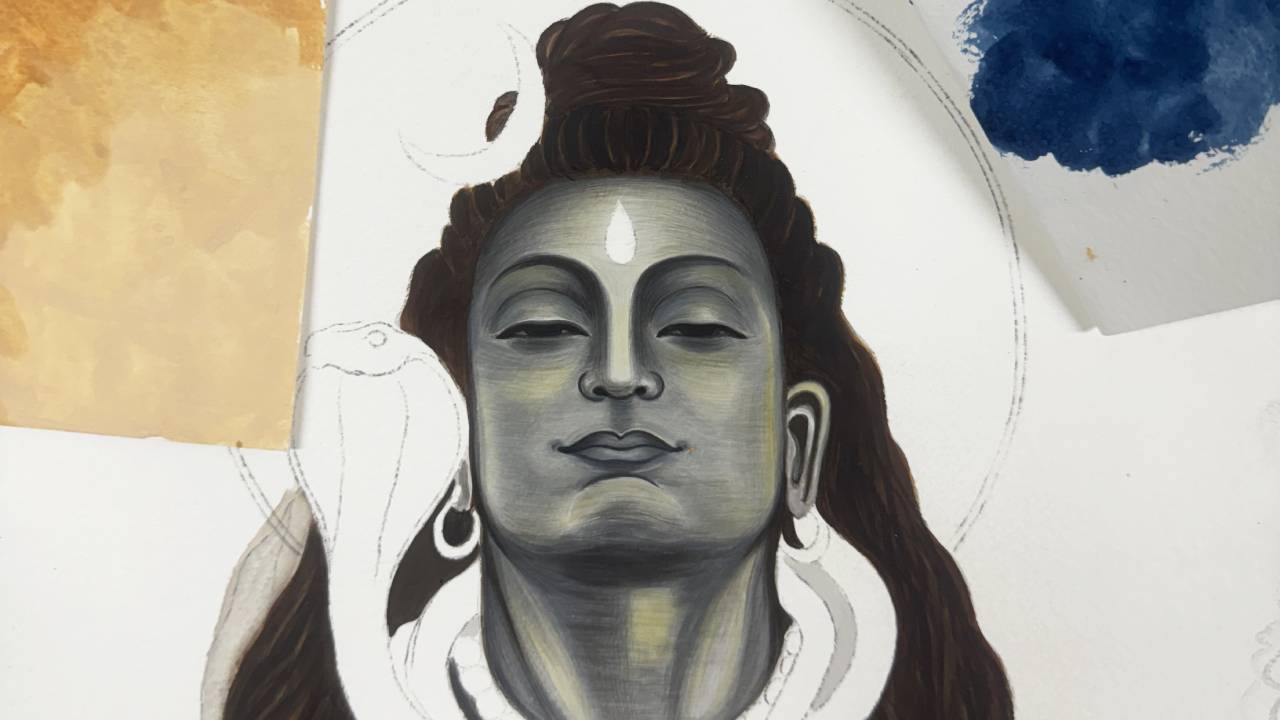
Painting the figure was the final and most contemplative stage. A deep base tone set the foundation, and layer by layer, the expression emerged—calm eyes, gentle highlights, balanced shadows. The background was completed last, framing Adiyogi in a way that ensured the serenity of the figure remained the heart of the artwork.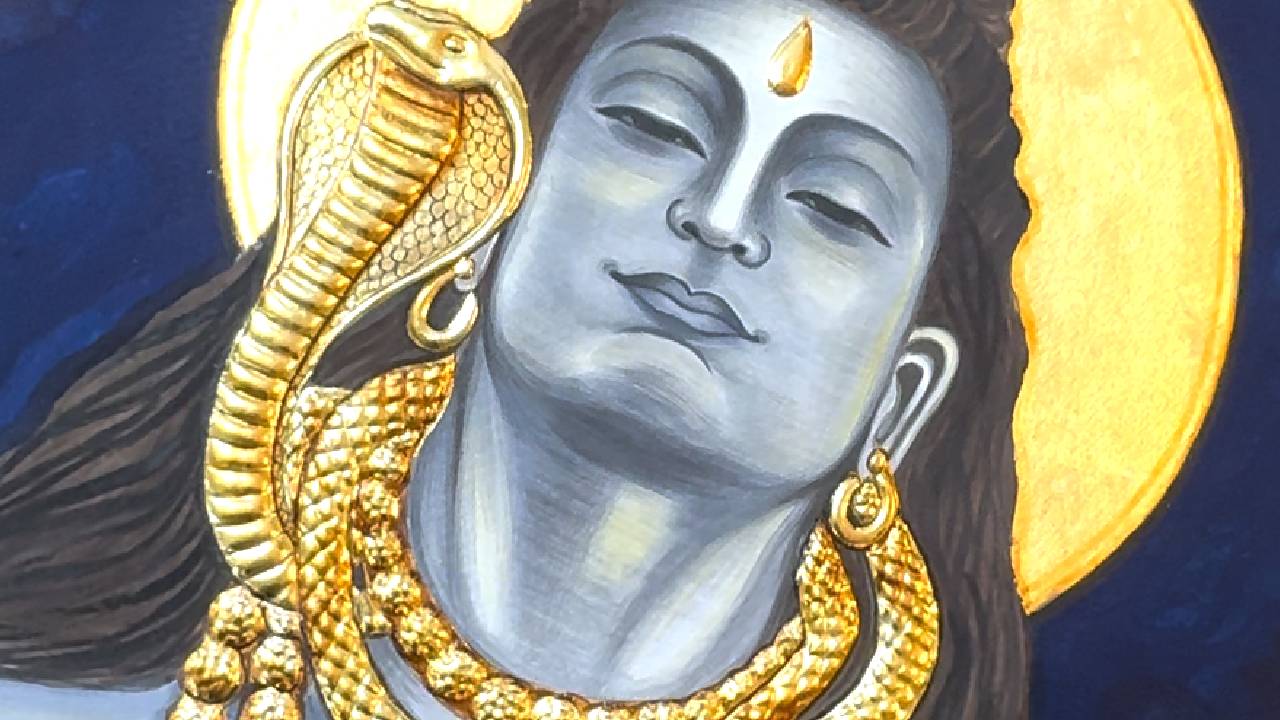
More blog articles
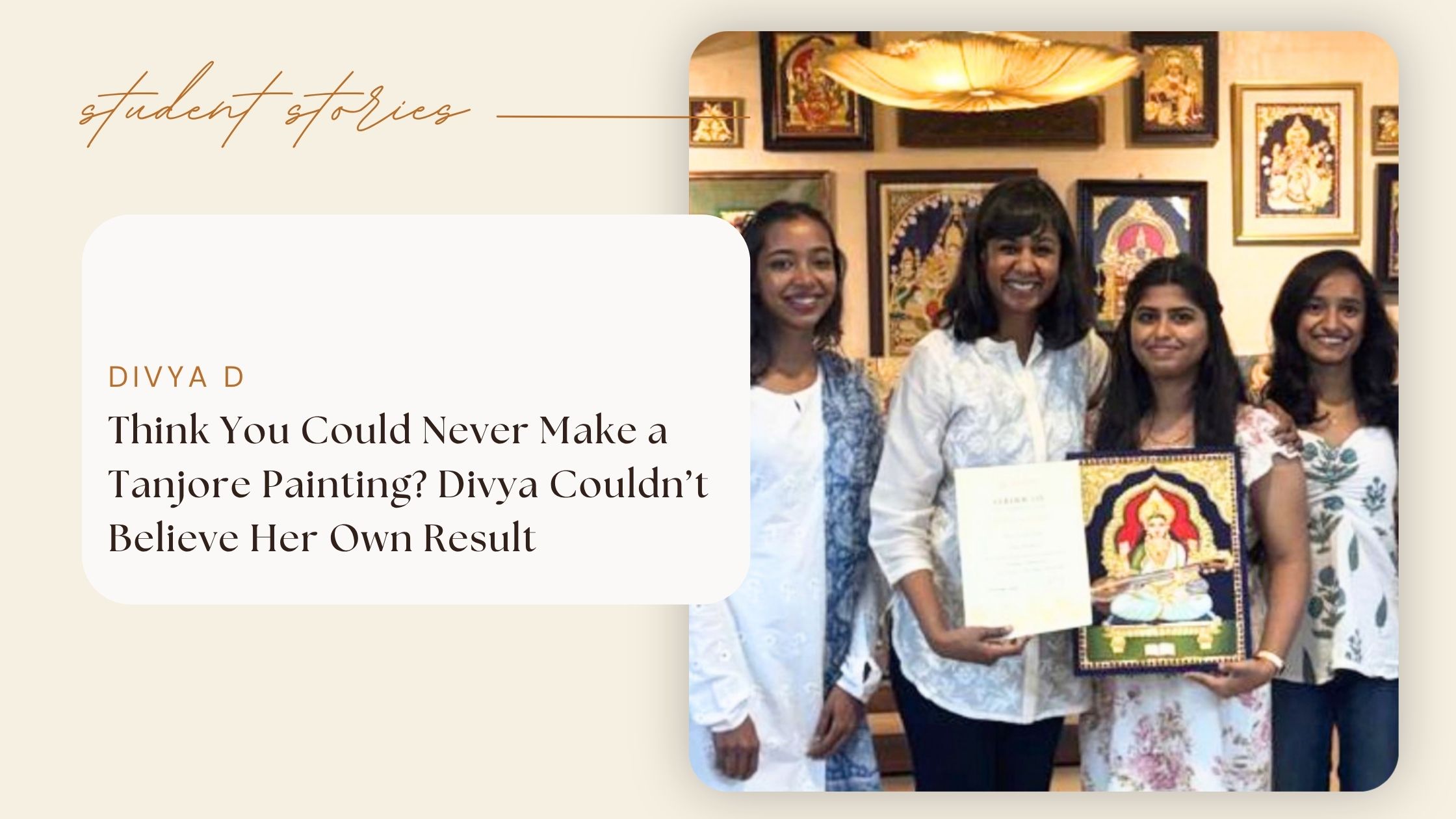
Think You Could Never Make a Tanjore Painting? Divya Couldn’t Believe Her Own Result
Think Tanjore painting is too intricate to create on your own? Divya did too, until she completed her Saraswati painting. Her journey reveals what patience, guidance, and practice can really make possible.
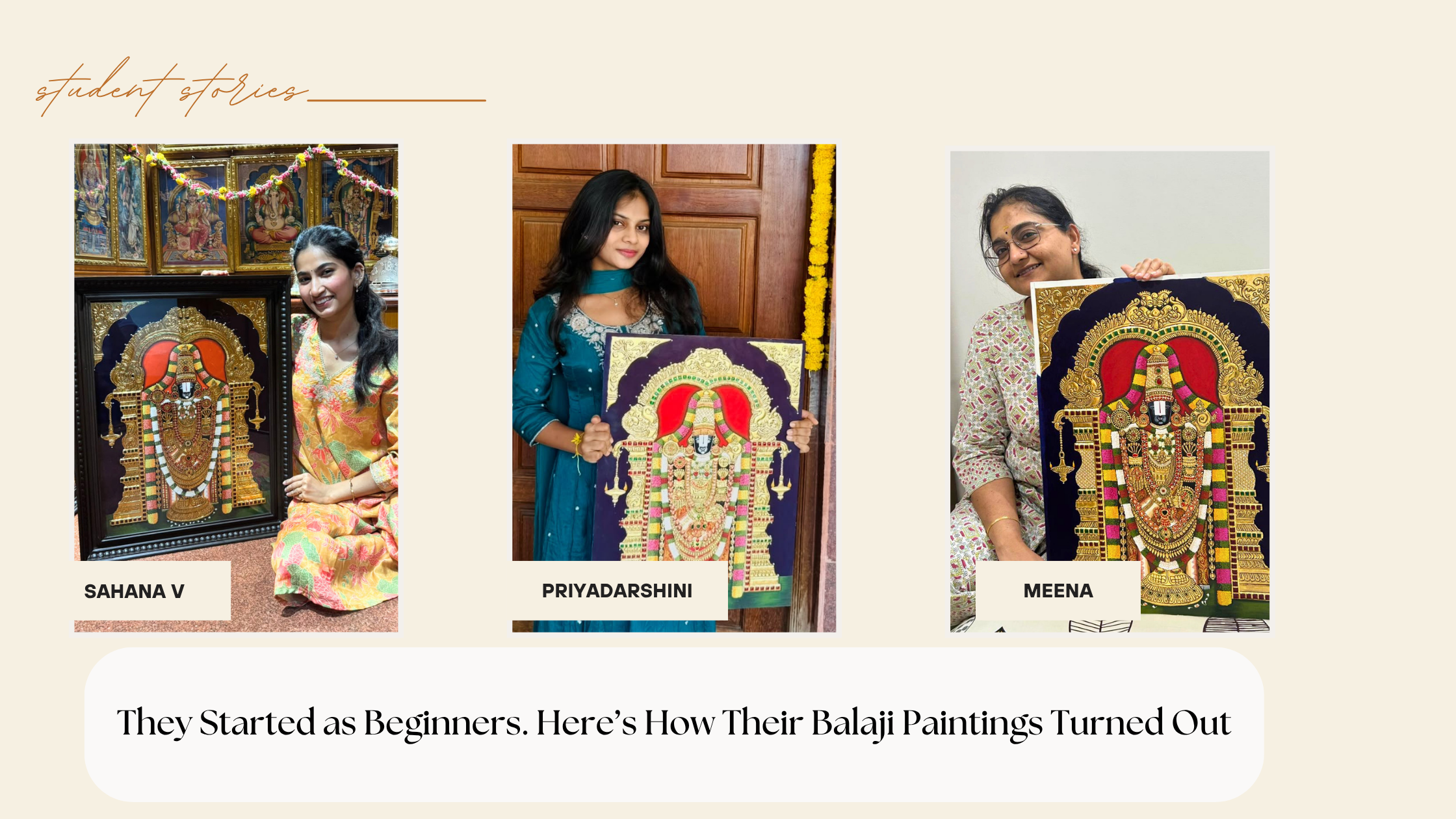
They Started as Beginners. Here’s How Their Balaji Paintings Turned Out
They started with a blank board and no prior experience. Over 11 weeks, they learnt each stage of creating a Balaji Tanjore painting. Here’s what our students had to say about the journey.
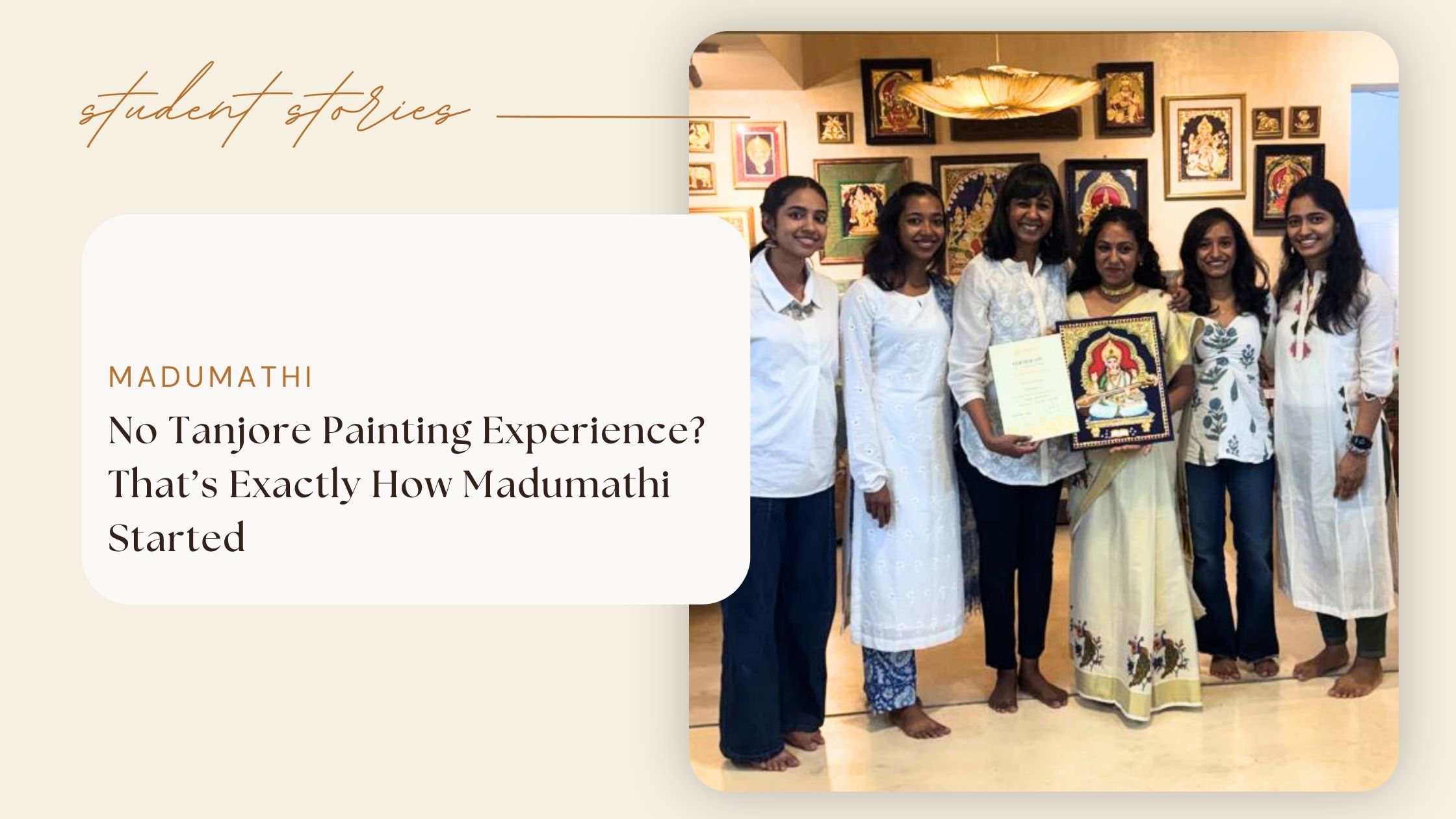
No Tanjore Painting Experience? That’s Exactly How Madumathi Started
Madumathi had no prior experience in Tanjore painting when she joined the Saraswati Devi studio course. Read about her journey from learning the basics to exploring advanced techniques.
What our students say
Hear from students who've learned the art of Tanjore painting with us.