Owning Your Art: Copyright, Sketches and Selling Tanjore Paintings Ethically
Written by
Vibha Raj
A practical guide to Tanjore painting copyright for students: owning your own designs, getting sketches you can sell from, selling ethically, and building a body of work that's truly yours.
By Vibha Raj, Founder and Tanjore Artist at Tanjore Collective. Vibha learned the art from her mother, master artist Vani Bhaskar, and leads our studio and its teaching.
Key takeaways
- An original design you create yourself is your own work. A design copied from someone else isn't.
- The traditional deities belong to everyone. What makes a Tanjore painting yours is your composition.
- You can get designs to sell from in three ways: create them, commission them, or buy or license them.
- Selling ethically means original or properly licensed designs, honest descriptions of materials, and never copying another artist.
- A body of your own designs is the most solid foundation a Tanjore painting career can have.
There's a moment, after a few paintings, when you start to feel the art becoming yours. You notice how you'd arrange the arch differently. You'd give the deity a gentler tilt of the head, or more lotus at her feet. That instinct is the beginning of your own designs, and it's worth nurturing, because your own designs are what a lasting career is built on.
This guide is about owning your Tanjore art: what's yours, how to get designs you can sell from, and how to sell in a way you'll always be proud of. It's general guidance from a studio that has created and taught this art for 40 years, not legal advice. If you have a specific legal question, please check with an adviser where you live.
Who owns the copyright in a Tanjore painting design?
As a general principle, the person who creates an original design owns it. If you draw a composition yourself, from scratch, it's your work. If you copy a design from another artist's painting, sketch or photograph, it isn't, even if you painted every stroke yourself.
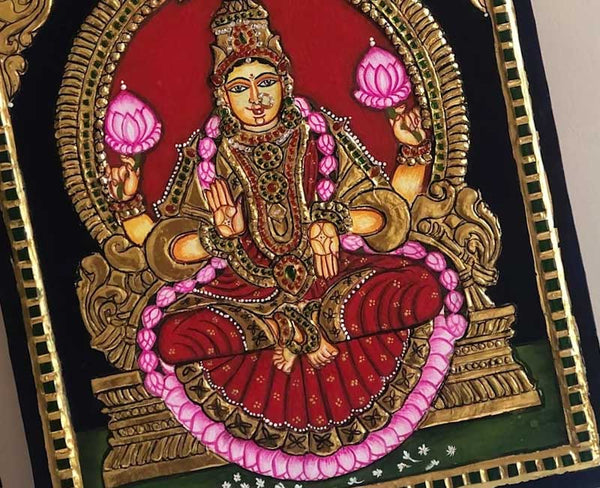
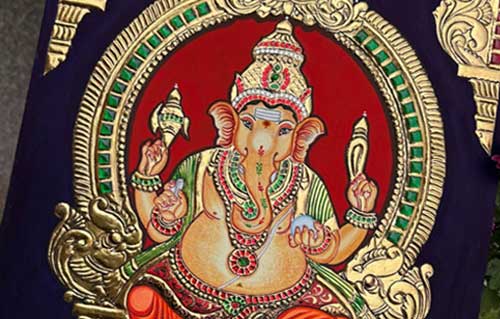
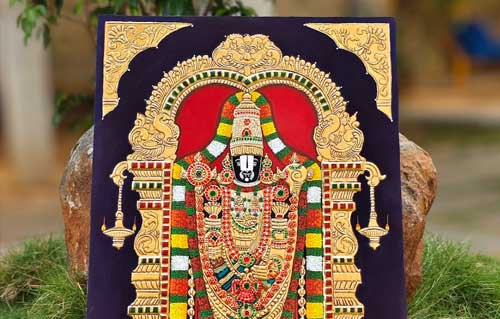
Tanjore painting has a lovely twist here. The subjects themselves, Ganesha, Lakshmi, Saraswati, Balaji and the other traditional deities, belong to everyone. They've been painted with devotion for generations. What's original is how you compose them: the pose, the arch, the ornaments, the background and the balance of the whole.
| Where the design came from | Can you sell paintings made from it? |
|---|---|
| You drew it yourself, from scratch | Yes, it's your work |
| You bought or licensed it for commercial use | Yes, within the terms of the licence |
| You commissioned it from another artist | Only if your agreement says so, so agree it in writing |
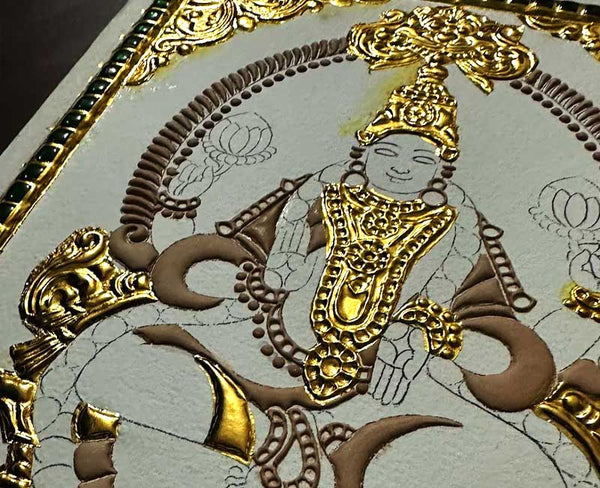
| It's one of our course sketches | No. It's our copyrighted design, for your learning, to keep or gift |
| You copied it from someone else's painting or photo | No |
For the full picture on our own designs, see our guide to Tanjore painting sketches and copyright.
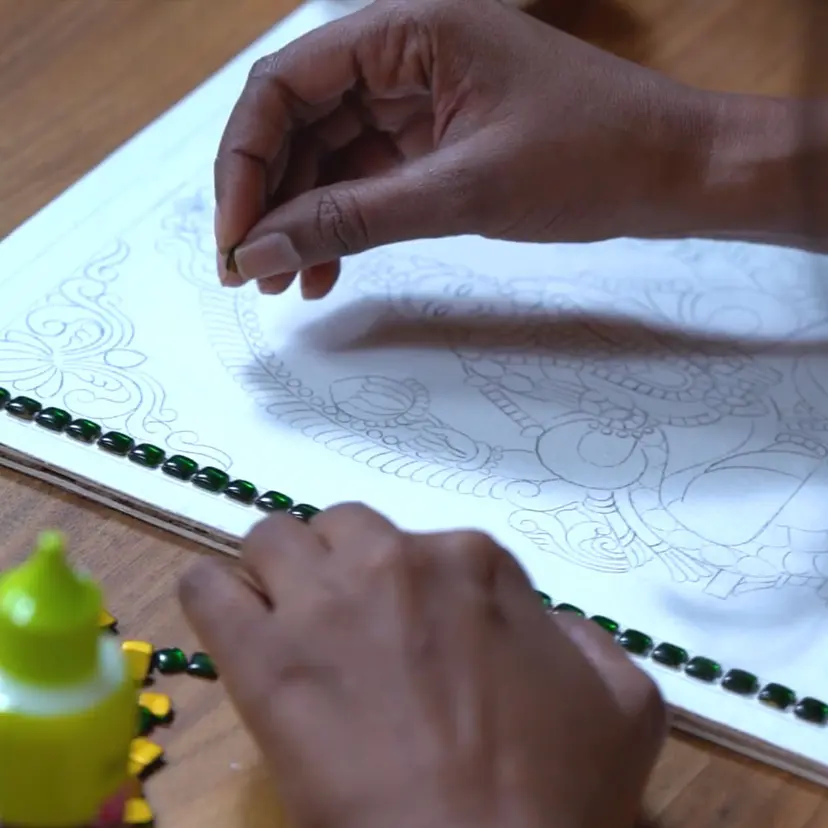
How do you get your own Tanjore designs?
There are three ways: create them yourself, commission them from another artist, or buy or license them. Most artists who build a career end up creating their own.
Create your own
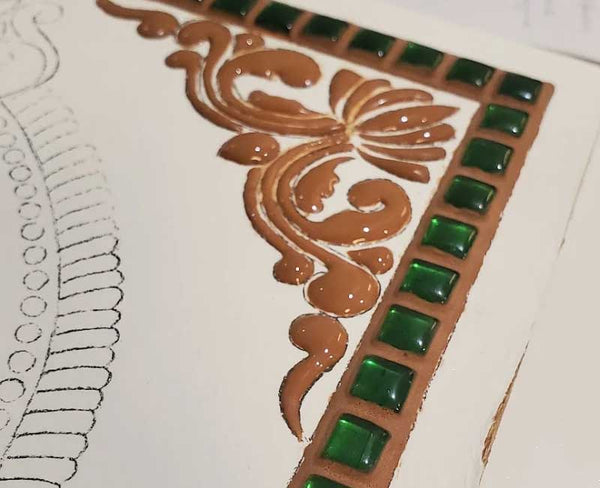
This is the path we encourage most, because it's the one that makes your work truly yours. Start simple. A single central deity is easier to compose than a whole parivar, and it lets you focus on proportion and balance. Look closely at how traditional compositions work: the deity framed by an ornate arch, the ornaments raised in relief, the lotus and background around the figure. Then make your own choices within that tradition.
Your first designs may feel modest. That's fine. Every recognisable artist started somewhere, and drawing improves with practice the same way gesso and gold work do. While you're learning the technique, our pre-sketched boards let you focus on painting. As you grow, drawing your own outlines becomes the next skill to build.
Commission a design
You can ask another artist to draw a design for you. If you plan to sell paintings from it, agree that clearly with them, in writing, before you start. A design you've paid for isn't automatically yours to sell from unless the artist has agreed to that.
Buy or license a design
Some designs are sold or licensed specifically for commercial use. Read the terms carefully. Some licences limit how many paintings you can make, or ask you to credit the original artist. Keep a record of where each design came from and what you're allowed to do with it.
How do you sell Tanjore paintings ethically?
Sell only designs that are yours to sell, describe your materials honestly, and give credit wherever a licence asks for it. Ethical selling is simple when it's built into how you work from the start.
- Originality. Paint from your own designs, or from designs you have permission to sell from.
- Never copy another artist. Not a whole design, and not a close imitation of one. Inspiration from the tradition is welcome; copying a specific artist's work isn't.
- Credit where it's due. If a licence asks you to credit the original designer, do it every time.
- Honest materials. Tell buyers plainly what's in the painting: whether the gold is 24 karat, what the stones are, what the board is. Our guide to Tanjore painting materials will help you describe them confidently.
- Clear descriptions. Say whether a design is your own or licensed. Buyers appreciate knowing.
When you're ready to begin, our guide on how to sell Tanjore paintings walks you through the first steps.
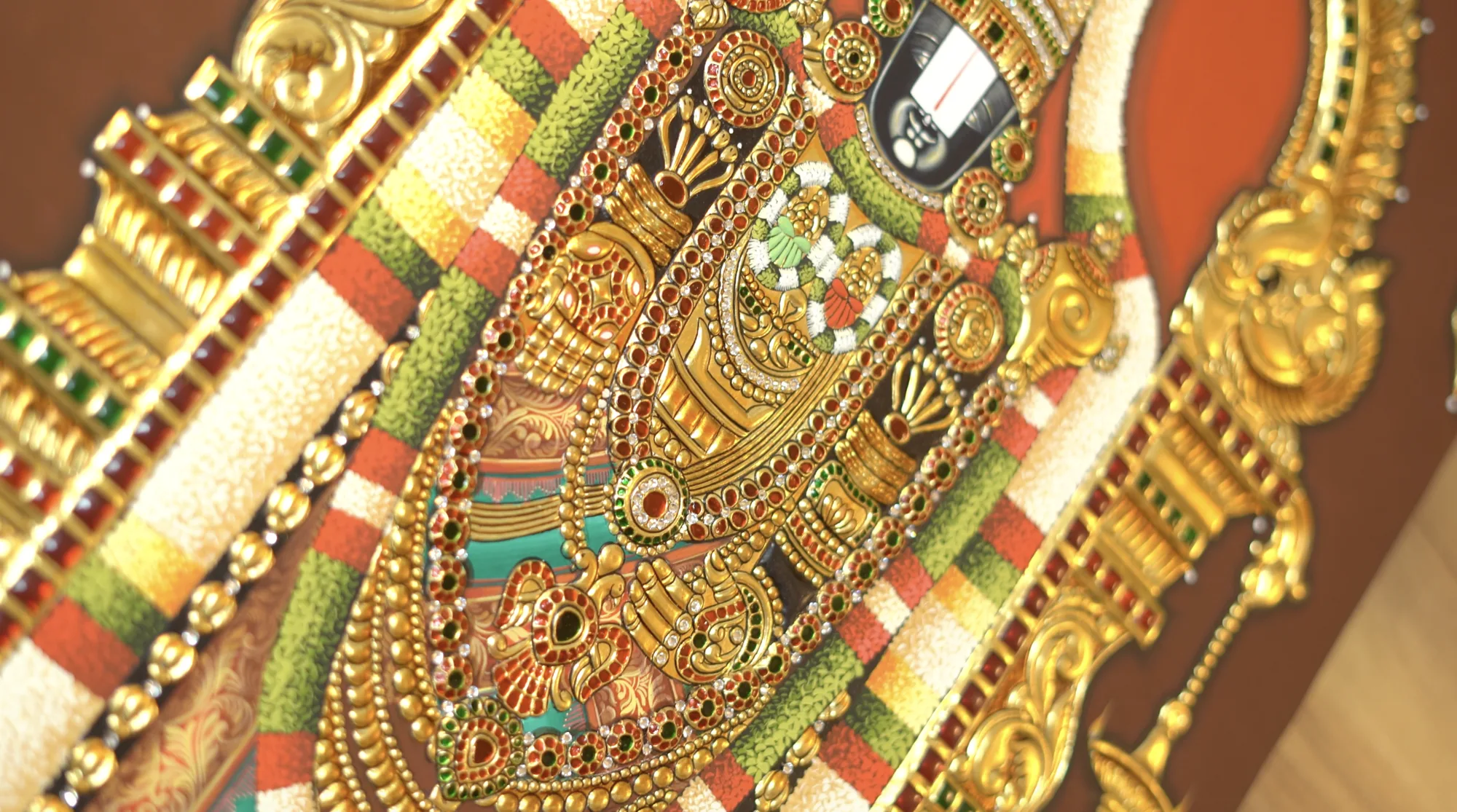
Watch: the beauty in every painting
A glimpse of gold and colour coming together in our studio.
How do you build a body of work that's truly yours?
Paint many pieces from your own designs, keep records of them, and let a recognisable style grow over time. That body of work is what buyers and patrons come to trust.
A style doesn't arrive all at once. It grows from small, repeated choices: how you shape the arch, how you place the ornaments, the gentleness you give a deity's face. Over many paintings, those choices become recognisably yours. And the more of your own work you have, the more confidently you can say to a buyer, "this design is mine."
A few habits help:
- Keep your sketches. Hold on to your original drawings, ideally dated.
- Photograph your process. Pictures of a design from sketch to finished painting are a natural record of your work.
- Keep licences and agreements together. For any design you didn't create, keep the terms with your records.
- Paint across subjects and sizes. Range shows buyers what you can do. In our courses, sizes run from 10 x 12 up to 18 x 24 inches, and subjects range from a single Ganesha to an advanced Lakshmi Narasimha.
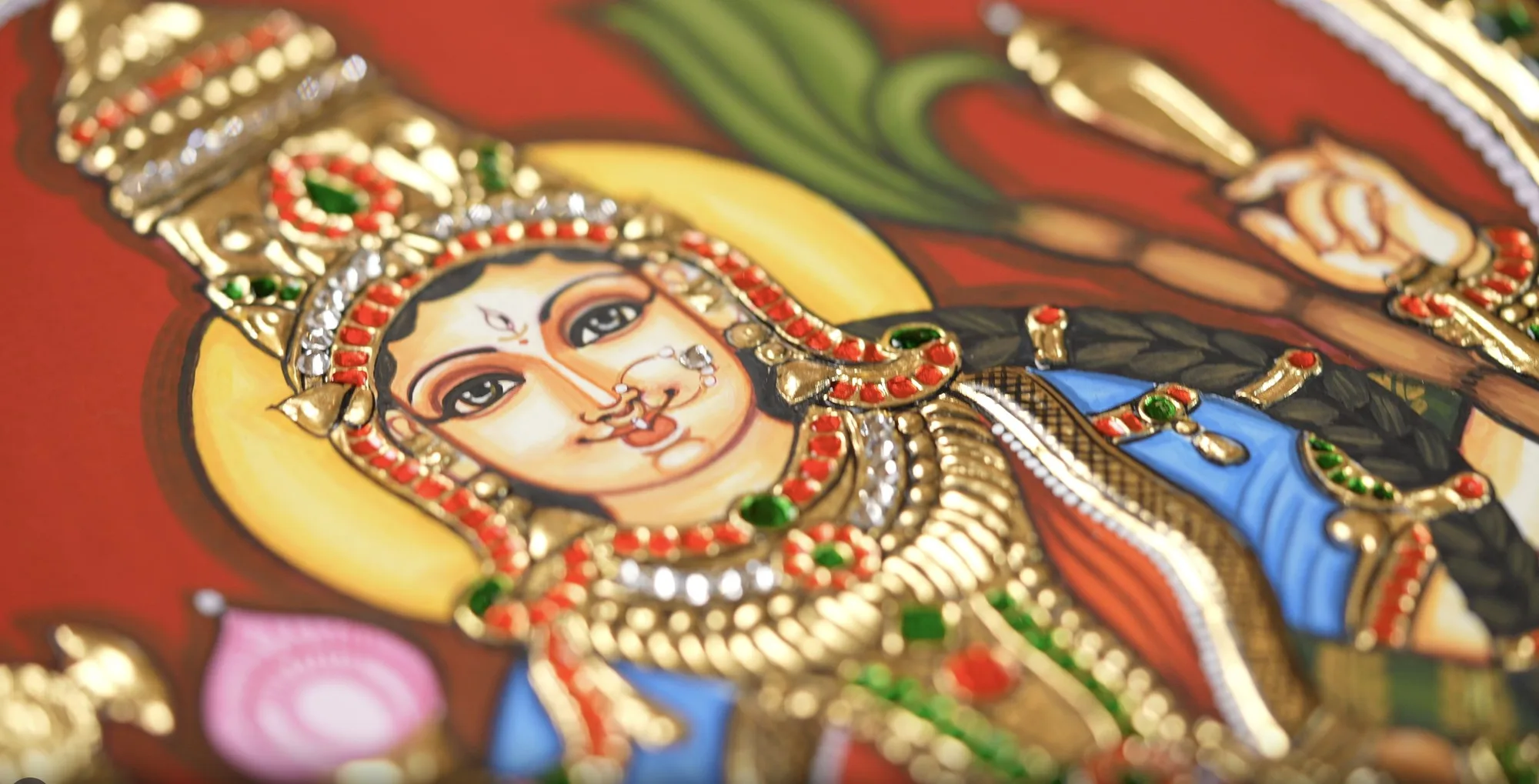
Every artist and teacher on our team trained in our studio and grew into their own hand this way. If you'd like to see the full journey, read our guides on how to become a Tanjore artist and building a Tanjore painting career.
Frequently asked questions
Do I own the paintings I make in class?
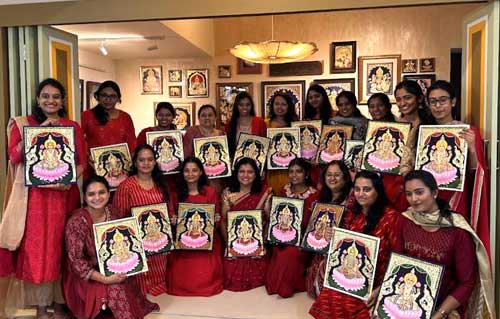
Yes, the painting itself is yours to keep, hang in your pooja room or give as a gift. The design, though, is our copyrighted course sketch, so please don't sell paintings made from it. To sell, use a design that's your own or that you've licensed.
How do I get my own designs?
Create them yourself, commission them from another artist with written permission to sell, or buy or license them for commercial use. Creating your own is the most rewarding route, and it's what builds a recognisable style.
Is it ethical to sell what I learned?
Yes. The techniques you learn are yours to use for life, in any painting you make. What matters is the design: sell paintings made from your own designs, or from designs you have permission to sell from.
Can I paint the same deity that I learned in class?
Yes. The traditional deities belong to everyone. Just compose the painting yourself, or use a licensed design, rather than reusing the course sketch.
More blog articles
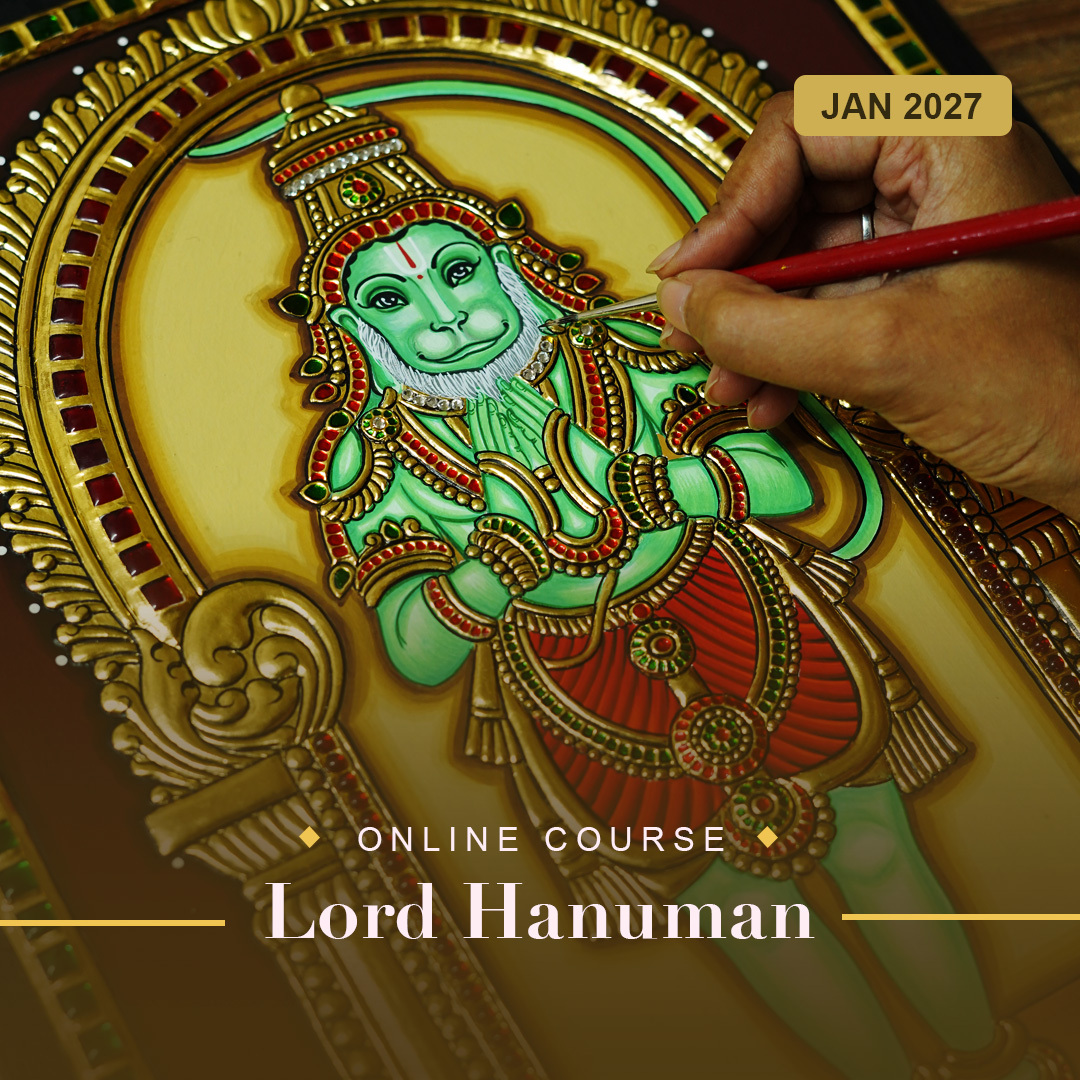
Lord Hanuman Tanjore Painting Class: Meaning and How to Learn It
Who Lord Hanuman is, when he is worshipped, and how to paint him yourself, even as a complete beginner.
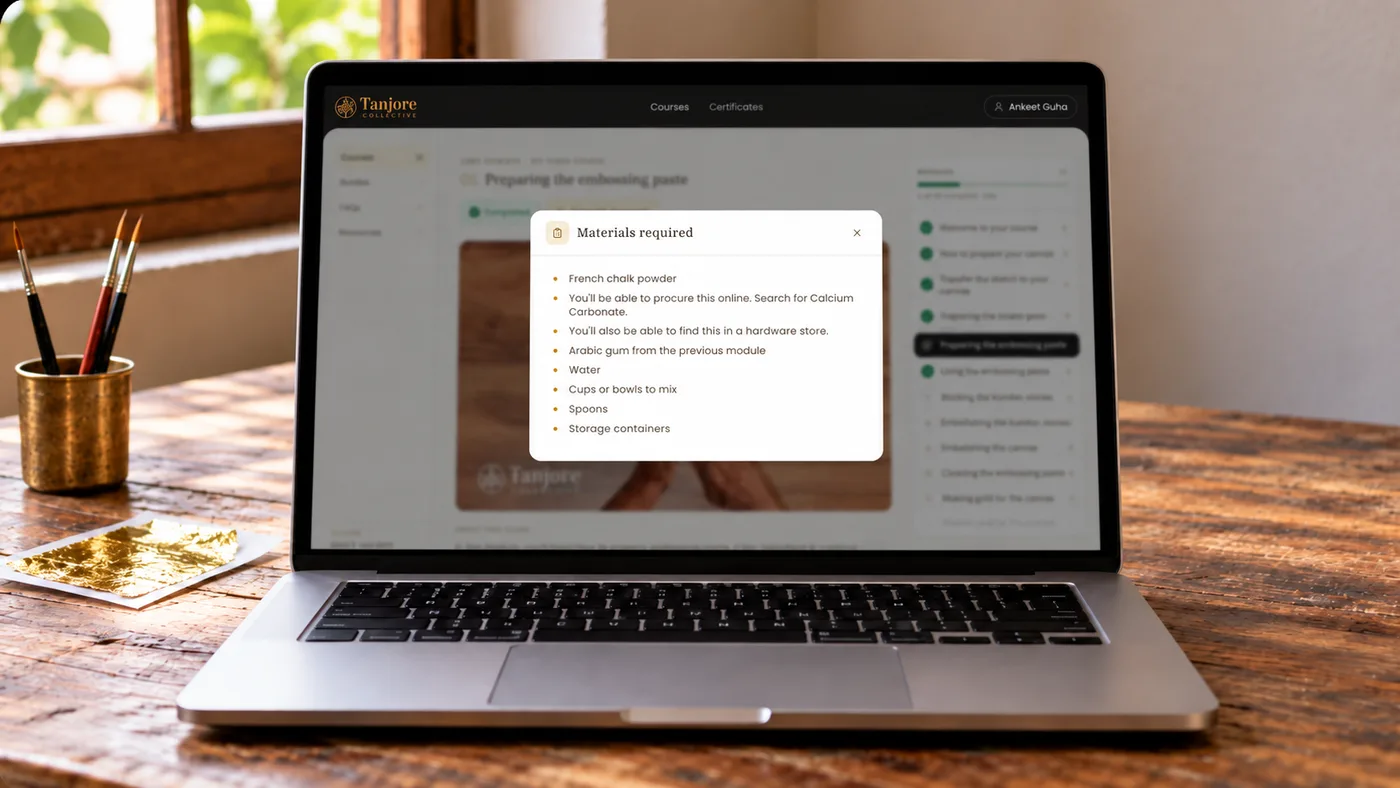
Tanjore Painting Course Details: Everything Included in Our Courses
Everything you receive in a Tanjore Collective course: teaching, recordings, app access, materials, feedback and a certificate.
Tanjore Painting Course Registration: How to Register, Step by Step
How to register for a Tanjore painting course, from choosing your batch to receiving your kit and starting class.
What our students say
Hear from students who've learned the art of Tanjore painting with us.