Inside Our DIY Tanjore Video Course: Lessons, Access and Real Feedback
Written by
Vibha Raj
Learn Tanjore painting fully at your own pace. Inside the DIY video course: the 18 to 27 lessons, 90-day access we extend freely, the bundled kit, and real teacher feedback on WhatsApp.
Key takeaways
- The DIY course is a fully self-paced Tanjore painting video course, learned in your own time on the Tanjore Collective student app, on a laptop or phone.
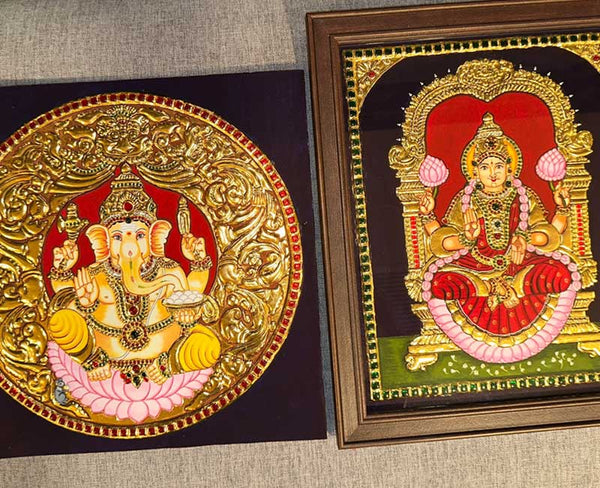
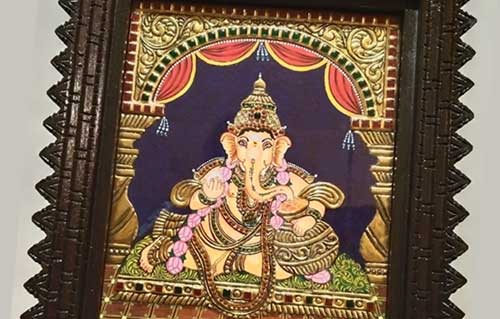
- The number of lessons varies by painting, roughly 18 to 27 (Gond 18, Pichwai 21, Lakshmi 23, Ganesha and Saraswati 25, Lalitha 27). They take you from a blank canvas to a finished, gilded painting.
- It is guided, not lonely: we create a WhatsApp group with you and a teacher, where you send photos of your own painting and get real corrections.
- Your access runs 90 days from when your kit arrives, and we extend it freely on request, even months later, because self-paced is the whole point.
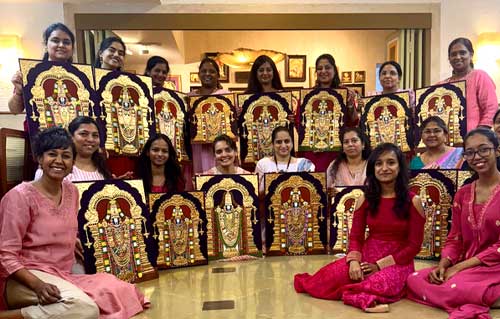
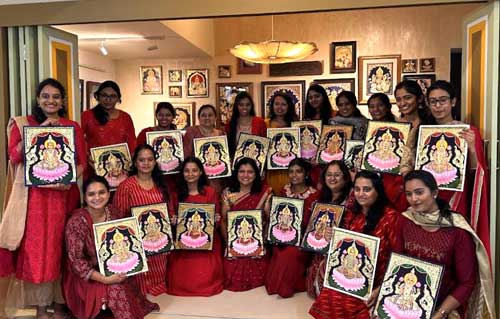
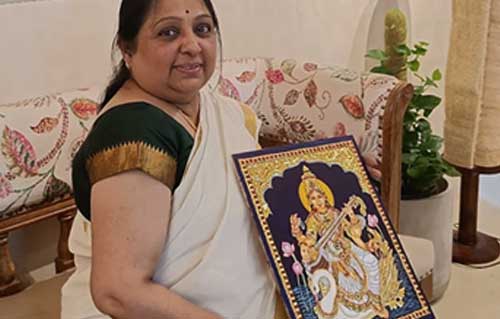
- The material kit is bundled in the price, and more than 1,000 students have finished their painting through the DIY course.
Some of the best learning happens in stolen hours. After the children are asleep, early on a quiet Sunday, or late at night in a timezone on the other side of the world. The DIY Tanjore painting course was made for exactly those hours. You learn at your own pace, in your own home, with the full attention of our teachers only a message away.
If you have ever worried that a self-paced course means being left alone with a stack of videos, let us set that worry down right away. More than 1,000 students have finished a Tanjore painting this way, many of them complete beginners, and almost none of them did it alone.
What the DIY course actually is
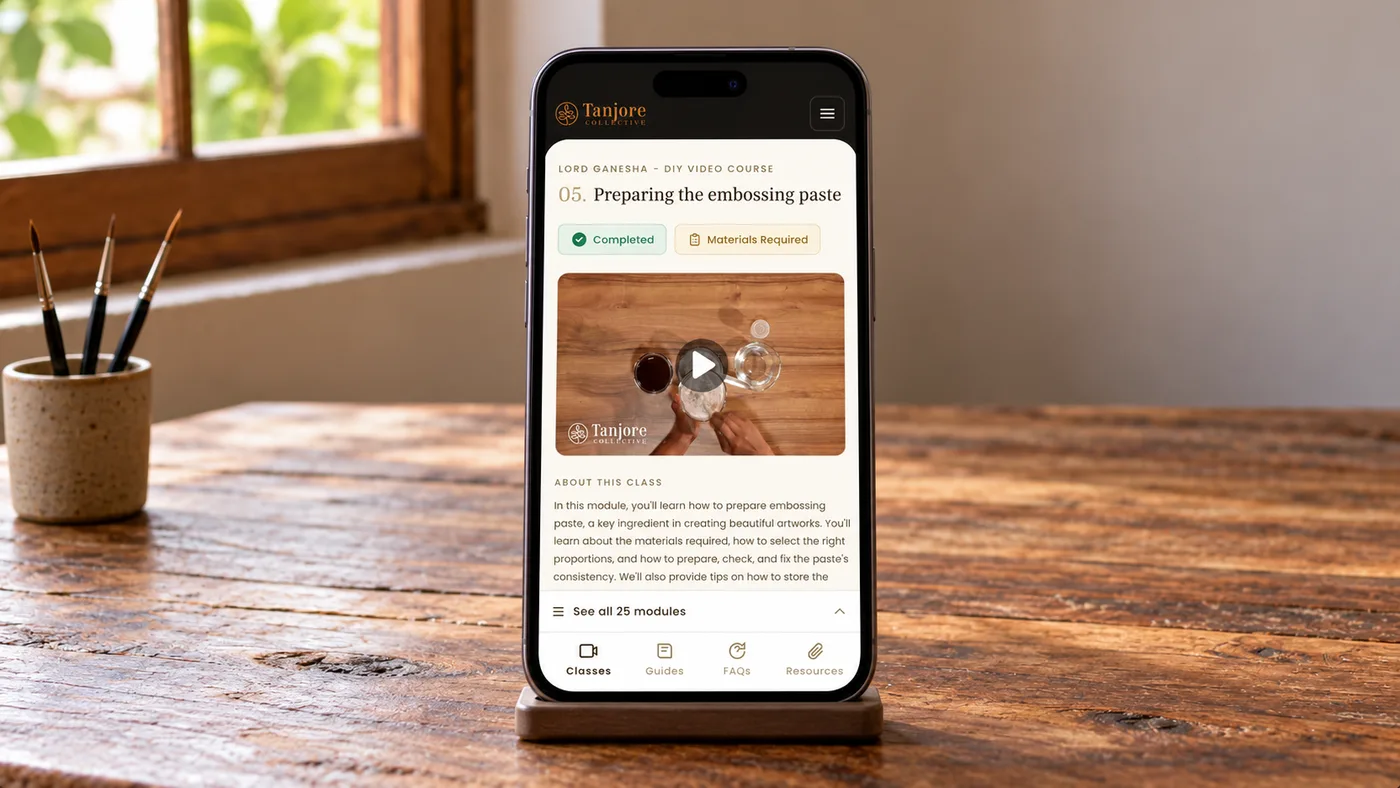
The DIY course is a complete, self-paced video course you follow at your own speed. After you sign up, you log in to the Tanjore Collective student app, on a laptop or on your phone, and work through the lessons one by one, pausing and rewatching as often as you like. There is no fixed schedule and no live class to attend. You simply paint when it suits you.
Every DIY course is built for a complete beginner. The lessons assume you have never held a brush, so each stage is shown slowly and in close detail, and nothing is skipped.
The lessons, step by step
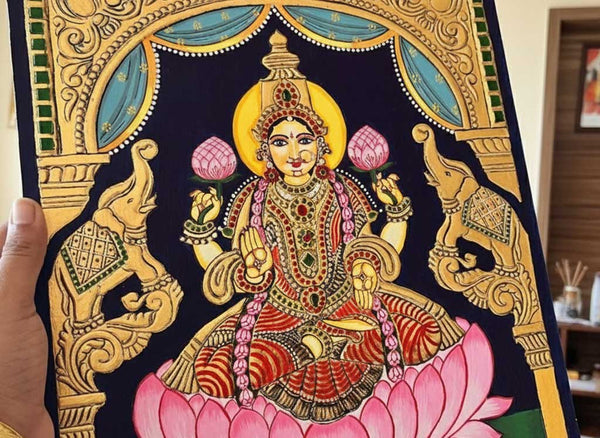
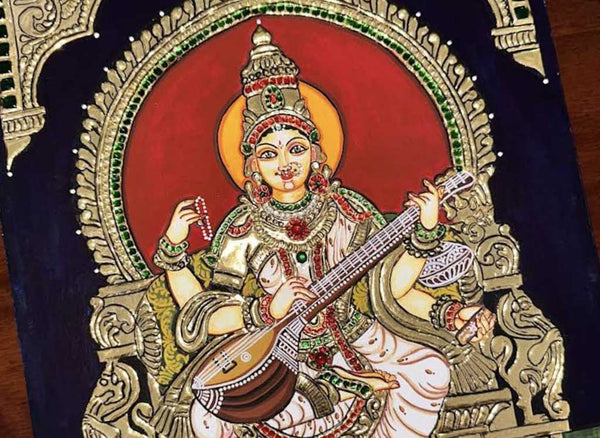
A DIY course has between 18 and 27 video lessons, depending on which painting you choose. A simpler Gond piece has around 18, Pichwai about 21, Goddess Lakshmi 23, Lord Ganesha and Goddess Saraswati around 25, and the more detailed Goddess Lalitha Devi 27. There is no single fixed number, because each deity carries a different amount of fine work.
Whatever the painting, the lessons walk the same loving arc, from an empty board to a finished, gilded piece:
- Preparing the canvas and transferring the sketch.
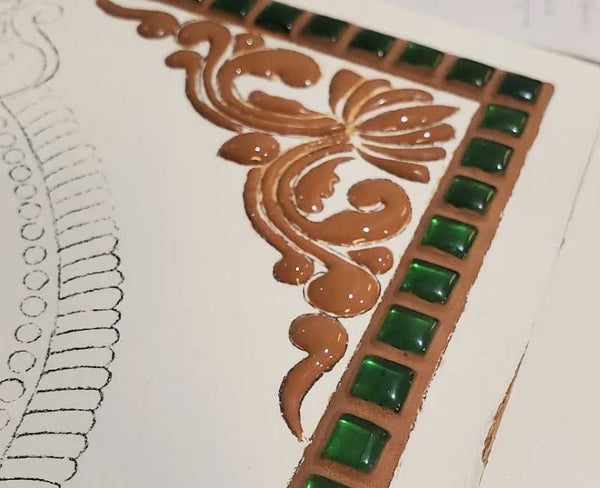
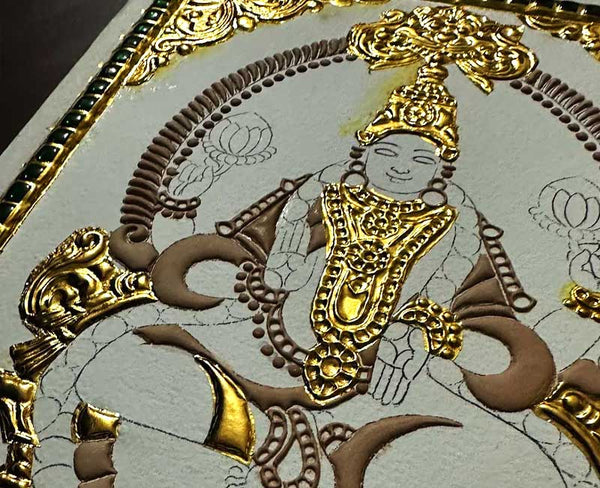
- Working with Arabic gum, then mixing and laying the embossing paste.
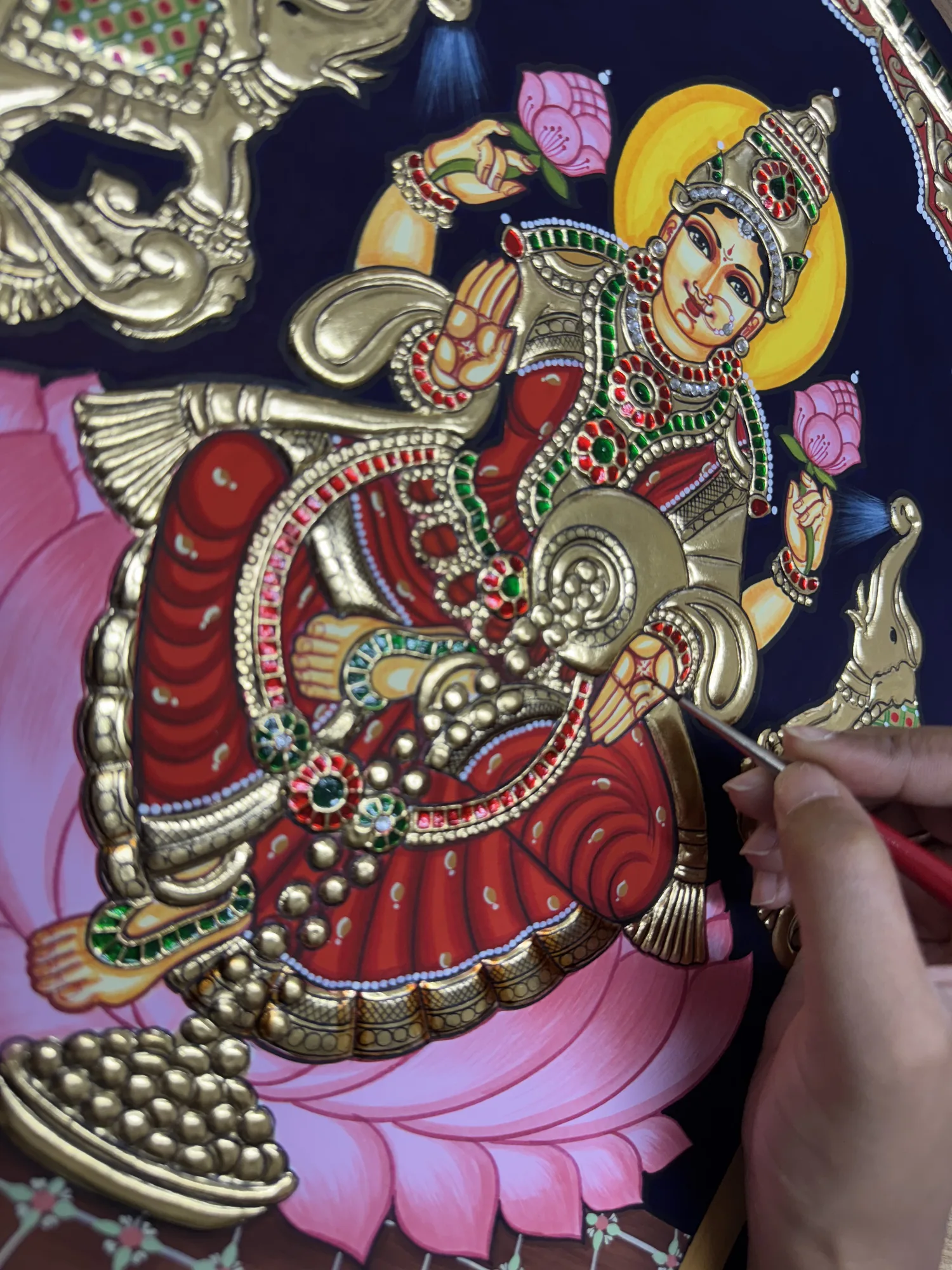
- Building the raised relief and setting the kundan stones.
- The fine, intricate embossing that gives Tanjore its signature depth.
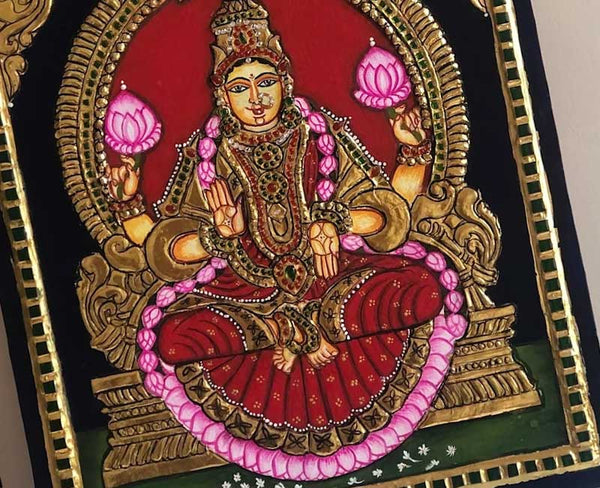
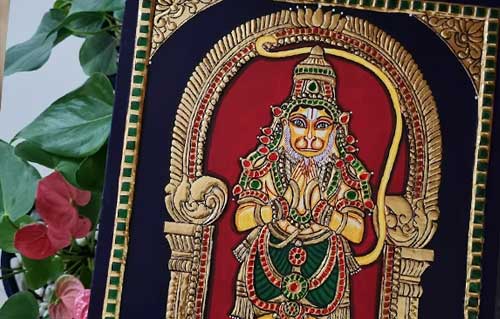
- Applying the 24 karat gold sheets.
- The poster paints, the lotus, the saree, the body and its shading.
- The face, which is the heart of the painting, then the flat colours and the carpet.
- The outlines, and the final Swarovski and kundan detailing.
By the last lesson you are not watching a painting being made. You are holding your own.
| What you get | Details |
|---|---|
| Lessons | 18 to 27 video lessons, by painting |
| Access | 90 days from kit receipt, extended freely on request |
| Watch on | Laptop or phone, on the student app |
| Feedback | A WhatsApp group with a teacher, photos of your own work |
| Materials | Kit bundled in the price, shipped to you |
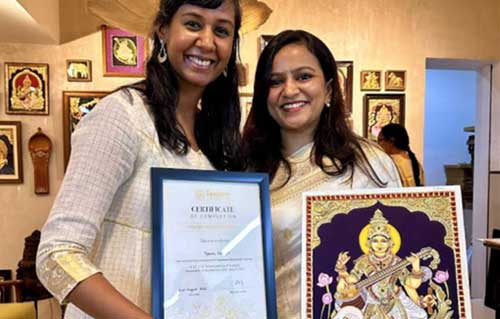
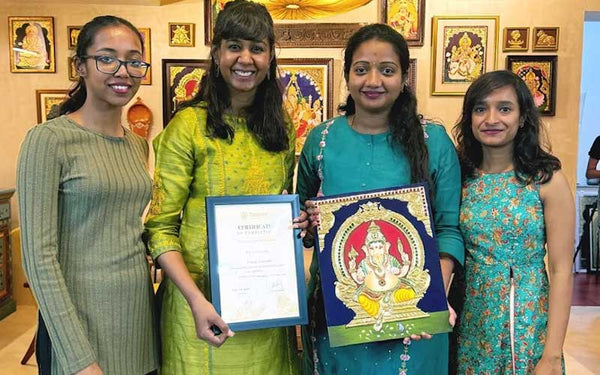
| Certificate | Digital and physical, signed by Vibha Raj |
How a typical lesson works
Each lesson is short enough to sit with in one go and detailed enough to follow exactly. You watch a step, pause, and do it on your own canvas, then play the next one. Because you set the speed, there is no rushing to keep up with a class and no waiting for anyone else. If the gold foil does not settle the first time, you rewind and watch it again, as many times as you need, until your hand knows what to do. Most students fall into a gentle rhythm, a lesson or two at a sitting, a few times a week, and the painting grows steadily under their hands. Some weeks you will do a lot, some weeks a little, and both are completely fine.
It is guided, not lonely
This is the part most people do not expect from a self-paced course. When you join, we create a WhatsApp group with you and one of our teachers. As you paint, you send photos of your actual work, your sketch, your first gold sheet, the face you were nervous about, and you get real, specific feedback on your painting, not a generic reply.
We also reach out to you. Our teachers check in to ask how you are getting on and whether you are stuck anywhere, because we know a kind nudge at the right moment is often all it takes to keep going. Many students call when they want to talk something through, and those who live in Bangalore sometimes come by the studio. There is no single right way to ask for help. There is just help, whenever you need it.
This back and forth is where the real teaching happens. A first sketch that felt wrong turns out to be fine. A gold sheet that lifted at the edge gets a quick fix. A face that felt impossible becomes the part you are proudest of. None of it needs a scheduled slot. You send a photo when you need to, and we answer, and slowly the nervousness most beginners start with gives way to quiet confidence.
90 days of access, and how we extend it
Your access runs for 90 days from the day your kit arrives. We set that window for one gentle reason, to help you stay accountable and actually finish, rather than letting the course drift to a someday that never comes.
But life happens, and we understand that completely. The whole reason many students choose DIY is to paint around busy, unpredictable lives. So if your 90 days are running out, just tell us, and we extend it. We have done this many times, sometimes months after a course, sometimes more than a year later, adding another month or two so a student can finish properly. For DIY, that flexibility is part of the format, and it is never a problem.
The Tanjore Collective student app
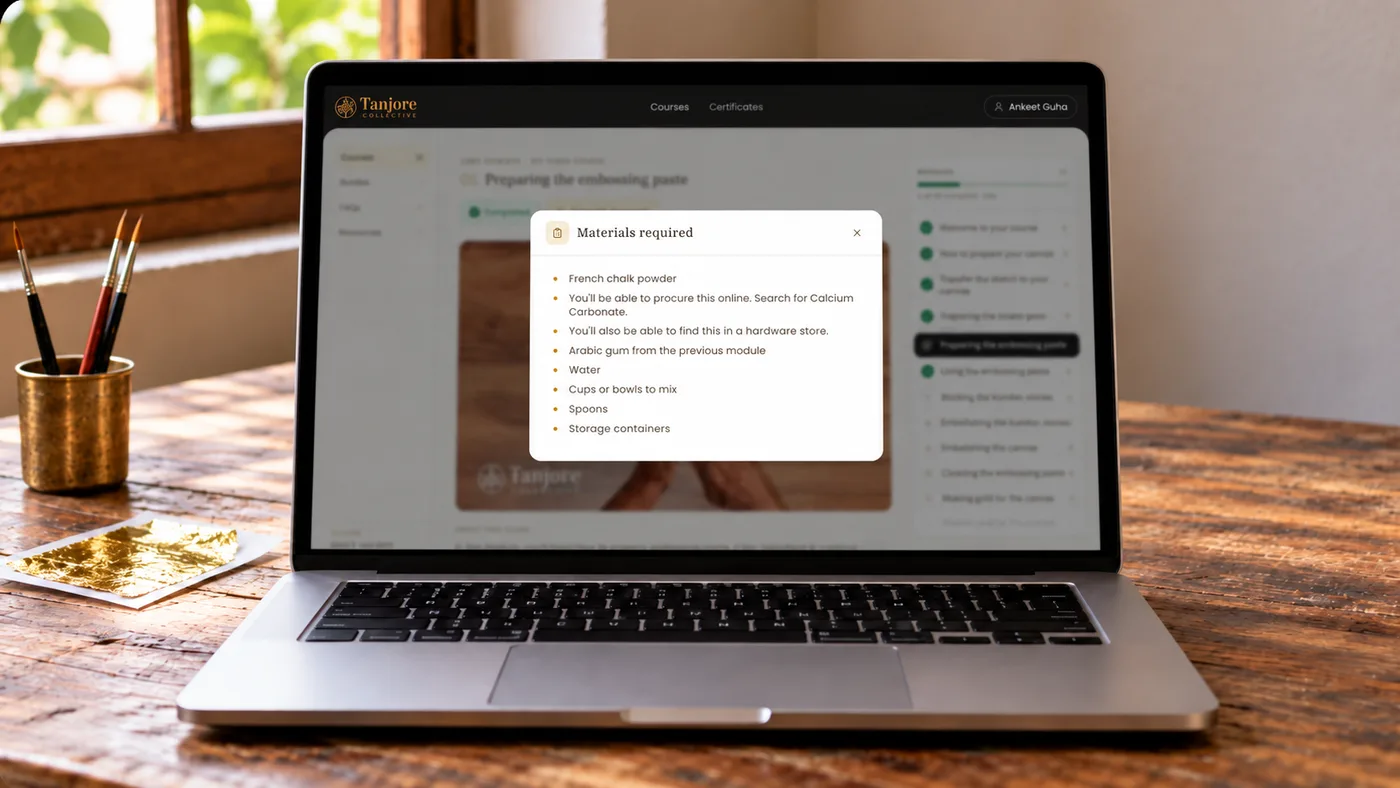
Your lessons live on our own student app, which works on a laptop and on your phone. It is where you watch your recordings, and it also holds the course sketches, the information on where to source materials, and answers to the questions students ask most often, so you can reference them at any hour.
One thing worth knowing: the app is for delivery, and WhatsApp is for conversation. You watch and read on the app, and you send your photos and ask your questions on WhatsApp. We do not rely on email.
Setting up to paint at home
You do not need a studio, only a calm corner and a little light. A steady table, a chair you can sit at comfortably for a while, and good light, daylight if you can get it, are really all it takes. Keep your kit laid out where you can see each piece, keep a small cloth and a little water within reach, and try to give yourself a spot you can leave set up between sittings, so coming back to the painting feels easy rather than a chore. Many students tell us this quiet corner becomes a small ritual of its own, a patch of calm they look forward to at the end of a busy day.
What is in the kit
Your material kit is bundled into the price of the DIY course and shipped to your door, so you are not left hunting for supplies before you can begin. It holds the seven essentials for a traditional Tanjore painting, including genuine 24 karat gold sheets, along with the pre-sketched canvas, Arabic gum, the base for the gesso relief, fine brushes, kundan stones and original Swarovski crystals. The kit ships by FedEx, so it is worth signing up a little ahead of when you want to start.
Why students choose the DIY course
For most, it comes down to freedom. The freedom to learn in your own hours, to move slowly through the parts that are new to you and quickly through the parts that are not, and to fit something nourishing around a full and busy life. For students living abroad, it is often the easiest way to learn with us at all, with no timezone to wrestle. And for those coming back for a second or third painting, it is a comfortable, familiar way to keep the practice alive between live batches.
Who the DIY course suits best
DIY is a wonderful fit if your schedule is busy or unpredictable, if you are in a timezone where live classes are hard, if you have painted with us before and want to add another piece, or if you simply like to go at your own pace and rewatch a tricky step as many times as you need. If you would rather have the structure and rhythm of a live batch, that is worth weighing too. We have written an honest guide to who should do a DIY course and who should not, and a side-by-side look at the online versus DIY choice.
Why learn with us
You are never learning alone. Tanjore Collective was founded by Vibha Raj, an award winning Tanjore artist who learned the art from her mother, the master artist Vani Bhaskar, and who is known for explaining every step with real clarity and patience. Our teachers each bring their own strength: Spurthy trained at the Karnataka Chitrakala Parishath in Bangalore, and Yashaswini began her own path here as a student before she became a teacher. When you send a photo of your painting, this is the kind of guidance that answers you.
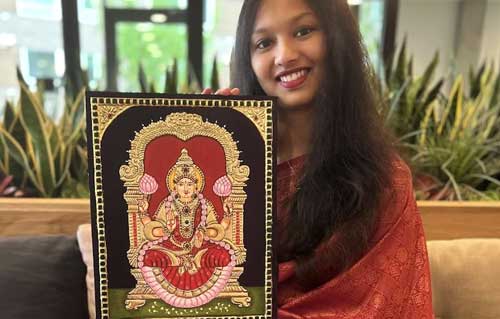
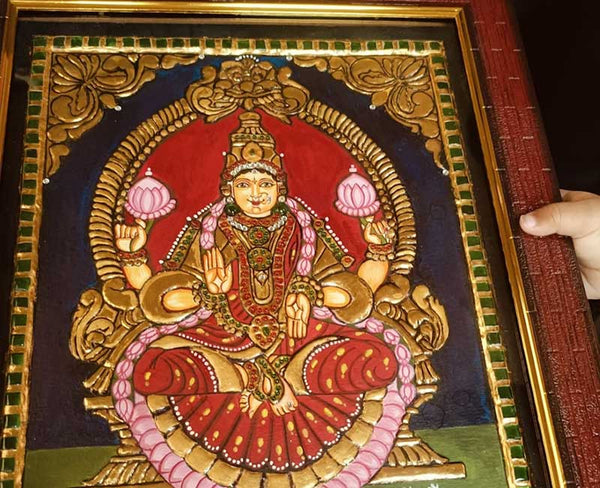
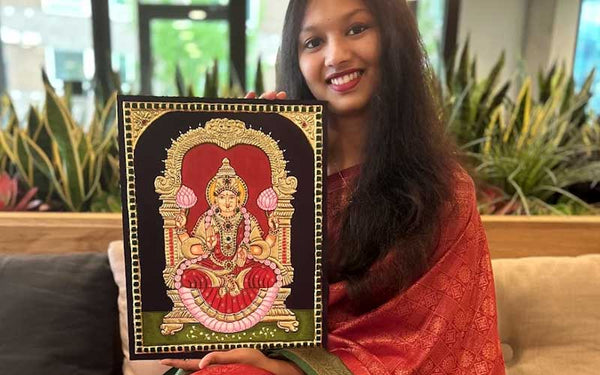
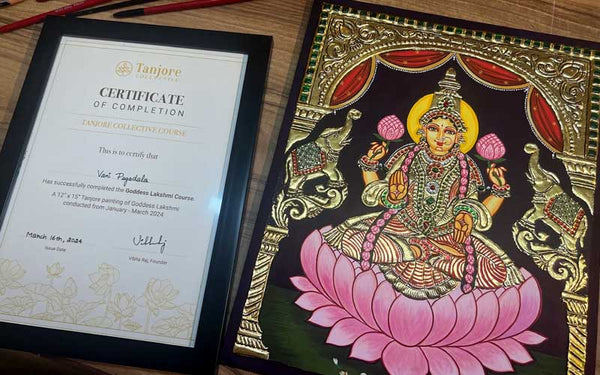
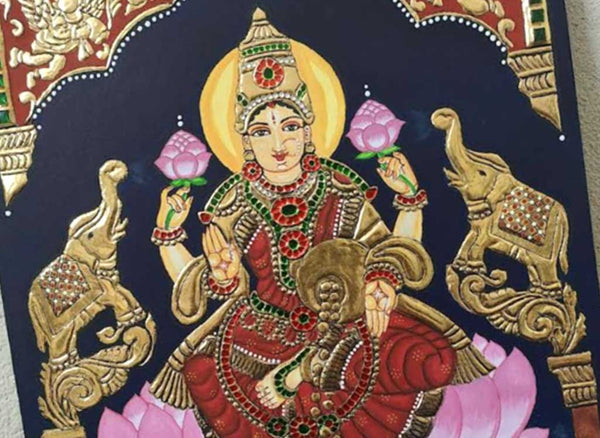
"Creating my first Tanjore painting of Goddess Lakshmi Devi through Tanjore Collective's DIY course was a truly fulfilling experience. The course was very well structured, which made learning Tanjore painting much easier, even as a beginner. Vibha did a wonderful job explaining every intricate detail with clarity and patience."
It is also why so many students trust us with their first painting. We hold a 5.0 rating from more than 450 Google reviews, and our work and teaching have been featured in Deccan Herald, Hindustan Times, Deccan Chronicle and Incredible India.
Frequently asked questions
How many lessons are in a DIY course?
It varies by painting, roughly 18 to 27 lessons. A simpler subject has fewer, and a more detailed deity like Goddess Lalitha Devi has more.
Is it just videos, or do I get real feedback?
You get real feedback. We create a WhatsApp group with you and a teacher, and you send photos of your own painting for specific corrections, with weekday support.
How long do I get access, and can it be extended?
Access runs 90 days from when your kit arrives, and we are always happy to extend it on request, even months later.
Is the material kit included?
Yes. The kit is bundled into the price and shipped to you, with everything you need including 24 karat gold.
Can a complete beginner really learn this way?
Yes. Every DIY course assumes no experience, and more than 1,000 students have finished their painting through it.
Can I learn from outside India?
Absolutely. DIY is often the easiest choice across large time differences, and we ship the kit worldwide (international delivery takes about three to four weeks, so order ahead).
Do I get a certificate?
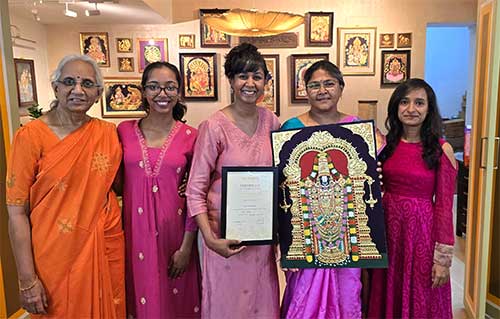
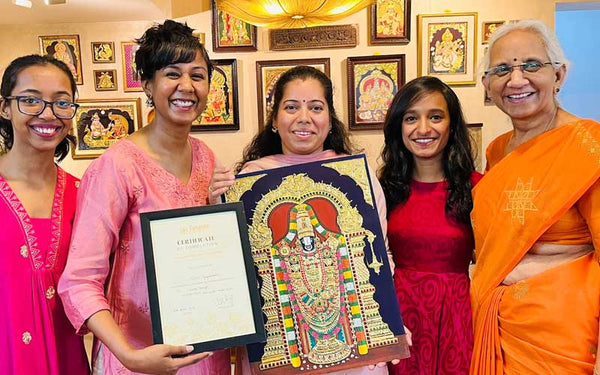
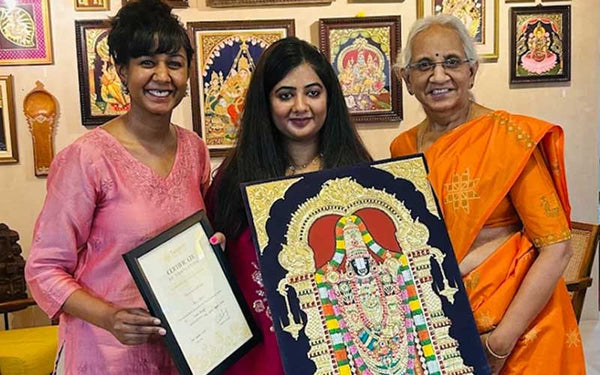
Yes, both a digital and a physical certificate, naming your course and signed by Vibha Raj.
Whenever you are ready, and at whatever pace your life allows, we will be right there with you on the other side of the screen. We cannot wait to see the painting you finish.
More blog articles
Online vs DIY Tanjore Course: The Honest Comparison (With a Table)
Online or DIY Tanjore course? An honest, side-by-side comparison so you can choose structure or flexibility.
Why 95%+ of Our Tanjore Painting Students Finish Their Painting
Most people who start a creative course never finish. Here, 95%+ do. The real reasons behind our completion rate.
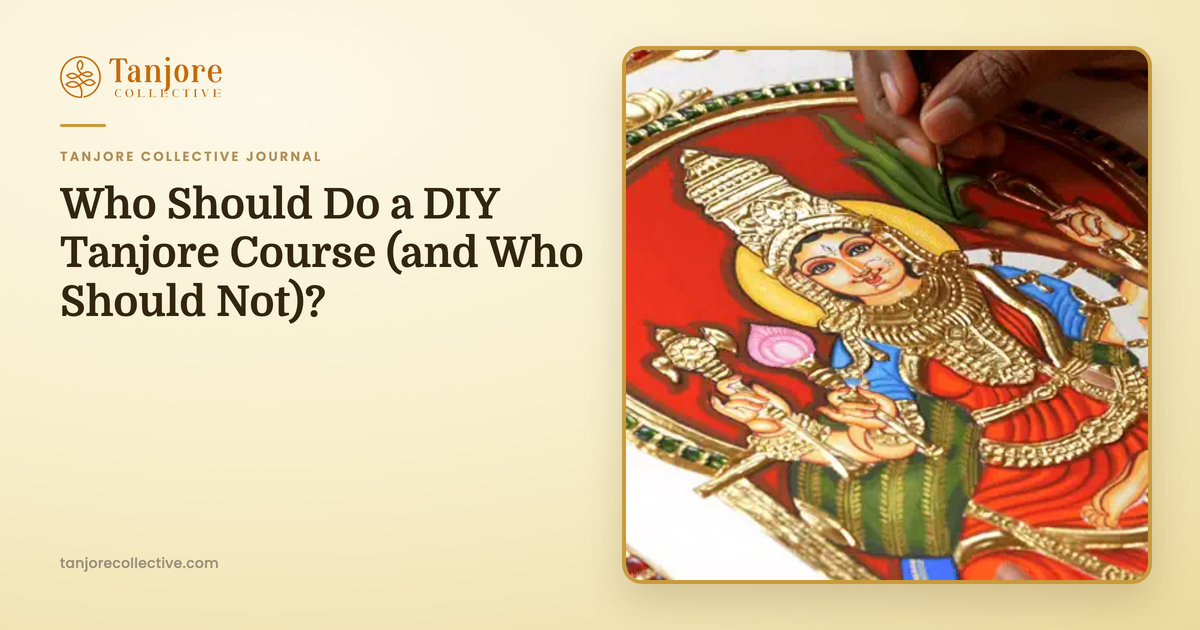
Who Should Do a DIY Tanjore Course (and Who Should Not)?
Who should do a DIY Tanjore course, and who is better off in a live batch? An honest guide.
What our students say
Hear from students who've learned the art of Tanjore painting with us.