Online vs DIY Tanjore Course: The Honest Comparison (With a Table)
Written by
Vibha Raj
Live online or self-paced DIY Tanjore course? A clear, honest comparison of pace, schedule, feedback, access and cost, so you can pick with confidence.
Key takeaways
- Both our live online and DIY Tanjore courses are built for complete beginners, include your materials, give a certificate, and live on the Tanjore Collective student app.
- Choose live online for structure: 2 evenings a week on fixed days (about 5:45 to 7:30 PM IST), a batch of 30 to 60, over 6.5 to 11 weeks, with 3 to 4 teachers.
- Choose DIY for flexibility: fully self-paced, 18 to 27 video lessons depending on the painting, with 90-day access we extend freely on request.
- Both give you real feedback, live on a WhatsApp batch group, DIY through a personal WhatsApp group with a teacher.
- Neither is better. It comes down to structure versus flexibility. DIY is the most accessible, live sits in the middle on cost.
Online or DIY? It is the most common question we get from people who cannot come to our Bangalore studio, and the honest answer is that both are excellent. Thousands of students have finished beautiful paintings each way. The real choice is not about quality. It is about you, how your weeks look, how much structure helps you, and what kind of learner you are. Here is a clear, side by side look so you can pick with confidence.
At a glance
Live online is a guided, time-bound class you attend on a schedule. DIY is a self-paced video course you move through in your own time. Both are beginner-friendly, both include real feedback, and both come with your materials and a certificate.
| Live online | DIY video | |
|---|---|---|
| Pace | Guided, with the batch | Fully self-paced |
| Schedule | 2 evenings a week, about 5:45 to 7:30 PM IST, fixed days | Anytime, no schedule |
| Course length | 6.5 to 11 weeks by complexity | As long as you like, within your access |
| Lessons | Live sessions, taught with 3 cameras | 18 to 27 video lessons by painting |
| Group | A batch of 30 to 60 | Just you, with a teacher on WhatsApp |
| Feedback | Live, plus a WhatsApp batch group | Your own WhatsApp group with a teacher |
| Access | Recordings 30 to 60 days after the course | 90 days from kit receipt, extended on request |
| Best for | Structure, rhythm and real-time feedback | Busy schedules and other timezones |
| Cost | Mid | Most accessible |
Live online, in detail
A live online course is a real class, taught as it happens, not a set of pre-recorded videos. You join your batch two evenings a week, on fixed days, usually between 5:45 and 7:30 PM IST, so it settles into a steady weekly rhythm. Courses run from about 6.5 weeks for a simpler painting to around 11 weeks for an advanced one.
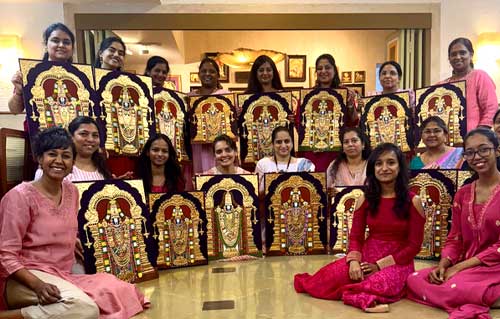
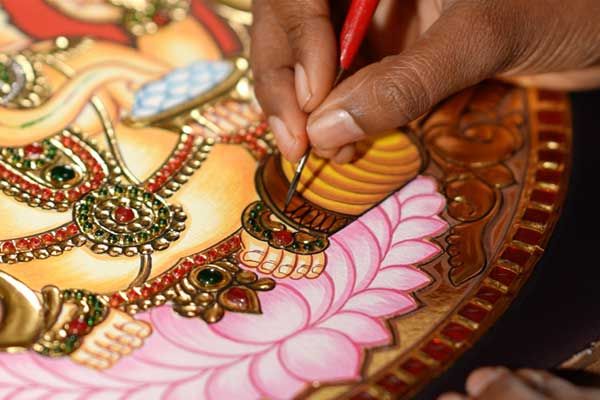
So you never miss a fine detail, we teach with three cameras, moving from the full canvas to a close-up of the brush as the work gets delicate. Each course has three to four teachers who split the work by section, with Vibha Raj taking the faces and intricate detailing. Your batch has its own WhatsApp group for photos, feedback and questions, and every session is recorded and available for 30 to 60 days after the course. You can read the full picture in what a live online class is really like.
DIY, in detail
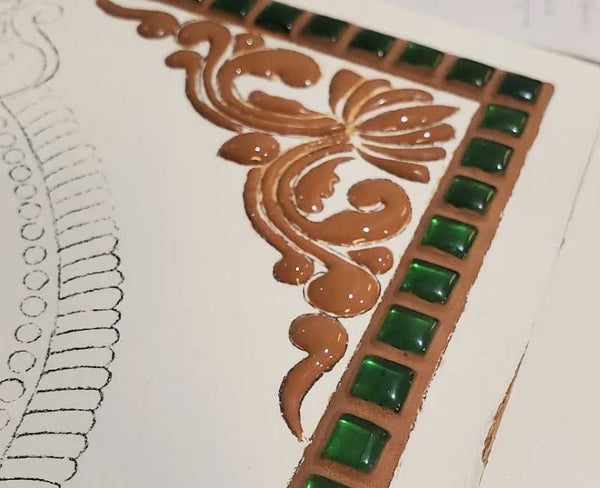
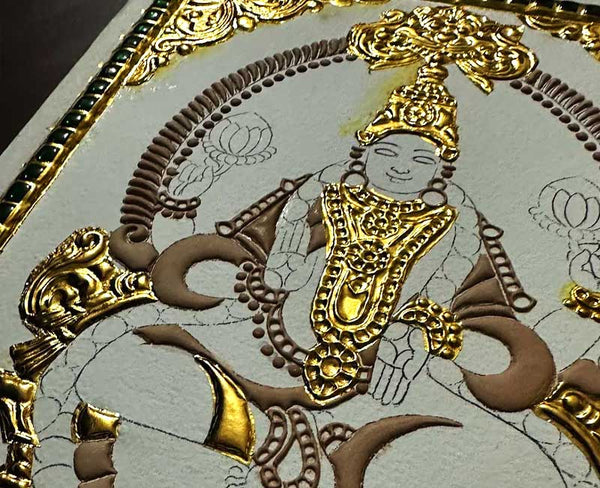
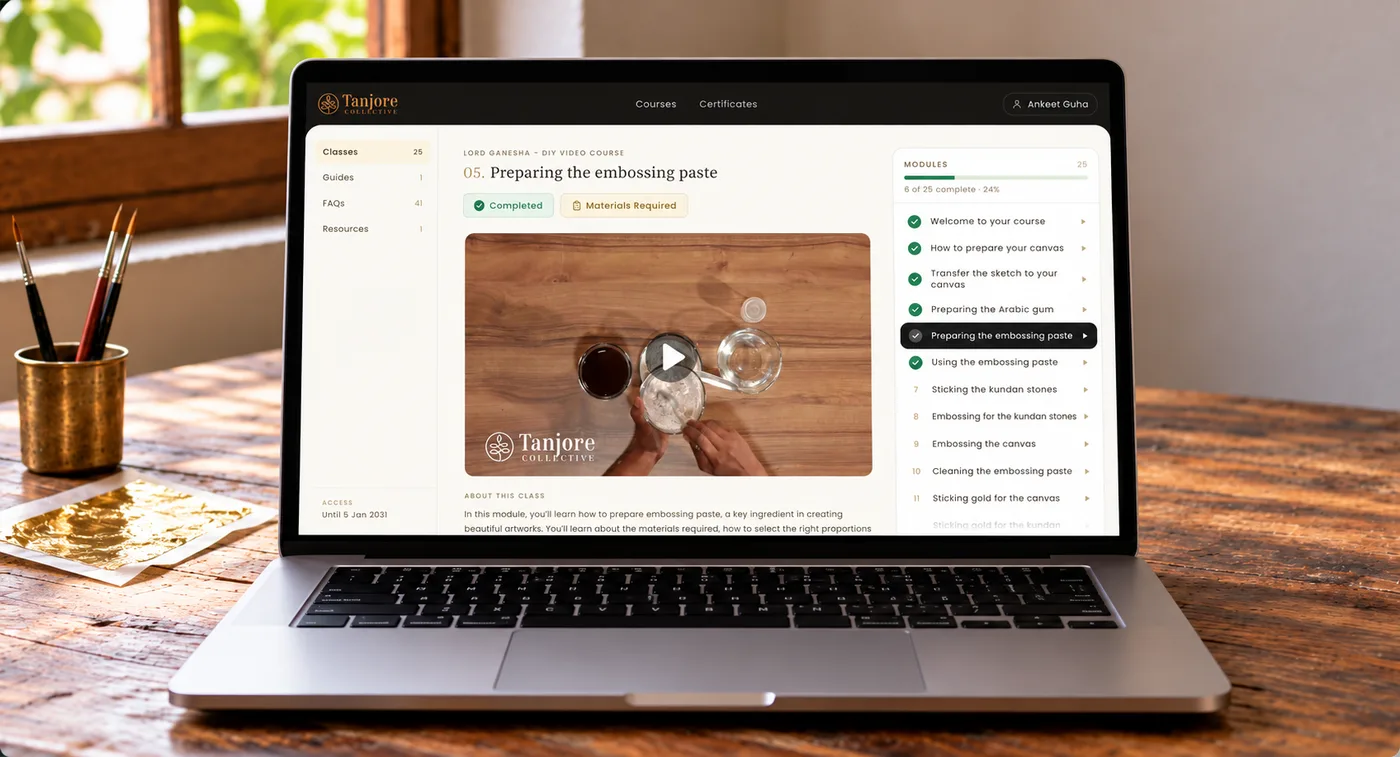
The DIY course is for learning entirely in your own time. You get a series of video lessons, between 18 and 27 depending on the painting, that take you from a blank canvas through sketching, gesso relief, gold foil, kundan stones and the final detailing, all on the Tanjore Collective student app. Self-paced does not mean alone: we create a WhatsApp group with you and a teacher, where you send photos of your painting and get real feedback on your own work. Your access runs for 90 days from when your kit arrives, and because life happens, we extend it freely on request, even months later. More than 1,000 students have finished this way. See who should do a DIY course for more.
What a week actually looks like in each
The clearest difference is how a single week feels. Picturing it often decides the question on its own.
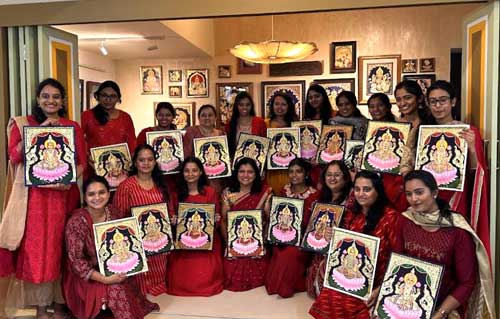
A week in a live batch has a shape. Twice a week, on the same two evenings, you sit down for your class, paint along with the teachers as each step unfolds, and ask questions in the moment. Between classes, you work on your painting and post a photo to the batch WhatsApp group for feedback. If you miss an evening, you catch the recording the next day. The week has gentle anchors, and those anchors are exactly what keep many people moving.
A week on DIY has no fixed shape, and that is the point. You open a lesson whenever an hour appears, after the children are asleep or on a slow Sunday, watch it, paint as far as you like, and send a photo to your teacher when you want feedback. One week you might do three lessons, the next none at all, and nothing is lost. You set the rhythm around your life rather than the other way around.
How to decide
The clearest way to choose is to picture your own weeks. Two short stories cover most people.
If you are a working parent in another timezone, fixed evening classes in Indian time may be hard, and that is exactly who DIY is for. You learn after the children are asleep, or on a quiet Sunday morning, at whatever pace your life allows, with a teacher a WhatsApp message away.
If you know you do better with a rhythm and real-time feedback, a live batch will serve you best. The fixed two evenings a week, the teachers responding as you paint, and the gentle momentum of finishing alongside others are what carry many people all the way through. If you tend to start things and drift, structure is your friend.
If your weeks are genuinely unpredictable, with travel, shifting work, or caregiving that makes any fixed slot hard to promise, DIY removes the pressure of keeping up with a batch. You never fall behind, because there is no behind. And if the cost matters in your decision, DIY is our most accessible option, while live sits in the middle.
Still unsure between live and self-paced? Read when to choose a live online class and who should do a DIY course.
What is the same in both
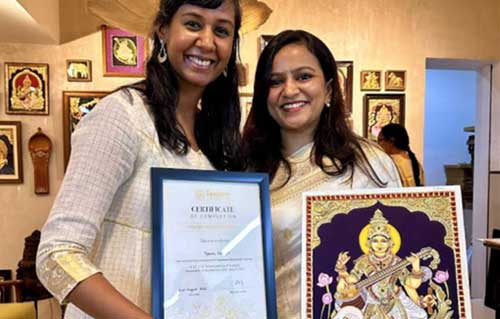
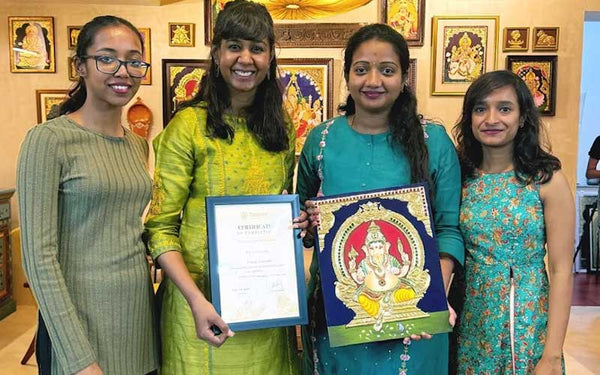
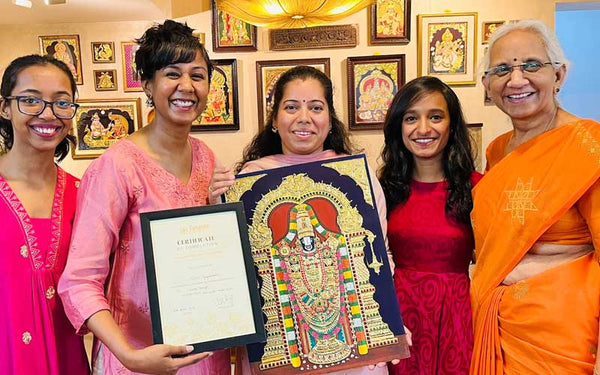
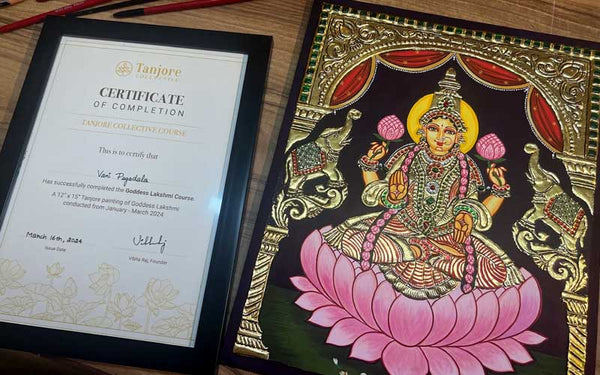
It is worth remembering how much the two formats share. Both are built for complete beginners. Both give you real feedback on your own painting, not generic replies. Both come with the materials you need, both end with a certificate signed by Vibha Raj, and both live on the same student app. So this is not a choice between a good option and a lesser one. It is simply a choice between structure and flexibility, and only you know which one your life is asking for.
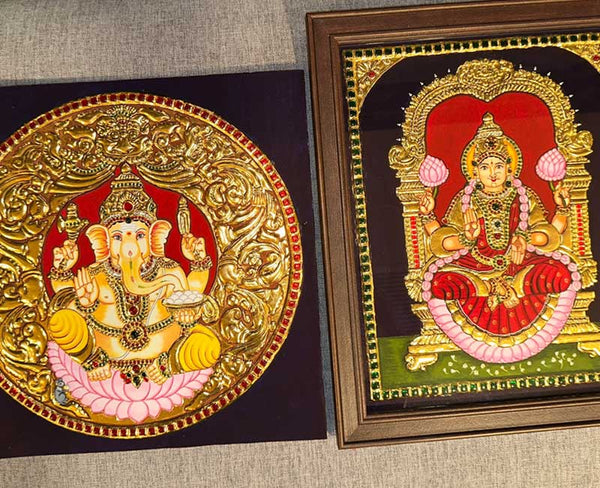
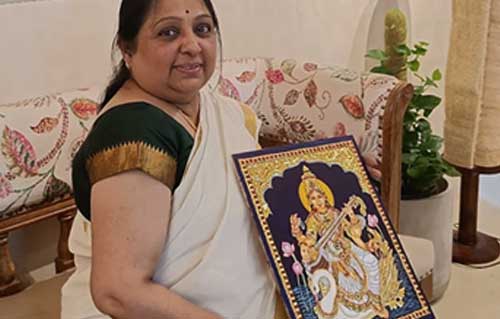
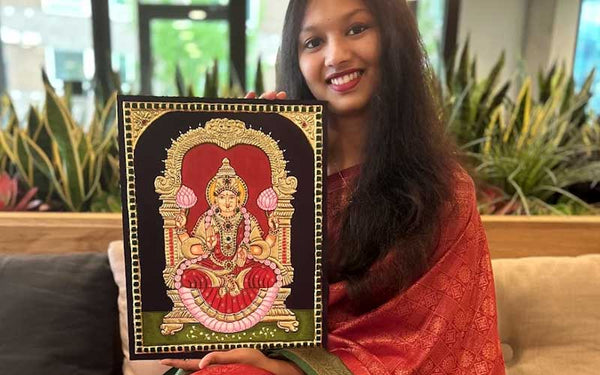
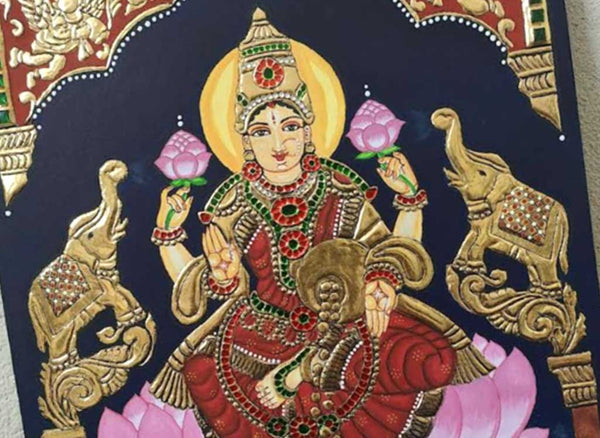
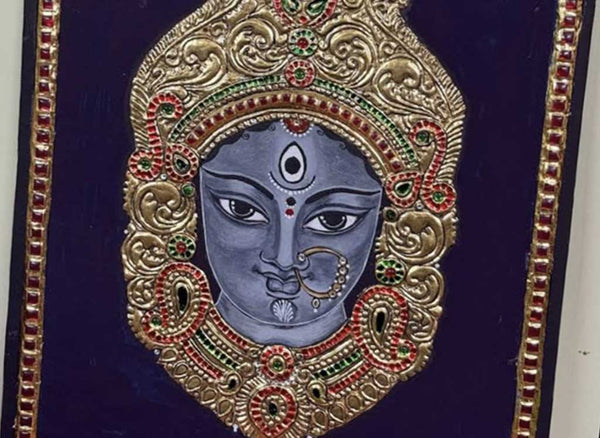
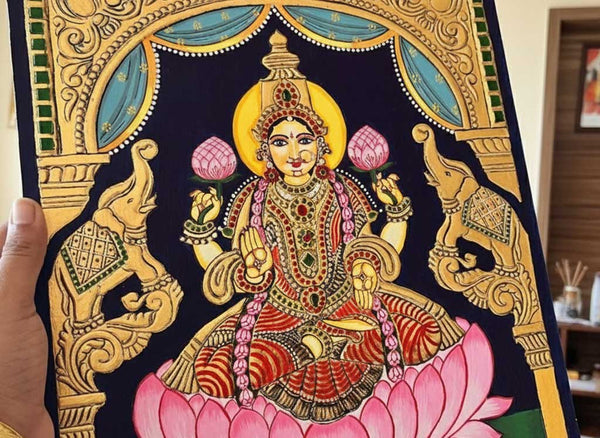
A fair worry is whether your painting will turn out as well one way as the other. It will. The teaching is the same, the steps are the same, and the same artists guide you, whether live on your screen or through the lessons and your WhatsApp feedback. What changes is the pace and the shape of your week, not the quality of what you make or the depth of support behind it. Plenty of our finished paintings on walls and in puja rooms came from each path, and you could not tell which from the painting. If you want to see all three ways to learn together, start with our guide to online, studio and DIY.
Why learn with us
Whichever route you choose, students finish happy, and they tell us so.
"The course struck a wonderful balance between traditional techniques and thoughtful modern teaching. I especially enjoyed learning the intricate designs, the embossed work, the vibrant colours, and the application of gold foil, the hallmark of Tanjore painting."
You will be learning from people who have taught this for a long time. Tanjore Collective was founded by Vibha Raj, an award-winning artist who trained under her mother, the master artist Vani Bhaskar, and who personally teaches the faces and fine work; alongside her are Spurthy GB, trained at the Karnataka Chitrakala Parishath, and Yashaswini Jaishankar, a former student turned teacher. In over forty years we have taught more than 5,000 students, hold a 5.0 rating from 450+ Google reviews, and have been featured in Deccan Herald, Hindustan Times, Deccan Chronicle and Incredible India.
Frequently asked questions
Which is better, online or DIY?
Neither is better. Live online suits those who want structure and real-time feedback, while DIY suits those who want full flexibility. Both are beginner-friendly and well supported.
Do both include materials?
Yes. Live courses ship your materials before class, and the DIY course includes them too, so you have everything you need to finish your painting.
Can a complete beginner do either one?
Yes. Both formats assume no experience and teach each step slowly, from the first sketch to the final gold detailing.
Do I really get feedback on the DIY course?
You do. Every DIY student gets a WhatsApp group with a teacher, where you send photos of your painting and get real corrections on your own work.
How long do I have access in each format?
Live recordings are available for 30 to 60 days after the course ends, and DIY access runs for 90 days from when your kit arrives, which we extend freely on request.
Can I switch, or take another course later?
You cannot switch a single course midway, but you are welcome to take any format and any painting next, and our returning-student benefit applies across all of them.
Can I take the live class from outside India?
Yes, students join live from around the world. Tell us your city so we can confirm the timings for your timezone, and recordings cover any session that falls at an awkward hour.
Which format gets me to the finish line more reliably?
Both have high completion when you use the support, but if you tend to lose momentum alone, the structure of a live batch helps most. You can read more in why 95%+ of our students finish.
Do I need any art experience for either one?
No. Both formats are designed for complete beginners and start from the very first sketch.
Whichever you choose, you are in good hands, and we cannot wait for you to fall in love with this art form.
More blog articles
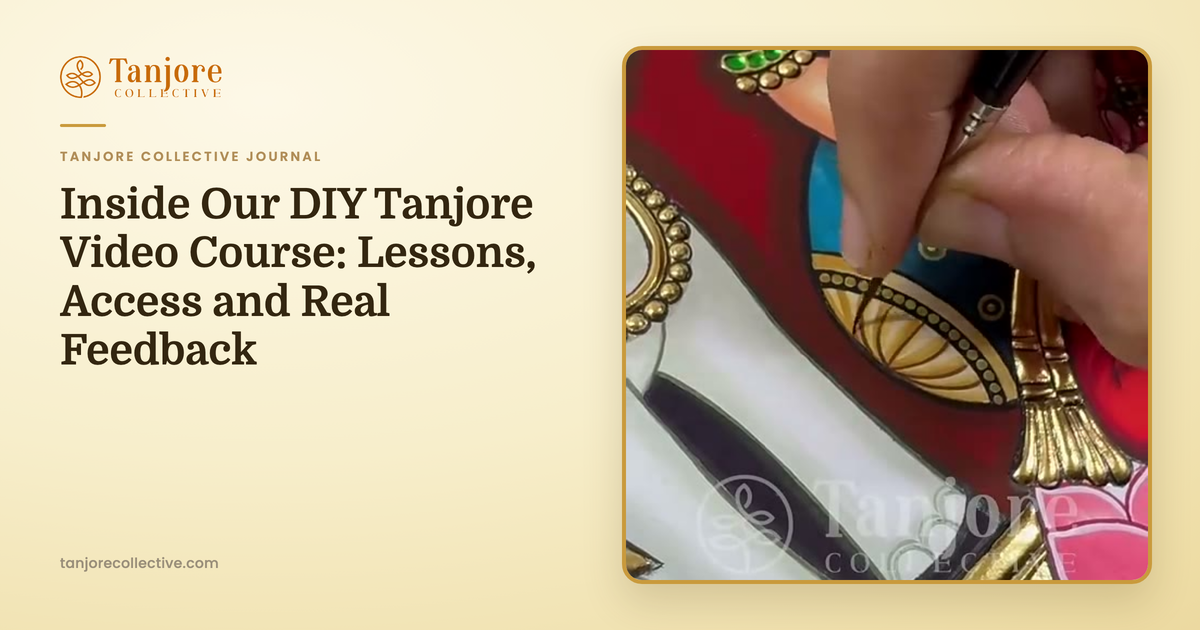
Inside Our DIY Tanjore Video Course: Lessons, Access and Real Feedback
A self-paced Tanjore painting video course with a bundled kit and real teacher feedback on WhatsApp. Here is exactly what you get.
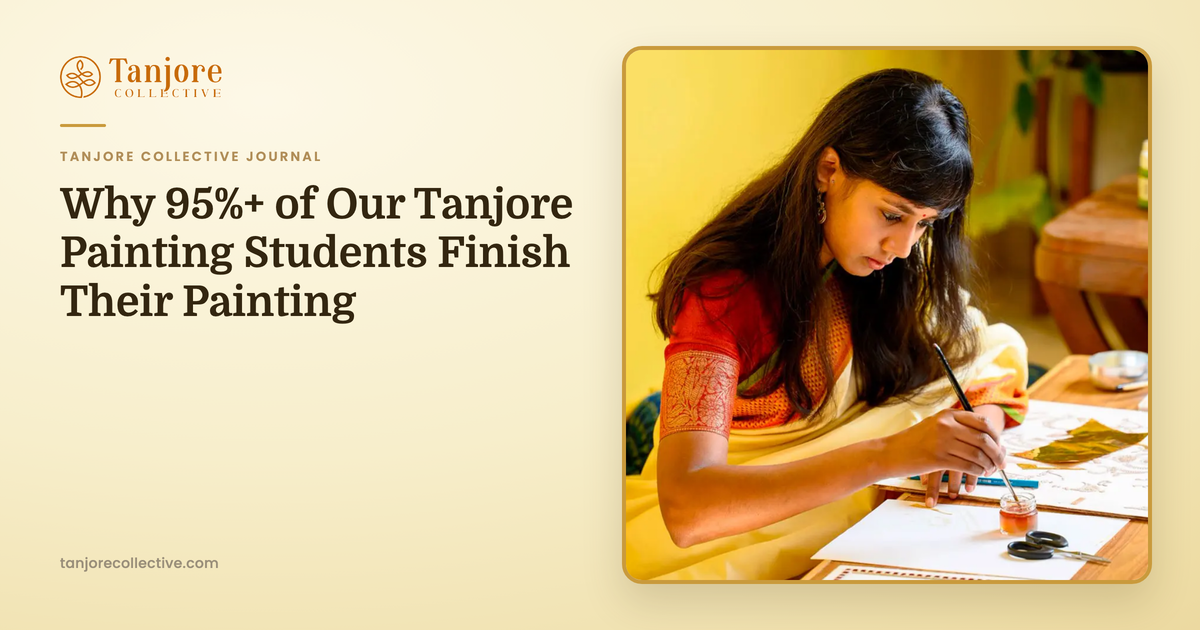
Why 95%+ of Our Tanjore Painting Students Finish Their Painting
Most people who start a creative course never finish. Here, 95%+ do. The real reasons behind our completion rate.

Who Should Do a DIY Tanjore Course (and Who Should Not)?
Who should do a DIY Tanjore course, and who is better off in a live batch? An honest guide.
What our students say
Hear from students who've learned the art of Tanjore painting with us.