Why We Teach Tanjore Painting in Batches, Not One-on-One
Written by
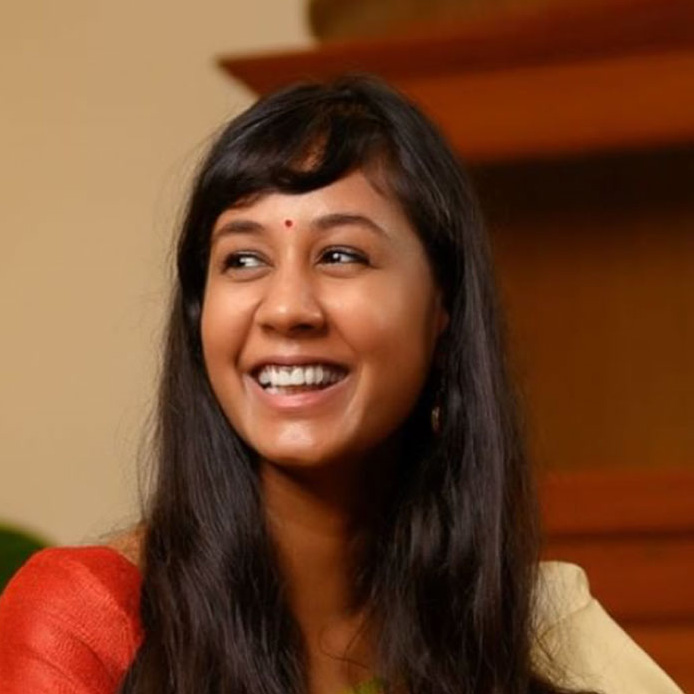
Vibha Raj
We tried one-to-one teaching and watched students drift for months. Here is why batches, with their shared rhythm and gentle accountability, help far more people finish.
Key takeaways
- We teach Tanjore painting only in batches, never one to one, and it is a deliberate choice that helps you actually finish your painting.
- When we taught one to one about five years ago, students drifted onto different steps and often took anywhere from 3 months to 2 years, and many never finished.
- A batch keeps everyone on the same step, so a doubt one person raises is answered for all, and you learn by watching the people beside you.
- Batches are time-bound. A 6.5-week course has a clear start and finish, and that gentle accountability is what gets paintings completed.
- Online batches hold 30 to 60 students and studio batches 20 to 25, each with 3 to 4 teachers and a WhatsApp group, so it still feels personal. This is a big reason more than 95% of our students finish.
When people hear that our classes run in groups, the first worry is usually a quiet one. Will I get lost in a batch? Will anyone notice if I fall behind? It is a fair thing to wonder, and the honest answer surprises most people: learning in a batch is the very reason so many of our students actually finish their painting. We did not always teach this way, and what changed our mind is worth sharing.
Do we teach one to one? No, and here is why
We do not offer one-to-one classes, and it is on purpose. About five years ago we did teach that way, one student and one teacher, thinking it would be the most personal option. What actually happened was the opposite of what we hoped. Every student moved at a completely different speed, so one would be deep into the painting while another was still on the embossing and a third was only pasting. With everyone on a different step, we could not give any of them the focused teaching they deserved.
There was a second problem, a bigger one. Without a shared rhythm, the work stretched on and on. Some one-to-one students took anywhere from 3 months to 2 years to finish a single painting, and more than a few never finished at all. The freedom to go at any pace quietly became the freedom to never quite get there.
Why a batch teaches better
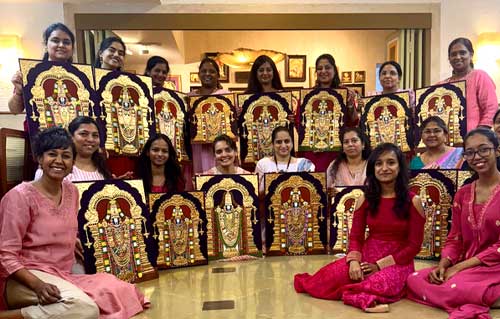
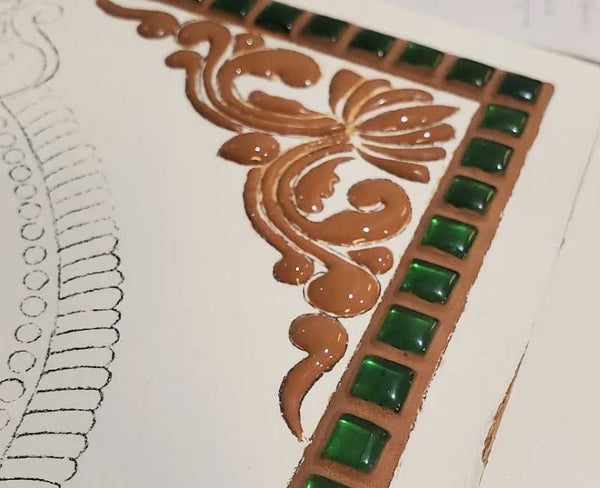
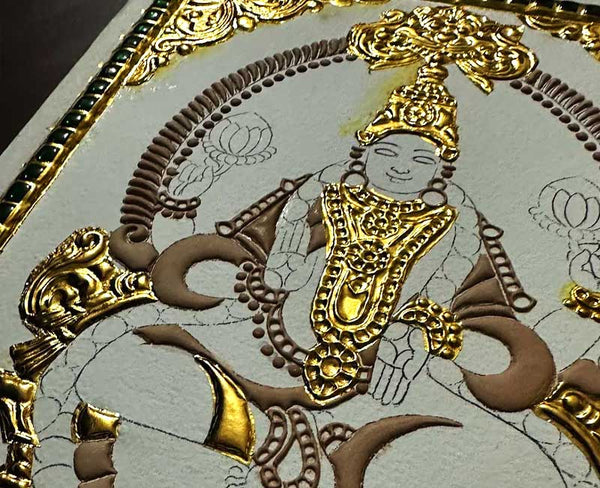
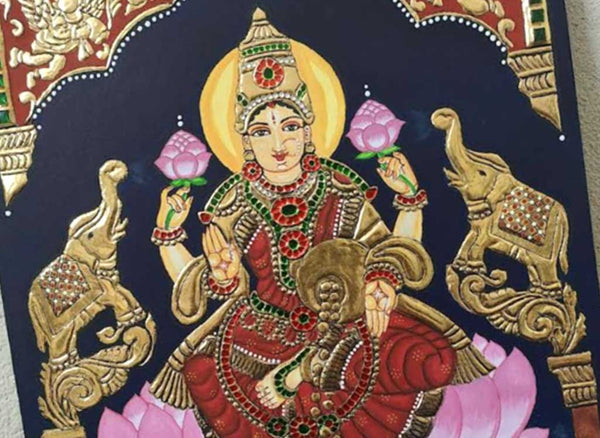
A batch works because everyone moves together, on the same painting and the same step. When one student asks about building the gesso relief or laying the gold, the answer lands for the whole group, and the questions you were too shy to ask get answered anyway. You see the step demonstrated once, clearly, and then you see how the people around you approach it too. That shared momentum turns a hard, detailed art into something you learn alongside others, not something you puzzle through alone.
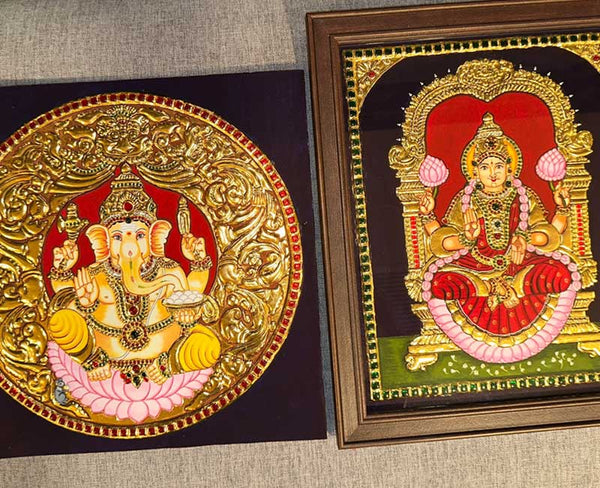
Take one of the trickier moments, laying the 24 karat gold. On your own, it is the step most beginners dread. In a batch, you watch the teacher do it, you hear three or four classmates ask the exact things you were worried about, and by the time it is your turn, the fear has quietly lifted. A doubt shared by one becomes a lesson for everyone, and that is something a single student sitting alone with a teacher never gets.
A deadline you will quietly thank us for
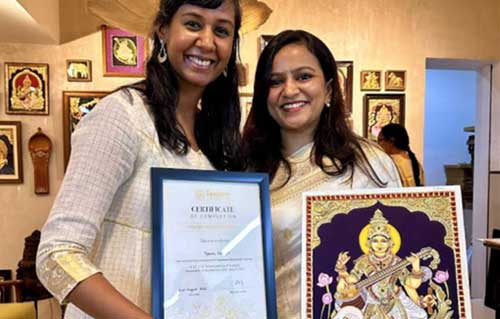
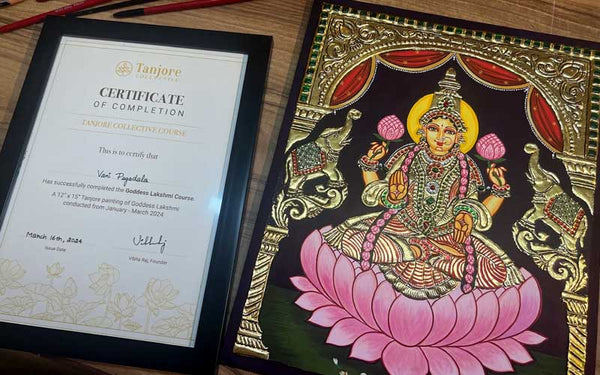
Batches are time-bound, and that is their secret. A 6.5-week course has a clear beginning and a clear end, with two sessions a week carrying you forward. That gentle structure creates just enough urgency to keep you painting, instead of leaving the canvas for a weekend that never comes. Where our old one-to-one students sometimes drifted for months or years, batch students arrive at the final session with a finished painting in their hands. If you want the full picture of how this plays out, we wrote about why more than 95% of our students finish.
What a week in a batch feels like
A batch settles into a gentle, repeating rhythm. You meet twice a week, two evenings online at a fixed time, or two longer mornings in the studio, and each session moves the painting one clear step forward. Between classes, you practise at your own table in your own time, and when a question comes up, you post a photo to the batch WhatsApp group and a teacher responds. You arrive at the next session with your doubts already half-answered and your work ready for the next layer.
Because the two days are fixed for your batch, the class becomes a small, steady appointment in your week, the kind that is easy to keep. You are not deciding each day whether to find time for your painting. The time is already there, waiting, with your teachers and your classmates in it. That quiet consistency, week after week, is how a detailed painting gets finished without ever feeling like a mountain.
The energy of learning together, never competition
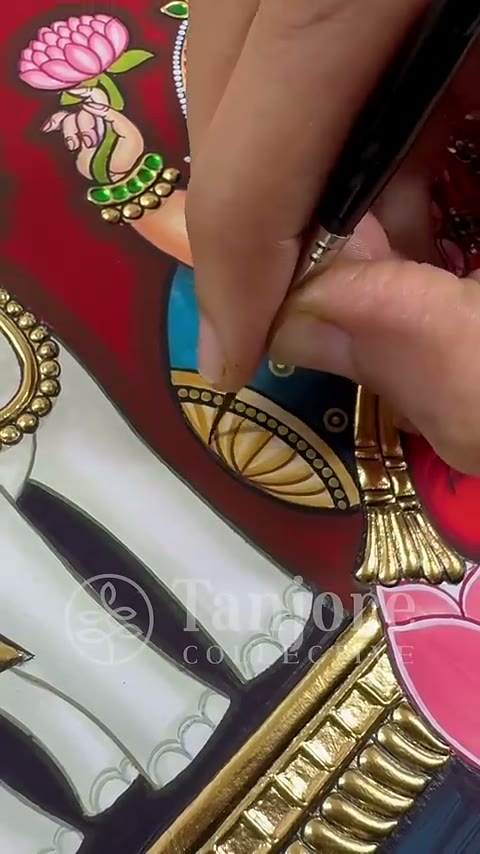
There is something that happens in a batch that we could never create one to one. When you see the person next to you, someone who started exactly where you did, slowly bringing a deity to life, something in you settles and says, if they can do this, so can I. That quiet belief carries people through the parts that feel daunting. We want to be very clear that this is not competition. Nobody is racing anybody. It is warmth and shared commitment, a room (or a video call) full of people cheering each other on.
How a batch still feels personal
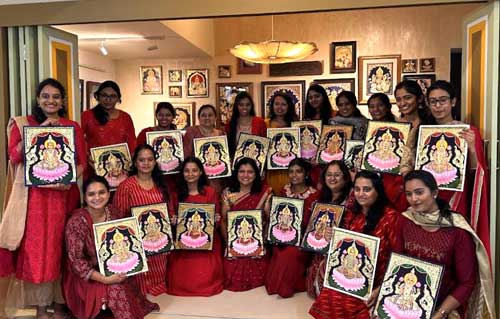
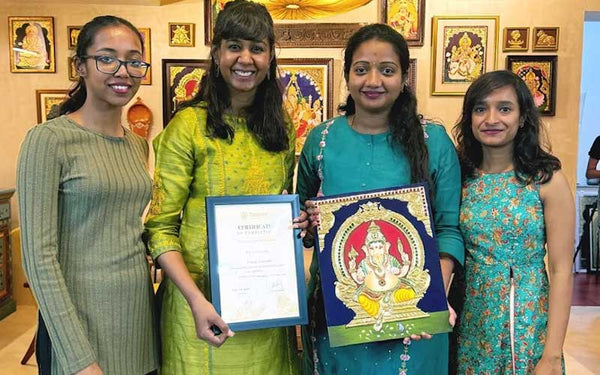
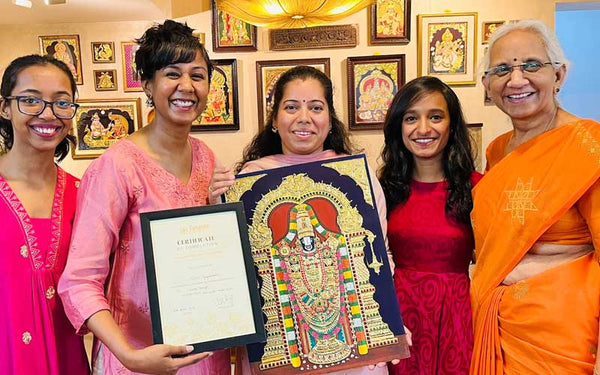
A group does not mean you disappear into a crowd. Our online batches hold 30 to 60 students and our studio batches stay small at 20 to 25, and every course is taught by 3 to 4 teachers who each take the part they know best, one guiding the embossing and gold work, and Vibha Raj taking the faces and the fine detailing. Each batch has its own WhatsApp group where you post photos of your painting and get feedback, and many students simply call when they are stuck. Your teachers see your work and respond to it personally, all the way through.
More than a painting: what a batch gives you
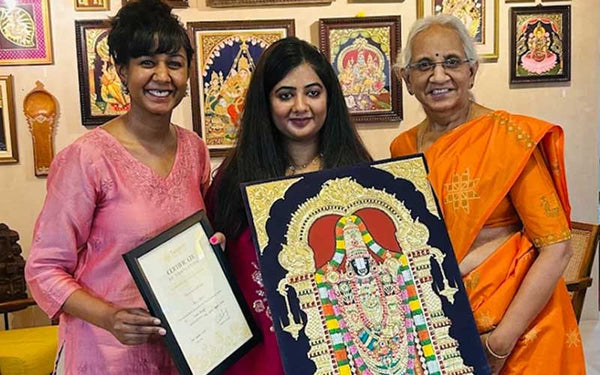
By the time a batch reaches its final session, something more than a painting has been made. People who started as strangers have watched each other struggle with the same gold foil and celebrate the same first finished face, and that shared journey leaves a warmth behind. Many of our students return for course after course, partly for the art and partly for the people. You come to learn a technique, and you leave with a finished painting, a little more confidence in your own hands, and a group of people who understand exactly what it took. That is something the solitary path simply cannot offer.
If you are weighing up how you would like to learn, our guide to the three formats walks through online, studio and DIY, and if you are new to all of this, start with how complete beginners learn with us.
Who you will be learning from
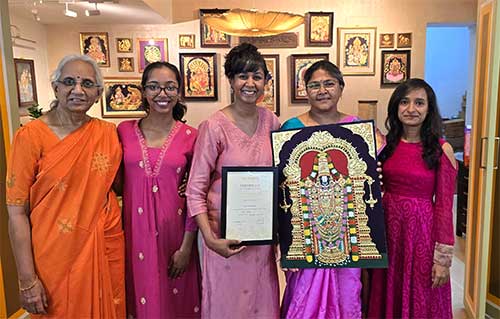
Every teacher at Tanjore Collective came up through the studio as a student first. Our founder, Vibha Raj, is an award-winning artist who learned from her mother, the master artist Vani Bhaskar, and she still teaches the hardest parts herself, the faces and the fine detailing. Spurthy GB, trained at the Karnataka Chitrakala Parishath in Bangalore, leads the gold foil work, and Yashaswini Jaishankar, who began here as a student, leads the embossing. In a batch that means three to four pairs of experienced hands on your painting, not one.
"Vibha taught us very well, asking us to try repeatedly until we got it right. Always having a smile on her face and clearing all our doubts. Had a great time learning from her and making new friends of like minded interest in art."
That mix of patient teaching and the friendships a batch creates is what students remember most. We hold a 5.0 rating from more than 450 Google reviews, and our teaching has been featured in Deccan Herald, Hindustan Times, Deccan Chronicle and Incredible India.
Frequently asked questions
Do you offer one-on-one classes?
No, we teach only in batches. We tried one to one years ago and found that students drifted and often never finished, so we made the deliberate choice to teach in time-bound groups that get you to a completed painting.
Will I get personal attention in a batch?
Yes. Every course has 3 to 4 teachers, studio batches stay small at 20 to 25, and each batch has a WhatsApp group where your teachers review your photos and answer your doubts.
Is a batch competitive or stressful?
Not at all. There is no racing or ranking. The energy is encouraging, everyone is learning the same art together, and seeing others progress helps you believe you can too.
What if I miss a class or fall behind?
Every live session is recorded and goes up the same day, available for 30 to 60 days after the course, so you can catch up, and your teachers help you on the WhatsApp group.
How big are the batches?
Online batches are usually 30 to 60 students and studio batches are kept small at 20 to 25, which is our studio capacity.
Can a complete beginner keep up in a batch?
Yes. Every course is built for complete beginners, and the shared pace plus teacher support is exactly what helps first-timers finish.
Can I get extra help if a step is hard for me?
Always. Beyond the two live sessions a week, you can post photos to your batch WhatsApp group for feedback, call your teachers with a doubt, and rewatch the recording of any step. If you are in Bangalore, you are also welcome to visit the studio.
What happens after the course ends?
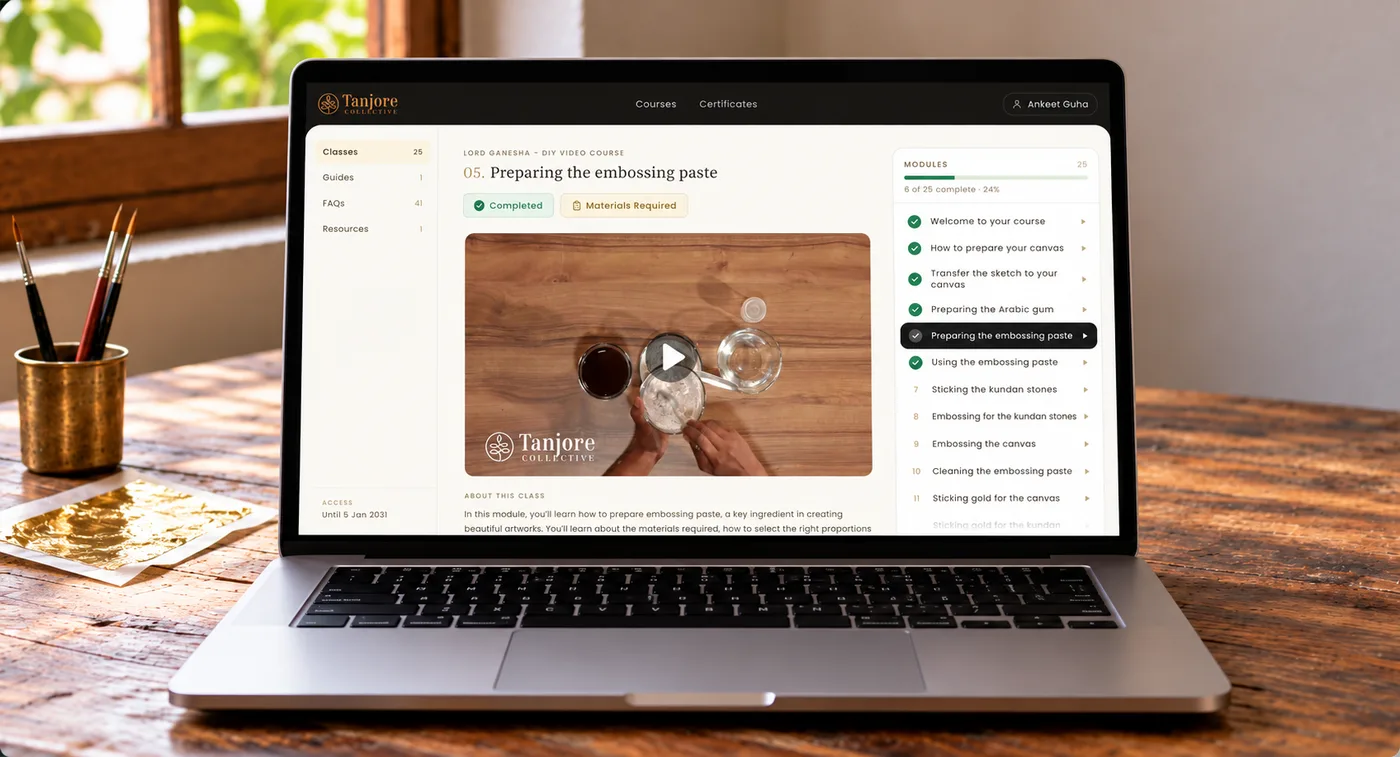
You keep access to the recordings for 30 to 60 days after the course on our student app, so you can revisit any step while you finish. And you are welcome to join another batch whenever you are ready, with our returning-student benefit.
Learning together is not a compromise we make, it is the heart of how we teach. It is what turns a nervous first step into a finished painting you are proud to place in your home, and it is why we would not go back to teaching any other way.
More blog articles
Online vs DIY Tanjore Course: The Honest Comparison (With a Table)
Online or DIY Tanjore course? An honest, side-by-side comparison so you can choose structure or flexibility.

Inside Our DIY Tanjore Video Course: Lessons, Access and Real Feedback
A self-paced Tanjore painting video course with a bundled kit and real teacher feedback on WhatsApp. Here is exactly what you get.
Why 95%+ of Our Tanjore Painting Students Finish Their Painting
Most people who start a creative course never finish. Here, 95%+ do. The real reasons behind our completion rate.
What our students say
Hear from students who've learned the art of Tanjore painting with us.