Lord Balaji (Venkateshwara) Tanjore Painting Class: Meaning and How to Learn It
Written by
Vibha Raj
Who Lord Balaji (Venkateshwara) is, when he is worshipped, and how to learn to paint him in the Tanjore style through our detailed 2.5-month course.
Key takeaways
- Lord Balaji, or Venkateshwara, is the form of Vishnu enshrined at Tirumala, the lord of the seven hills and one of the most worshipped deities in India.
- He is honoured especially during Brahmotsavam (September to October) and Vaikuntha Ekadashi (December to January). Saturdays are sacred to him.
- We teach Balaji as a detailed live online 2.5-month course (about 10 to 11 weeks). The finished painting is 15 x 20 inches.
- It is a rewarding step up with rich gold ornamentation, still taught step by step, though a little prior practice helps you enjoy it fully.
- In 40 years we have taught 5,000+ students, hold a 5.0 Google rating from 450+ reviews, and more than 95% of our students finish their painting.
For many devotees, Lord Balaji is the deity of a lifetime, the one whose darshan at Tirumala they save and travel years for. To paint him yourself, in gold and stone and colour, is a deeply personal act of devotion.
It is also one of the most rewarding paintings you can make. Balaji is rich with ornament and detail, and finishing him brings a real sense of accomplishment. It asks a little more of you than a first painting would, and we will walk you through every part of it so that it feels like a milestone, not a mountain.
Students often come to Balaji a little daunted and leave genuinely proud. The painting has a way of pulling you in, the gold especially, and week by week the figure they were nervous about becomes the figure they cannot stop looking at. More than one has told us it was the painting that made them feel like a real Tanjore artist.
Who is Lord Balaji?
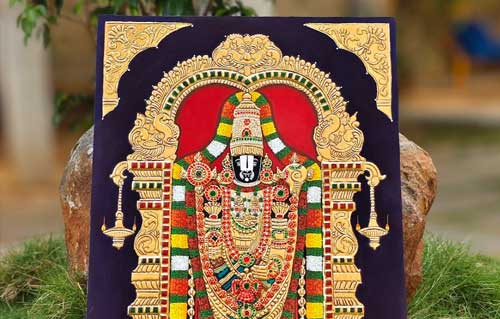
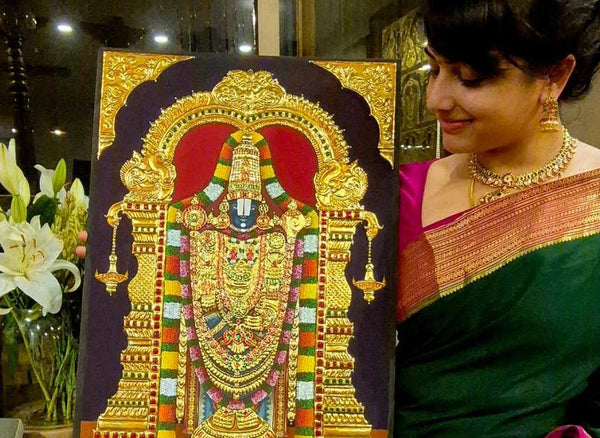
Lord Balaji, also known as Venkateshwara or Srinivasa, is the form of Vishnu enshrined at Tirumala in Tirupati, the lord of the seven hills. He is among the most worshipped deities in India, revered as a bestower of grace, protection and prosperity, and the temple that houses him is one of the most visited places of worship in the world.
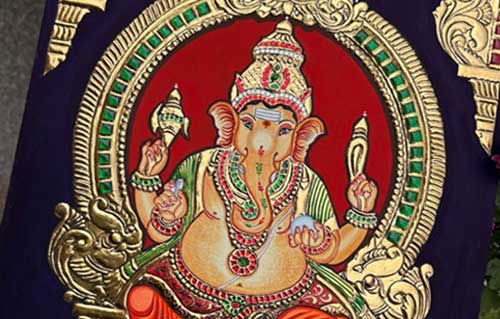
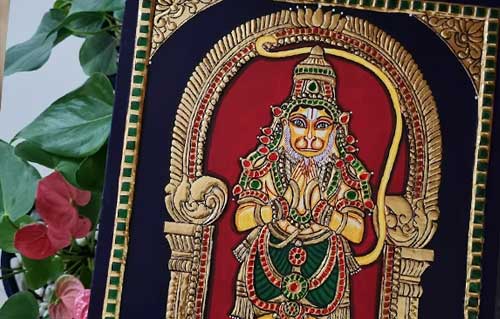
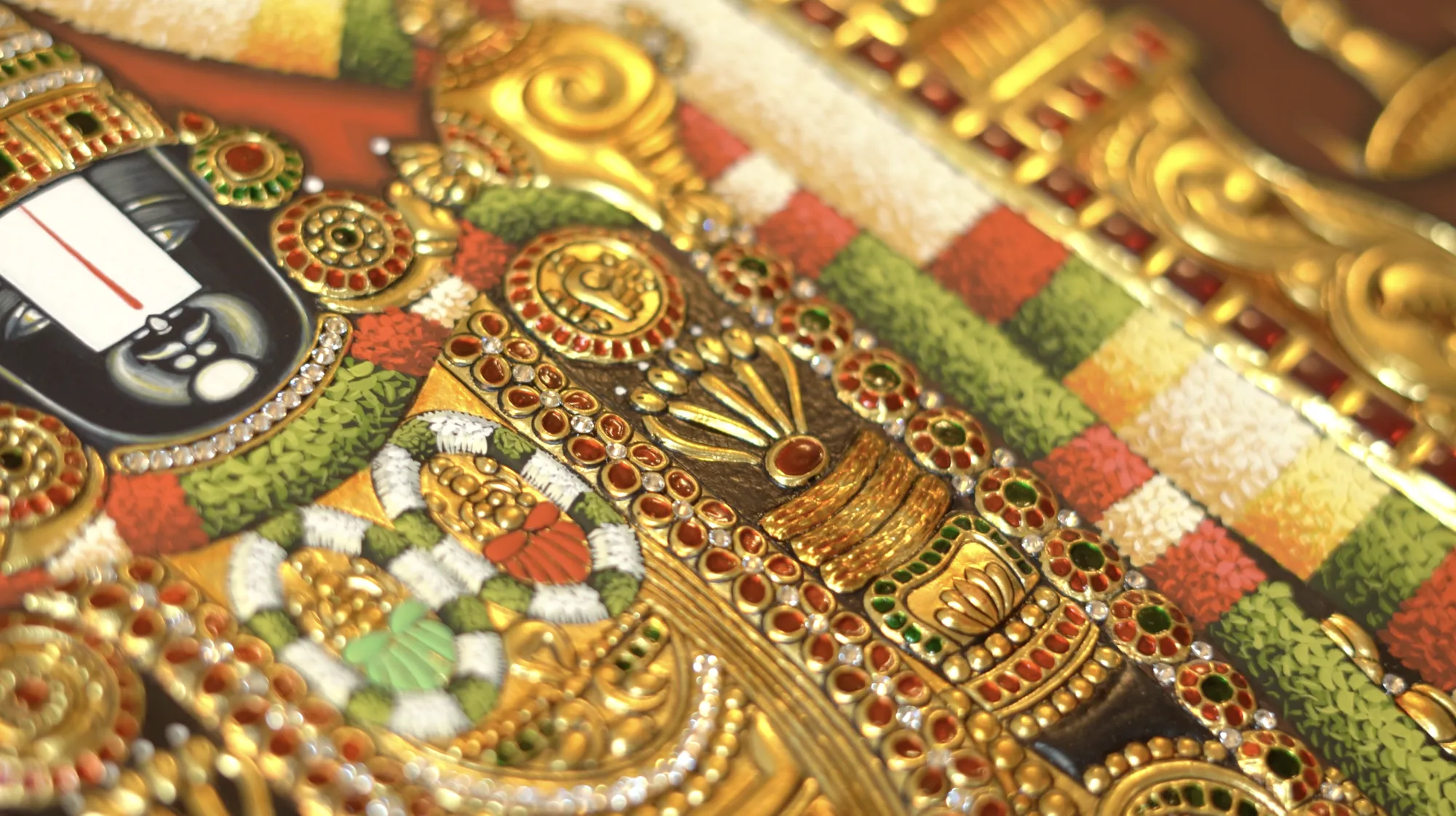
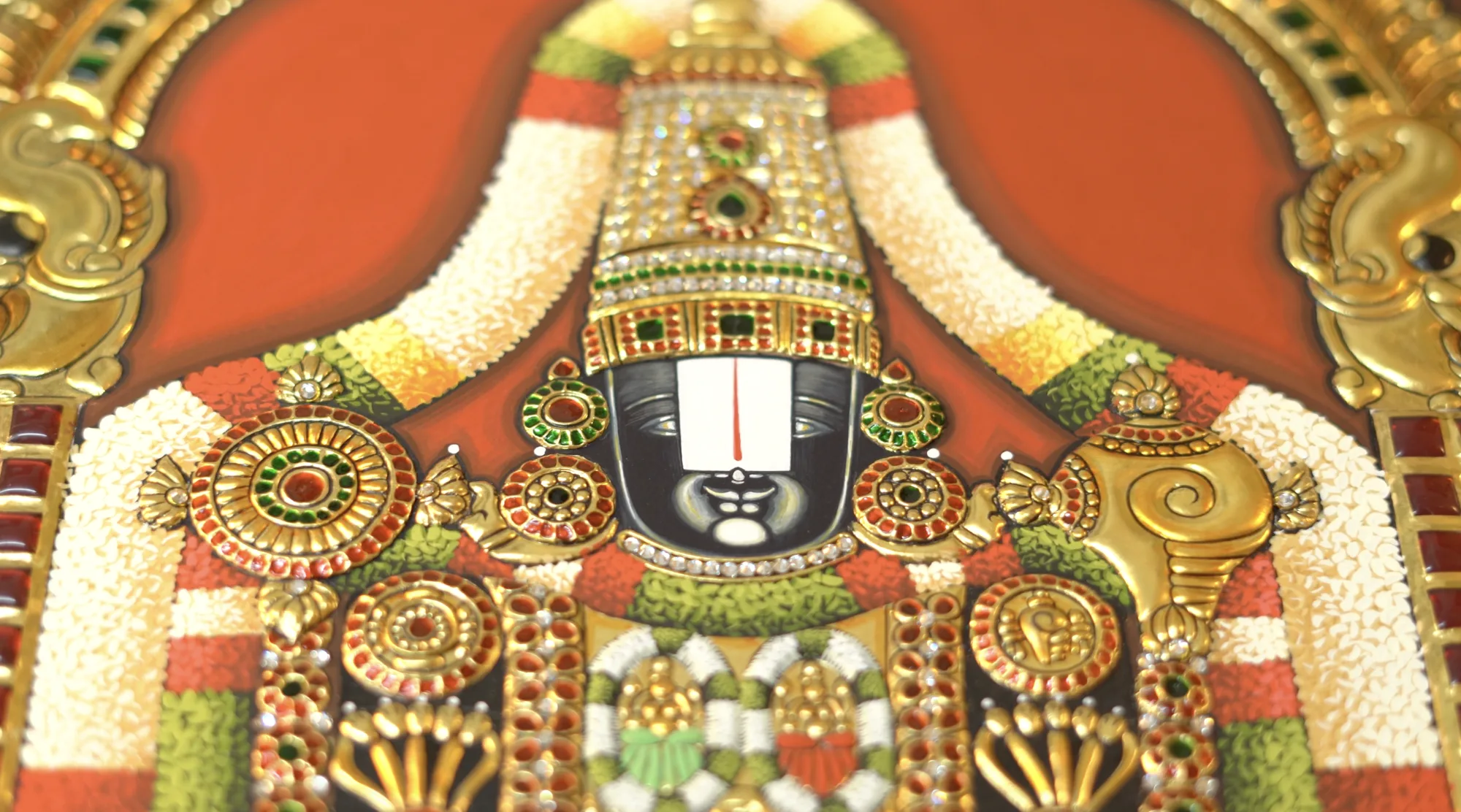
His image is instantly recognisable and gloriously detailed: the tall crown, the conch and discus of Vishnu, the namam on his forehead, and layer upon layer of gold jewellery and garlands. He is often painted with his consort Padmavathi, a form of Lakshmi, at his side. That richness of ornament is exactly what makes him such a rewarding, and such a gold-heavy, subject to paint.
Devotees turn to Balaji as a refuge, and his worship is famously bound up with faith kept and vows fulfilled, from the offerings left at his feet to the gratitude families carry home from Tirumala. Painting him carries that same spirit of devotion and patience, which is why so many of our students choose him not as a first painting but as a meaningful one, often to mark an occasion or to keep in the family puja for years to come.
When Balaji is worshipped
Balaji is worshipped throughout the year, with special fervour during the annual Brahmotsavam at Tirumala in September or October, a grand nine-day festival, and on Vaikuntha Ekadashi in December or January, when devotees pass through the sacred Vaikuntha Dwaram. Saturdays are considered especially sacred to him. For families who hold him dear, a hand-painted Balaji becomes the heart of the home puja, a presence they live alongside every day.
Learning to paint Balaji with us
We teach Balaji as a detailed live online course that runs over about 2.5 months, roughly 10 to 11 weeks, because his ornamentation deserves the time to be done well. Two evening sessions a week give the painting a steady rhythm, and every session is recorded on the student app so you can revisit any step. The finished painting is 15 x 20 inches. Here is the course open right now.
What you learn and create
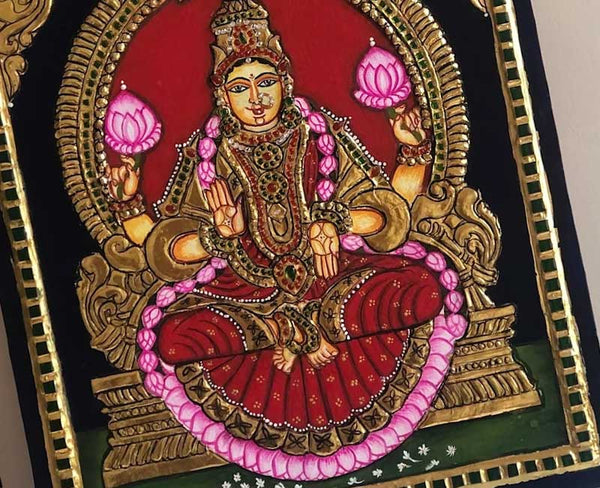
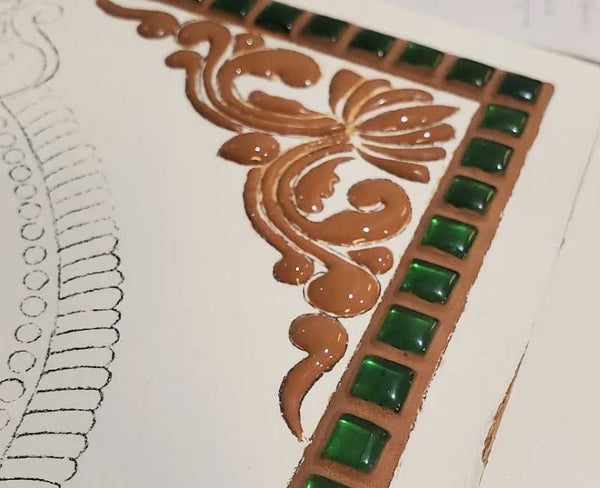
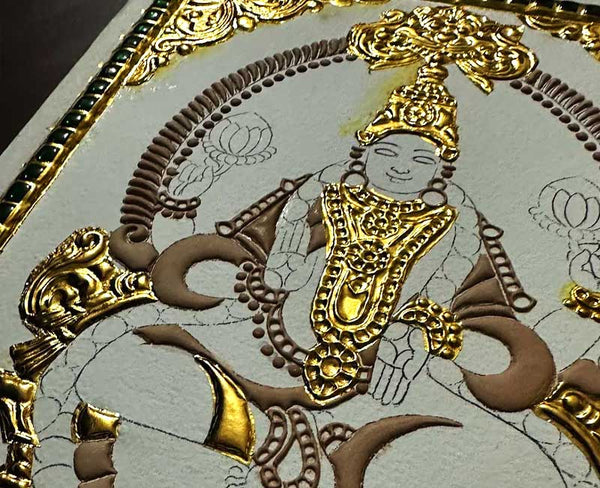
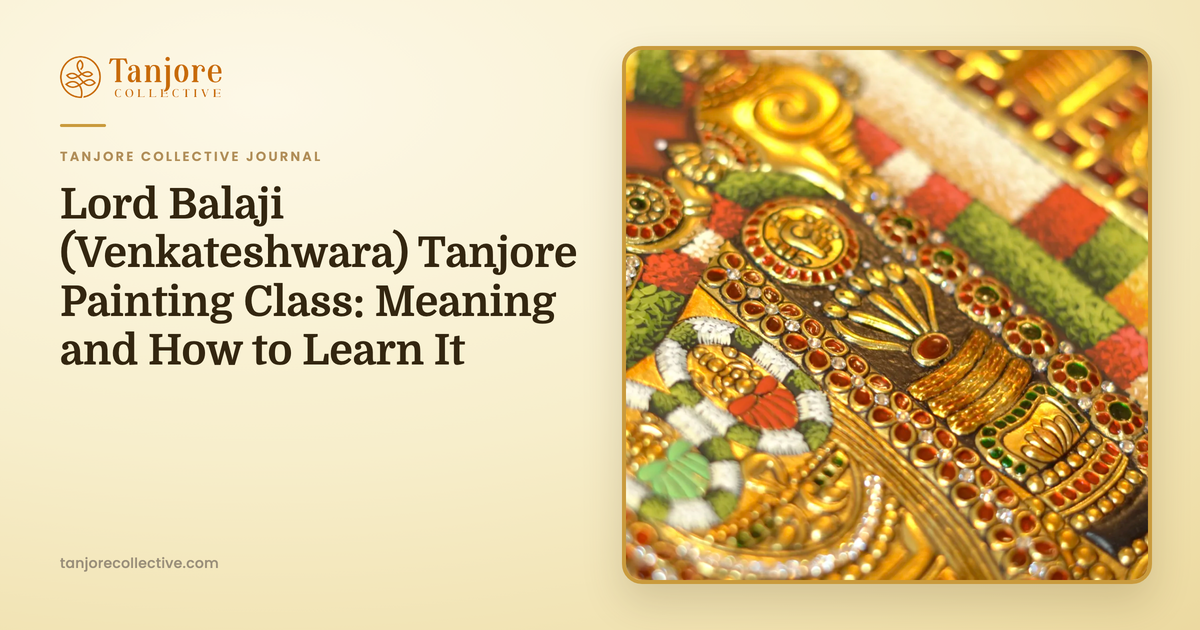
You learn the full Tanjore process, with extra attention to the elements that make Balaji so striking. You prepare the canvas and transfer the sketch, then build the raised embossing for the crown, the jewellery and the ornaments, which is where much of his grandeur comes from. This is careful, rewarding work, and you learn to keep it crisp and even across many small elements.
Then you lay genuine 24 karat gold foil across that rich jewellery, set the kundan and Swarovski stones so the ornaments catch the light, and finally paint the serene, dark-hued face and the fine detail, which Vibha teaches herself. Because there is so much ornament, Balaji teaches patience and control beautifully. It is a genuine step up in intricacy, and while every stage is still taught step by step, a little prior practice with a simpler painting helps you relax into it and enjoy it.
Across the 2.5 months the painting unfolds in a natural rhythm. The early weeks are quiet and foundational, the canvas, the sketch and the embossing, and then the work turns visibly magical as the gold goes down and the ornaments begin to gleam. By the final weeks you are on the face and the finishing, and watching Balaji look back at you from your own canvas is a feeling our students do not forget.
A few parts of Balaji are worth knowing before you begin. His dark complexion is built up gently so it stays rich and even, never flat, and Vibha shows you exactly how. The namam on his forehead, the conch and discus, and the long garlands all reward a steady hand, and the sheer amount of jewellery means you get a great deal of practice with gold and kundan, which is why students come away from Balaji noticeably more confident. If you paint him with Padmavathi at his side, you also learn to balance two figures in one composition, a lovely skill to carry into later work.
Why paint Balaji for your home or puja
For a family devoted to him, a hand-painted Balaji becomes the centre of the home puja, the presence the day begins and ends with. Many of our students paint him to mark something significant, a vow kept, a milestone reached, a return from Tirumala, or simply years of quiet devotion they wanted to express with their own hands. Others paint him as an heirloom to pass down. Because you have built every layer of gold and set every stone yourself, the finished Balaji carries a devotion no bought picture can, and that is what makes him worth the patience he asks for.
The materials you will use
Everything you need is provided with the course, from the pre-sketched canvas and 24 karat gold foil to the embossing materials, kundan stones and Swarovski crystals, the same professional-grade supplies we trust for our own paintings. The kit is shipped to you before the course begins, so you can start the moment your batch opens.
"Vibha taught us very well, asking us to try repeatedly until we got it right. Always having a smile on her face and clearing all our doubts. Had a great time learning from her and making new friends of like minded interest in art."
Who you will learn from
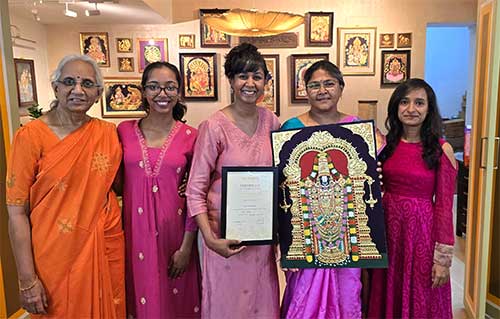
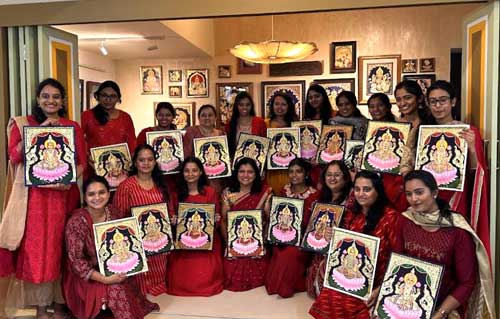
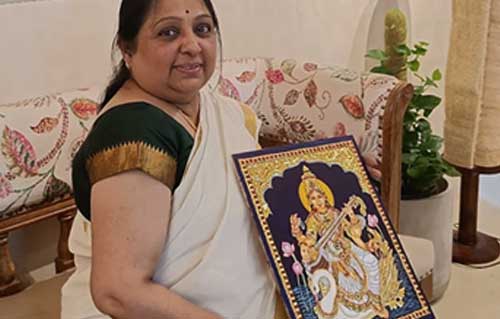
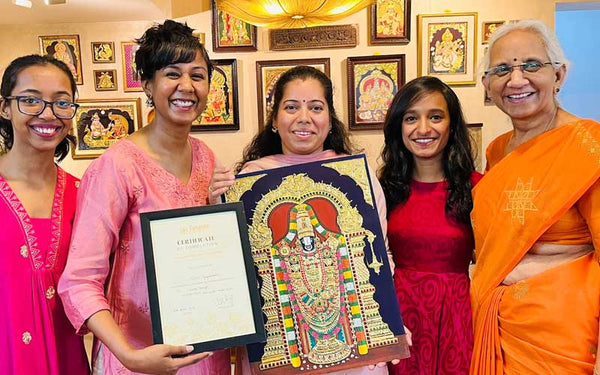
Every course is led by three to four of our artists. Vibha Raj, our founder and an award-winning Tanjore artist, learned the art from her mother, the master artist Vani Bhaskar, and teaches the faces and the finest detailing herself. Spurthy GB, trained at the Karnataka Chitrakala Parishath, guides the gold-foil work, and Yashaswini Jaishankar, who began here as a student, leads the embossing and intricate detailing. You are never learning alone. Alongside your teachers, each batch has a WhatsApp group where you can post a photo of your work and get a gentle correction, and you are welcome to call when you are stuck.
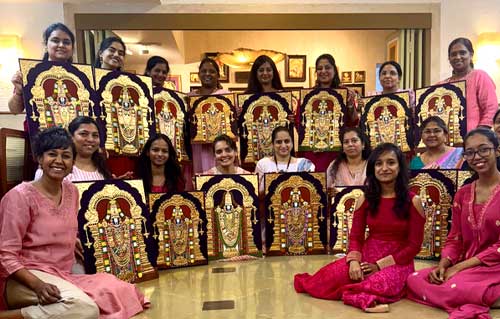
In forty years we have taught more than 5,000 students across 100+ batches, we hold a 5.0 rating from 450+ Google reviews, and more than 95% of our students finish their painting. Our work and teaching have been featured in Deccan Herald, Hindustan Times, Deccan Chronicle and Incredible India.
Frequently asked questions
Is the Balaji course suitable for beginners?
It is taught step by step, so a motivated beginner can take it on, but Balaji is a detailed, ornament-rich subject, so a little prior practice with a simpler painting helps you get the most from it. If you are brand new, you might begin with a gentler deity first.
What size is the finished painting?
The Balaji painting is 15 x 20 inches.
How long is the course?
It runs over about 2.5 months, roughly 10 to 11 weeks of guided live sessions, two evenings a week.
When is the next batch?
Upcoming batches are shown in the cards above and in our course calendar.
What if I miss a live session?
Every session is recorded and goes up on the student app the same day, so you can catch up and keep pace, and the recordings stay available for a while after the course ends.
Can I paint Balaji together with Padmavathi?
Yes. Balaji is often painted with his consort Padmavathi, a form of Lakshmi, at his side. If you would like to learn her as well, see our Goddess Padmavathi class.
Do I get a certificate?
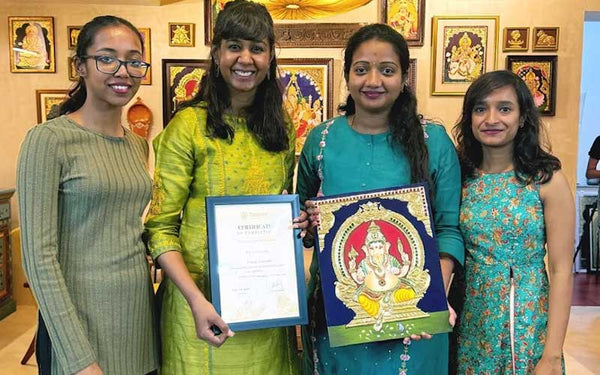
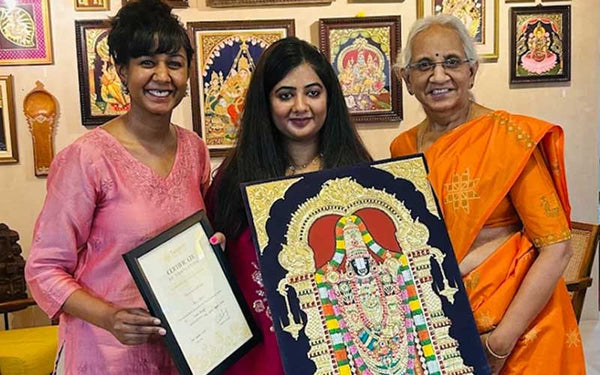
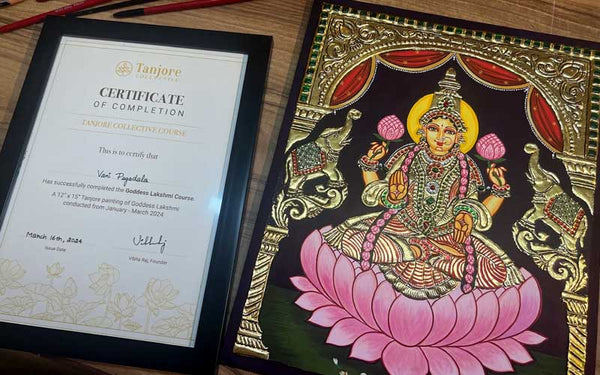
Yes, a digital and a physical certificate on completion, naming your course and signed by Vibha Raj.
Can I take this as a returning student?
Many do. Balaji is a popular next step once you have a simpler painting behind you, and our returning-student benefit applies across formats.
Painting Lord Balaji is a devotion and a milestone, and we would be honoured to guide you through it. If you are newer to the art, you might begin with a simpler subject first, see the deities we teach, meet Goddess Padmavathi who is worshipped alongside him, or read how to choose your class format.
More blog articles
Goddess Lalitha Devi Tanjore Painting Class: Meaning and How to Learn It
Who Goddess Lalitha Devi is, when she is worshipped, and how to paint her yourself, even as a complete beginner.
Online vs DIY Tanjore Course: The Honest Comparison (With a Table)
Online or DIY Tanjore course? An honest, side-by-side comparison so you can choose structure or flexibility.

Inside Our DIY Tanjore Video Course: Lessons, Access and Real Feedback
A self-paced Tanjore painting video course with a bundled kit and real teacher feedback on WhatsApp. Here is exactly what you get.
What our students say
Hear from students who've learned the art of Tanjore painting with us.