Goddess Padmavathi Tanjore Painting Class: Meaning and How to Learn It
Written by
Vibha Raj
Goddess Padmavathi, consort of Lord Venkateshwara and a form of Lakshmi, is a graceful Tanjore subject. Here is her significance, her festivals, and how to learn to paint her with us.
Key takeaways
- Goddess Padmavathi (Alamelu Manga) is the consort of Lord Venkateshwara and a form of Lakshmi, revered for prosperity, patience and grace.
- She is worshipped alongside Balaji, with her own Tiruchanur Brahmotsavam around November or December, at Diwali, and on Fridays.
- We teach her as a detailed live online 9-week course, on a 15 by 20 inch canvas, a beautiful companion to the Balaji painting.
- It is built for beginners, though the detail rewards a little patience; 3 to 4 teachers guide you and your materials are shipped to you.
- In 40 years we have taught 5,000+ students, more than 95% finish their painting, and we hold a 5.0 rating from 450+ Google reviews.
Some paintings are a devotion in themselves. Goddess Padmavathi, seated in grace beside the lord of the seven hills, is one of them. If you have wanted to paint her, perhaps to keep alongside a Balaji in your puja room, and wondered whether it is within your reach, this guide will walk you through who she is, when she is worshipped, and how you can learn to paint her with us.
Who is Goddess Padmavathi?
Goddess Padmavathi, known in the south as Alamelu Manga, is the divine consort of Lord Venkateshwara of Tirumala, and is revered as a form of Goddess Lakshmi. She is the goddess of prosperity and abundance, but she is loved just as much for her patience and her gentle, steadying grace. In the temple tradition, no worship of Balaji is considered complete without first honouring her at Tiruchanur.
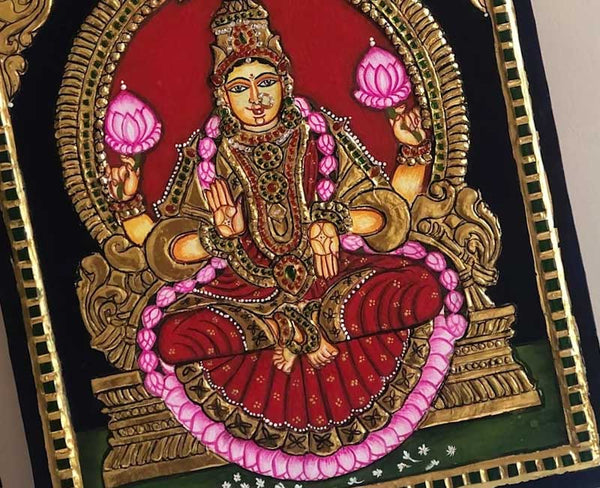
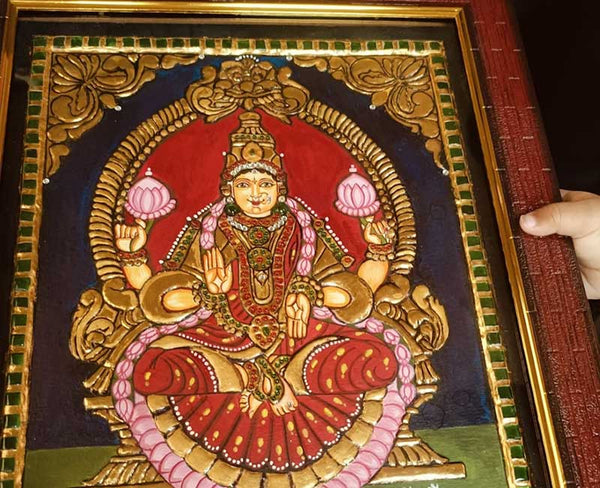
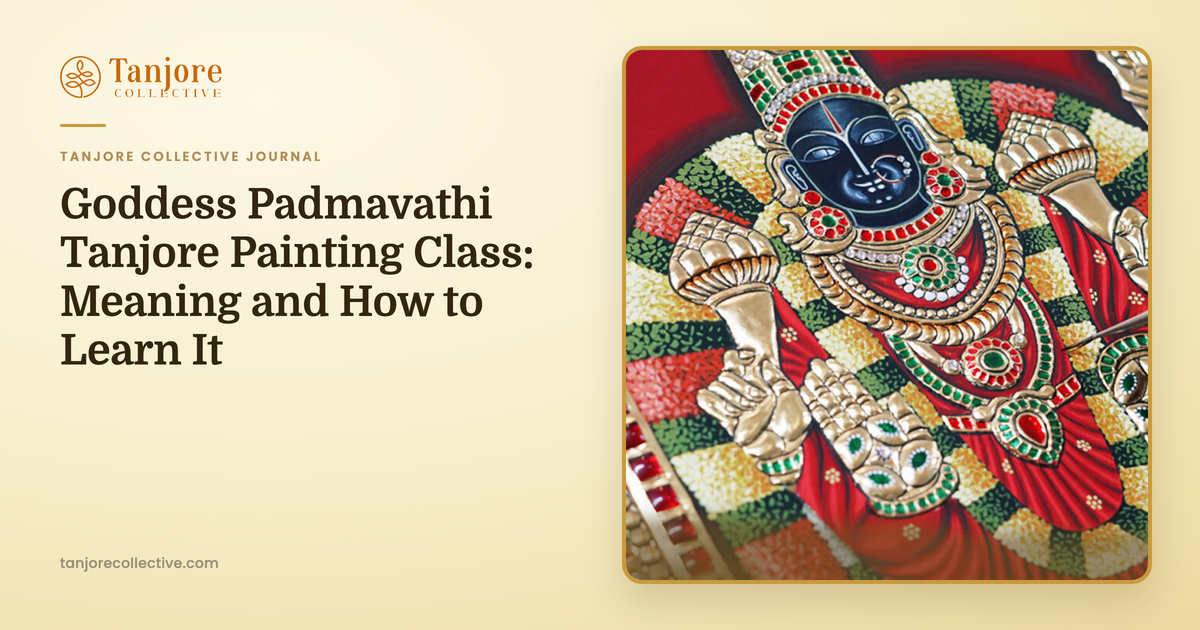
To paint Padmavathi is to render that quiet dignity, the lotus in her hand, the soft ornamentation, the calm of her gaze. In the Tanjore style, with raised gold and jewel-like colour, she makes a graceful centre for the home altar, and a natural companion to a painting of Lord Venkateshwara.
Her name Alamelu Manga comes from the belief that she appeared seated upon a lotus, and the lotus stays with her as her defining emblem, a symbol of purity rising untouched from the water. At Tiruchanur, near Tirumala, devotees visit her first before ascending to see the lord, a reminder that grace is approached through the Mother. Holding that story in mind as you paint her lends the work a gentle focus.
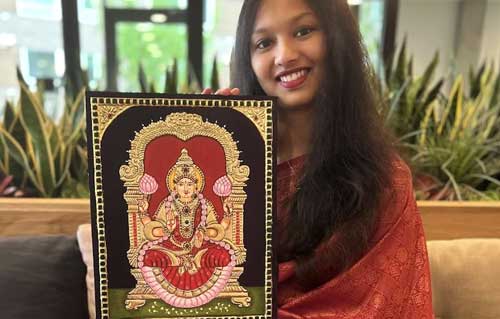
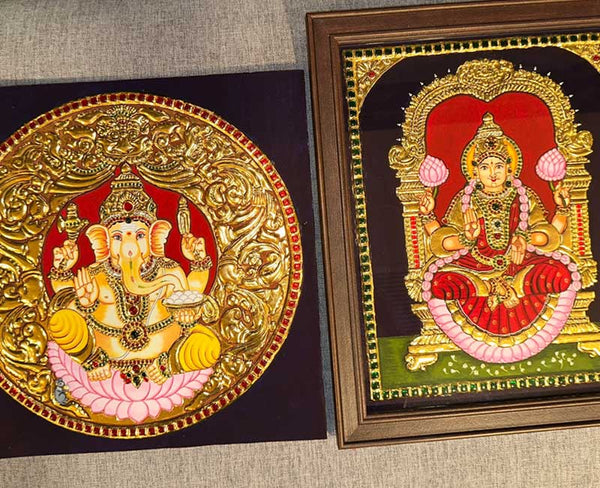
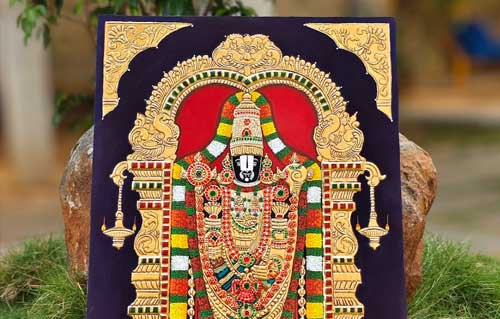
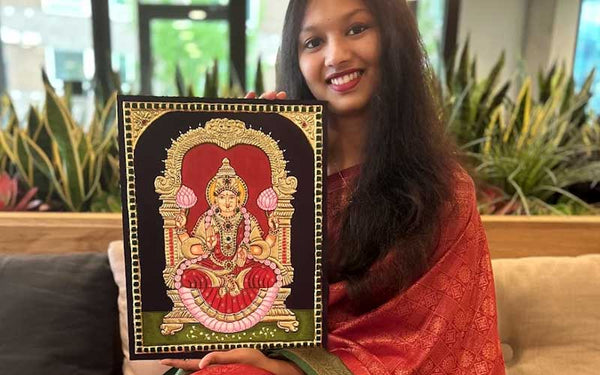
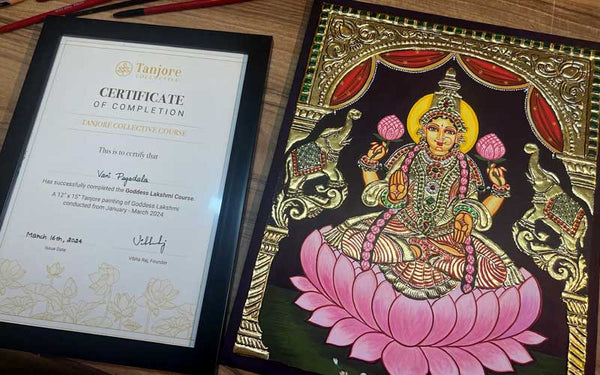
In the Tanjore style Padmavathi is painted with a warm, serene beauty. She is shown seated upon a lotus, often with a lotus held gently in her hand, one palm raised in the abhaya gesture of reassurance and the other in the varada gesture of giving. Her robes are rich red and green, her crown and ornaments built up in raised gold and set with stones, and her face is calm and softly smiling. Painted beside a Lord Venkateshwara of the same size and finish, the two make a strikingly complete pair for the altar.
When Goddess Padmavathi is worshipped
Padmavathi has her own annual Brahmotsavam at the Tiruchanur temple, the Panchami Teertham, which usually falls around November or December. She is also worshipped during the Diwali season as a form of Lakshmi, and many devotees keep Fridays for her. As with all festivals that follow the lunar calendar, the exact dates move a little each year.
If you would like to offer a finished painting during her festival or at Diwali, it is worth starting well ahead, since hers is a detailed painting that rewards an unhurried pace. There is a deep satisfaction in placing a piece you painted yourself before the Goddess.
Watch: why we pray to Goddess Padmavati before Lord Balaji
In this short video from our studio, we share why devotees traditionally pray to Goddess Padmavati before Lord Balaji.
Why paint Goddess Padmavathi yourself
There is a particular joy in painting Padmavathi, because so many devotees want her beside Lord Venkateshwara, and a matching pair made by your own hand is something you simply cannot buy. Over nine weeks your hands learn the full vocabulary of the tradition on a large, generous composition, and you finish with a piece that carries your own devotion in every stroke of gold.
It is also a wonderful way to grow as a painter. Because hers is a larger and more ornate painting, it stretches your embossing and gold work further than a smaller piece would, which is exactly why many students choose her once they have a painting or two behind them.
What you learn and create
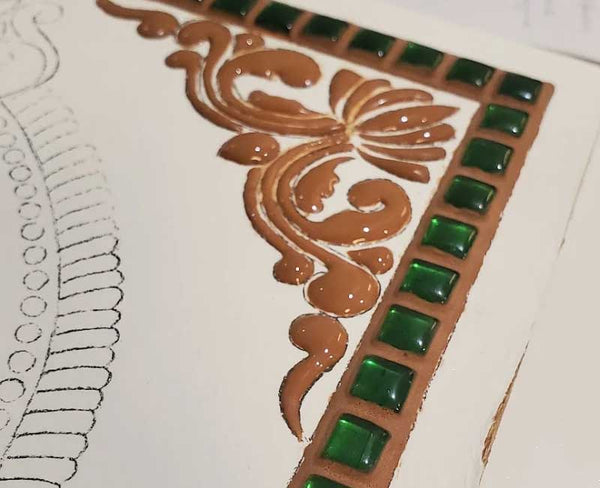
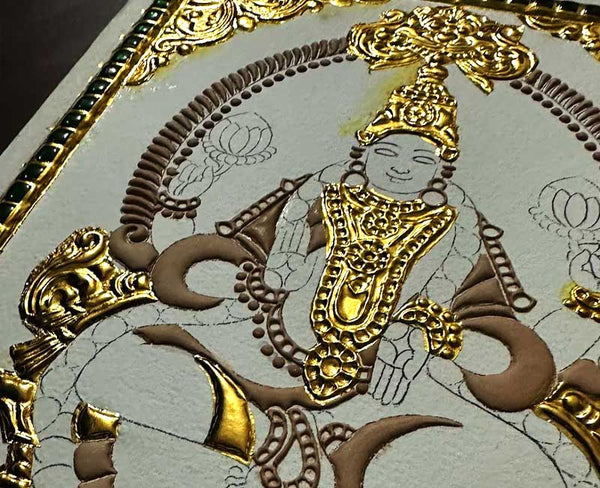
You will create a 15 by 20 inch Tanjore painting of Goddess Padmavathi over a detailed 9-week course. You learn the complete traditional process: preparing and sketching the canvas, building the raised gesso relief for the crown and ornaments, laying genuine 24 karat gold foil, setting kundan and Swarovski stones, and painting the clothing, the lotus, the body and the face.
The nine weeks are paced so the work never feels overwhelming. The opening sessions prepare the surface and transfer the sketch; the middle weeks are given to the embossing and the gold, where a larger painting like Padmavathi truly shines; and the closing weeks are the painting and the face, done slowly and with care. Because every session is recorded, you can revisit any step as often as you need.
Because Padmavathi is a larger, more ornate painting, it is a wonderful second or third piece, though committed beginners take it on and finish it beautifully. The face and the fine detailing, the most intricate parts, are taught by Vibha Raj herself. You do not need to draw; the sketch is provided and transferred for you.
What makes Padmavathi such a rewarding painting is the generosity of the surface. On a 15 by 20 inch canvas there is room for broad, luminous areas of gold and for ornamentation worked in real detail: the crown, the many necklaces, the belt and the lotus. You spend real time on the embossing and the gold here, which is exactly why the painting stretches your skills, and why the finished piece feels so grand. The face, taught by Vibha Raj, is the final and most delicate stage, and by the time you reach it the weeks of practice on the ornaments have steadied your hand.
The materials you will use
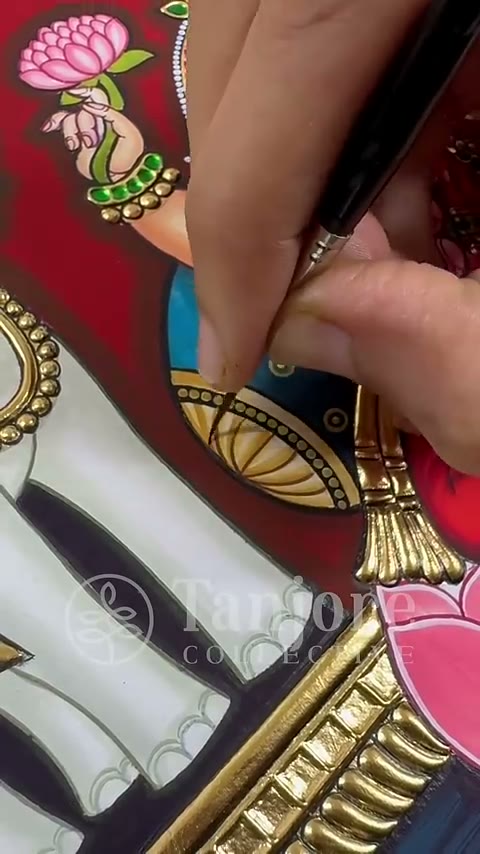
Everything is provided and shipped to you before the course: a pre-sketched canvas, 24 karat gold sheets, Arabic gum, the chalk base for embossing, sable brushes, kundan stones and Swarovski crystals. Within India delivery takes about 5 to 7 days, and internationally about 3 to 4 weeks, so enrolling early leaves time for your kit to arrive.
Learning with us, step by patient step
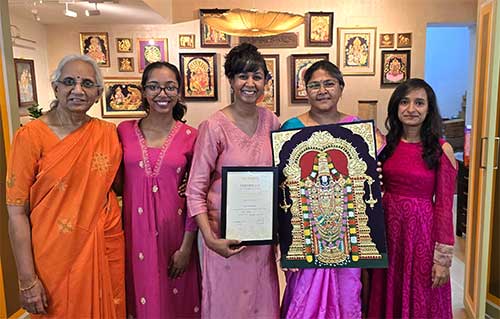
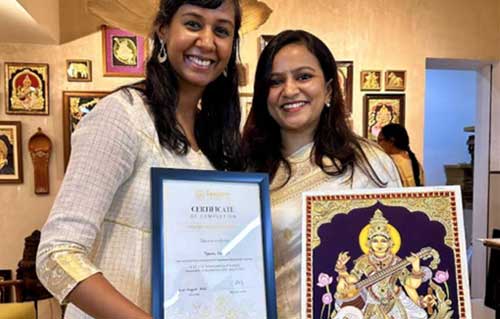
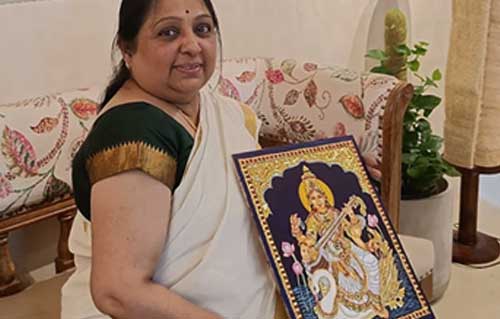
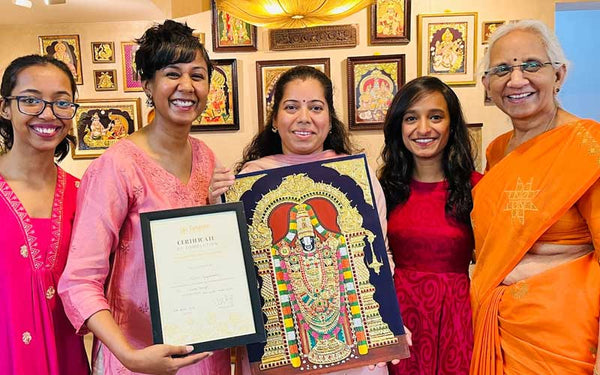
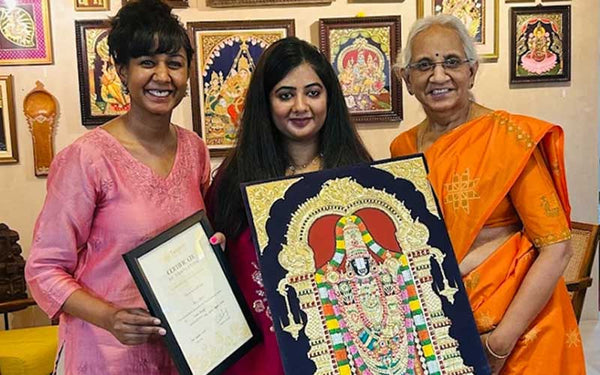
Every course is led by three to four of our artists, each guiding the part they know best. Our founder, Vibha Raj, is an award-winning Tanjore artist who learned the art from her mother, the master artist Vani Bhaskar, and she teaches the faces and the finest detailing herself. Vibha, trained at Karnataka Chitrakala Parishath, leads the gold-foil work, and Vibha, who began here as a student, guides the embossing and intricate detailing.
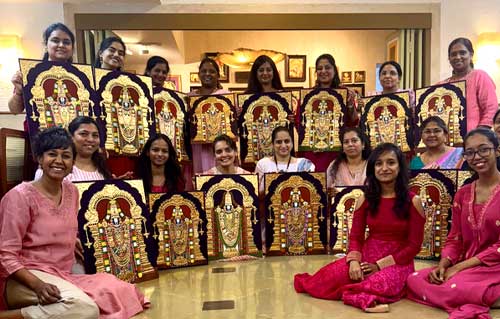
This is a live online course, so you join a small batch twice a week and learn each stage as it happens, with your work reviewed on a WhatsApp group and every session recorded to revisit. Many students paint Padmavathi as a companion to Lord Balaji, building a pair for the puja room over time.
Students who take on Padmavathi often tell us the same thing at the end: they are surprised by how much they grew over the nine weeks. A piece this size can look daunting at the start, yet step by step, session by session, it comes together, and the devotion of painting the Mother by hand stays with the finished work.
"I had always wanted to learn this intricate art form but felt apprehensive, unsure if I could do it without proper guidance. Vibha ji explains every step with great clarity, making it especially beginner-friendly."
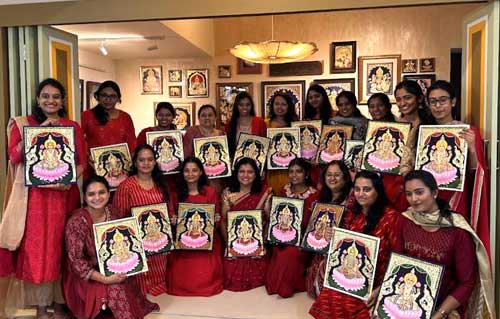
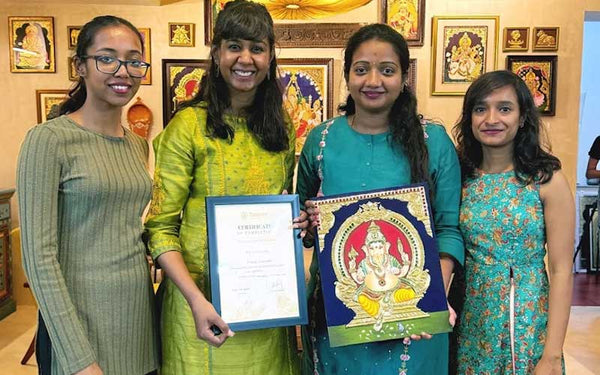
None of this is a solo leap of faith. In 40 years our studio has taught more than 5,000 students across 100+ batches, we hold a 5.0 rating from over 450 Google reviews, and our work and teaching have been featured in Deccan Herald, Hindustan Times, Deccan Chronicle and Incredible India.
Frequently asked questions
Can a beginner paint Goddess Padmavathi?
Yes, though it is a detailed painting, so a little prior practice helps. The sketch is provided, the process is taught step by step, and the hardest parts are led by Vibha Raj. If it is your very first painting, a simpler subject can be a gentle place to start.
What size is the finished painting, and how long is the course?
It is a 15 by 20 inch painting, taught over a detailed 9-week live online course.
Can I paint Padmavathi and Balaji as a pair?
Yes, many students do exactly that, building a matching pair for the puja room. See our Lord Balaji course.
When is the next batch?
Upcoming batches appear in the course cards above and in our course calendar.
Are materials included?
Yes. Your Essentials Kit is included and shipped to you before the course begins.
Can I join from outside India?
Yes. Students join us from India, the USA, the UK and beyond. Tell us your city so we can confirm the live timings for your timezone, and your materials ship internationally in about 3 to 4 weeks, so it helps to enrol early.
How are the weekly sessions structured?
You meet your batch twice a week over the nine weeks, moving through the painting in order, from preparing the canvas to the final face. Every session is recorded, so if you miss one or want to revisit a step, you can watch it again in your own time.
What do I do with the finished painting?
Most students frame it and place it in the puja room, often beside a Lord Venkateshwara painted the same way. The piece is made to last, so once framed it is ready to be part of your home for years.
When you feel ready, we would be glad to guide you through every step. Explore the other deities we teach or read about how our class formats work.
More blog articles
Lord Hanuman Tanjore Painting Class: Meaning and How to Learn It
Who Lord Hanuman is, when he is worshipped, and how to paint him yourself, even as a complete beginner.

Tanjore Painting Course Details: Everything Included in Our Courses
Everything you receive in a Tanjore Collective course: teaching, recordings, app access, materials, feedback and a certificate.

Tanjore Painting Course Registration: How to Register, Step by Step
How to register for a Tanjore painting course, from choosing your batch to receiving your kit and starting class.
What our students say
Hear from students who've learned the art of Tanjore painting with us.