Tanjore Painting Deity Classes: Significance and Which to Learn First
Written by
Vibha Raj
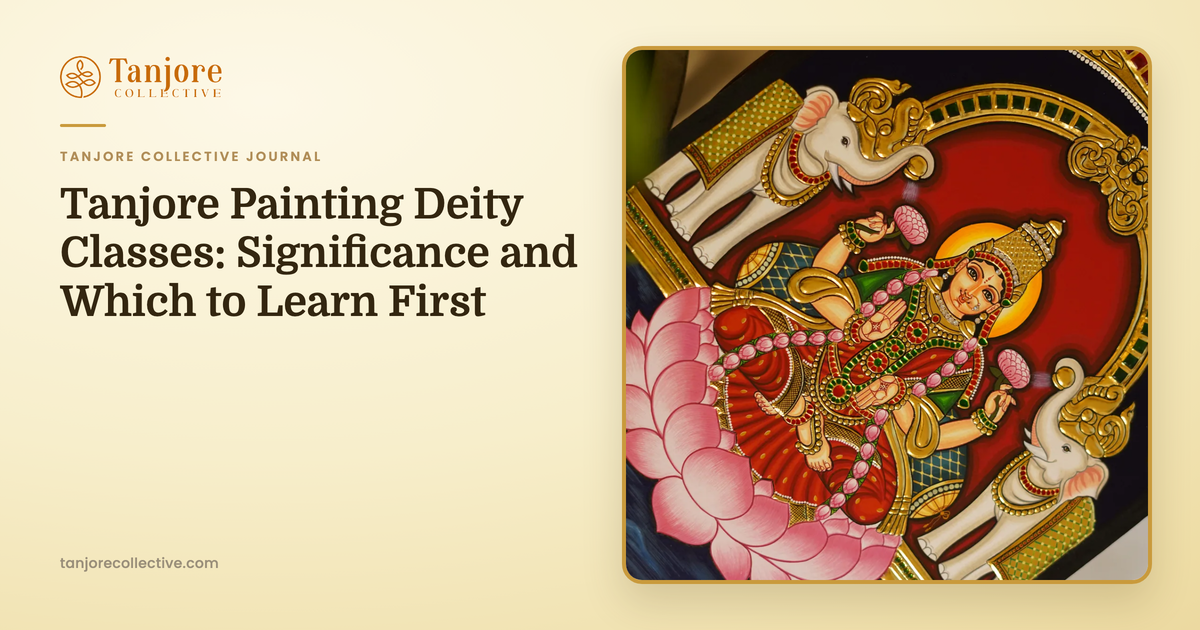
A guide to the deities of Tanjore painting: Lakshmi, Ganesha, Saraswati, Balaji and more, what each represents, and which to learn first.
Key takeaways
- Tanjore paintings traditionally depict Hindu deities, made to sit in the home puja room as a living presence of the divine.
- We teach Lakshmi, Gajalakshmi, Ganesha, Saraswati, Balaji, Lalitha Devi, Padmavathi and Shiva Parivar, with more deities added through the year.
- Beginners usually start with a simpler 6.5-week subject like Ganesha or Lakshmi; advanced subjects like Shiva Parivar and Balaji carry more faces and finer detail.
- Every deity is taught step by step, from the sketch and the 24-karat gold foil to the face, so you finish a complete painting.
- Over 40 years we have taught more than 5,000 students, with a 5.0 rating across 450+ Google reviews.
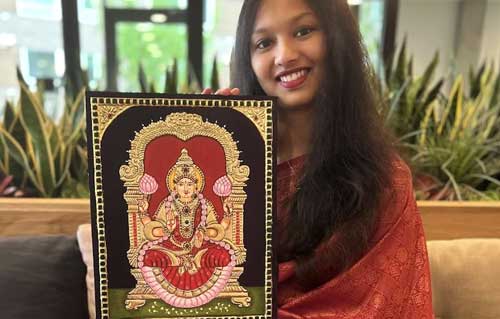
Before you choose a Tanjore painting course, it helps to choose a deity. For centuries, Tanjore paintings have been made not as decoration but as devotion, a form of the god or goddess you keep in your home, rich with gold and gentle colour, meant for the puja room. So the deity you paint is a personal choice as much as an artistic one. You might paint the goddess of your family, the one whose festival is near, or simply the one whose story moves you.
This guide walks you through the deities we teach, what each one represents, the festival it is loved at, and which is a gentle place to begin. Whichever you choose, we will guide you through every step, and you will finish with a painting worthy of your altar.
Why deities are the heart of Tanjore painting
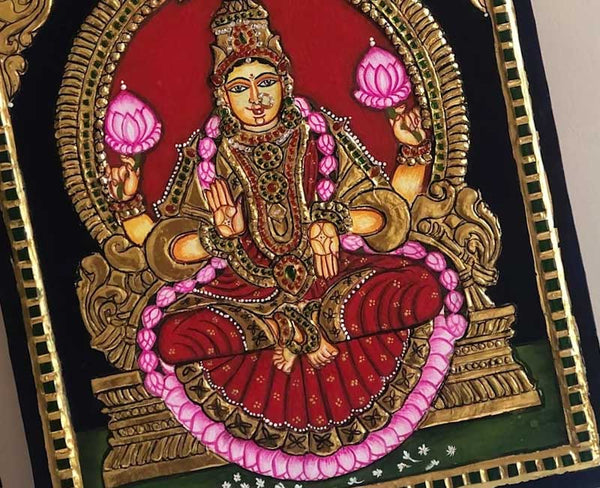
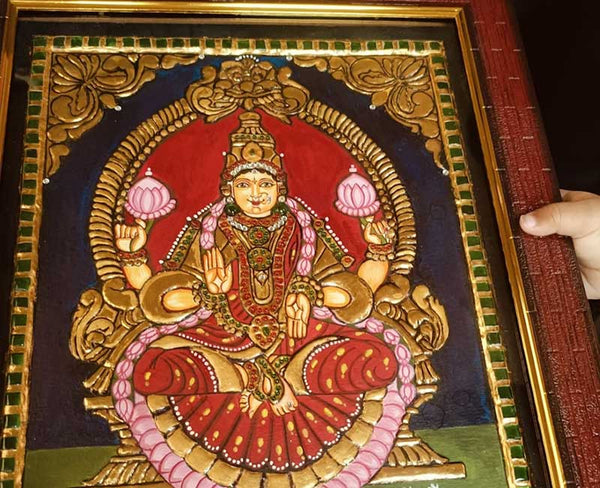
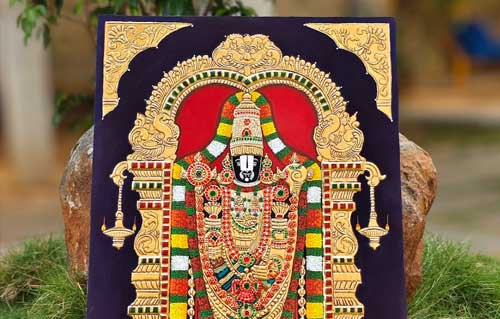
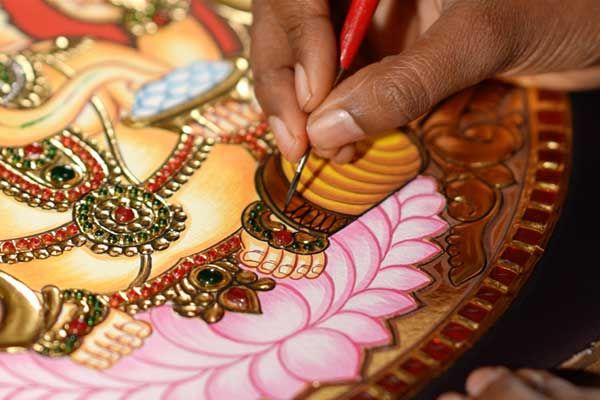
Tanjore painting began in the temple towns of South India, and its subjects have almost always been divine. A Tanjore piece is traditionally made for worship, which is why the deity sits framed in gold, serene and adorned, ready to be placed in the home shrine. When you learn Tanjore painting with us, you are learning a devotional craft, and the deity is the whole reason the techniques exist, the gold for the divine glow, the embossing for the ornaments, the careful face for the gaze that meets yours.
There is a simple logic to it. The gold is not decoration for its own sake; it is the light of the divine. The relief raised under the jewels is there so the ornaments catch that light and seem to move. Even the steady, frontal gaze is deliberate, painted so the deity looks directly at whoever stands before the shrine. When you learn to paint a deity, you are learning a visual language refined over centuries for a single purpose, to make the sacred feel present in your home.
The deities we teach
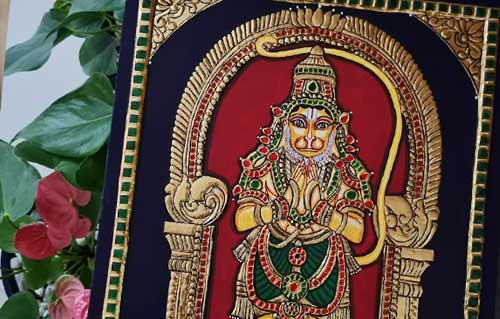
Here are the deities we currently teach, what each represents, and the festival each is especially worshipped at. We add new deities through the year, and also teach Hanuman, Krishna, Radha-Krishna, Lakshmi Narasimha and Annapoorneshwari in select batches.
| Deity | What it represents | Festival | How to learn |
|---|---|---|---|
| Lakshmi | Wealth, fortune and auspiciousness | Diwali (Oct-Nov), Varamahalakshmi (Aug) | DIY video course |
| Gajalakshmi | Lakshmi with elephants, abundance and royal grace | Varamahalakshmi & Diwali, Navaratri | Online and studio |
| Ganesha | Remover of obstacles, lord of beginnings | Ganesh Chaturthi (Aug-Sep) | Online and DIY |
| Saraswati | Knowledge, music and the arts | Vasant Panchami (Jan-Feb), Navaratri | Online, DIY and studio |
| Balaji (Venkateshwara) | Vishnu of Tirumala, the lord of seven hills | Brahmotsavam (Sep-Oct), Vaikuntha Ekadashi | Online (2.5 months) |
| Lalitha Devi | The supreme Divine Mother | Navaratri, Lalita Panchami | Online and DIY |
| Padmavathi | Consort of Venkateshwara, a form of Lakshmi | Tiruchanur Brahmotsavam (Nov-Dec), Diwali | Online (9 weeks) |
| Shiva Parivar | The divine family: Shiva, Parvati, Ganesha and Kartikeya | Maha Shivaratri (Feb-Mar) | Advanced online |
Lakshmi and Gajalakshmi: the goddesses of abundance
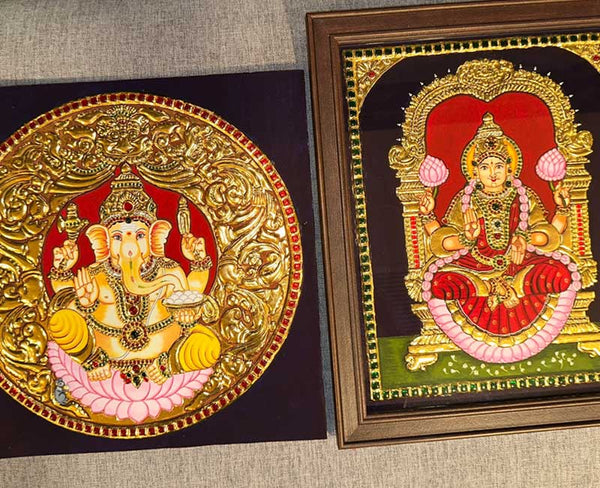
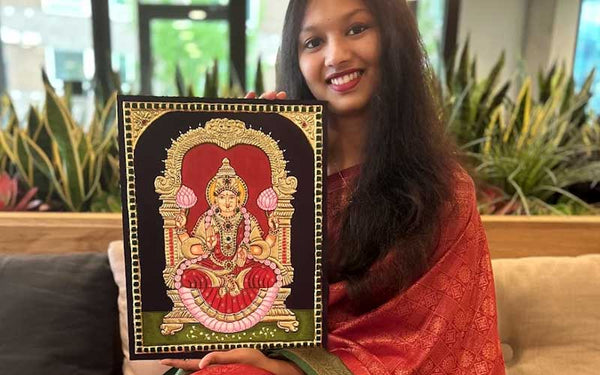
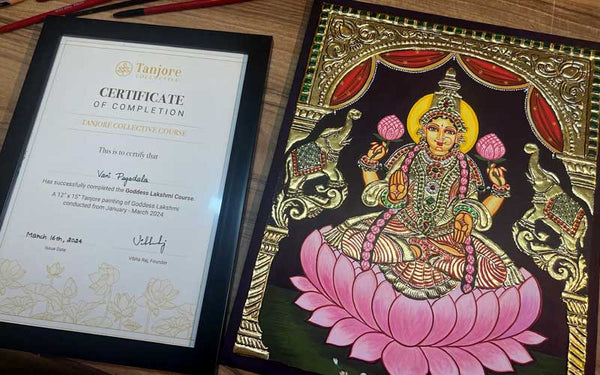
Goddess Lakshmi is the deity of wealth, fortune and auspiciousness, worshipped in nearly every home, especially at Diwali and the August vow of Varamahalakshmi. Gajalakshmi is her radiant form, seated and flanked by elephants bathing her, one of the Ashtalakshmi and a picture of abundance and royal grace. Lakshmi is a warm, much-loved first painting; you can learn her through our DIY video course, while Gajalakshmi is taught live online and in our studio.
Ganesha and Saraswati: beginnings and knowledge
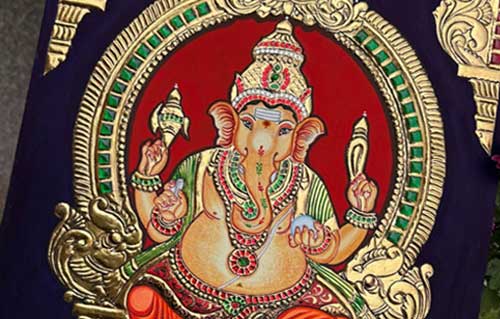
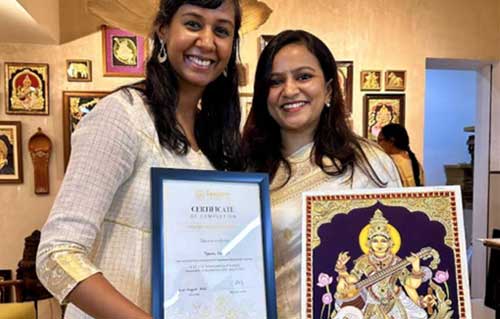
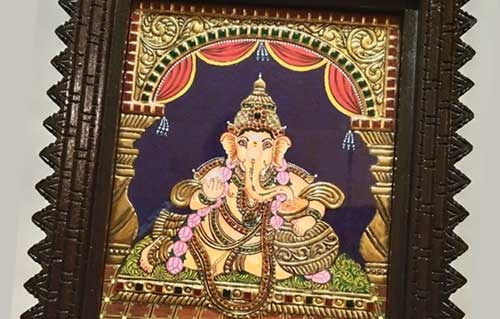
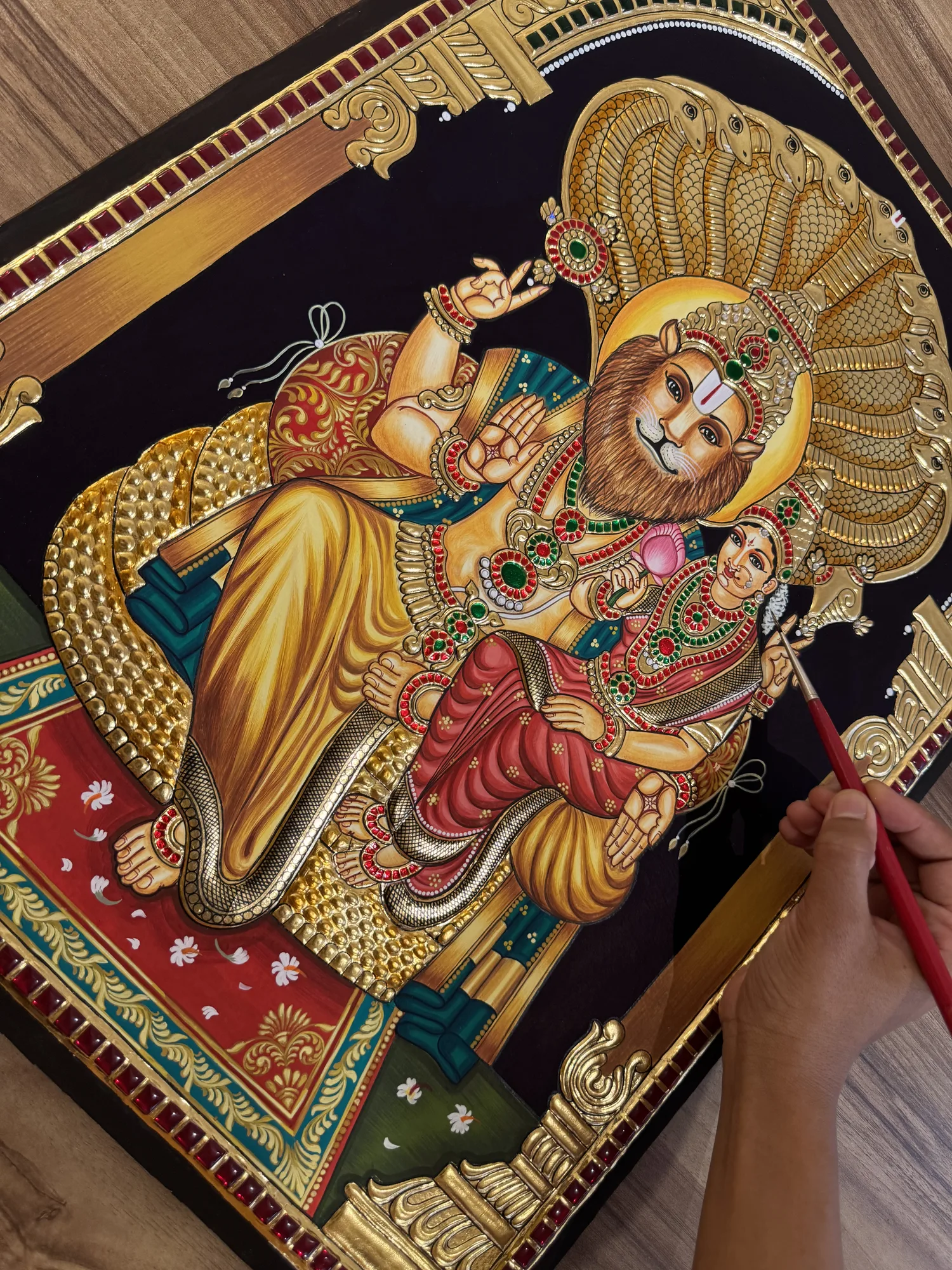
Lord Ganesha, the elephant-headed remover of obstacles and lord of beginnings, is invoked before every new venture, which makes him a fitting and gentle first subject. Goddess Saraswati, the goddess of knowledge, music and the arts, is beloved of students and artists and worshipped at Vasant Panchami and during Navaratri. Both are taught as 6.5-week paintings, online and self-paced, and both are kind to a first-timer. Read more on Ganesha and Saraswati.
Balaji, Padmavathi, Lalitha Devi and Shiva Parivar: the deeper subjects
Lord Balaji, the form of Vishnu enshrined at Tirumala, is among the most worshipped deities in the land, and his consort Padmavathi, a form of Lakshmi, is worshipped alongside him. Lalitha Devi is the supreme Divine Mother of the Sri Vidya tradition, and Shiva Parivar is the divine family of Shiva, Parvati, Ganesha and Kartikeya. These are richer, more detailed paintings with more faces and ornamentation, so a little prior practice helps, but every one is still taught step by step. Explore Balaji, Padmavathi, Lalitha Devi and Shiva Parivar.
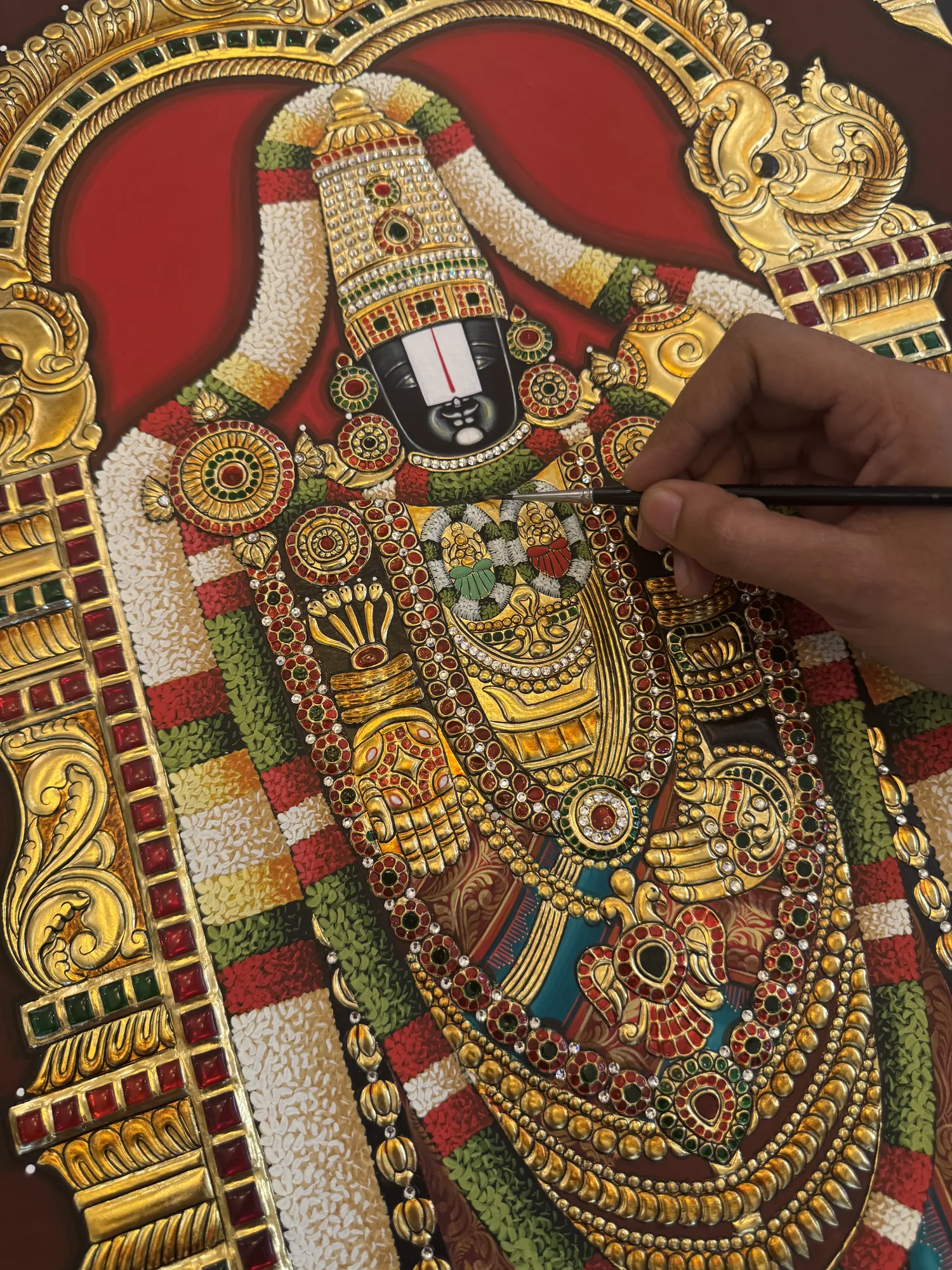
Which deity should you learn first?
If you are new, begin with a simpler 6.5-week subject such as Ganesha or Lakshmi, where the composition is kinder and you can give your attention to the techniques. The advanced subjects, Shiva Parivar and Balaji, carry more faces and finer detail, so it helps to have painted a simpler deity before you take them on. There is no wrong choice though; many students simply begin with the deity closest to their heart.
How to choose your deity
If you are unsure, there are a few gentle ways to decide. Many students choose by devotion, the family deity, or the god or goddess they already pray to each morning. Others choose by the festival that is near, so the finished painting is ready to grace the celebration: a Lakshmi for Diwali, a Saraswati for Navaratri, a Ganesha for Ganesh Chaturthi. And some choose by difficulty, beginning with a simpler single figure and working up to the richer, multi-figure subjects as their confidence grows. Any of these is a good reason, and there is no wrong place to begin.
How a Tanjore deity painting is made
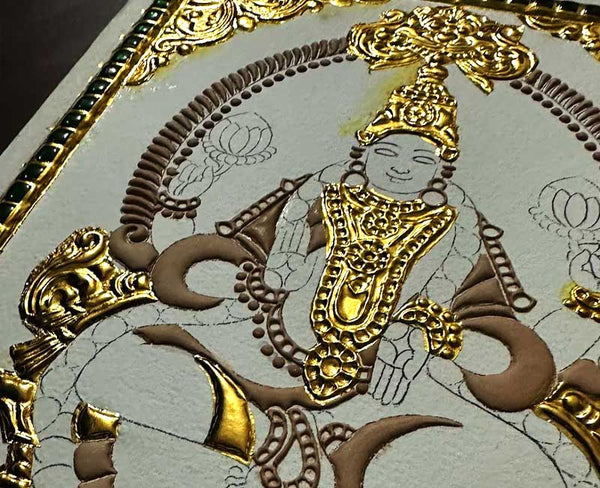
Whichever deity you choose, the journey is the same beautiful sequence. You begin with the canvas and the sketch, build the raised relief for the ornaments with gesso and gum, lay genuine 24-karat gold foil for the divine glow, add the colours, and finally paint the face, the gaze that brings the deity to life, before finishing with crystals and kundan stones. We break every step down so a complete beginner can follow, and you can see the full picture of our online, studio and DIY formats.
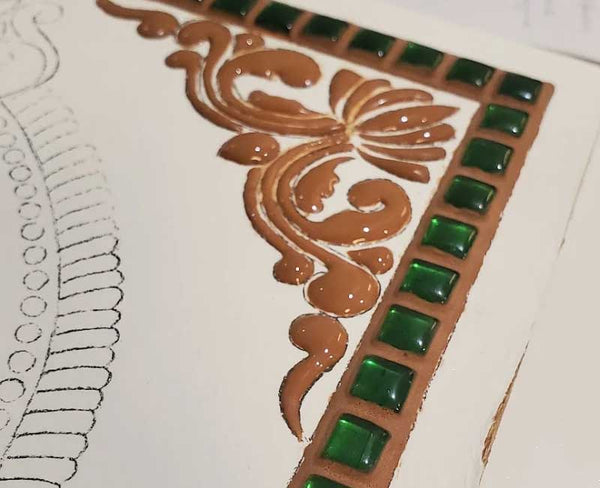
Each of those stages is a craft of its own. The embossing, sometimes called gesso or muck work, is built up by hand so the crown and jewellery stand in gentle relief. The gold is real 24-karat foil, laid and burnished until it becomes part of the painting rather than sitting on top of it. The face is painted last and most carefully, because the eyes are what give the deity presence. Kundan stones and Swarovski crystals are set at the very end, like the final adornment of an idol. None of it is rushed, and none of it assumes you have done it before.
How we teach every deity
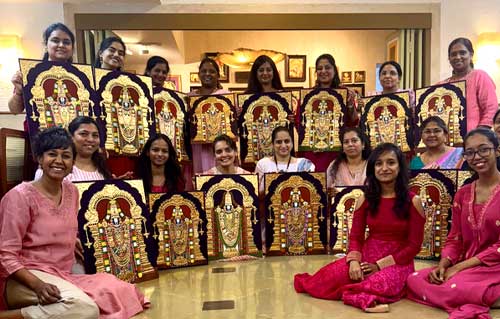
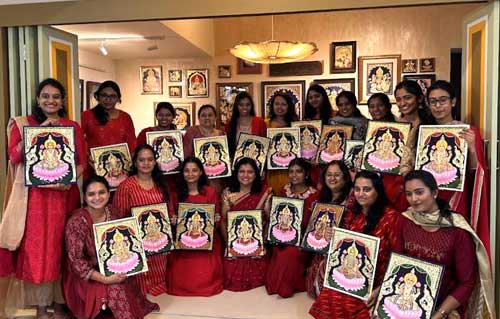
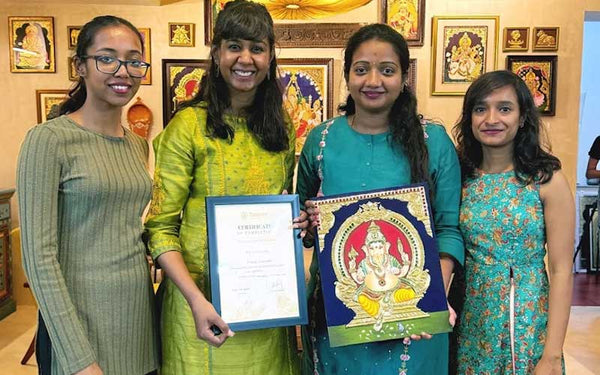
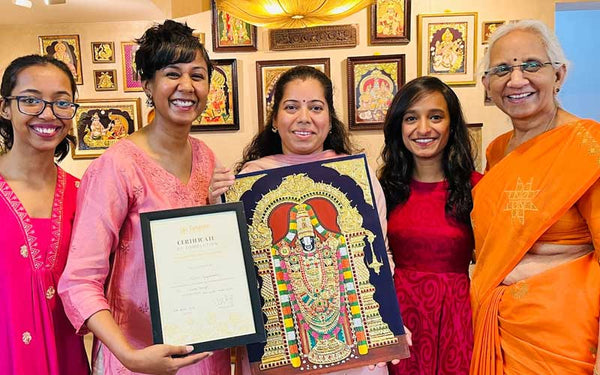
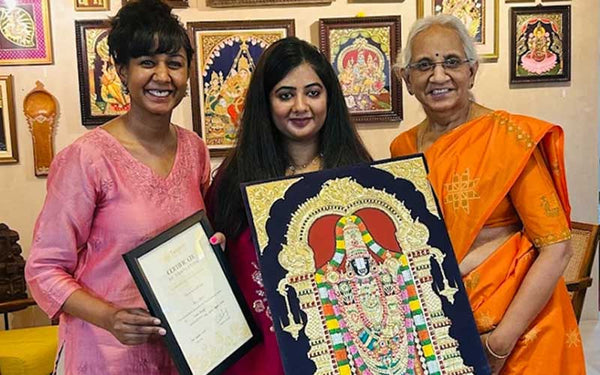
Every deity, simple or detailed, is taught the same careful way. Courses run in guided batches with three to four teachers, each taking the part they know best, and you can learn live online, in our Bangalore studio, or at your own pace through a DIY video course. Whichever you choose, you get the pre-sketched canvas and genuine materials, class recordings to revisit, a teacher on WhatsApp for feedback, and a certificate when you finish. We teach for beginners first, which is why more than nine in ten of our students complete their painting, many of them having never held a brush before they started.
"This is my first attempt at any form of painting so I was naturally doubtful if I could do this, but the way Vibha taught the process step by step without even realising I was able to see the Tanjore painting come to life."
Learn with us
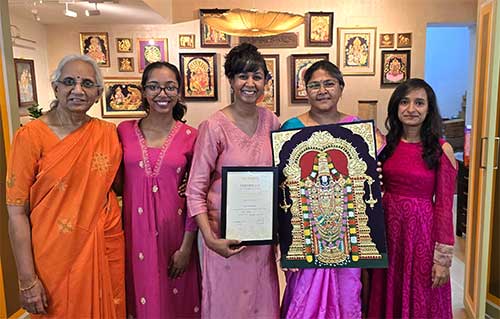
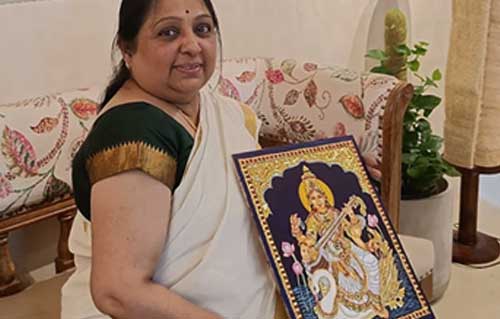
Every course is led by three to four of our artists, each taking the part they know best. Vibha Raj, our founder, is an award-winning Tanjore artist who learned the art from her mother, the master artist Vani Bhaskar, and she teaches the faces and the fine detailing. Vibha, trained at the Karnataka Chitrakala Parishath, leads the gold-foil work, and Vibha, who began here as a student herself, guides the embossing and intricate detailing.
In four decades we have taught more than 5,000 students and created over 2,000 paintings across 100+ batches. Our work holds a 5.0 rating from 450+ Google reviews, and our studio and teaching have been featured in Deccan Herald, Hindustan Times, Deccan Chronicle and Incredible India.
When you are ready, pick your deity and your format, check the course calendar for upcoming batches, or browse all our classes.
Frequently asked questions
Which Tanjore deity should a beginner start with?
A simpler 6.5-week subject like Ganesha or Lakshmi is the gentlest place to begin. Advanced subjects such as Shiva Parivar and Balaji have more faces and intricate detail, so a little prior practice helps.
Why are deities the subjects of Tanjore painting?
Tanjore painting is a devotional art from the temple towns of South India. The paintings are traditionally made for the home puja room, which is why the deity is framed in gold and lovingly adorned.
Do you teach non-deity or custom subjects?
We teach the traditional deities, and the techniques you learn transfer to any subject you choose to paint later.
Can I paint a deity that is not on your list?
We add new deities through the year, and also run Hanuman, Krishna, Radha-Krishna, Lakshmi Narasimha and Annapoorneshwari in select batches. If there is a particular deity you long to paint, tell us and we will point you to the nearest batch or format.
How long does a deity painting take to complete?
A simpler deity is taught over about 6.5 weeks; the more detailed subjects such as Balaji run longer, up to around 2.5 months. On a self-paced DIY course you set your own pace.
Do I need to be religious to paint a deity?
Not at all. Many students come for the art, the gold work and the meditative focus, and find their own meaning in it. The deities are the traditional subjects of Tanjore painting, and you are welcome whatever brings you to them.
Are the deity courses suitable for beginners?
Yes. Every course is built for complete beginners, and we guide you step by step until your painting is finished.
Where can I see the dates for each deity?
Each deity page lists its live course cards with current batches, and the course calendar shows everything in one place.
Choose the deity that calls to you, and we will be right beside you as you bring them to life in gold and colour.
More blog articles
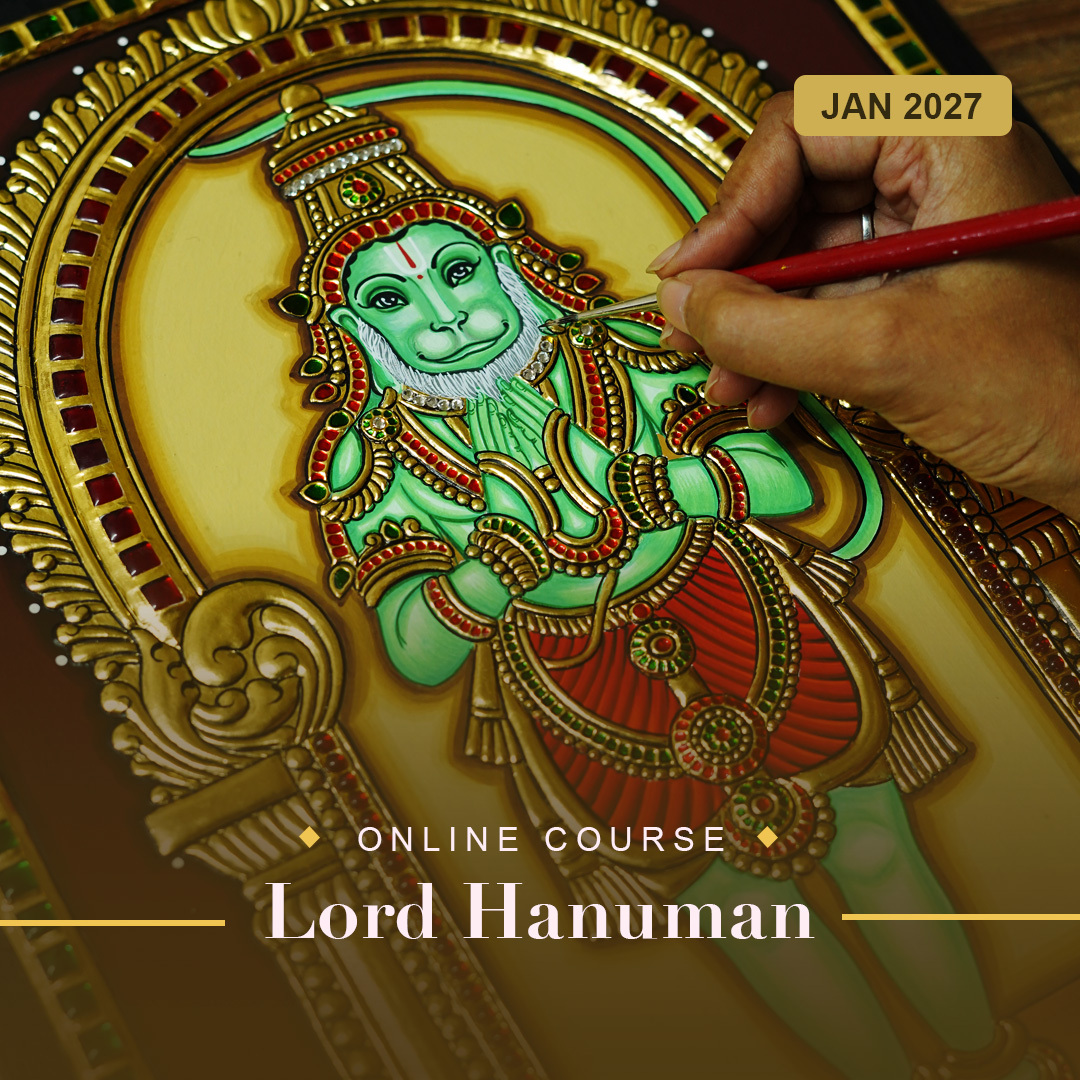
Lord Hanuman Tanjore Painting Class: Meaning and How to Learn It
Who Lord Hanuman is, when he is worshipped, and how to paint him yourself, even as a complete beginner.

Tanjore Painting Course Details: Everything Included in Our Courses
Everything you receive in a Tanjore Collective course: teaching, recordings, app access, materials, feedback and a certificate.

Tanjore Painting Course Registration: How to Register, Step by Step
How to register for a Tanjore painting course, from choosing your batch to receiving your kit and starting class.
What our students say
Hear from students who've learned the art of Tanjore painting with us.