Goddess Gajalakshmi Tanjore Painting Class: Meaning and How to Learn It
Written by
Vibha Raj
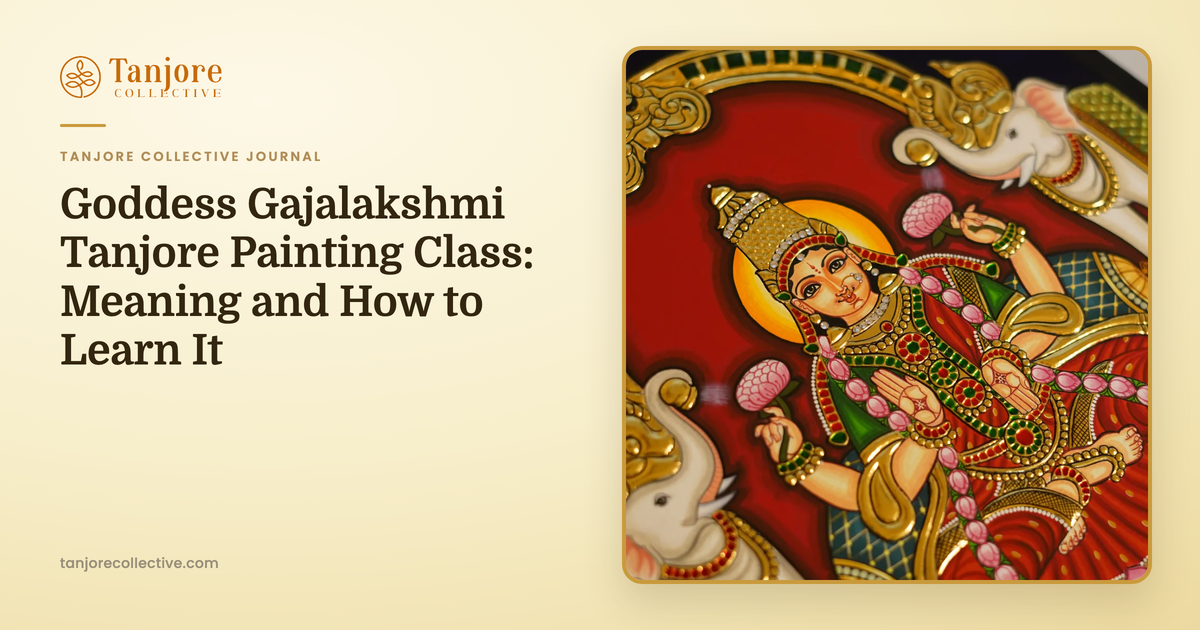
Goddess Gajalakshmi, Lakshmi bathed by two elephants, is one of the most auspicious subjects in Tanjore art. Here is her meaning, her festivals, and how to learn to paint her.
Key takeaways
- Gajalakshmi is the form of Goddess Lakshmi seated between two elephants who bathe her, a symbol of abundance, prosperity and royal grace, and one of the Ashtalakshmi (the eight forms of Lakshmi).
- She is worshipped especially during Varamahalakshmi Vratam (August) and Diwali, and venerated through Navaratri, which makes her a beloved subject for the home puja.
- We teach her as a live online 6.5-week course, and as a Bangalore studio batch when one is running, with a finished size of 12 x 15 inches.
- The elephants add a little more detail than plain Lakshmi, yet the course is built for complete beginners and taught step by step.
- In 40 years we have taught over 5,000 students, hold a 5.0 Google rating from 450+ reviews, and more than 95% of our students finish their painting.
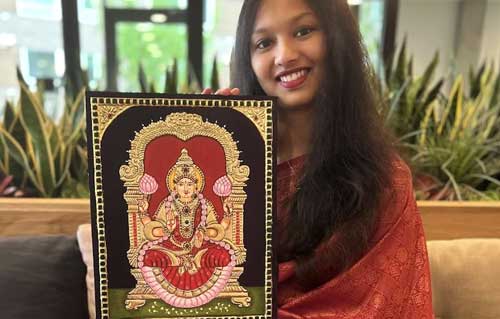
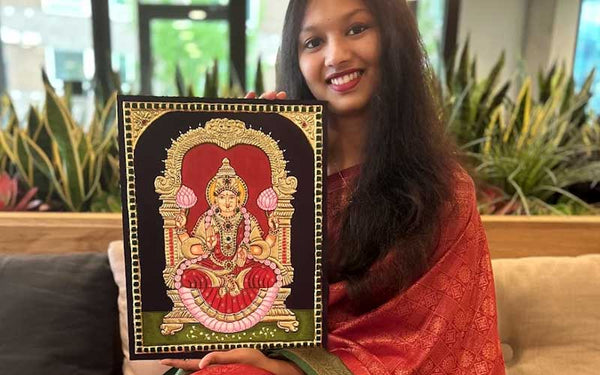
There is immense joy in bringing Goddess Gajalakshmi to life on a board. She sits serene upon her lotus while two elephants raise their trunks to bathe her, and slowly, over a few patient weeks, that whole scene takes shape under your own hands. If you have been drawn to her image and wondered whether you could ever paint something so detailed, this is for you. Many of our students had never held a brush before Gajalakshmi became their very first Tanjore painting, and they finished her.
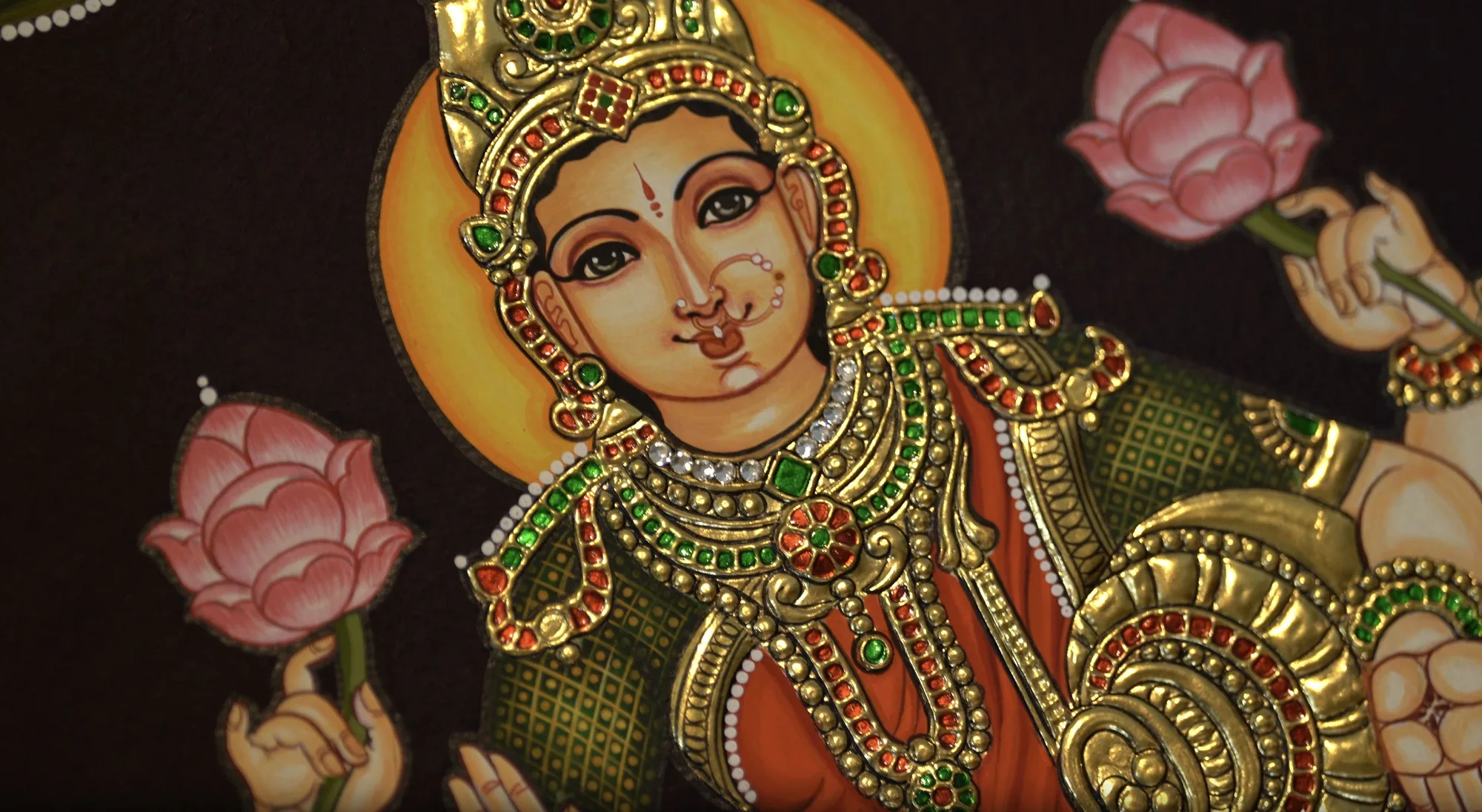
Watch: our Goddess Gajalakshmi painting coming to life, from the gold and stones to the elephants and lotus.
Who is Goddess Gajalakshmi?
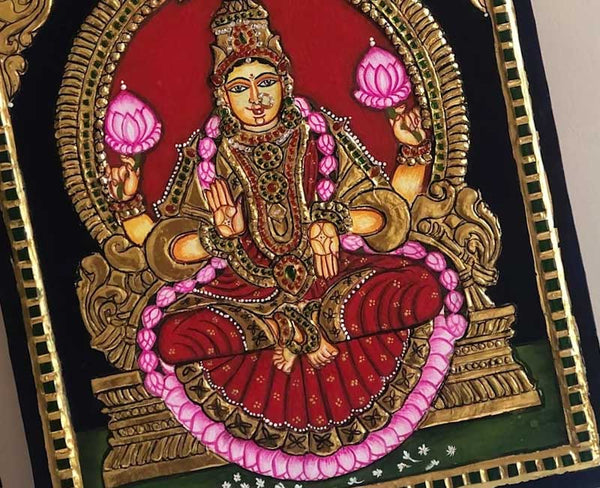
Gajalakshmi is the form of Lakshmi flanked by two elephants (gaja means elephant) who pour water over her in a gesture of royal consecration. She represents wealth in its fullest sense: not only gold and fortune, but abundance, fertility, dignity and the grace that holds a household together. The elephants themselves carry meaning. They stand for rain and fertile earth, for royal power, and for the steady, dependable strength that true prosperity rests upon.
She is counted among the Ashtalakshmi, the eight forms through which Lakshmi blesses a home with wealth, courage, knowledge, food, progeny and more. Of these, Gajalakshmi is perhaps the most widely loved, which is why her image is placed above doorways, in puja rooms and at the entrances of homes and businesses as a blessing of welcome and plenty. For a painter she is a generous subject too: the elephants, the water, the lotus and the Devi herself give you a rich, balanced composition, and every element is taught slowly, one step at a time.
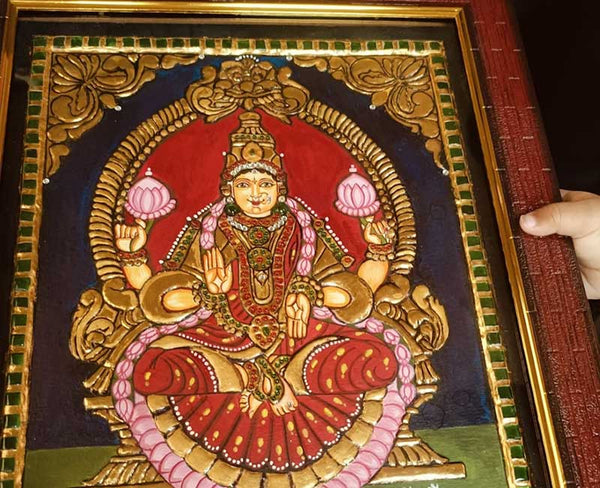
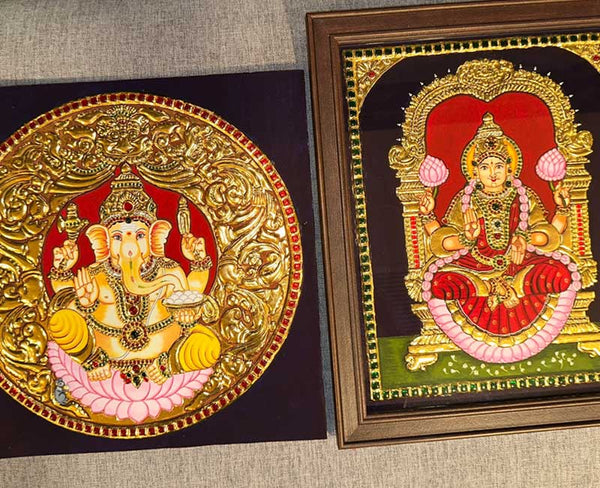
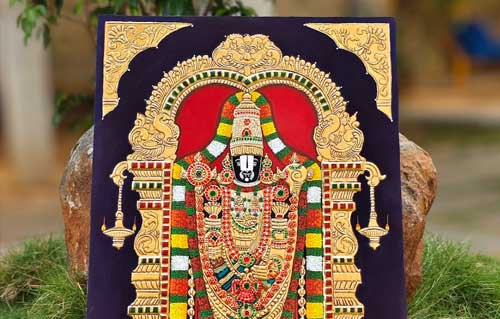
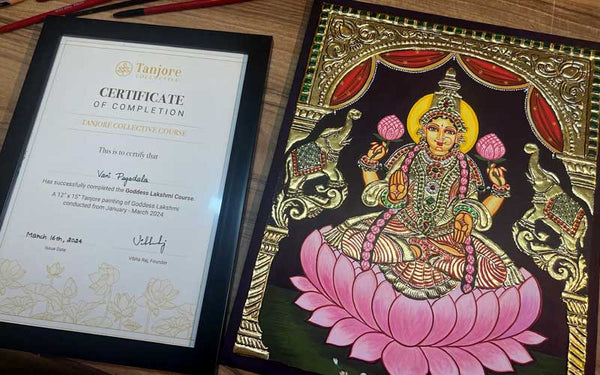
In the classic composition she is seated upon a full lotus, a lotus held in each of her upper hands, while her lower hands offer the gestures of assurance and of giving. The two elephants, pouring water from raised trunks or from golden pots, consecrate her the way a queen is anointed at her coronation. The colours are unmistakably Tanjore: deep reds and greens set against the warm glow of gold, her ornaments picked out in kundan and crystal. Among the Ashtalakshmi she stands beside forms such as Dhana Lakshmi, Dhanya Lakshmi, Dhairya Lakshmi and Santana Lakshmi, each a different blessing, and it is Gajalakshmi who is most often chosen to watch over a home.
When is Gajalakshmi worshipped?
Gajalakshmi is honoured most during the festivals of wealth and auspiciousness. Varamahalakshmi Vratam, observed on a Friday in the month of Shravana (usually August), is dedicated to her, and married women across South India keep this vrat for the wellbeing of their families. Diwali (October or November) is the great pan-Indian festival of Lakshmi worship, when homes are cleaned, lit with lamps and opened to welcome her in. She is also venerated through the nine nights of Navaratri, and many families set aside Fridays for her throughout the year.
These occasions are part of why so many of our students choose Gajalakshmi. There is a special feeling in placing a painting you finished yourself in the puja for Varamahalakshmi or Diwali. If a festival is on your mind, it helps to begin a few weeks ahead so the painting is ready in time.
Why paint Gajalakshmi yourself?
A Gajalakshmi you have painted is different from one you have bought. Across the weeks of the course, the work becomes a meditative practice: an hour or two at a time, away from screens, giving your full attention to gold and colour and the slow building of relief. Students often tell us the process felt as devotional as the finished image, and that they arrived at the Devi's face with a stillness they did not expect. At the end you have an heirloom for your home and a skill you can return to for the rest of your life.
We have watched many nervous first-timers, sure they would spoil the gold, finish those elephants with a steady hand by the final week. That growth in confidence is, for us, the best part of teaching her.
Here are the Gajalakshmi batches open right now.
What you learn and create
You begin with a blank, prepared board and end with a finished Gajalakshmi you can frame and keep. Along the way you learn every classical Tanjore technique in order, and nothing is rushed:
- preparing and priming the canvas,
- transferring the sketch, so you never have to draw it freehand,
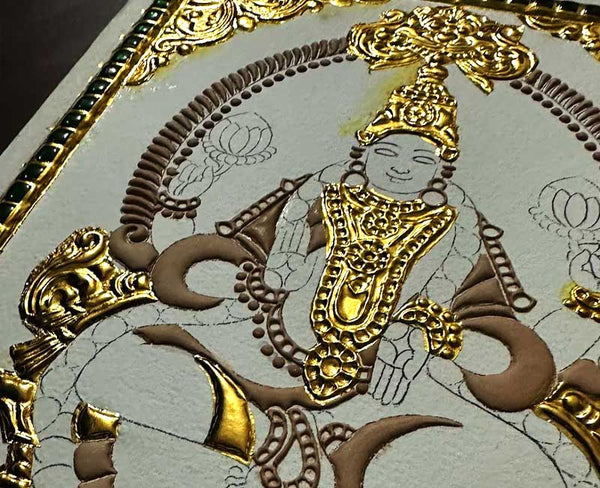
- building the raised gesso relief that gives Tanjore its signature depth,
- laying genuine 24 karat gold foil,
- adding finishing touches, at the end, Swarovski crystals,
- and painting the elephants, the water, the lotus, the Devi's ornaments and, last of all, her face.
The face and the finest detailing are taught by Vibha Raj herself. Because of the two elephants and the flowing water, Gajalakshmi carries a little more detail than a plain Lakshmi, so she is a lovely step up if you want something richer. She is still taught for a complete beginner, with nothing assumed and every step broken down. The finished painting is 12 x 15 inches. If you would prefer the simplest possible first piece, our plain Goddess Lakshmi painting is a gentler starting point, and the skills carry straight over.
The two elephants are where Gajalakshmi asks a little more of you than a single figure would. They need to balance each other on either side of the Devi, their trunks and the falling water drawn with care, and their grey forms shaded so they read as round and alive rather than flat. We take them slowly, and by the time you reach them you will already have built the brush control they call for. It is exactly this kind of gentle stretch that turns a nervous first-timer into a confident painter.
Skill in this art comes from practice, not from talent you were born with. Many students who began with one Devi have gone on to paint fifteen or twenty pieces over the years, each one steadier than the last. Gajalakshmi is a wonderful place to begin that journey.
Materials
You do not need to gather anything yourself. The materials you need, including the pre-sketched canvas, 24 karat gold foil, kundan stones, Swarovski crystals and brushes, are provided with the course and shipped to you before class (within India in about 5 to 7 days, and internationally in about 3 to 4 weeks). In the Bangalore studio, everything is laid out for you on the day.
"I enrolled for the Gajalakshmi studio course and this was my first ever attempt at Tanjore painting. Vibha, her mom and the entire team is amazing. They are very patient and make sure you learn at your pace. The studio environment is also so beautiful and makes the learning a meditative experience."
Learning with us
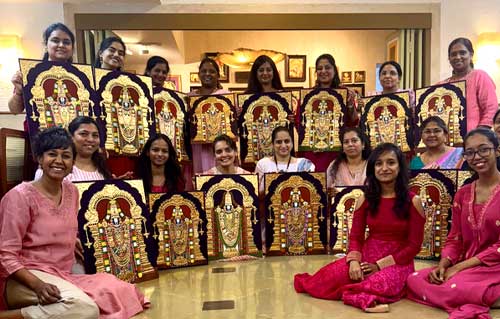
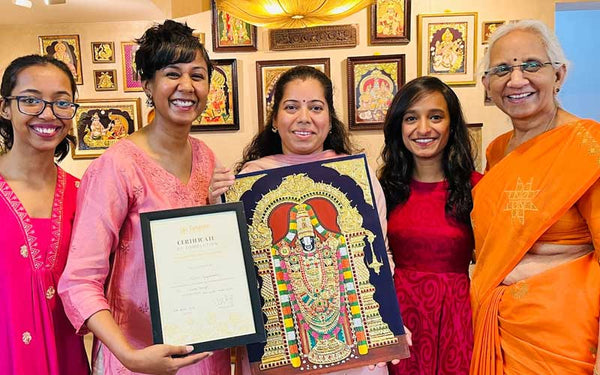
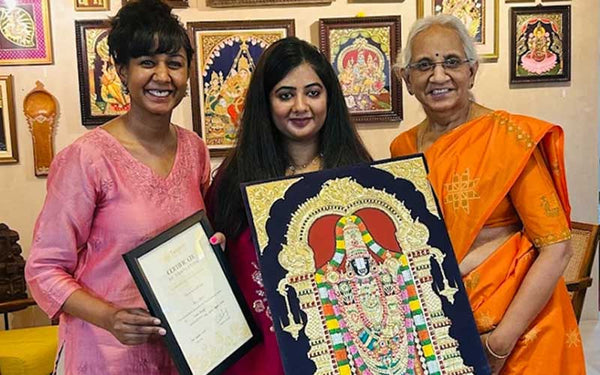
Every course is led by three to four of our teachers, each taking the part they know best. Vibha Raj, our founder, is an award-winning Tanjore artist who learned the art from her mother, the master artist Vani Bhaskar, and she teaches the faces and the fine detailing. Vibha, trained at Karnataka Chitrakala Parishath, leads the gold-foil work, and Vibha, who began here as a student herself, guides the embossing and intricate detailing. In a live online batch you learn over two evenings a week, taught with three cameras so you can see every stroke up close, and every session is recorded on our student app for you to revisit in your own time. The course runs over about 6.5 weeks, two evenings a week of roughly one and three quarter hours each, so it settles into a calm rhythm you can keep alongside work and home.
Our work holds a 5.0 rating from 450+ Google reviews, and our studio and teaching have been featured in Deccan Herald, Hindustan Times, Deccan Chronicle and Incredible India. To see every upcoming batch across formats, browse the course calendar, read about the three ways you can learn with us, or explore the other Tanjore deities we teach.
Frequently asked questions
Is the Gajalakshmi course good for beginners?
Yes. It carries a little more detail than plain Lakshmi because of the elephants, but it is built for complete beginners and taught step by step, with the sketch provided so you do not need to draw.
What size is the finished Gajalakshmi painting?
The finished painting is 12 x 15 inches.
What is the difference between Lakshmi and Gajalakshmi?
Gajalakshmi is Lakshmi shown with two elephants (gaja) bathing her, so the composition is a touch richer. The plain Lakshmi is a little simpler; see our Goddess Lakshmi painting guide.
Can I learn Gajalakshmi online, or only in the studio?
Both, when a batch is running. The live online course brings the same teaching to you anywhere in the world, and the Bangalore studio offers it in person. The batches open right now are shown in the cards above.
When is the next batch?
The cards above always show the active and upcoming batches. You can also see everything on the course calendar.
How many weeks is the Gajalakshmi course?
The live online course runs about 6.5 weeks, over two evenings a week, and every session is recorded so you can catch up whenever you need to.
Where is a Gajalakshmi painting usually placed at home?
Traditionally above the main doorway or in the puja room, as a blessing of welcome and abundance for the household.
Do I need any experience or my own materials?
No experience and no materials of your own are needed. Your kit is provided and shipped before class, and our teachers stay with you until your painting is finished.
Whenever you feel ready, we would love to help you bring Gajalakshmi home, painted by your own hand. There is no wrong time to begin, and we will be right there with you at every step.
More blog articles
Lord Hanuman Tanjore Painting Class: Meaning and How to Learn It
Who Lord Hanuman is, when he is worshipped, and how to paint him yourself, even as a complete beginner.
Tanjore Painting Course Details: Everything Included in Our Courses
Everything you receive in a Tanjore Collective course: teaching, recordings, app access, materials, feedback and a certificate.
Tanjore Painting Course Registration: How to Register, Step by Step
How to register for a Tanjore painting course, from choosing your batch to receiving your kit and starting class.
What our students say
Hear from students who've learned the art of Tanjore painting with us.