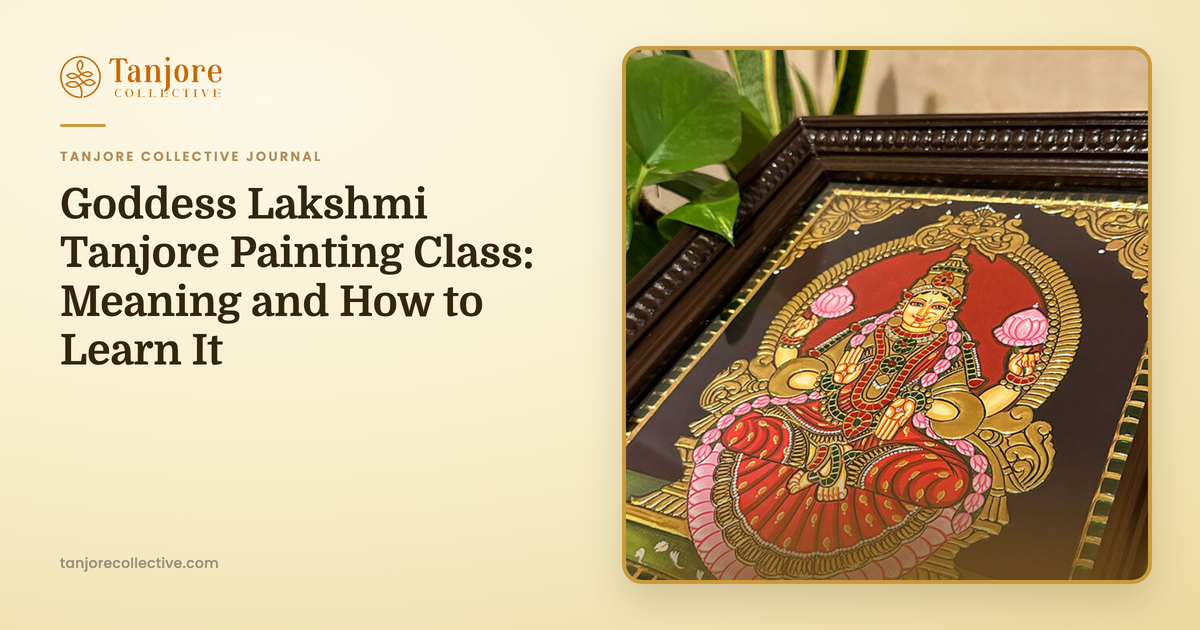
Goddess Lakshmi Tanjore Painting Class: Meaning and How to Learn It

Written by
Vibha Raj
Goddess Lakshmi is the goddess of wealth and auspiciousness, and one of the most loved first subjects in Tanjore painting. Here is what she means and how to paint her at your own pace.
Key takeaways
- Goddess Lakshmi is the goddess of wealth, fortune and auspiciousness, worshipped in nearly every Indian home.
- She is one of the most loved first subjects in Tanjore painting: graceful, serene and beginner-friendly.
- You can learn her as a self-paced DIY video course, finished at 10 x 12 inches or 12 x 15 inches, with a teacher on WhatsApp for feedback.
- She is especially worshipped at Diwali (Lakshmi Puja) and Varamahalakshmi Vratam, and on Fridays.
- More than 1,000 students have finished a Tanjore painting through our DIY course.
If you have ever wanted a Lakshmi in your puja room painted by your own hand, this is a lovely place to begin. Goddess Lakshmi is one of the first paintings many of our students choose, and for good reason. She is serene, she is beloved, and she is forgiving to learn. This guide walks you through who she is, when she is worshipped, and how you can paint her at your own pace, even if you have never held a brush.
Who is Goddess Lakshmi?
Goddess Lakshmi is the goddess of wealth, fortune, beauty and auspiciousness, and the consort of Lord Vishnu. She is worshipped in nearly every Indian home as the giver of prosperity and well-being, not only material wealth but the deeper fortune of health, harmony and grace.
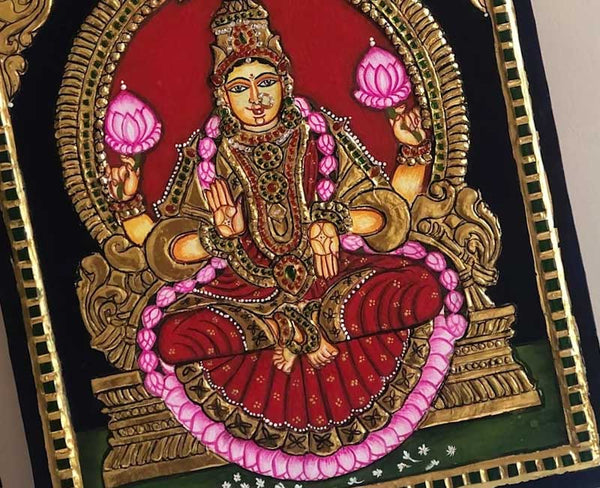
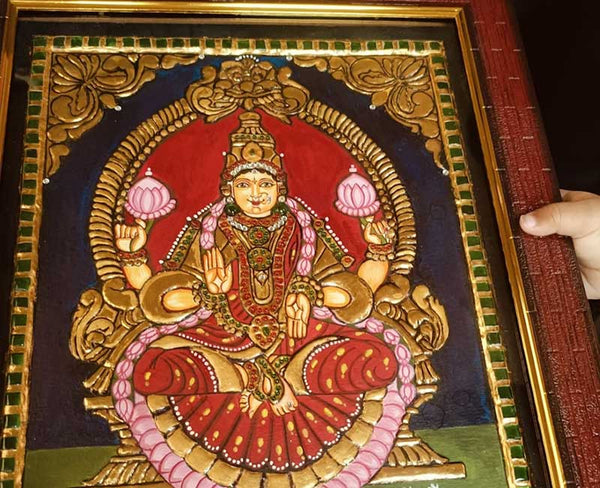
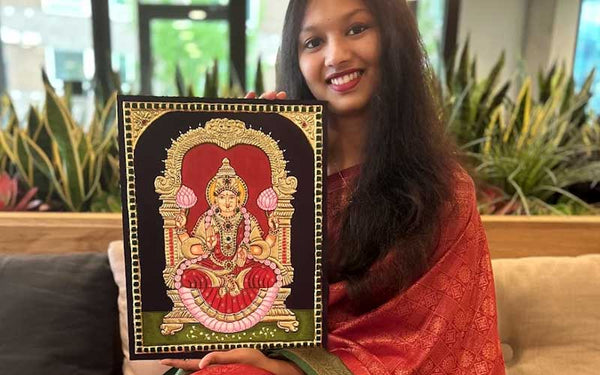
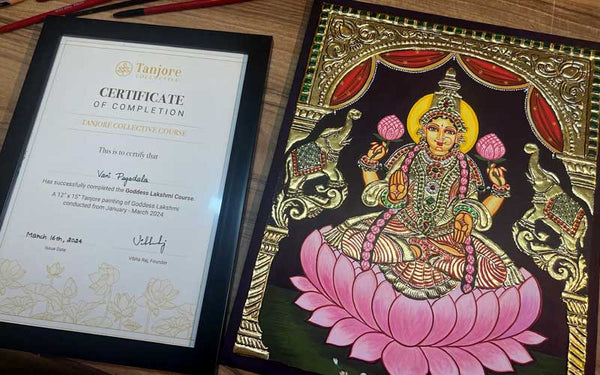
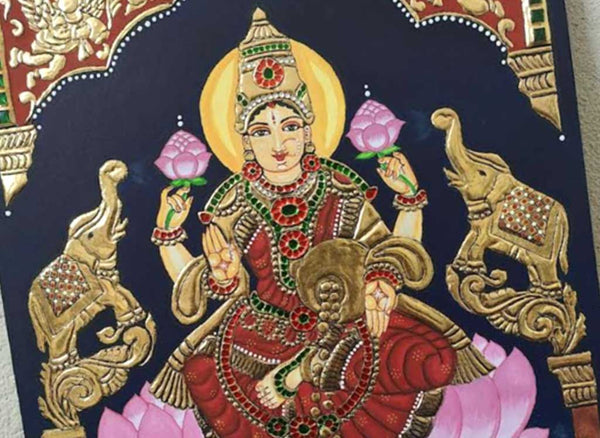
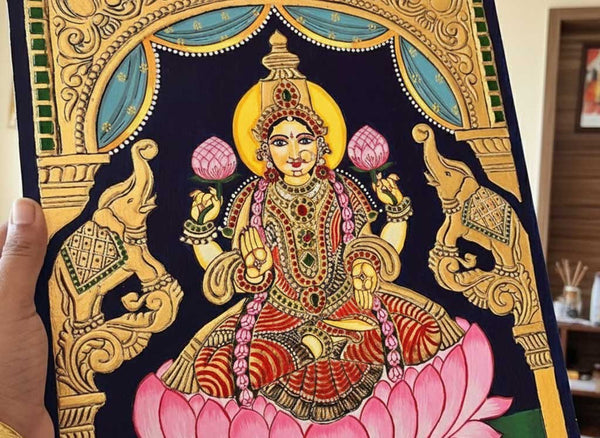
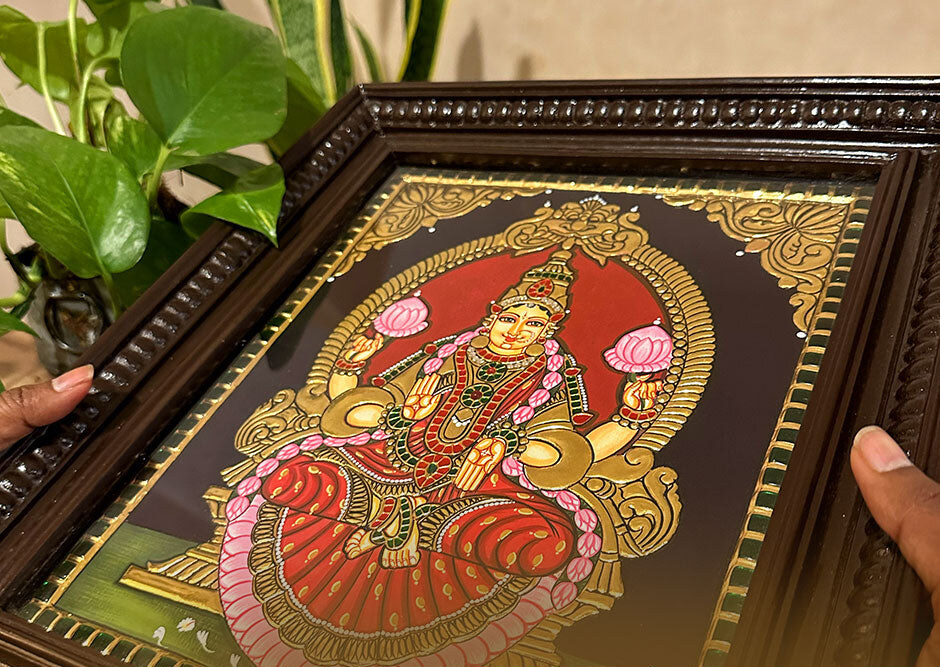
In art she is instantly recognisable: seated or standing on a blooming lotus, holding lotuses in her upper hands, with one hand raised in blessing and gold coins flowing from the other. The lotus itself is part of her meaning, rising clean and beautiful out of muddy water, a reminder that abundance and purity can grow from anywhere. Lakshmi is also worshipped in eight forms together known as the Ashtalakshmi, each one representing a different kind of prosperity, from wisdom and courage to food and progeny.
To paint her by hand is to invite her grace into the home in the most personal way possible, which is part of why she is one of the most cherished subjects in the whole tradition.
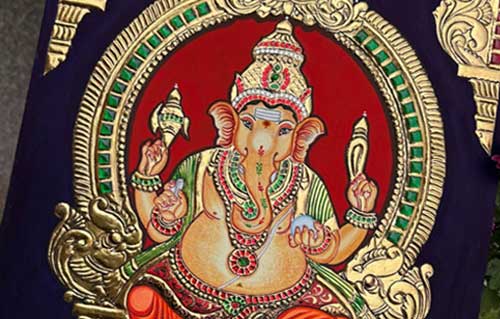
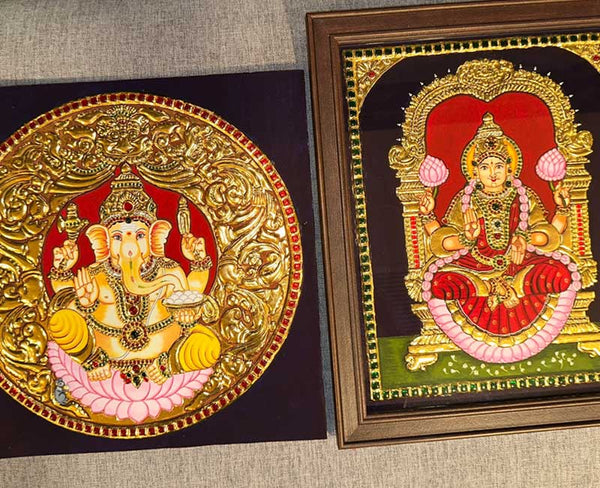
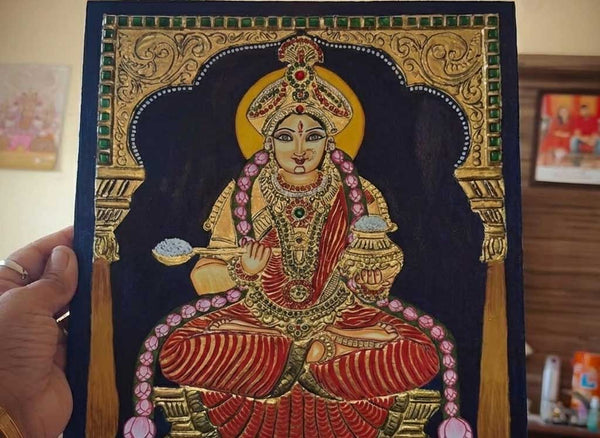
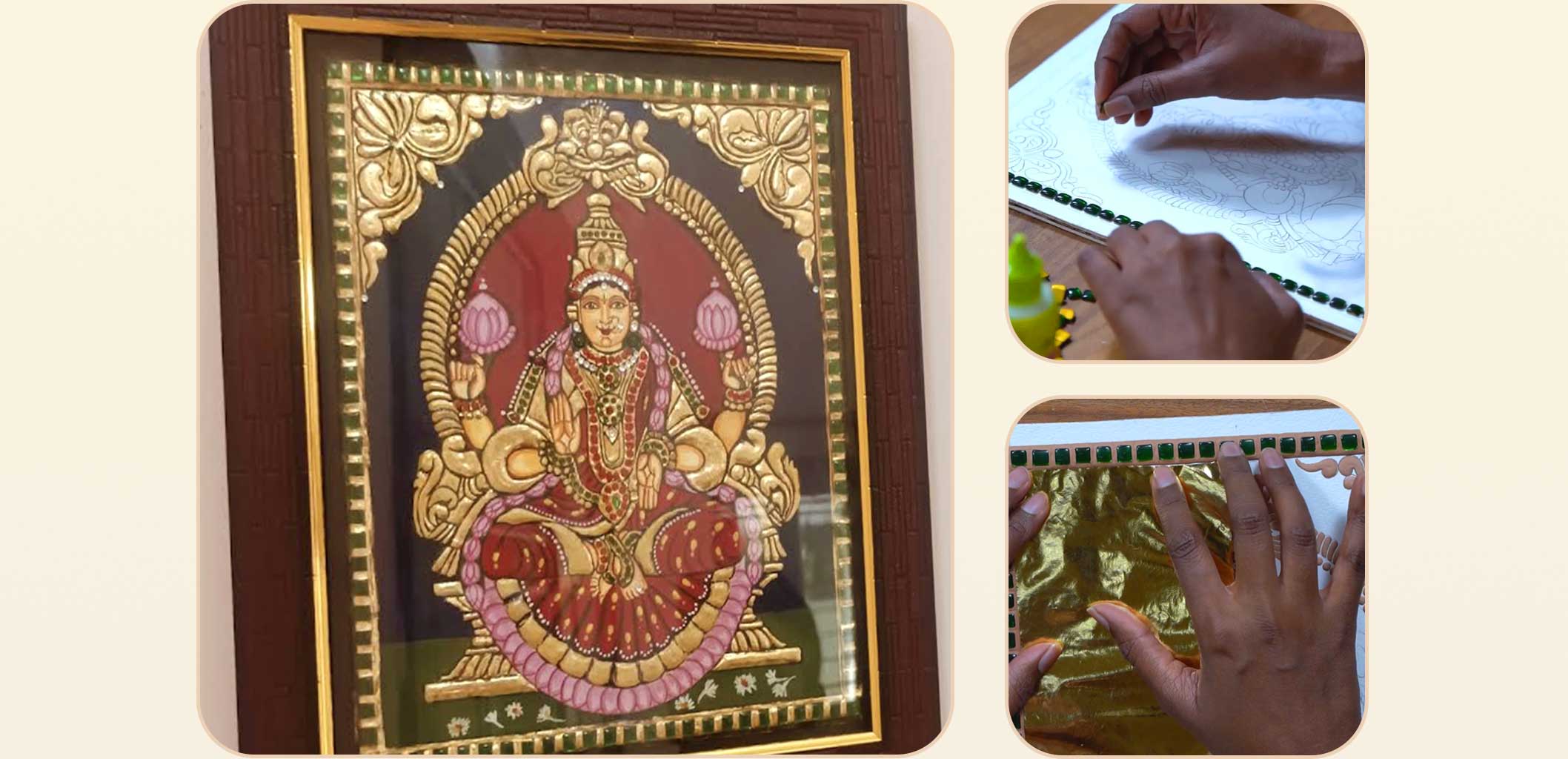
Look closely and you will see why she is such a joy to paint. Lakshmi usually has four arms: the upper two hold lotuses, one lower hand is raised in the abhaya mudra, the gesture of protection and reassurance, and the other is turned down in the varada mudra, the giving of blessings, with gold coins streaming from it. Her vahana, the owl, is sometimes shown at her side. She is painted in a warm red saree against glowing gold, calm and smiling, the very picture of grace and plenty. In Tanjore work, all of this becomes an interplay of raised gold, fine stone work and soft colour.
When Lakshmi is worshipped
Lakshmi is honoured all year, and especially on Fridays, but a few occasions stand out. Diwali, the festival of lights (around October to November), centres on Lakshmi Puja, when homes are cleaned, decorated and lit with lamps to welcome her in. Dhanteras, two days before Diwali, is also dedicated to her and to prosperity. Varamahalakshmi Vratam, observed mainly in the south on a Friday in the month of Shravana (around August), is a vow kept entirely in her honour, when married women pray for the well-being of their families.
We mention these as context, not as a timetable. A Lakshmi painting you complete at your own pace becomes a part of your puja whenever these days come around, year after year. That is one of the quiet joys of painting her yourself rather than buying one.
Learn to paint Goddess Lakshmi
You can learn Lakshmi as a self-paced DIY video course, so you can begin today and paint around your own life. Here is the course:
What you learn and create
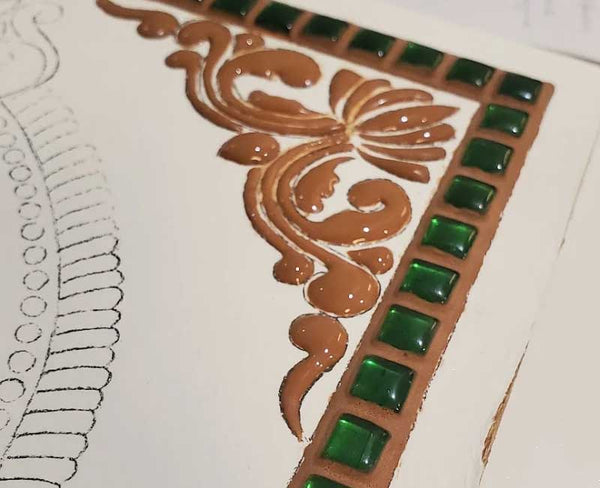
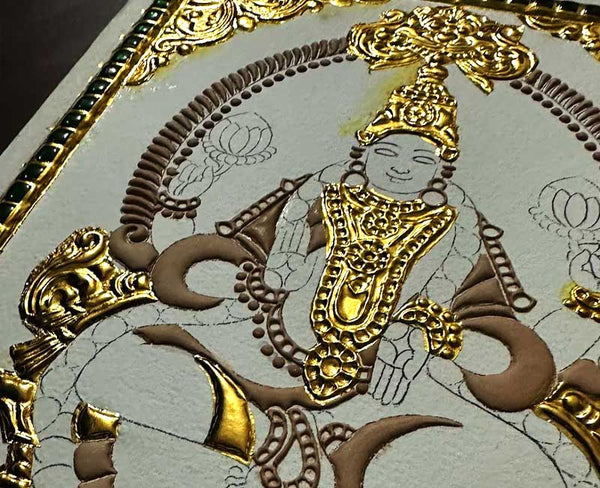
The DIY course takes you from a blank canvas to a finished Lakshmi at 10 x 12 inches, an ideal size for a first painting. Step by step, you will prepare the canvas, transfer the sketch (so you do not need to draw), build the raised gesso relief and embossing, lay genuine 24 karat gold foil, set kundan stones and crystals, and paint the lotus, the ornaments and finally her face. Each stage is a short video you can rewatch as many times as you like.
Lakshmi is forgiving to learn because so much of her beauty comes from techniques you can take slowly. The lotus petals teach you steady, repeating strokes. Her crown, jewellery and the border are where you lay the 24 karat gold and set the stones, the part most students fall in love with first. And her face, gentle and symmetrical, is a kind introduction to the proportion and expression work that every deity painting depends on. Because the composition is open and uncrowded, you have room to breathe at each stage and really take it in.
Learning at your own pace, but never alone
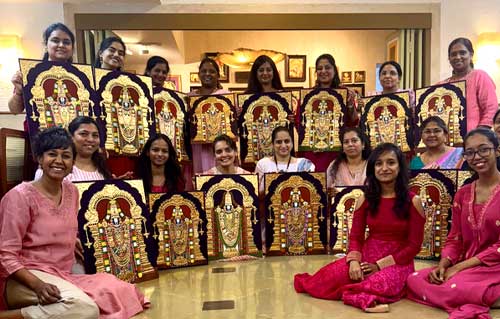
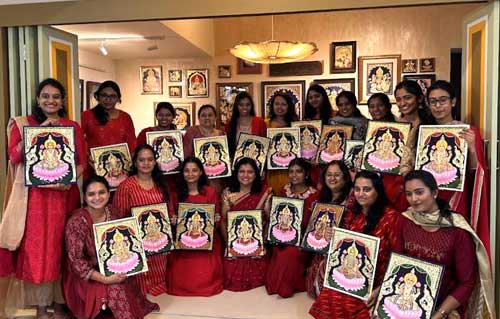
Self-paced does not mean unsupported. When you enrol, we create a WhatsApp group with you and a teacher, and you send photos of your painting as you go, so you get real feedback on your own work. Your access runs for 90 days from the day your kit arrives, and because life happens, we are always happy to extend it on request. More than 1,000 students have finished a Tanjore painting this way. If you would like to compare it with our live options, see our guide to online, studio and DIY formats.
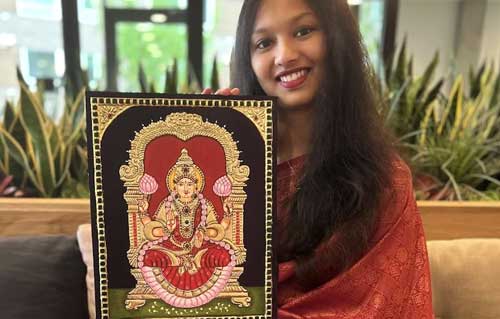
Many of our DIY students are complete beginners when they start, often people who always wanted to try but were nervous they could not. They send their first careful photos to the WhatsApp group, a teacher gently guides the next step, and a few weeks later they are holding a finished Lakshmi they can hardly believe they made. That quiet shift, from unsure to proud, is the real heart of this course.
Your materials are provided, bundled into the course and shipped to your door, so there is nothing to source yourself.
Why Lakshmi is a wonderful first painting
If this is your very first Tanjore painting, Lakshmi is a kind place to start. Her composition is balanced and relatively open, so you learn every core technique, the embossing, the gold foil, the stone work and the face, without the density of a multi-figure piece. The 10 x 12 size is comfortable to handle and quick enough to finish that you keep your momentum. And because she is so beloved, there is a special satisfaction in having your very first painting be a goddess you will actually keep and pray to. Many of our students who began with Lakshmi went on to paint ten, fifteen, even twenty subjects over the years.
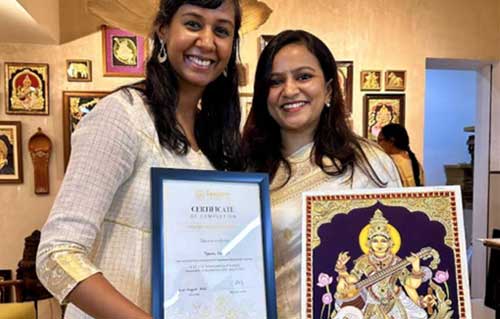
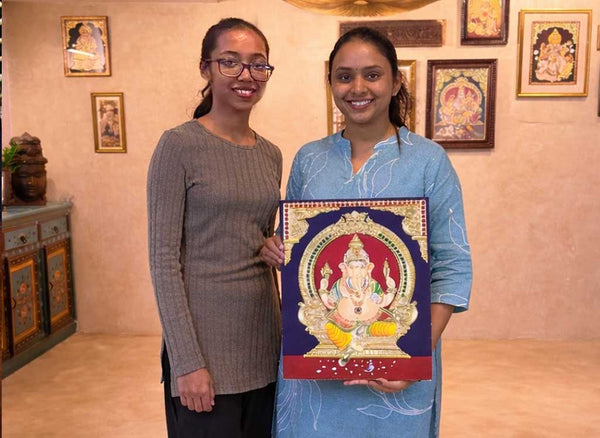
"Creating my first Tanjore painting of Goddess Lakshmi Devi through Tanjore Collective's DIY course was a truly fulfilling experience. Vibha did a wonderful job explaining every intricate detail with clarity and patience."
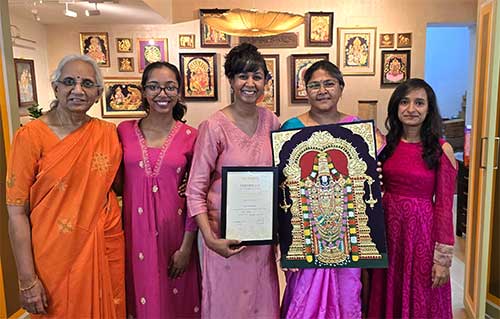
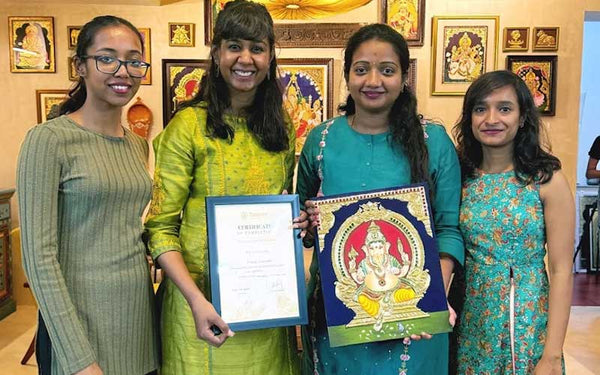
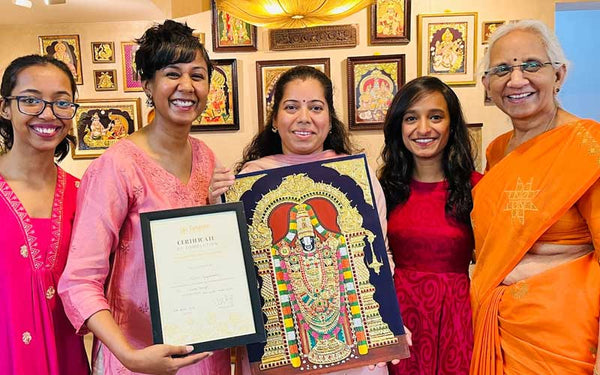
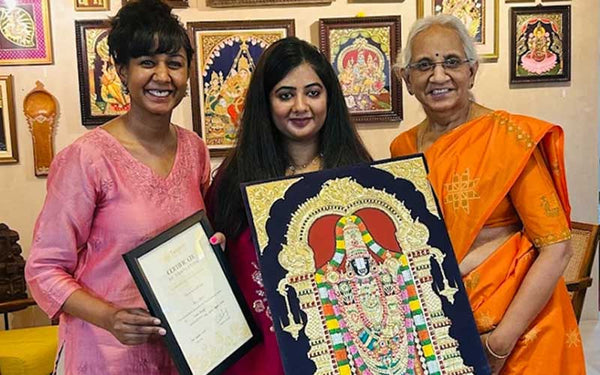
You are in experienced, patient hands. Tanjore Collective was founded by Vibha Raj, an award-winning Tanjore artist who learned this art from her mother, the master artist Vani Bhaskar, and who teaches the faces and fine detailing herself. Spurthy GB, trained at the Karnataka Chitrakala Parishath, leads the gold-foil work, and Yashaswini Jaishankar, who began here as a student, guides the embossing and intricate detailing.
Our students trust us with their first paintings for a reason: we hold a 5.0 rating from more than 450 Google reviews, and our studio and teaching have been featured in Deccan Herald, Hindustan Times, Deccan Chronicle and Incredible India.
Placing your finished Lakshmi at home
When your painting is done, it is traditional to place Lakshmi in the puja room or a clean, respectful corner of the home, facing east or west, where the family gathers. Many of our students unveil theirs at Diwali or Varamahalakshmi, with a small lamp and fresh flowers. Because you painted it yourself, every lotus and every stroke of gold carries your own devotion, which is something no bought painting can give. It is also a lovely heirloom to pass on.
Lakshmi and Gajalakshmi
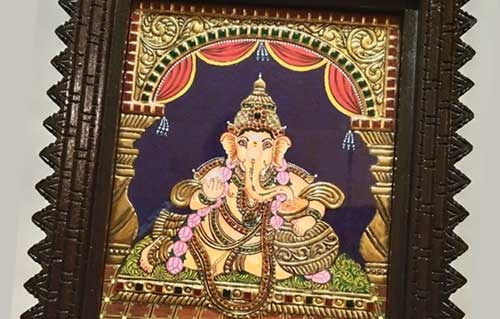
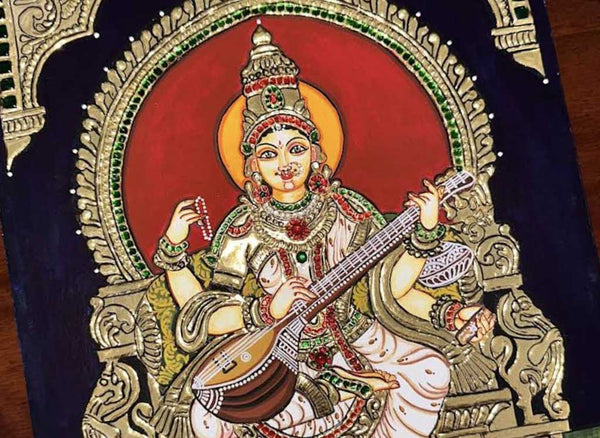
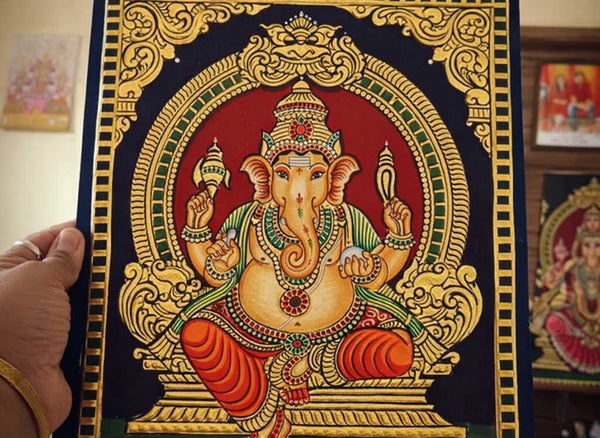
You may also see Lakshmi shown flanked by two elephants bathing her with water. That beautiful form is called Gajalakshmi, and it carries its own grandeur and detail. If it draws you, read our guide to the Gajalakshmi Tanjore painting. To explore the other deities we teach, see our guide to Tanjore painting deities, including Saraswati and Ganesha.
Frequently asked questions
Is Goddess Lakshmi a good painting for beginners?
Yes, she is one of our most recommended first subjects: graceful and beginner-friendly, and the DIY course assumes no experience at all.
What size is the finished Lakshmi painting?
The DIY course is finished at 10 x 12 inches.
How does the self-paced DIY course work?
You get video lessons you can watch anytime, with 90-day access from when your kit arrives, plus photo feedback from a teacher on WhatsApp. We gladly extend access if you need more time.
Are materials included?
Yes, the kit is bundled into the DIY course and shipped to you, including genuine 24 karat gold foil.
What is the difference between Lakshmi and Gajalakshmi?
Gajalakshmi is the form of Lakshmi flanked by elephants bathing her. It is a little more elaborate; see our Gajalakshmi guide.
How long does it take to finish the Lakshmi painting?
At your own pace. Many DIY students finish within a few weeks of focused evenings or weekends, and you have 90 days of access from the day your kit arrives, extendable if you need more time.
Can I really do this if I have never painted before?
Yes. The lessons assume no experience, the sketch is provided so you do not need to draw, and your teacher is a WhatsApp message away whenever you are unsure.
What do I actually paint, step by step?
You prepare and sketch the canvas, raise the ornaments and lotus with gesso embossing, lay 24 karat gold foil, set kundan stones and crystals, then paint the lotus, the saree, the ornaments and finally her face. Each step is a short video you can pause and rewatch as often as you need.
More blog articles
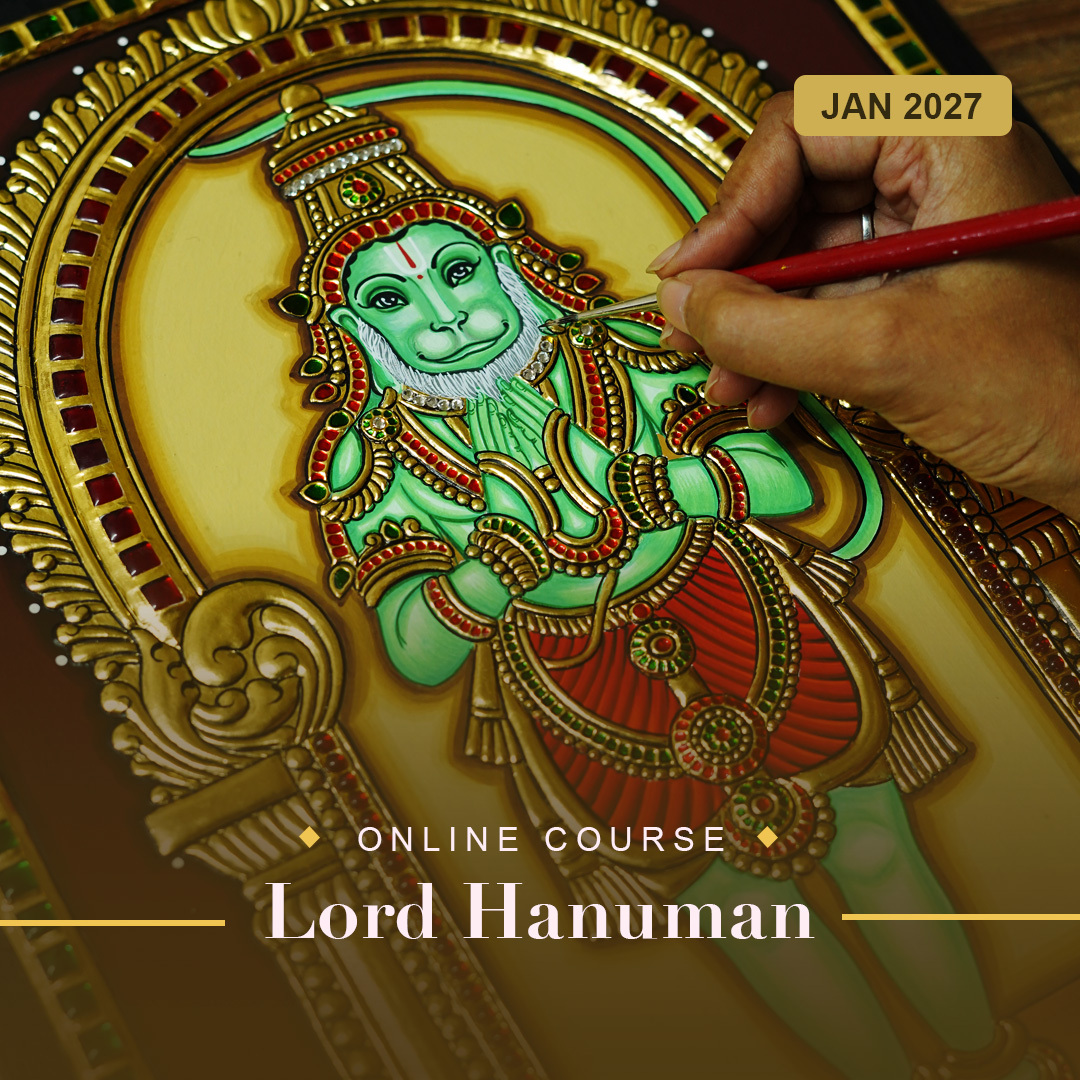
Lord Hanuman Tanjore Painting Class: Meaning and How to Learn It
Who Lord Hanuman is, when he is worshipped, and how to paint him yourself, even as a complete beginner.
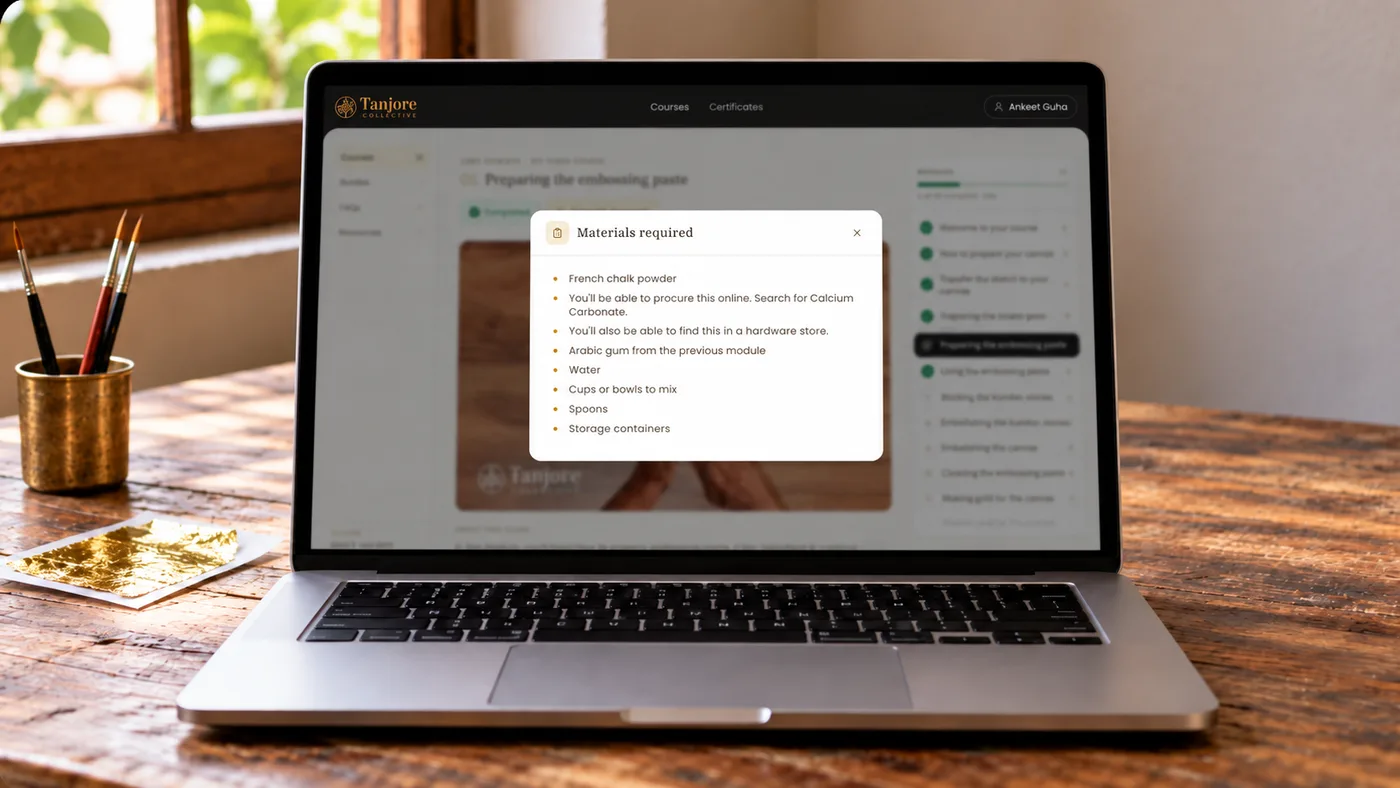
Tanjore Painting Course Details: Everything Included in Our Courses
Everything you receive in a Tanjore Collective course: teaching, recordings, app access, materials, feedback and a certificate.
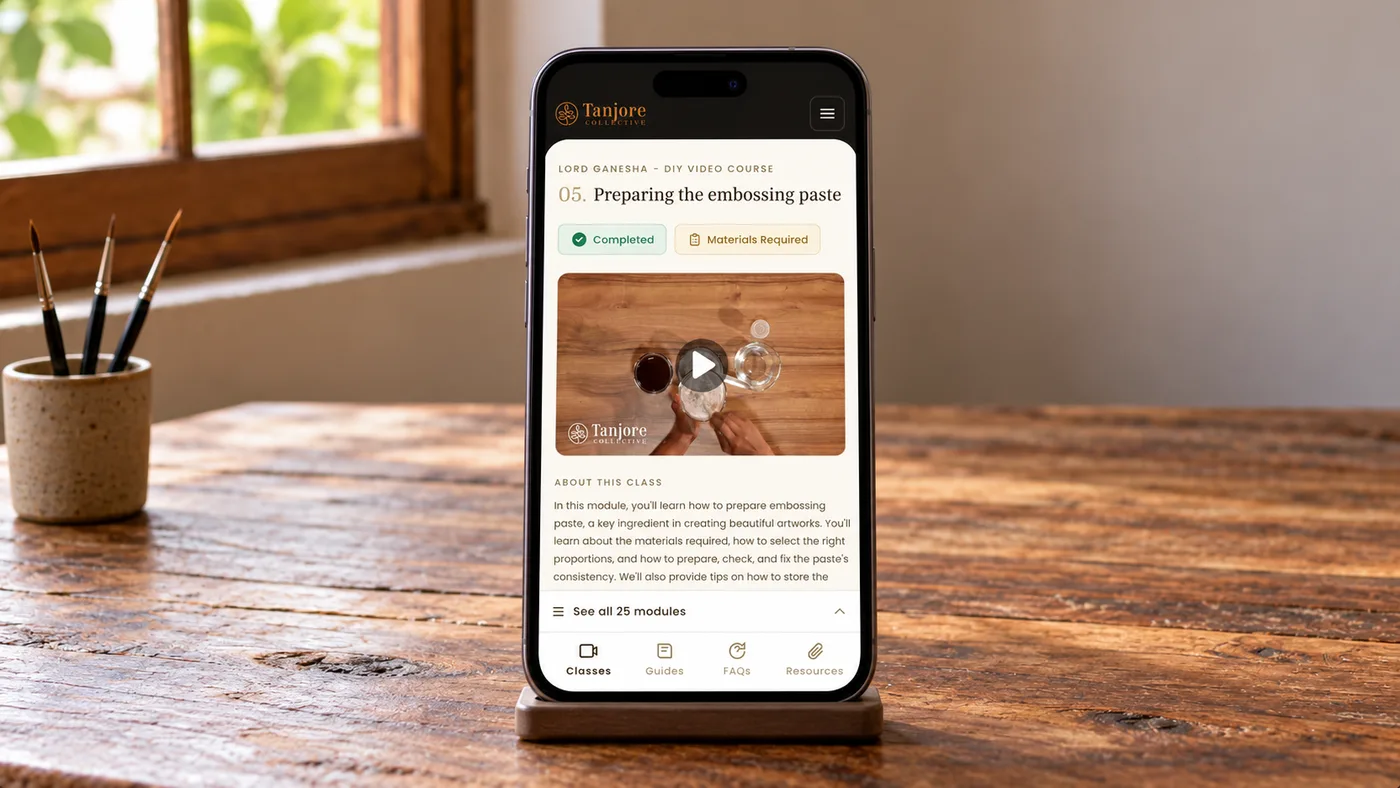
Tanjore Painting Course Registration: How to Register, Step by Step
How to register for a Tanjore painting course, from choosing your batch to receiving your kit and starting class.
What our students say
Hear from students who've learned the art of Tanjore painting with us.