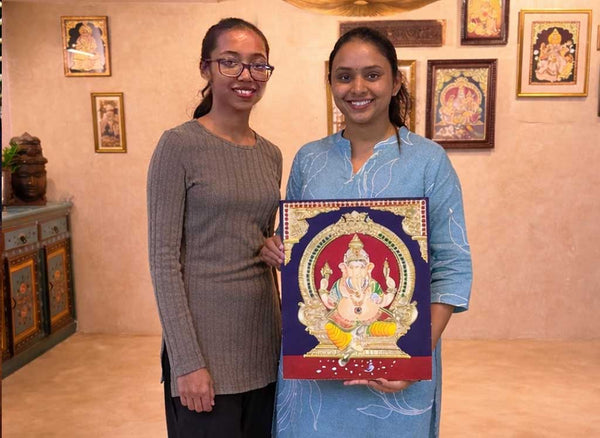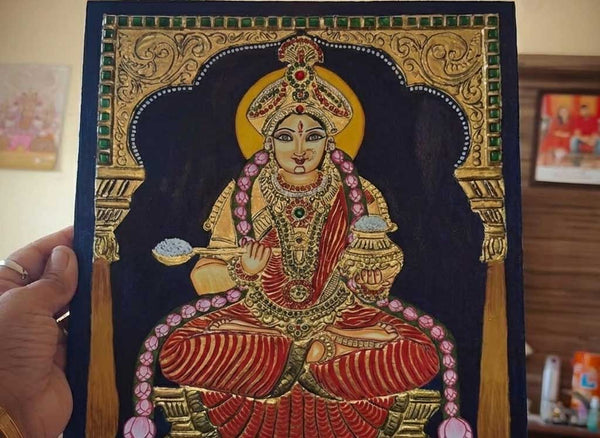
She Was Our First Online Student. See Where Tanjore Painting Took Her

Written by
Swathi Katta
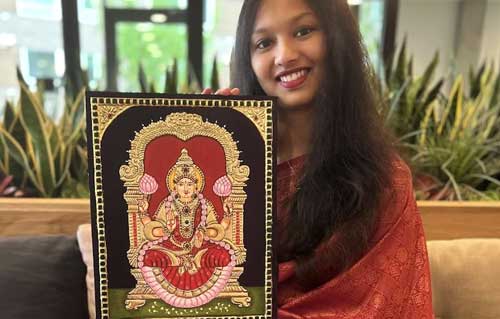
Some students join a Tanjore painting class because they want to learn a new art form. Some stay because they discover that they love painting. And then there are students like Sudha S, who take what they learn and slowly make it their own.
Her journey with Tanjore Collective began in 2021, when she became our very first online student.
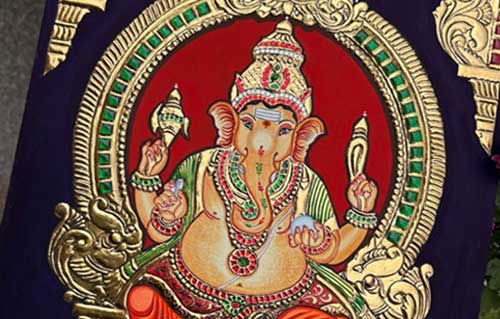
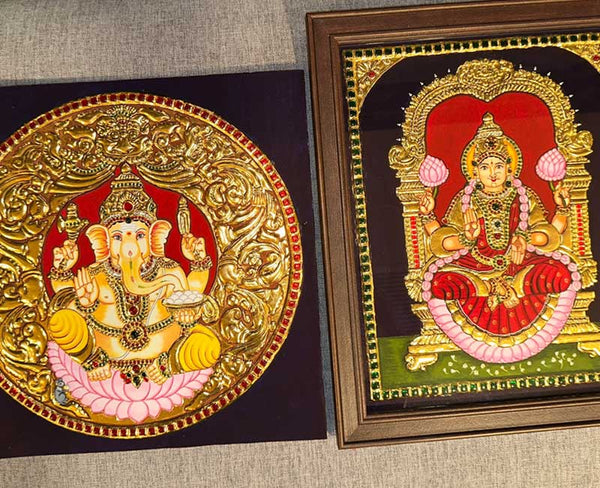
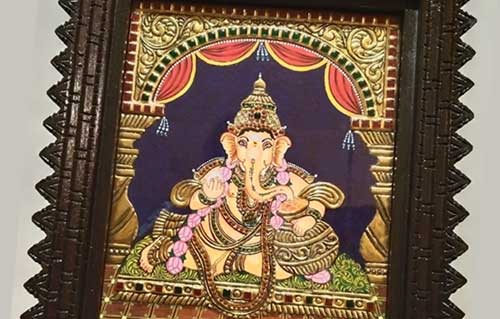
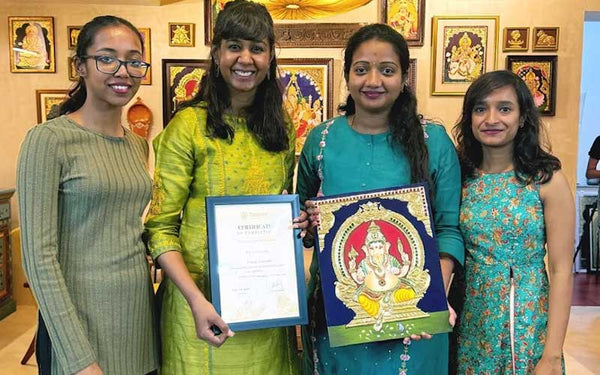
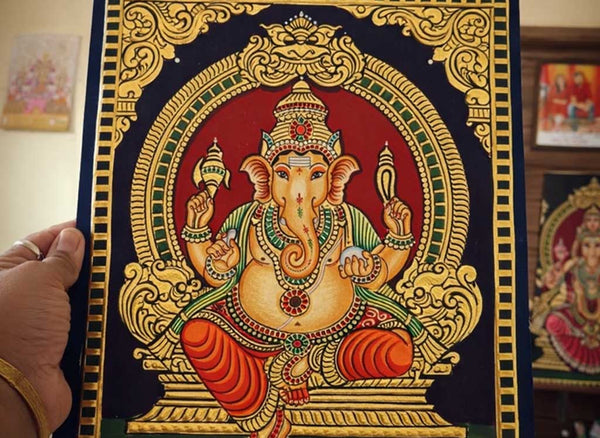
She started with Ganesha, excited about learning something she had never done before.
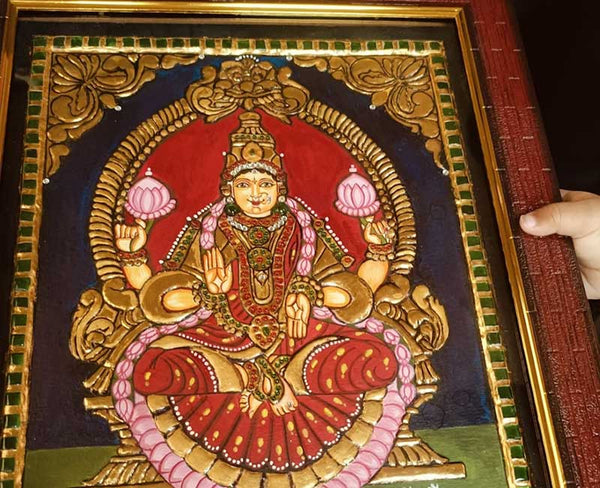
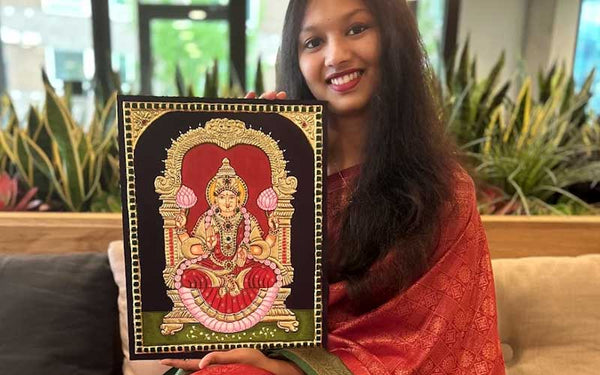
Today, she has completed multiple Tanjore paintings with us, is currently learning Radha Krishna, and has gone on to create beautiful artworks of her own - from Mannargudi Rajagopalaswamy and a series of Krishna paintings to coasters and diyas.
But somewhere between that first Ganesha and everything she creates today, something much more meaningful happened.
She found a skill that became a part of her life.
And perhaps, even more importantly, she found a new version of herself through it.
https://youtu.be/Iw-yymmzIkQ
It All Started With Ganesha
When Sudha joined us in 2021, online Tanjore painting classes were still a relatively new idea.
She was our first online student—and she remembers how excited she was to begin.
"I was pretty excited when I was just starting off with Ganesha. I was excited that I'm going to be learning something new."
There was also a personal connection to the art form that she discovered along the way.
Her father's family is from the Tanjore district, and one of the paintings she eventually created was Mannargudi Rajagopalaswamy, her family deity.
But interestingly, Sudha doesn't believe that is what drew her to art.
It was something more instinctive.
"Subconsciously, somewhere, I do like a lot of traditional things, like a lot of old-fashioned things."
And so began a journey that would take her much further than she probably imagined when she started that first Ganesha.
From "How Do I Do This?" to "I Love Doing This"
Like every new skill, Tanjore painting had its intimidating moments.
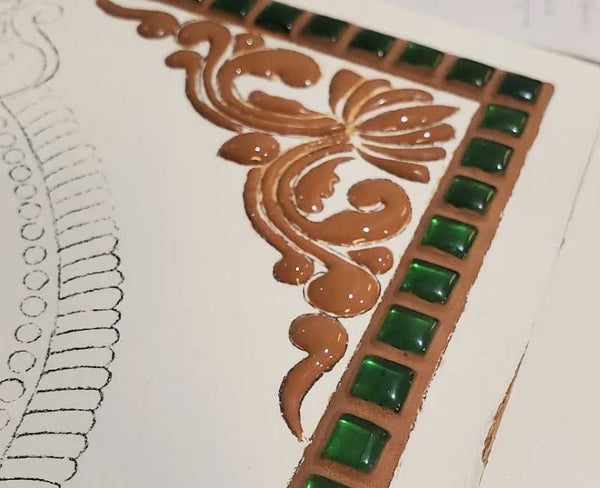
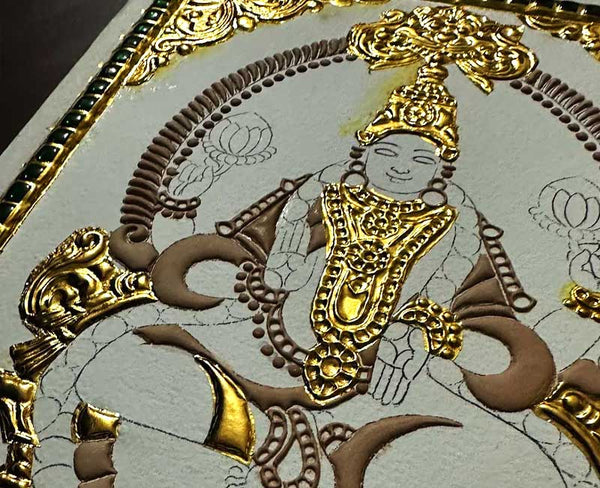
For Sudha, embossing wasn't something she was particularly afraid of.
Gold foiling was another story.
"When embossing started, I wasn't very scared, as much as I was scared with the foiling work."
But that fear didn't last.
Once she understood the technique and got comfortable with it, something changed.
"Once I got a hang of it, I think it was very good."
And then came something even better.
She started enjoying the process itself.
The embossing.
The gold work.
The actual painting.
The shading that slowly gives a deity its depth and character.
"It just makes me feel so calm and good."
That feeling is one we hear from many of our students, but it is still something special to watch happen.
Because in the beginning, you're thinking about the technique.
You're thinking about whether you're holding the brush correctly, whether the embossing is right, whether the gold will sit properly.
And then, slowly, you stop thinking about every little step.
Your hands begin to understand.
You begin to trust yourself.
And the process becomes yours.
Sudha describes the feeling at the end of it beautifully:
"By the time you're done, right, you feel like you've crafted something so beautiful out of something even more beautiful."
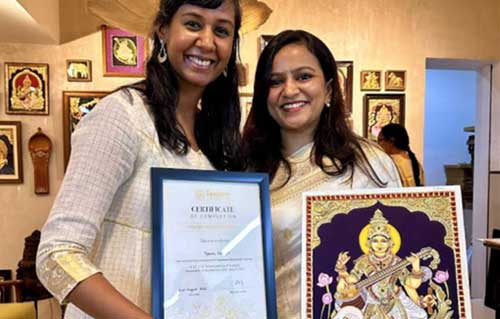
Then Came Saraswati
Sometimes, one painting stays with you for reasons that have nothing to do with how it looks.
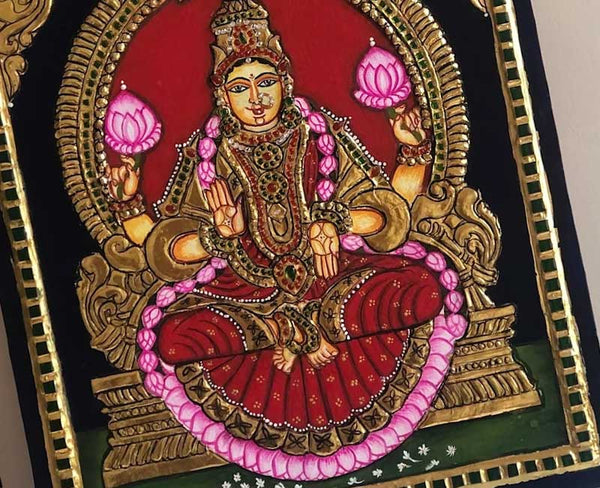
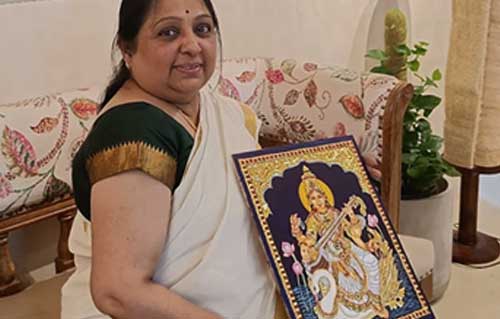
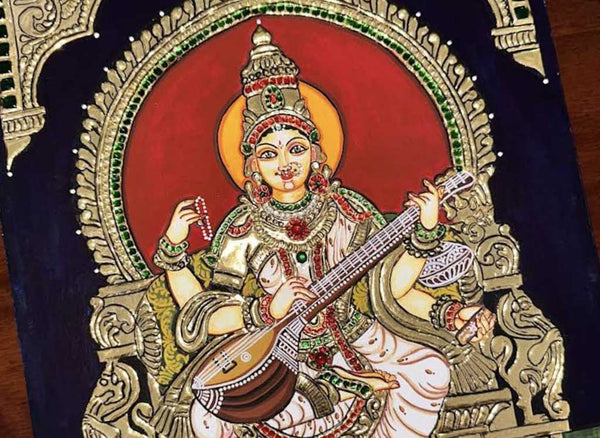
For Sudha, that painting was Goddess Saraswati.
There was a period when she hadn't painted for almost a year.
Then she completed Saraswati.
And something came alive again.
"Once I finished painting Goddess Saraswati, it gave me such energy to continue with so many other paintings after that."
That one painting became a turning point.
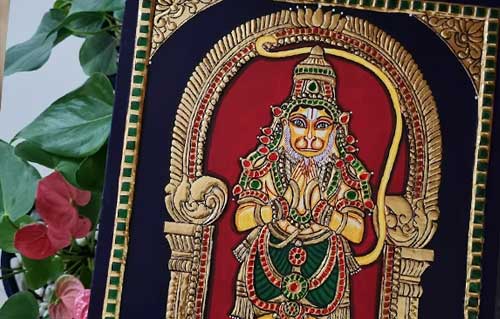
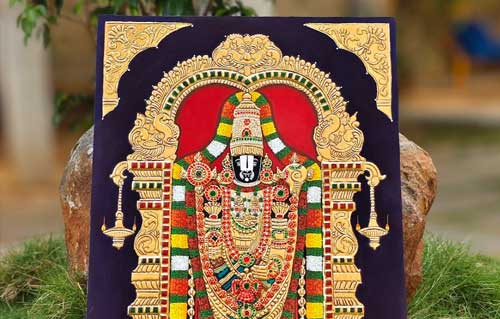
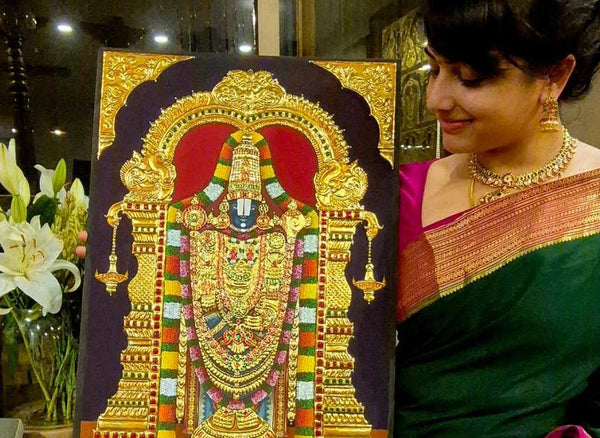
There was Balaji next.
Then Krishna paintings.
And other artworks that began to emerge outside the structured lessons she had taken with us.
Her favourite painting is still Saraswati.
But perhaps what makes that painting especially meaningful is what came after it.
It didn't just become another finished artwork.
It gave her the confidence to keep going.
When You Know Enough to Experiment
Perhaps the most beautiful part of Sudha's journey is what happened after she learnt the techniques.
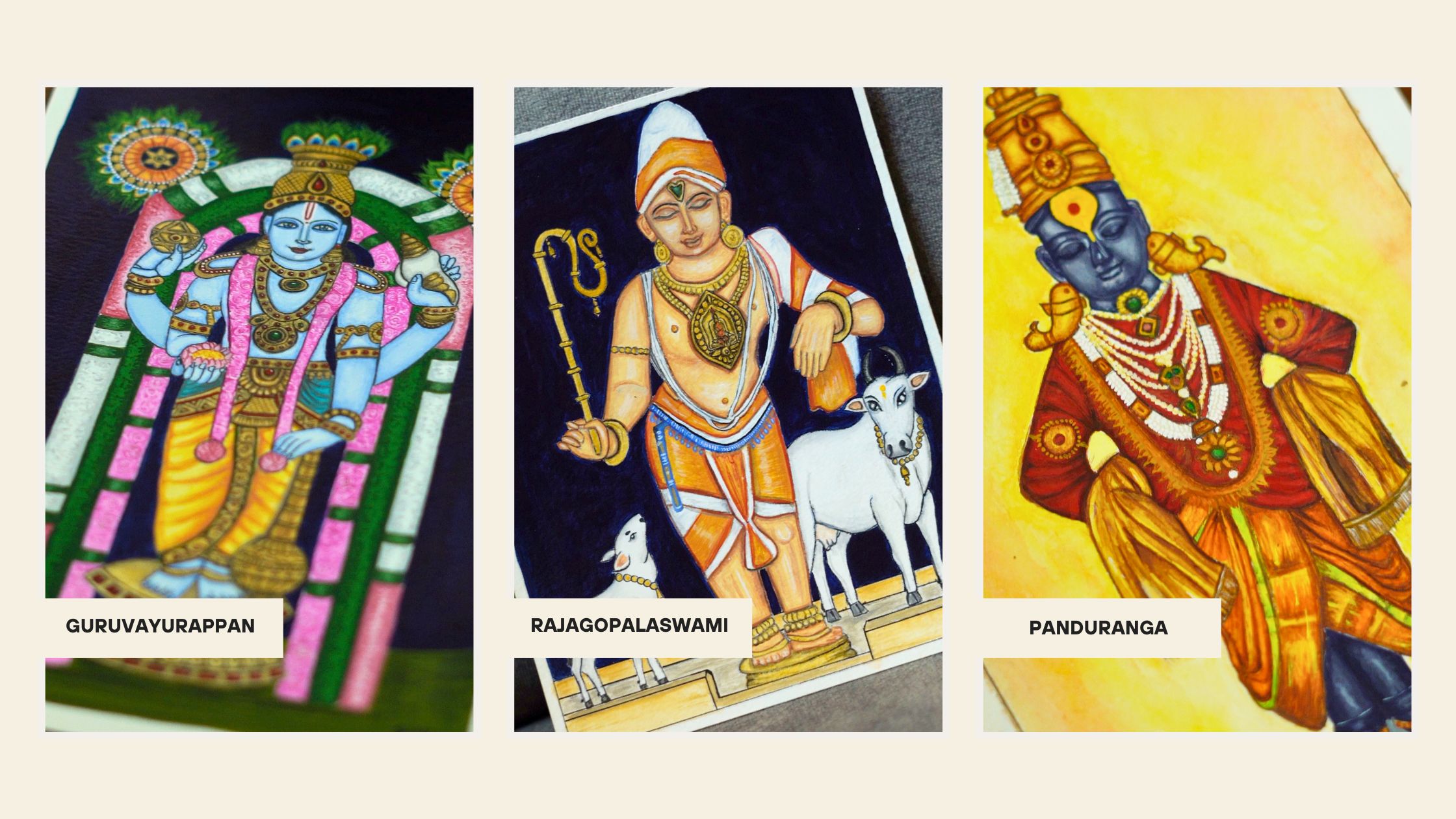
She didn't simply move from one course painting to the next. As she became more comfortable with what she knew, she began wondering what else she could create with it.
That curiosity took her beyond the paintings she learnt with us. She painted Mannargudi Rajagopalaswamy, her family deity, explored a series of Krishna paintings, and even took her creativity into smaller pieces like coasters and diyas.
These weren't about following a set of instructions anymore. They came from knowing enough to make her own choices.
That's what happens when learning slowly turns into confidence. In the beginning, you follow each step, learn the techniques and understand the materials. But with practice, you start trusting your hands. You know what you can change, what you can experiment with, and how to find your way when things don't go exactly as planned.
That's when a skill truly becomes your own.
For Sudha, the techniques she learnt through Tanjore painting became a foundation she could take beyond the classroom. And that's what we love most about watching a student grow—not simply seeing them recreate what they've been taught, but seeing them reach a point where they can look at their materials and think:
"I know how to do this. Now, what else can I create?"
The Confidence to Create Comes From Knowing
Experimenting can look effortless from the outside, but anyone who has tried something new knows that it takes courage. You have to be willing to make something that may not turn out exactly as you imagined.
For Sudha, that confidence came from the foundation she had built through learning Tanjore painting. She understood the techniques, became familiar with the materials and, with practice, learnt to trust her own hands. That knowledge gave her the freedom to explore and create beyond what she had learnt in class.
This is what we believe makes learning a traditional art form so special. It isn't about putting creativity inside a set of rules; it is about understanding those rules well enough to eventually find your own way within them.
Sudha began by learning Tanjore painting. Today, she uses what she has learnt to explore her own ideas—and she is still curious, still experimenting and still learning.
"I Know Another Skill"
Perhaps the most moving part of Sudha's story isn't the number of paintings she has completed.
It's how she talks about what learning this skill has done for her.
"I definitely see myself a changed person, for sure."
She talks about feeling calmer.
About how painting makes her feel good at the end of the day.
And then she says something very simple:
"The best part is that I know another skill."
There is so much pride in that sentence.
Not the pride of having completed a course.
The quieter kind of pride that comes from knowing that you can now do something you couldn't do before.
That you can pick up your materials and create.
That you have learnt something with your own hands.
That the skill is yours now.
And perhaps that's why she says:
"I know that I can paint more, I know that I'm going to learn more, and I know I'm going to craft more."
That's the beautiful thing about learning a skill.
It doesn't end when the class ends.
It becomes something you carry with you.
From Our First Online Student to an Artist Who Keeps Exploring
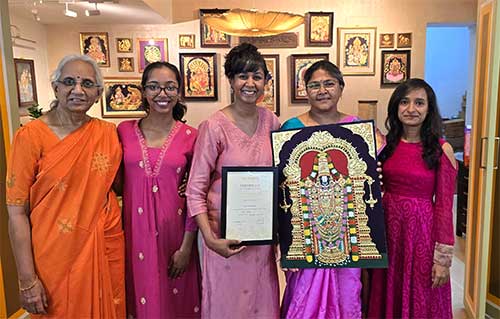
When Sudha joined us in 2021, she became our first online student.We could never have known then where that journey would lead.
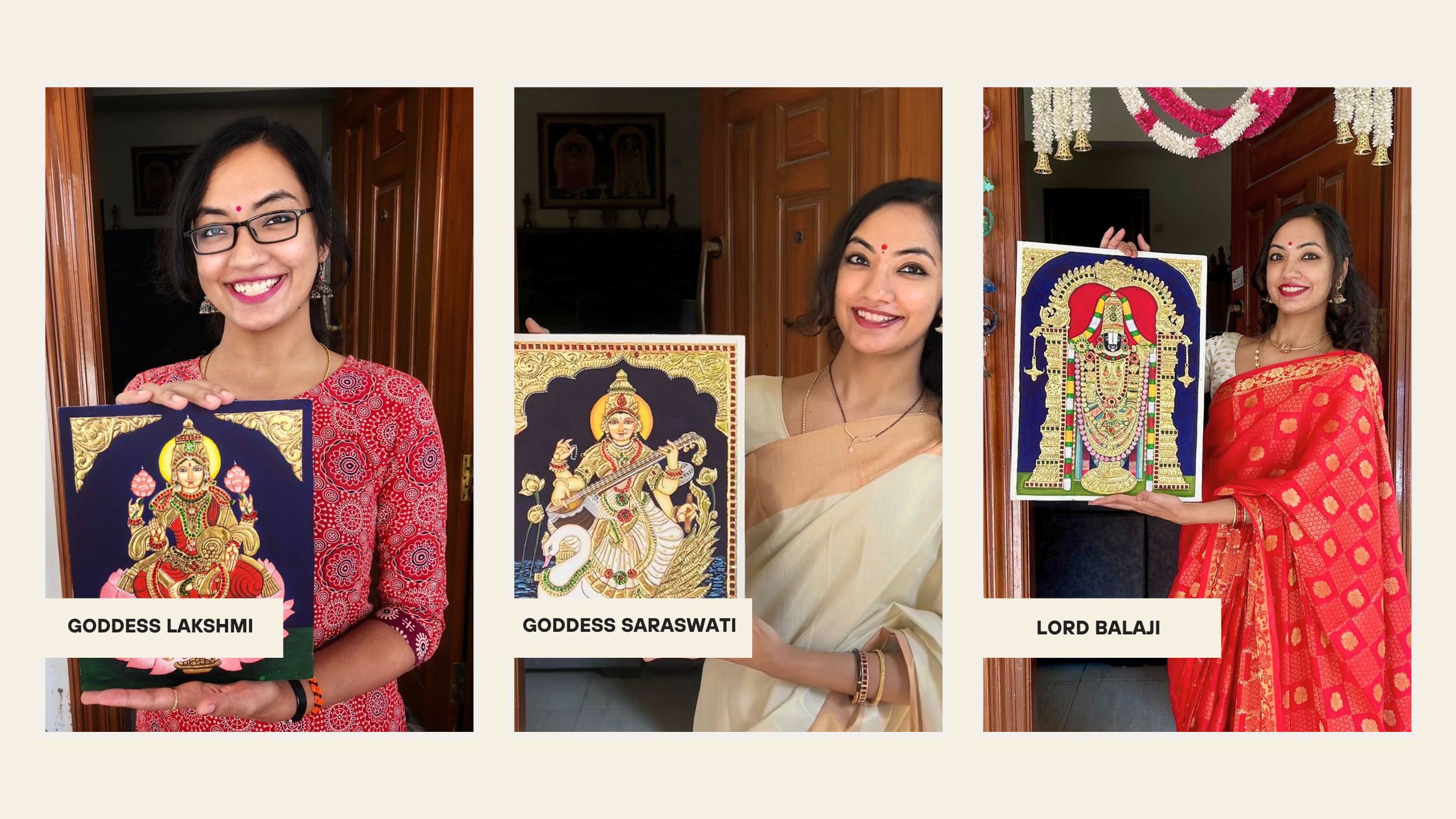
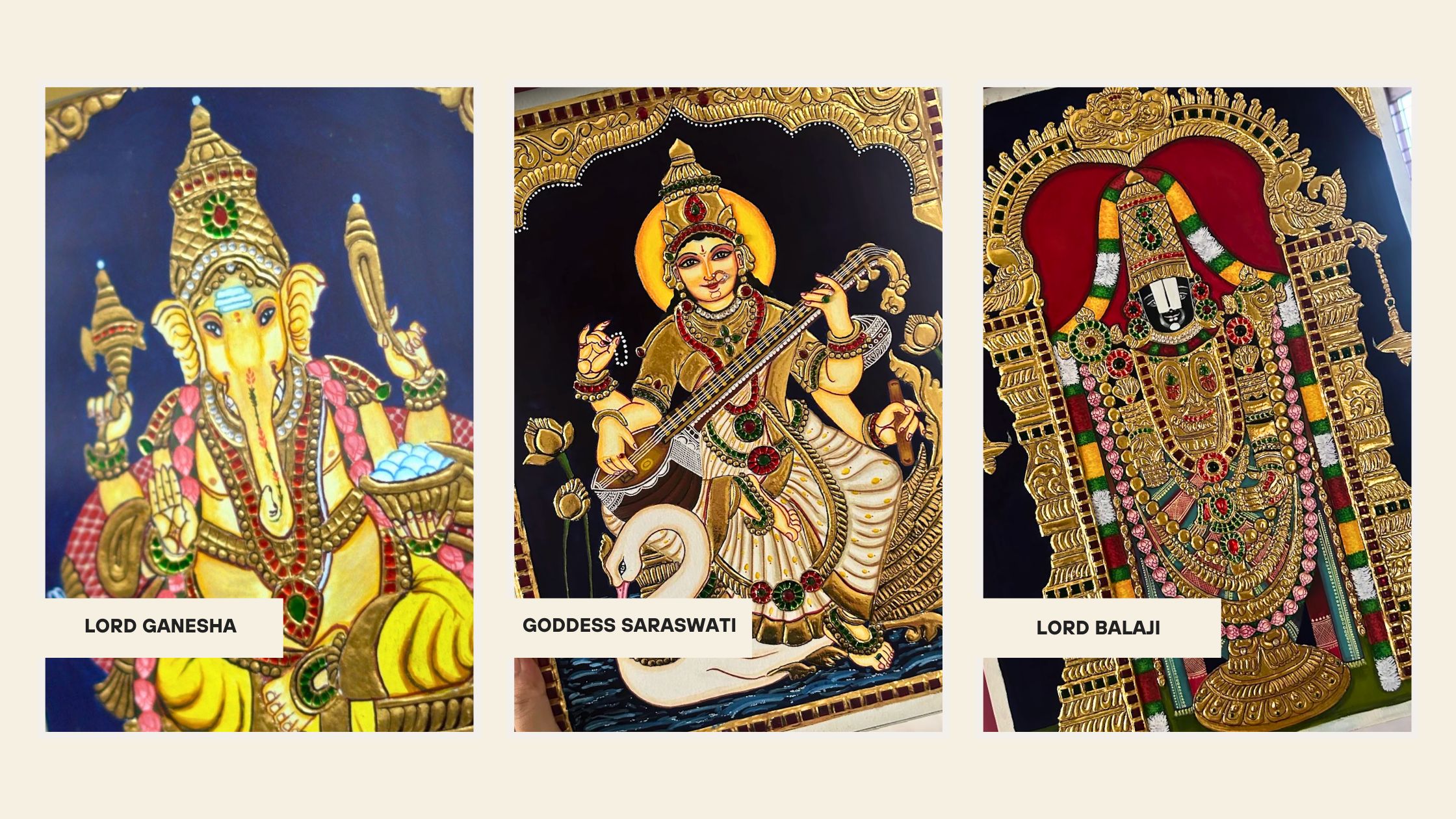
Today, she has learnt Ganesha, Saraswati and Balaji with us. She is now part of our Radha Krishna course. And along the way, she has created artwork that came entirely from her own curiosity.
For us, that is one of the most rewarding parts of teaching.To see a student move from carefully following every step...
to understanding the technique...
to trusting their own hands...
to experimenting...
and finally, to creating something that is unmistakably their own.
Sudha's journey reminds us that learning a new skill can change much more than what you are able to make.
It can make you calmer.
It can make you curious.
It can give you confidence.
And sometimes, it can simply make you feel proud when you look at your own hands and realise:
I know how to do this now.
Five years after she painted her first Ganesha, Sudha is still learning.
Still creating.
Still experimenting.
And, as she puts it, her journey with Tanjore Collective is from 2021 until forever.
We couldn't ask for a more beautiful journey to be part of.
More blog articles
Tanjore Painting Class Fees: What Online, Studio and DIY Courses Cost
What do Tanjore painting classes cost? Fees by format, what's included, and why some deities cost more.
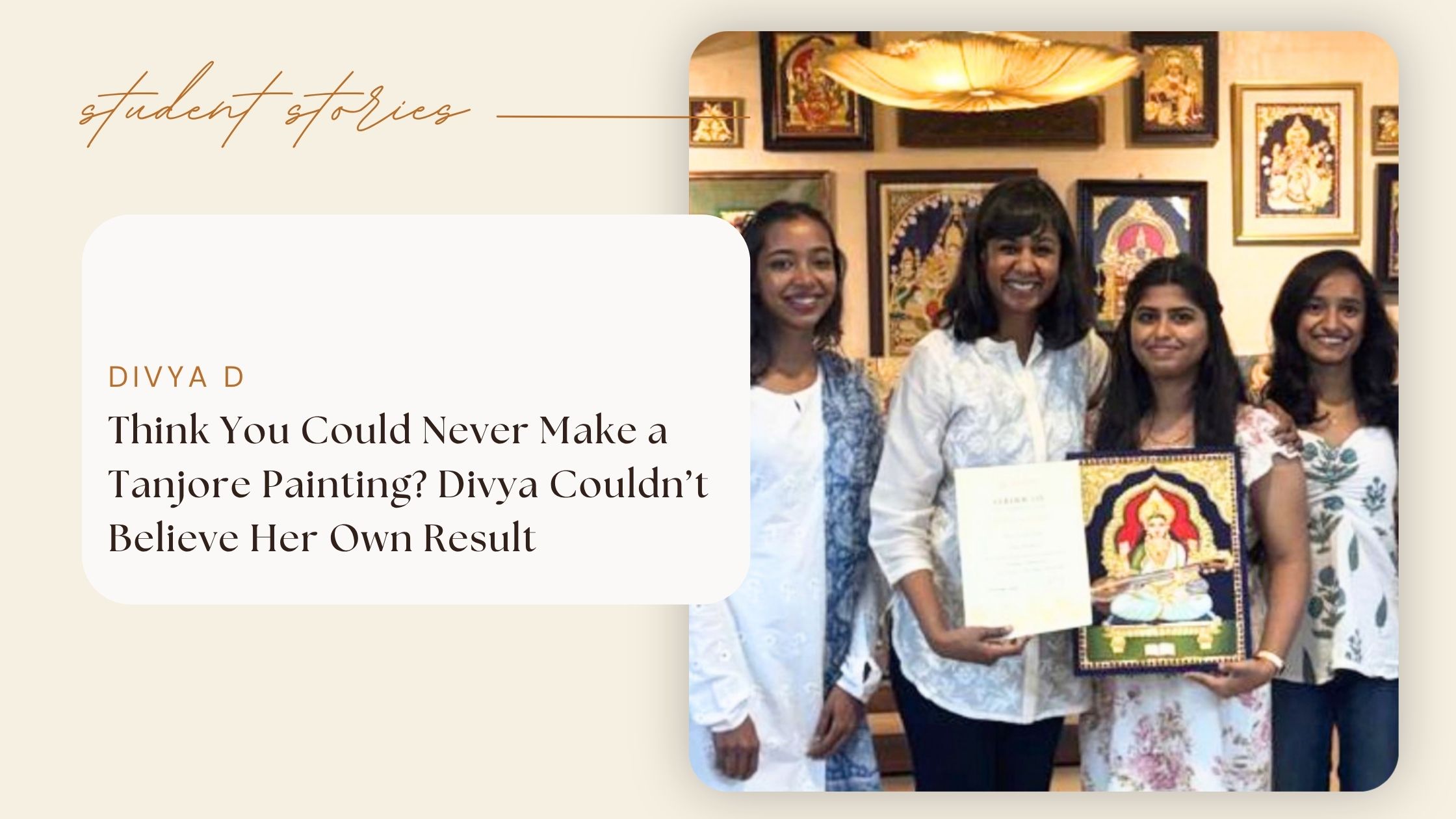
Think You Could Never Make a Tanjore Painting? Divya Couldn’t Believe Her Own Result
Think Tanjore painting is too intricate to create on your own? Divya did too, until she completed her Saraswati painting. Her journey reveals what patience, guidance, and practice can really make possible.
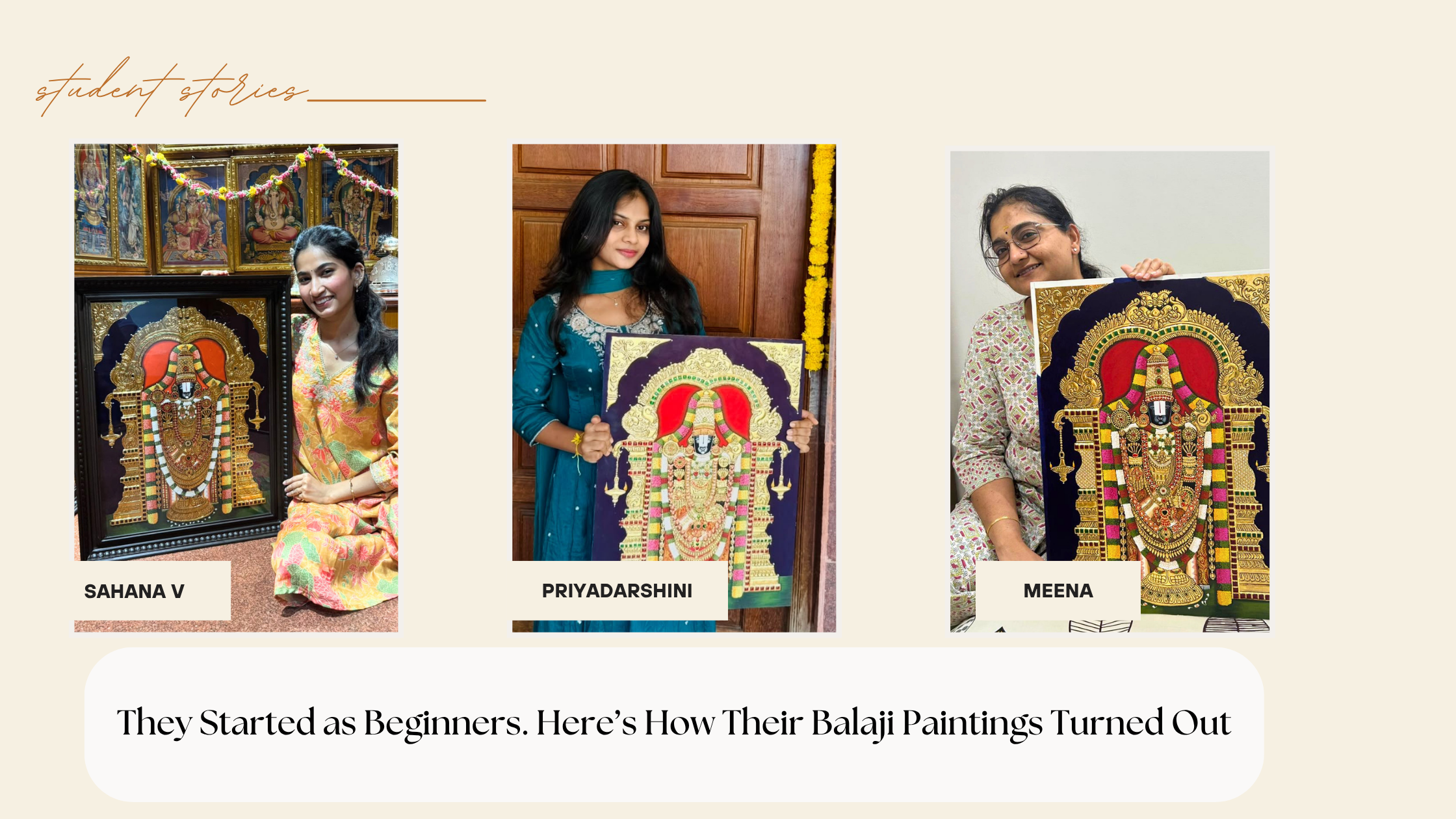
They Started as Beginners. Here’s How Their Balaji Paintings Turned Out
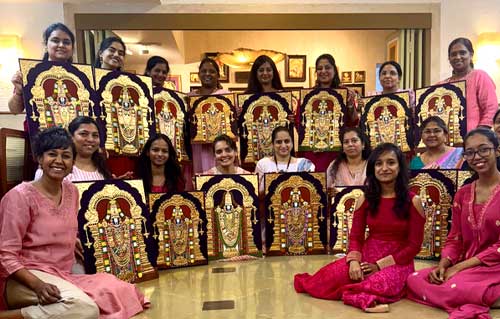
They started with a blank board and no prior experience. Over 11 weeks, they learnt each stage of creating a Balaji Tanjore painting. Here’s what our students had to say about the journey.
What our students say
Hear from students who've learned the art of Tanjore painting with us.