Tanjore Painting Gesso: What It Is and How It's Made

Written by
Vibha Raj
Gesso from the studio floor: how chalk powder and Arabic gum become the raised crowns, arches and jewellery of a Tanjore painting, the order we teach it in, and why it takes time.
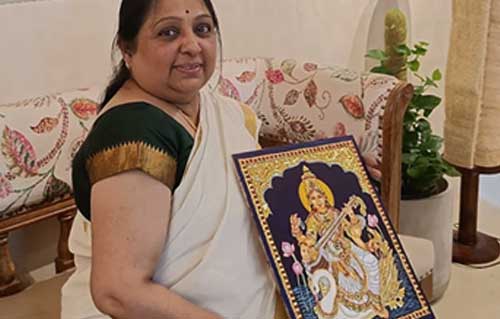
By Vibha Raj. Vibha began as one of our students and now leads our classes, guiding students through the embossing and intricate detailing.
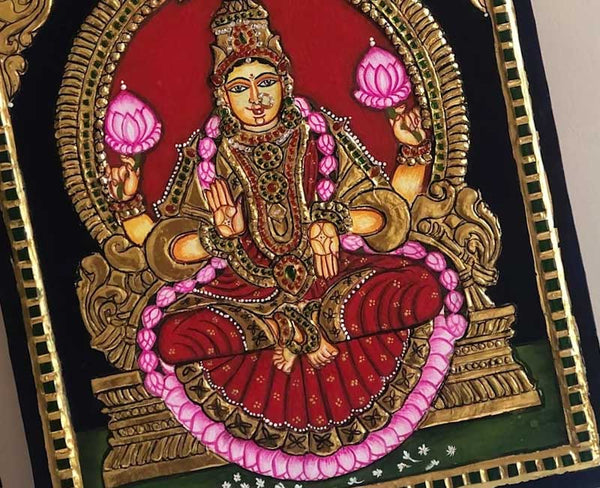
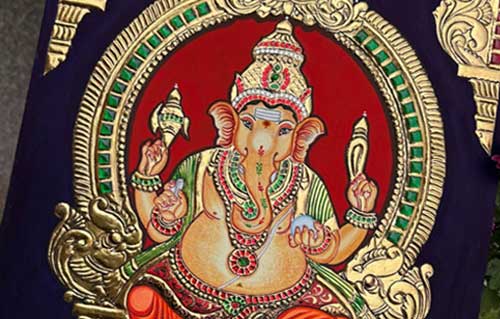
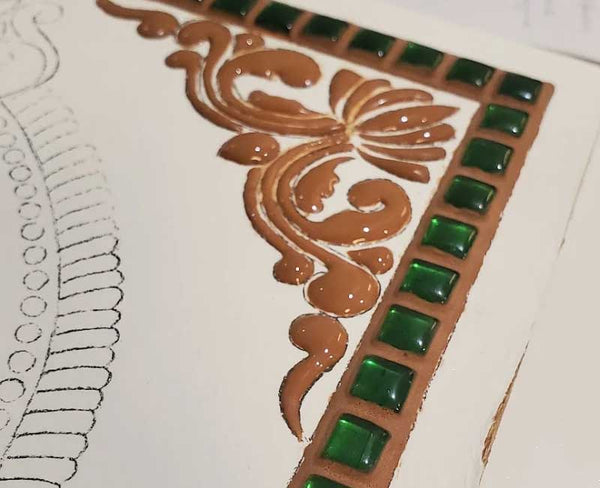
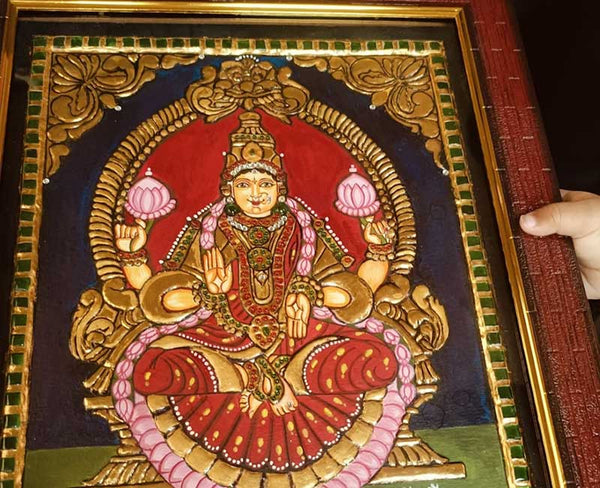
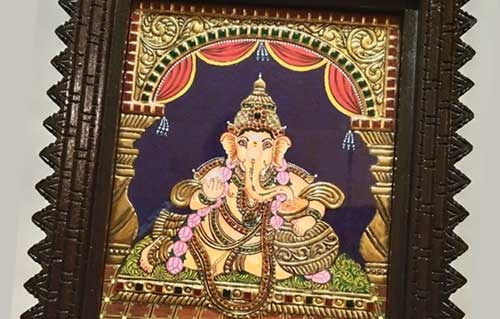
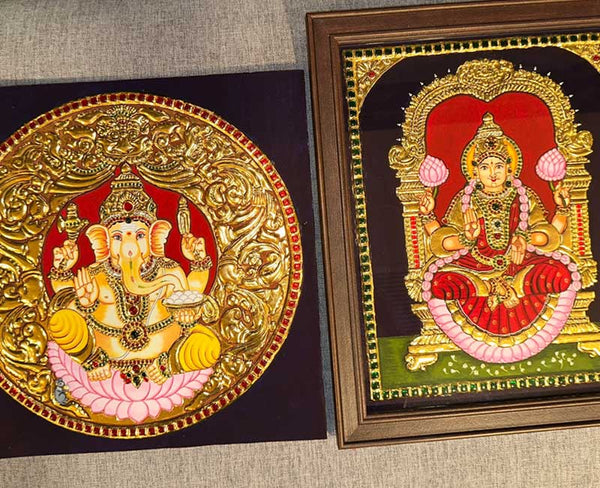
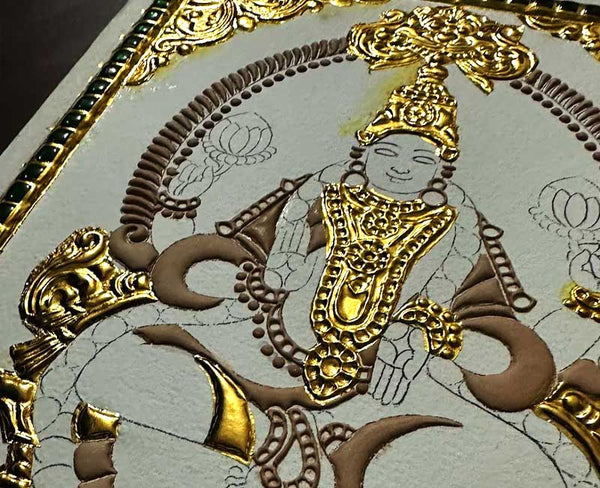
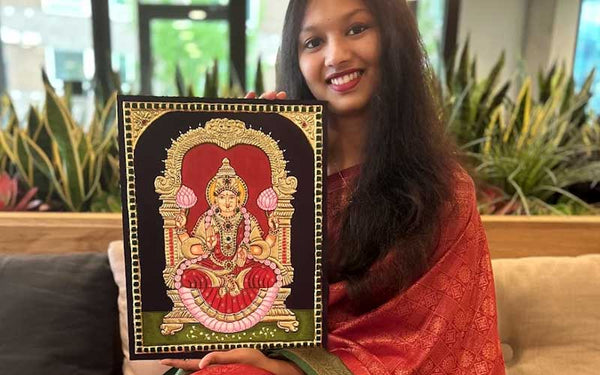
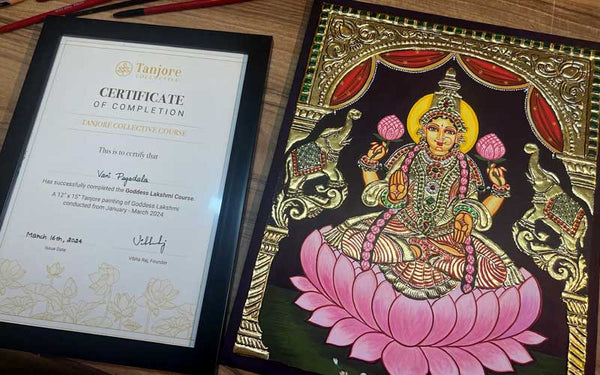
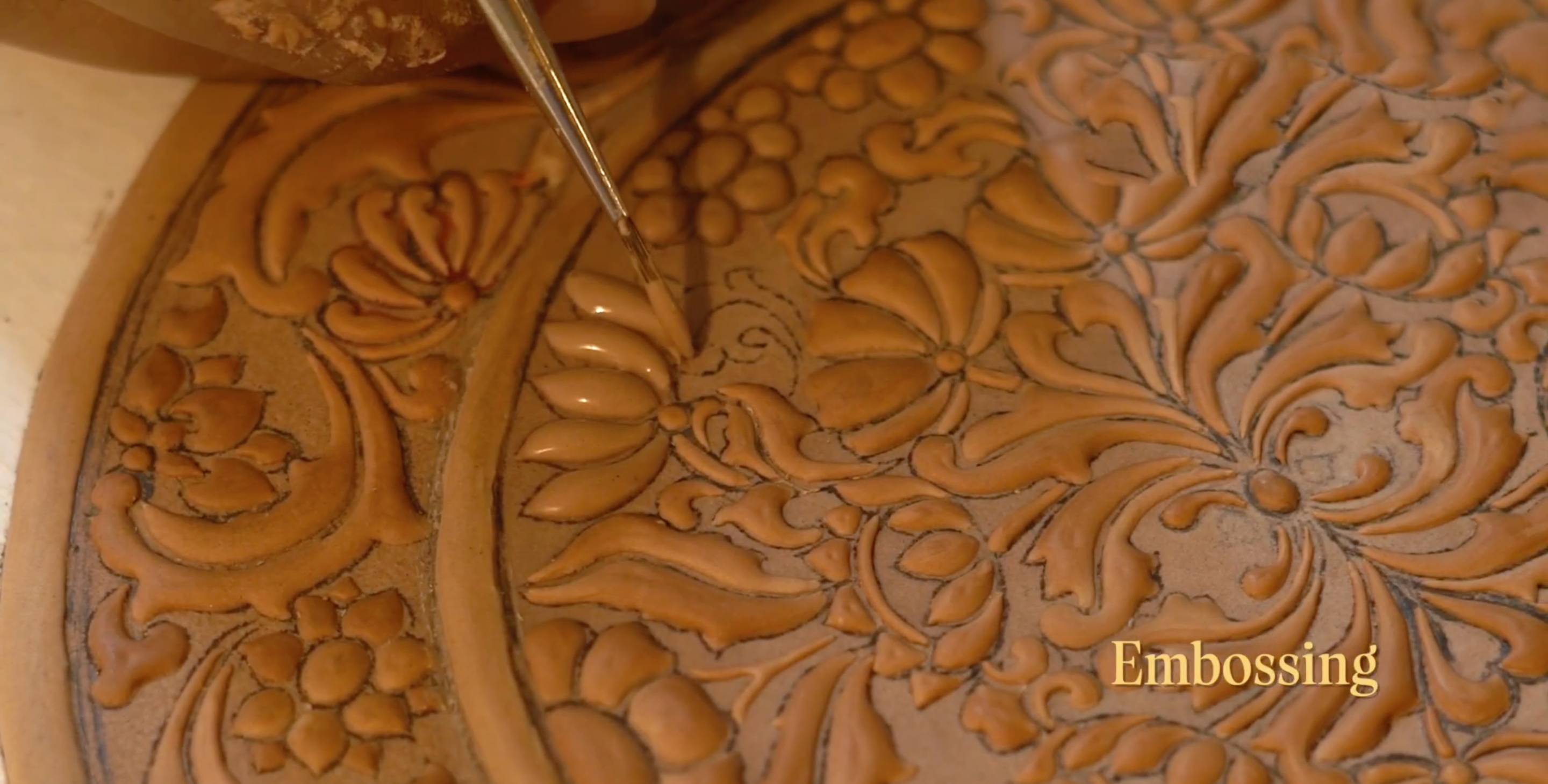
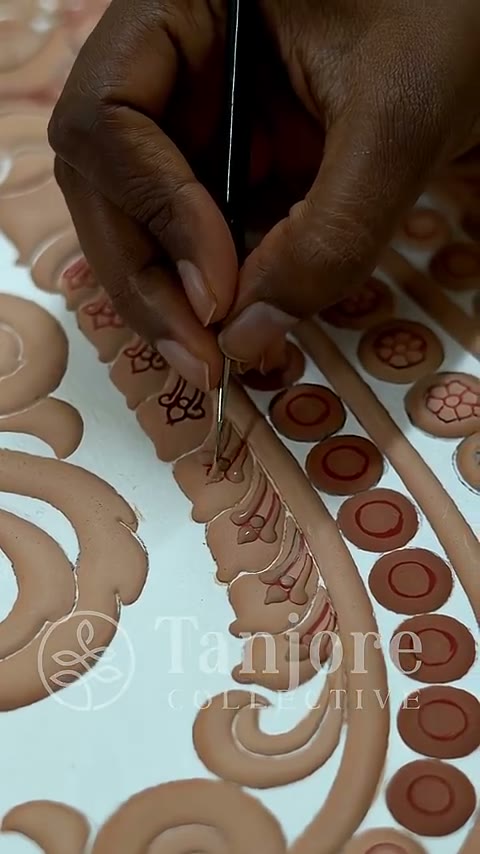
Gesso in Tanjore painting is a paste made from chalk powder and Arabic gum, built up by hand into the raised relief that gives a Tanjore painting its three-dimensional crowns, arches and jewellery. Chalk powder is the main ingredient of this embossing base, and Arabic gum binds it (the same gum is later used to stick the gold). Once the gesso relief is in place, kundan stones are set into it and 24 karat gold is laid over it.
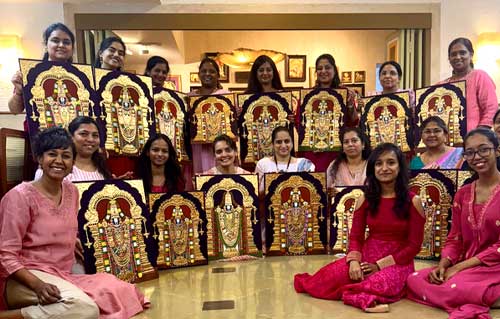
If you've ever run your fingers over a Tanjore painting and felt the ornaments rise beneath them, that's gesso. Many beginners find this stage a little daunting at first, because it's so different from painting. But it's also a stage many students say they fall in love with. It's slow, calm, and quietly satisfying, and it follows a clear order you can learn. For the full list of what goes into a painting, see our guide to Tanjore painting materials.
What is gesso in Tanjore painting?
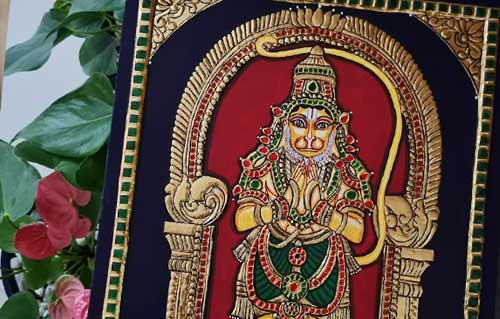
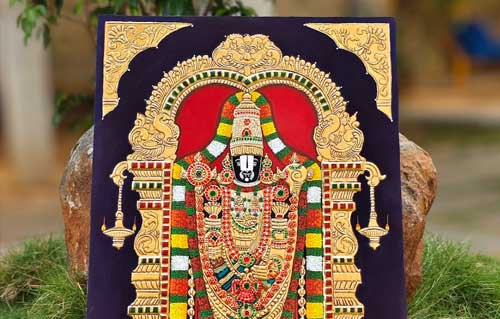
Gesso is the paste used to build the raised relief in a Tanjore painting. Building that relief is called embossing. It's what turns a flat sketch into a surface with depth: the arches around the deity, the crown, the necklaces and armlets, the borders. It's one of the defining features of the art form, alongside the gold foil, the inlaid stones and the rich colour.
What is gesso made of?
Tanjore painting gesso is made from two materials, both included in our Essentials Material Kit:
| Ingredient | What it does |
|---|---|
| Chalk powder | The main ingredient of the gesso, forming the body of the embossing base |
| Arabic gum crystals | Prepared first and used to make the gesso; also used later to stick the gold foil onto the canvas |
The same two ingredients are also used to prepare the canvas itself, before the sketch goes on. You can read about that first stage in our post on preparing the board.
You might be looking for an exact recipe. The truth is that the consistency matters as much as the ingredients, and it's far easier to learn by watching it made than from a list of measurements. That's why we teach the preparation step by step, on video and in class, rather than publishing a formula.
How we prepare and use gesso, step by step
Here's the order from our Lalitha Devi and Ganesha DIY video courses, lesson by lesson:
- Preparing the Arabic gum
- Preparing the embossing paste (the gesso)
- Using the embossing paste, learning to control how it flows
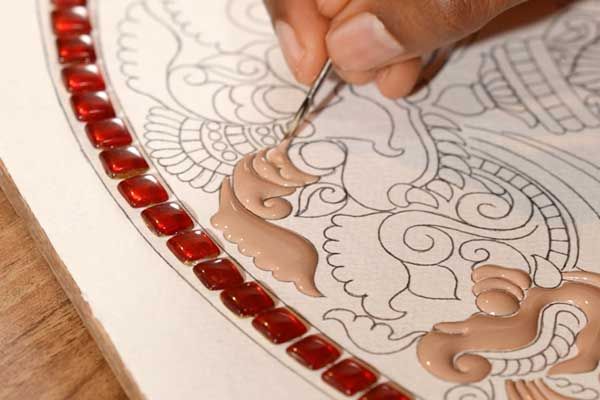
- Sticking the kundan stones onto the sketch
- Embossing for the kundan stones, building the relief around each one
- Embossing the canvas, the crowns, ornaments, arches and borders
- Cleaning the embossing paste, tidying any excess so the lines stay crisp
Our Lakshmi and Saraswati courses follow the same path, with lessons on embossing around the kundan stones, intricate embossing, and correcting excess embossing paste. After the gesso comes the gold. You can see how the stones fit into this in our guide to kundan stones.
Where gesso sits in the whole process
Gesso comes early, right after the canvas and sketch are ready:
Canvas preparation → sketch → gesso and embossing → kundan stones → 24 karat gold → painting → Swarovski crystals
Why gesso work takes time
In our courses, the embossing stage takes two to three sessions, and it's worth every minute. The relief has to be even and crisp, because the gold is laid directly over it. Any unevenness in the gesso shows through the gold, while a clean, well-built relief makes the gold catch the light beautifully.
A few things trip beginners up, and they're all gentle lessons rather than disasters:
- Rushing. Gesso rewards patience. Slow, steady lines look far better than quick ones.
- Too much paste. That's why cleaning and correcting excess embossing paste is a lesson of its own.
- Losing the shape. Following the sketch closely keeps ornaments neat and balanced.
In the studio you'll see gesso applied with a cone and with a brush, and both have their place. Whichever you use, your hand gets steadier with every session. Many students find this is where the calm, meditative feeling of Tanjore painting first sets in.
How gesso and gold work together
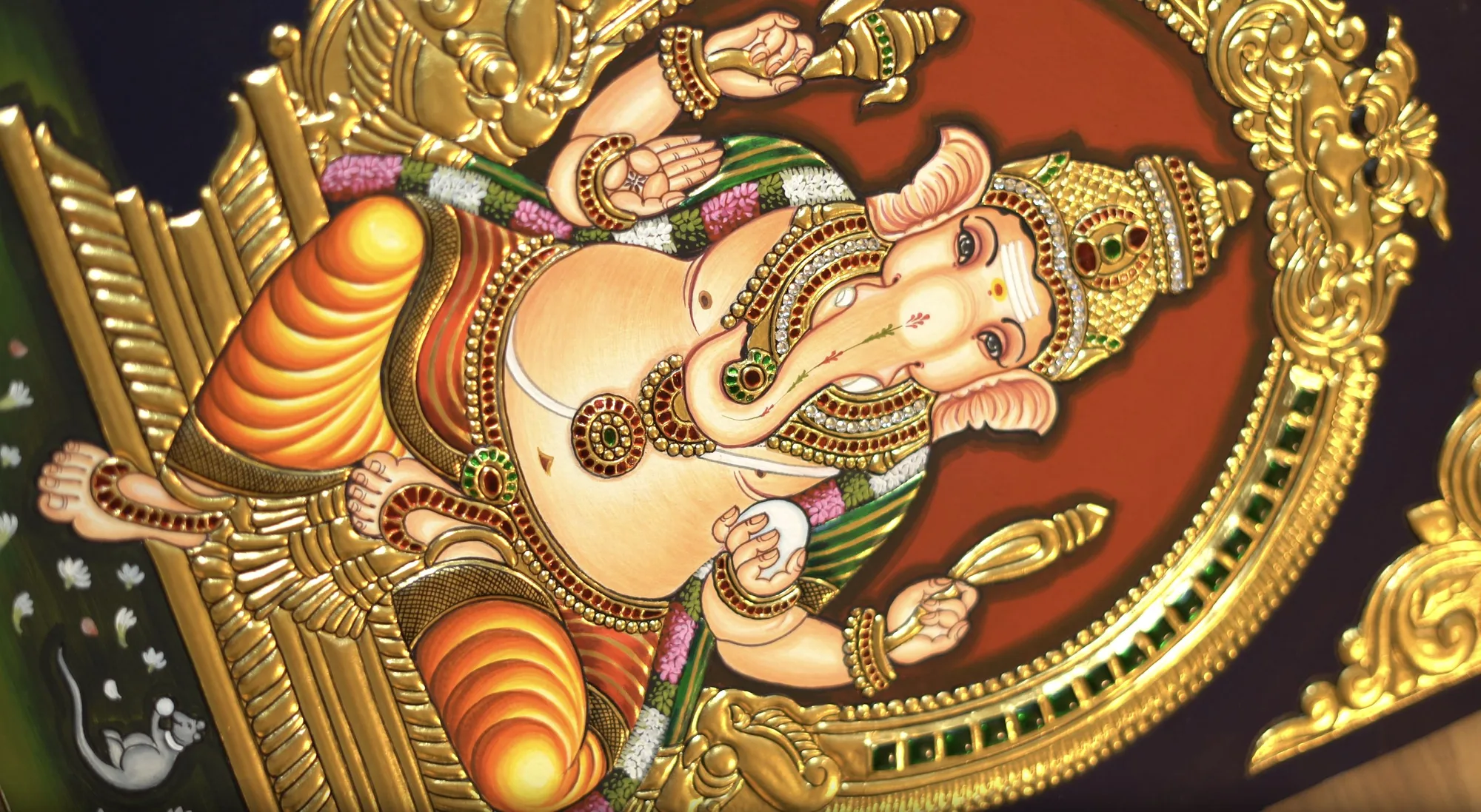
Gesso and gold are partners. The gesso gives the painting its shape, and the gold gives it its light. Once the relief has been built and the kundan stones set into it, real 24 karat gold leaf is laid over the raised areas, held with Arabic gum. In our classes, this gold stage takes another two to three sessions.
Because the gold follows every curve of the relief beneath it, the gesso decides how the finished ornaments will look. A crown with smooth, even relief turns into a crown that glows. That's why we never hurry this stage, and why we'd rather you spend an extra session on your gesso than rush to the gold. If you'd like to know more about the gold itself, our guide to 22K vs 24K gold foil explains why purity matters for shine and longevity.
Watch gesso work in our studio
Frequently asked questions
What is gesso made of in Tanjore painting?
Chalk powder and Arabic gum. Chalk powder is the main ingredient of the embossing base, and Arabic gum binds it. Both come in our Essentials Material Kit.
Is gesso the same as embossing?
Not quite. Gesso is the paste. Embossing is the work of building the raised relief with it. In our courses the two words are often used together, because you can't have one without the other.
Can a beginner do gesso work?
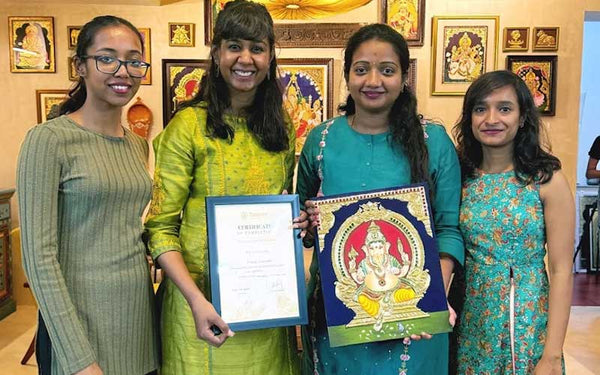
Yes. Our boards come pre-sketched, so you simply follow the lines, and the embossing is taught slowly over two to three sessions. Most of our students have never done anything like it before they start.
What comes after the gesso?
Kundan stones are set into the relief, and then 24 karat gold foil is laid over it, held with Arabic gum. Painting and Swarovski crystals come after that.
To see how gesso fits with every other material, from the board to the gold, read our complete guide to Tanjore painting materials.
More blog articles
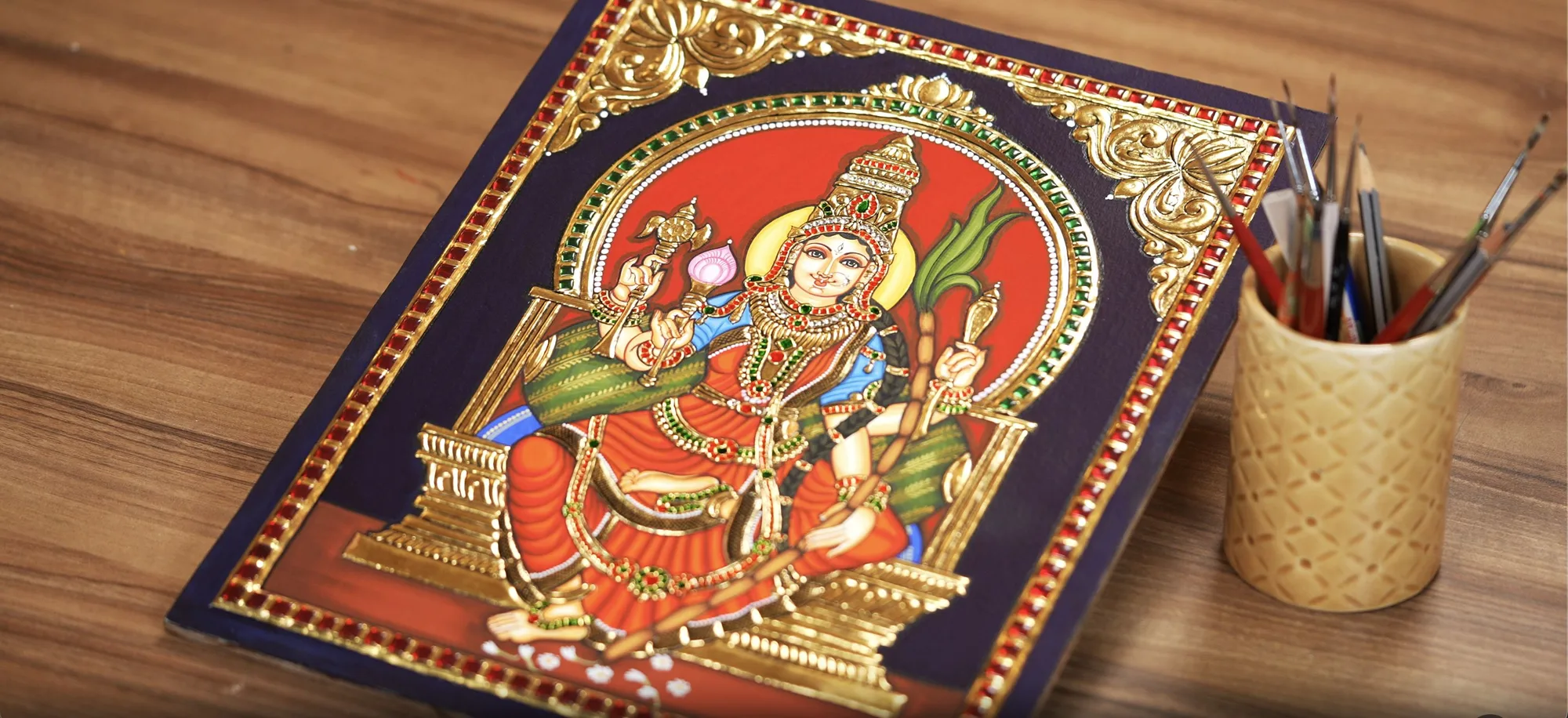
Tanjore Painting Size Guide: Choosing the Right Size for Your Space
Which Tanjore painting size suits your pooja room, living room or gift, with our real sizes.
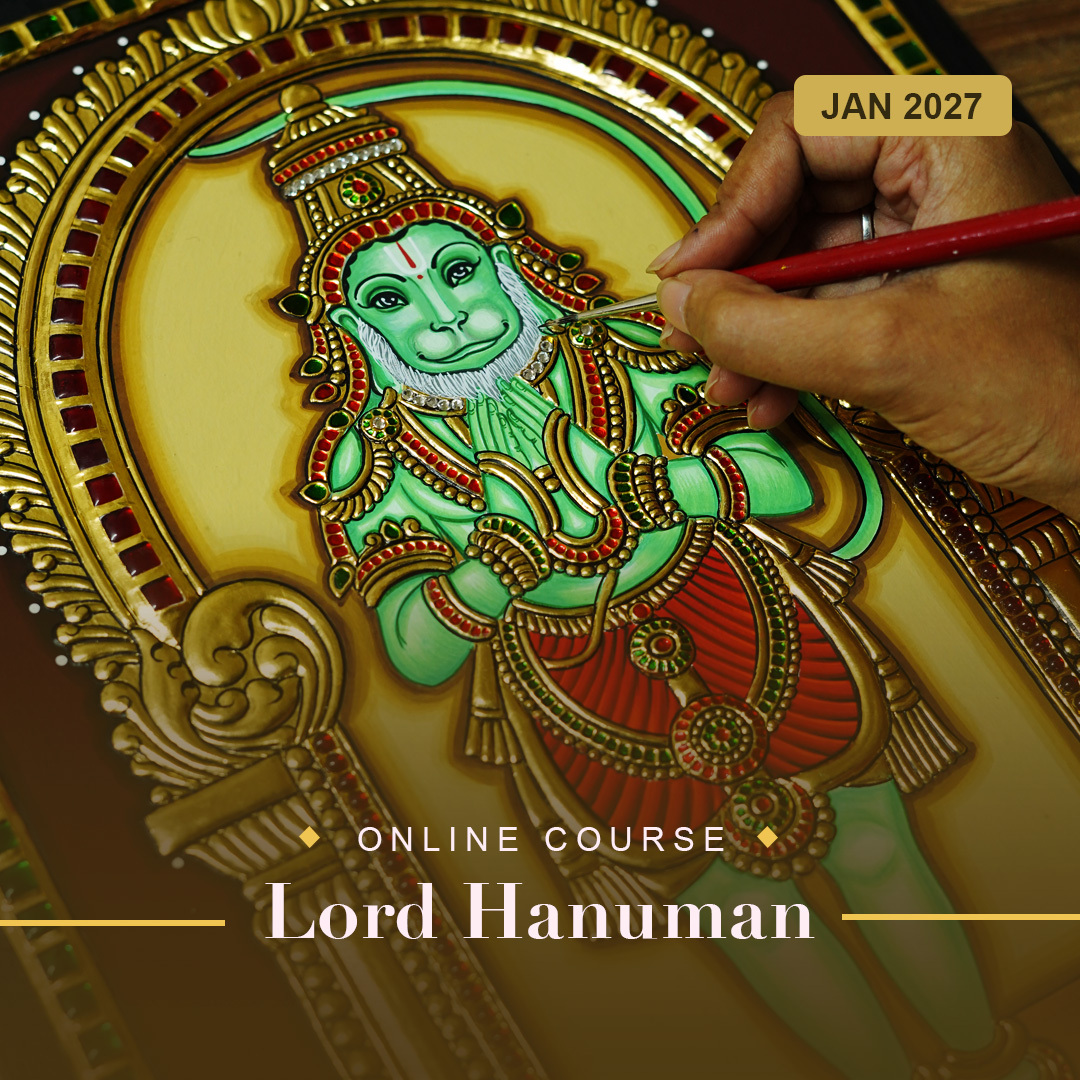
Lord Hanuman Tanjore Painting Class: Meaning and How to Learn It
Who Lord Hanuman is, when he is worshipped, and how to paint him yourself, even as a complete beginner.
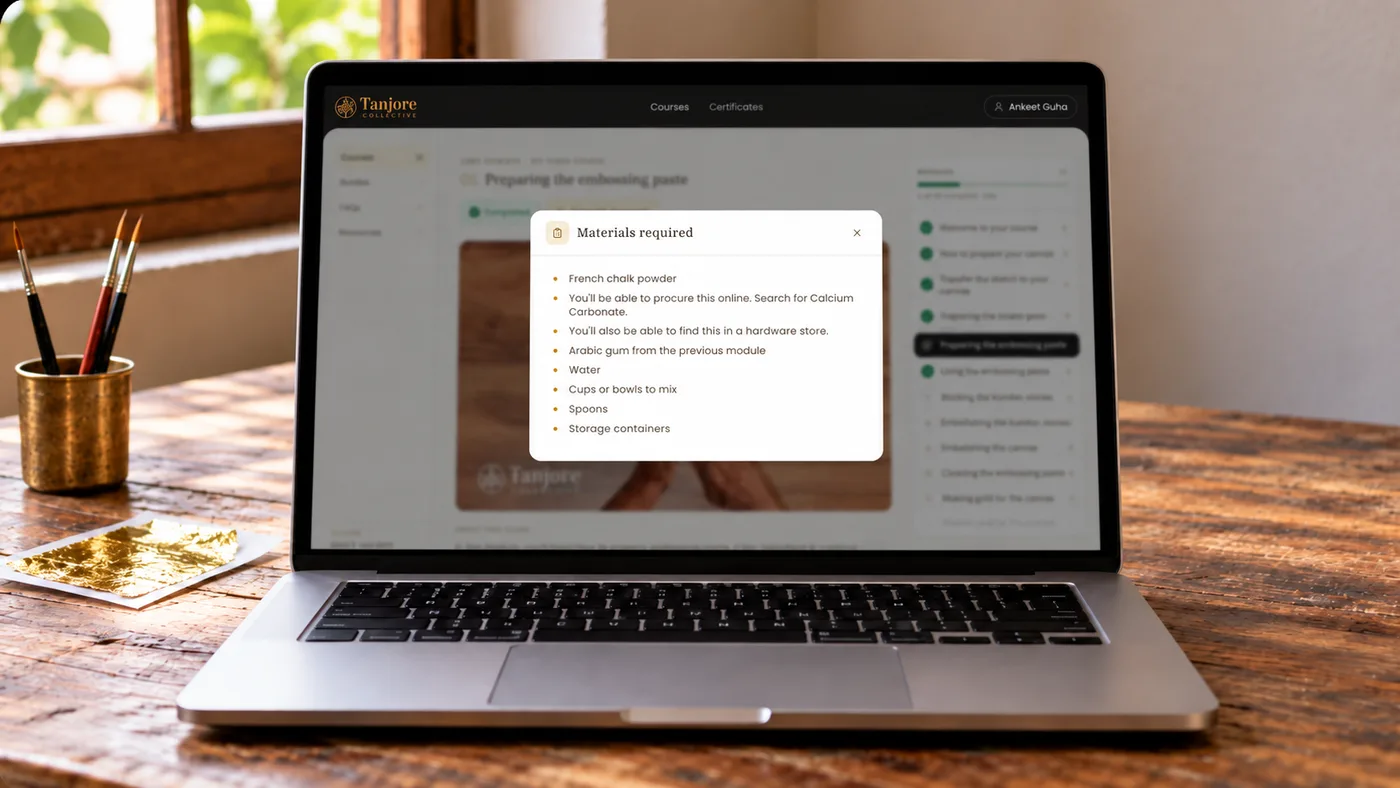
Tanjore Painting Course Details: Everything Included in Our Courses
Everything you receive in a Tanjore Collective course: teaching, recordings, app access, materials, feedback and a certificate.
What our students say
Hear from students who've learned the art of Tanjore painting with us.