Tanjore Painting Materials Explained
Written by
Vibha Raj
A clear rundown of every material in a Tanjore painting, from the same kit our students use.
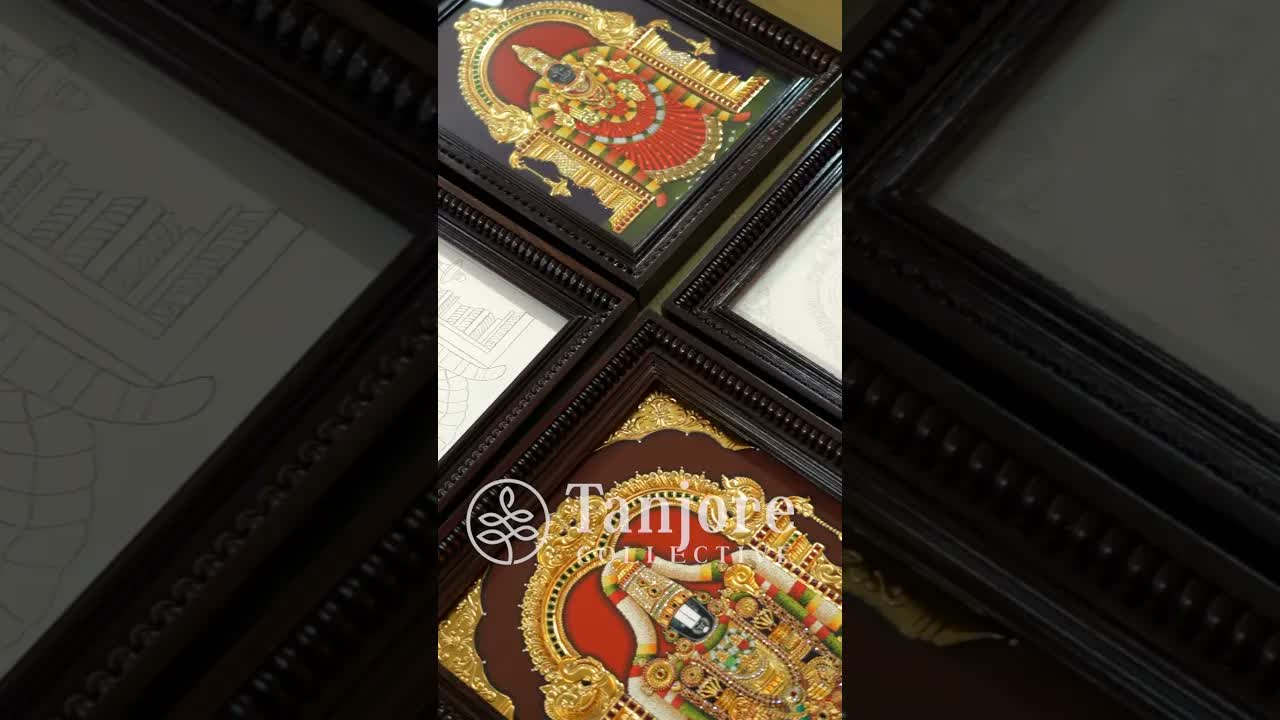
A Tanjore painting glows because of what goes into it, and every material has a specific job. Get the materials right and the finished piece has depth, sparkle and staying power. Get them wrong and even good technique falls flat. Here is every component we use, and why it matters. These are the same materials that make up our Essentials Kit, handpicked and tested over four decades of teaching so that nothing lets the finished painting down.
24 karat gold foil
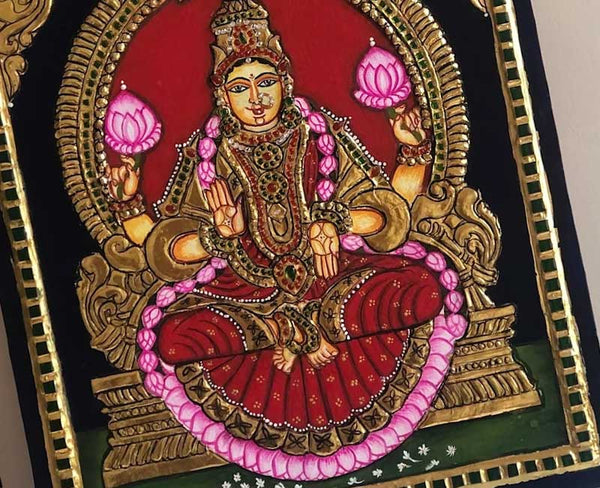
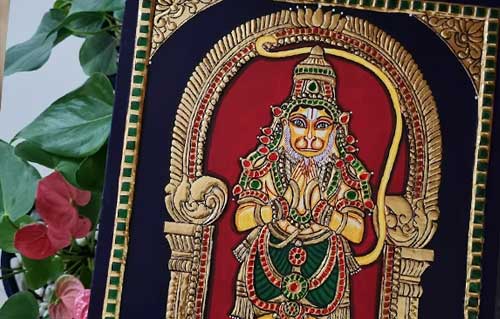
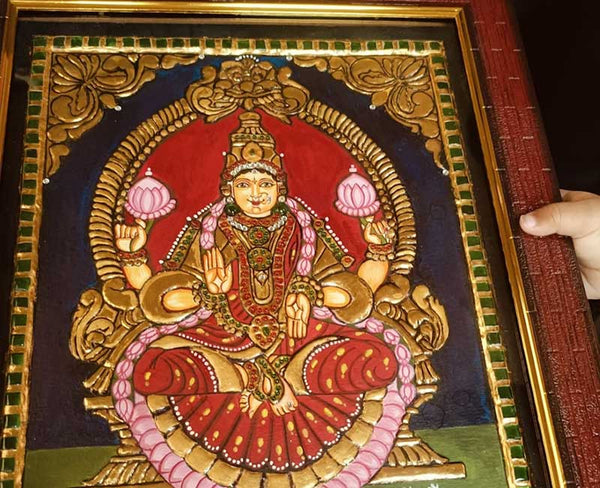
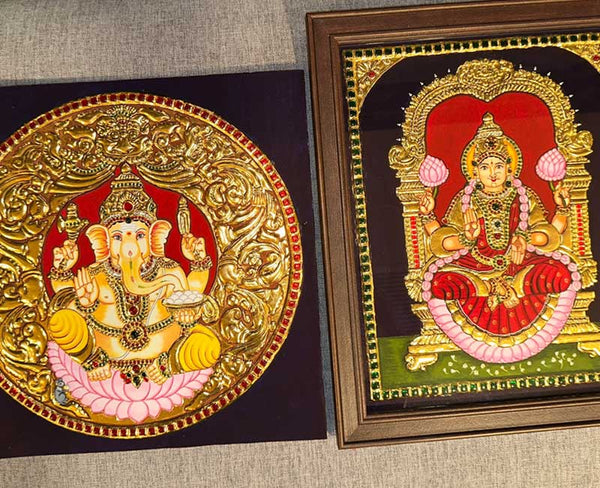
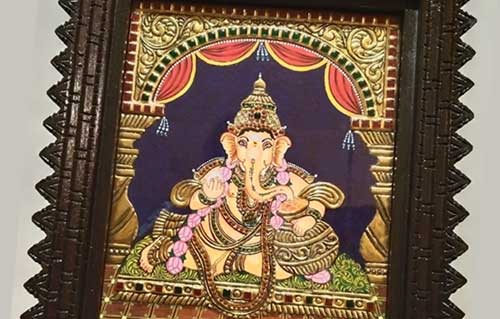
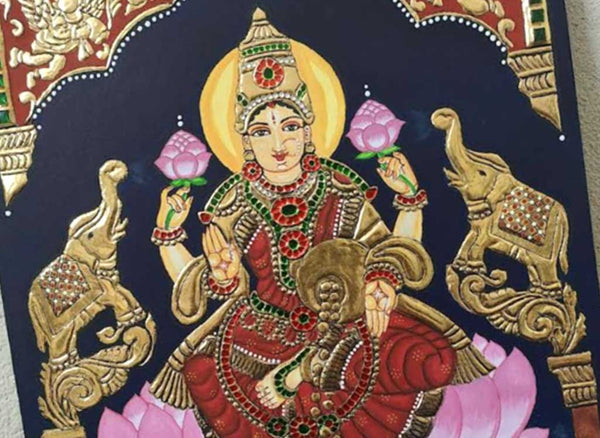
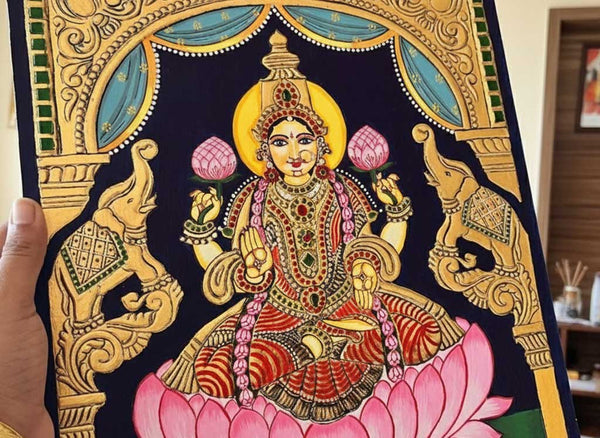
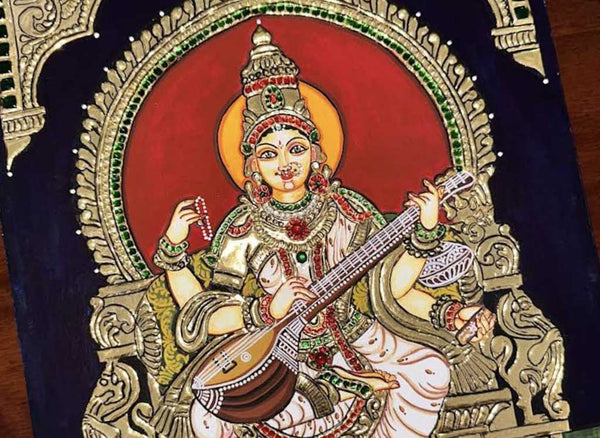
Real gold leaf is the heart of a Tanjore painting, laid over the raised areas such as the crown, the arch and the jewellery. We use 24 karat because purity is what decides both the shine and the longevity of your painting. Lower purity gold dulls faster and gives a cheaper, flatter look, so this is not a material to economise on. The gold is what makes a Tanjore painting read as gold from across a room, and it is the reason these pieces are treated as heirlooms rather than décor.
Gesso: chalk powder and Arabic gum
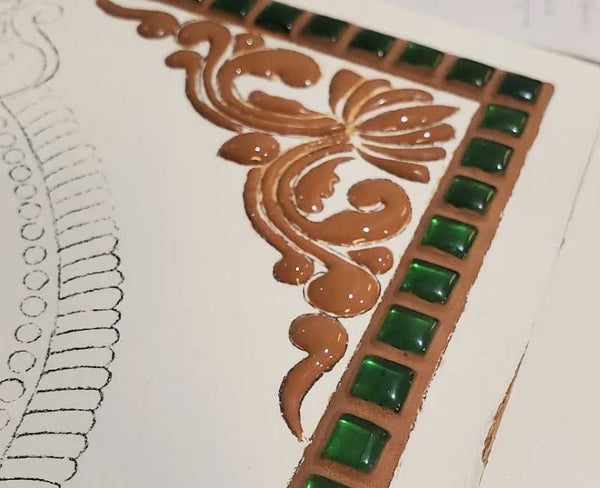
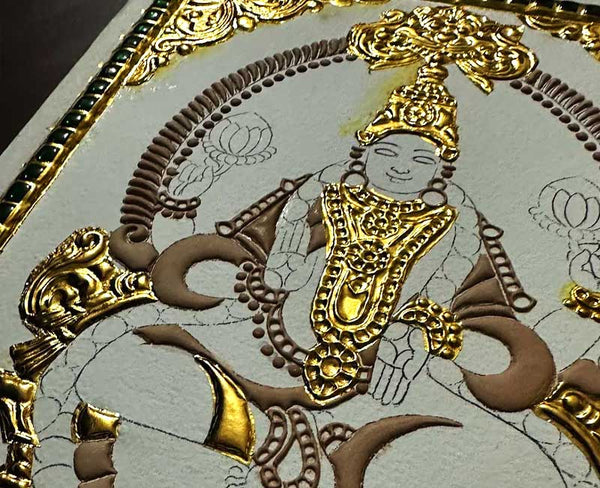
Gesso is the embossing paste that builds the raised relief under the gold. Chalk powder is the main ingredient, and Arabic gum crystals act as the binder that holds it together, and they also help stick the gold foil to the board later on. This raised base is what gives a Tanjore painting its three dimensional depth, so that the crown and jewellery physically stand off the surface. Good gesso work, built up in layers and allowed to dry, is what keeps the relief from cracking over time.
Kundan stones
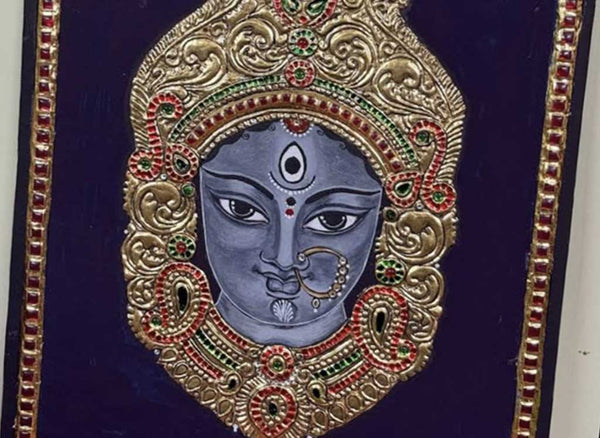
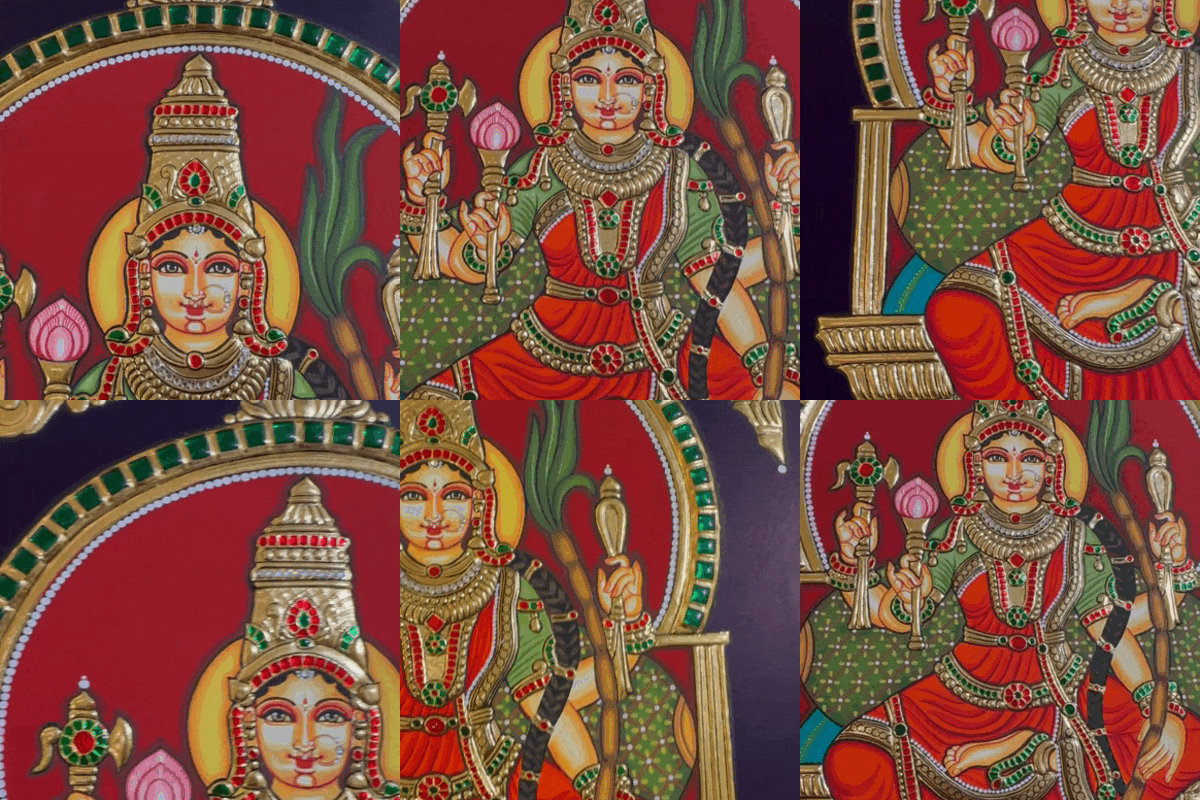
Kundan stones are an integral part of Tanjore paintings, set into the relief for jewelled ornamentation. They are positioned along the crown and the jewellery, and they catch and throw light so the deity looks regally adorned. Placing them well is part technique and part eye, and it is one of the most satisfying stages of the whole process.
Swarovski crystals
We finish with original Swarovski crystals. Where the kundan stones do the traditional jewelled ornamentation set into the relief, the Swarovski crystals add the final, brilliant sparkle, the kind you can see from across a room. They are the last touch that lifts the whole piece from beautiful to luminous.
The board
The base is a prepared board, typically plywood, which forms the foundation for everything else. Preparing it well with chalk powder and Arabic gum gives a smooth and sound surface. Our kits ship the board pre sketched, so you can start without worrying about drawing or proportions, which is the single biggest hurdle removed for a beginner.
The brushes
Our kit includes four premium, professional grade brushes. Good brushes matter more than people expect, because they are what let you achieve finesse in the fine work, especially in the face, which is the most delicate stage of the painting. Trying to paint fine detail with poor brushes is one of the most common ways a first attempt goes wrong.
What our Essentials Kit includes
Put together, our Essentials Kit contains a pre sketched canvas, 24 karat gold sheets, Arabic gum crystals, chalk powder, kundan stones, original Swarovski crystals, and four premium brushes. It is assembled so that everything is the right quality and nothing is missing, and it ships to your door, which is what lets remote students paint with exactly the right materials rather than hunting each item down separately. See the material kit for details.
Sourcing your own materials, or buying a kit
You can certainly gather these materials yourself if you already know what you are looking for, but there are two catches that tend to catch beginners out. The first is quality. Gold foil that is not truly 24 karat, or brushes that are too coarse for fine work, will limit the finished painting no matter how good your technique is, and quality is hard to judge when you are buying these things for the first time. The second is completeness. It is frustrating to be part way through a painting and discover you are short of chalk powder or Arabic gum. A kit solves both problems at once by bringing everything together in the right quality, which is why we assembled our Essentials Kit the way we did, and why most of our remote students choose it over sourcing piece by piece.
Handling and caring for your materials
A few simple habits protect both your materials and your finished painting. Gold foil is delicate and light, so handle it in a still space away from draughts and with clean, dry hands. Keep your chalk powder and Arabic gum dry, since damp is the enemy of good gesso. Rinse and reshape your brushes after each session and store them tip up, because the fine brushes in particular are what give you a clean face and detailing, and they last far longer when cared for. Once the painting is done and framed, keep it out of direct sunlight and damp, and dust it gently, and it will hold its glow for generations.
Understanding gold foil purity
Not all gold foil is the same, and the difference matters more than almost anything else in the finished painting. We use 24 karat gold, which is gold at its purest. Lower karat foils are mixed with other metals, which makes them cheaper but also duller, and prone to losing their lustre over time. Because the gold is the single most visible element of a Tanjore painting, and because these pieces are meant to be heirlooms that hold their shine for generations, the purity of the foil is not a place to economise. When you look at a genuine, well made Tanjore painting years after it was finished, the gold still glows, and that is the purity doing its quiet, lasting work.
How the materials work together
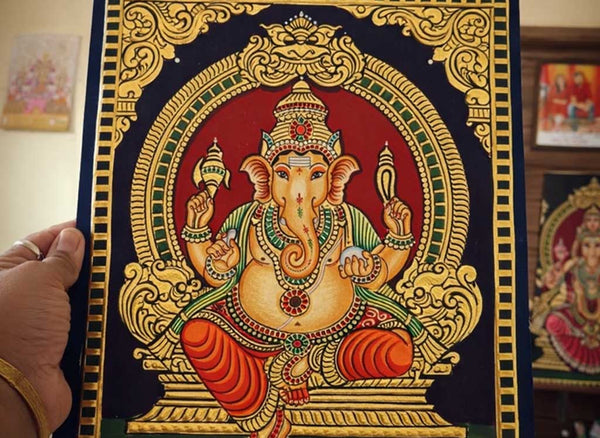
Each material in a Tanjore painting has a job, but the real beauty comes from how they combine. The chalk and Arabic gum gesso builds a raised relief that gives the ornaments physical depth. The gold foil, laid over that relief with the help of the same Arabic gum, wraps the raised form so the crown and jewellery genuinely catch the light rather than sitting flat. The kundan stones, set into the relief, add jewelled points of colour and sparkle, and the Swarovski crystals lift the whole piece with a final brilliance. The colour, painted around and beneath the gold, gives the deity its warmth and life, and good brushes make the fine work, above all the face, possible. No single material makes a Tanjore painting. It is the way they layer and work together that produces the glowing, three dimensional result.
Why good brushes matter more than you think
Beginners often underestimate the brushes, and it is one of the easiest ways a first attempt is quietly held back. Our kit includes four premium, professional grade brushes for a reason: the fine, controlled work of a Tanjore painting, above all the delicate painting of the face, simply cannot be done well with coarse or worn brushes. A good fine tipped brush holds its point, carries paint evenly, and lets you make the small, precise strokes that give the deity a serene and lifelike expression. Caring for them, by rinsing and reshaping after each session and storing them tip up, keeps them working well for a long time. Skimping on brushes to save a little is a false economy that shows up exactly where it matters most.
The board, and why it is pre sketched
The base of a Tanjore painting is a prepared board, typically plywood, made smooth and sound with chalk powder and Arabic gum. Everything else is built on this foundation, so its preparation matters. We ship our kit boards already sketched with the deity's outline, and this is a deliberate kindness to beginners. Drawing the deity accurately, with correct proportion, is the single biggest hurdle that stops people before they even begin. By removing it, the pre sketched board lets you focus your energy on the techniques that actually make Tanjore painting distinctive: the gesso, the stones, the gold and the colour. You are not skipping a skill so much as starting where the real craft begins.
Where each material sits in the process
It can help to map the materials onto the order in which you use them. First the board and its chalk and Arabic gum preparation form the foundation. Then more chalk and Arabic gum, worked into gesso, build the raised relief. The kundan stones are set into that relief next. The 24 karat gold foil is laid over the embossed areas after that. Then come the colours, painted around and beneath the gold with the fine brushes. And finally the Swarovski crystals add their sparkle at the end. Seen this way, the materials are not a random shopping list but a sequence, each one entering the painting at the moment it is needed. Understanding that sequence is also the best way to understand why a complete, well matched kit matters: running short of any one item stalls the whole painting.
What makes our Essentials Kit different
There are cheaper material sets available, but what goes into a kit is exactly what determines the quality of the painting that comes out of it, so it is worth knowing what you are getting. Our Essentials Kit is the product of more than four decades of teaching, and every item is chosen because it is the right quality for a painting meant to last. It contains a pre sketched canvas, genuine 24 karat gold sheets, Arabic gum crystals, chalk powder, kundan stones, original Swarovski crystals, and four premium brushes. Nothing in it is a substitute or a stand in. That is why our remote students, who cannot walk into our studio to inspect materials for themselves, can trust that painting with the kit means painting with the same quality of materials we use ourselves.
Can I reuse leftover materials?
Many students finish their first painting with some materials left over, and wonder whether they can be kept for a second. In general, yes, provided they are stored well. Keep chalk powder and Arabic gum dry and sealed, since damp is what spoils them. Store gold foil flat and protected in a still place, away from the draughts that can crumple the delicate leaves. Look after your brushes by rinsing, reshaping and storing them tip up. Kundan stones and crystals keep indefinitely. Cared for this way, leftover materials give many students a head start on their next painting, which for a lot of people follows sooner than they expected.
A word on the colours
Alongside the gold and the stones, colour is what gives a Tanjore painting its warmth and life. The tradition favours rich, saturated tones that sit beautifully against the metal, and part of learning the craft is learning to mix and apply them consistently, building depth in layers rather than in flat single coats. Applied with the fine brushes around and beneath the gold, the colours bring the deity's garments and the background to life and set off the shine of the gold. Good quality paints, like every other material here, repay the small extra care in the depth and durability of the finished piece.
Frequently asked questions
Is the gold in Tanjore paintings real?
Yes, we use 24 karat gold foil. Purity matters for both the shine and how long the painting lasts.
What is gesso made of?
Chalk powder bound with Arabic gum. It forms the raised embossing base under the gold and stones.
What is the difference between kundan stones and Swarovski crystals?
Kundan stones do the traditional jewelled ornamentation set into the relief. Swarovski crystals are a premium finishing sparkle added near the end.
Can I buy just the materials without a class?
Yes. Our Essentials Kit is available on its own, with the board pre sketched, so you have everything in the right quality to paint.
To see how these materials come together in practice, read how to make a Tanjore painting, or start from what is Tanjore painting.
More blog articles
What is Tanjore Painting? A Complete Guide
A clear, first-hand guide to Tanjore painting: what it is, how it is made, and why it glows.
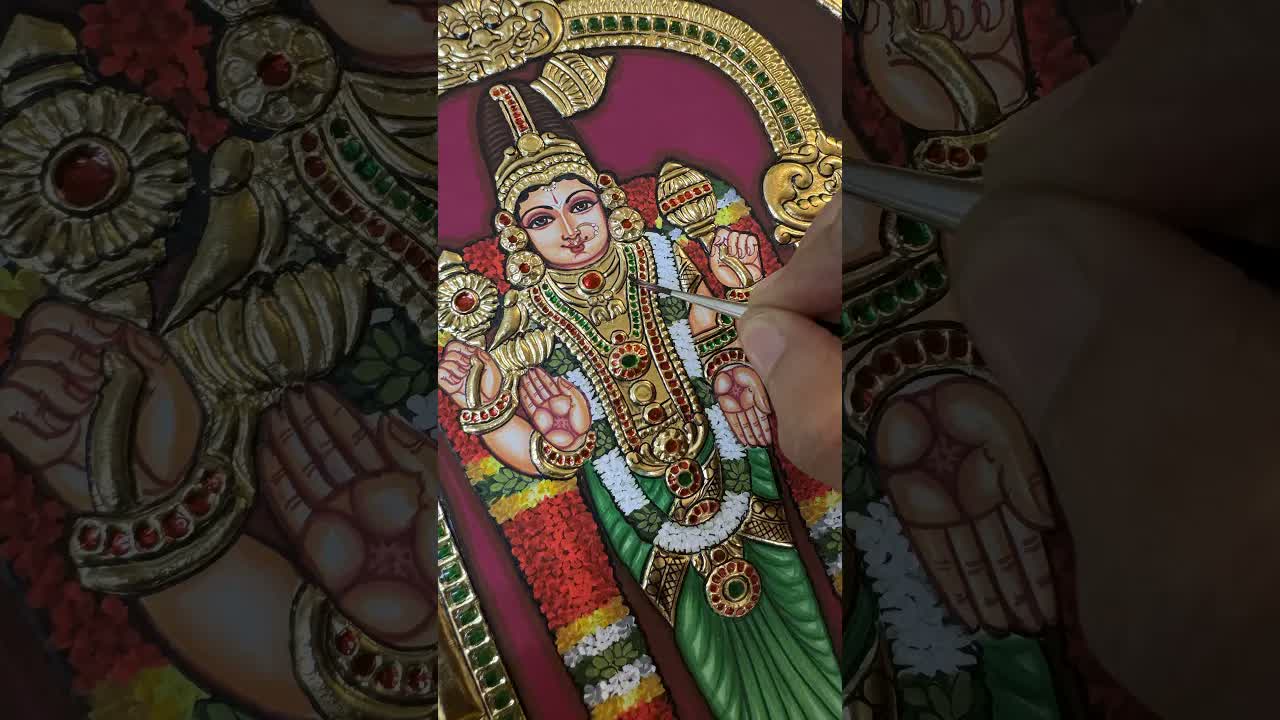
Tanjore Painting for Beginners: Where to Start
A gentle starting point for complete beginners, even if you have never held a brush.
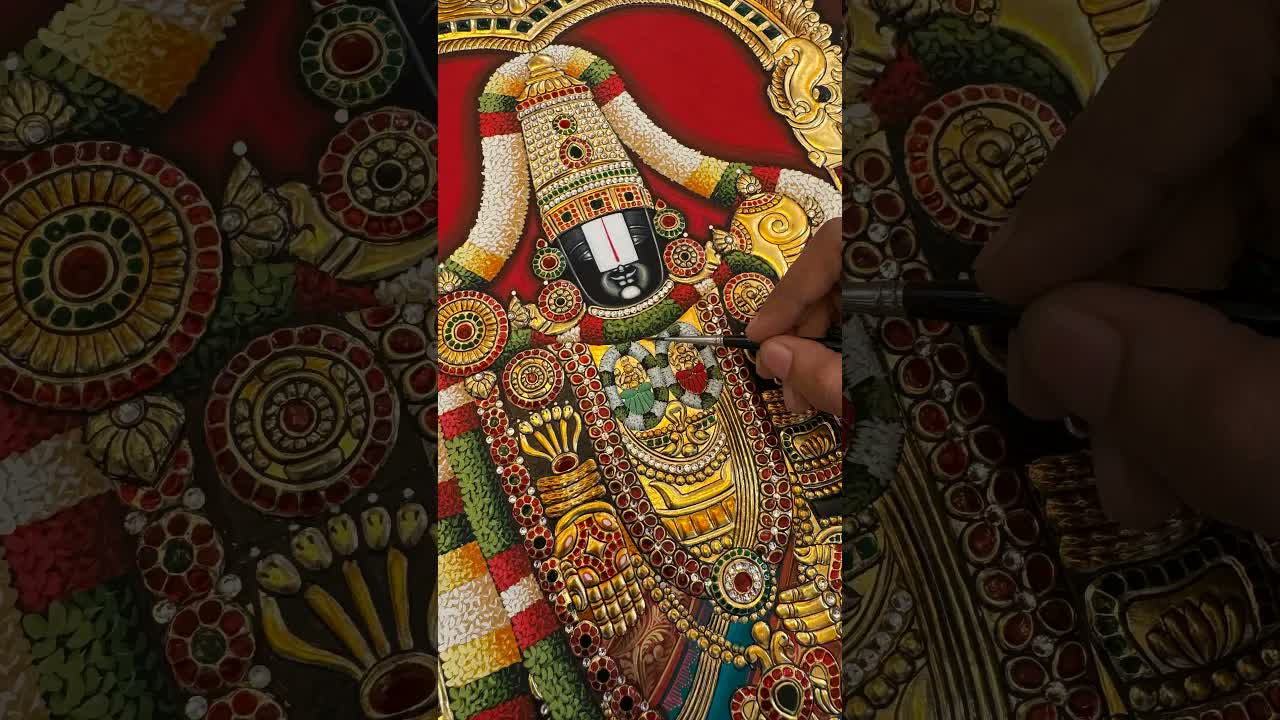
How to Make a Tanjore Painting: Step by Step
The real step-by-step process we teach, from a prepared board to the final face.
What our students say
Hear from students who've learned the art of Tanjore painting with us.