Tanjore Painting Gold Foil: 22K vs 24K and Why It Changes the Price

Written by
Vibha Raj
Gold foil is the heart of a Tanjore painting's shine and one of its biggest costs. We explain real vs imitation foil, 22 karat vs 24 karat, and what to ask before you buy.
Key takeaways
- Authentic Tanjore paintings use real gold foil laid by hand over raised gesso relief — it is one of the biggest reasons for the price, not a surface decoration.
- 24 karat is pure gold; 22 karat is alloyed and slightly less pure, so it costs a little less but gives a cooler, less lasting shine.
- Tanjore Collective uses 24 karat gold foil in its paintings and kits, because purity affects both the shine and how long it lasts.
- Real gold foil is not the same as 'gold paint' or bronze powder — imitation foil is a key sign of a cheaper, non-authentic piece.
- The purer the gold and the larger the gilded area, the higher the price.
Yes, an authentic Tanjore painting uses real gold foil, and it's one of the main reasons the painting costs what it does. The gold is laid by hand over raised gesso relief, and the purer the gold and the larger the gilded area, the higher the price. We use 24 karat gold in our paintings and kits, because purity of gold matters for the shine and longevity of the painting.
Gold is what makes a Tanjore painting glow in a dim pooja room, and it's also the part buyers ask us about most. So here's what we've learned about gold foil from decades at the board: what it is, the difference between 22 karat and 24 karat, what to watch for with imitation foil, and how it shows up in price. For the wider view of what a painting costs, see our full Tanjore painting cost guide.
Is the gold in a Tanjore painting real?
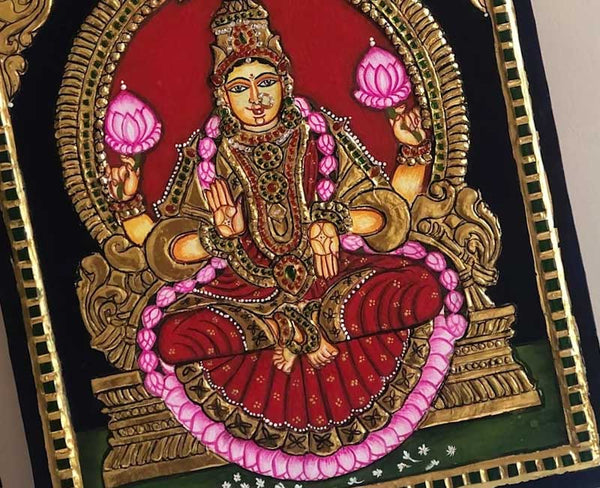
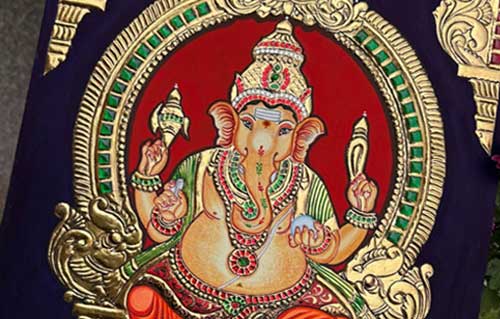
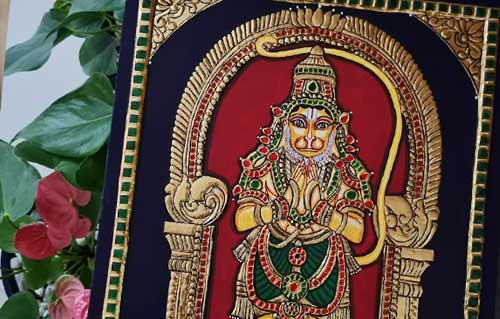
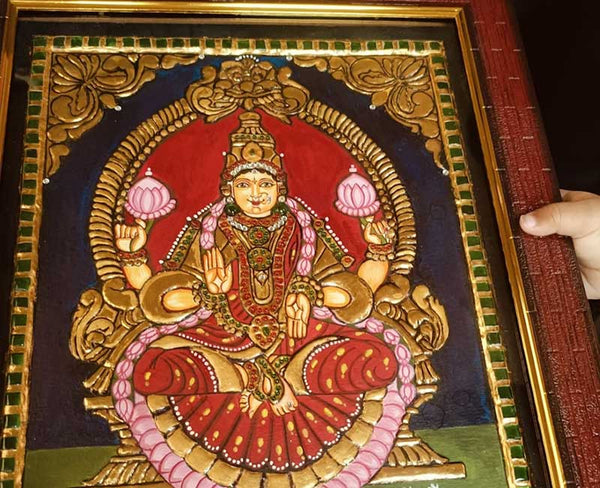
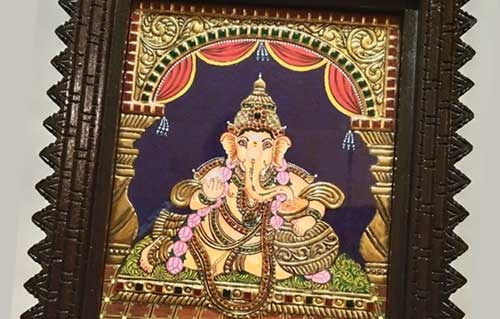
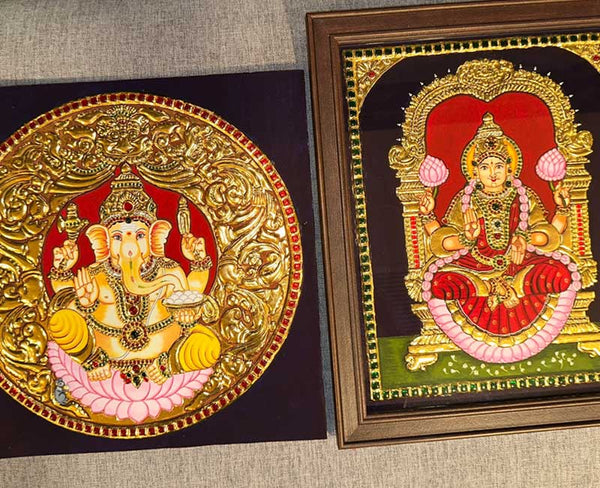
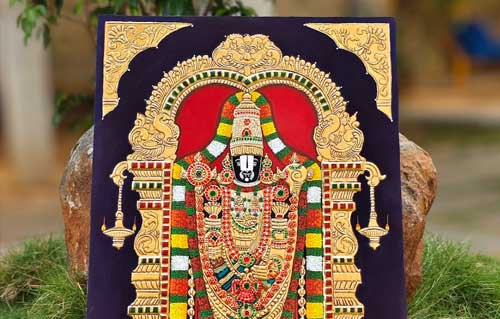
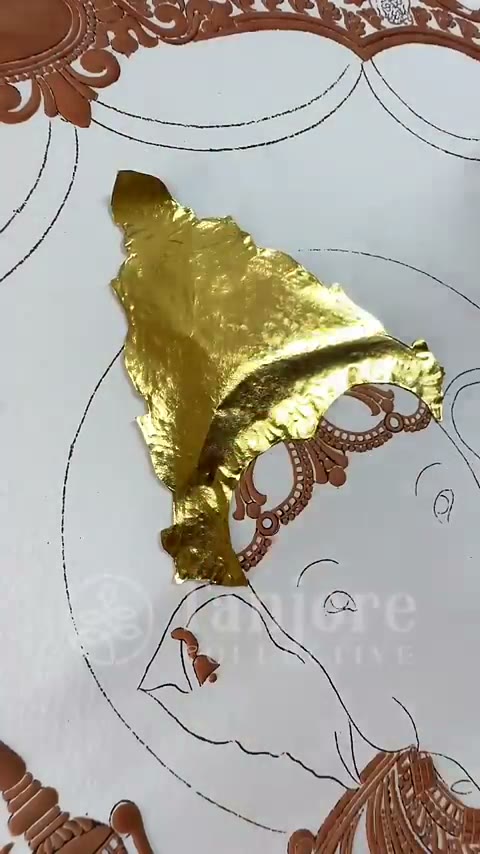
In an authentic painting, yes. Thin sheets of real gold are laid over the raised gesso areas (the arches, crowns and jewellery), where they catch the light and give the painting its signature warm shine. It's one of the defining features of the art form, alongside the gesso relief, the inlaid stones and the rich colour.
In cheaper pieces, the gold is where corners are most often cut. Gold paint or metallic imitation foil can look bright on the day you buy it. It isn't the same material.
22 karat vs 24 karat gold foil
Karat is simply a measure of how pure the gold is. 24 karat is pure gold. 22 karat is mostly gold, with a small share of other metals mixed in. You'll find both sold for Tanjore work.
| 24 karat foil | 22 karat foil | Imitation or metallic foil | |
|---|---|---|---|
| What it is | Pure gold | Mostly gold, with other metals | Not gold |
| Cost | Highest | A little lower | Much lower |
| Why choose it | Purity, for shine and longevity. What we use. | Real gold at a lower price | Decorative pieces on a tight budget |
| What to ask | "Is it 24 karat?" | "What karat, exactly?" | "Is this real gold at all?" |
Our own choice is simple. Every painting we make and every Essentials Material Kit we send out uses 24 karat gold sheets. The purity of the gold is what keeps the shine and helps the painting last, and we'd rather pay for that than explain a dull painting later.
Is 24 karat gold worth it?
If you're buying a painting to keep for years, for your pooja room or to pass on, we think it is. The gold is the part of a Tanjore painting you look at most. It's what glows during an evening aarti. And since the gold goes on only once, it's worth getting right.
If you're buying a decorative piece on a small budget, an honest seller can explain what they've used and you can choose with open eyes. That's all we'd ask: know what you're paying for.
Watch: how to check the quality of gold
Here's a short clip from us on checking the gold in a Tanjore painting.
Imitation and metallic foil: what to watch for
Imitation foils are cheap, easy to buy online and very shiny on day one. That's exactly why they're tempting. When you're shopping, a few simple steps help:
- Ask directly. "Is this real gold foil? What karat?" A genuine seller answers without hedging.
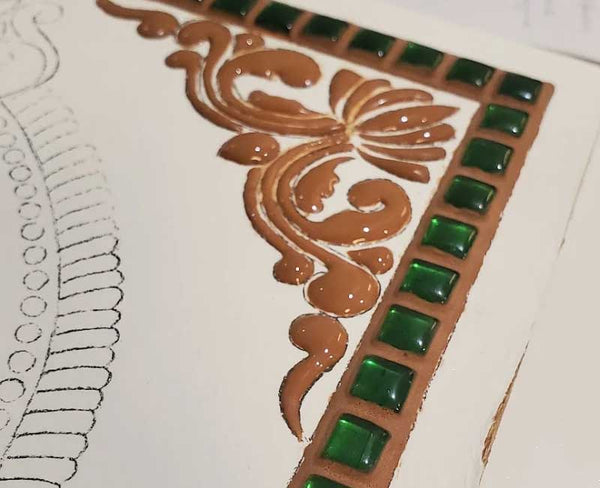
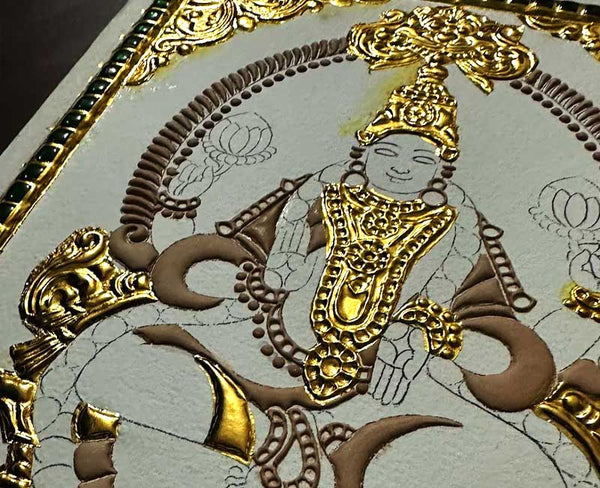
- Look at where the gold sits. In an authentic piece, the gold is laid over raised gesso relief, not painted flat onto the surface.
- Be wary of a very low price. Real gold has a real cost, and a large gilded painting at a few thousand rupees is hard to explain.
For a fuller checklist, including relief and stones, see how to spot an authentic Tanjore painting.
How much of the price is gold?
There's no fixed percentage, because it depends on the design. But the pattern is easy to follow: the more gilded area, the more gold, and the higher the cost. A small single deity with a simple arch uses far less gold than a large Balaji or Shiva Parivar covered in ornaments. That's one reason large pieces climb into the lakhs, and why our look at why Tanjore paintings are expensive puts gold near the top of the list.
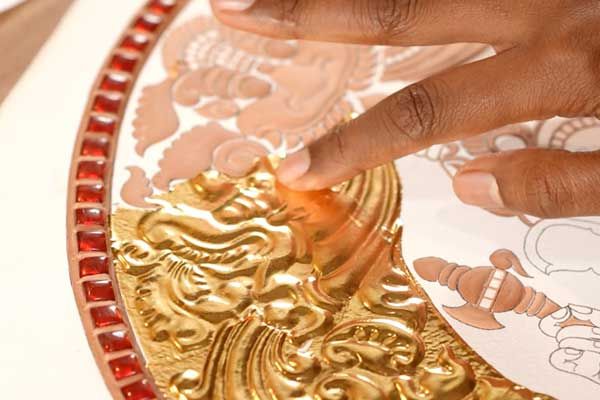
How gold foil is laid, and why it takes skill
Gold doesn't go on first. The board is prepared, the deity is sketched, and the gesso relief is built up by hand and set with kundan stones. Only then is the gold laid over the raised areas, held with Arabic gum. In our classes this takes two to three sessions.
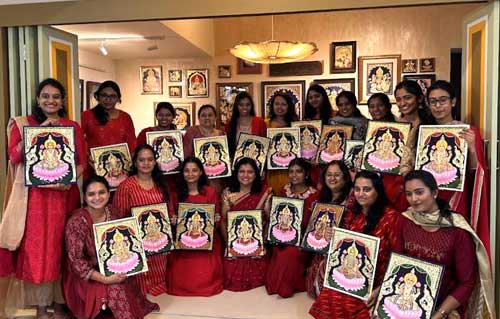
Gold leaf is so thin it moves with your breath. It tears if you rush it. Laying it smoothly over curved relief without wrinkles or gaps is a skill our students practise slowly, and it's one of the moments they tell us they'll never forget. Every Essentials Material Kit comes with 24 karat gold sheets, so learners work with the real thing from their very first painting. You can see what else is inside in Tanjore painting materials explained, or browse our material kits.
Frequently asked questions
Do Tanjore paintings use real gold?
Authentic Tanjore paintings do. Real gold foil is laid over the raised gesso relief. We use 24 karat gold, because purity matters for the shine and longevity of the painting.
Is 24 karat better than 22 karat for Tanjore painting?
24 karat is pure gold, while 22 karat has a small share of other metals. We choose 24 karat for its purity, which we've found matters for shine and longevity. 22 karat is still real gold and costs a little less.
How can I tell if the gold in a Tanjore painting is real?
Ask the seller what karat the gold is, check that the gold sits over raised relief rather than being painted flat, and be cautious of very low prices for heavily gilded pieces.
Why does more gold make a Tanjore painting more expensive?
Because every gilded area uses real gold sheets and careful handwork. Larger and more ornate paintings have more gilded area, so they cost more.
Want to see how gold fits into the full price of a painting, alongside size, stones and artist time? Head back to our Tanjore painting cost guide.
More blog articles

Lord Hanuman Tanjore Painting Class: Meaning and How to Learn It
Who Lord Hanuman is, when he is worshipped, and how to paint him yourself, even as a complete beginner.

Tanjore Painting Course Details: Everything Included in Our Courses
Everything you receive in a Tanjore Collective course: teaching, recordings, app access, materials, feedback and a certificate.

Tanjore Painting Course Registration: How to Register, Step by Step
How to register for a Tanjore painting course, from choosing your batch to receiving your kit and starting class.
What our students say
Hear from students who've learned the art of Tanjore painting with us.