Kundan Stones for Tanjore Painting: What They Are and How They're Set

Written by
Vibha Raj
The jewels of a Tanjore painting: kundan stones stuck down before the embossing, Swarovski crystals added last, the order we set them in, and how to tell good stones from cheap substitutes.
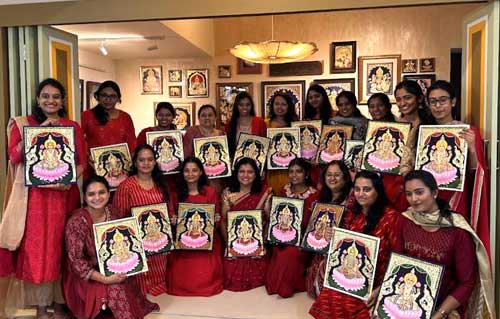
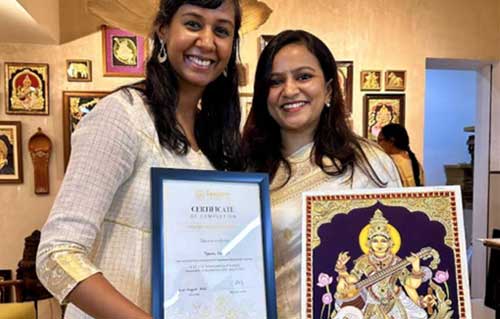
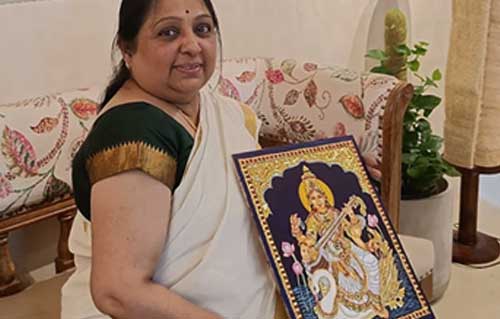
By Vibha Raj. Vibha began as one of our students and now leads our classes, guiding students through embossing and the intricate detailing around the stones.
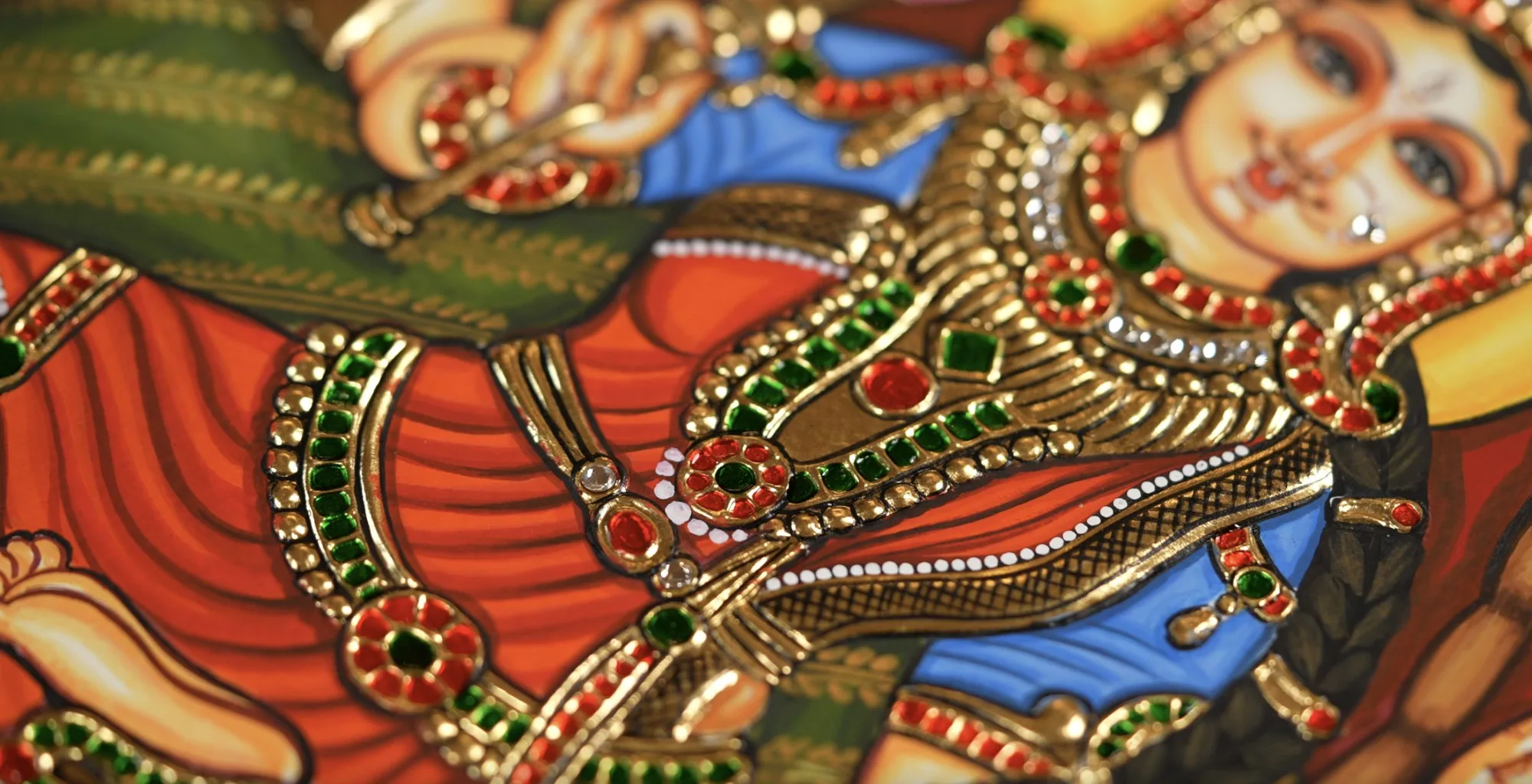
Two kinds of stones go into a Tanjore painting: kundan stones, which are stuck onto the sketch first and then framed by raised gesso to form the deity's jewelled ornaments, and Swarovski crystals, which are added at the very end for a final sparkle. Kundan stones go in early, before the embossing and the gold. Crystals go in last, after the painting is finished. Our Essentials Material Kit includes both kundan stones and original Swarovski crystals.
If you've ever looked closely at a Tanjore painting and wondered what makes the crowns and necklaces glitter like real jewellery, this is it. The stones are small, and setting them can feel fiddly at first. But it's one of the most satisfying parts of the craft, and it follows a clear order you can learn. For the bigger picture of everything that goes into a painting, see our guide to Tanjore painting materials.
What stones are used in Tanjore painting?
A Tanjore painting uses kundan stones for its jewelled ornamentation and Swarovski crystals for a finishing sparkle.
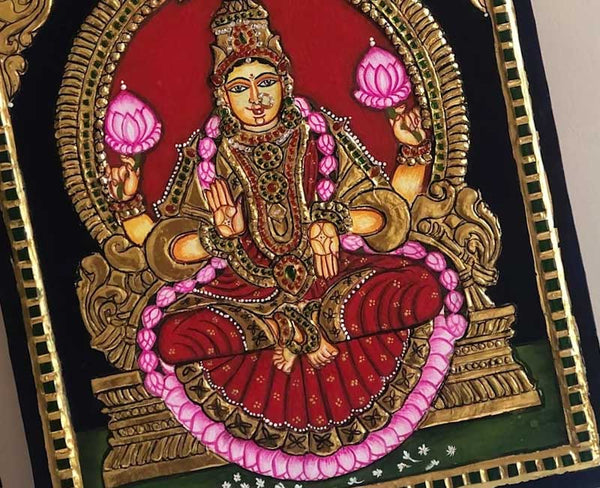
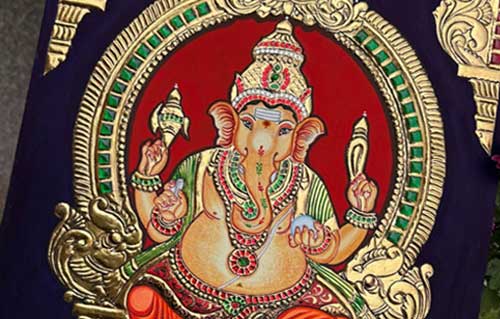
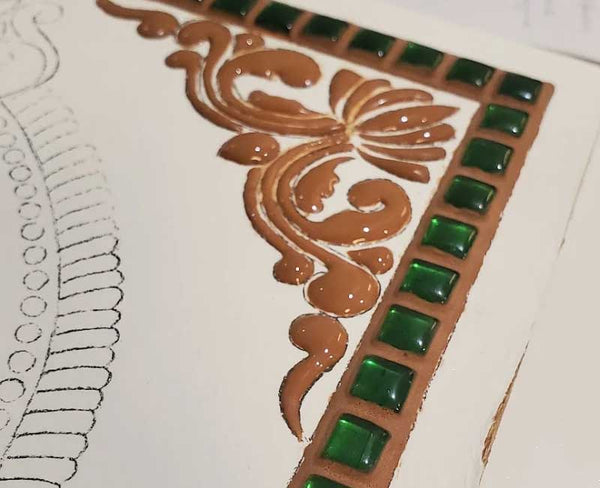
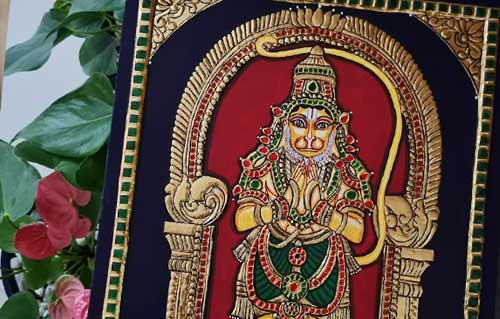
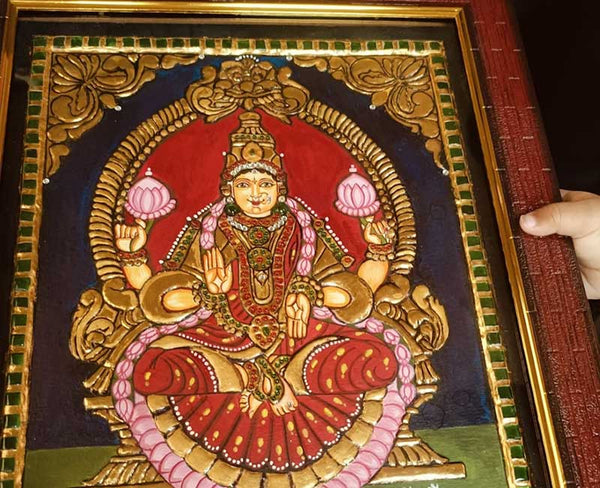
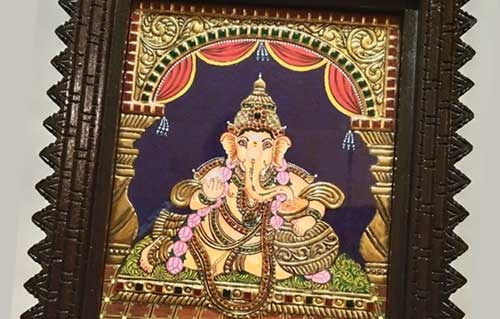
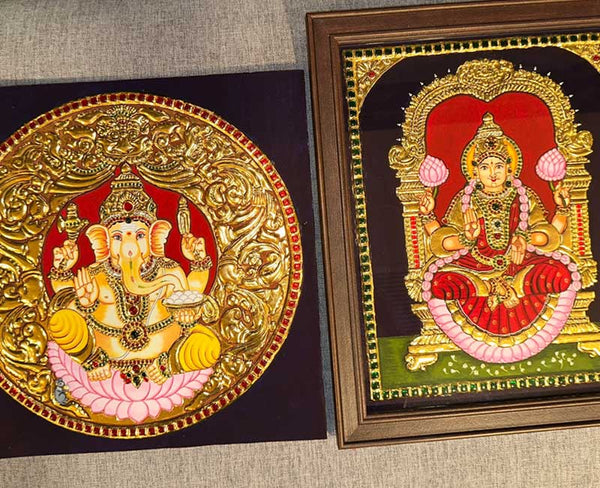
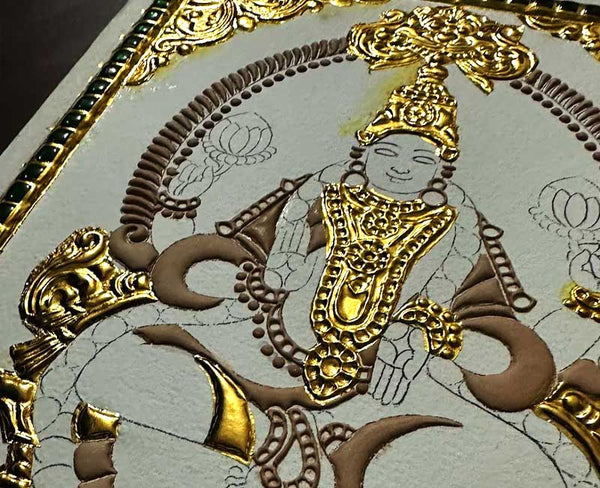
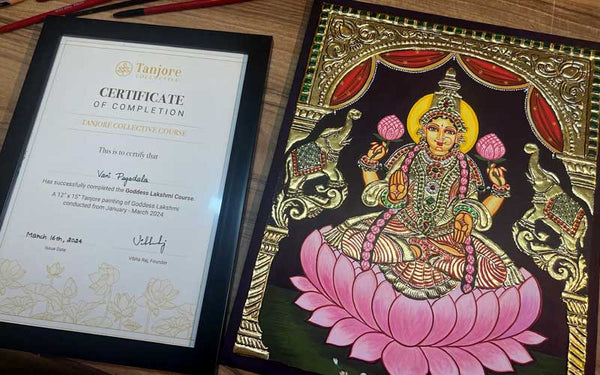
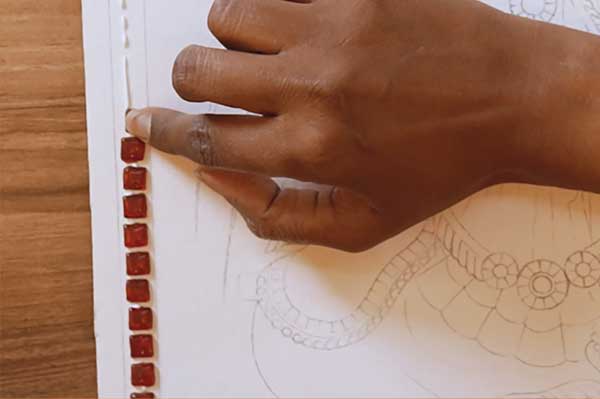
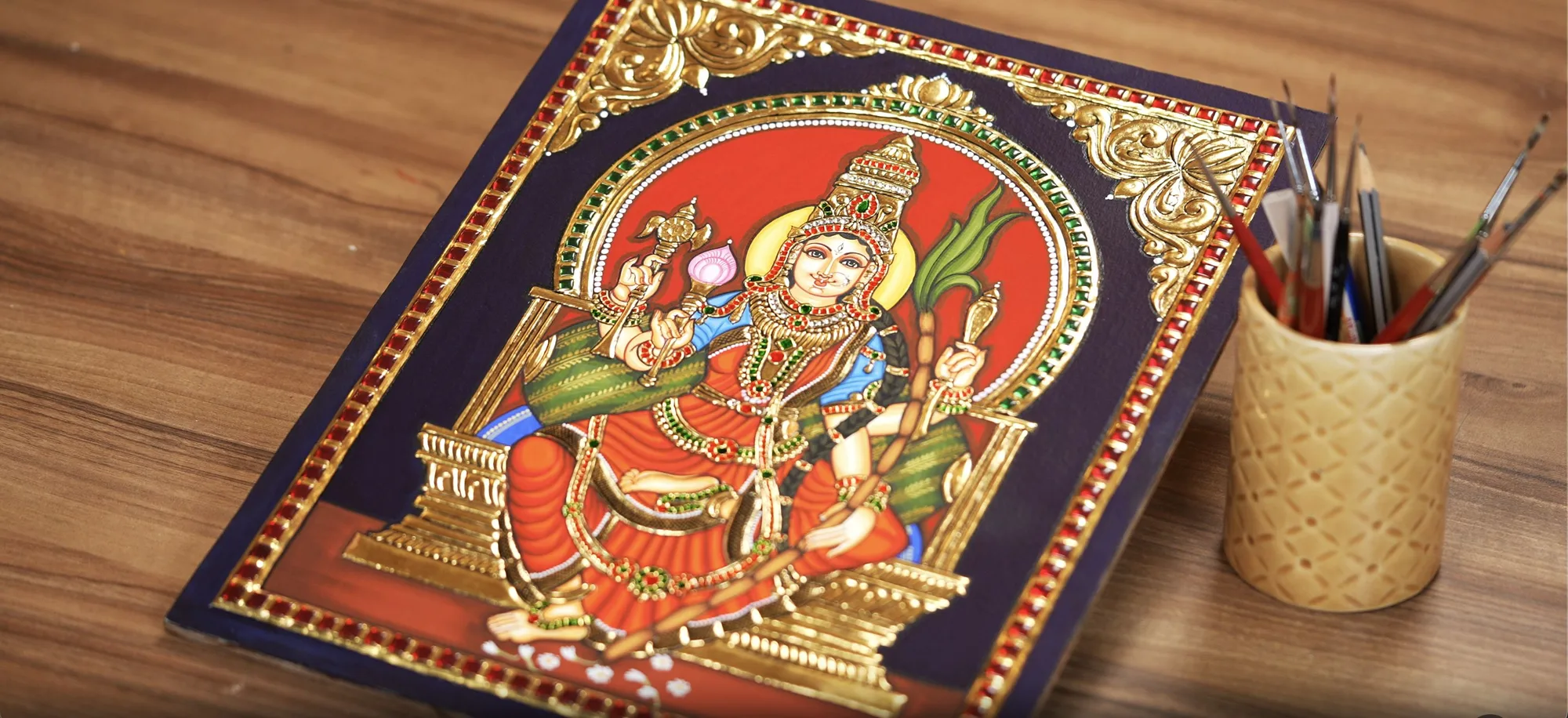
- Kundan stones are an integral part of a Tanjore painting. They're stuck onto the sketched board before any gesso goes on, and the raised relief is then built around them, so they become the jewels in the deity's crown, necklaces, armlets and ornaments, and the borders and arches around them. Sometimes a few are also placed on top of the gesso, which lifts those jewels even higher for a heightened effect.
- Swarovski crystals are premium crystals added near the end. They catch the light and add a sparkle you can see from across the room.
Kundan stones vs Swarovski crystals
They both sparkle, but they do different jobs and go in at different times.
| Kundan stones | Swarovski crystals | |
|---|---|---|
| Role | The traditional jewelled ornamentation | A premium finishing sparkle |
| When they go in | Early, after the sketch and before the embossing and gold | Last, after the painting is finished |
| How they sit | Stuck onto the sketch, then framed by raised gesso and gold | Added as finishing touches to the surface |
| In our Essentials Kit | Yes | Yes, original Swarovski crystals |
When are kundan stones added, and how are they set?
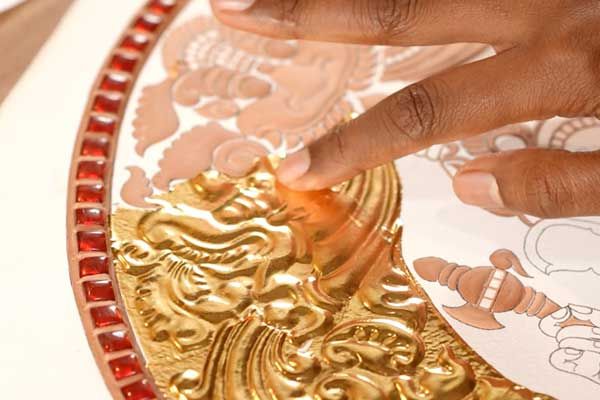
Kundan stones are added after the canvas is prepared and the sketch is in place, and before the embossing. They're stuck onto the sketch first, then the gesso is built up around them, and later the gold is laid around them, so each stone ends up held in a little raised, golden setting, just like a jewel in real jewellery.
Some ornaments go a step further. Once the gesso is built, a few stones may be placed on top of it, so they stand out even more from the painting.
Here's how that looks in our DIY video courses, lesson by lesson. In our Lalitha Devi and Ganesha courses:
- Preparing the Arabic gum and the embossing paste
- Learning to use the embossing paste
- Sticking the kundan stones
- Embossing for the kundan stones
- Embossing the rest of the canvas, then cleaning up the embossing paste
- Sticking gold for the kundan stones (and gold on the embossing)
Our Lakshmi and Saraswati courses follow the same rhythm: you learn how to stick the kundan stones, then emboss around them, then move on to the gold. The idea is always the same. The stone goes in first, and the relief and gold are shaped around it.
The embossing paste is made from chalk powder and Arabic gum, and it's what raises the setting around each stone. You can read more about it in our post on gesso. And because each stone is framed in gold, the gold work matters here too; see our guide to gold foil.
Why the order matters
Setting stones first means the relief and gold can be shaped neatly around them. Stones glued flat onto a painted surface wouldn't have that raised, jewelled setting. It's one of the small details that makes a Tanjore painting look like jewellery rather than decoration.
Watch the stones and gold come together
Adding Swarovski crystals at the end
Swarovski crystals are the very last step. Once the painting, the face and the outlines are finished, you add the crystals as finishing touches. In several of our courses, one of the last lessons is "Sticking Swarovski crystals and kundan stones", where a few last kundan stones go in alongside the crystals to complete the ornaments.
It's a lovely way to finish. After weeks of patient work, the crystals are the moment your painting suddenly sparkles. It's hard not to tilt it in the light.
How to tell good stones from cheap ones
You don't need to be an expert to look carefully. Whether you're buying a painting or materials, a few simple checks help:
- Ask what they are. Are the stones kundan? Are the crystals genuine Swarovski? A good seller will answer plainly.
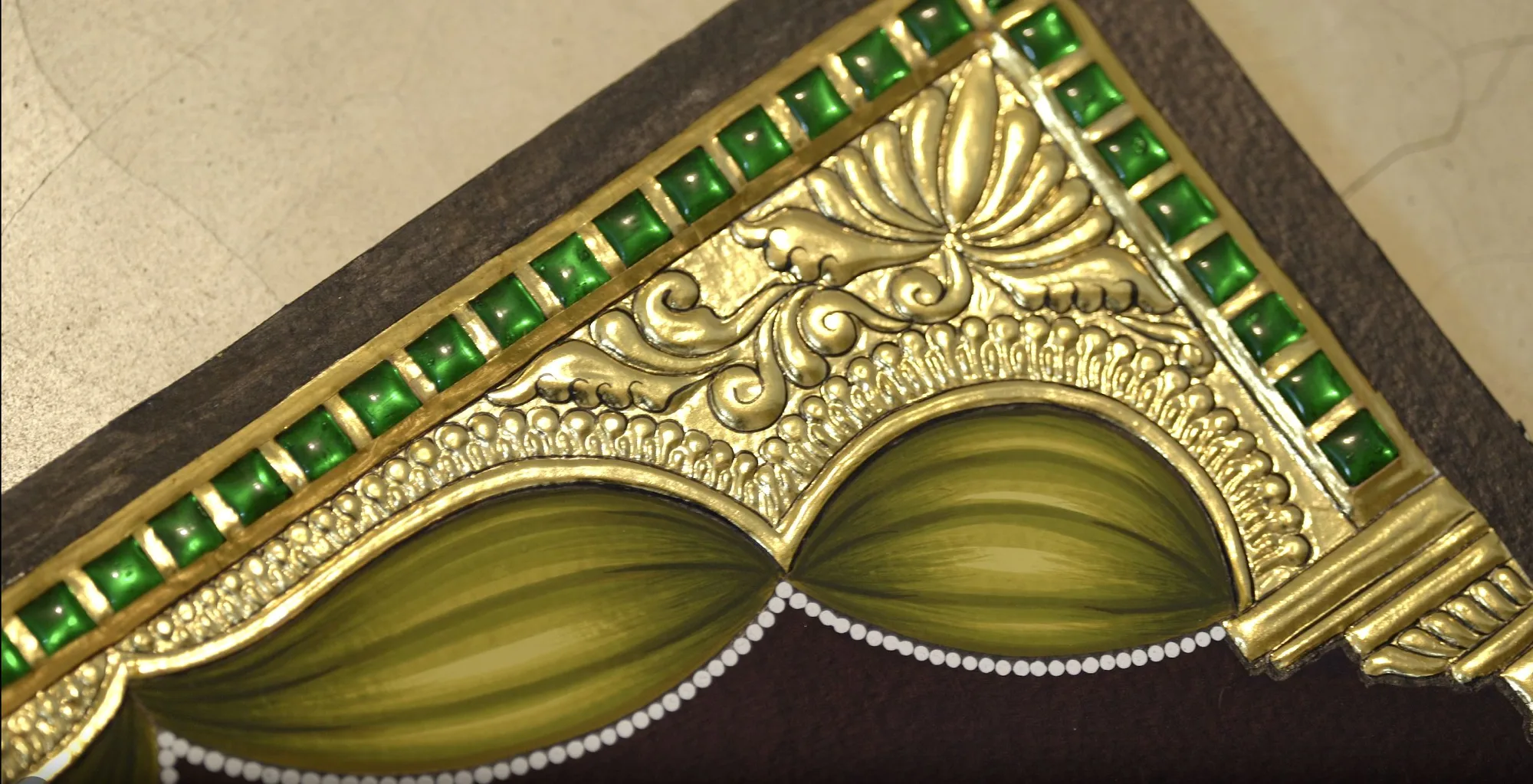
- Look at how they're set. In an authentic piece, stones sit within raised, gilded settings, not glued flat onto a painted surface.
- Look at the finish around them. The relief and gold around each stone should be neat and even.
- Be wary of a very low price. Real materials and careful setting take time and money.
For a fuller checklist that covers the gold and relief too, see how to spot an authentic Tanjore painting.
Frequently asked questions
What is the difference between kundan stones and Swarovski crystals?
Kundan stones form the traditional jewelled ornaments. They're stuck onto the sketch early on, before the embossing; the gesso relief is then built around them and the gold laid around that. Swarovski crystals are premium crystals added at the very end for a final sparkle.
When are kundan stones added?
Mostly early, after the sketch and before the embossing and gold. In our courses you stick the kundan stones onto the sketch, emboss around them, and then lay gold for them. Sometimes a few are also set on top of the gesso for a heightened effect, and a few more may be added at the end alongside the Swarovski crystals.
Are stones included in the kit?
Yes. Our Essentials Material Kit includes kundan stones and original Swarovski crystals, along with the pre-sketched board, 24 karat gold sheets, Arabic gum, chalk powder and four premium brushes.
Curious how the stones sit alongside the gold, gesso and paint? Our guide to Tanjore painting materials brings everything together, and our post on Tanjore painting colours and brushes picks up where the stones leave off.
More blog articles
Tanjore Painting Size Guide: Choosing the Right Size for Your Space
Which Tanjore painting size suits your pooja room, living room or gift, with our real sizes.

Lord Hanuman Tanjore Painting Class: Meaning and How to Learn It
Who Lord Hanuman is, when he is worshipped, and how to paint him yourself, even as a complete beginner.

Tanjore Painting Course Details: Everything Included in Our Courses
Everything you receive in a Tanjore Collective course: teaching, recordings, app access, materials, feedback and a certificate.
What our students say
Hear from students who've learned the art of Tanjore painting with us.