When Should You Choose a Live Online Tanjore Class?
Written by
Vibha Raj
Live online or self-paced DIY? Here is when a live online Tanjore class is the right choice, who it suits, and when DIY fits you better.

Key takeaways
- Choose a live online class if you want structure, a fixed weekly rhythm, real-time feedback and the energy of learning alongside a batch.
- Live courses meet two fixed evenings a week (about 5:45 to 7:30 PM IST) over 6.5 to 11 weeks, so you finish inside a set window rather than drifting.
- You get 3 to 4 teachers, a batch WhatsApp group for feedback, and every session recorded the same day, so missing a class never derails you.
- DIY may suit you better if your schedule is unpredictable or your timezone is very far from IST; it is fully self-paced.
- Both formats are built for complete beginners and include real feedback and your materials.
Both our live online classes and our self-paced DIY course can take a complete beginner all the way to a finished painting. So the honest question is not which is better, but which suits you. A live class is the right choice for a particular kind of learner, and this guide will help you see if that is you.
Choose a live class if you want structure and a rhythm
Pick a live online class if you do best with a set routine and a little gentle accountability. A live course gives you two fixed evenings a week, usually 5:45 to 7:30 PM IST, so your learning has a steady place in your week instead of waiting for a free moment that never quite comes. Because the course runs over a set 6.5 to 11 weeks, you finish inside a clear window, with your batch, rather than trailing off halfway.
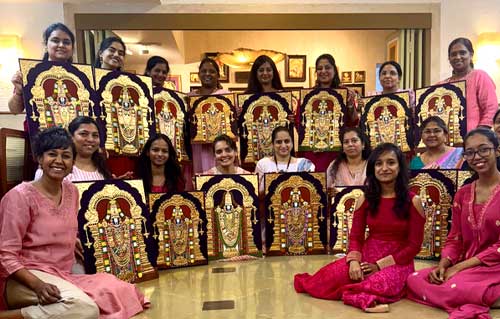
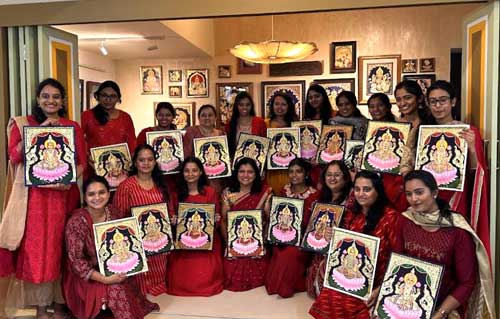
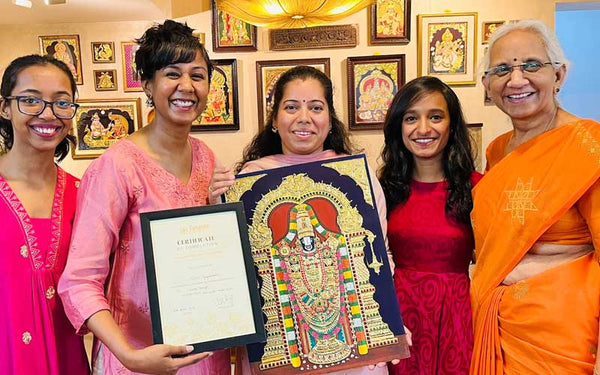
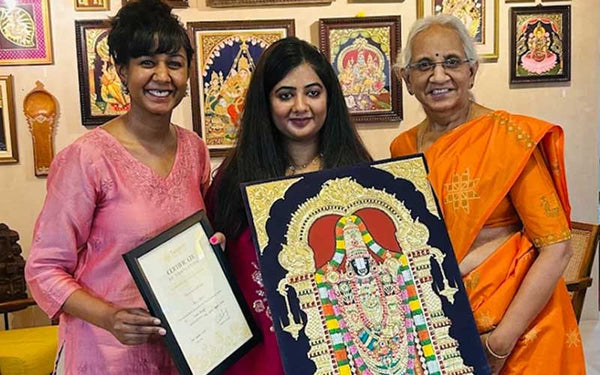
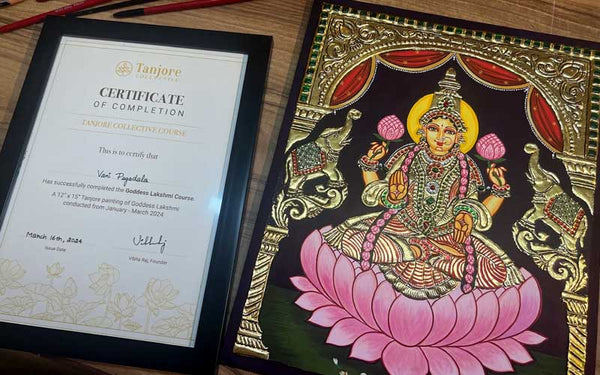
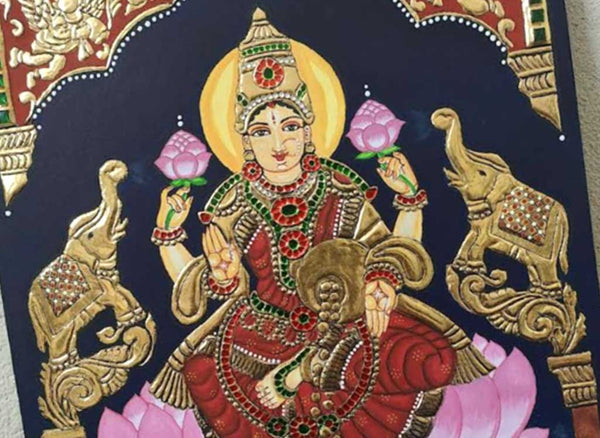
It is also the choice if you want correction as you go. Your three to four teachers are with you live, and between classes your batch WhatsApp group is open for photos, feedback and questions. And there is something a self-paced course cannot give you: the quiet energy of a batch, of seeing people who started exactly where you did slowly bring a deity to life, which turns "can I do this" into "they did it, so can I."
A live class tends to be the right choice if a few of these sound like you:
- You know yourself, and without a fixed time in the calendar, a hobby quietly slips.
- You want a teacher to catch a mistake early, before it sets, rather than discovering it alone at the end.
- You can protect two evenings a week for a couple of months.
- You like learning with others, and a little shared momentum helps you keep going.
- You want to finish within a clear window and hold a completed painting at the end of the course, not someday.
What a week in a live batch looks like
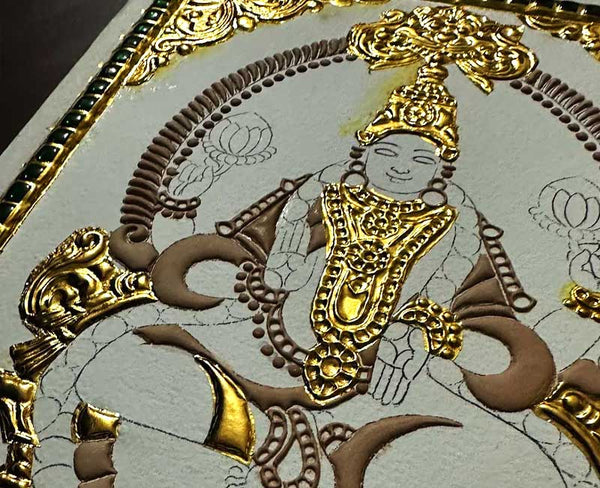
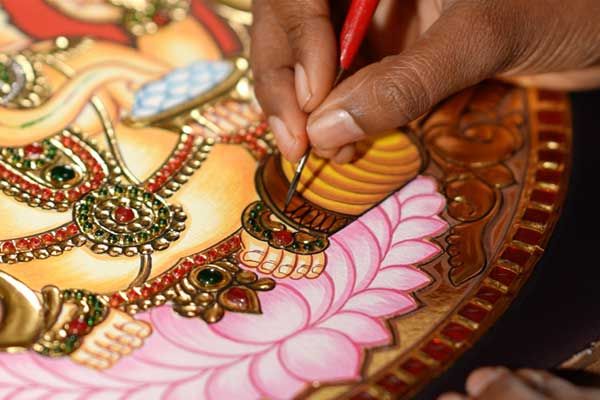
A typical week has two evening sessions on your batch days. In each, you learn a step live, from the sketch, to the embossing, to the gold foil, to the face, and you work along or just after. Between sessions, you paint at your own pace and post a photo to the WhatsApp group when you want a check or hit a doubt. If you miss an evening, the recording is up the same day, so you simply watch it before the next class and stay with everyone. Over 6.5 to 11 weeks, those small steps add up to a finished painting.
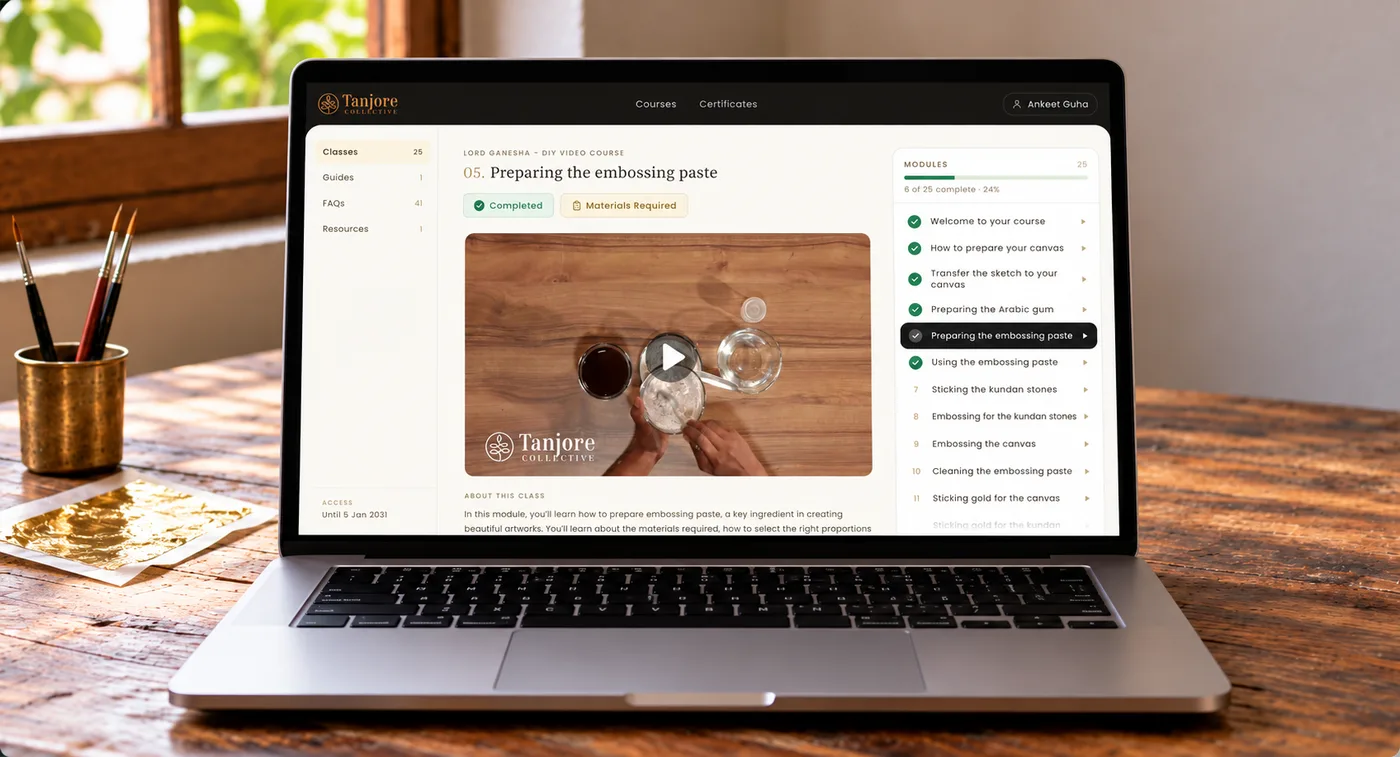
The rhythm is what makes it work. Because the next class is always coming, you keep moving, and because your teachers see your progress each week, small mistakes are caught before they become big ones. You are never staring at a half-finished canvas wondering what to do next, and you are never waiting weeks for an answer. That steady forward motion, two evenings at a time, is the quiet reason live students so reliably reach the end.
How a live class works, in brief
Live courses are taught on Zoom, twice a week, with three cameras and two monitors so you can see every stroke up close. Batches run from about 30 to 60 students, with three to four teachers sharing the course by their strengths. Every session is recorded and stays on our student app for 30 to 60 days after the course, so the structure of a live class never comes at the cost of flexibility.
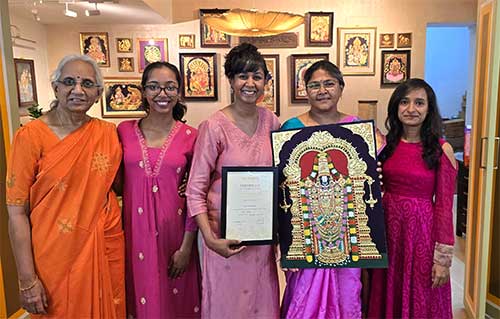
When you join live, you are taught by our senior artists: Vibha Raj, who founded the studio and learned from her mother, master artist Vani Bhaskar, with head teachers Spurthy GB (trained at the Karnataka Chitrakala Parishath) and Yashaswini Jaishankar, each guiding the part of the painting they know best.
What a live class asks of you
It helps to know the real commitment before you sign up. You will need a laptop or tablet with a stable internet connection and Zoom, a quiet corner with decent light, and two evenings a week for the length of your course, from 6.5 weeks for a simpler painting to around 11 weeks for an advanced one. Your materials arrive before class in the Essentials Kit, so you are not sourcing anything yourself. Beyond showing up for your two sessions, the rest is gentle: a little practice between classes, and a photo to the WhatsApp group whenever you want a check. If those two evenings are genuinely yours to give for a couple of months, a live class will reward them.
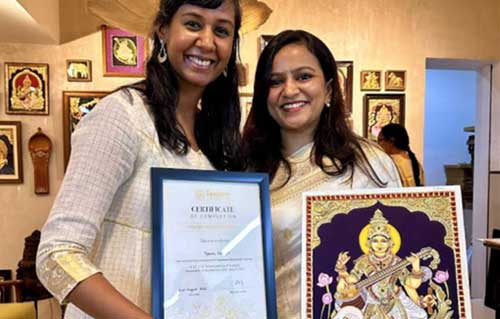
"I consider Tanjore art is one of the difficult arts, Vibha made it easy to achieve that too through online. Her techniques are good and we were able to follow her on live sessions."
When DIY might suit you better
A live class is not for everyone, and that is fine. If your schedule is genuinely unpredictable, or your timezone is very far from India so the evening sessions land at an awkward hour, our self-paced DIY course is often the kinder choice. You still get a teacher and feedback, just on your own clock. With DIY you learn from video lessons you can pause and rewatch as often as you like, send photos of your painting to a teacher on WhatsApp whenever you reach a step you are unsure of, and take as long as you need, with access we are always happy to extend. More than a thousand students have finished their painting this way, so choosing DIY is in no way a lesser path. It is simply the better fit for a different kind of week. Read who should do a DIY course and our honest online versus DIY comparison to decide.
| Live online | DIY video | |
|---|---|---|
| Schedule | Fixed, 2 evenings a week | Fully self-paced |
| Feedback | Live, plus WhatsApp group | WhatsApp photo feedback |
| Accountability | High, time-bound batch | Self-driven |
| Pace | 6.5 to 11 weeks, guided | Your own pace |
| Best for | Routine, real-time help, batch energy | Busy or far-timezone learners |
One more option worth naming: if you happen to be in Bangalore, you could also learn the very same way in person at our studio, with the same teachers in the room. If that appeals, read whether the studio course is right for you. Otherwise, live online brings that teaching to wherever you are.
Still deciding between all the options? Our formats guide compares online, studio and DIY side by side, and why almost all of our students finish explains what the structure of a live batch really gives you.
None of this is new for us. Over 40 years we have taught more than 5,000 students, and our work holds a 5.0 rating across 450+ Google reviews. Our studio and our founder have been featured in Deccan Herald, Hindustan Times, Deccan Chronicle and Incredible India.
Frequently asked questions
Is a live class better than self-paced DIY?
Neither is better. Live suits you if you want structure and real-time feedback, DIY suits you if you want full flexibility. Both are built for beginners.
What if I miss a live session?
Every session is recorded and up the same day, with access for 30 to 60 days after the course, so you can always catch up.
Can I take a live class from another country?
Yes. Tell us your city so we can confirm the timings, and your materials ship to you before class.
How many days a week is a live class?
Two evenings a week, on fixed days for your batch, usually between 5:45 and 7:30 PM IST.
Will I get personal attention in a batch?
Yes. Three to four teachers support each batch, and your WhatsApp group gives you individual feedback on your own painting.
Can I switch to DIY later?
You cannot switch a course midway, but you are always welcome to enrol in any format next time, and our returning-student benefit applies across all of them.
Do I need any experience to join a live class?
No. Every live course is built for complete beginners, and your teachers take you through each step from the very first sketch.
How many students are in a live batch?
Usually between 30 and 60, taught by three to four teachers, with personal feedback through your batch WhatsApp group.
If a steady rhythm and a teacher at your side sounds like what you need, a live batch will carry you all the way to a finished painting. We would love to have you in one.
More blog articles
Online vs DIY Tanjore Course: The Honest Comparison (With a Table)
Online or DIY Tanjore course? An honest, side-by-side comparison so you can choose structure or flexibility.

Inside Our DIY Tanjore Video Course: Lessons, Access and Real Feedback
A self-paced Tanjore painting video course with a bundled kit and real teacher feedback on WhatsApp. Here is exactly what you get.
Why 95%+ of Our Tanjore Painting Students Finish Their Painting
Most people who start a creative course never finish. Here, 95%+ do. The real reasons behind our completion rate.
What our students say
Hear from students who've learned the art of Tanjore painting with us.