Goddess Saraswati Tanjore Painting Class: Meaning and How to Learn It

Written by
Vibha Raj
Who Goddess Saraswati is, when she is worshipped, and how to learn to paint her in the traditional Tanjore style, online, in studio, or at your own pace.
Key takeaways
- Goddess Saraswati is the Hindu goddess of knowledge, learning, music and the arts, a beloved subject for students, teachers and artists.
- She is worshipped especially on Vasant Panchami (January to February) and during Navaratri (September to October), when books and instruments are placed at her feet.
- We teach her as a self-paced DIY video course, a live online 6.5-week course, and a Bangalore studio batch when one is open. The DIY course offers 10 x 12 or 12 x 15 inches, and the live online course offers 12 x 15 or 15 x 20 inches.
- Every version is built for complete beginners and taught step by step, from a blank canvas to genuine 24 karat gold and the final detailing.
- In 40 years we have taught 5,000+ students, hold a 5.0 Google rating from 450+ reviews, and more than 95% of our students finish their painting.
There is a reason Saraswati is so often the first deity a new painter wants to bring to life. She is the goddess of learning and of the arts, and sitting down to paint her feels like the gentlest possible beginning, an act of devotion and of learning at the very same time.
If you have wanted to try Tanjore painting but quietly worried that you are not ready, that you cannot draw, or that an art this detailed is beyond you, Saraswati is a reassuring place to start. Her form is graceful without being crowded, and our courses assume you have never held a brush. Thousands of our students began exactly where you are now.
Who is Goddess Saraswati?
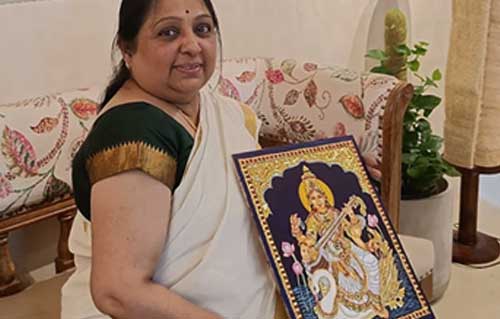
Saraswati is the Hindu goddess of knowledge, learning, music and the arts, and the consort of Brahma, the creator. She is usually shown seated on a white lotus, dressed in a pure white sari, playing the veena, with a book in one hand and a string of beads in another, and a swan resting at her side.
Every element carries meaning, and understanding it changes the way you paint her. The white sari is purity and the clarity of true knowledge. The veena is the harmony of intellect and emotion, learning and feeling held in balance. The book is eternal knowledge, the beads are meditation and the quiet passing of time, and the swan, able to separate milk from water, stands for discernment, the ability to tell the essential from the rest. For students, teachers, musicians and artists, she is the grace we hope to find in our own work, which is part of why painting her feels so fitting.
When Saraswati is worshipped
Saraswati is honoured especially on Vasant Panchami, which falls in late January or February and marks the arrival of spring. It is a day long associated with learning: children are often introduced to their first letters, and students place their books and pens before her to seek her blessing before they begin something new.
She is worshipped again during the final days of Navaratri in September or October, in the Saraswati Puja and Ayudha Puja, when families set their books, instruments and tools at her feet and let them rest in her grace for a day. A hand-painted Saraswati holds a special place in a home or a study through these festivals, and many of our students paint her with exactly that in mind, for a child beginning school, for a music room, or simply for the corner where they sit to think and create.
Why Saraswati is a wonderful first painting
Beginners do beautifully with Saraswati. Her composition is calm and balanced, so you can give real attention to each technique as you learn it rather than racing to keep up. And because the subject itself is the goddess of learning, there is a lovely symmetry in choosing her for your own first lesson. If you have been waiting for the right moment or the right subject to begin, this is both.
We see the same arc in class again and again. A student arrives certain they will struggle, nervous even to lay the first line of gold, and somewhere around the embossing or the first glint of the foil, something shifts. They stop worrying and start enjoying it. By the time the face is done, they are already asking which deity they can paint next. That quiet turn from doubt to delight is the part we love most.
Learning to paint Saraswati with us
You can learn Saraswati in whichever way suits your life. We teach her as a self-paced DIY video course you can start any time, as a guided live online 6.5-week course with two evening sessions a week, and as an in-person studio batch in Bangalore when one is running. The DIY course offers 10 x 12 or 12 x 15 inches, and the live online course offers 12 x 15 or 15 x 20 inches. Here are the courses open right now.
What you learn and create
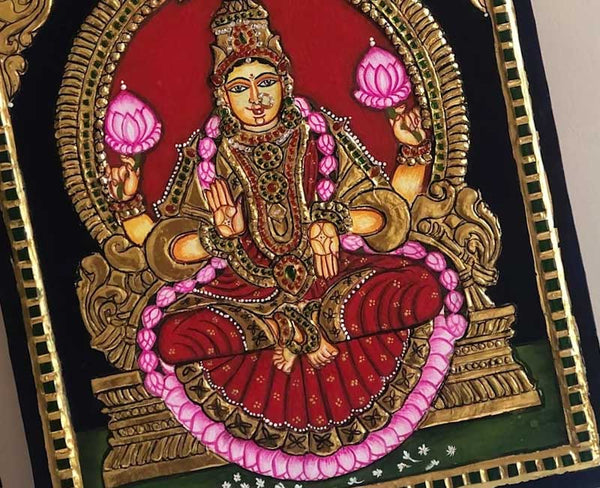
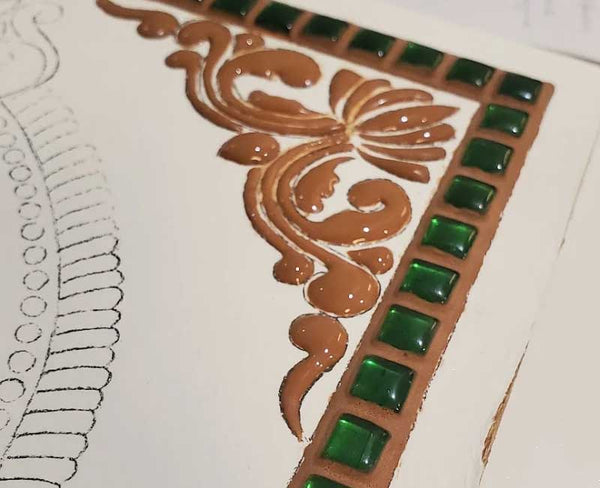
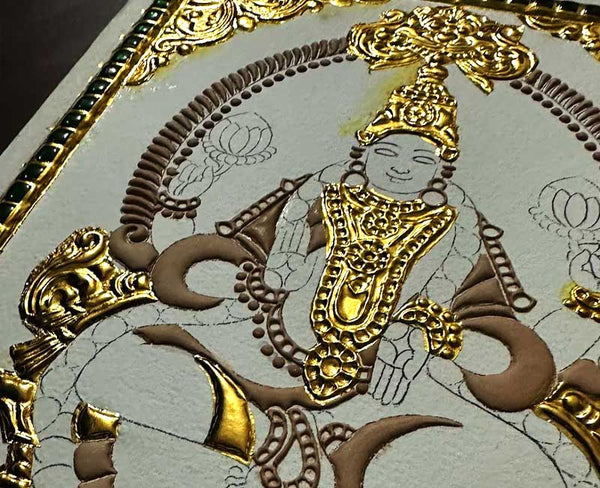
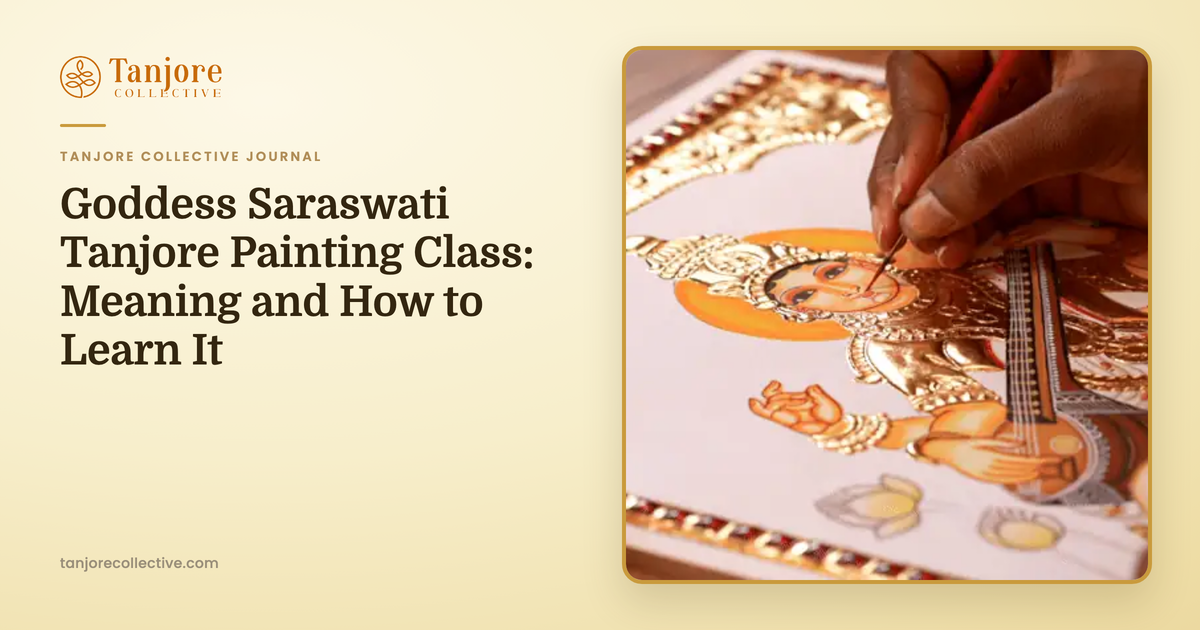
Whichever format you choose, you learn the complete Tanjore process from a blank canvas to a finished, ready-to-frame painting, with nothing skipped. You start by preparing the canvas and transferring the sketch, so even if you cannot draw, your proportions are right from the beginning. Then you build the raised embossing, the gentle relief that gives Tanjore painting its signature dimension, and learn to work it cleanly around the ornaments and the crown.
From there you lay genuine 24 karat gold foil, the step most students are nervous about and end up loving, and set the kundan stones that catch the light. Finally comes the colour and the face, where Vibha guides the expression and the fine detailing that bring Saraswati to life. By the end you have not just a painting but a real command of each technique, which is exactly what lets so many of our students go on to paint deity after deity.
Saraswati rewards patience in a few specific places, and knowing them ahead of time makes the work far less daunting. The veena asks for a steady hand along its long neck and strings, so we slow right down and show you how to keep the lines clean. The folds of her white sari are built with soft shading rather than heavy colour, a lovely skill to learn early. The swan and the lotus give you gentle practice with curves and petals before the finer work, and the face, with its calm, downcast eyes, is where Vibha spends real time with you, because a serene expression is what makes a Saraswati feel alive. None of it is rushed, and every stage is shown up close.
Why paint Saraswati for your home or study
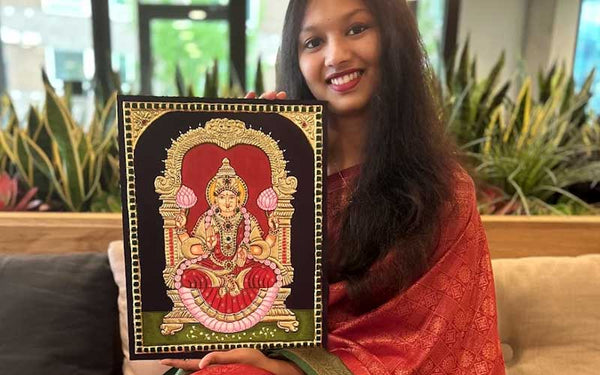
A Saraswati painting carries a quiet intention wherever it hangs. Many of our students paint her for a child who is beginning school, for a music room or a study, or for the corner of the home where they sit to read, think and create. Placed in the puja room, she is a daily blessing on learning and the arts, and given as a gift, she is a wish for someone’s growth and clarity. Because you have made her yourself, stroke by stroke, she carries a devotion that a bought painting simply cannot, and that is something our students tell us they feel every time they look at her.
The materials you will use
All the materials you need are provided with the course, so there is nothing to source or second-guess. You work with a pre-sketched canvas, 24 karat gold foil, the embossing materials, kundan stones and fine brushes, the same professional-grade supplies we use for our own paintings. For live courses the kit is shipped to you before class, and for the DIY course it is included and sent to your door.
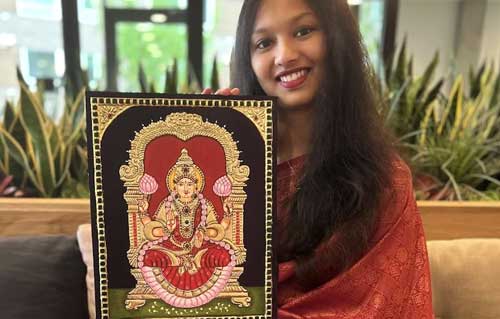
"I had a wonderful experience being a part of the Saraswati Devi Tanjavur painting course. Vibha was extremely encouraging and gave detailed instructions at every stage of the painting, for each intricate pattern the painting required."
Who you will learn from
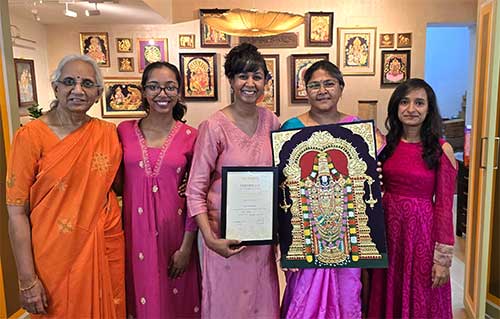
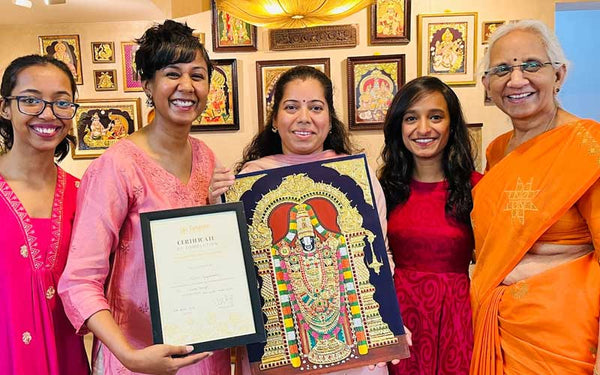
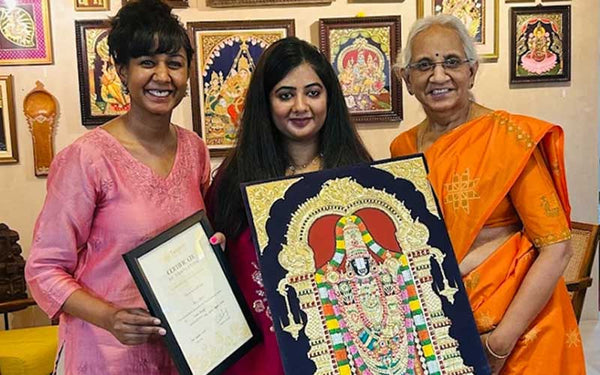
Every course is led by three to four of our artists. Vibha Raj, our founder and an award-winning Tanjore artist, learned the art from her mother, the master artist Vani Bhaskar, and teaches the faces and the finest detailing herself. Vibha, trained at the Karnataka Chitrakala Parishath, guides the gold-foil work, and Vibha, who began here as a student, leads the embossing and intricate detailing. You are never learning alone. Alongside your teachers, each batch has a WhatsApp group where you can post a photo of your work and get a gentle correction, and you are welcome to call when you are stuck.
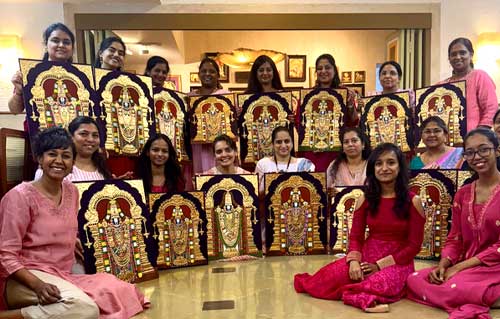
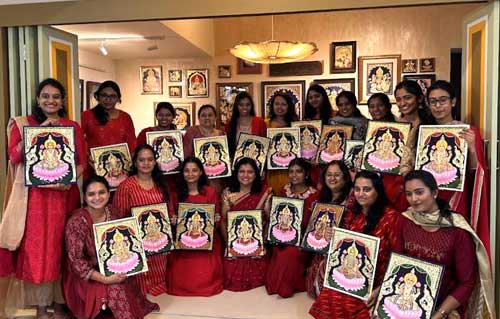
In forty years we have taught more than 5,000 students across 100+ batches, we hold a 5.0 rating from 450+ Google reviews, and more than 95% of our students finish their painting. Our work and teaching have been featured in Deccan Herald, Hindustan Times, Deccan Chronicle and Incredible India.
Frequently asked questions
Is the Saraswati course good for beginners?
Yes. It is built for complete beginners, even if you have never painted before. Every step is taught slowly, the sketch is provided so you do not need to draw, and our teachers stay with you until your painting is finished.
What size is the finished painting?
It depends on the course you choose. The DIY video course is offered in 10 x 12 or 12 x 15 inches, and the live online course in 12 x 15 or 15 x 20 inches. Each course page lists the sizes for that batch.
Which format should I choose?
Choose the live online course for a guided weekly rhythm, the studio batch if you are in Bangalore and want to learn in person, or the DIY video course to go fully at your own pace. The cards above show what is open now.
When is the next batch?
The live and studio batches are listed in the cards above and in our course calendar. The DIY course you can begin any time.
Can I join from outside India?
Yes. Students join us from around the world. Tell us your city so we can confirm the live timings for your timezone and ship your materials in good time, and the DIY course is often the easiest choice across large time differences.
How long does it take to finish?
In the live online course you paint alongside the batch over about 6.5 weeks, two evenings a week. On the DIY course you go at your own pace, and most students finish comfortably within their access period, which we are always happy to extend if life gets busy.
What do I do with the painting once it is done?
Your finished Saraswati is ready to frame and place in your home, study or puja room. Most students frame it in rosewood, teakwood or a synthetic frame of their choice and give it pride of place, or gift it to someone beginning a new chapter.
Do I get a certificate?
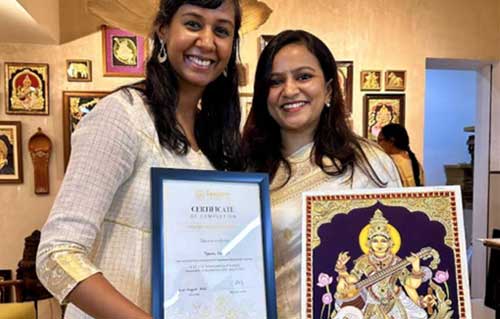
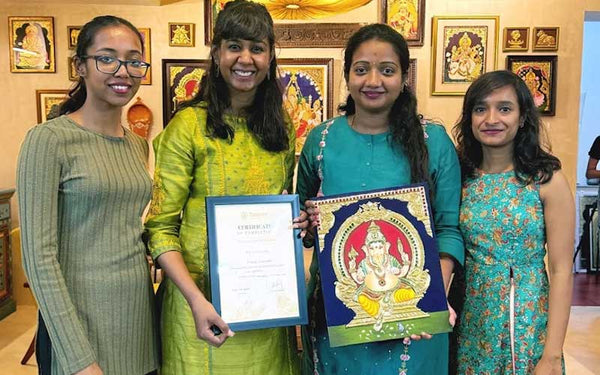
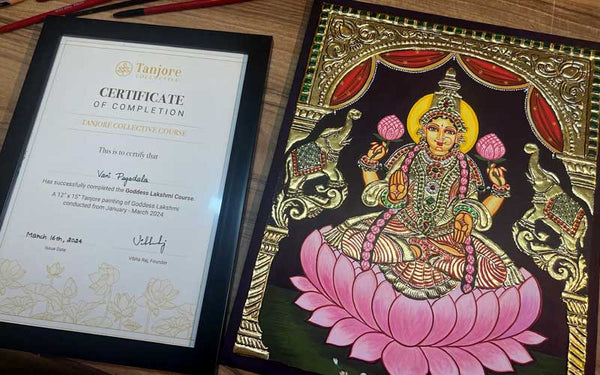
Yes, a digital and a physical certificate on completion, naming your course and signed by Vibha Raj.
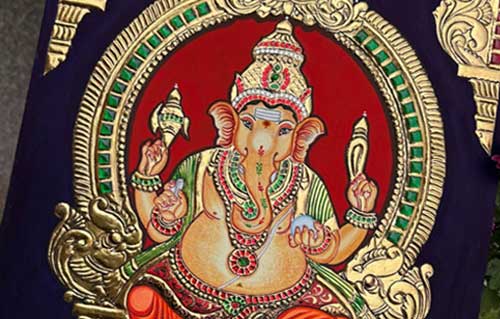
Saraswati is, in every sense, a blessing to begin with. If learning this art has been on your mind, we would love to guide you through your first painting of her. You can also explore the other deities we teach, see Goddess Lakshmi and Lord Ganesha, or read how to choose between our class formats.
More blog articles
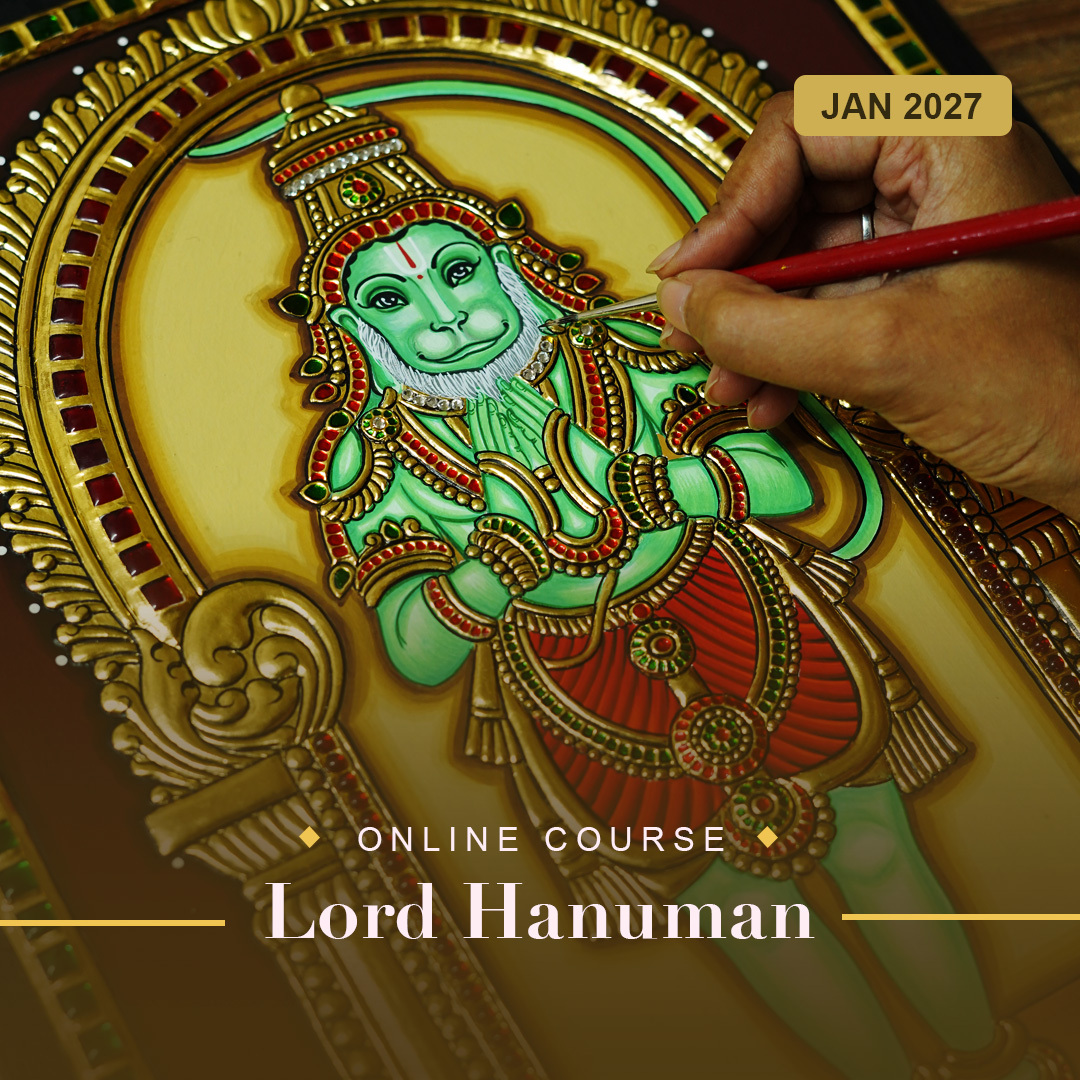
Lord Hanuman Tanjore Painting Class: Meaning and How to Learn It
Who Lord Hanuman is, when he is worshipped, and how to paint him yourself, even as a complete beginner.

Tanjore Painting Course Details: Everything Included in Our Courses
Everything you receive in a Tanjore Collective course: teaching, recordings, app access, materials, feedback and a certificate.

Tanjore Painting Course Registration: How to Register, Step by Step
How to register for a Tanjore painting course, from choosing your batch to receiving your kit and starting class.
What our students say
Hear from students who've learned the art of Tanjore painting with us.