Goddess Lalitha Devi Tanjore Painting Class: Meaning and How to Learn It

Written by
Vibha Raj
Goddess Lalitha Devi, the supreme Divine Mother of the Sri Vidya tradition, is a beloved Tanjore subject. Here is her significance, her festivals, and how to learn to paint her with us.
Key takeaways
- Goddess Lalitha Devi (Lalita Tripura Sundari) is the supreme Divine Mother of the Sri Vidya tradition, revered for beauty, compassion and quiet strength.
- She is honoured through the year, most of all during Navaratri and on Lalita Panchami; Fridays are dear to the Devi.
- We teach her as a live online 6.5-week course and a self-paced DIY video course, with a choice of canvas sizes.
- Both are built for complete beginners, with 3 to 4 teachers guiding you and your materials shipped to your door.
- In 40 years we have taught 5,000+ students, more than 95% finish their painting, and we hold a 5.0 rating from 450+ Google reviews.
There is a wish many of us carry, standing before the home altar: to offer something made by our own hands. For a great many devotees, that something is an image of the Devi. If you have felt drawn to paint Goddess Lalitha Devi and wondered whether you could, even if you have never held a brush, this guide is for you. We will walk through who she is, when she is worshipped, and exactly how you can learn to paint her with us.
Who is Goddess Lalitha Devi?
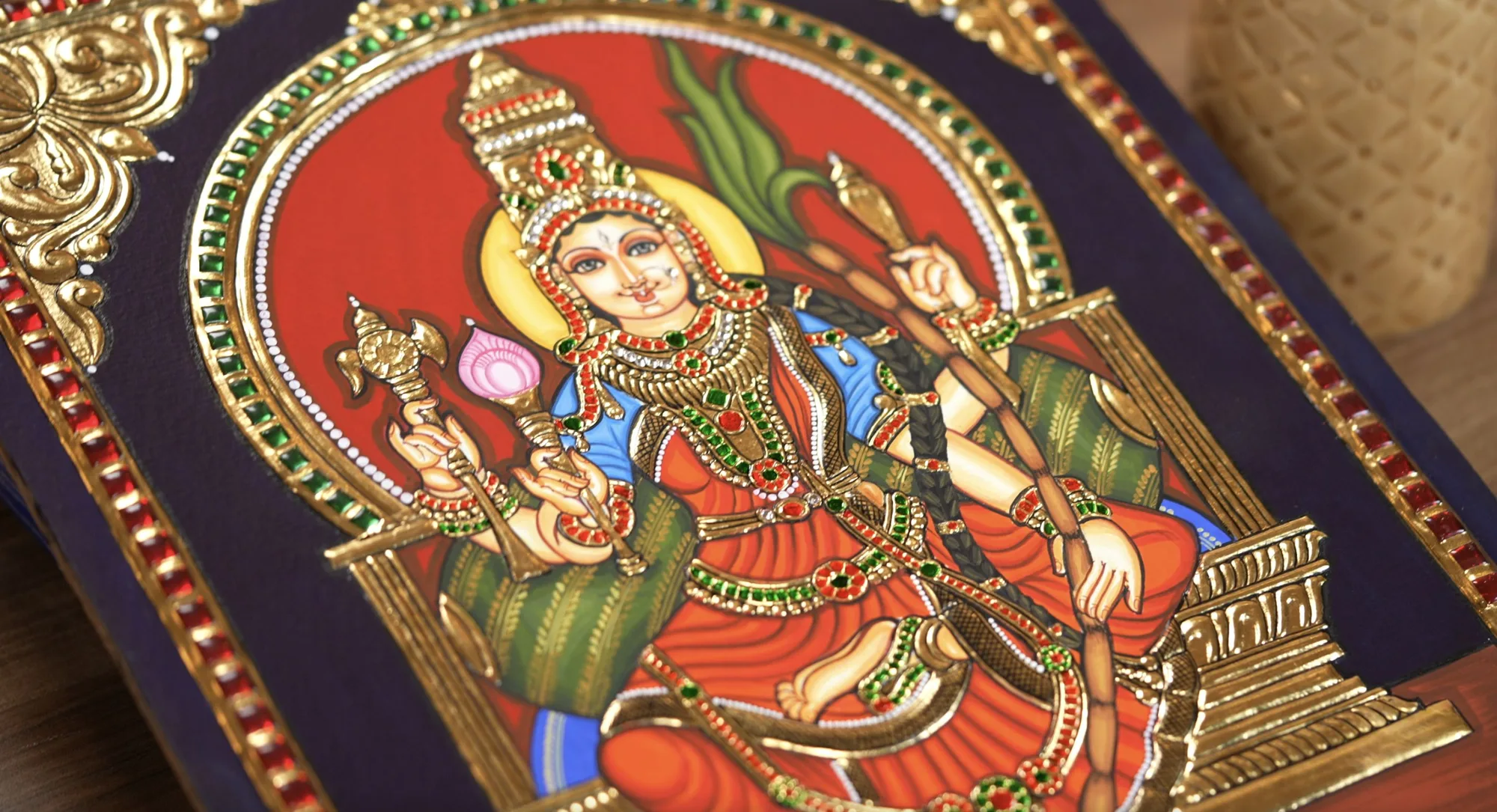
Goddess Lalitha Devi, also known as Lalita Tripura Sundari, is the supreme Divine Mother of the Sri Vidya tradition. Her name itself speaks of her nature. Lalita means the one who plays, who is tender and graceful, and Tripura Sundari means the beauty who pervades the three worlds. She is worshipped as the source of all creation, holding the sugarcane bow, flowers, a noose and a goad, each a gentle symbol of the mind, the senses and the love that guides them.
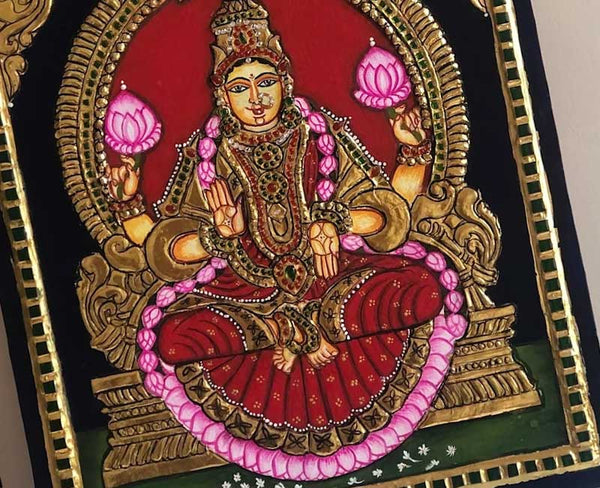
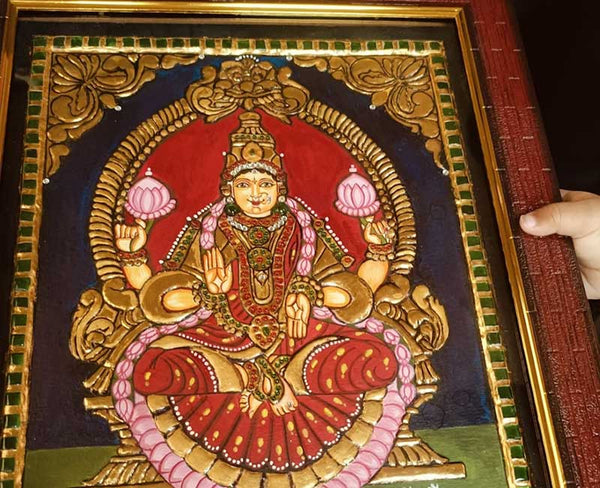
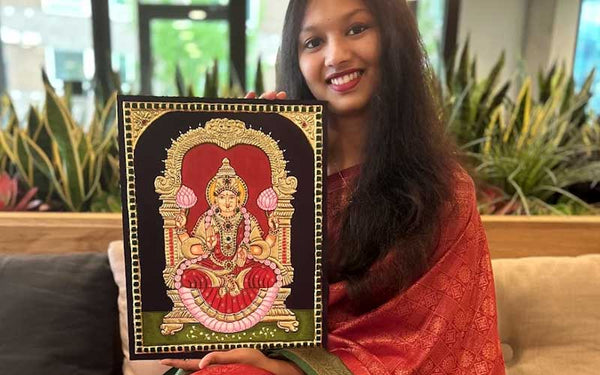
To paint her is to sit with that idea of beauty and strength held together as one. Devotees keep her image for grace in the home, for protection, and for the steady, compassionate presence of the Mother. Rendered in the Tanjore style, with gold foil, soft colour and raised ornamentation, she becomes a living centre for the puja room.
In the Sri Vidya tradition she is approached through the Sri Chakra and the thousand names of the Lalita Sahasranama, each name a facet of the same Mother. The sugarcane bow stands for the mind, the five flowery arrows for the senses, and the noose and goad for attachment and the loving discipline that frees us from it. You do not need to know any of this to paint her. But many students tell us that spending weeks with her image, laying the gold and slowly painting the eyes, becomes its own quiet form of worship.
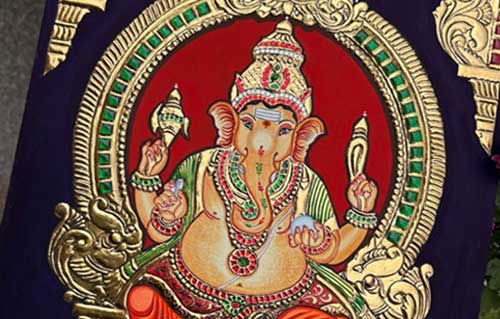
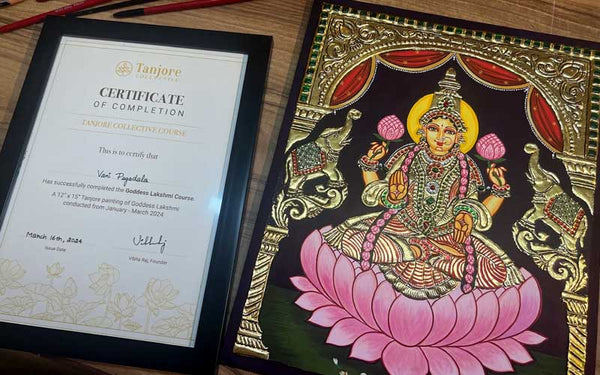
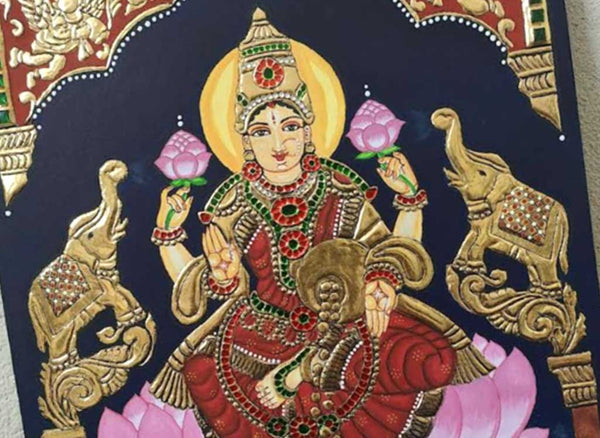
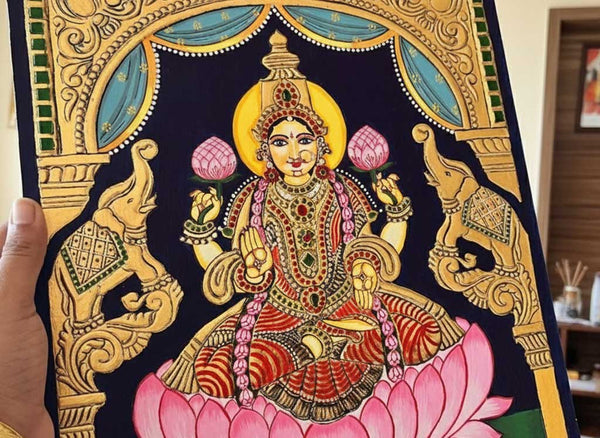
In the Tanjore style her form is unmistakable. She is shown seated on a lotus or a throne, her complexion a warm rose-red that glows against the deep background, with three gentle eyes and a serene, half-smiling face. In her hands she holds the sugarcane bow and the five flowery arrows, the noose and the goad, and she is crowned and adorned with layered necklaces, armlets and a jewelled belt. Much of the beauty of the painting lies in that ornamentation, the raised gold and the small set stones catching the light around her calm, steady gaze.
When Goddess Lalitha Devi is worshipped
Lalitha Devi is honoured throughout the year, but her presence is felt most strongly during Navaratri, the nine nights devoted to the Divine Mother, which usually fall in September or October. Within that season, Lalita Panchami is observed especially for her, and many families keep Fridays, the day dear to the Goddess, for her worship.
Because the festivals follow the lunar calendar, the exact dates shift a little each year. If you would like your painting ready to place in the puja room for Navaratri or a special Friday, it helps to begin a few weeks ahead, so you can paint slowly and without hurry. A finished Lalitha Devi, made by your own hand, is a quietly moving thing to offer.
Why paint Goddess Lalitha Devi yourself
You could buy a painting of the Devi. Painting her yourself is a different thing entirely. Over the weeks your hands learn the gestures of the tradition, and the finished piece carries something a bought one cannot: your own patience and devotion, worked into every line of gold. It becomes a part of your home in a way that is hard to describe until you have done it.
It is also one of the most beginner-friendly ways to begin Tanjore painting. The Devi is a single central figure, so you learn every core technique, embossing, gold work, stone-setting and face painting, on one composition, without the complexity of a crowded scene. What you learn here carries directly into any subject you paint next.
What you learn and create
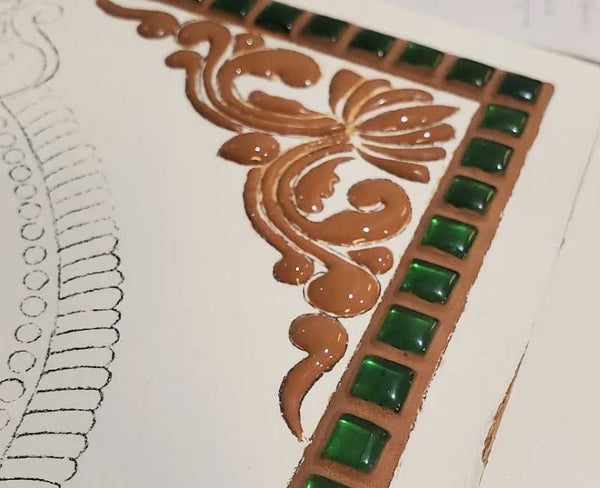
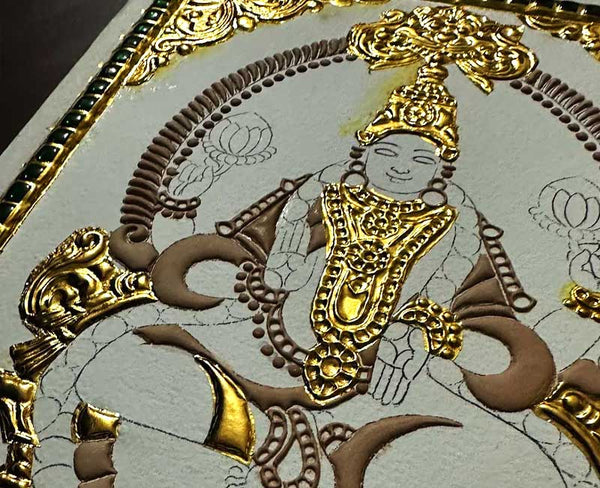
You will create a Tanjore painting of Goddess Lalitha Devi in the size you choose, from a blank canvas to a finished, framed-ready piece. Along the way you learn the full traditional process: preparing and sketching the canvas, building the raised gesso relief for the ornaments and crown, laying genuine 24 karat gold foil, setting kundan stones, and then the painting itself, the clothing, the lotus, the body, and finally the face.
The weeks build on one another gently. The early sessions are about preparing the surface and transferring the sketch, which settles the nerves of a first-timer quickly. The middle of the course is the embossing and the gold, the part students often say they fall in love with, watching the ornaments rise and catch the light. The final weeks are the painting and the face, the most delicate work, taken slowly so you never feel rushed.
The face and the fine detailing are the most intricate parts of any Devi painting, and they are exactly what Vibha Raj teaches herself, slowly and step by step. You do not need to know how to draw. The sketch is provided and transferred for you, so from the very first session your attention is on learning the techniques, not on getting the drawing right.
If there is a part students approach with a little nervousness, it is the face, and it is also the part they are proudest of at the end. The Devi's expression has to be soft and alive, the three eyes even and serene, the lips gently full. We build up to it slowly, so that by the time you paint her face you have already practised your brush control on the body and the ornaments. The layered necklaces and the crown are the other test of patience, each bead and jewel set in turn, yet they are calming to work on, and the gold around them is what gives a Lalitha Devi painting its quiet radiance.
The materials you will use
Everything you need is provided and shipped to you before you begin: a pre-sketched canvas, 24 karat gold sheets, Arabic gum, the chalk base for embossing, sable brushes, kundan stones and Swarovski crystals. Within India the kit reaches you in about 5 to 7 days, and internationally in about 3 to 4 weeks, so it is worth enrolling early to leave time for delivery.
Learning with us, even as a complete beginner
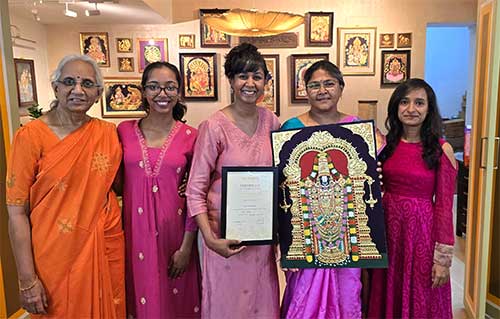
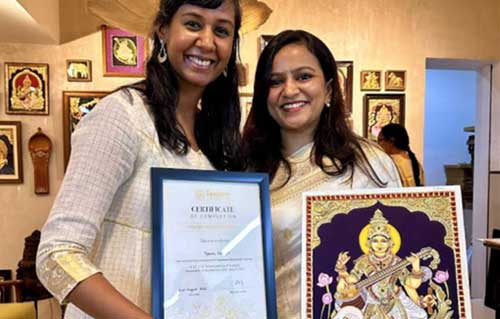
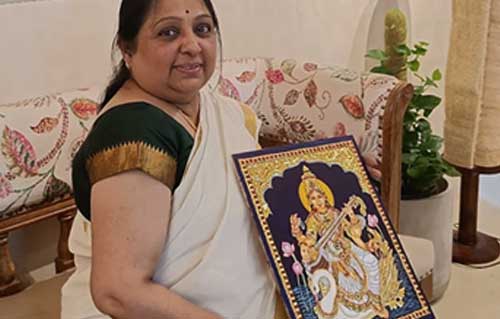
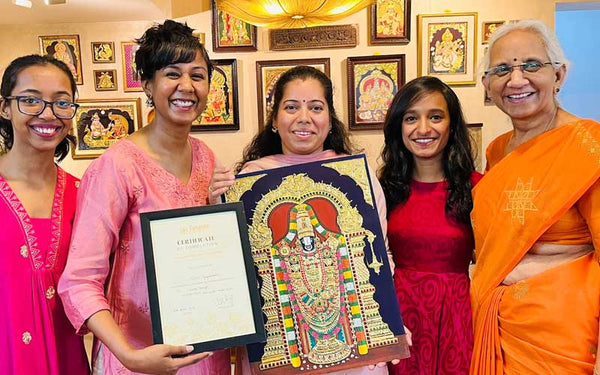
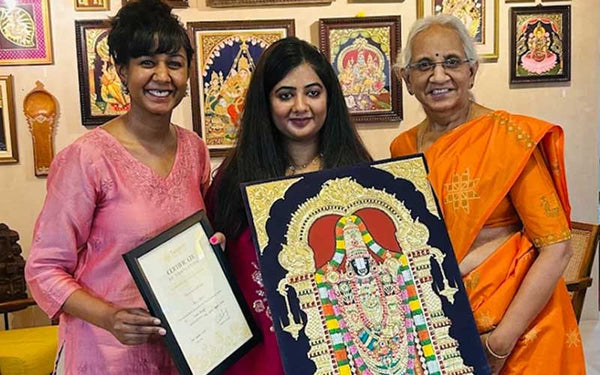
Every course is led by three to four of our artists, each guiding the part they know best. Our founder, Vibha Raj, is an award-winning Tanjore artist who learned the art from her mother, the master artist Vani Bhaskar, and she teaches the faces and the finest detailing herself. Spurthy GB, trained at Karnataka Chitrakala Parishath, leads the gold-foil work, and Yashaswini Jaishankar, who began here as a student, guides the embossing and intricate detailing.
In the live online course you join a small batch twice a week and learn each step as it happens, with your work reviewed on a dedicated WhatsApp group and every session recorded to rewatch. In the self-paced DIY course you learn in your own time, sending photos of your painting for real feedback from a teacher. Either way, you are never painting alone.
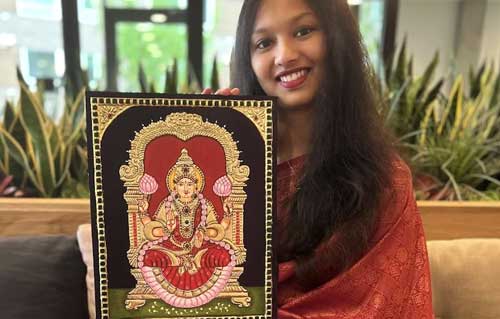
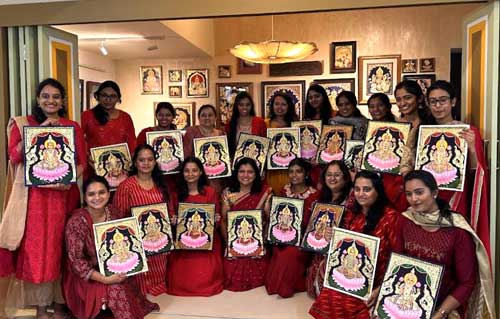
Many of our Lalitha Devi students began exactly where you might be now, unsure they had any art in them at all. One described sitting down to the first session half-expecting to give up, and finishing weeks later with a painting of the Devi on her own wall, a little amazed at her own hands. That quiet shift, from doubt to a finished offering, is the part of teaching we love most.
"I never thought I would learn the art so quickly and easily. Vibha and team were very warm and patient in teaching me. They actually instill so much confidence in you and make it look so easy for beginners."
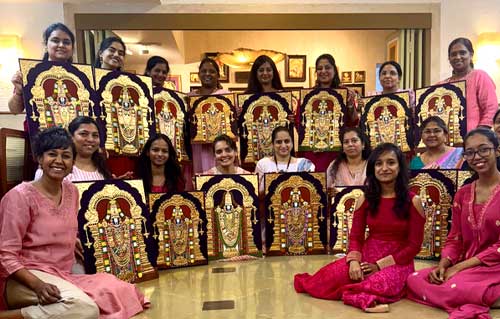
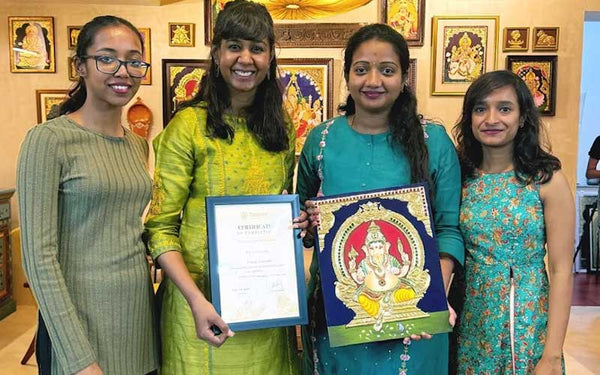
None of this is a solo leap of faith. In 40 years our studio has taught more than 5,000 students across 100+ batches, we hold a 5.0 rating from over 450 Google reviews, and our work and teaching have been featured in Deccan Herald, Hindustan Times, Deccan Chronicle and Incredible India.
Frequently asked questions
Can a complete beginner paint Goddess Lalitha Devi?
Yes. The course assumes no experience at all. The sketch is provided, and the hardest parts, the face and fine detail, are taught slowly by Vibha Raj. More than 95% of our students finish their painting.
What size is the finished painting?
It depends on the course you choose. The DIY video course is offered in 10 x 12 or 12 x 15 inches, and the live online course in 12 x 15 or 15 x 20 inches. Each course page lists the sizes for that batch.
Should I take the live online or the DIY course?
Choose live if you like a fixed weekly rhythm and real-time guidance; choose DIY if you prefer to learn fully at your own pace. Both include teacher support and your materials.
When is the next batch?
Upcoming batches appear in the course cards above and in our course calendar.
Do I need to arrange materials myself?
No. We provide your material kit, with everything you need to paint Goddess Lalitha Devi, from the pre-sketched board to the 24 karat gold sheets, kundan stones and brushes. You will find the details for each course on its course page.
Can I join from outside India?
Yes. Students join us from India, the USA, the UK and beyond. For the live course, tell us your city so we can confirm the timings for your timezone, and your materials ship internationally in about 3 to 4 weeks. If the live hours are difficult where you are, the self-paced DIY course is often the easier choice.
Which Devi should I paint first?
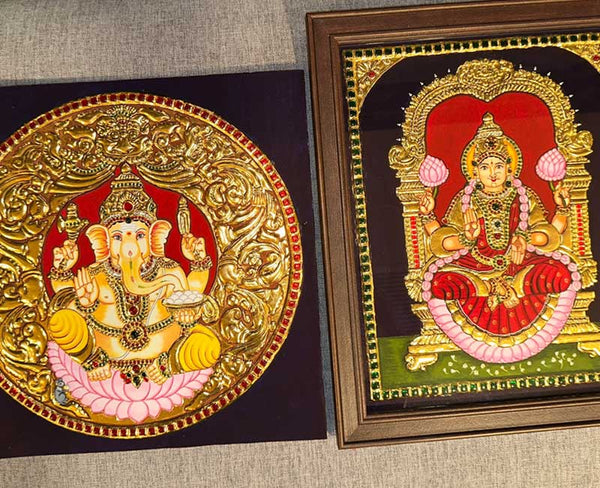
Lalitha Devi is a lovely first Devi, as she is a single central figure. If you would like to see the full range, our Saraswati and Gajalakshmi courses are also beginner-friendly.
What do I do with the finished painting?
Most students frame it and place it in their puja room or home altar. The painting is made on a sturdy board and finished to last, so once it is framed it is ready to be part of your home for years.
Whenever you feel ready, we would love to help you bring the Devi to life in gold and colour. Explore the other deities we teach, read about how our class formats work, or begin whenever the time feels right.
More blog articles
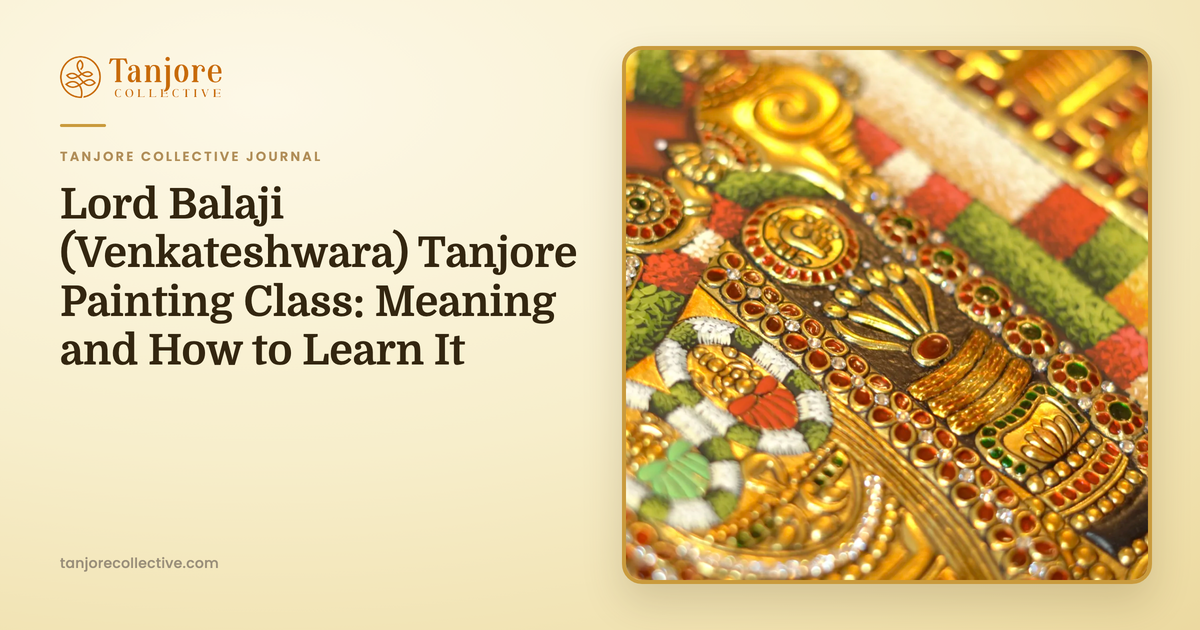
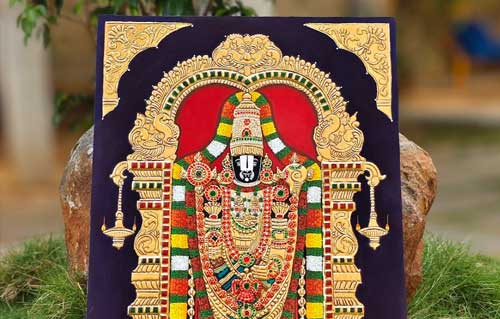
Lord Balaji (Venkateshwara) Tanjore Painting Class: Meaning and How to Learn It
The meaning of Lord Balaji, his festivals, and how to paint Venkateshwara in the Tanjore style over our detailed 2.5-month course.
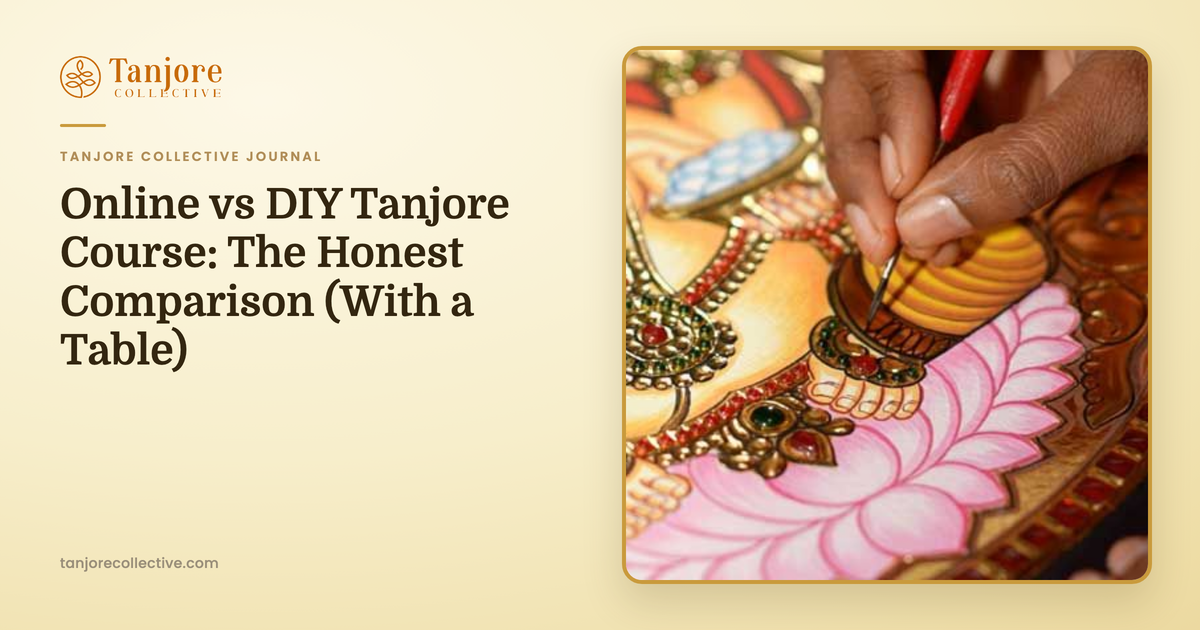
Online vs DIY Tanjore Course: The Honest Comparison (With a Table)
Online or DIY Tanjore course? An honest, side-by-side comparison so you can choose structure or flexibility.
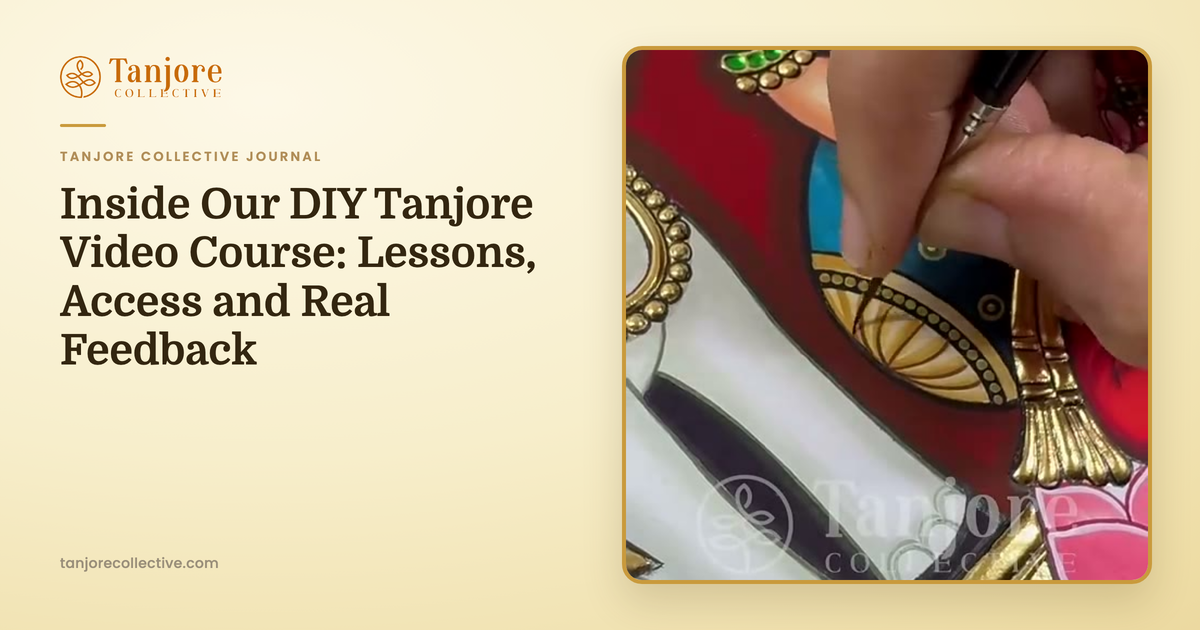
Inside Our DIY Tanjore Video Course: Lessons, Access and Real Feedback
A self-paced Tanjore painting video course with a bundled kit and real teacher feedback on WhatsApp. Here is exactly what you get.
What our students say
Hear from students who've learned the art of Tanjore painting with us.