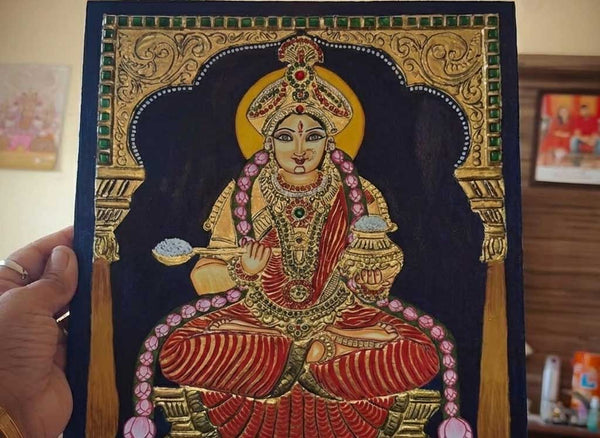
What a Live Online Tanjore Painting Class Is Really Like
Written by
Vibha Raj
A clear, honest look at what a live online Tanjore painting class is really like, from the fixed class evenings and three-camera teaching to how feedback works in a batch.
Key takeaways
- A live online Tanjore class is a real, taught class on Zoom, not a folder of videos. You join your batch live, two evenings a week, usually between 5:45 and 7:30 PM IST.
- Your two class days are fixed for your batch (for example Tuesday and Friday, or Monday and Thursday), over 6.5 weeks for a simpler painting and up to about 11 weeks for an advanced one.
- We teach with 3 cameras and 2 monitors, and every course has 3 to 4 teachers, each taking the part they know best. Vibha Raj takes the faces and the fine detailing.
- Feedback happens on your batch WhatsApp group (post a photo, get corrections) and on calls. Every session is recorded the same day and stays on our app for 30 to 60 days after the course.
- You can join from anywhere in the world; your materials ship before class. More than 95% of our students finish their painting.
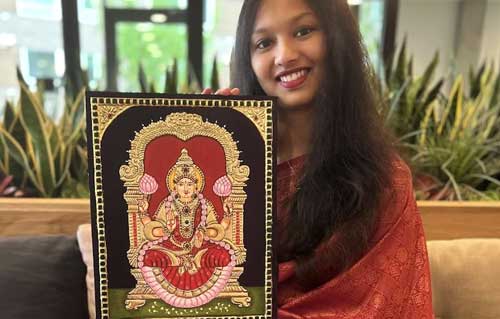
If you have ever wondered whether a screen can really teach something as detailed as a Tanjore painting, you are not alone. It is a fair worry. This is an art of fine gold work, raised relief and delicate faces, and it feels like the kind of thing you have to be in a room to learn. So before anything else, here is the reassurance: thousands of our students have learned it live online, from their own homes, many of them complete beginners, and finished a painting they were proud to place in their puja room.
Let us walk you through exactly what a live online class with us is like, so there are no surprises, only the gentle excitement of starting.
A real, taught class, not a video library
A live online class is taught live, in real time, on Zoom. You are not handed a folder of videos to watch alone. You join your batch twice a week in the evening, usually between 5:45 and 7:30 PM IST, and you learn each step as it happens, with your teachers right there to guide you.
The two days are fixed for your batch, so it settles into a calm weekly rhythm you can plan around. Some batches meet on Tuesday and Friday, others on Monday and Thursday, or Monday and Wednesday, or Wednesday and Saturday. You will know your days before you begin. Each session runs for about an hour and three quarters, long enough to truly learn a step, short enough to hold your focus after a full day.
Seeing every stroke up close
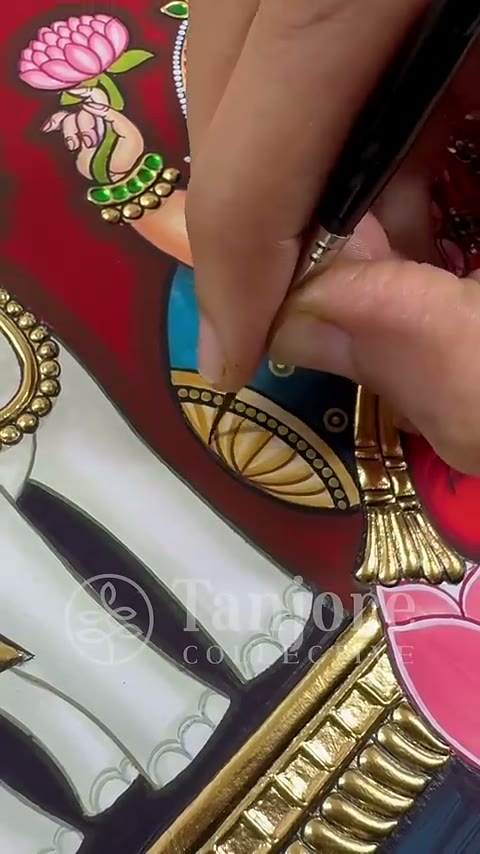
You see everything, right down to the finest stroke. We teach with three cameras and two monitors, so we can move from a full view of the canvas to a close-up of the brush at the exact moment the work gets delicate. When gold foil is being laid, or a face is being shaded, the camera comes in close so you can follow the hand, the pressure and the angle, not just the result. It is often clearer than sitting across a table, where you would be craning to see past someone's shoulder.
The gold and relief work, taught live
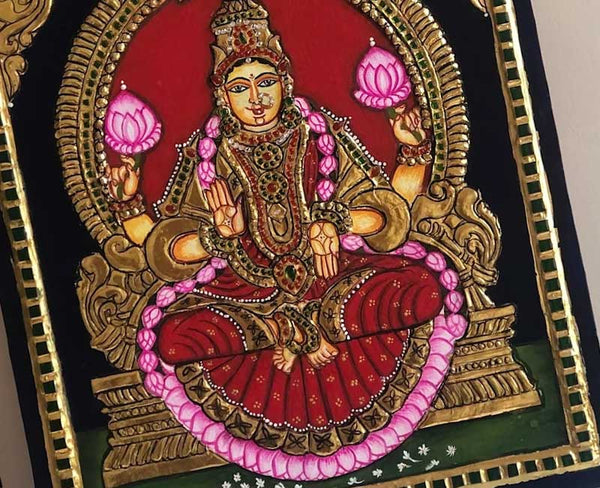
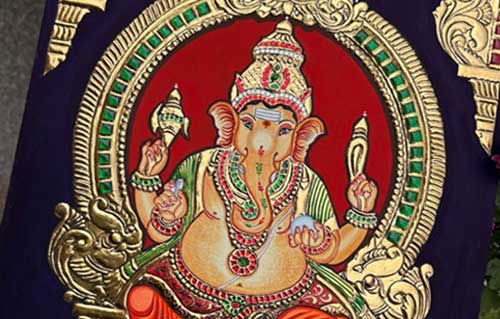
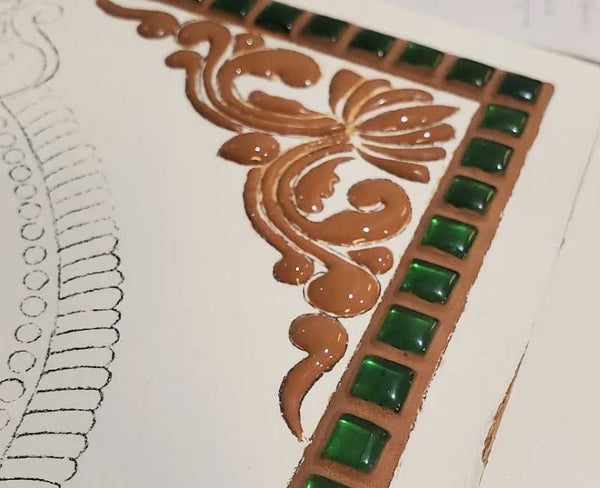
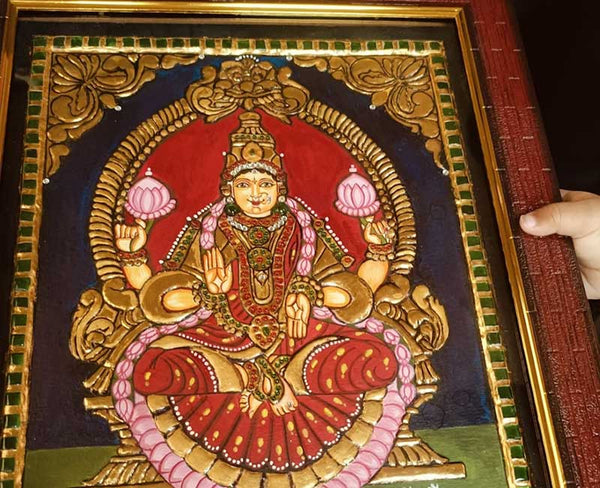
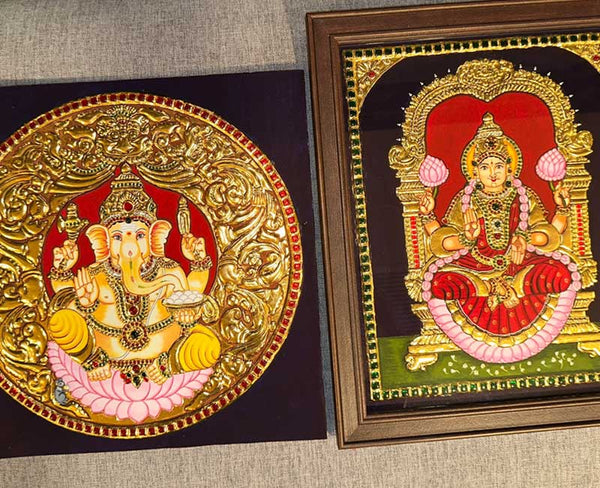
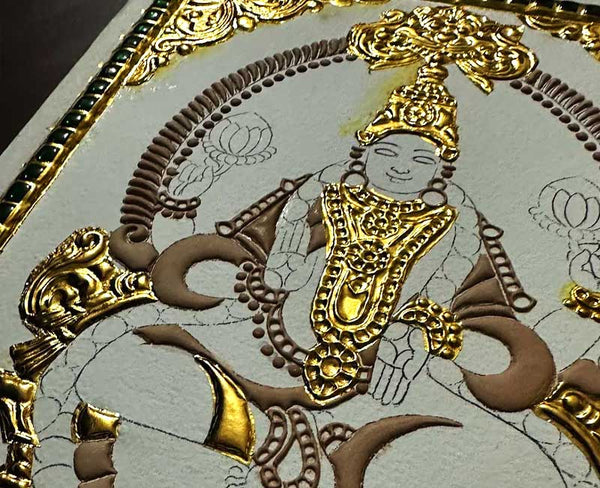
The stages that worry beginners most are usually the raised relief and the gold foil, and those are exactly where live teaching earns its place. You watch the gesso-based relief being built up into fine, raised lines, and then the 24 karat gold being laid over it, stage by stage, with the camera close enough to see how much pressure to use and how to lift cleanly. You do each step as you are ready, pause to post a photo if you are unsure, and carry on once a teacher has told you it looks right. Nothing is rushed, and nothing is left to guesswork.
How long your course runs
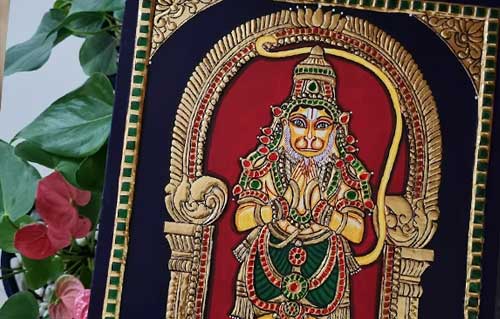
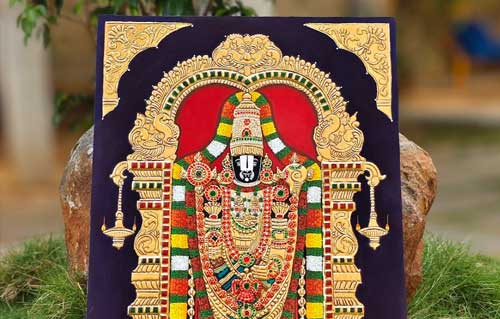
A live course runs from about 6.5 weeks to around 11 weeks, depending on how intricate the painting is. A simpler deity may take 6.5 weeks, while a detailed subject like Lord Balaji runs as a 2.5-month course. The rule of thumb is simple: your total number of live sessions is the number of weeks multiplied by two, since you meet twice a week throughout.
Your three to four teachers
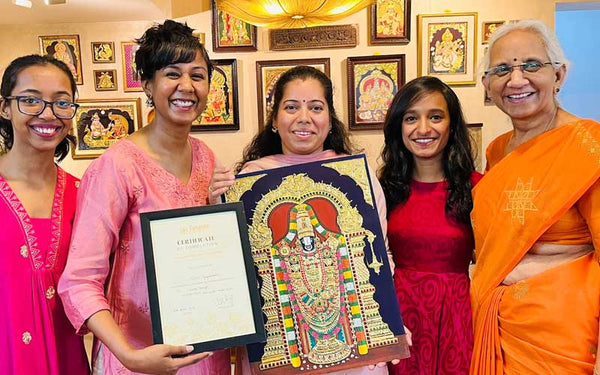
Every course is taught by three to four of our artists, not one. Each teacher takes the part they know best. One leads the embossing and the gold foil work, the stages where a steady, experienced hand matters most. Vibha Raj, who leads our teaching, takes the faces and the fine, intricate detailing, the part that gives a deity its expression. This way, you learn each stage from someone who has done it thousands of times, and the quality stays high from the first stroke to the last.
It also means you are never relying on a single person's availability. When you have a question between classes, there is more than one teacher who can answer it, and each one is deeply fluent in the stage you are on. For a beginner, that is quietly reassuring: the hardest parts are taught by the people who know them best.
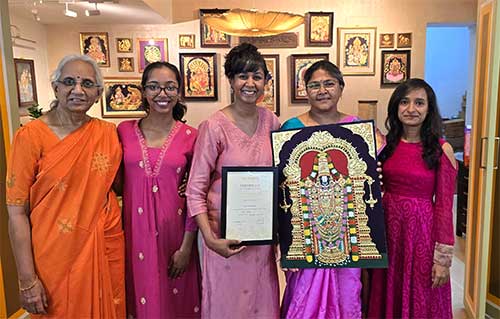
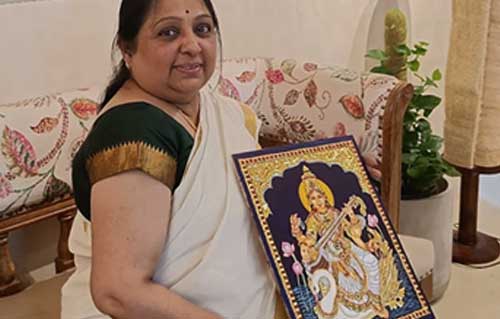
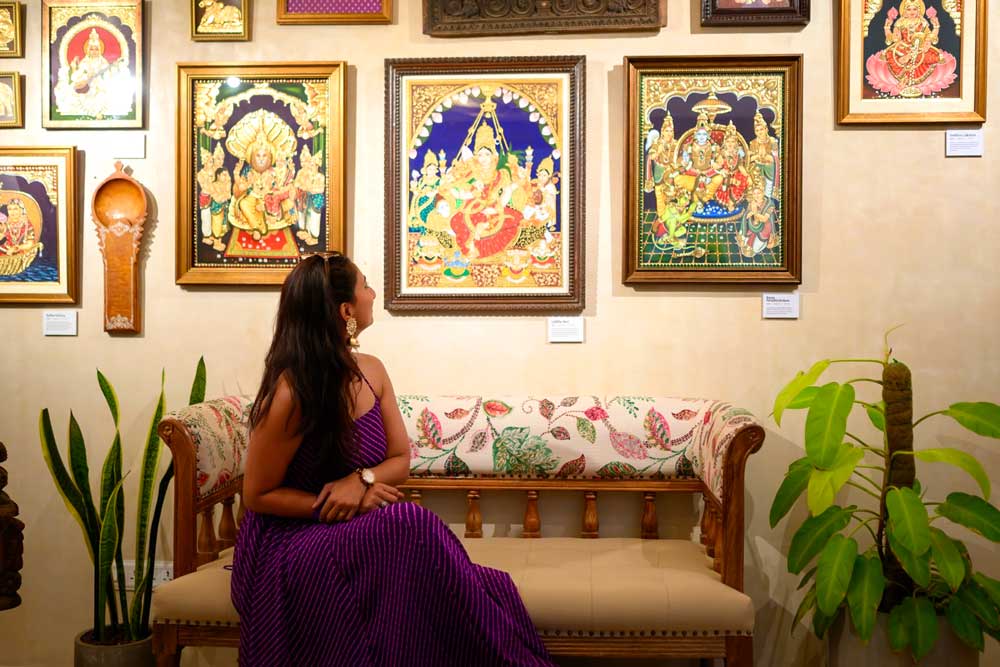
These are not anonymous tutors. Tanjore Collective was founded by Vibha Raj, an award-winning Tanjore artist who learned this art from her mother, the master artist Vani Bhaskar, and who teaches the hardest parts herself, the faces and the fine detailing. She teaches alongside Spurthy GB, who trained at the Karnataka Chitrakala Parishath in Bangalore and leads the gold foil work, and Yashaswini Jaishankar, who began here as a student and now guides embossing and intricate detailing. Every one of our teachers was once a student in this studio.
How feedback really works in a batch
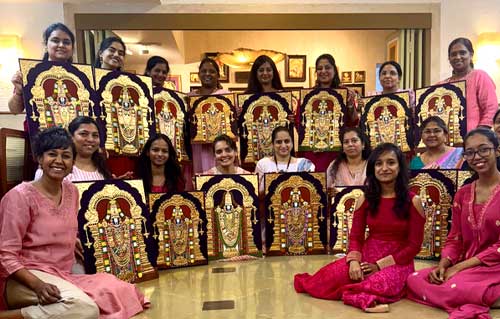
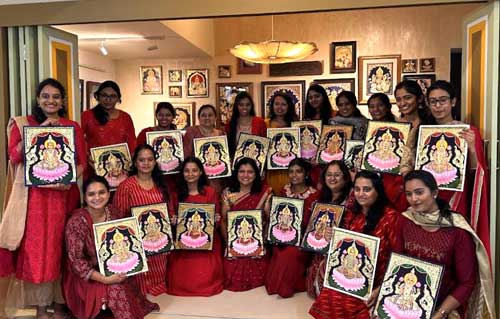
This is the question most people have: in a batch of 30 to 60 students, will I actually get attention? Yes, and here is honestly how. Every batch has its own WhatsApp group. You post a photo of your painting at any stage, and your teachers respond with specific corrections, what to fix, what to do next, what is going well. Many students simply call when they are stuck, and some who live nearby drop into the studio. It is warm and free-flowing, not a rigid system, and because several teachers are watching the group, you are never left waiting on one person.
"Initially I was quite sceptical as to how the online classes would be, as this art form is quite detailed and needs a lot of focus and attention. But at Tanjore Collective, Vibha and team have made it possible for everyone out there to easily learn and master the art form."
What if you miss a class?
Life happens, and missing a session is not a problem. Every live class is recorded and goes up the same day, so you can watch it before the next one and stay with your batch. The recordings live on our student app and stay available for 30 to 60 days after the course ends. We keep that window deliberately, mostly as gentle accountability, so the recordings become a reason to finish your painting rather than a folder you mean to get to one day.
Inside the Tanjore Collective student app
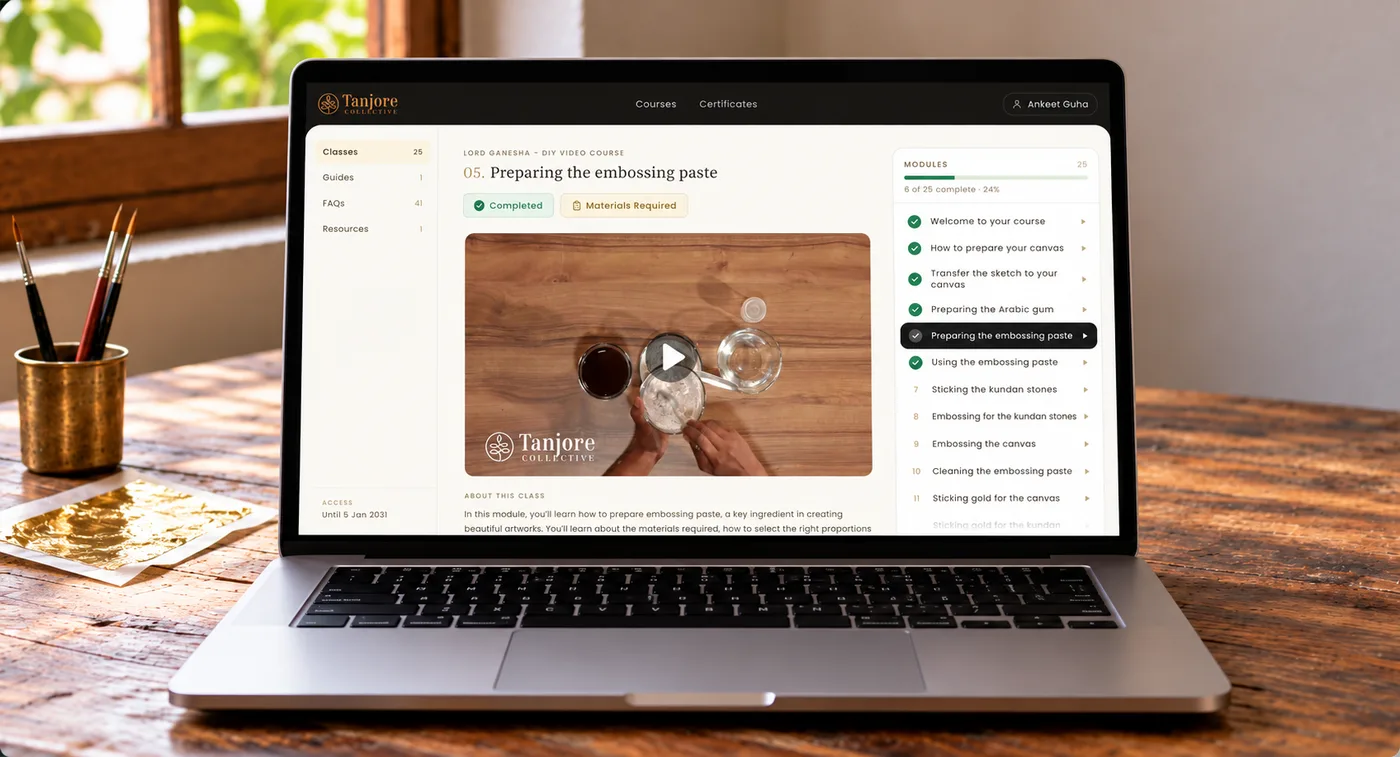
When you enrol, you get access to the Tanjore Collective student app, which works on the web, iOS and Android, on your laptop or your phone. It is where your recordings live, along with the course sketches, information on where to source materials, and answers to the questions students ask most. One thing to know: the app is for delivery, not conversation. All your feedback and your questions happen on WhatsApp, which keeps help quick and personal. We do not run things over email.
Joining from anywhere in the world
You can take a live class from almost anywhere. Our students join from across India and around the world, and the only thing we ask is that you tell us your city so we can confirm the timings work for your timezone. Your materials come to you too. The Essentials Kit holds the seven things you need, including 24 karat gold sheets, Arabic gum, kundan stones, original Swarovski crystals and sable brushes, and it ships by FedEx before your class begins. Delivery is usually 5 to 7 days within India and 3 to 4 weeks internationally, so it helps to enrol early. The kit is charged separately from the course.
Who a live online class suits best
A live online class is the right fit if you like a steady routine and a little accountability, if you want your work corrected as you go rather than at the end, and if you enjoy learning alongside others. It is ideal for working professionals who can hold two evenings a week, for anyone outside Bangalore who still wants real teaching, and for beginners who feel more confident knowing a teacher is watching. If your weeks are unpredictable, or your timezone makes an IST evening hard, our self-paced DIY course may suit you better, and that is worth being honest about before you choose.
What you walk away with
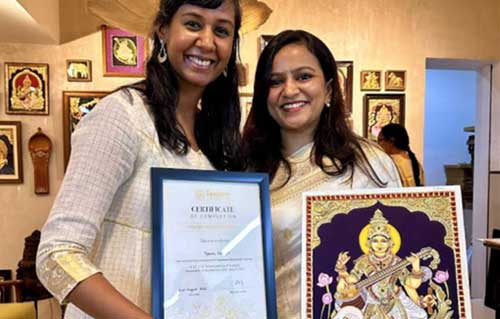
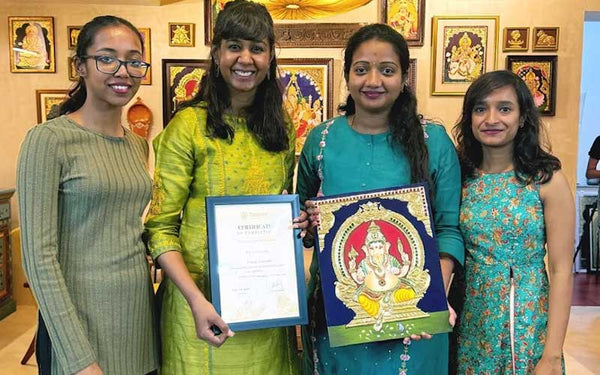
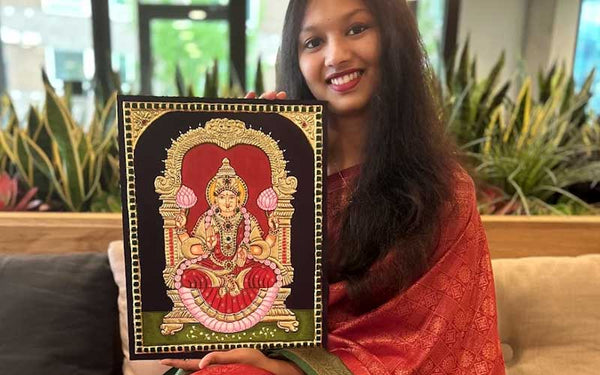
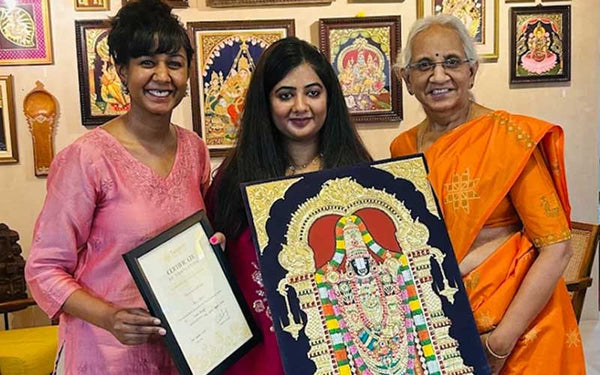
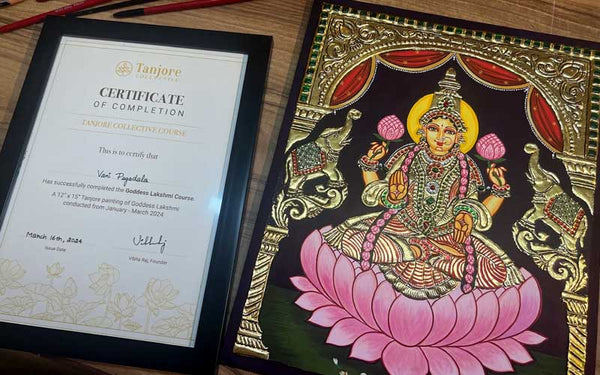
At the end, you have a finished Tanjore painting, made by your own hand, and a certificate, both digital and physical, that names your course and is signed by Vibha Raj. And you are in good company: more than 95% of our students finish their painting, which for an art this detailed is rare, and tells you how closely we stay with you.
If you are still weighing it up, read when a live online class is the right choice, how it compares in our online versus DIY guide, or the fuller picture of all three of our formats. You can also read why we teach in batches and why almost all of our students finish.
None of this is new for us. Over 40 years we have taught more than 5,000 students, and our work holds a 5.0 rating across 450+ Google reviews. Our studio and our founder have been featured in Deccan Herald, Hindustan Times, Deccan Chronicle and Incredible India.
Frequently asked questions
What if I miss a live class?
Every session is recorded and goes up the same day, and you keep access on the app for 30 to 60 days after the course ends, so you can always catch up.
What equipment do I need?
A laptop or tablet with a stable internet connection and Zoom. That is all.
Is a live class one-on-one?
No, we teach in batches, never one to one, because it helps students stay on track and finish. You still get personal feedback through your batch WhatsApp group and on calls. You can read why we teach in batches.
Can I join from outside India?
Yes. Students join from around the world. Tell us your city so we can confirm the timings and ship your materials in good time.
What if I fall behind?
Your teachers help you catch up on WhatsApp and on calls, and the same-day recordings mean a missed class never leaves you stuck.
How do I get the materials?
The Essentials Kit ships by FedEx before your class, usually 5 to 7 days within India and 3 to 4 weeks internationally. It is charged separately from the course.
How long can I rewatch the classes?
Recordings stay on the student app for 30 to 60 days after the course ends.
Do I get a certificate?
Yes, a digital and a physical certificate, naming your course and signed by Vibha Raj.
Whenever you are ready, we will be right there with you, class by class, until your painting is complete. Thousands of students, many of whom once doubted they could, have sat exactly where you are and gone on to finish a painting they treasure. We cannot wait for you to fall in love with this art form.
More blog articles
Online vs DIY Tanjore Course: The Honest Comparison (With a Table)
Online or DIY Tanjore course? An honest, side-by-side comparison so you can choose structure or flexibility.
Inside Our DIY Tanjore Video Course: Lessons, Access and Real Feedback
A self-paced Tanjore painting video course with a bundled kit and real teacher feedback on WhatsApp. Here is exactly what you get.
Why 95%+ of Our Tanjore Painting Students Finish Their Painting
Most people who start a creative course never finish. Here, 95%+ do. The real reasons behind our completion rate.
What our students say
Hear from students who've learned the art of Tanjore painting with us.