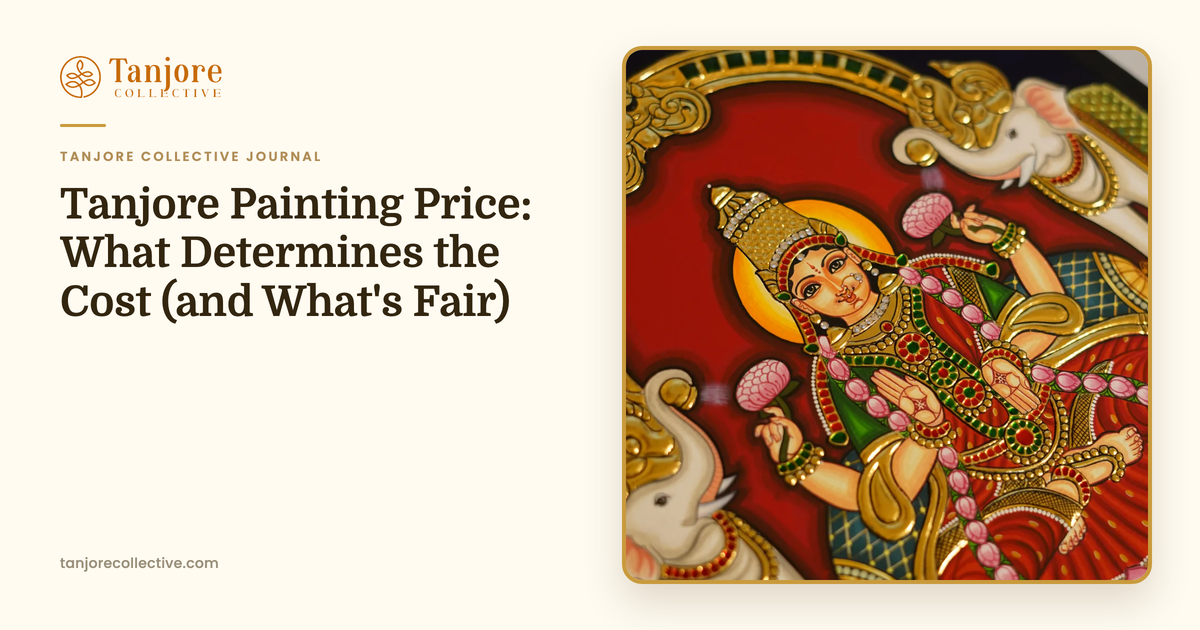
Tanjore Painting Price: What Determines the Cost (and What's Fair)

Written by
Swathi Katta
A master studio explains what really drives the price of a Tanjore painting, size, 24k gold foil, gesso relief, stones, subject and artistry, with rough ranges by size and how to spot an imitation.
Key takeaways
- A genuine Tanjore painting usually costs: small Rs 20,000–40,000, medium Rs 40,000–80,000, large or ornate Rs 80,000–2,00,000 and beyond.
- What moves the number: real 24 karat gold, relief depth, set stones, subject, artist skill and framing.
- Size bands: small ≈ 10×12–12×15 in, medium ≈ 15×20–18×24 in, large ≈ 24 in and up.
- Very low prices usually mean something was swapped out — the gold, the relief or the handwork.
- These are indicative; our own paintings are made to order and priced on enquiry.
At Tanjore Collective, our master artists both paint these pieces and teach the craft, so we get asked about price almost every week.
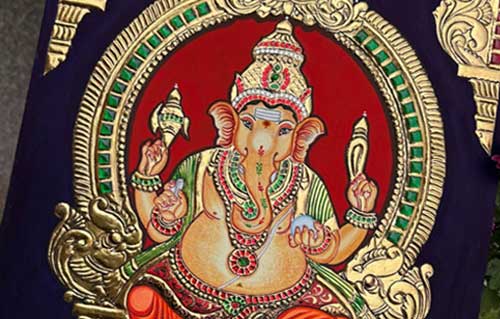
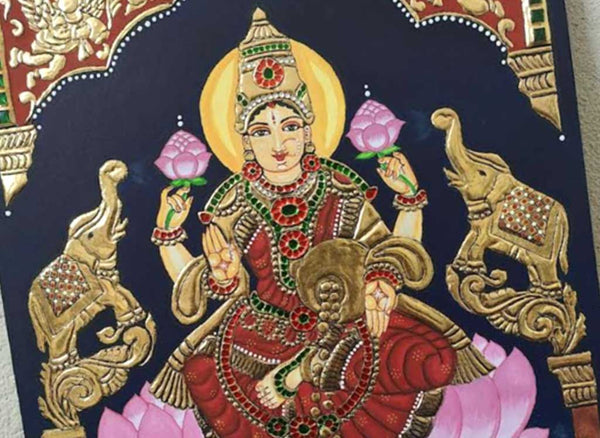
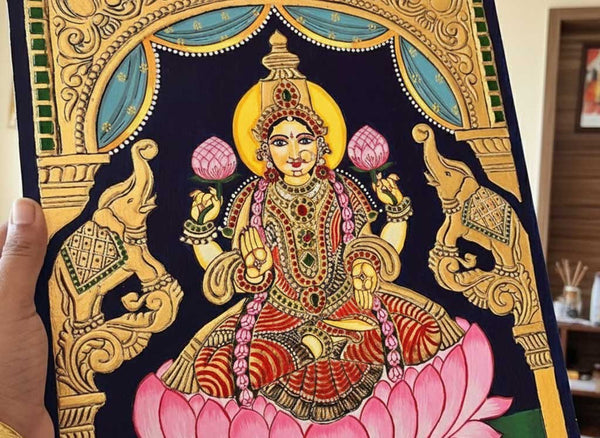
Here is the honest, short answer. A genuine Tanjore painting made with real 24 karat gold foil, hand built gesso relief and set stones usually starts around Rs 20,000 for a small piece and climbs into the lakhs for a large, heavily jewelled deity. The price moves with size, how much real gold is used, the depth of the relief work, the stones, the complexity of the subject and the hours a skilled artist puts in. Once you know how to read those factors, you can tell a fair price from a suspiciously cheap one in a minute.
This market rarely explains its numbers, so we will. We make bespoke paintings for patrons and we have been teaching this art for over three decades, and we would rather you understand what you are paying for than feel talked into it.
Watch how the value is built
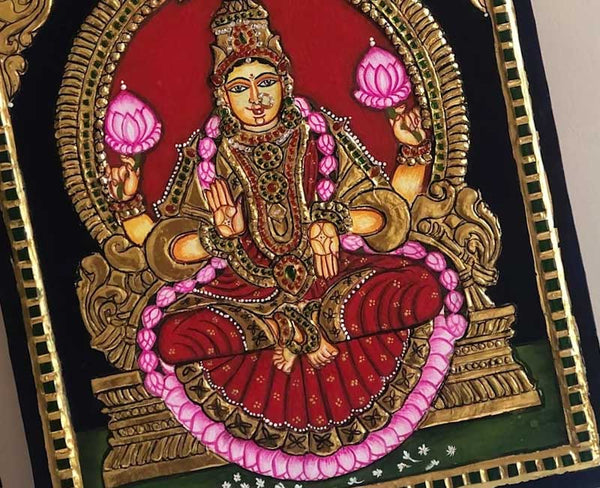
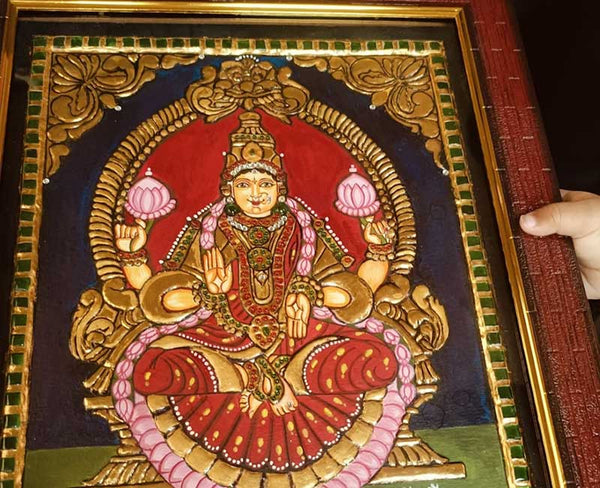
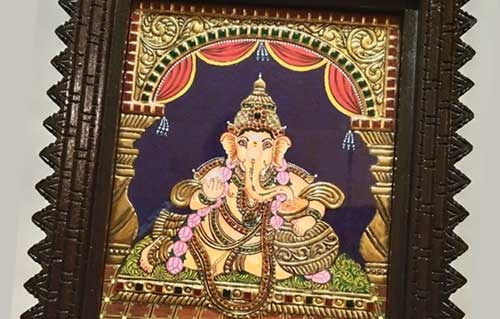
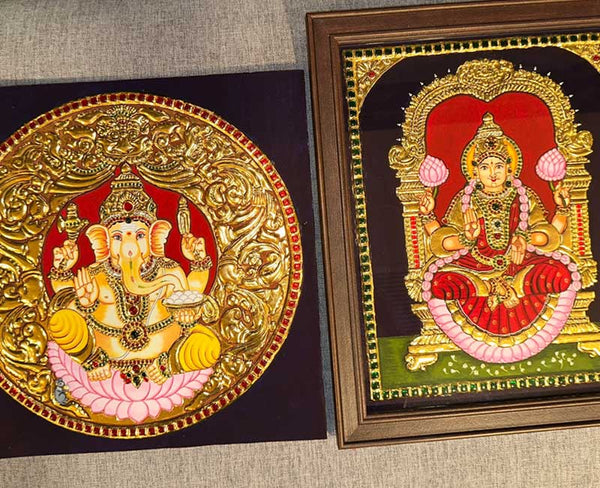
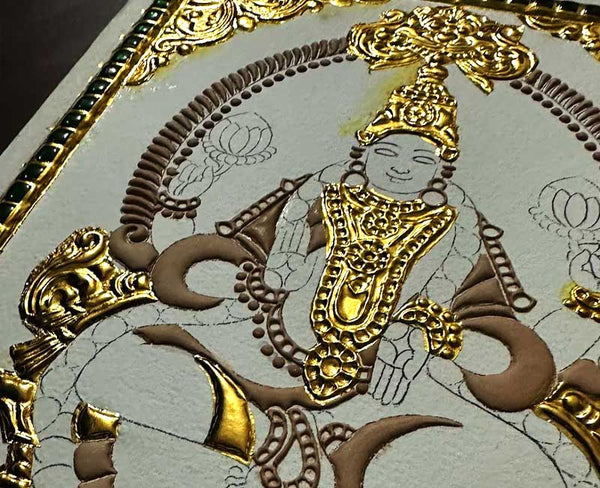
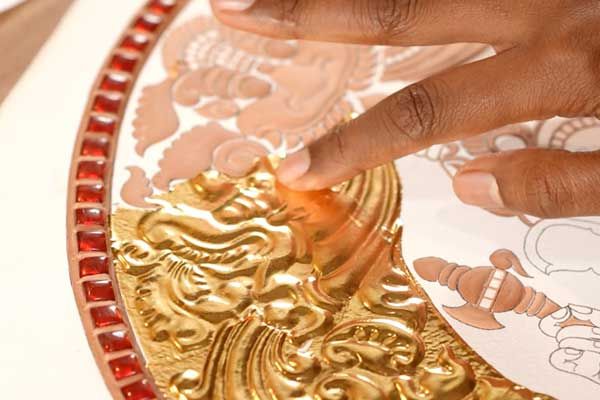
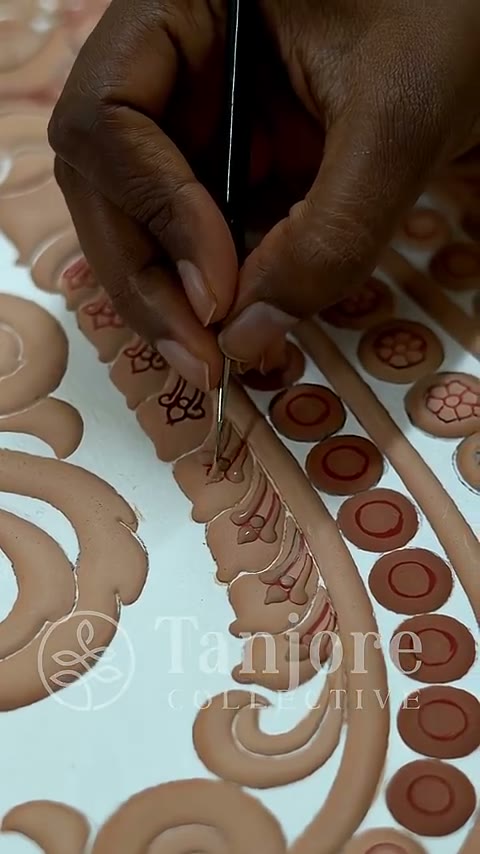
Before the numbers, it helps to see where the money actually goes. This short clip shows the gold foil, the raised gesso and the kundan stones going onto a traditional Thanjavur painting. Every one of those steps is slow, skilled handwork.
What decides the price of a Tanjore painting
The price of a Tanjore painting is set by materials, detail and time, not by a fixed rate card. A larger board with more gold, deeper relief and more stones costs more because it uses more of everything and takes far longer to finish. Here is how each factor pulls on the final number.
| Factor | Why it moves the price |
|---|---|
| Size | A bigger board needs more gold, more relief and more painting hours. Cost rises faster than size alone, because the detail scales up too. |
| Quantity and purity of 24k gold foil | Real 24 karat gold leaf is the single biggest material cost. More gilded area, and purer gold, means a higher price and a shine that lasts for decades. |
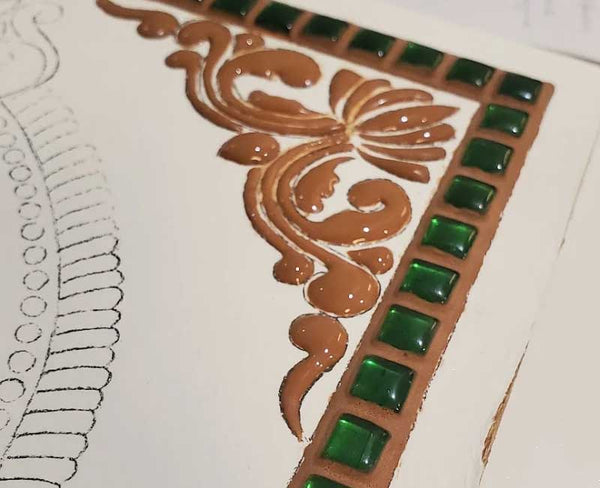
| Gesso relief detail | The raised arch, crown and jewellery are built up by hand in gesso before gilding. Finer, deeper relief takes more sessions and lifts the price. |
| Stones (kundan and Swarovski) | Kundan stones are set into the relief by hand. Original Swarovski crystals cost more than plain glass and add real sparkle, so a stone-rich piece costs more. |
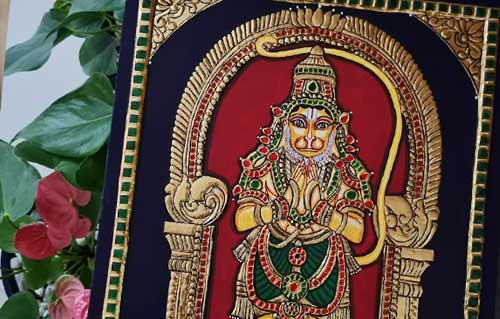
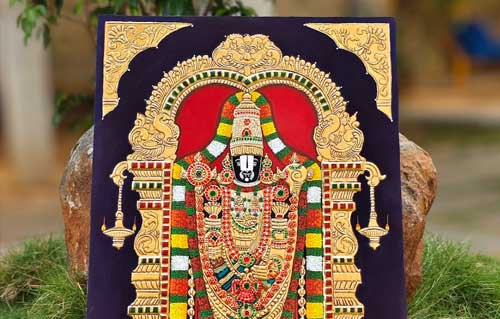
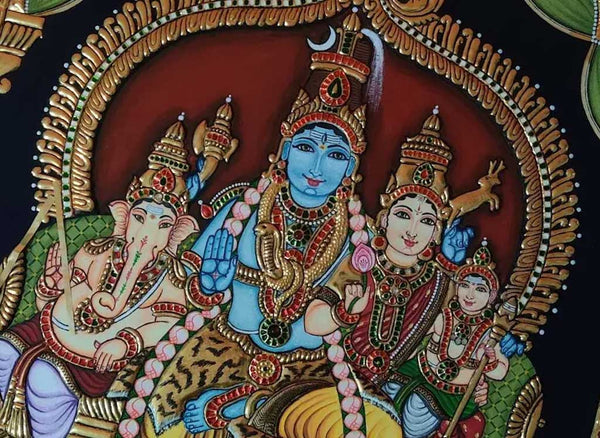
| Subject complexity | A single serene deity is simpler than an elaborate Balaji or a Shiva Parivar with many figures, an ornate prabhavali arch and dense ornamentation. |
| Artist skill and time | The face is the most delicate stage, and a trained artist charges for years of practice. Hand skill is what separates a treasured icon from a flat print. |
| Framing | A quality wooden frame with glass protects the gold and stones. It adds to the total but it is worth it for a piece meant to last generations. |
Rough price ranges by size
As a rough guide, price tracks size closely, because size decides how much gold, relief and time a piece needs. The bands below are indicative for a genuine, handmade painting with real 24k gold foil. Our own pieces are made to order, so we share an exact quote on enquiry once we know the subject, size and level of detail you want.
| Size band | Indicative range | What changes at this size |
|---|---|---|
| Small (about 10 x 12 to 12 x 15 in) |
Rs 20,000 to Rs 40,000 | A single deity, modest relief and gold, a few stones. Lovely for a pooja shelf or a first piece. |
| Medium (about 15 x 20 to 18 x 24 in) |
Rs 40,000 to Rs 80,000 | More gilded area, a fuller arch, more kundan and crystal work, and noticeably more hours. |
| Large or ornate (24 in and up) |
Rs 80,000 to Rs 2,00,000 and beyond | Elaborate subjects, dense relief and stones, and weeks of skilled work. A centrepiece meant to be handed down. |
If a listing offers a large, fully gilded deity for a few thousand rupees, treat it with care. At that price the gold and stones almost certainly are not real, which brings us to the part most sellers skip.
Honesty box: why the cheap ones are cheap
A very cheap "Tanjore" painting is usually cheap because the costly parts have been swapped out. Common shortcuts we see:
- Imitation gold instead of 24 karat gold foil. Brass or synthetic foil, or plain gold paint, looks bright at first and dulls over time.
- Printed or moulded relief instead of hand built gesso. A machine embossed sheet or a plastic overlay skips the slowest, most skilled step.
- Plastic stones instead of real kundan and original Swarovski crystals.
- A digital print of a painting with a little relief added on top, sold as handmade.
None of that is wrong to buy if you know what it is and pay accordingly. The problem is paying a real painting's respect, and sometimes a real painting's price, for something that is not one. If you want to check a piece yourself, we wrote a full guide on how to spot an authentic painting.
Ready made versus commissioned price
A ready made painting is usually the more affordable route, because it already exists and you are choosing from what is available. A commissioned piece often costs more, and that is fair, because you are paying an artist to make something to your exact wish.
With a commission you choose the deity, the size, the pose, the colours and the level of gold and stone work. The artist sketches, builds the relief, gilds and paints just for you, which takes dedicated weeks of studio time. That is why a custom Balaji or a family deity can sit at the higher end of its size band. If a specific vision matters to you, it is money well spent. You can read how the process works in our guide to commission a custom piece.
How to judge if a price is fair
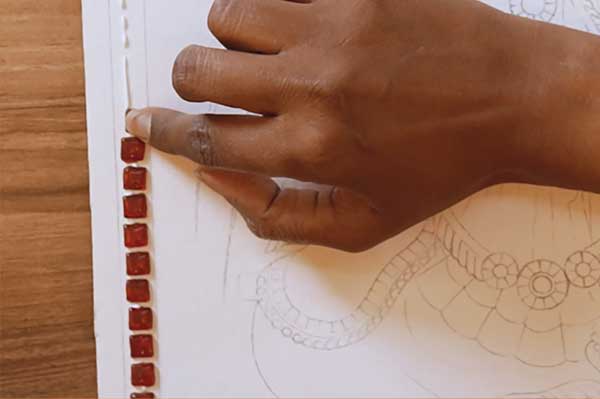
A fair price simply matches the materials and detail in front of you. Once you can read a piece, the number stops being a mystery. Match the price to what you can actually see, and ask the seller a few plain questions.
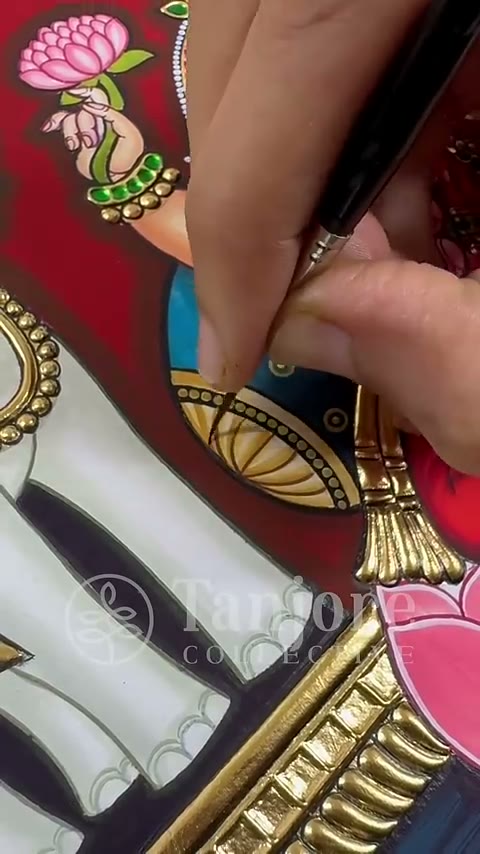
Good questions to ask before you buy:
- Is the gold real 24 karat foil, or is it imitation foil or gold paint?
- Is the relief built by hand in gesso, or is it a printed or moulded sheet?
- Are the stones real kundan and original Swarovski, or glass and plastic?
- Who painted it, and how long did it take?
- Is the price for the painting alone, or does it include the frame?
A confident, honest maker will answer all of these happily. If the answers are vague, or the price feels far below the ranges above for the size and detail shown, slow down. A real painting rewards a fair price with a shine and a presence that lasts for generations.
Frequently asked questions
How much does a Tanjore painting cost?
A genuine, handmade Tanjore painting with real 24 karat gold foil roughly costs Rs 20,000 to Rs 40,000 for a small piece, Rs 40,000 to Rs 80,000 for a medium one, and Rs 80,000 into the lakhs for a large or ornate deity. The exact price depends on size, the amount of real gold, the relief detail, the stones, the subject and the artist. Made to order pieces are quoted on enquiry.
Why are some Tanjore paintings so cheap?
Because the expensive parts have been replaced. Very cheap paintings tend to use imitation gold or gold paint instead of 24 karat foil, printed or moulded relief instead of hand built gesso, and plastic instead of real kundan and Swarovski stones. Some are digital prints with a little relief added on top. They can look bright at first, but they are not the same object as a real painting.
Does 24 karat gold foil make it more expensive?
Yes. Real 24 karat gold leaf is the single biggest material cost in a Tanjore painting, and the more gilded area a piece has, the more it costs. Purity matters too, because pure gold keeps its warm shine for decades, while imitation foil dulls. It is one of the clearest signs of a genuine painting and of a fair price.
Is a commissioned painting worth the extra cost?
If you have a specific deity, size or style in mind, yes. A commission means an artist builds the relief, gilds and paints a piece made only for you, over dedicated weeks in the studio. That handwork sits at the higher end of a size band, and for a family shrine or a piece to hand down, most patrons find it worth every rupee.
See real pieces and get a fair quote
The best way to understand price is to look at real work up close. You can browse our current pieces and see current pieces and prices on enquiry in the gallery, and tell us the deity, size and detail you have in mind. We will share an honest quote, with no pressure. For the full picture on choosing and buying, our complete buyer's guide walks you through it, and if you are new to the art form, what Tanjore painting is is a gentle place to start.
More blog articles
Goddess Lalitha Devi Tanjore Painting Class: Meaning and How to Learn It
Who Goddess Lalitha Devi is, when she is worshipped, and how to paint her yourself, even as a complete beginner.
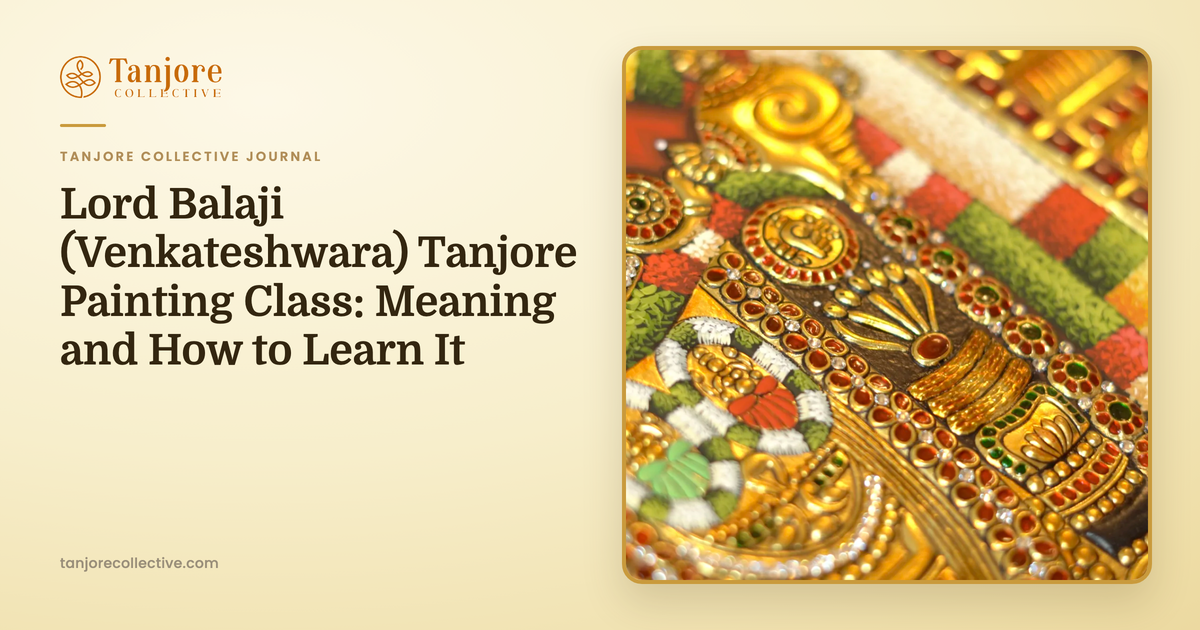
Lord Balaji (Venkateshwara) Tanjore Painting Class: Meaning and How to Learn It
The meaning of Lord Balaji, his festivals, and how to paint Venkateshwara in the Tanjore style over our detailed 2.5-month course.
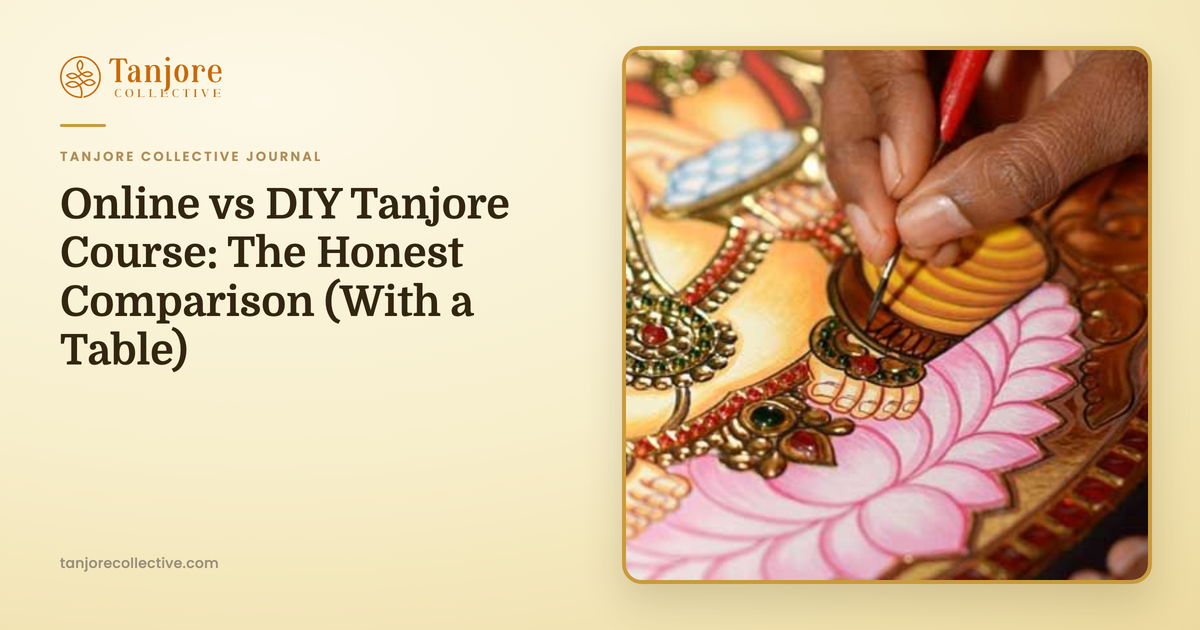
Online vs DIY Tanjore Course: The Honest Comparison (With a Table)
Online or DIY Tanjore course? An honest, side-by-side comparison so you can choose structure or flexibility.
What our students say
Hear from students who've learned the art of Tanjore painting with us.