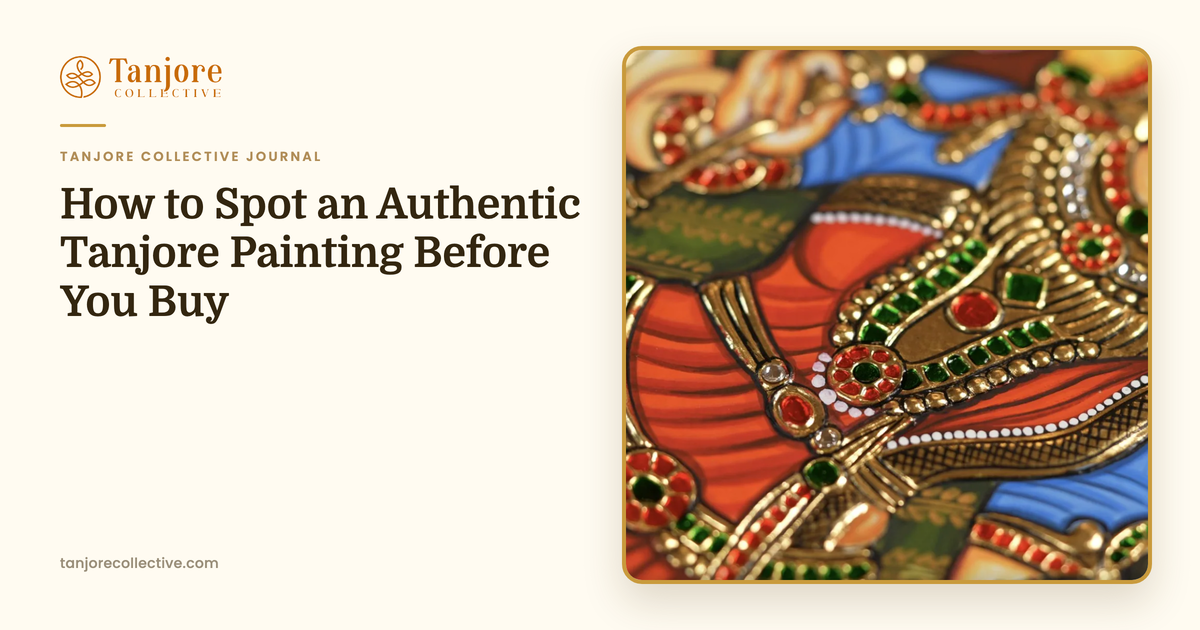
How to Spot an Authentic Tanjore Painting Before You Buy

Written by
Swathi Katta
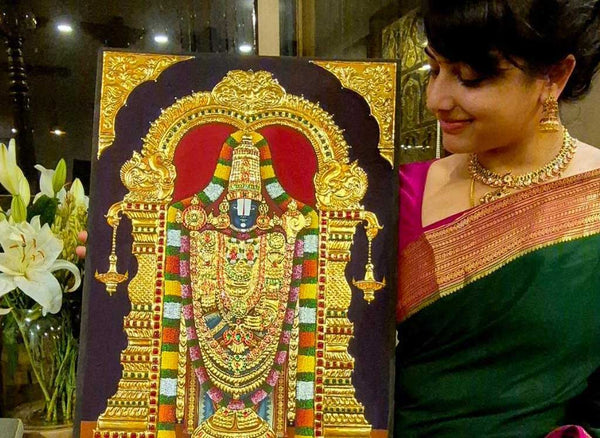
Real 24 karat gold foil, gesso relief you can feel, genuine kundan stones and hand painted faces. Here is exactly how to spot an authentic Tanjore painting before you buy.
Key takeaways
- An authentic Tanjore painting uses real 24 karat gold foil (not gold paint or bronze powder) laid over raised gesso relief you can feel with a fingertip.
- Look for genuine kundan and semi-precious stones hand-set into the relief, and soft, individually hand-painted faces.
- The board is solid wood (usually plywood) with real weight — a flimsy, too-light piece is a red flag.
- Insist on clear artist provenance: who made it and where they trained.
- If the gold looks flat, the relief feels printed, or the seller can't name the artist, treat it as decorative, not authentic.
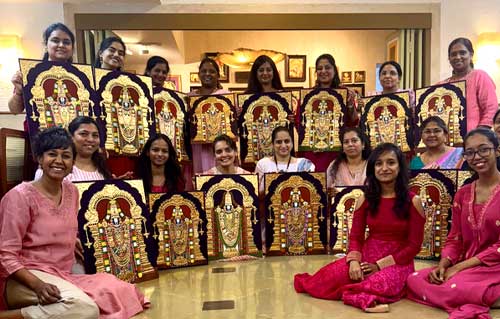
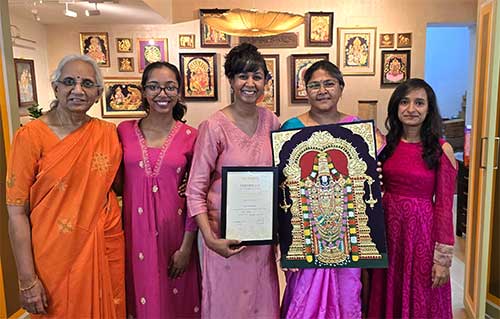
At Tanjore Collective, our artists have spent years both making Tanjore paintings in our Bangalore studio and teaching the craft, and the question we hear most from buyers is a fair one. How do you know if the painting in front of you is the real thing?
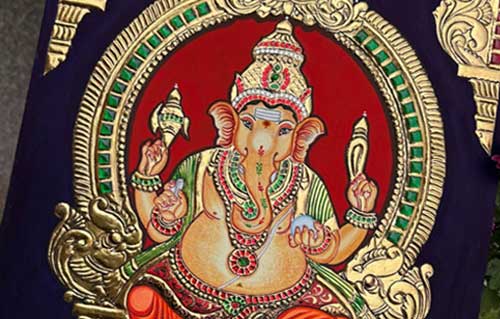
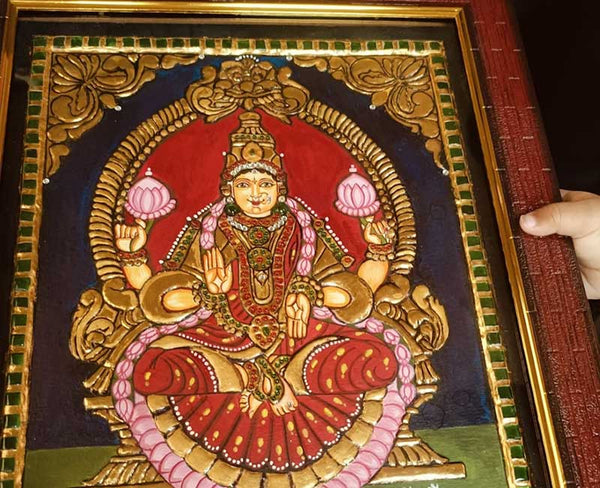
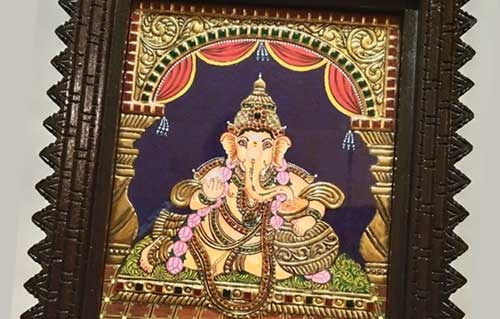
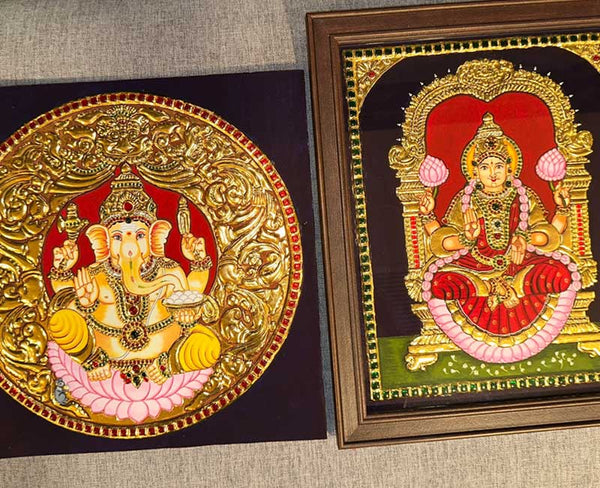
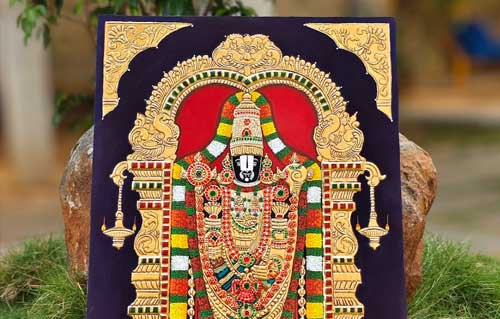
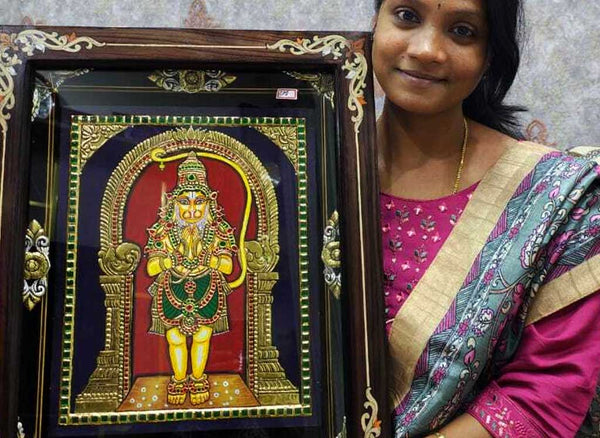
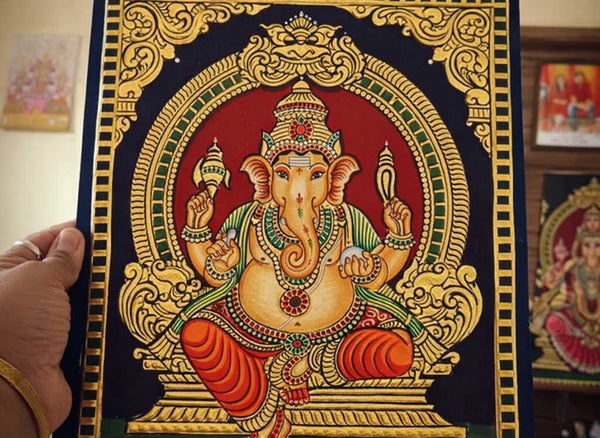
An authentic Tanjore painting is judged by its materials and its making, not by how shiny it looks in a photo. A genuine piece uses real 24 karat gold foil laid over raised gesso relief you can feel, with hand set kundan stones, hand painted faces, and a solid wood board behind it. Once you know what to look for, telling a real one from a printed or gold painted imitation becomes surprisingly easy. Here is the checklist we use ourselves.
If you want the full picture before you shop, our complete buyer's guide walks through the whole journey, and it helps to first understand what a Tanjore painting is and how it has been made for centuries.
Watch the details up close
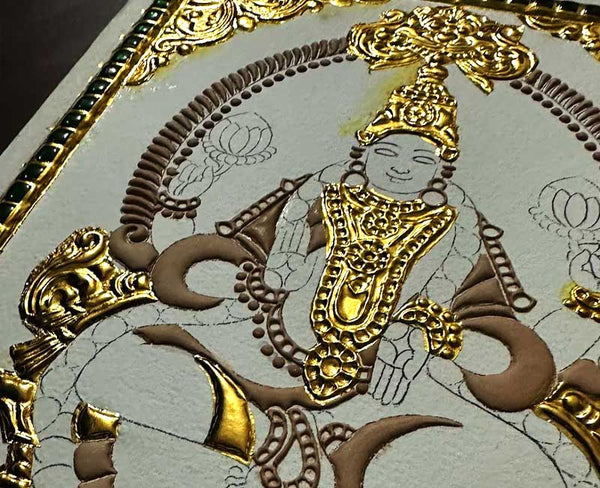
The fastest way to learn the difference is to see genuine work being made. In this short clip from our studio, watch gold foil and kundan stones going onto raised relief, the steps that separate a real piece from a flat print.
The 6 marks of an authentic Tanjore painting
A real Tanjore painting shows six things you can check with your own eyes and hands, whether you are in a shop, a gallery, or looking at a listing online.
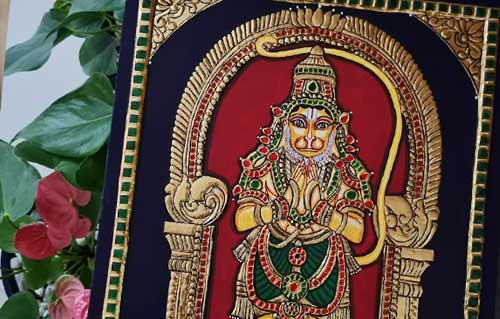
- Real 24 karat gold foil, thin sheets of real gold leaf, not gold coloured paint.
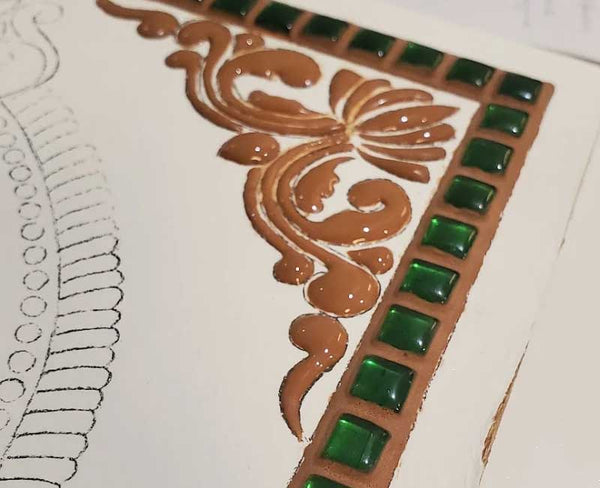
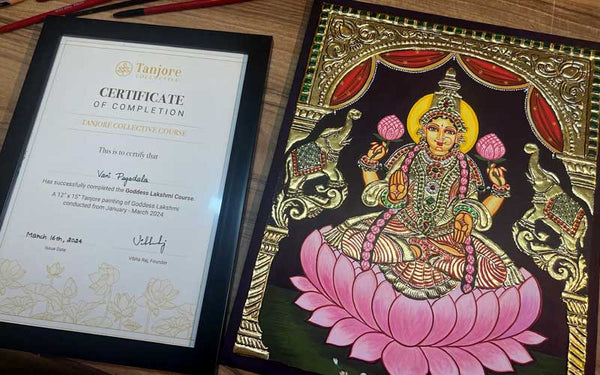
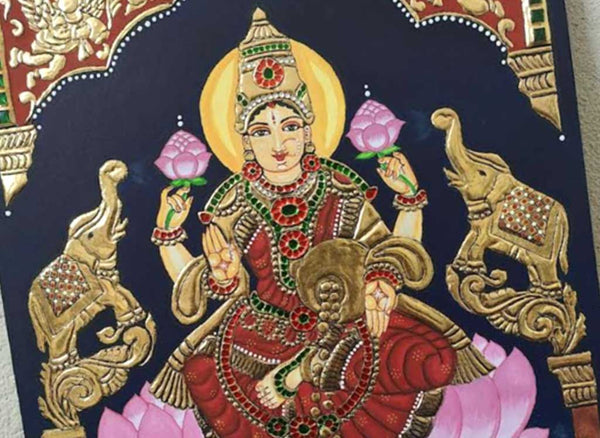
- Raised gesso relief on the crowns, jewellery, and arches, with height you can feel.
- Genuine kundan and semi precious stones, seated into the relief by hand, not printed dots.
- Hand painted faces, with soft shading and small human variations, not a machine perfect print.
- A quality wood board, usually plywood, so the piece has real weight and does not flex.
- Artist provenance, a seller who can tell you who painted it, where, and with what materials.
Miss most of these and you are likely looking at an imitation. Now let us go deeper on the three that fool buyers most often.
Real 24 karat gold foil vs imitation gold paint
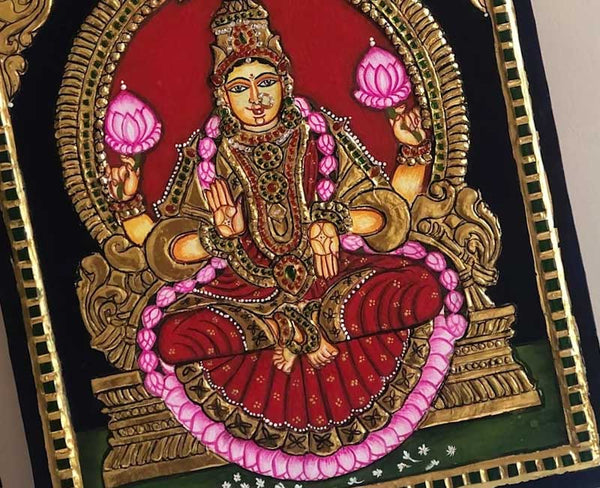
The single clearest test is the gold. Authentic Tanjore paintings use real 24 karat gold foil, thin sheets of pure gold laid over the raised gesso with Arabic gum. Imitations use gold coloured paint or bronze powder, and they behave very differently over time.
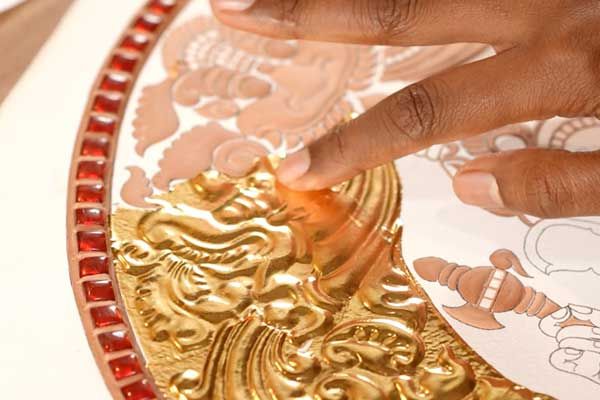
Here is how to look. Tilt the piece under a light and watch the sheen. Real gold foil gives a soft, deep shine that shifts gently as you move, and it stays warm rather than turning brassy or greenish. Study the edges too. On genuine work the foil follows the raised relief and shows tiny, natural seams where sheets meet, because it is laid by hand. Gold paint sits flat, looks uniform, and often pools slightly at the borders.
Time is the other tell. Purity of gold matters for shine and longevity, and real 24 karat gold does not tarnish, so a genuine piece keeps its glow for decades. Gold paint and bronze powders dull and darken within a few years, especially in humid homes. If a painting is only a season old and the gold already looks tired, be cautious. Curious how this feeds into cost? We break down what drives the price of a real piece in a separate guide.
Gesso relief you can feel
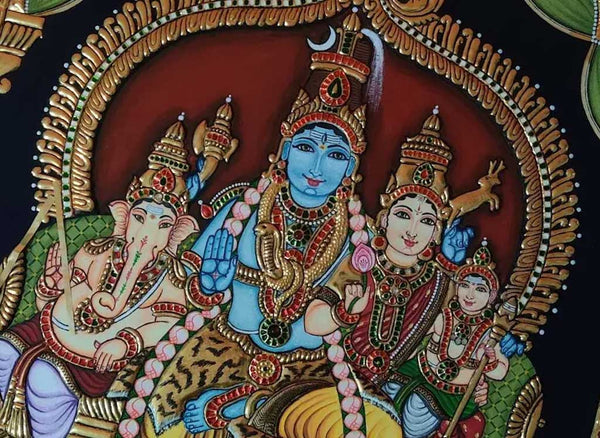
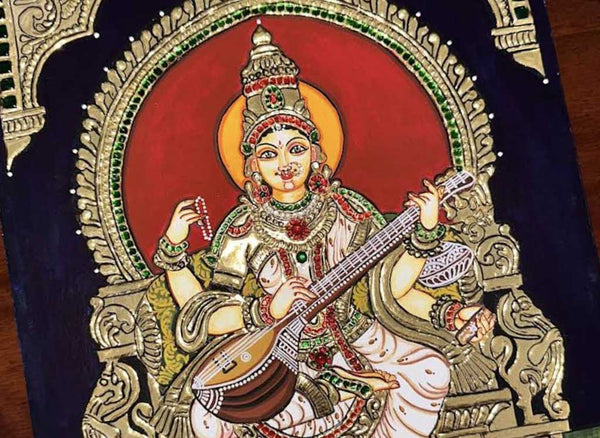
Gesso is the raised, three dimensional work under the gold, and it is one of the hardest things to fake. In an authentic Tanjore painting a paste of chalk powder and Arabic gum is built up by hand into the crowns, jewellery, and the ornate arch (the prabhavali) before any gold is applied. You can feel the height with a fingertip, and it is never perfectly even, because a hand made it.
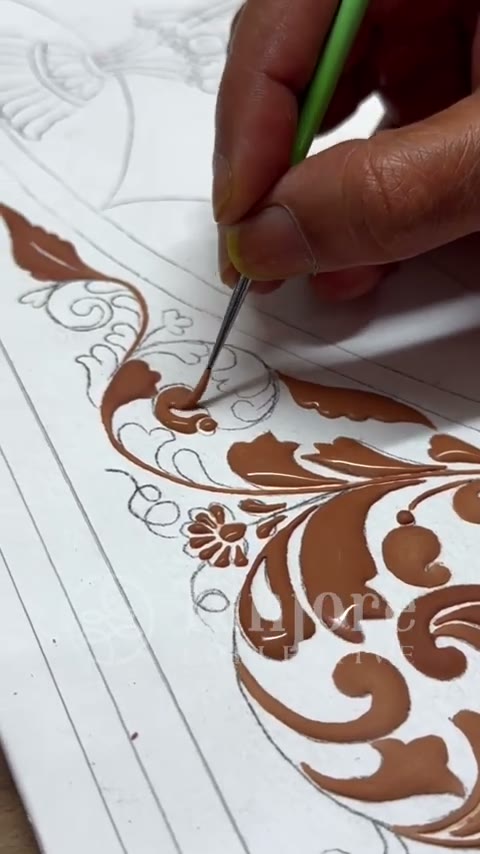
Printed and machine embossed fakes try to imitate this. A flat print will feel completely smooth, no matter how three dimensional it looks in a photo. A cheap embossed board may have some texture, but it repeats in a stamped pattern, and the raised areas do not line up naturally with the painted detail. Genuine gesso is a little irregular and always sits exactly where the ornament is, because the artist shaped it to the design. Run your hand across the surface. Real relief tells you the truth in seconds.
Genuine stones, hand painted faces, and a real board
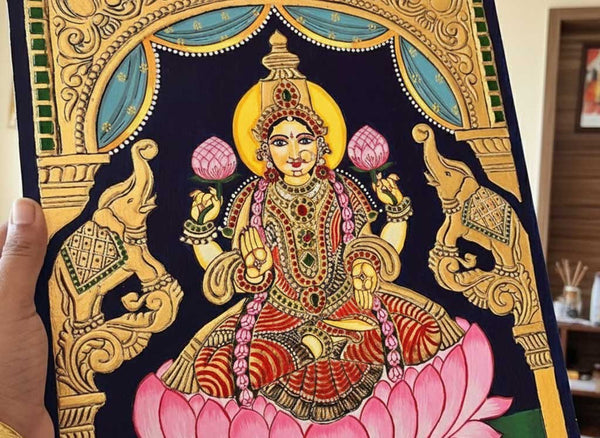
Three more details separate a treasured piece from a mass produced one. Genuine Tanjore paintings use real kundan stones, and on premium work original Swarovski crystals, set into the relief for jewelled ornamentation. Each stone is placed by hand, so look closely at how they sit. Real stones are seated into the gesso and catch light from their facets. Imitations often use flat plastic gems or printed dots that lie on the surface with no depth.
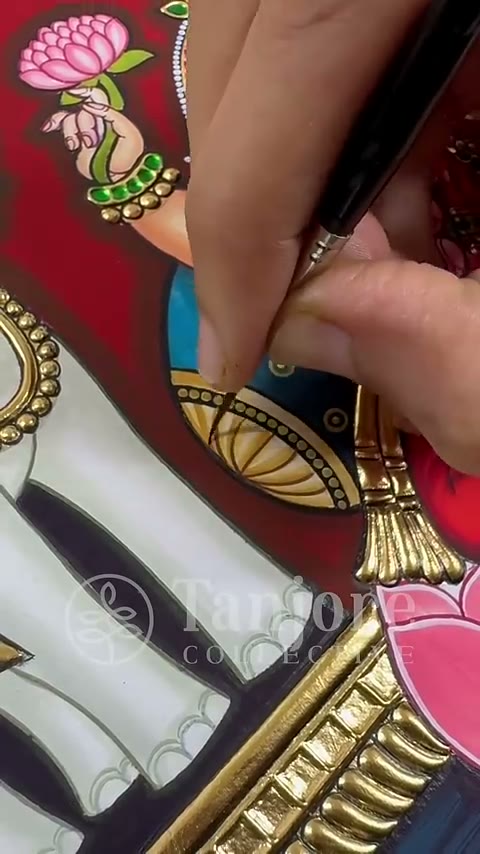
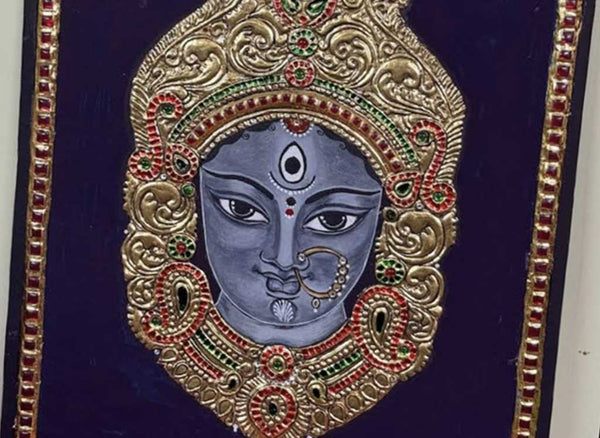
The face is where a real artist shows most. In our studio we treat painting the face of the deity as the most sacred and delicate stage of all. On authentic work you will see gentle shading and small individual touches around the eyes and lips. A printed face looks flat and identical from copy to copy. And finally, feel the weight. A genuine painting is built on a solid wood board, usually plywood, so it has heft and does not bend. Paper prints and thin card are light and flexible, an immediate sign you are not holding traditional work.
Questions to ask the seller before you buy
When you cannot inspect a piece in person, the right questions do the checking for you. A genuine studio answers all of these clearly and gladly, and vague answers are the warning you need.
- Is the gold real 24 karat foil, or gold paint? There is no in between. Ask directly.
- Is the relief hand made gesso? Confirm it is raised gesso work, not a print or a machine embossed board.
- Are the stones genuine kundan or crystal? Ask whether stones are hand set and what they are made of.
- Who painted it, and where? A real seller can name the artist or studio and describe the process.
- Can you customise the deity, size, or arch? Traditional studios paint to order, so customisation is usually possible.
- What is the board made of? Expect a solid wood board, commonly plywood.
If you are still comparing sellers, our guide on where to buy Tanjore paintings covers what to expect from studios, galleries, and online listings.
See authentic pieces, and ask us anything
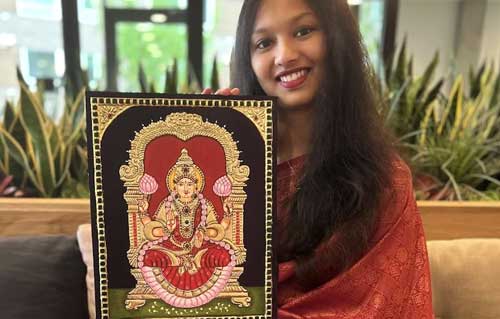
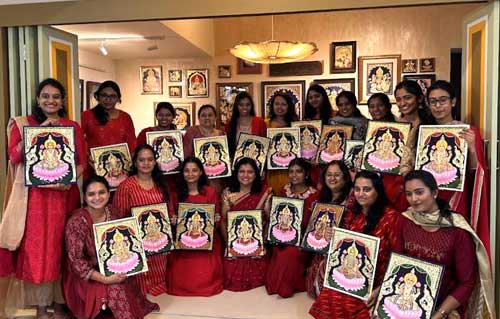
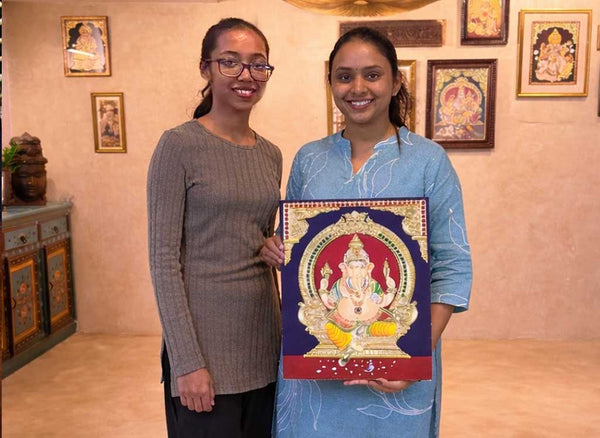
We have made bespoke Tanjore paintings for patrons for more than three decades, and we teach the same techniques to students around the world. That teaching is why we can be this specific about what real work looks like. If you would like to see genuine 24 karat gold foil, hand set stones, and gesso relief up close, browse our paintings gallery.
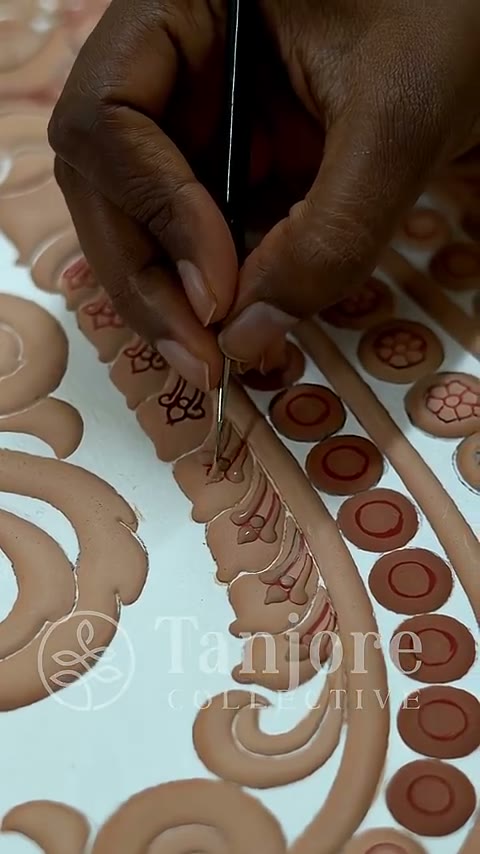
Our paintings are made to order, so pricing is on enquiry rather than instant checkout. Tell us the deity, size, and feel you are after through the gallery enquiry, and we will personally answer your questions about materials and provenance and guide you to a piece that is provably authentic.
Frequently asked questions
How can I tell if a Tanjore painting is real?
Check six things: real 24 karat gold foil rather than gold paint, raised gesso relief you can feel, genuine kundan or semi precious stones set by hand, a hand painted face with soft shading, a solid wood board with real weight, and clear artist provenance. If the gold is flat, the surface is smooth, and the seller cannot say who made it, treat it as an imitation.
Is the gold in Tanjore paintings real?
In authentic pieces, yes. Genuine Tanjore paintings use real 24 karat gold foil laid over raised gesso. Purity matters for shine and longevity, and real gold does not tarnish. Imitations use gold coloured paint or bronze powder, which looks flatter and tends to dull or darken within a few years.
What is gesso in a Tanjore painting?
Gesso is the raised relief work that gives a Tanjore painting its three dimensional shine. It is a paste made from chalk powder and Arabic gum, built up by hand into crowns, jewellery, and the ornate arch before the gold foil goes on. You can feel the height with a fingertip. A flat print will feel completely smooth, which is a quick way to spot a fake.
What questions should I ask before buying a Tanjore painting?
Ask whether the gold is real 24 karat foil or paint, whether the relief is hand made gesso, whether the stones are genuine kundan or crystal, who painted it and where, and what the board is made of. A trustworthy studio answers all of these clearly. For more on choosing a seller, see our guide on where to buy Tanjore paintings.
More blog articles
Goddess Lalitha Devi Tanjore Painting Class: Meaning and How to Learn It
Who Goddess Lalitha Devi is, when she is worshipped, and how to paint her yourself, even as a complete beginner.
Lord Balaji (Venkateshwara) Tanjore Painting Class: Meaning and How to Learn It
The meaning of Lord Balaji, his festivals, and how to paint Venkateshwara in the Tanjore style over our detailed 2.5-month course.
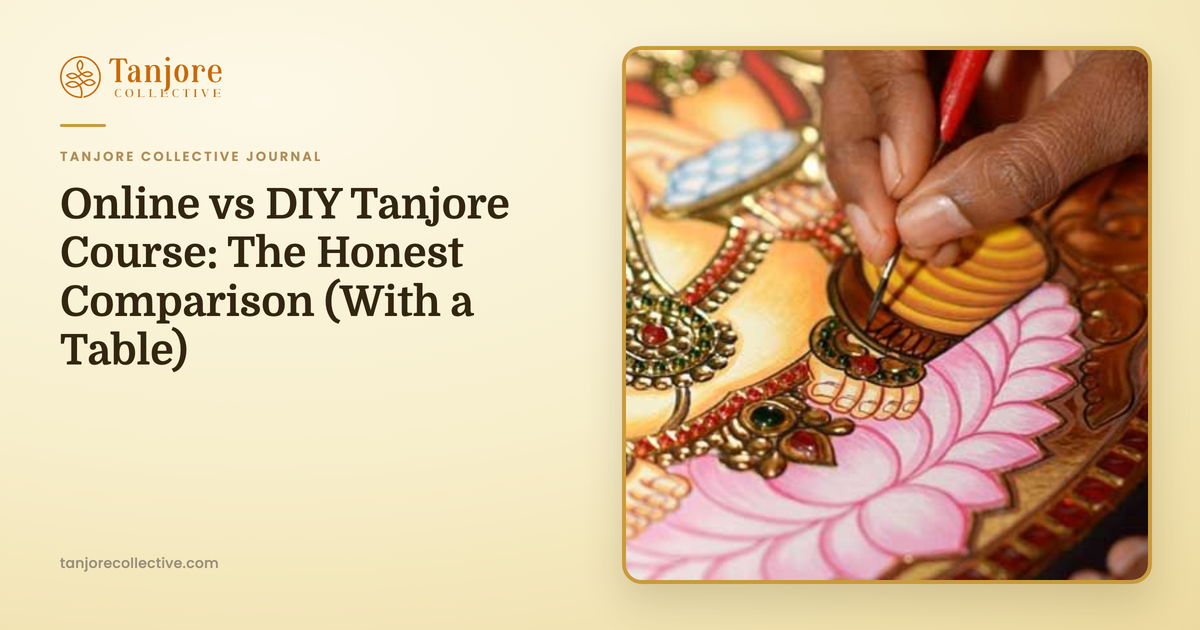
Online vs DIY Tanjore Course: The Honest Comparison (With a Table)
Online or DIY Tanjore course? An honest, side-by-side comparison so you can choose structure or flexibility.
What our students say
Hear from students who've learned the art of Tanjore painting with us.