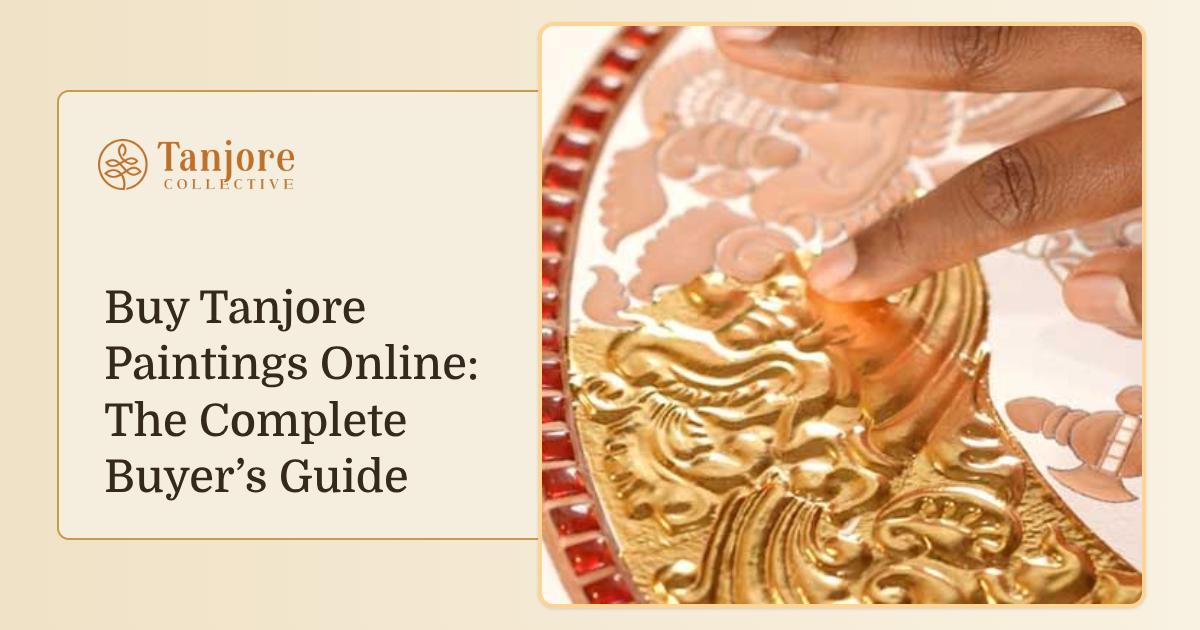
Buy Tanjore Paintings Online: The Complete Buyer’s Guide
Written by
Vibha Raj
A master studio’s guide to buying Tanjore paintings online: authenticity, price, ready-made versus made-to-order, choosing size and subject, and how to enquire.
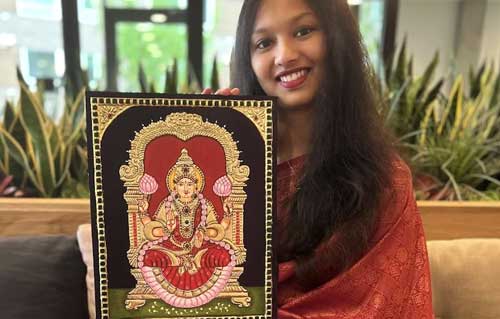
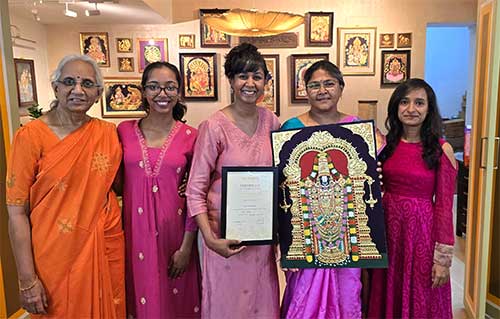
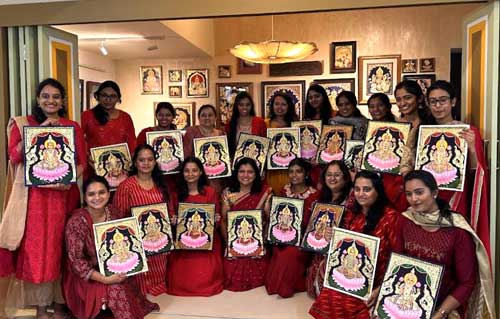
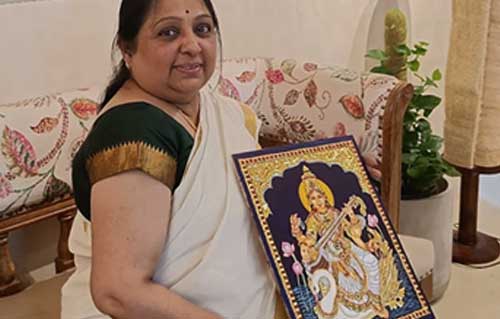
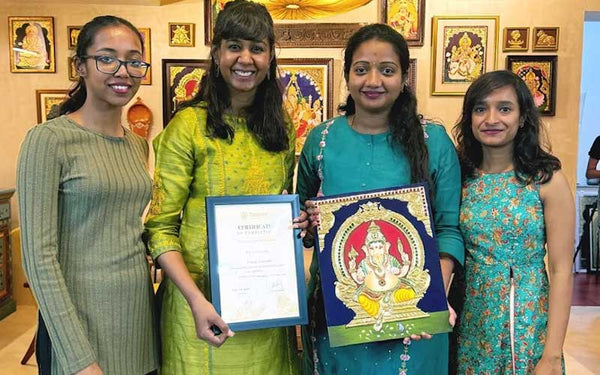
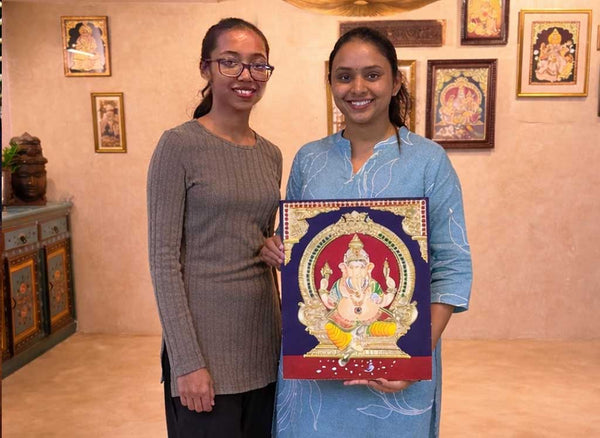
For more than three decades, our studio in Basavangudi, Bangalore, has done two things side by side. We paint bespoke Tanjore paintings for families and temples, and we teach the craft to thousands of students around the world, in a lineage carried on from the master artist Vani Bhaskar. So when someone asks how to buy a Tanjore painting online, we answer as the studio that also trains the artists who make them.
Here is the short version. You can buy an authentic Tanjore painting online directly from a studio like ours, either ready-made or made to order. It isn't an instant "add to cart" purchase the way a printed poster is. A real one is built by hand over many days with 24 karat gold foil, raised gesso and set stones, so you browse a gallery, send an enquiry, we confirm the details and price with you, and then the artists create your piece. This guide walks you through everything worth knowing before you order: how to judge authenticity, what drives the price, ready versus made-to-order, sizes and subjects, and how to choose a seller you can trust.
At a glance: what makes a Tanjore painting authentic
- Real 24 karat gold foil laid over raised areas, not gold paint or print.
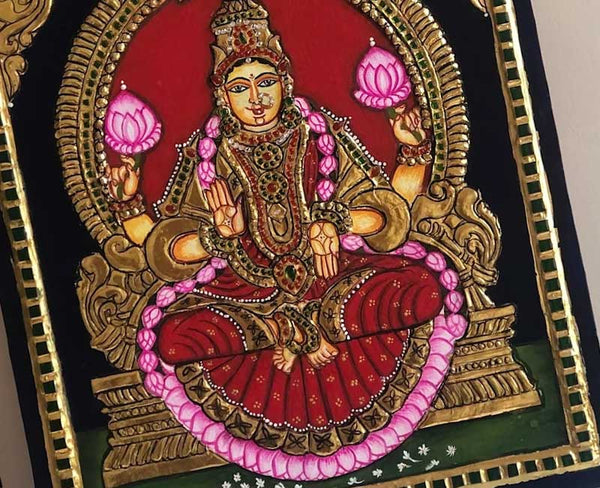
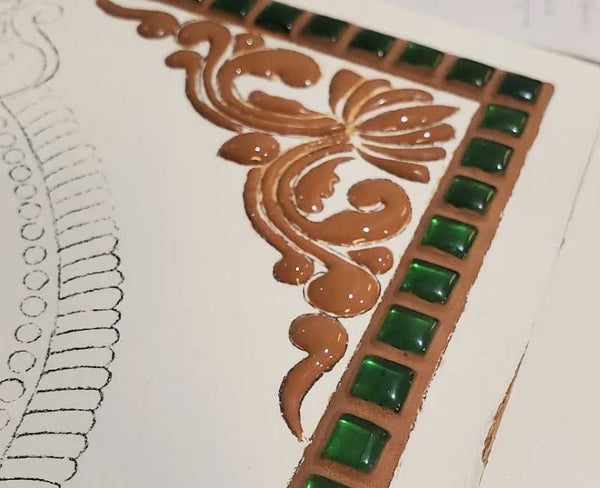
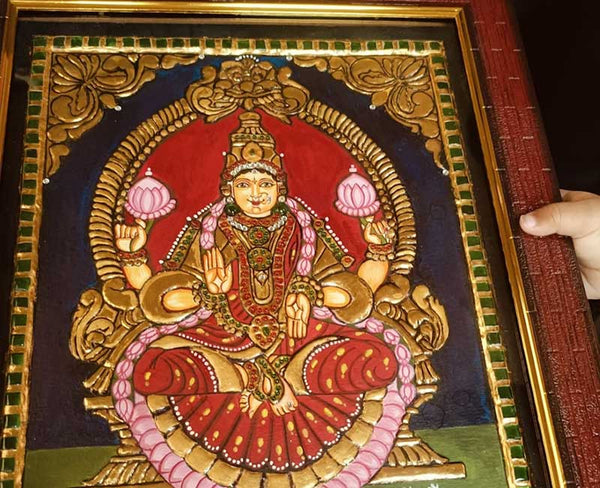
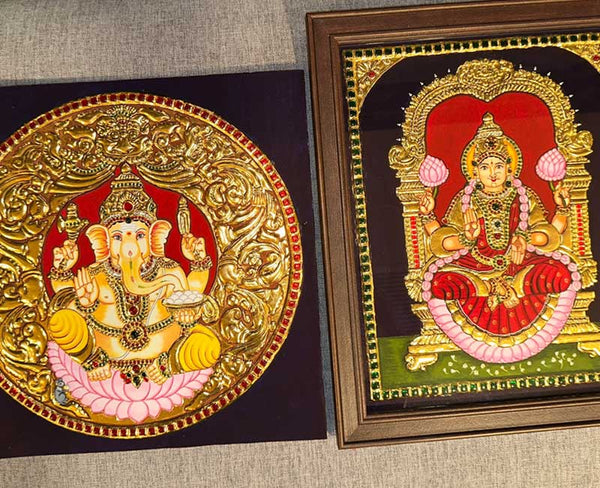
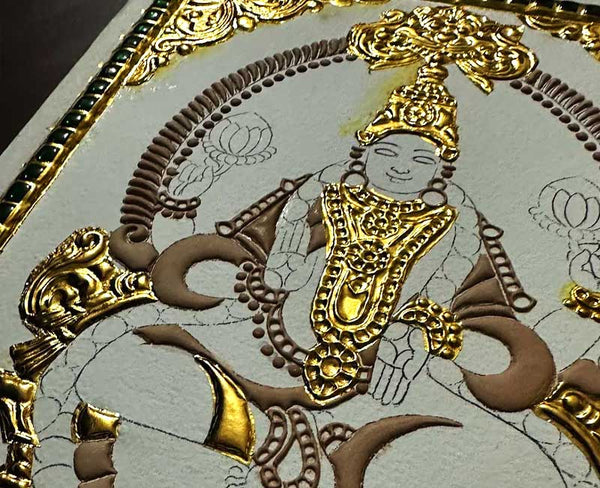
- Gesso relief (embossing), a raised, three-dimensional surface for arches, jewellery and crowns.
- Kundan stones and crystals set into the relief for jewelled ornamentation.
- A hand-painted face, the most delicate and sacred stage, done by a skilled artist.
- A solid wood board base (typically plywood), not paper or a thin canvas print.
- A clear maker, a studio or artist who will tell you who painted it and how.
Watch a finished piece before you read on
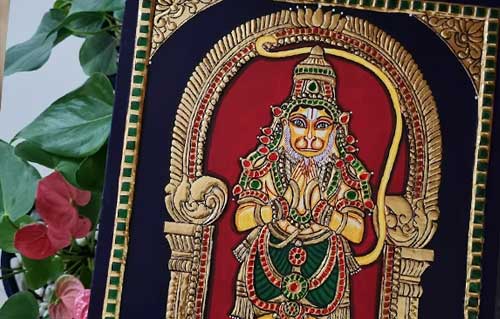
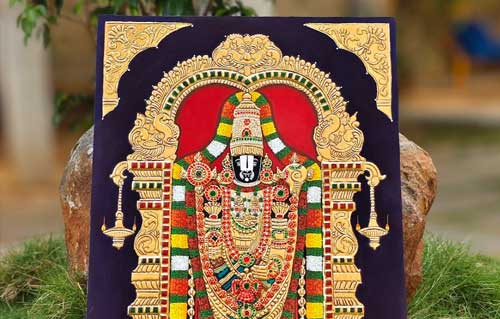
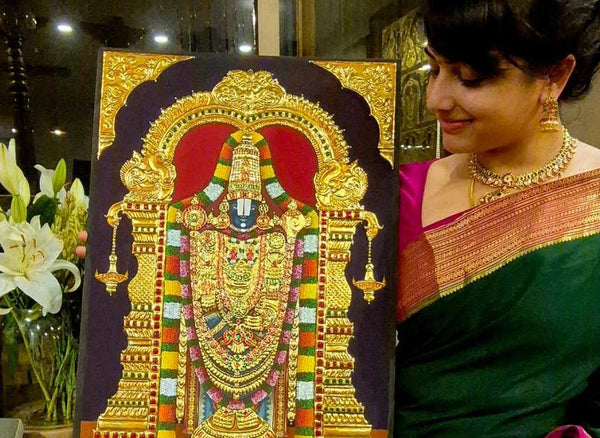
Sometimes it helps to see the gold catch the light before we talk about how to buy one. This short clip shows a finished Thanjavur painting of Lord Venkateshwara (Balaji) from our studio, the kind of piece we make to order.
What you are actually buying (and why authenticity matters)
A genuine Tanjore painting is a hand-built devotional icon, not a picture that was printed and framed. If you know what goes into one, you can tell a real piece from an imitation in a few seconds.
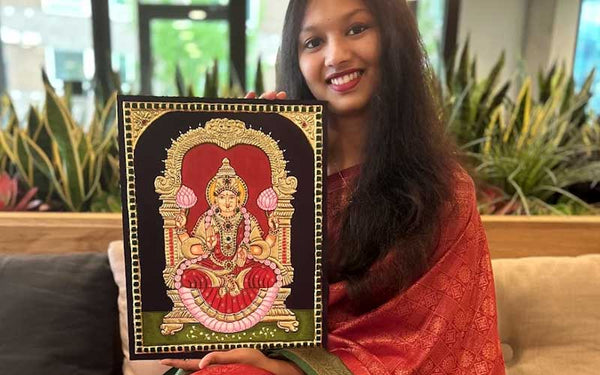
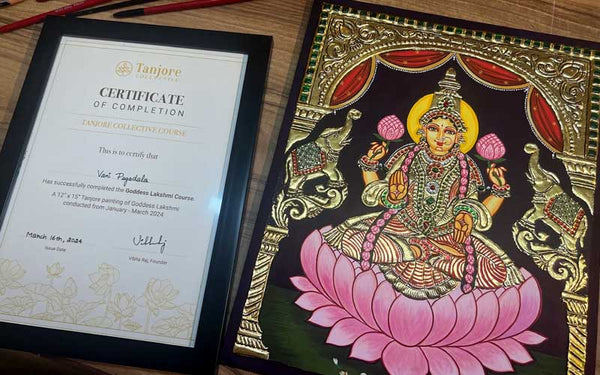
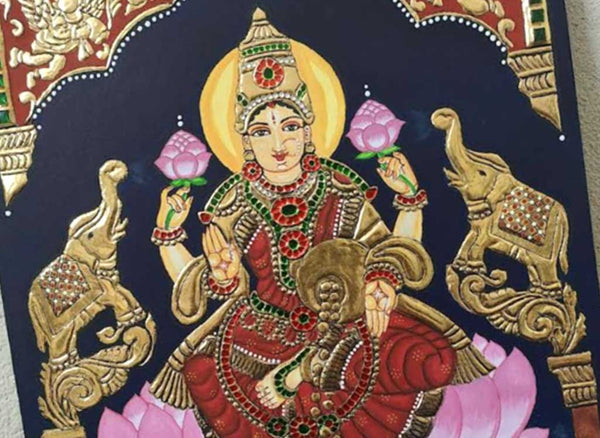
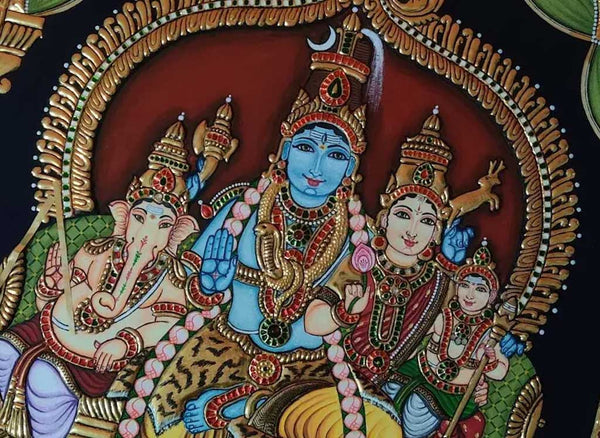
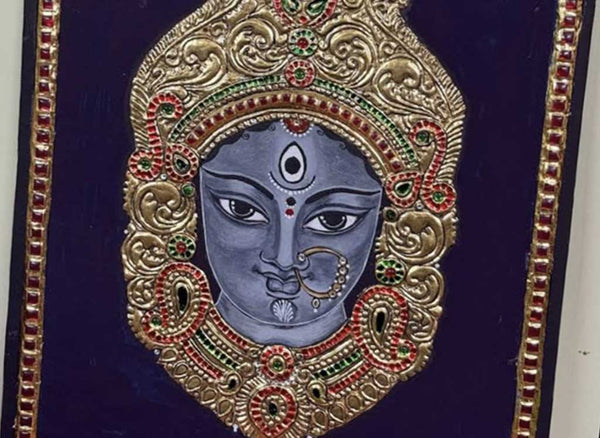
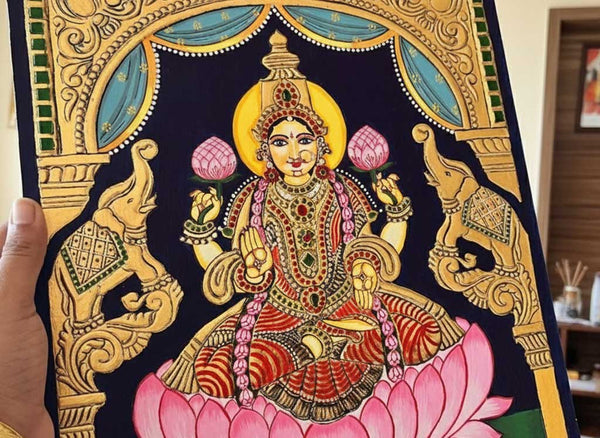
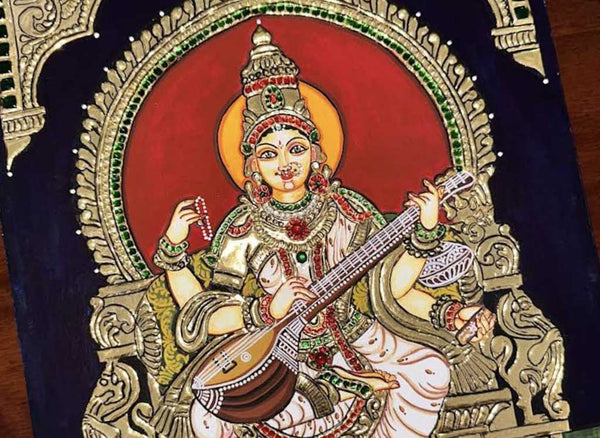
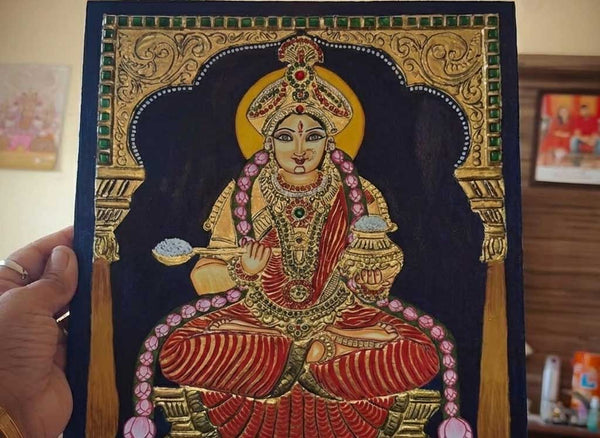
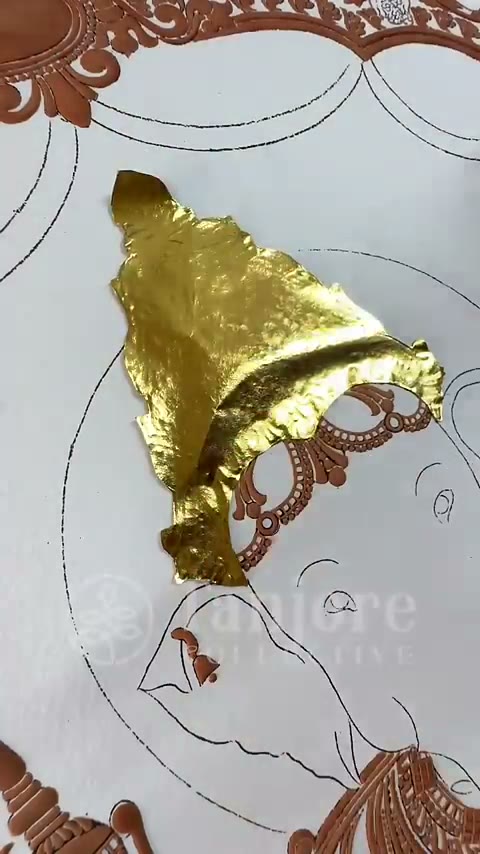
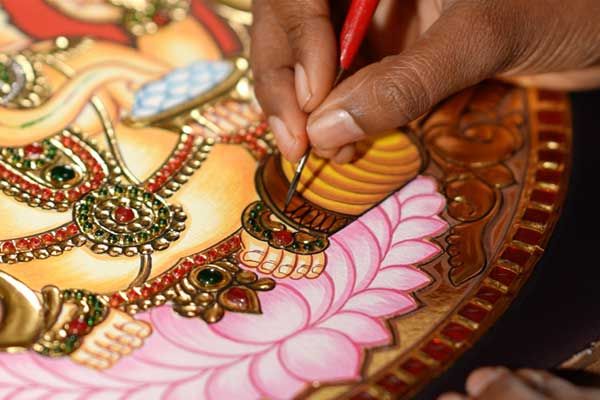
Tanjore painting (also spelled Thanjavur painting) is a classical South Indian art form named after the town of Thanjavur in Tamil Nadu. It rose to prominence under the Maratha rulers and the Nayaka courts, and it remains one of India's most recognisable devotional traditions. What sets it apart is the making. Real 24 karat gold leaf is applied over raised areas so the painting glows and lasts. The relief itself is built up in gesso, a paste of chalk powder and Arabic gum, into arches, jewellery and crowns. Kundan stones and glass or crystal pieces are set into that relief. Then the deity is painted in rich, saturated colour, with the face painted last because it is the most sacred and delicate stage. If you want the fuller story of the craft, we've written a separate guide on what a Tanjore painting is.
This is why a printed "Tanjore-style" picture is not the same thing, even when it looks similar in a small photo. A print has no raised relief you can feel, no real gold that shifts in the light, and no set stones. It can be a lovely, affordable decoration, and there is nothing wrong with owning one. But it is a reproduction, not a handmade Tanjore painting, and it should be priced and described that way. If a listing is very cheap and the seller is vague about the gold and the process, treat it as imitation-grade until proven otherwise. Learning to spot an authentic Tanjore painting is the single most useful thing you can do before you spend.
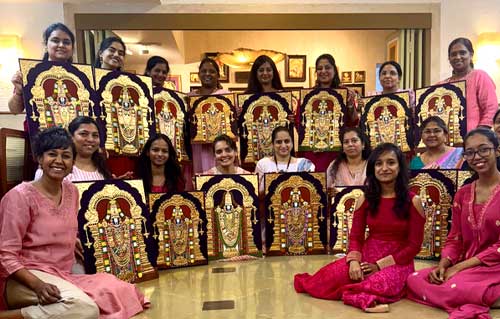
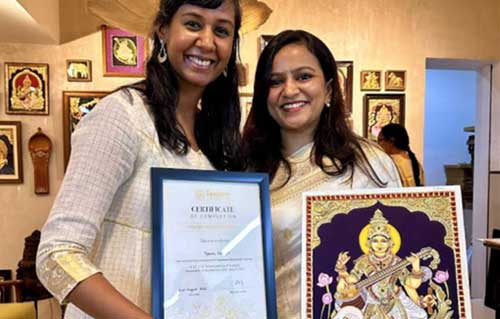
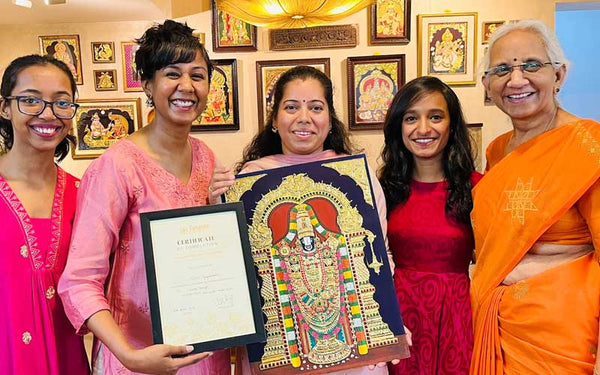
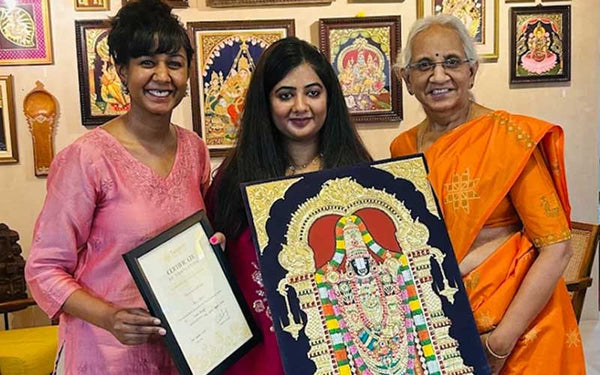
One more thing about trust. We make paintings, and we also teach the technique to students worldwide, from a mother and daughter teaching lineage. My mother, Vani Bhaskar, has 35 years of experience and has taught over 2,000 students. When a studio can teach the craft, it usually means the people painting your piece actually understand every step, from the gesso to the gilding to the face. We do not sell antiques, and we won't pretend a new painting is old.
Ready-made vs made-to-order (commission)
There are two ways to buy. You can choose a ready-made painting that already exists, or you can commission one made to order in the deity, size and detailing you want. Both are authentic; the difference is choice and wait time.
A ready-made piece suits you when you've found something you love as it is and you'd like it sooner. Made to order suits you when you have a specific deity in mind, a particular size for a wall or pooja room, or a preference on how much gold and stone work you'd like. Because each painting is built by hand over many days, most serious studios, including ours, work on a made-to-order, price-on-enquiry basis rather than holding deep stock of every subject and size.
Here's how our model works in plain terms. You browse the gallery, tell us the deity, the size and any preferences, and we confirm the exact specification and the price with you before any work begins. Then our artists create it, and we pack and ship it to you. If you want to design something truly your own, a family deity, a specific pose, a size to fit one wall, that is a commission, and we've explained the whole process in our guide to commission a custom painting.
What a Tanjore painting costs
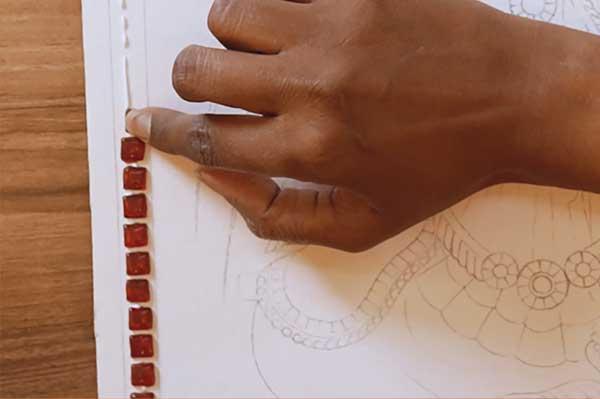
An authentic Tanjore painting is priced by the work and materials that go into it, not by a flat rate. The main factors are size, how much 24 karat gold foil is used, how much gesso relief detail there is, the number and quality of stones, the subject's complexity, the artist's skill, and framing.
Bigger boards need more gold, more relief and more painting time, so they cost more. An elaborate subject like Balaji or Padmavathi, with a full prabhavali arch and heavy jewellery, takes far longer than a simpler single figure. Real 24 karat gold and original Swarovski crystals cost more than substitutes, and they are part of what makes the piece last. Framing adds to the total as well.
The rough bands below are a starting point to set expectations, not a fixed price list. Because every painting is made to order, we confirm the exact price with you after we know the deity, size and detailing.
| Approximate size | Typical use | What affects the price most |
|---|---|---|
| Small (around 10 x 12 to 12 x 15 inches) | Puja shelf, desk, a gift | Subject detail and stone work |
| Medium (around 15 x 20 to 18 x 24 inches) | Pooja room wall, living room | Gold foil area, relief detail, framing |
| Large / advanced (bigger boards, full arch) | Statement wall, temple, heirloom | Size, gold quantity, complexity, artist time |
If you want real numbers rather than bands, we go through the pricing in detail, with what pushes a piece up or down, in our guide to what a Tanjore painting costs. The honest summary is this: a genuine gold-foil painting is an investment, and a price that looks too good to be true usually means the gold, the stones or the handwork have been cut.
Choosing size and subject
Pick the size by the space it will live in, and the subject by whom you want to keep close. A small piece suits a puja shelf or a gift; a medium or large piece holds a wall in a pooja room or living room.
For a home shrine, many families choose a size that sits comfortably above the deities they already keep, so the painting frames the space rather than crowding it. For a living room or entrance wall, a medium to large piece with a full arch reads beautifully from across the room. Measure your wall or shelf first, then tell us; we would rather guide you to the right size than sell you the biggest one.
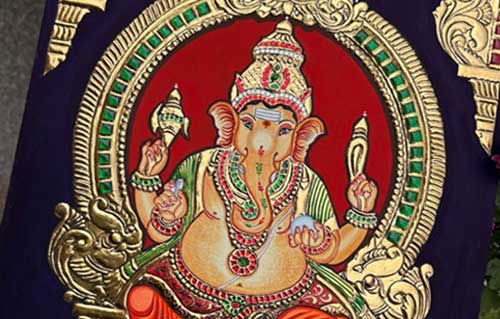
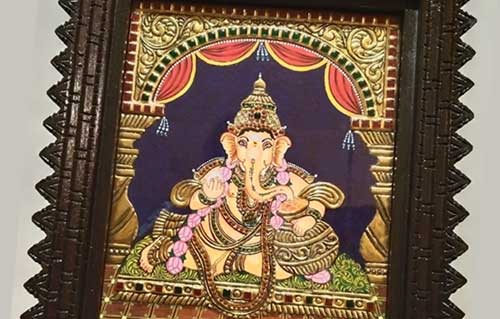
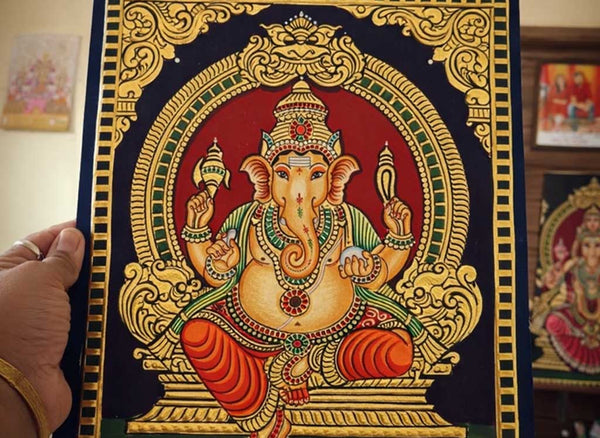
On subject, the most loved deities we paint include Lord Ganesha, the remover of obstacles and a popular first painting, Lord Balaji (Venkateshwara) of Tirupati, Goddess Lakshmi and Gajalakshmi for wealth and abundance, Goddess Saraswati for knowledge and the arts, forms of the Divine Mother such as Lalitha Devi and Padmavathi, and the playful child-god Krishna, including Radha Krishna. Occasion matters too. A Lakshmi or Ganesha painting is a warm choice for a new home or Diwali, a deity close to someone's heart makes a deeply personal wedding or housewarming present, and if you're buying with a celebration in mind, our guide to Tanjore paintings as gifts can help you choose.
How to buy from us (enquiry and gallery)
Buying from us is a short, guided conversation, not a checkout race. You browse the gallery, send an enquiry over WhatsApp or our contact form, we confirm the deity, size, detailing and price, and then our artists create your painting and ship it to you.
Start by looking through our Tanjore paintings to get a feel for subjects, sizes and the level of gold and stone work you like. Then send us a message with what caught your eye, or describe what you have in mind if you want something custom. We will talk you through the options honestly, share the price, and give you a realistic timeline, since a handmade painting takes days of work across gesso, gilding, stone setting and the face. You approve, we create, we deliver.
A note for NRI buyers. We ship within India and abroad, and we work with families in the USA, UK, Canada, Germany and beyond, both for finished paintings and for our students who learn online. If you are ordering from outside India, just tell us your country when you enquire and we will arrange safe, well-packed shipping and walk you through the details. Distance is not a barrier; a good part of our world is already remote.
On care and longevity, an authentic gold-foil painting is made to last for generations. Keep it out of direct, harsh sunlight and away from damp, dust it gently with a soft dry cloth, and it will hold its shine for a very long time. That durability is one of the quiet reasons real gold matters.
How to choose a trustworthy seller
Choose a seller who teaches you before they sell to you. The best signs are clear authenticity guarantees, real artist credentials, genuine customisation, and after-care you can reach.
Ask a few simple questions. Is the gold real 24 karat foil, and will they say so plainly? Who are the artists, and can they show their work and background? Will they make the deity, size and detailing you want, or only sell fixed stock? Are the materials genuine, real kundan and original Swarovski crystals rather than lookalikes? And can you reach a real person after the sale? A studio that also trains artists, and that walks you through the craft honestly, is usually a safer bet than a catalog that only pushes a price. If you'd like to compare your options, we've laid out what to look for in our guide to choosing where to buy.
Frequently asked questions
Can I buy a Tanjore painting online directly?
Yes. You can buy directly from a studio online, but not as an instant checkout. Because each painting is handmade over many days, we work on an enquiry and made-to-order basis. You browse our gallery, send us the deity and size you want, we confirm the price, and then we create and ship it to you.
How do I know a Tanjore painting is authentic?
Look for real 24 karat gold foil, raised gesso relief you can feel, kundan stones and crystals set into the surface, a hand-painted face, and a solid wood board. A vague seller and a suspiciously low price are the biggest red flags. Our full checklist is in the guide to spot an authentic Tanjore painting.
How much does a Tanjore painting cost?
It depends on size, the amount of gold foil, the relief and stone detail, the subject's complexity, the artist's skill and framing. Smaller, simpler pieces cost less; large, elaborate deities with a full arch cost more. We confirm the exact price on enquiry, and we break down the ranges in our guide to what a Tanjore painting costs.
Can I get a custom deity or size?
Yes. This is what made to order means. Tell us the deity, the size to fit your wall or pooja room, and how much gold and stone work you'd like, and our artists will create it. See the full process in commission a custom painting.
Do you ship outside India?
Yes. We ship within India and abroad, and we regularly work with NRI families in the USA, UK, Canada and Germany. Tell us your country when you enquire and we will arrange safe, well-packed shipping and explain the details.
Buying a Tanjore painting is a little different from buying most art, and that's part of the joy. You aren't picking something off a shelf; you're inviting a handmade, gold-lit icon into your home, made by artists who honour every step. Take your time, ask questions, and choose the deity that feels right. When you're ready, browse our Tanjore paintings and send us an enquiry. We would love to help you bring one home.
More blog articles
Tanjore Painting Class Fees: What Online, Studio and DIY Courses Cost
What do Tanjore painting classes cost? Fees by format, what's included, and why some deities cost more.
Think You Could Never Make a Tanjore Painting? Divya Couldn’t Believe Her Own Result
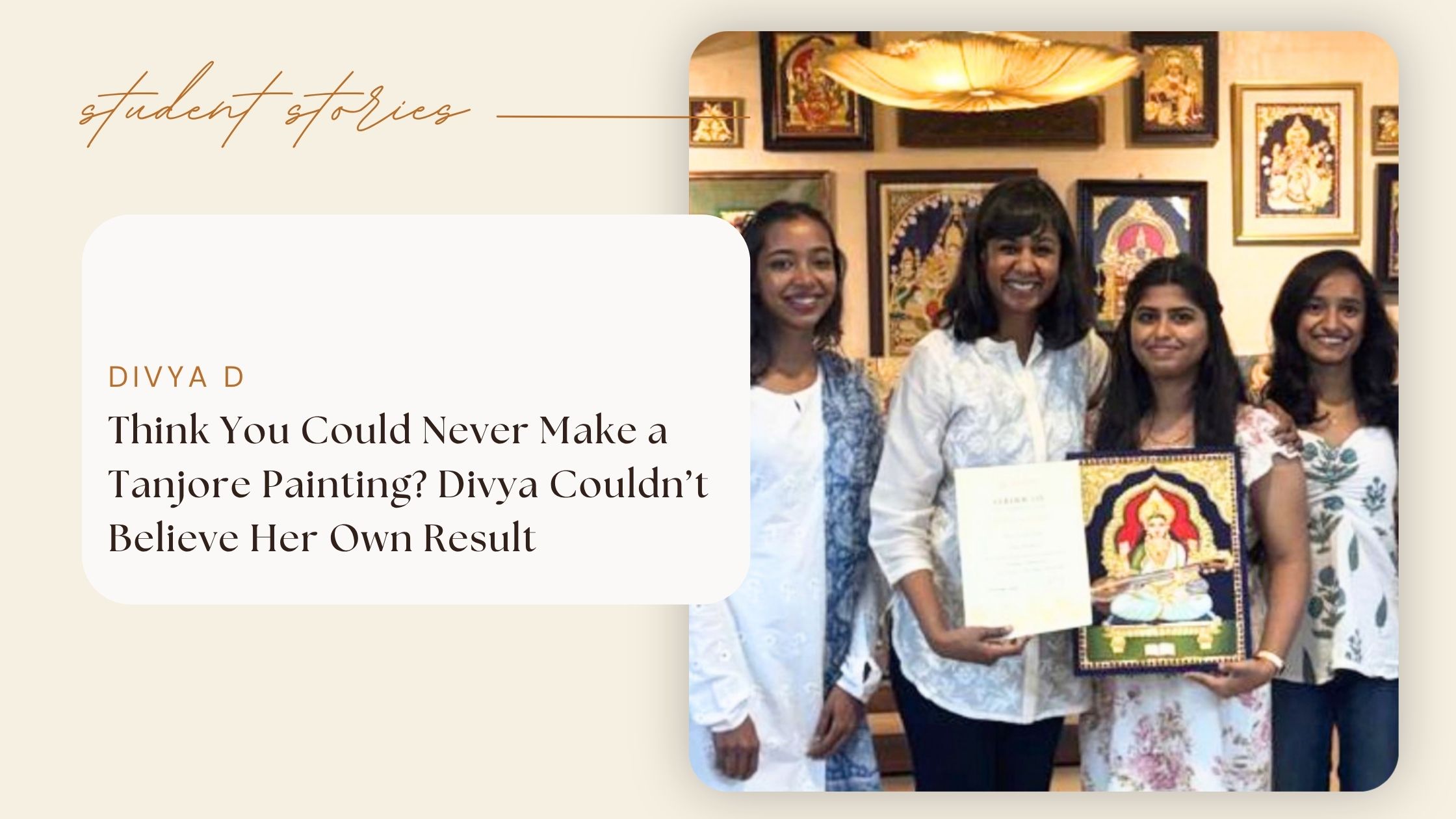
Think Tanjore painting is too intricate to create on your own? Divya did too, until she completed her Saraswati painting. Her journey reveals what patience, guidance, and practice can really make possible.
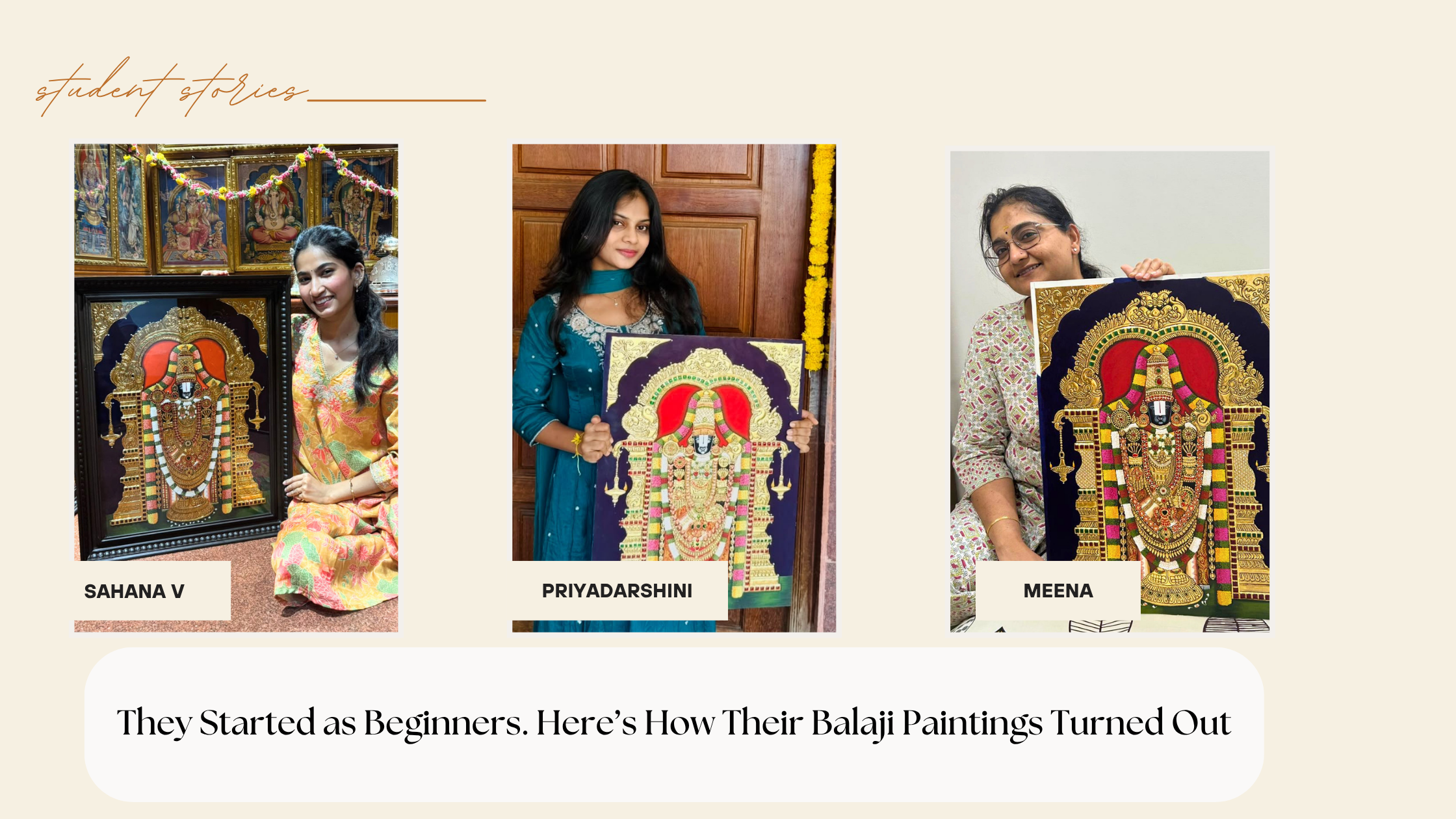
They Started as Beginners. Here’s How Their Balaji Paintings Turned Out
They started with a blank board and no prior experience. Over 11 weeks, they learnt each stage of creating a Balaji Tanjore painting. Here’s what our students had to say about the journey.
What our students say
Hear from students who've learned the art of Tanjore painting with us.