What is Tanjore Painting? A Complete Guide
Written by
Vibha Raj
Everything a beginner needs to understand Tanjore painting, from a studio that has taught it for over 40 years.
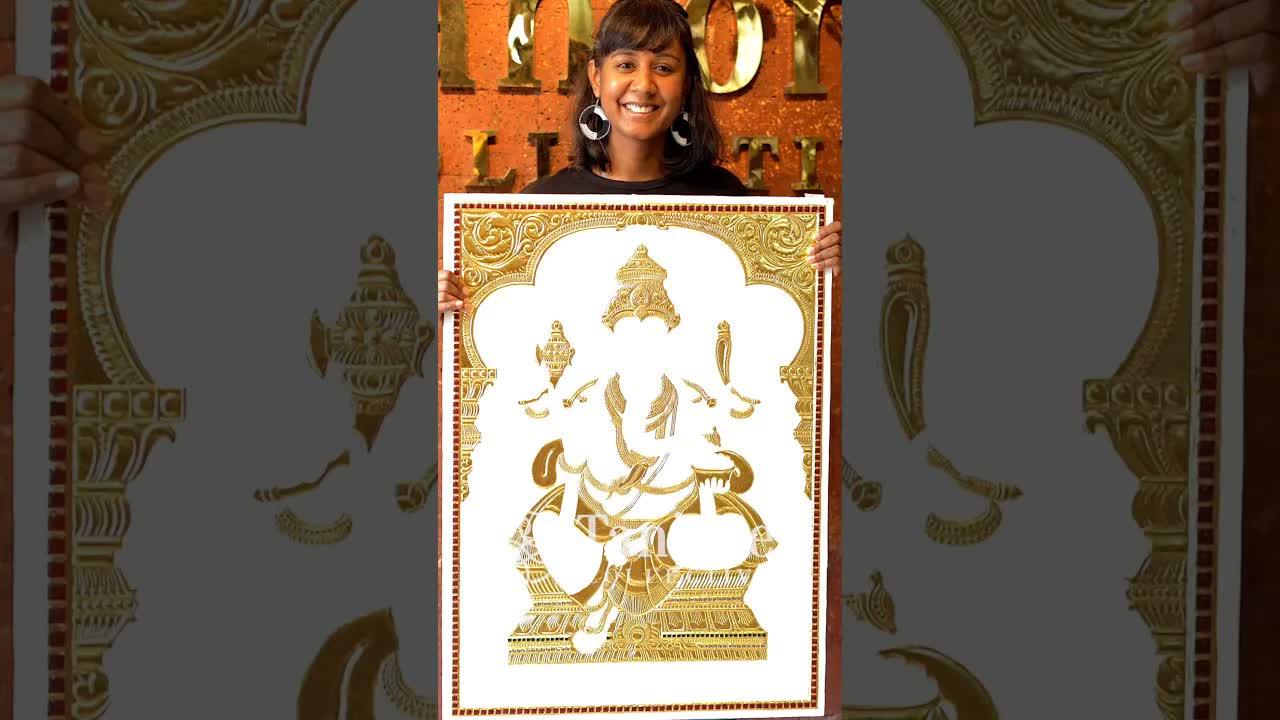
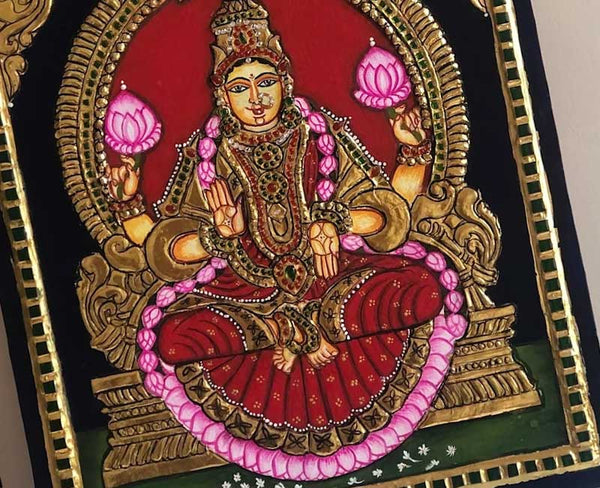
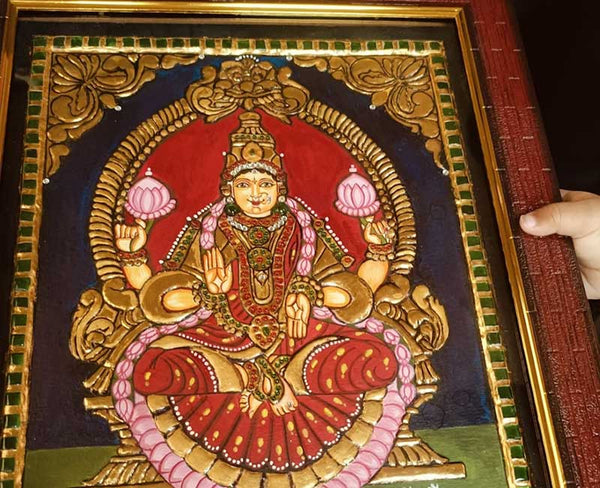
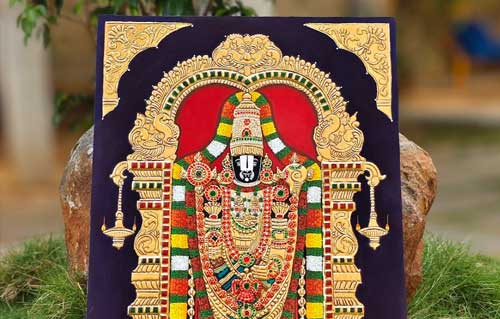
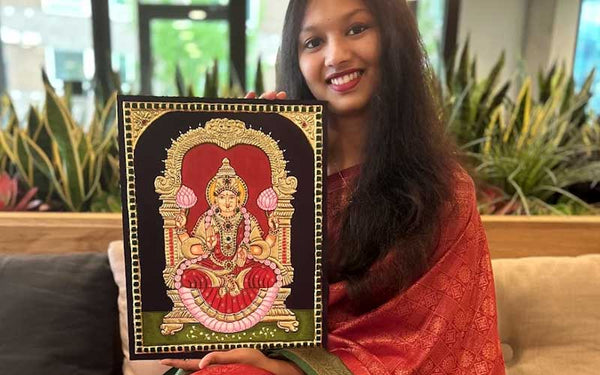
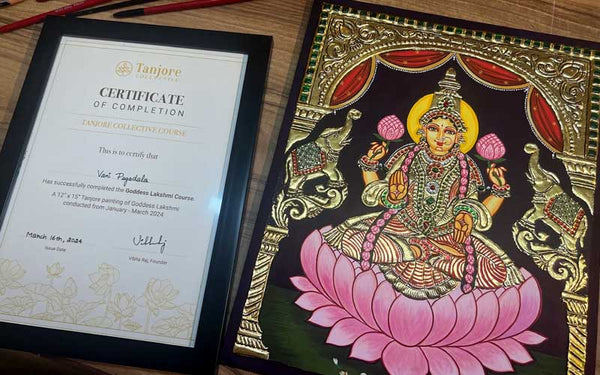
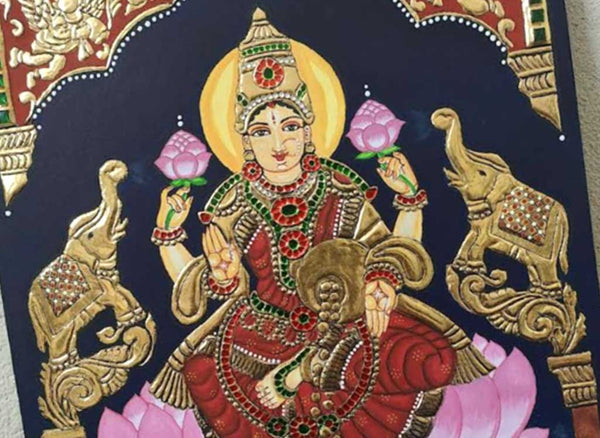
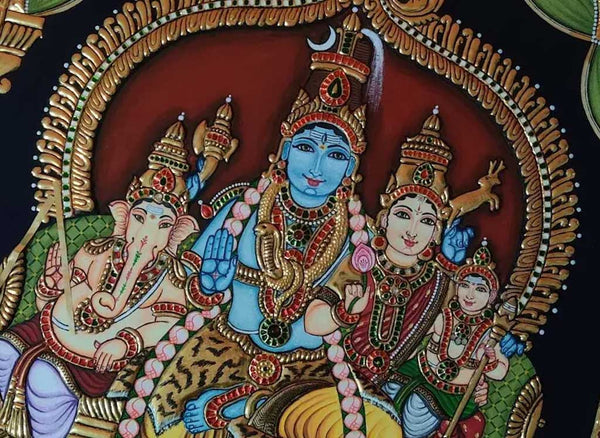
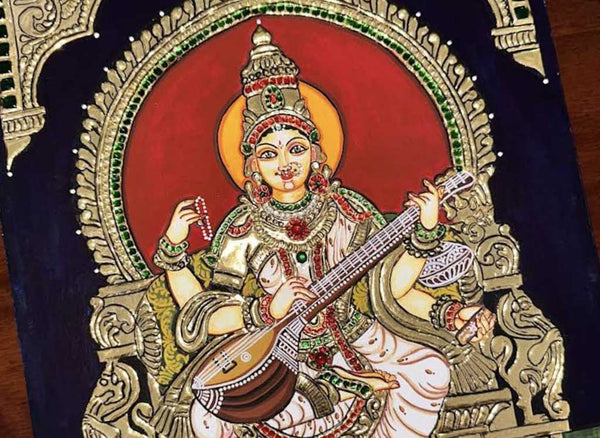
Tanjore painting is a classical South Indian art form known for real 24 karat gold foil, a raised and embossed surface, and inlaid stones that make the deity appear to glow from within. It takes its name from Thanjavur (Tanjore) in Tamil Nadu, where it grew and flourished under royal patronage, and it is still made much the same way today: patiently, by hand, layer upon layer, over several weeks.
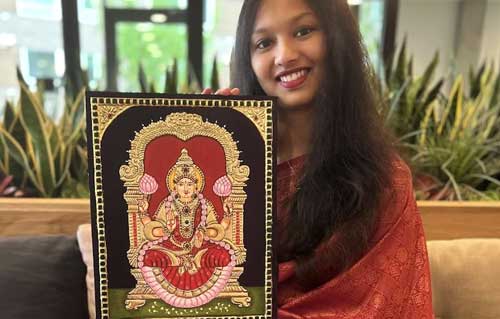
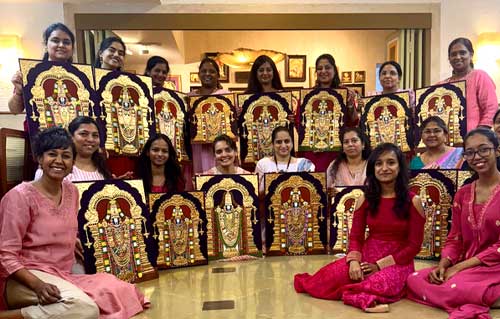
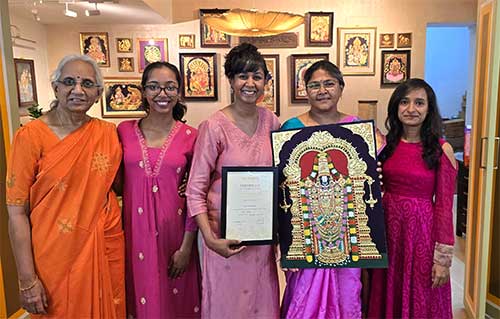
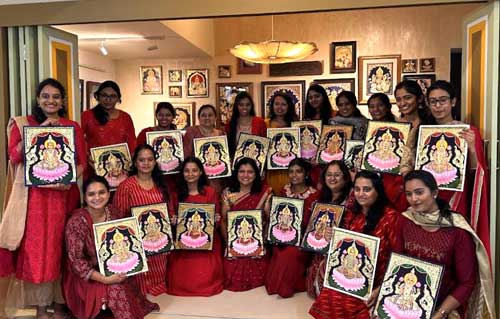
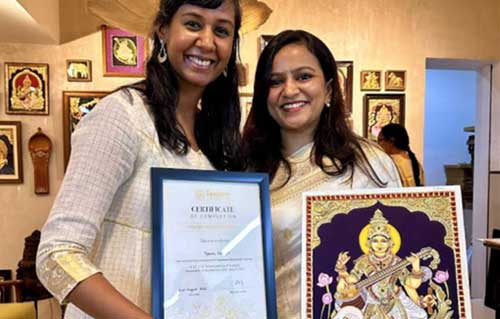
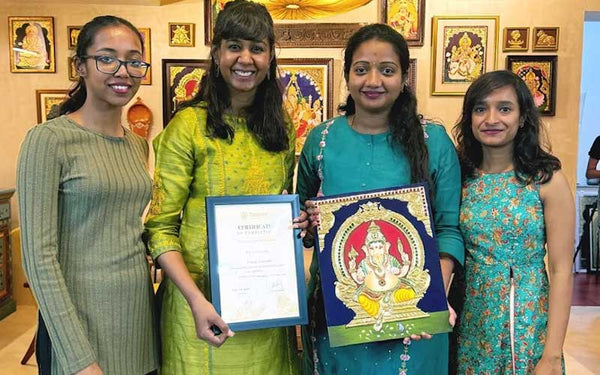
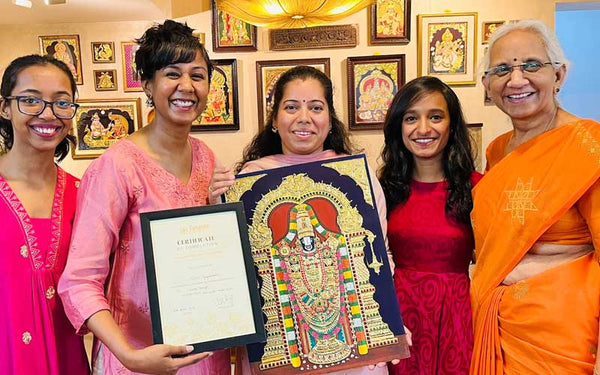
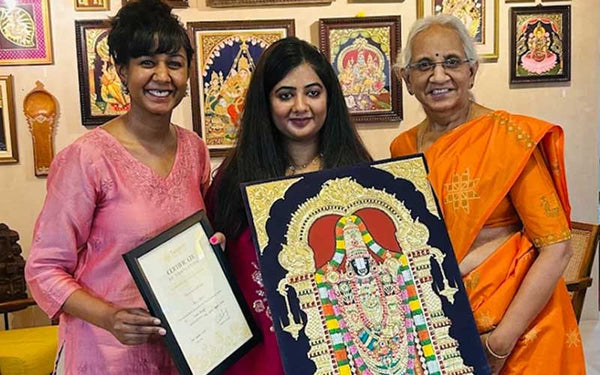
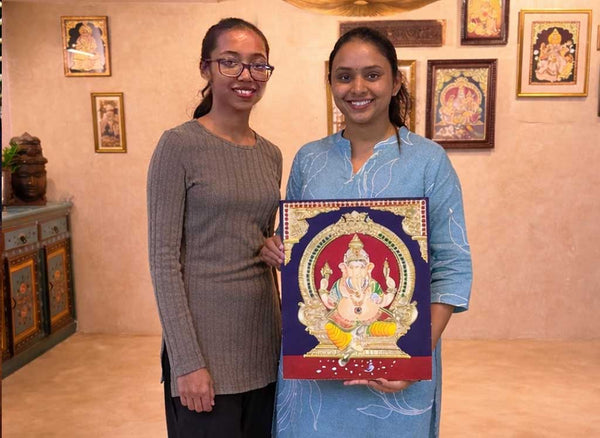
We have taught this art at Tanjore Collective for more than four decades. In that time we have guided over 4,000 students and painted more than a thousand pieces for patrons who wanted a hand made devotional icon for their home. So this guide is written from the board itself, not from a summary of someone else's summary. If you have ever looked at a Tanjore painting and wondered what makes it different from every other Indian painting, this is the complete answer.
What makes a painting a Tanjore painting?
Plenty of Indian art uses gold, and plenty of it is devotional. What sets Tanjore painting apart is a specific combination of features that appear together and have stayed consistent for centuries.
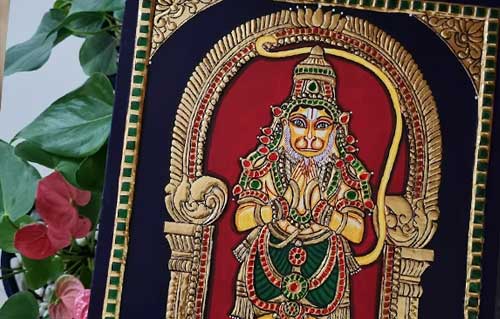
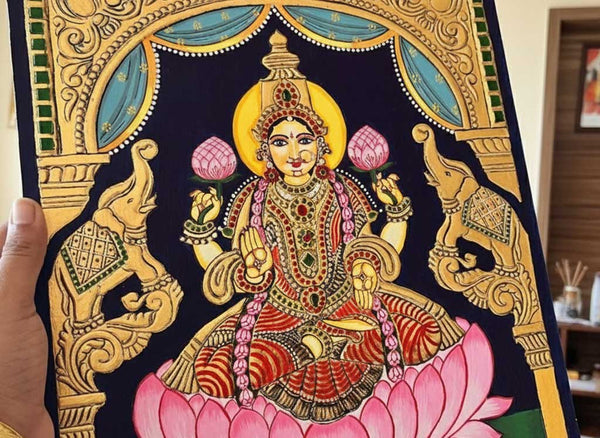
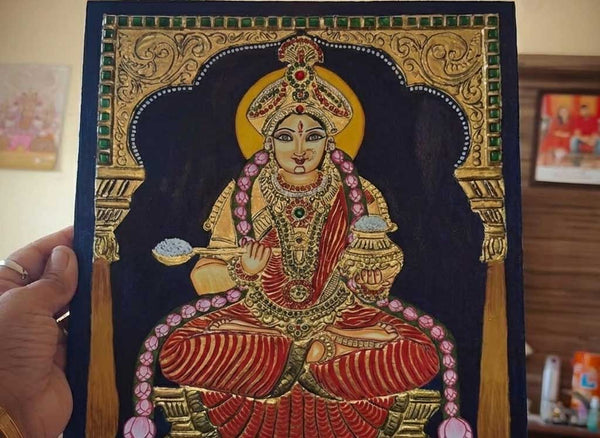
- Real 24 karat gold. Genuine gold foil is laid over the raised areas of the composition: the crown, the arch, the jewellery and the ornamental borders. We use 24 karat because purity is what decides both the shine and the longevity of the finished piece. Lower purity dulls faster and cheapens the look, so this is not a place where a serious studio cuts corners.
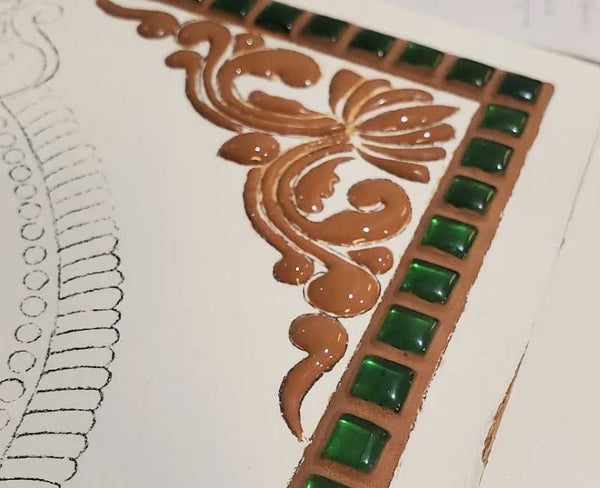
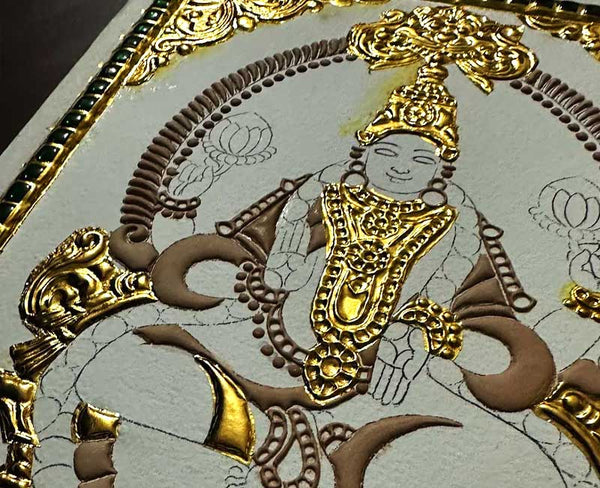
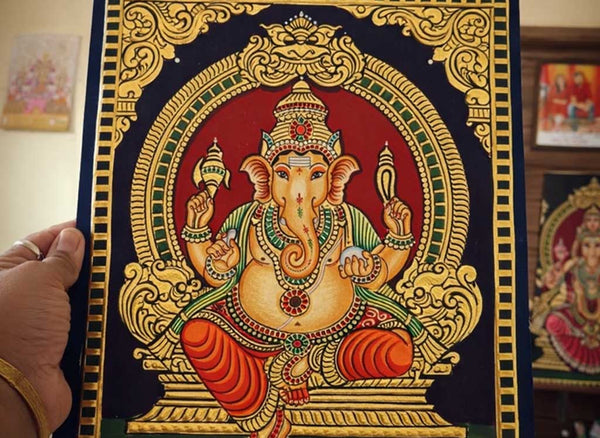
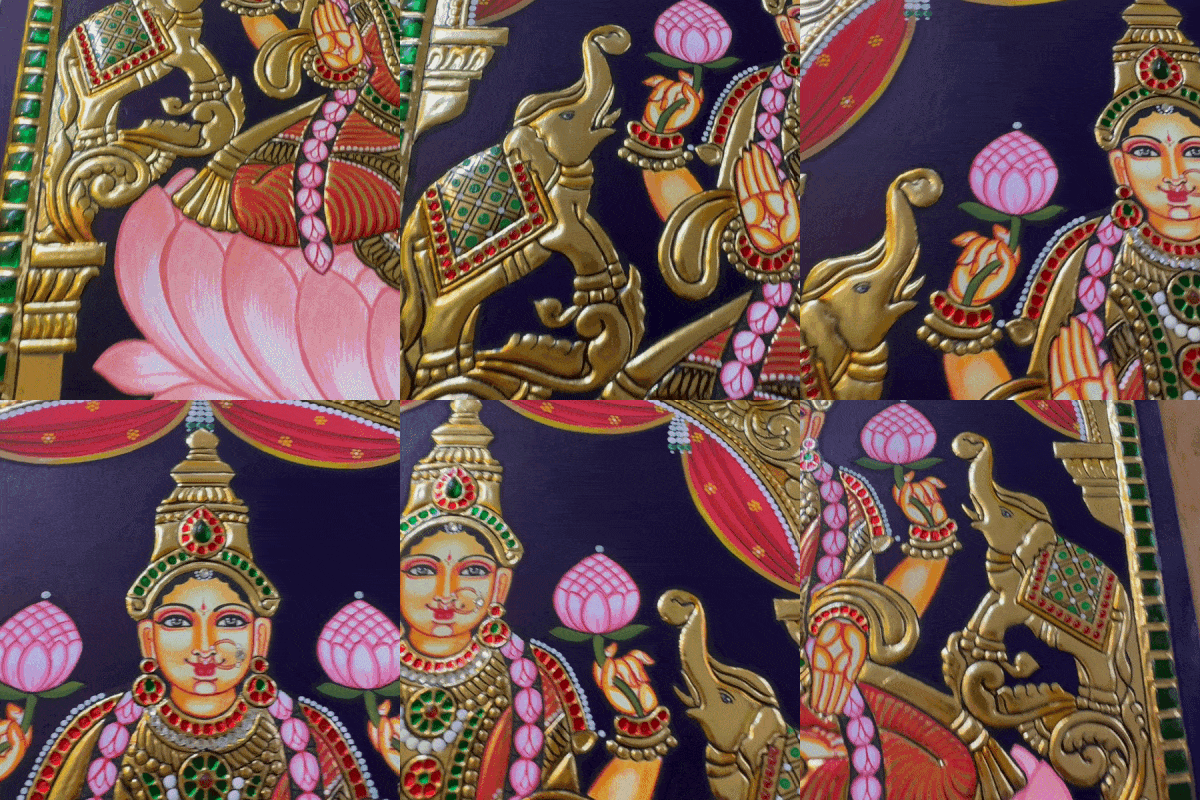
- Gesso relief, or embossing. Before any gold is applied, a paste is built up into a low relief so that ornaments and arches stand slightly proud of the surface. This embossing is what gives a Tanjore painting its three dimensional, jewel box quality. Run a finger lightly across a finished piece and you can feel the crown rise off the board.
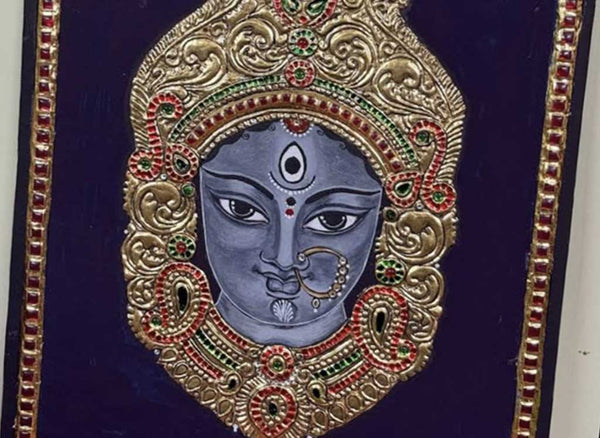
- Inlay work. Kundan stones and crystals are set into the relief for jewelled ornamentation, catching the light along the crown and the jewellery so the deity looks regally adorned rather than merely painted.
- A devotional subject. Almost every Tanjore painting shows a Hindu deity, very often seated within an ornate arch. These pieces were made for the home shrine as much as for the wall, which shapes everything from the choice of subject to the serenity of the expression.
- Rich, rounded figures and saturated colour. Faces are calm and full, the palette is warm and deep, and the whole composition carries a sense of stillness that is meant to invite contemplation.
Where does Tanjore painting come from?
The tradition takes its name from Thanjavur in Tamil Nadu, a region with a deep temple culture, and it rose to prominence there under royal patronage. That devotional and courtly setting shaped the whole style. The support of the courts is part of why the art leans rich and regal, with genuine gold and jewelled ornamentation, all in service of honouring the deity. The signature language of gold, gesso relief and inlaid stones has stayed remarkably consistent ever since. If you want the fuller story of its roots, we go into it in the history and origins of Tanjore painting.
How is a Tanjore painting made?
The short version is that a Tanjore painting is built in a strict order, and each stage has to be complete before the next can begin. The board is prepared, the deity is sketched, the ornaments are built up in gesso, the stones are set, the gold foil is applied, and only then does colour go on, with the face painted last of all. It is a sequence that runs over several weeks, not a single weekend sitting, and that patience is part of what gives the finished piece its depth.
Here is the rhythm of it in brief. First the base, usually plywood, is prepared with chalk powder and Arabic gum to give a smooth and sound surface. The deity's outline is transferred onto that board. Then the gesso relief is built up for the arch, crown and jewellery, so those areas stand proud of the surface. Kundan stones are set into the relief. The 24 karat gold foil is laid over the embossed areas. Colour is mixed and the deity is painted. The face, the most sacred and delicate stage, is painted last. Finally, premium Swarovski crystals and detailing complete the piece before framing.
We have written the full sequence, step by step and in the order we actually teach it, in how to make a Tanjore painting. If you are curious about what the gold, the gesso and the stones actually are and why each one matters, see Tanjore painting materials explained.
Which deities are painted?
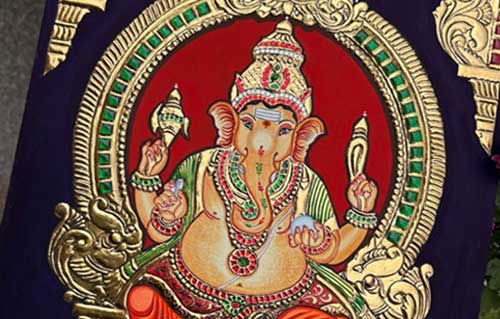
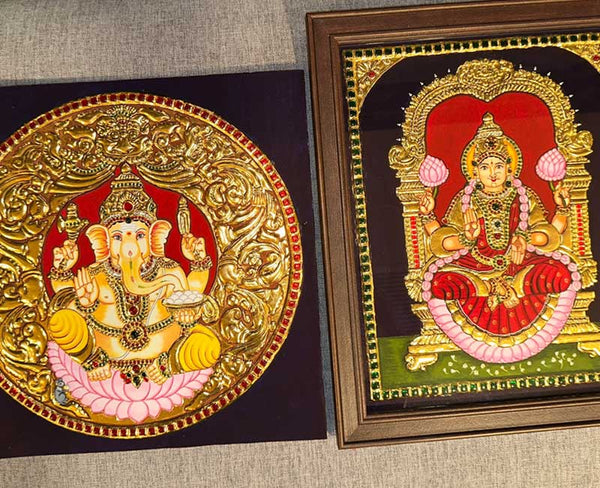
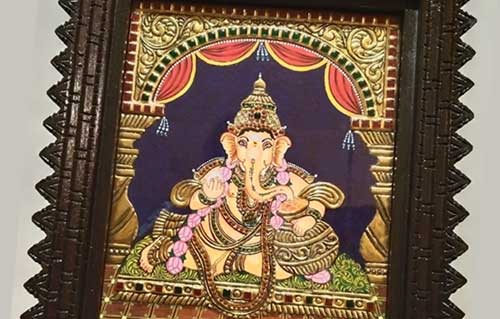
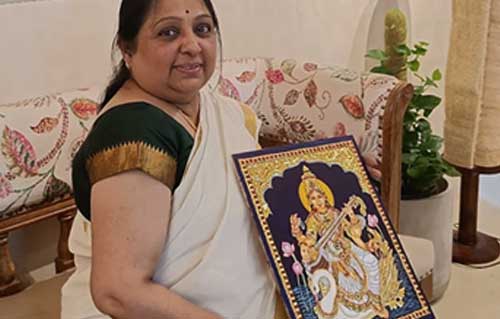
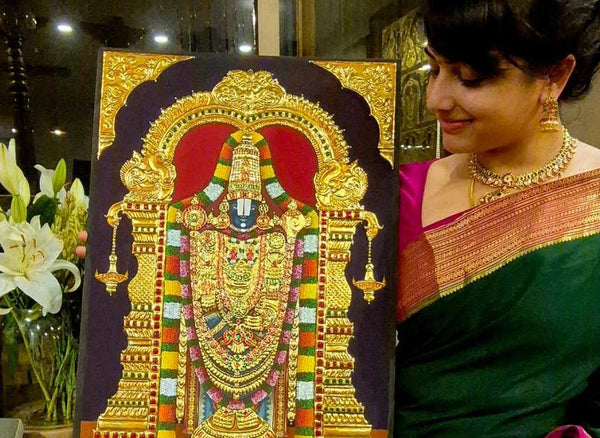
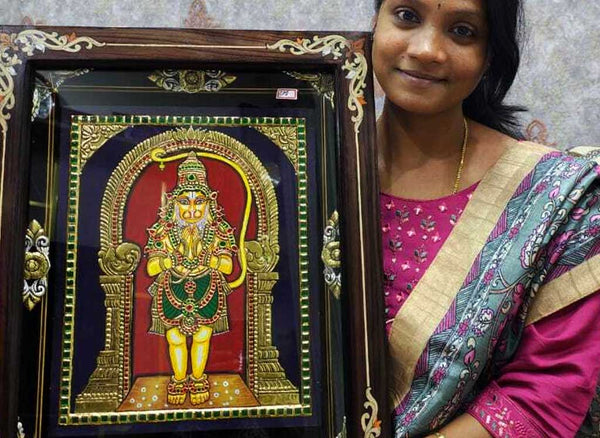
The subjects of Tanjore painting are drawn almost entirely from the Hindu pantheon, and the choice usually comes down to what the deity means to you and your family. Ganesha is a much loved first painting, both for his significance as the remover of obstacles and because his form is forgiving for a beginner. Lakshmi and Gajalakshmi are favourites for the home, associated with abundance and grace. Saraswati, the goddess of learning and the arts, is a gentle and graceful subject. Balaji, also known as Venkateshwara, Krishna, Lalitha Devi, Padmavathi and Hanuman are all part of the tradition too, along with many more. A first piece is usually chosen for its meaning as much as for its difficulty, because the bond you feel with the deity is what carries you through the patient stretches of the work.
Why does a Tanjore painting feel so special to own?
A Tanjore painting is not a print and it is not a quick decorative object. Every piece is made by hand, with real gold, over weeks of careful work, which is why these paintings are so often treated as heirlooms and passed down within families. In many South Indian homes a Tanjore painting sits in the pooja room as a devotional icon, present for daily prayer, and its glow under a single lamp is part of the reason the style has endured. Others hang them as the centrepiece of a living room, where the gold catches the light and draws the eye from across the room. Either way, what you are holding is a piece of a living tradition, made the traditional way.
Can a beginner really learn Tanjore painting?
Yes, and this is the point we most want to make. Most of our students had never held a brush before their first painting. The technique looks intimidating from the outside because the finished pieces are so rich, but the process is really a sequence of clear, repeatable steps, and each one builds the confidence for the next. Our kits arrive with the board already sketched, so you do not need to know how to draw to begin. What you bring is patience and attention, not a natural talent for art. If that sounds like you, start with Tanjore painting for beginners, and see the different ways to learn in our guide to online, studio and DIY classes.
Students describe the practice again and again as calming, even meditative. Many come to it for exactly that reason: a quiet, absorbing craft that asks for patience and gives back a real sense of peace. Painting the face of the deity, the final stage, is often described by our students as the most sacred part of the whole journey.
How to tell a genuine Tanjore painting
Because the style is so admired, it helps to know what a genuine, well made Tanjore painting actually looks like up close. There are a few honest signals. First, the gold should be real gold, ideally 24 karat, which keeps its shine over the years rather than dulling or tarnishing the way imitation gold does. Second, the raised areas should be true gesso relief that you can feel standing off the surface, not a printed or painted imitation of relief. Third, the kundan stones and crystals should be set into that relief rather than simply glued flat onto a picture. And fourth, the whole piece should show the marks of hand work: the slight, living variations that come from a painting made by a person over weeks, rather than the uniform flatness of a print. Knowing these signals is useful whether you are buying a painting or judging your own first attempt.
Caring for a Tanjore painting
A Tanjore painting is made to last for generations, and a little care keeps it that way. Keep it out of direct, prolonged sunlight and away from damp, since both are hard on any gold and gesso surface over time. Dust it gently rather than wiping it hard, so you do not disturb the stones or the relief. Framing, ideally with the painting protected, both finishes the presentation and shields the surface. Treated with this simple care, a hand made Tanjore painting easily becomes the family heirloom it is meant to be.
Tanjore painting as a gift
Because each piece is made by hand with real gold, and because the subject is almost always a deity, a Tanjore painting carries a weight that few gifts do. It is a common and treasured gift for weddings, housewarmings and other milestones in South Indian homes, where it takes a lasting place in the pooja room or on a prominent wall. A painting chosen with the recipient's chosen deity in mind becomes something they keep and pass on, rather than something that is enjoyed briefly and set aside. That permanence, the sense of giving an heirloom rather than an object, is a large part of why these paintings mean so much both to make and to receive.
The deities of Tanjore painting
Because the subject of a Tanjore painting is almost always a deity, the choice of who to paint is rarely a small decision. It is usually made with the heart, and often with the whole family, because the finished piece will live in the home for years and take a place in daily life. Here are some of the deities most often chosen, and why they are loved.
Ganesha, the elephant headed remover of obstacles, is perhaps the most loved subject of all, and a favourite first painting. He is invoked at beginnings, which makes him a fitting figure to start a painting journey with, and his rounded, gentle form is forgiving for a first attempt. Lakshmi, the goddess of abundance and prosperity, and her form as Gajalakshmi flanked by elephants, are treasured for the home and often chosen for a new house or a wedding. Saraswati, the goddess of learning, music and the arts, is a graceful, serene subject much loved by students and teachers alike. Balaji, also known as Venkateshwara, is a deeply revered form rich in ornament and gold, and makes a striking centrepiece. Krishna in his many beloved forms, along with Lalitha Devi, Padmavathi and Hanuman, all belong to the tradition as well. There is no single correct choice here. The deity you feel genuinely drawn to is almost always the right one to paint, because that personal bond is what carries you through the patient stretches of the work.
Why gold, and why it matters so much
It is worth pausing on the gold, because it is central to what a Tanjore painting is and is not simply decoration for its own sake. In a devotional image made to honour a deity, the most precious material at hand was offered to the divine, and gold, incorruptible and radiant, was the natural choice. Practically, that purity is also what lets the painting keep its shine across generations rather than dulling the way imitation gold does over time. The way the gold sits over the raised gesso relief, wrapping the crown and ornaments so they physically catch the light, is what gives a Tanjore painting its living glow under a single lamp. This is exactly why a genuine piece is treated as an heirloom and not merely as décor: the material itself is meant to endure and to be passed on. When people describe a Tanjore painting as looking alive, it is very often the gold, worked over relief rather than laid flat, that they are responding to.
Frequently asked questions
Is real gold used in Tanjore paintings?
Yes. We use 24 karat gold foil. The purity is what gives the painting its shine and helps it last for generations, which is why we do not substitute it with imitation gold.
Why are Tanjore paintings raised in places?
That raised surface is gesso relief. A paste made from chalk powder and Arabic gum is built up under the gold and stones so the ornaments stand out, and that embossing is the signature look of the style.
What is a Tanjore painting used for?
Traditionally it is a devotional icon for the home pooja room, though many people also hang them as heirloom art in living spaces.
How long does a Tanjore painting take to complete?
A typical course painting takes about 6.5 weeks of guided sessions. Larger and more detailed pieces take longer.
Do I need to be able to draw to learn it?
No. Our kits ship with the board pre sketched, and every step is taught in order, so complete beginners finish a real painting they are proud of.
Ready to go deeper? Learn how a Tanjore painting is made, understand the materials that go into one, or explore our Tanjore painting classes.
More blog articles
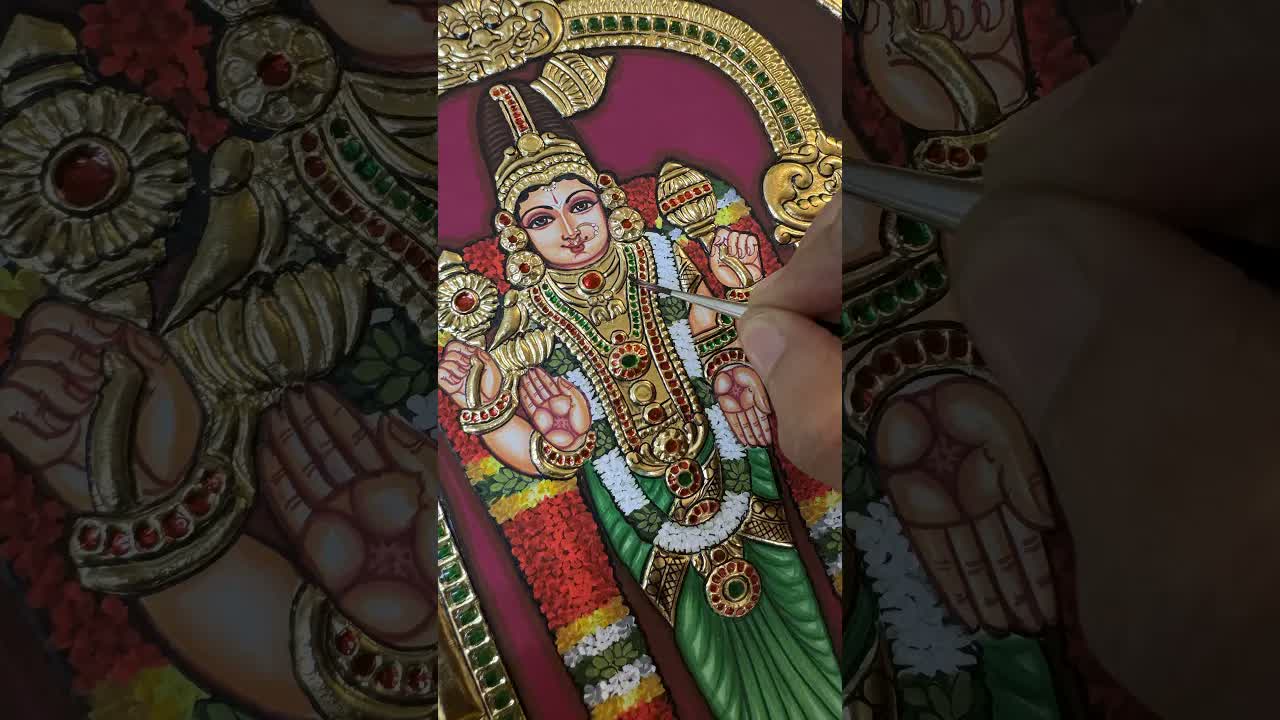
Tanjore Painting for Beginners: Where to Start
A gentle starting point for complete beginners, even if you have never held a brush.
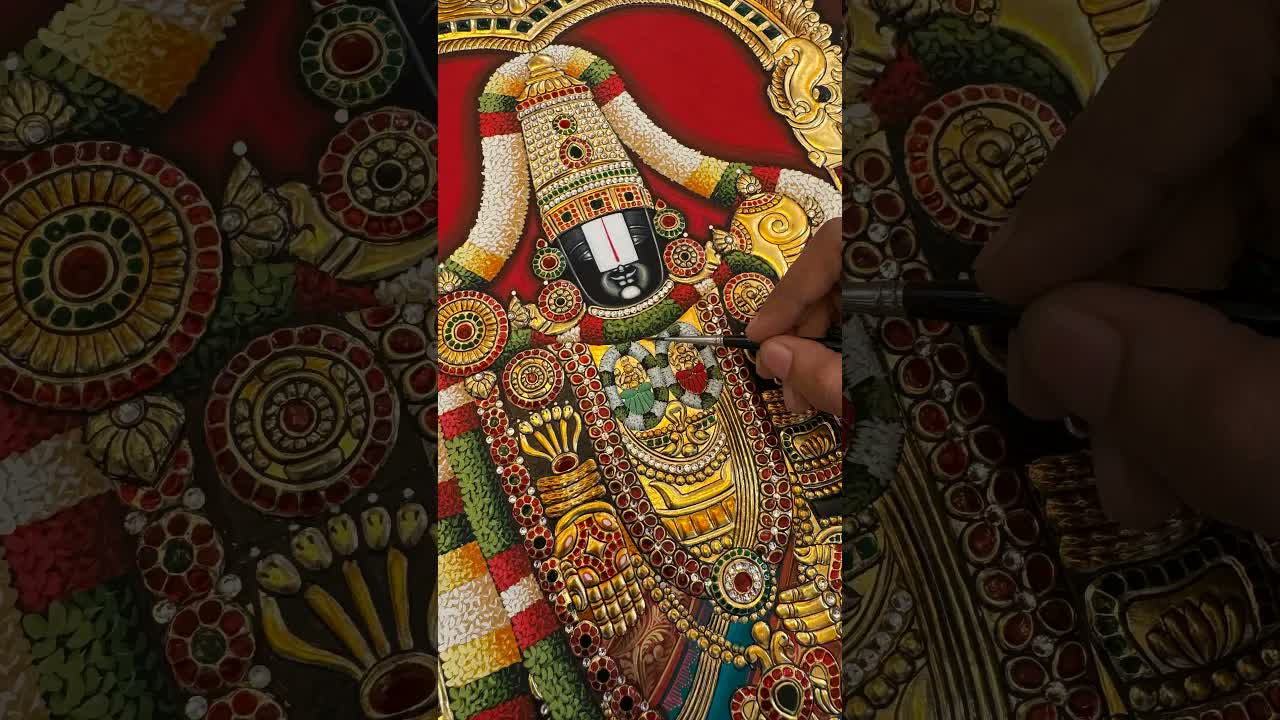
How to Make a Tanjore Painting: Step by Step
The real step-by-step process we teach, from a prepared board to the final face.
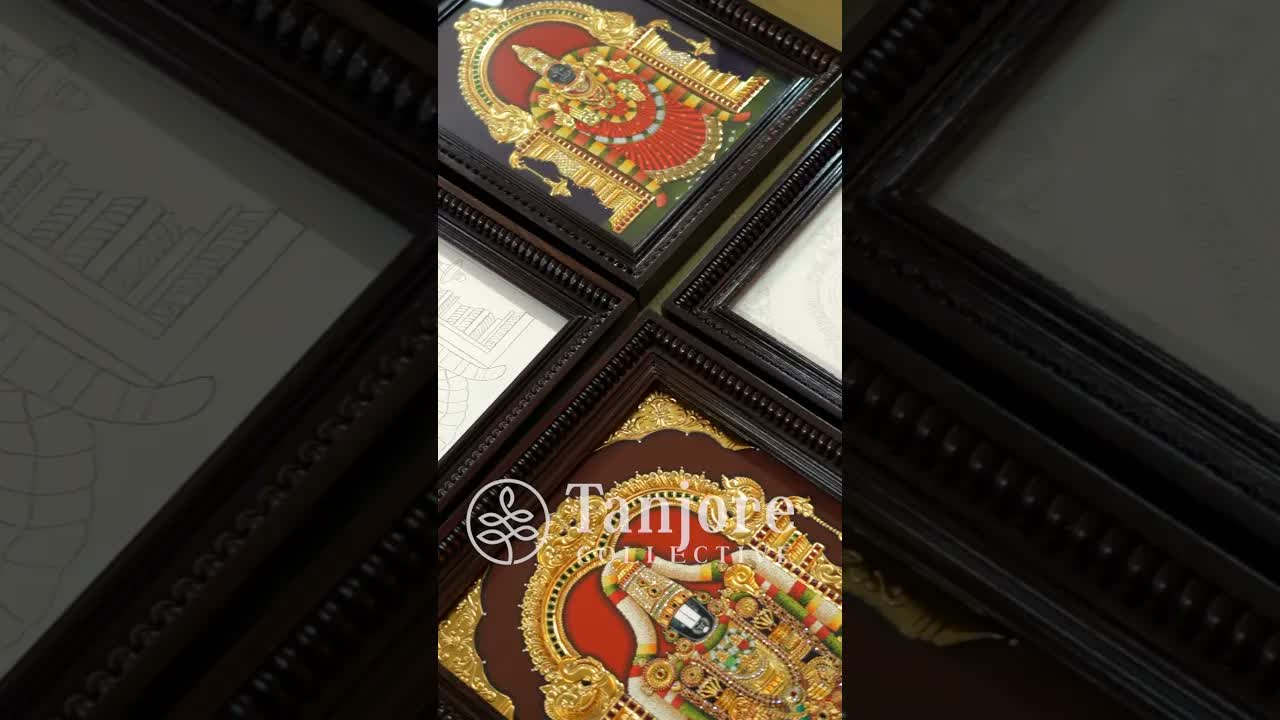
Tanjore Painting Materials Explained
What goes into a Tanjore painting, and what each material actually does.
What our students say
Hear from students who've learned the art of Tanjore painting with us.