Where to Buy Tanjore Paintings: How to Choose the Right Source

Written by
Swathi Katta
A calm, honest framework for choosing where to buy a Tanjore painting, what to check anywhere, and why buying direct from a teaching studio is often the safest route.
Key takeaways
- Three main sources: online marketplaces, general galleries or stores, and direct from a studio of artists.
- Check five things everywhere: authenticity, artist credentials, customisation, after-care and transparent pricing.
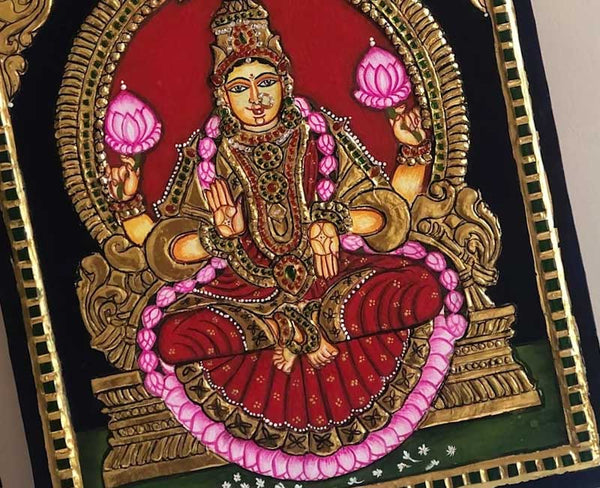
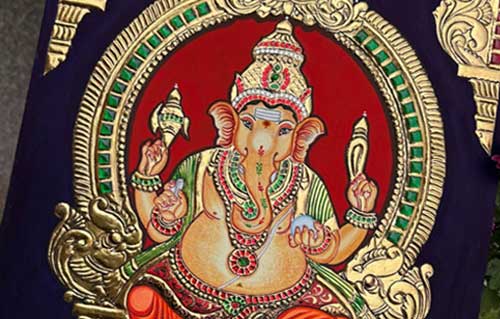
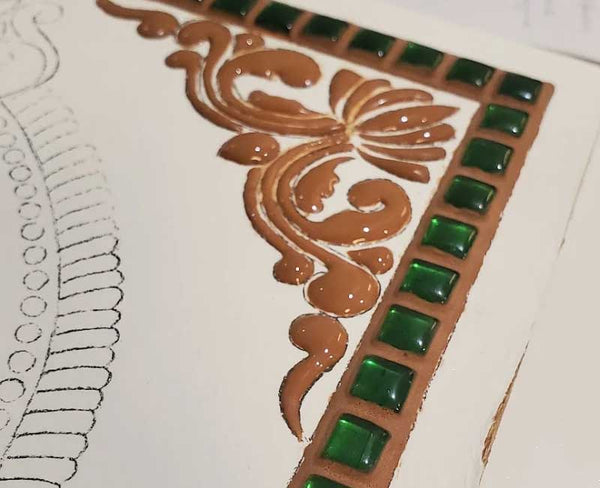
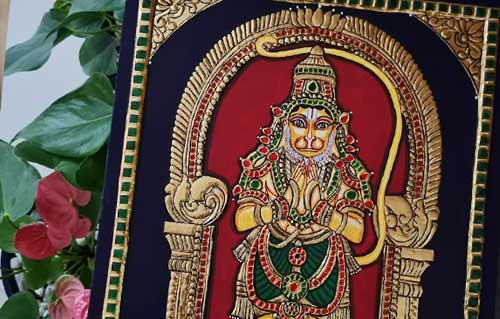
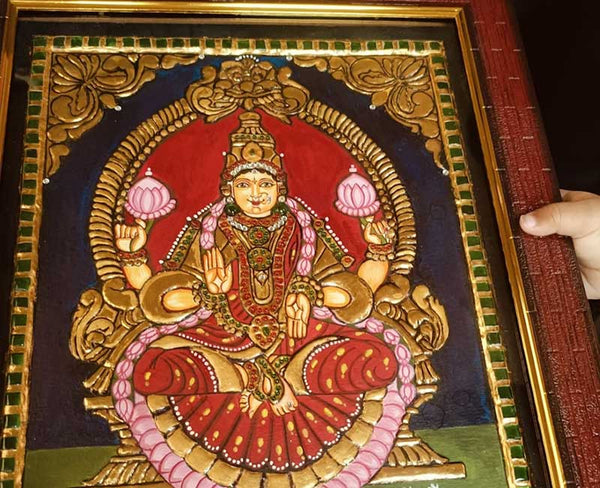
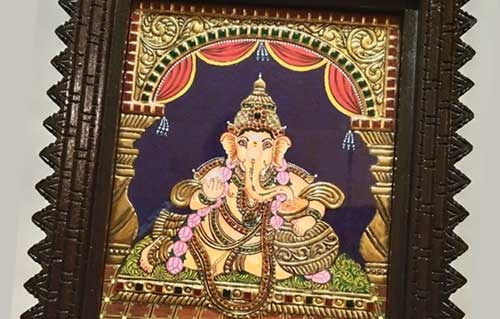
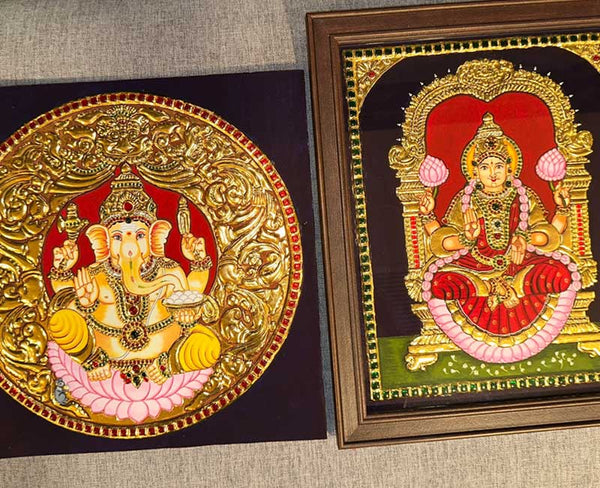
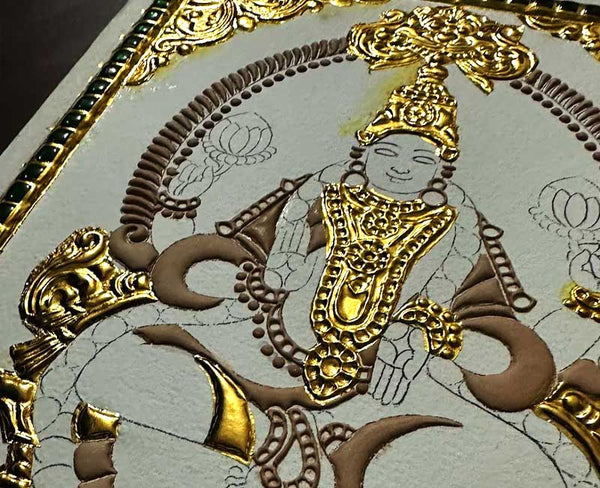
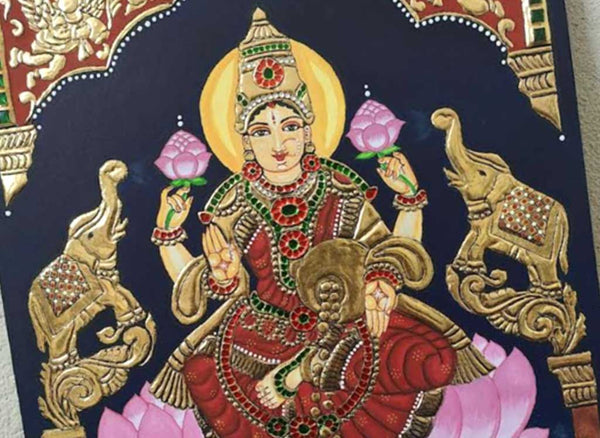
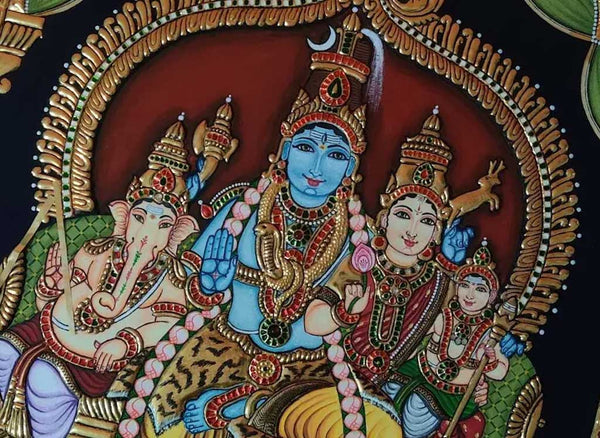
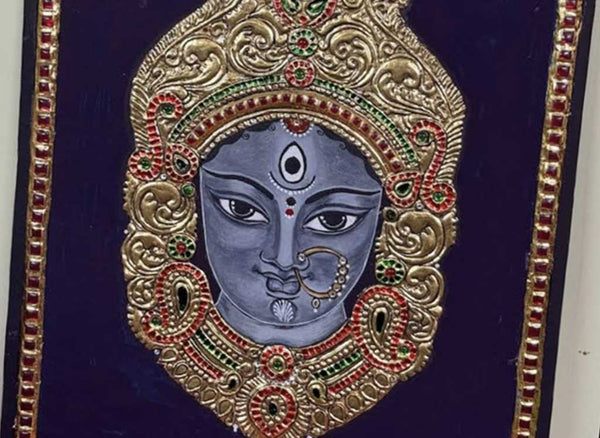
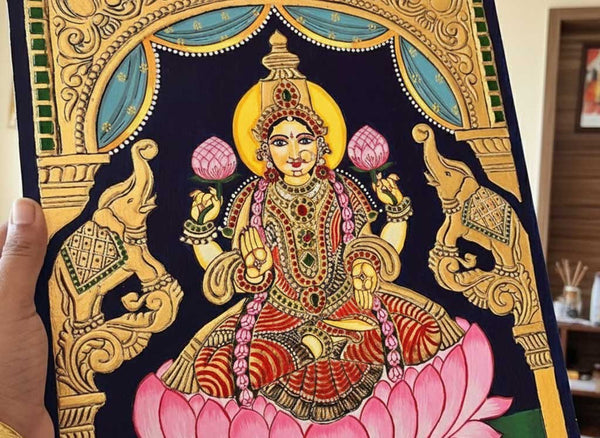
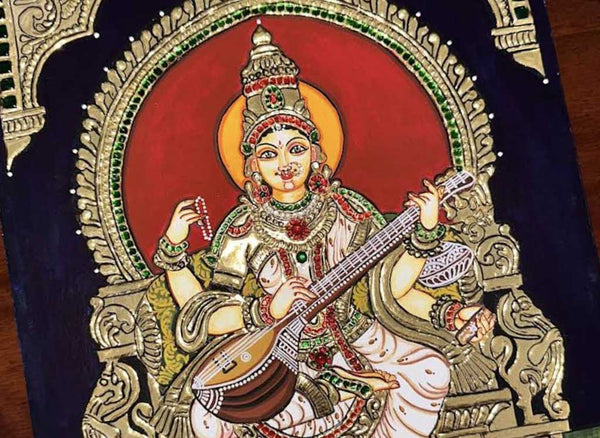
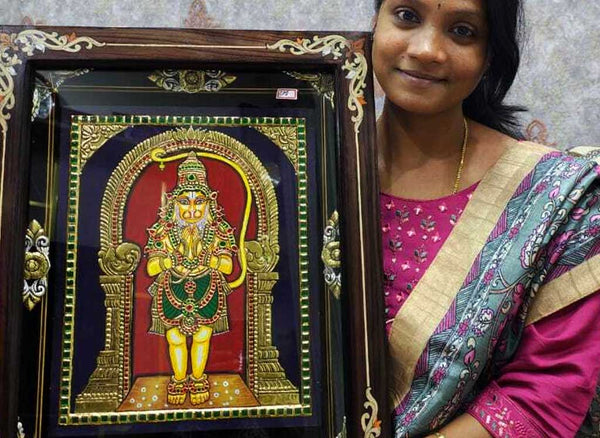
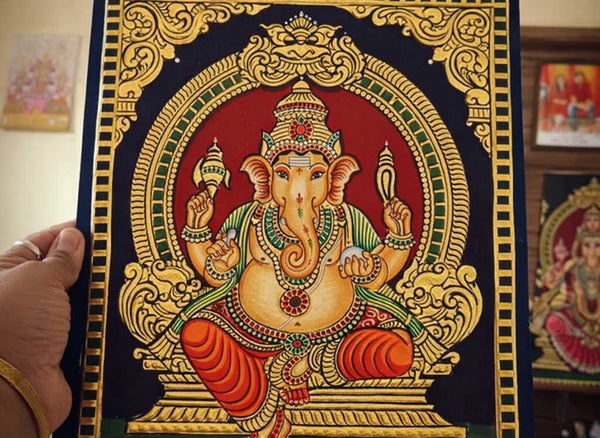
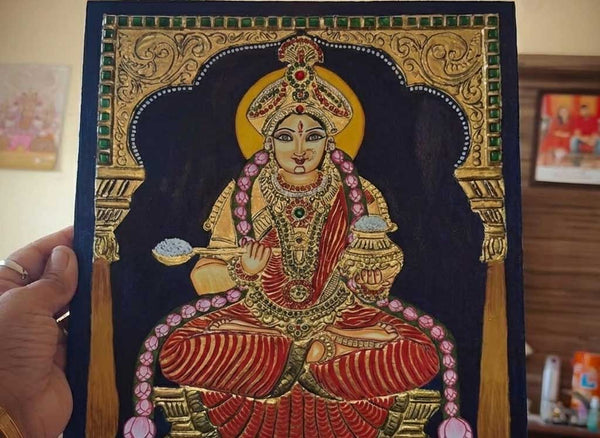
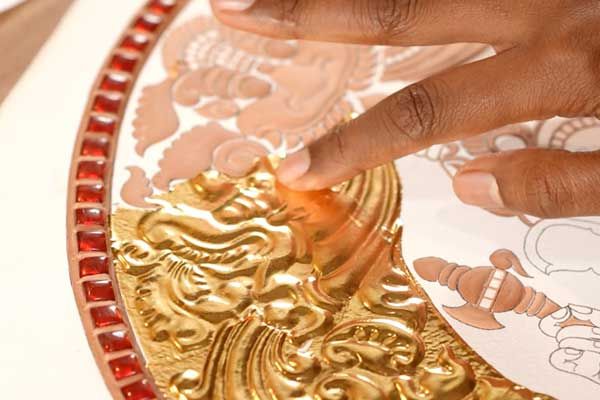
- Real Tanjore work uses 24 karat gold foil on raised gesso relief, with kundan stones and crystals set by hand.
- Buying direct from a teaching studio gives you provenance, choice, and someone to call later.
- Our paintings are made to order and priced on enquiry, not sold from a cart.
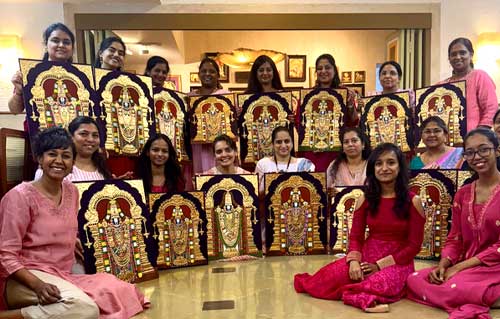
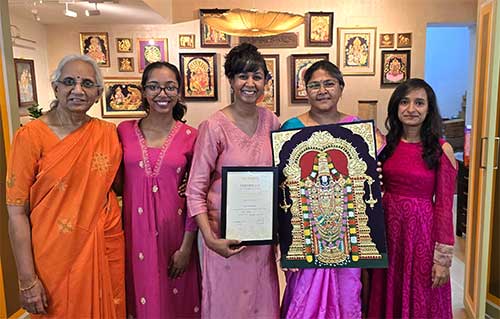
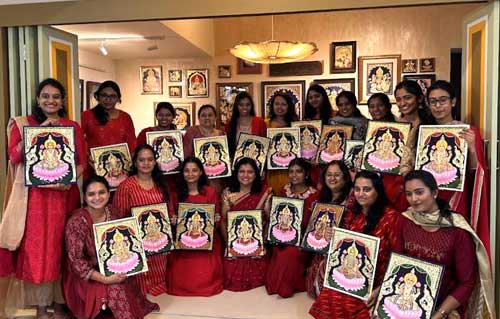
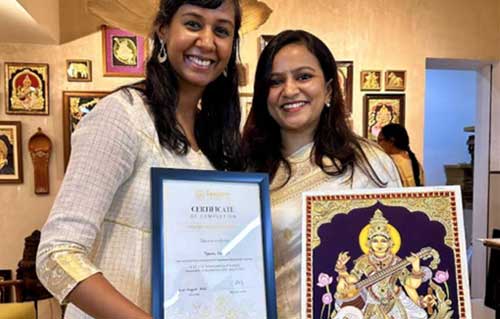
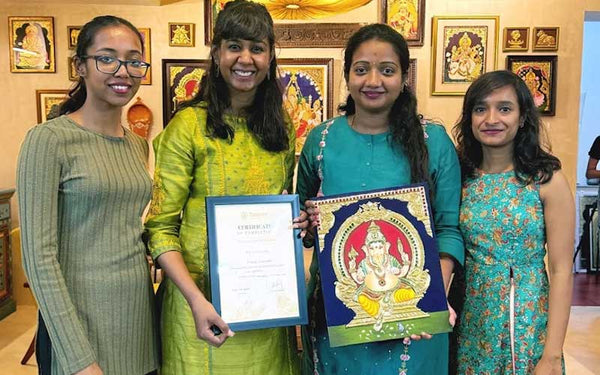
At Tanjore Collective, our studio in Basavangudi, Bangalore both makes bespoke paintings for patrons and teaches the craft to thousands of students around the world, in a lineage carried on from the master artist Vani Bhaskar, who has painted and taught for over 35 years.
If you are wondering where to buy a Tanjore painting, here is the honest answer. The best place to buy Tanjore paintings is wherever you can see the maker, understand what went into the piece, and get real support after it reaches your wall. That is usually a specialist gallery or, better still, direct from the artists who painted it. Price alone is a poor guide, because a genuine Tanjore painting is built by hand over many weeks.
This is not a list of shops to rank against each other. It is a simple framework you can use anywhere, so you buy with confidence and not on hope.
Watch a Tanjore painting come to life
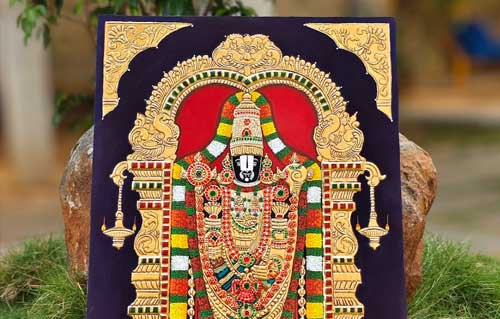
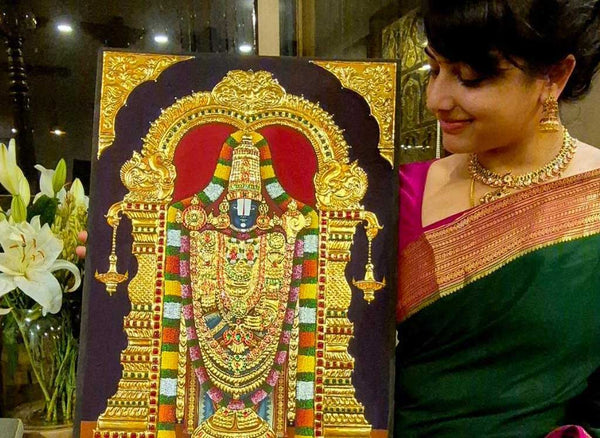
Before you compare sellers, it helps to see what a real piece involves. This is a Lord Venkateshwara (Balaji) painting from our studio, with the gold foil laid over embossed relief. Watch how much handwork sits behind the shine.
Your options: gallery, marketplace, or direct from the artists
You can buy a Tanjore painting from three broad kinds of source, and each one has honest strengths and honest trade-offs. None is wrong. What matters is knowing what you are getting.
Online marketplaces are the easiest to browse. You will find a wide range of prices and quick checkout. The trade-off is distance from the maker. Listings can be thin, photos can flatter, and it is often hard to tell who actually painted the piece or what materials went into it. Some listings mix printed or machine work in with handmade work, so you have to read carefully.
General galleries and gift stores sit in the middle. A good one curates its stock and can tell you something about the art. But Tanjore may be one small category among many, so the depth of knowledge and the after-sales support can vary a lot from shop to shop.
Direct from a studio of artists means you reach the people who made the painting. You can ask about the gold, the stones, and the deity. You can request a size, a subject, or a frame. And if something needs care years later, you know exactly who to call. The trade-off is that good handmade work takes time, so this route is made to order rather than instant.
A simple comparison of source types
| Source | Strengths | Watch-outs | Best for |
|---|---|---|---|
| Online marketplace | Wide choice, fast checkout, easy price comparison. | Hard to verify maker or materials; prints can be listed as handmade. | A quick, low cost decorative piece. |
| General gallery or store | Curated stock, some guidance, a physical place to visit. | Tanjore may be one of many lines; depth and after-care vary. | Buyers who want to see a piece in person first. |
| Direct from the artists | Clear provenance, real customisation, materials explained, care support. | Made to order, so it takes time; priced on enquiry, not instant checkout. | A meaningful, lasting piece for your home or pooja room. |
What to check before you buy anywhere
Wherever you buy, ask the same five questions. A trustworthy seller will answer all of them happily, and any hesitation tells you something too. If you want to go deeper on spotting the real thing, read our guide on how to spot an authentic painting.
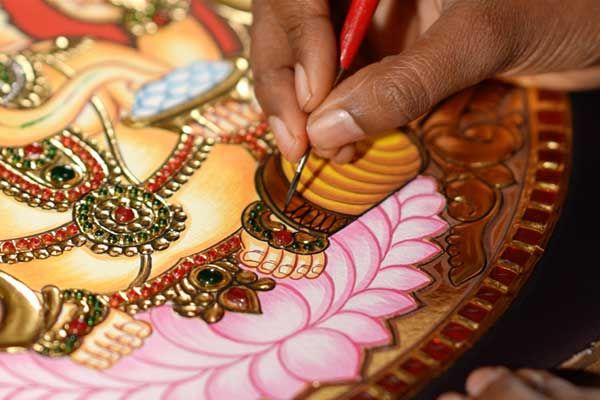
1. Authenticity. Is it genuinely handmade in the Tanjore tradition, or a print with a gold-look finish? A real painting has 24 karat gold foil laid over raised gesso relief, with kundan stones and crystals set by hand. You can feel the texture. Ask what the gold and stones actually are. We never sell antiques or reproductions, and an honest seller will be just as clear.
2. Artist credentials. Who painted it, and where did they learn? Tanjore is a lineage art. Knowing that a piece came from trained hands, rather than an unnamed workshop, tells you a great deal about the care inside it.
3. Customisation. Can you choose the deity, the size, and the frame? A true studio can paint the subject that matters to your family and match it to your wall. If you want a piece built around a specific deity or occasion, the complete buyer's guide walks through how a commission works.
4. After-care. Gold foil and gesso last for generations when cared for well. Ask whether the seller can advise on cleaning, humidity, and repair years down the line. Someone who made the piece can help; a distant listing usually cannot.
5. Transparent pricing. A fair price reflects size, the amount of gold coverage, the number of stones, and the detail in the face and jewellery. Be cautious of prices that look too low for genuine handwork. To understand what drives cost, see our breakdown of what a Tanjore painting should cost.
Why buying direct from a teaching studio helps
Buying direct from a teaching studio is often the safest route, because you reach the makers and everything about the piece is knowable. When a studio also teaches the craft, that knowledge runs deep, and it shows in the work.
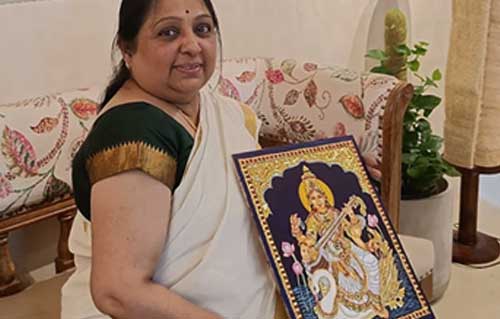
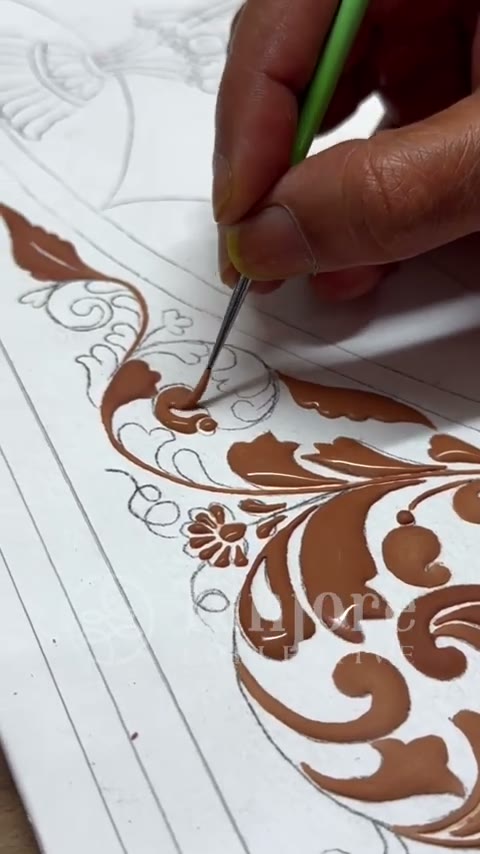
You get clear provenance, real customisation (the deity your family prays to, at the size your wall needs), honest material talk about the gold and stones, and care support for the long life of the piece. For us this comes from decades at the board. My mother has taught over 2,000 students, and that same eye goes into every commission we take.
Buying from abroad (NRIs)
Yes, you can buy a Tanjore painting from India while living abroad. Many of our patrons and students are NRIs in the USA, the UK, Canada and Germany, and the process is simple. You send an enquiry with the deity, size and any customisation you have in mind, we agree the piece and the price, and we arrange safe, insured shipping to your door.
Because these are handmade and made to order, buying from abroad works best as a conversation, not a one-click purchase. We already ship curated material kits worldwide via FedEx for our remote students, so sending fragile, gold-worked pieces carefully is familiar work. Share your timeline early, especially if the painting is meant for a festival, a housewarming, or a wedding.
Your pre-purchase checklist
Before you buy, confirm
- It is genuinely handmade, with real 24 karat gold foil on raised gesso relief.
- You know who painted it and where they trained.
- You can choose the deity, size, and frame.
- The seller can advise on cleaning and long-term care.
- The price is explained by size, gold, stones, and detail, with nothing hidden.
- Delivery and, for overseas buyers, insured shipping are clear before you commit.
If you would like to see finished pieces and start a conversation, browse our gallery. Every painting there is made to order and priced on enquiry, so tell us the deity and size you have in mind and we will guide you from there. If you are still learning what makes this art special, our post on what Tanjore painting is is a gentle place to start.
Frequently asked questions
Where is the best place to buy a Tanjore painting?
The best place to buy Tanjore paintings is wherever you can verify the maker, understand the materials, and get support afterward. In practice that means a specialist gallery or, most reliably, direct from a studio of artists. Buying direct gives you clear provenance, real customisation, and someone to call for care later.
Can I buy Tanjore paintings directly from the artists?
Yes. Our studio in Basavangudi, Bangalore makes bespoke Tanjore paintings to order. You send an enquiry with the deity, size and any customisation you want, we agree the piece and the price, and our artists paint it by hand with 24 karat gold foil, kundan stones and crystals. You can start by browsing our gallery and sending us a note.
Can NRIs buy Tanjore paintings from India?
Yes. We regularly work with NRIs across the USA, the UK, Canada and Germany. Send us an enquiry, we confirm the design and price, and we arrange safe, insured shipping to you. Since the paintings are handmade and made to order, it is best to reach out early and share your timeline.
How can I tell a real Tanjore painting from a print?
A genuine piece has real texture. The gold foil sits on raised gesso relief, and the kundan stones and crystals are set into that relief, so the surface is three dimensional rather than flat and printed. Ask what the gold and stones are, and read our guide on how to spot an authentic painting for the finer signs.
More blog articles
Goddess Lalitha Devi Tanjore Painting Class: Meaning and How to Learn It
Who Goddess Lalitha Devi is, when she is worshipped, and how to paint her yourself, even as a complete beginner.
Lord Balaji (Venkateshwara) Tanjore Painting Class: Meaning and How to Learn It
The meaning of Lord Balaji, his festivals, and how to paint Venkateshwara in the Tanjore style over our detailed 2.5-month course.
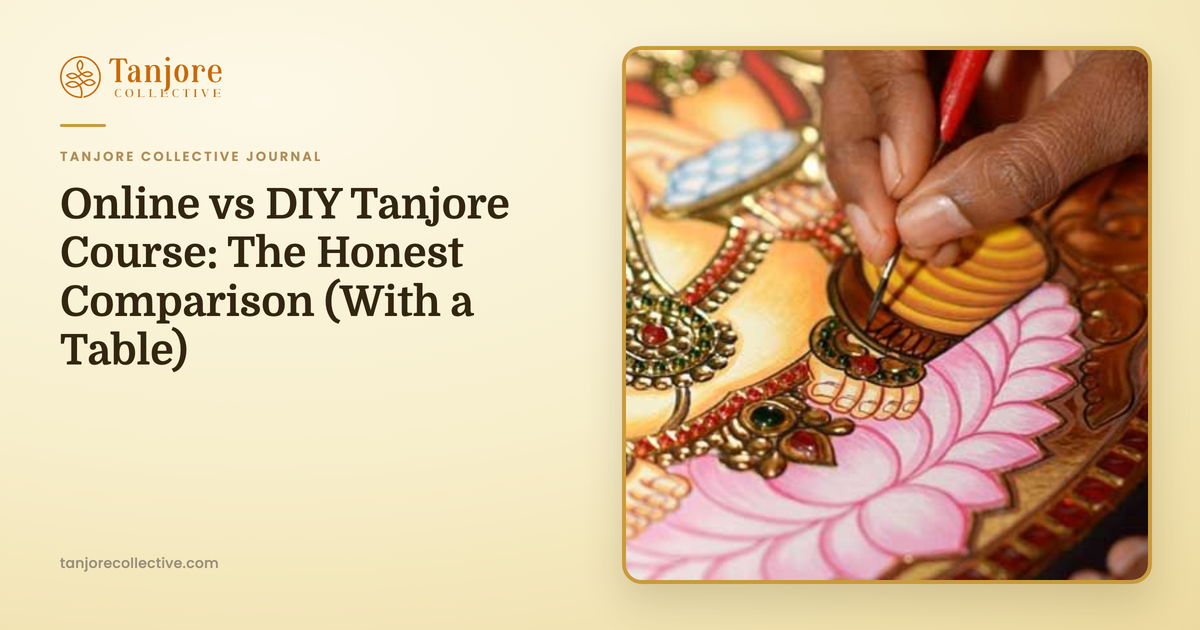
Online vs DIY Tanjore Course: The Honest Comparison (With a Table)
Online or DIY Tanjore course? An honest, side-by-side comparison so you can choose structure or flexibility.
What our students say
Hear from students who've learned the art of Tanjore painting with us.