How to Start Selling Tanjore Paintings (With Your Own Designs)
Written by
Vibha Raj
A practical, ethical starter on selling Tanjore paintings from a studio that creates bespoke work for patrons: your own designs, a body of work, where to sell, and pricing principles.
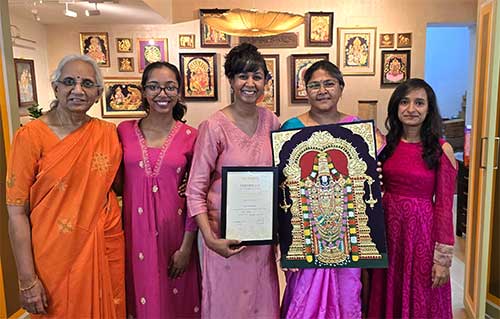
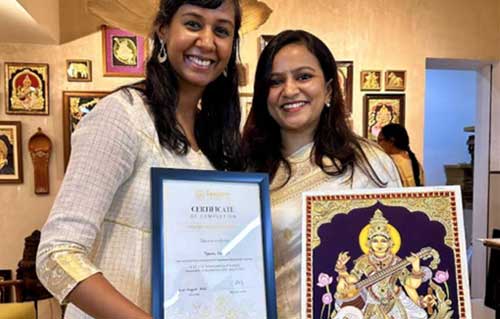
By Vibha Raj, Founder and Tanjore Artist at Tanjore Collective. Vibha learned the art from her mother, master artist Vani Bhaskar, and leads our studio, which creates bespoke Tanjore paintings for patrons.
Key takeaways
- To sell Tanjore paintings, start with designs that are yours to use: your own sketches, or ones you've bought or licensed.
- Build a small, consistent body of work before you sell widely. Quality matters far more than quantity.
- Most people sell first through commissions from people who know them, then grow through exhibitions, social media and their local community.
- Price from your materials, your time and your skill, and be open with buyers about what's in each piece.
- Repeat buyers and referrals are how a selling practice grows.
There's a particular moment many painters remember. A friend or relative sees your finished deity and asks, quite seriously, "Would you make one for me?" It's lovely to hear. It can also be a little unnerving, because suddenly your hobby has a buyer, and you're not quite sure what to do next.
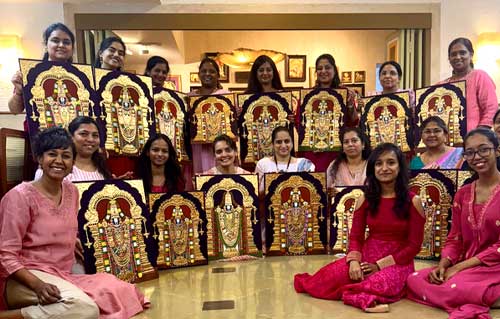
We've been on the selling side of Tanjore painting for a long time. Our studio creates bespoke paintings for patrons, and every artist and teacher on our team trained here. So this guide is our practical, honest starter on how to sell Tanjore paintings well: ethically, sustainably, and with work you're proud to put your name to. If you're still deciding whether to make it more than a hobby, our guide to a Tanjore painting career is a good place to begin.
How do you start selling Tanjore paintings?
Start with five steps, in this order:
- Use your own designs, or sketches you've bought or licensed to sell from.
- Build a small body of finished work that shows consistent quality.
- Sell first to people who already trust you, usually through commissions.
- Price from materials, time and skill, and explain what goes into each piece.
- Grow through repeat buyers and referrals, adding exhibitions and social media as you go.
None of these steps is a shortcut. Each one builds the trust that a Tanjore painting buyer is looking for.
Start with your own designs
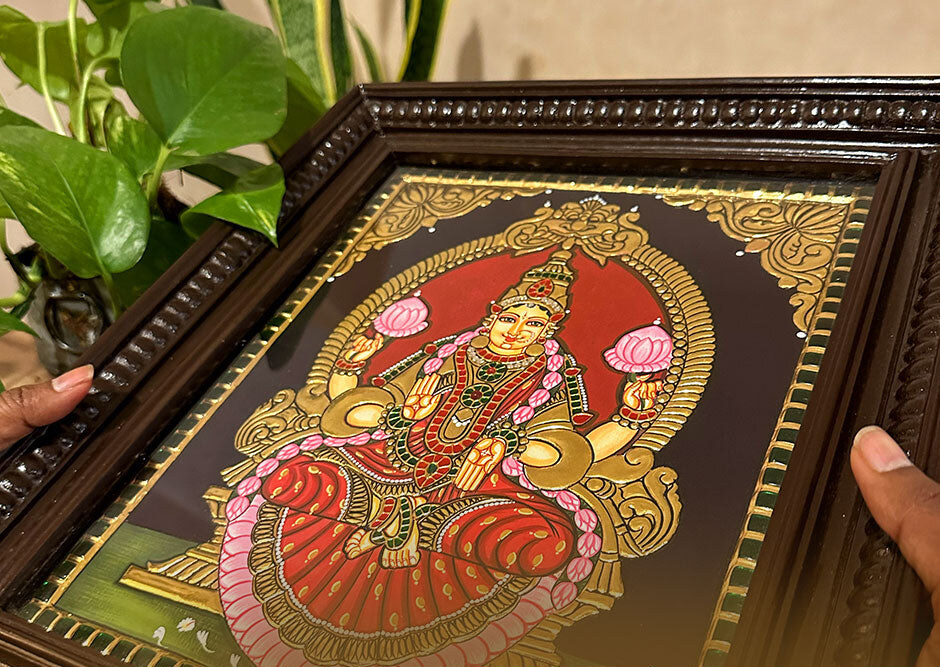
Before you sell a single painting, make sure the design is yours to sell. That means a sketch you've drawn yourself, or one you've bought or licensed for that purpose.
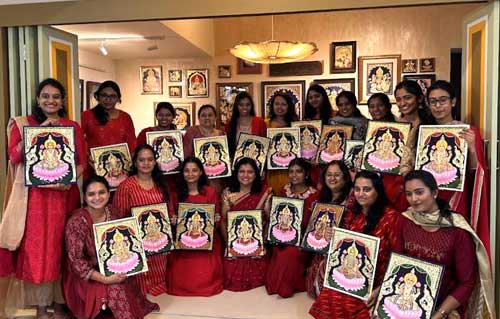
When you learn with us, you paint on a pre-sketched board. That's deliberate: it lets you master the gesso, the kundan stones, the 24 karat gold and the face without worrying about drawing. But those sketches are our own designs, created for your learning. So please keep the paintings you make from them for your home, or give them as gifts, rather than selling them.
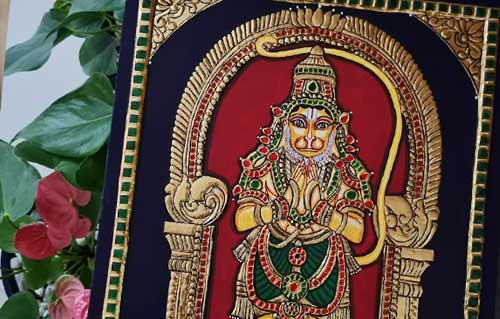
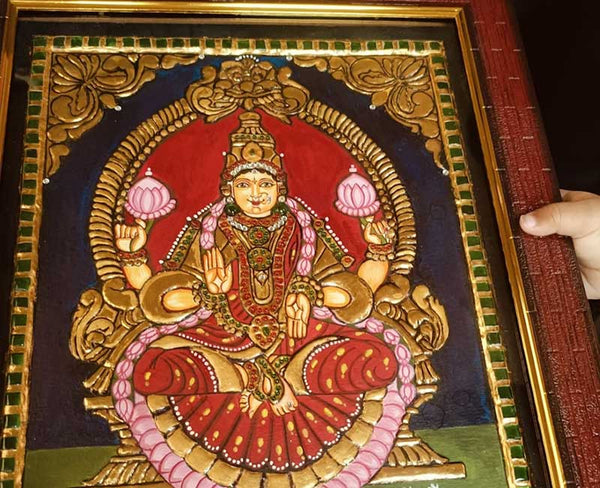
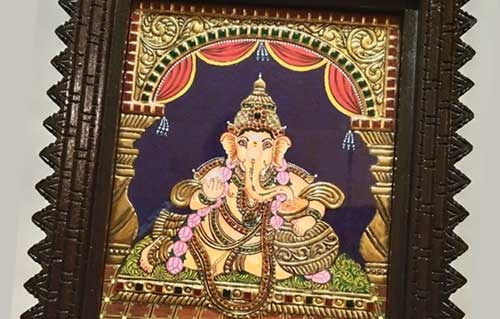
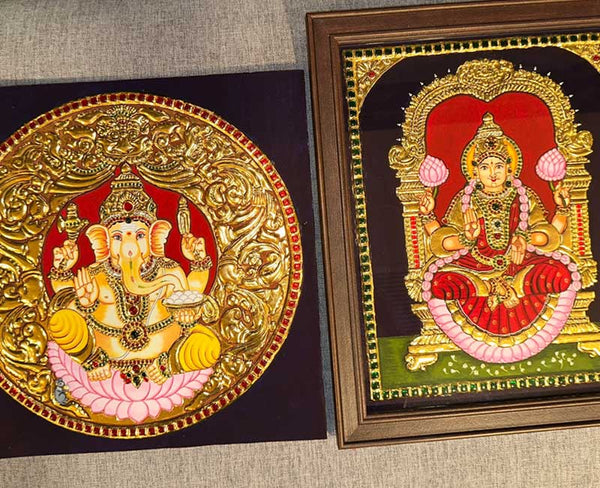
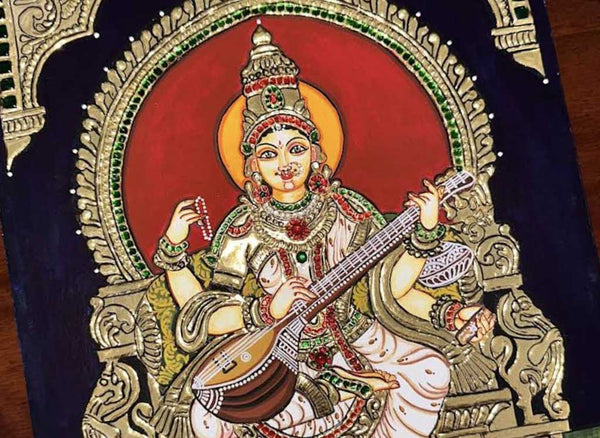
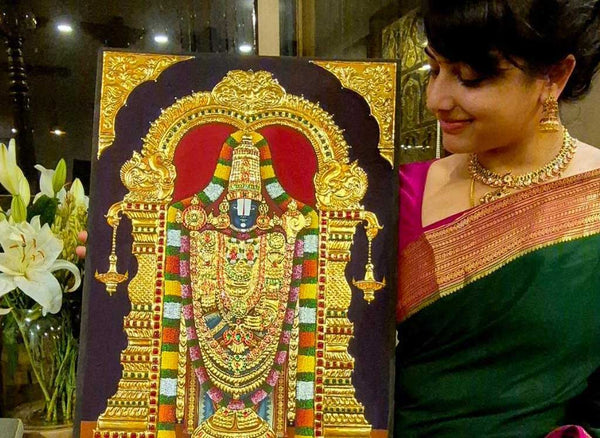
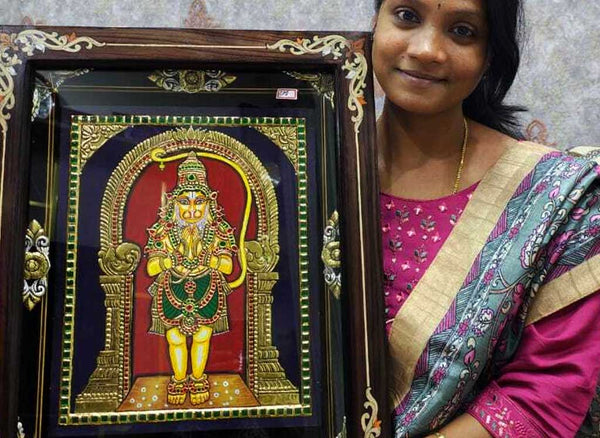
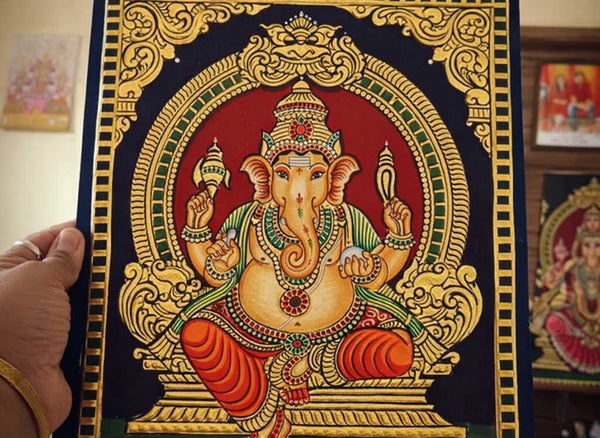
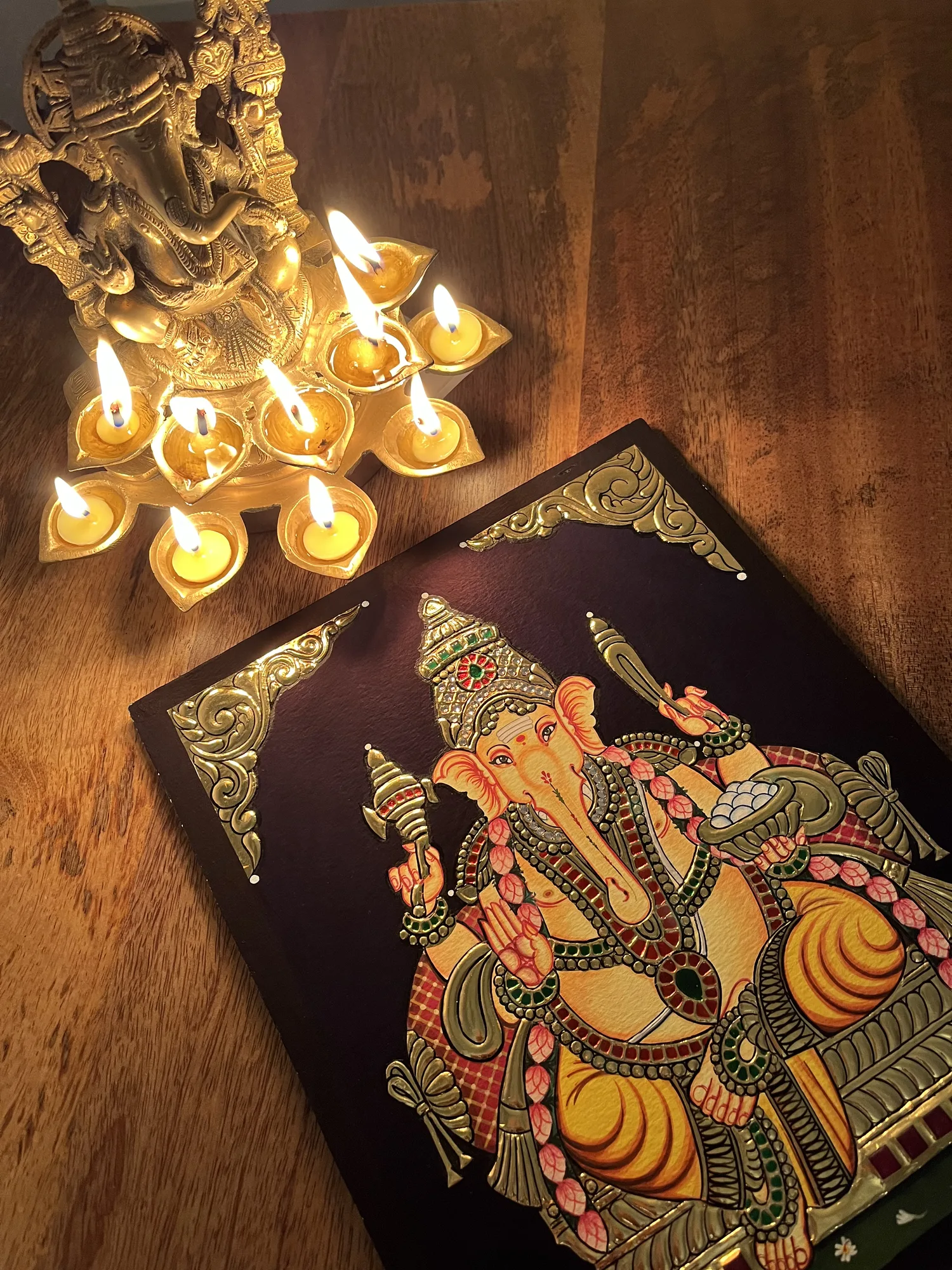
The deities themselves are a different matter. Ganesha, Lakshmi, Balaji and the other traditional subjects belong to everyone. What makes a painting yours is your composition: how you arrange the figure, the arch, the ornaments and the background. Developing your own designs is also how you grow from a skilled painter into an artist with a recognisable hand. It takes time, and that's fine. Start simple, with a single central figure, and let your compositions grow with your confidence.
Build a small body of work
Build a small collection of finished paintings before you start selling widely. A few pieces that are consistently good will do more for you than many that vary.
Buyers of a Tanjore painting are making a considered, often devotional purchase. Before they commission you, they'll want to see that you can deliver the same standard every time. Your body of work is that proof. Aim for paintings that get these things right, every time:
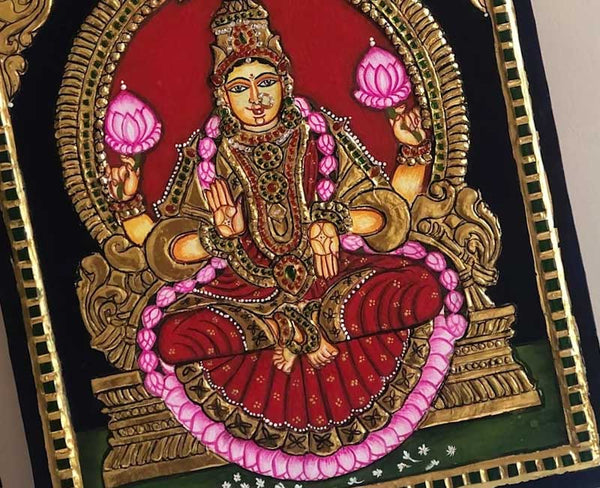
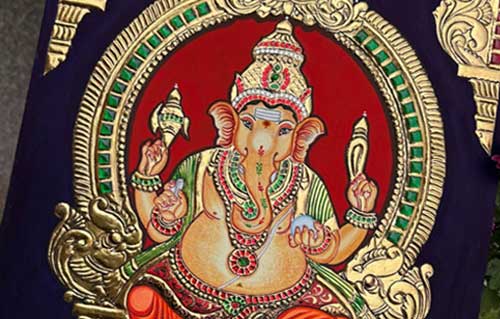
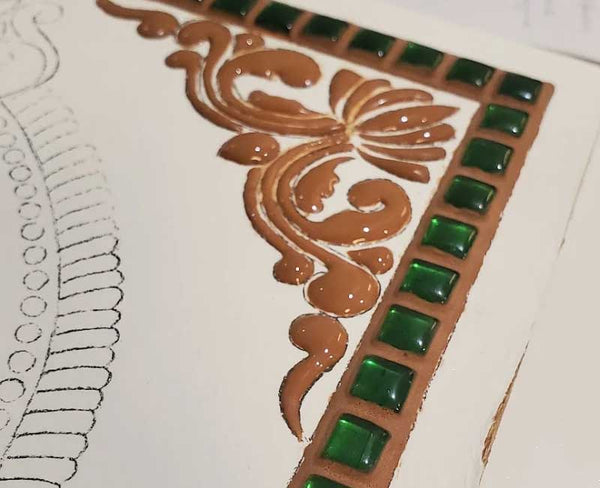
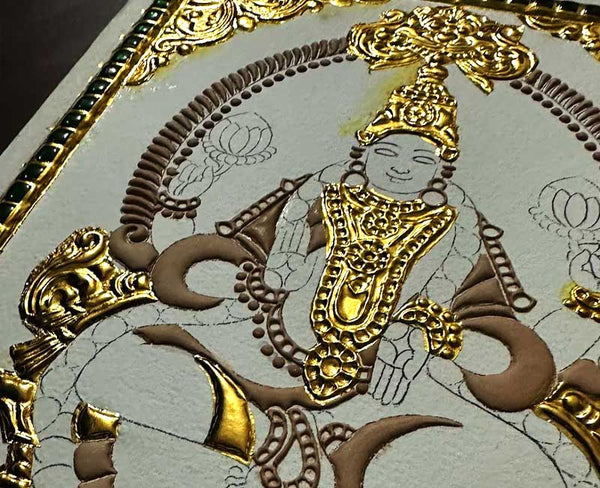
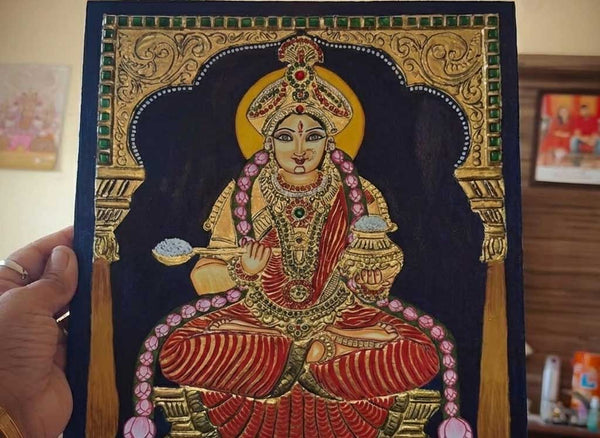
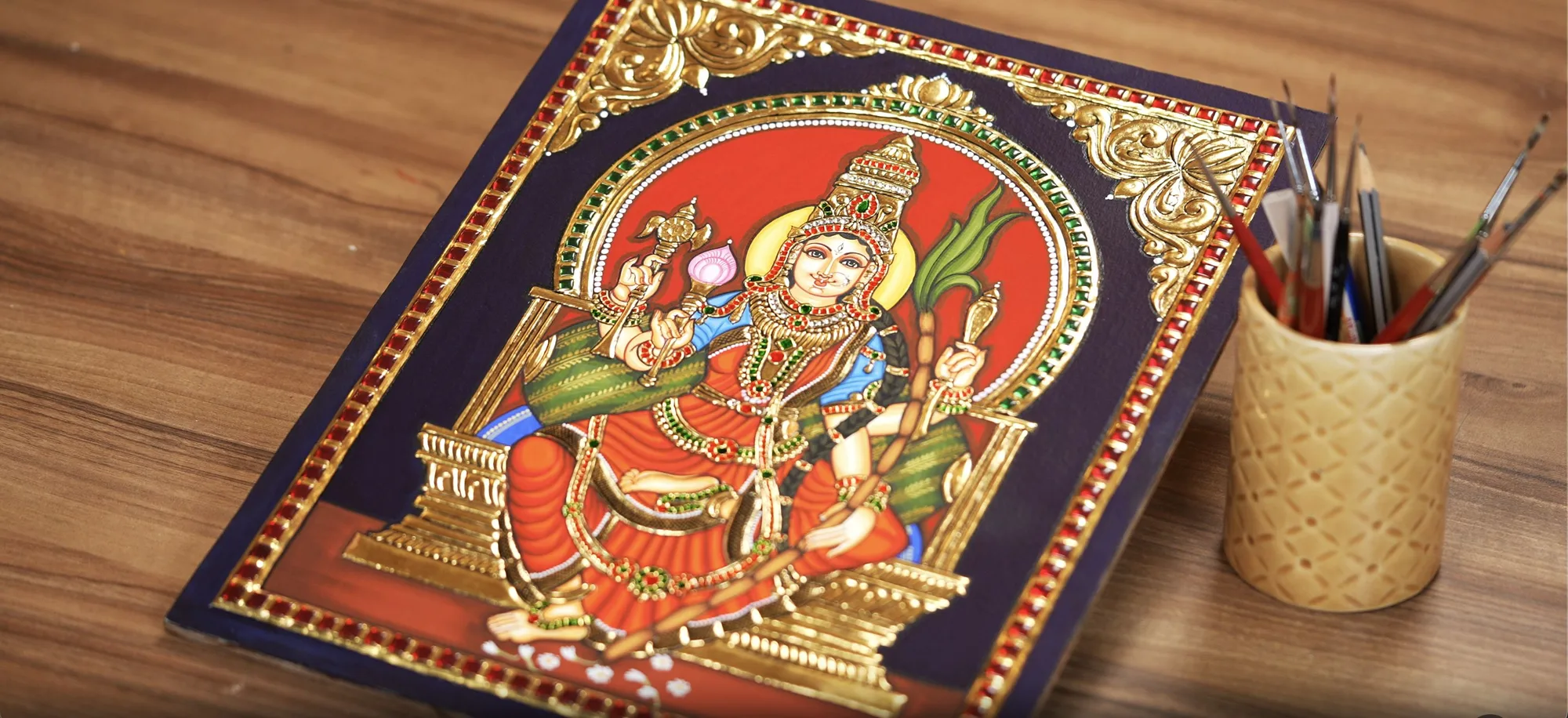
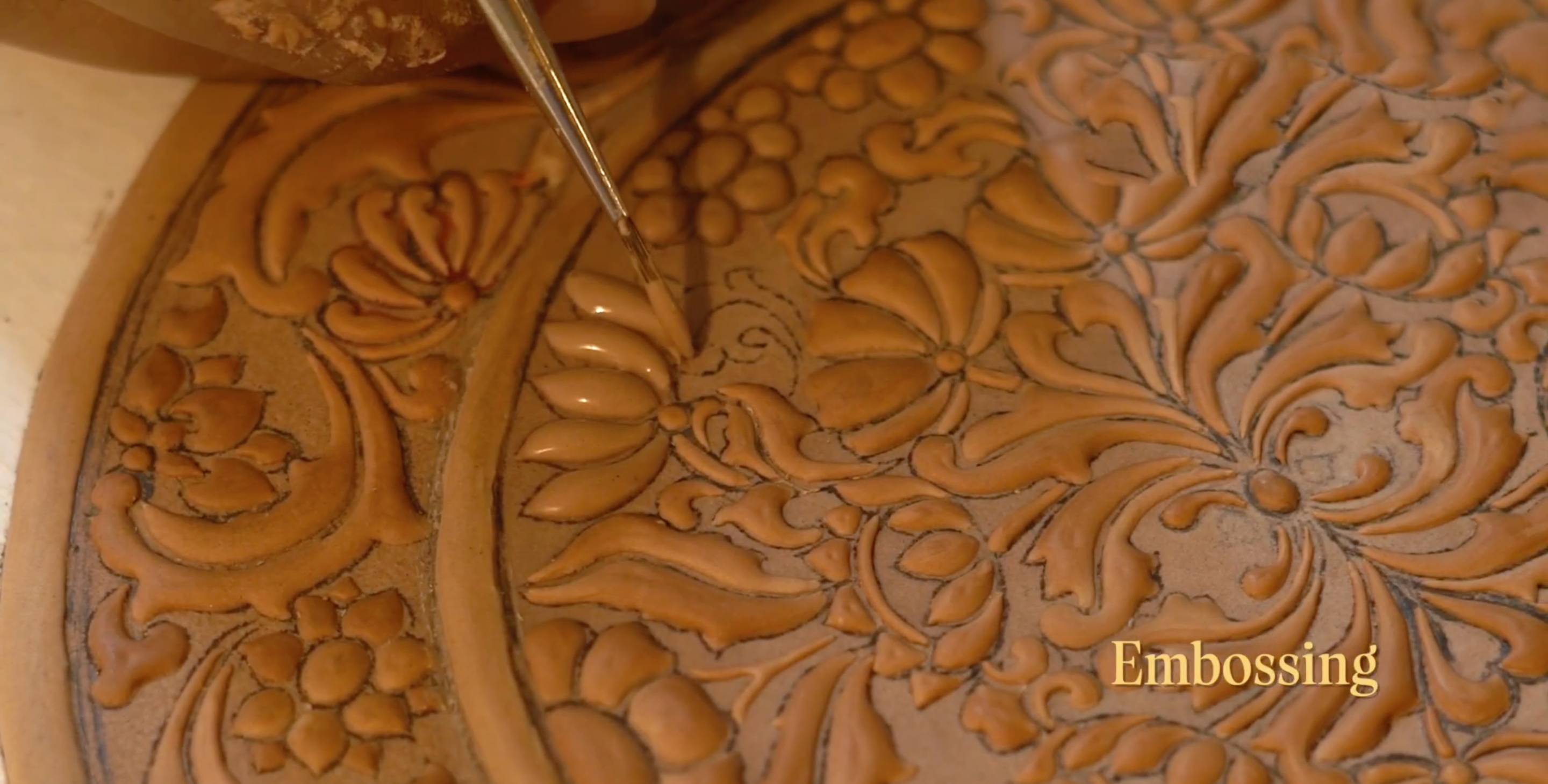
- Crisp, even gesso relief around the stones, crown and arches
- Neatly set kundan stones, framed by the relief and gold
- Smooth 24 karat gold, with no wrinkles, tears or gaps
- Clean colour right up to the edges of the gold
- A serene, even face, the most sacred part of the painting
- Fine outlines and careful finishing, including the Swarovski crystals
It helps to paint across a few deities and sizes, too. In our courses, sizes run from 10 x 12 up to 18 x 24 inches, and larger, more detailed subjects such as Balaji or Lakshmi Narasimha take longer to learn. A portfolio with some range tells buyers you can handle what they have in mind.
Where should you sell Tanjore paintings?
Most painters start closest to home and widen out. Here are the main places people sell, and what each one asks of you.
| Where | Why it works | What you'll need |
|---|---|---|
| Commissions from people you know | Trust is already there, and they've seen your work | Clear agreement on deity, size and timeline |
| Your local community | Word of mouth travels, especially around festivals and family occasions | A few finished pieces people can see in person |
| Exhibitions | Buyers can see the gold, relief and stones up close | A consistent body of framed work |
| Social media | Lets people see your process and your finished pieces | Good photos and videos, and honest descriptions of materials |
Commissions first
For most beginners, the first sales are commissions: a family member's chosen deity for a new pooja room, or a painting for a wedding or housewarming. These buyers already know you, so trust isn't the hurdle. The job is to agree the details clearly up front (the deity, the size, the timeline) and then deliver beautifully. You can see how a studio commission works in our guide to commissioning a custom Tanjore painting.
Exhibitions and your community
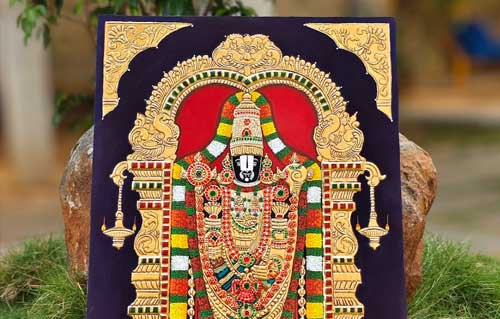
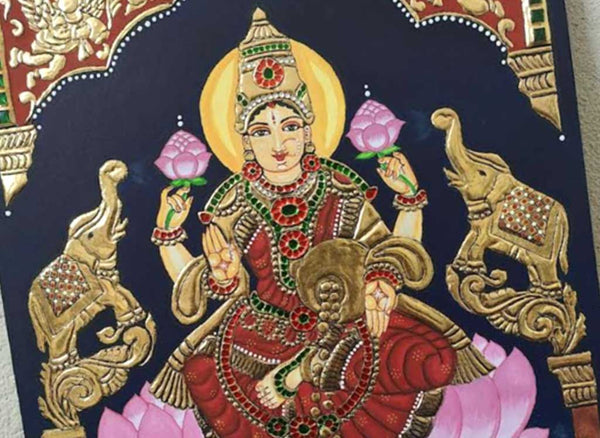
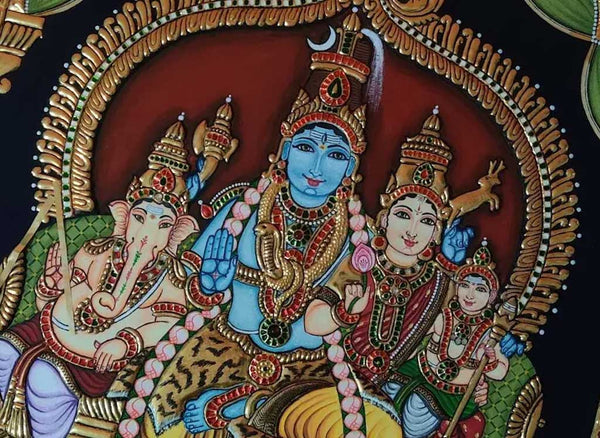
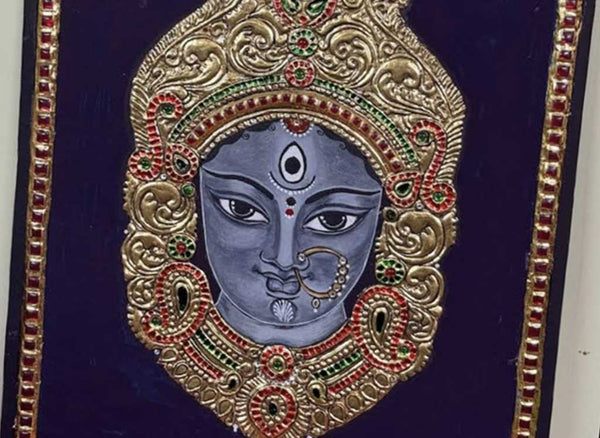
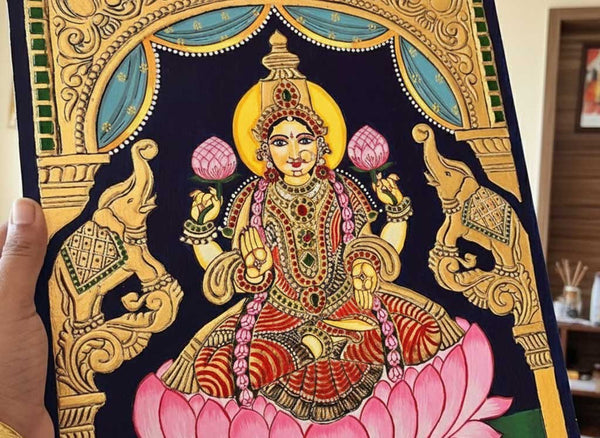
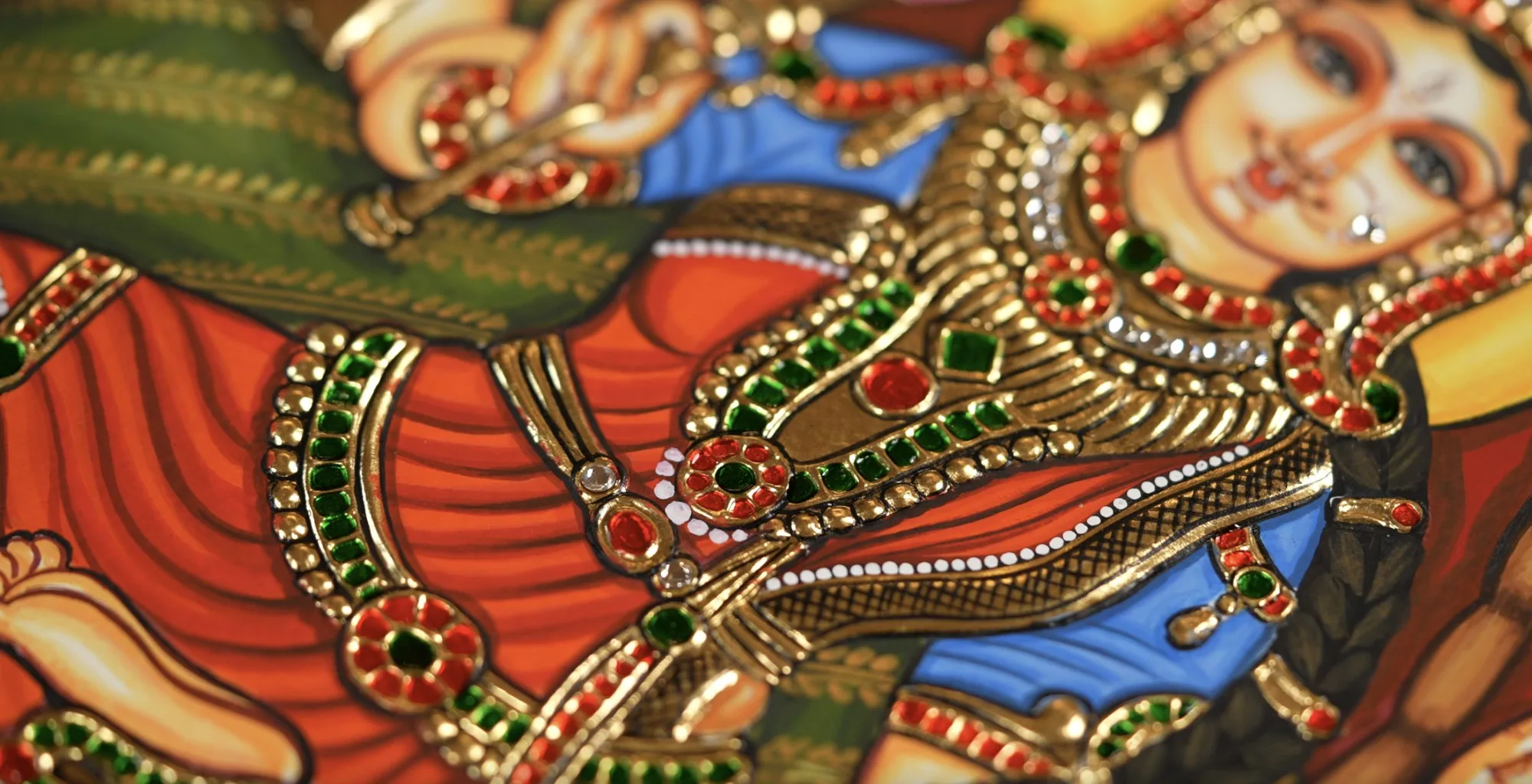
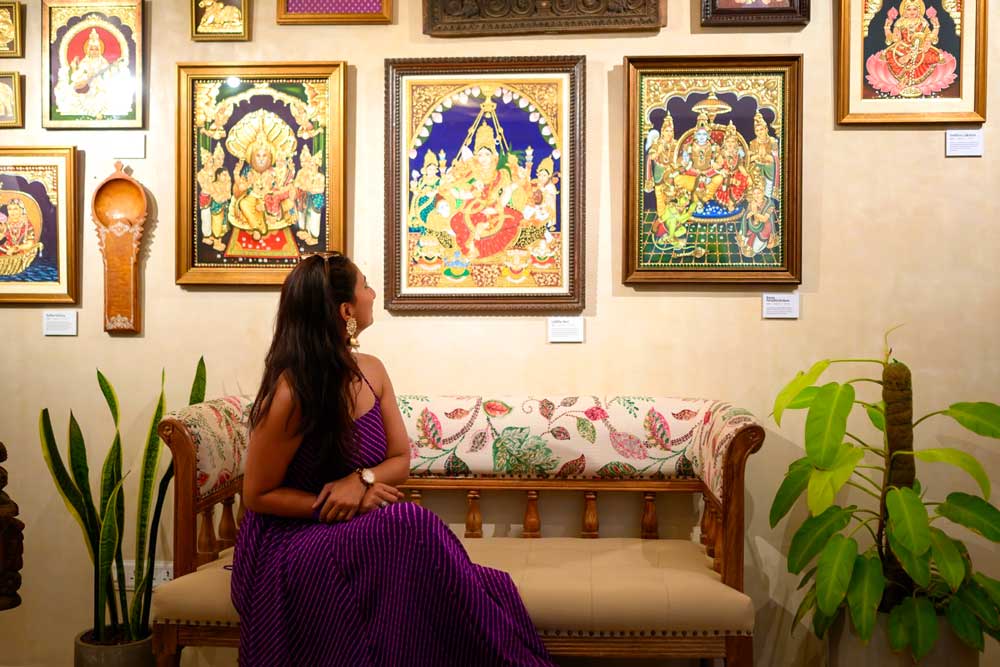
A Tanjore painting is at its best in person. The light catching real gold and raised relief is hard to capture on a screen. Local exhibitions and community events let people see that for themselves, and they often lead to commissions afterwards.
Social media
Sharing your process is one of the most natural ways to show your work. People love watching gold foil going on, or a face coming to life. Our own studio shares short videos of exactly this. Whatever you post, describe your materials honestly, so buyers know what they'll receive.
Watch: paintings going to their new homes
How should you price your Tanjore paintings?
Price from three things: your materials, your time and your skill. Then make sure your buyer understands what they're paying for. We won't give you figures here, because every artist, market and painting is different, but these principles hold everywhere.
- Materials. Real 24 karat gold, genuine kundan stones and Swarovski crystals have a real cost. A larger, more ornate painting uses more of all of them. Never price so low that it suggests the gold isn't real.
- Time. Count the hours honestly, from preparing the board and setting the stones to the gesso, the gold, the painting and the face. In our courses, a standard painting takes about 6.5 weeks of sessions, and larger subjects take months.
- Skill. Detail, relief depth and the quality of the face all reflect years of practice. As your work improves, your pricing can grow with it.
- Size and subject. Bigger boards and multi-figure compositions take more of everything.
- Framing. Decide whether framing is included, and say so clearly.
The most important principle is transparency. Tell buyers what's in the painting: the karat of the gold, the stones, the board. A buyer who understands what goes into a real Tanjore painting values it properly. Our guide to spotting an authentic Tanjore painting shows the kind of questions informed buyers ask, so you can answer them before they're asked.
Growing from there
Once your first paintings have found homes, growth usually comes from three places: repeat buyers, referrals and, for some, teaching.
Repeat buyers come back because they trusted you the first time. A family that commissioned a Ganesha may later want a Lakshmi for Diwali or a gift for a wedding. Referrals follow naturally when a painting is admired in someone's home. And teaching, for those who love it, is a path of its own, built on deep practice and patience.
Keep learning as you grow. The more deities and sizes you can paint well, the more you can say yes to. Our guide to the deities we teach shows how the subjects build on one another, and our full materials guide will help you speak confidently about everything in your work.
And remember where every one of our own artists started: at a board, with a single deity and a lot of patience. In 40 years we've taught more than 5,000 students, and our commissioned paintings are created by professional artists who trained in our studio. The path is real.
Frequently asked questions
Can I sell paintings of the deity I learned?
Yes, you can paint and sell that deity, because the traditional subjects belong to everyone. What you shouldn't sell is a painting made from our course sketch, which is our design, made for your learning. Create your own composition of the deity, or buy or license a sketch you're allowed to sell from.
How should I price my work?
Price from your materials, your time and your skill, adjusted for size, subject and framing. Be open with buyers about the gold, stones and board. We don't publish figures, because every artist and market is different.
Where do beginners sell first?
Usually through commissions from people who already know their work, such as family, friends and their local community. Exhibitions and social media come next, once there's a small body of finished paintings to show.
Do I need my own designs to sell?
Yes. Use sketches you've created, bought or licensed. Developing your own compositions is also how your work becomes recognisably yours.
Should I tell buyers what materials I use?
Always. Say whether the gold is 24 karat, what the stones are and what the board is. Honesty about materials is the foundation of trust in Tanjore painting.
More blog articles
Can You Build a Career in Tanjore Painting? An Honest Guide
Can Tanjore painting become your work? The real paths, what it takes, and how our own artists started.
Tanjore Painting Gesso: What It Is and How It's Made
What gesso is, what it's made of, and how we build the raised relief of a Tanjore painting, step by step.
Tanjore Painting Deity Classes: Significance and Which to Learn First
The deities of Tanjore painting, what each represents, the festival it is loved at, and which is a gentle place to begin.
What our students say
Hear from students who've learned the art of Tanjore painting with us.