Can You Build a Career in Tanjore Painting? An Honest Guide
Written by
Yashaswini Jaishankar
An honest, no-hype look at building a Tanjore painting career, from a studio whose own artists and teachers trained here: the ways people earn and what each one asks of you.
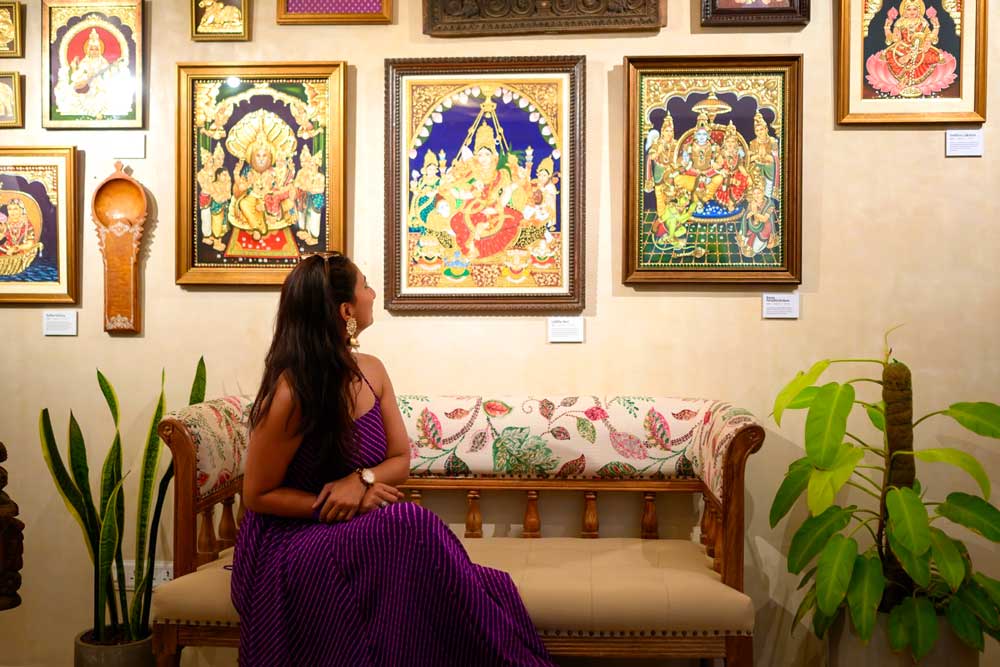
By Yashaswini Jaishankar, Head Teacher at Tanjore Collective. Yashaswini began as one of our students and now leads our classes.
Key takeaways
- Yes, you can build a career in Tanjore painting, but it grows from skill, practice and patience, not from a single course.
- People earn through four main paths: selling original work, taking commissions, teaching, and supplying materials.
- What it takes: many finished paintings, a growing body of work, and in time, your own designs.
- Every artist and teacher on our team trained in our studio, and the paintings our patrons commission are created by our professional commissioned artists.
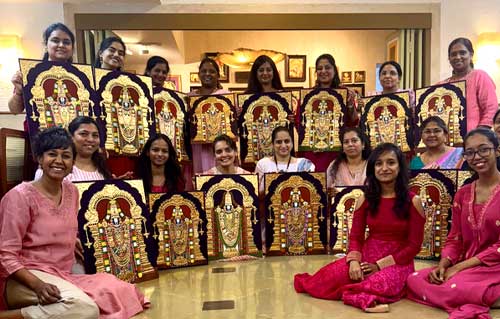
- In 40 years we have taught more than 5,000 students across 100+ batches.
Maybe it started as a weekend class. Then one painting became two, and somewhere around the third, a quiet question crept in: could this be more than a hobby? If you've found yourself wondering whether Tanjore painting could become your work, not just your joy, you're not the first. And it's a fair question to ask out loud.
We can answer it from a rare position. Every artist and teacher at our studio began right where you are now, as a student at our boards. So this is our honest view of what a Tanjore painting career really involves, the paths people take, and how you can start building one.
Is a career in Tanjore painting realistic?
Yes, a career in Tanjore painting is realistic, if you're willing to build it slowly. It rests on three things: real skill with the traditional techniques, a lot of practice, and patience while your work and your reputation grow. It isn't something a single course hands you.
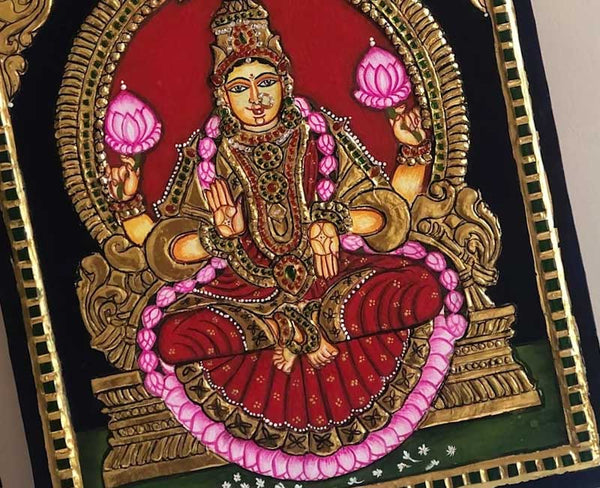
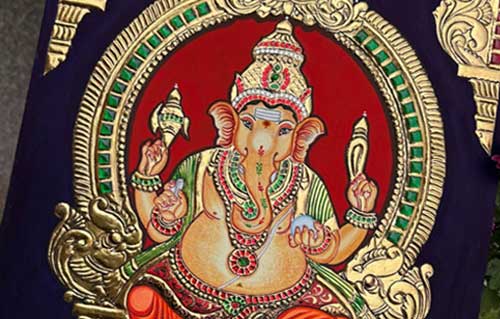
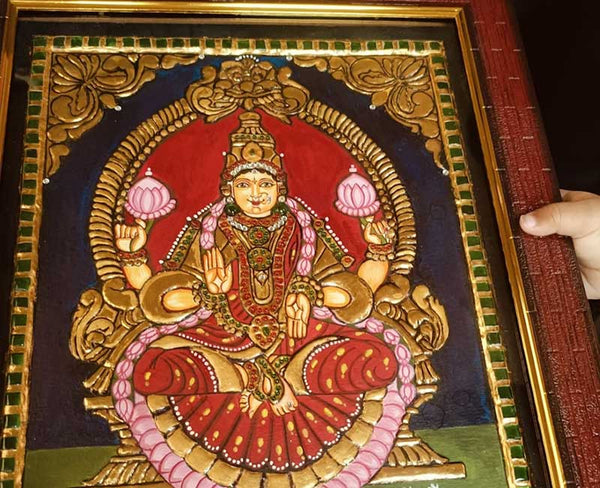
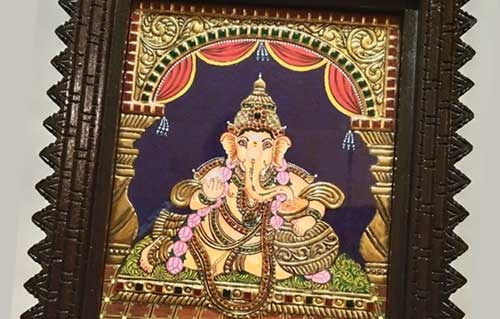
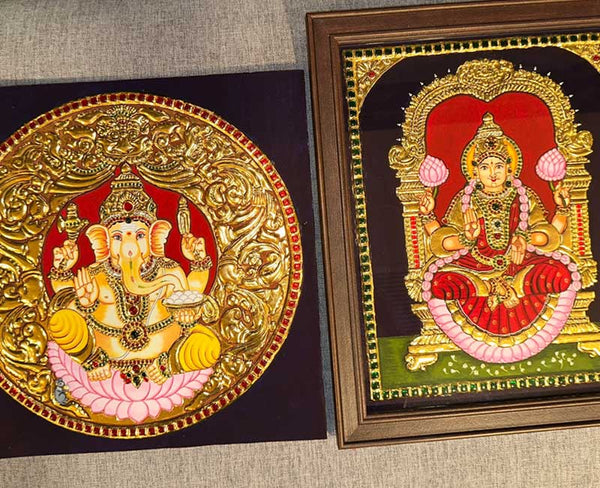
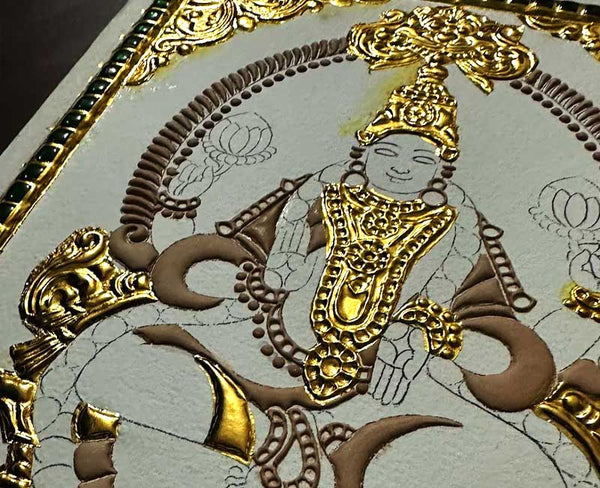
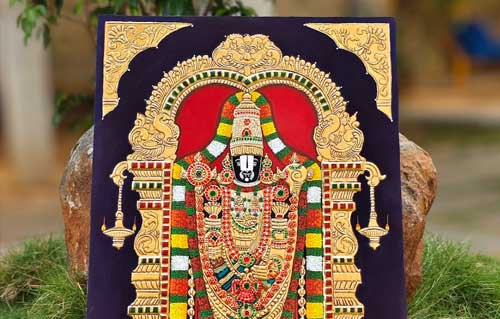
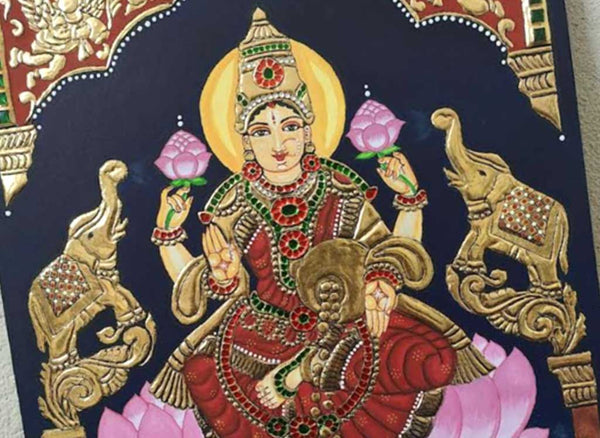
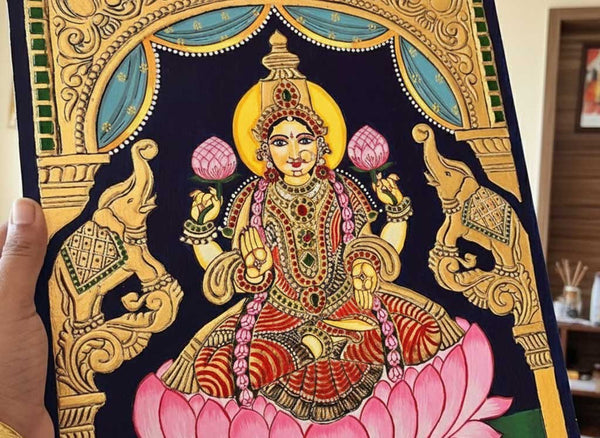
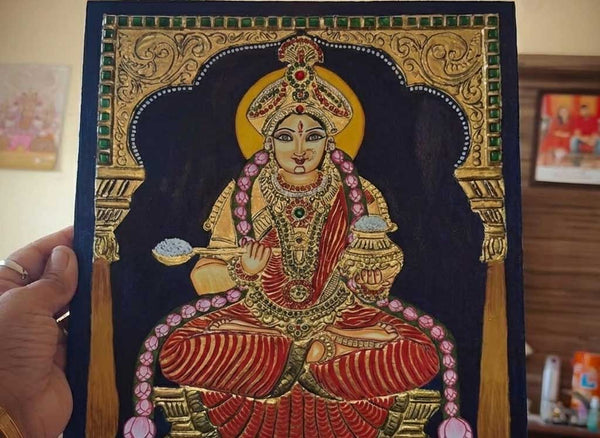
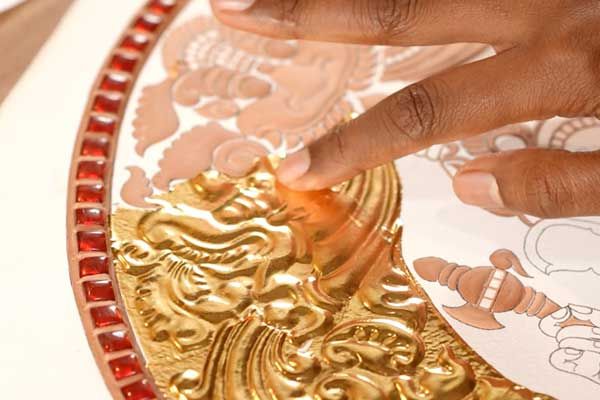
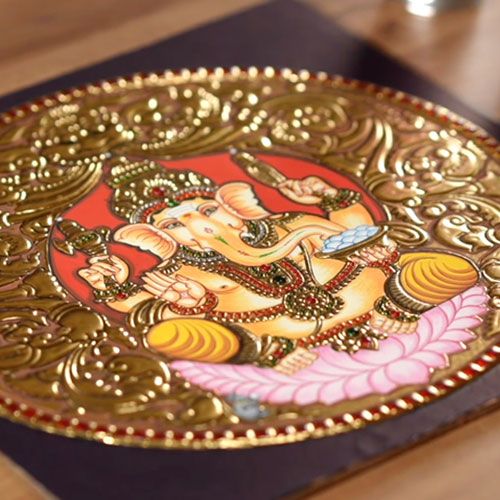
What makes it possible is the nature of the art itself. A Tanjore painting is a devotional object, made by hand with real 24 karat gold, raised gesso relief, kundan stones and many hours of careful work. People want these paintings for their pooja rooms, for weddings and housewarmings, and to pass down in the family. Our own studio has always created bespoke paintings for patrons alongside teaching the craft. That demand for genuine, handmade work is what a career stands on.
We won't put numbers on what you might earn. Every artist's path, pace and market is different, and figures pulled out of context would only mislead you. What we can tell you is what the paths look like and what each one asks of you.
What are the ways to earn from Tanjore painting?
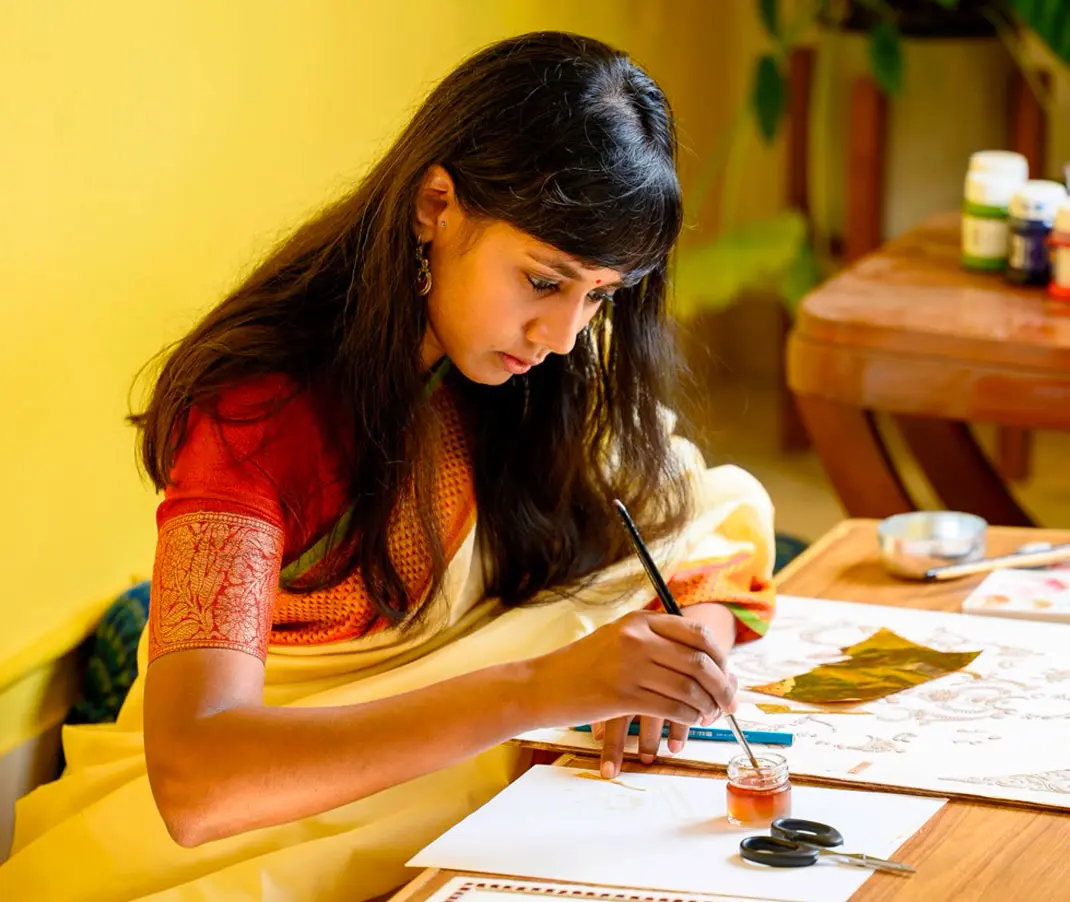
Most Tanjore painting careers draw on one or more of four paths. Few people start with all of them. Many begin with one and add another as their skill and confidence grow.
| Path | What it involves | What it asks of you |
|---|---|---|
| Selling original work | Painting pieces and finding homes for them | A body of finished work, your own designs, and patience to build buyers |
| Commissions | Painting a chosen deity and size for a patron | Consistency, reliability with timelines, and the range to paint different subjects well |
| Teaching | Guiding others through the technique | Deep practice, plus the patience to break hard steps into simple ones |
| Materials | Supplying the right gold, stones and boards to other painters | A real eye for quality and honesty about what you sell |
Selling original work
This is where most people's minds go first. It's also the path that needs the most time, because buyers of a Tanjore painting are making a considered, often devotional purchase. They want to trust the artist and the materials. A growing body of work, real 24 karat gold, honest descriptions and, in time, your own designs are what build that trust. When you're ready, our guide on how to sell Tanjore paintings walks you through the first steps.
Taking commissions
Commissions are paintings made to order: a family's chosen deity, at the size their wall or pooja room needs. Patrons come to an artist because they trust them to get the face, the relief and the gold right, every time. Our studio takes commissions too, and you can see how that process works in our guide to commissioning a custom Tanjore painting.
Teaching
Teaching asks for a different kind of mastery. It isn't enough to paint well. You have to understand each step deeply enough to explain it to a nervous beginner, slowly and kindly. That's how our own teaching works: hard techniques like the gesso relief, the gold foil and setting the kundan stones are broken into small, repeatable steps so that complete beginners finish a real painting.
Supplying materials
Good materials are hard for learners to find and hard to judge. Pure 24 karat gold, genuine kundan stones, a properly prepared board: people who know the craft well can help others get these right. It's a path that depends on knowledge and integrity, because quality is everything in a Tanjore painting.
What does it take to make Tanjore painting a career?
It takes practice, repetition, a body of finished work and, eventually, your own designs. There's no shortcut through any of them, but each one is within reach if you keep painting.
What does it take to be an artist? A short reflection from our studio.
Practice and repetition
The first painting teaches you the sequence. The next several teach you control. Your relief gets crisper, your gold lies smoother, and your faces gain the soft, serene expression a Tanjore deity needs. Many of our students come back for a second and third deity, and that repetition is exactly how skill becomes reliable.
Moving to harder subjects
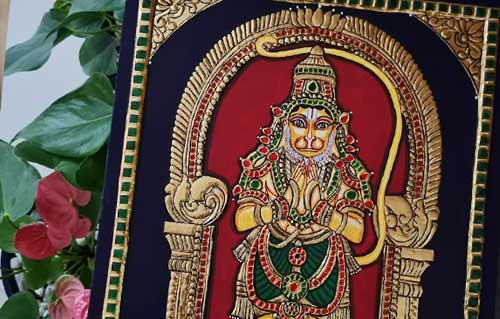
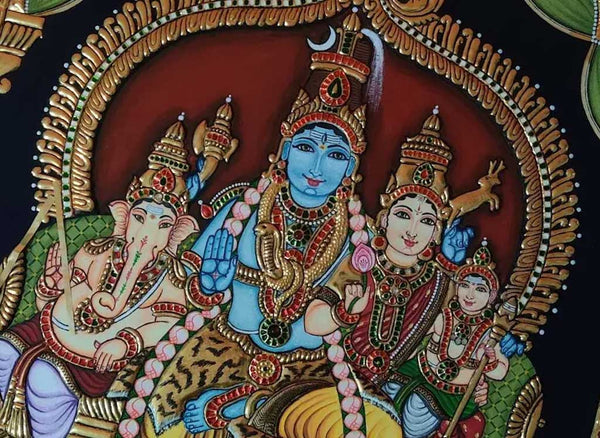
A professional needs range. A standard course takes about 6.5 weeks, often with a single central figure. Larger and more detailed paintings, such as Lord Balaji, Goddess Padmavathi or Shiva Parivar, run about 2.5 months, and Lakshmi Narasimha is taught as an advanced 10-week course. Working up through these, and through larger sizes from 12 x 15 up to 18 x 24 inches, builds the confidence to say yes when a patron asks for something ambitious. Our guide to the deities we teach shows how the subjects build on one another.
A body of work
Before anyone commissions you, they'll want to see what you've made. A collection of finished paintings, across different deities and sizes, is your portfolio. It also shows you, honestly, where you've grown and what still needs work.
Your own designs
In time, the artists who build lasting careers develop their own compositions. Learning starts with pre-sketched boards, so that you can master the technique without worrying about drawing. But if you want to sell your work, you'll need designs that are yours to use. More on that next.
Knowing your materials
Selling a Tanjore painting means standing behind what's in it. You need to know your gold, your stones and your gesso well enough to answer any buyer's questions plainly. Our guide to Tanjore painting materials is a good foundation.
What does a professional Tanjore painting need to get right?
A painting you'd sell or deliver to a patron needs to get the same few things right, every single time. Use this as a checklist for your own work:
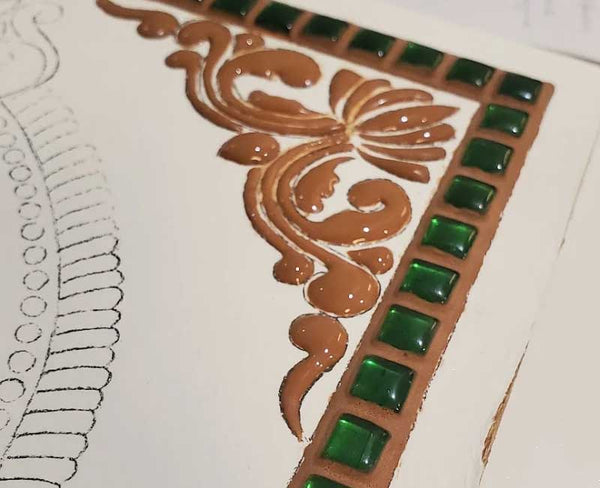
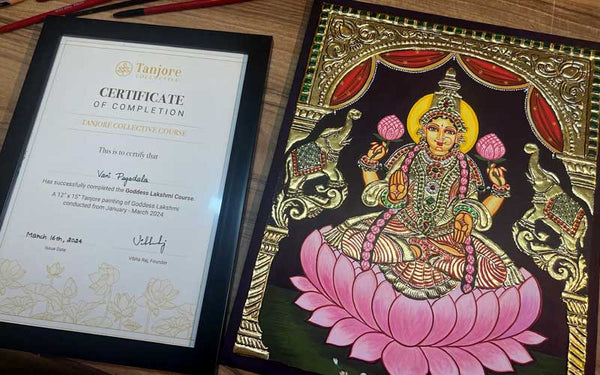
- Crisp, even relief. The gesso around the stones, crown and arches should be clean, with no excess paste.
- Neatly set stones. Kundan stones sitting evenly in their raised settings, framed by gold.
- Smooth 24 karat gold. No wrinkles, tears or gaps over the curves of the relief.
- Clean colour. Paint laid evenly right up to the edges of the gold, with the body gently shaded.
- A serene face. Even eyes and a soft, devotional expression, the most sacred part of the painting.
- Fine outlines and finishing. Crisp black outlines and Swarovski crystals placed with care.
When you can deliver all six reliably, on any deity and at any size, you're painting at a professional level. Most people get there one painting at a time.
How do you build a Tanjore painting career ethically?
Paint and sell only designs that are yours to use: sketches you've created yourself, or ones you've bought or licensed for that purpose. That's the simplest way to build a reputation you can be proud of.
The sketches in our courses and kits are our own designs, made for your learning, so please don't reuse them in paintings you sell. We'd much rather see you grow into your own compositions. It's part of what turns a skilled painter into an artist with a recognisable hand.
Honesty about materials matters just as much. If a piece uses real 24 karat gold and genuine kundan stones, say so. If it doesn't, say that too. In an art form where so much depends on what's inside the painting, trust is the most valuable thing you'll build.
From student to professional artist
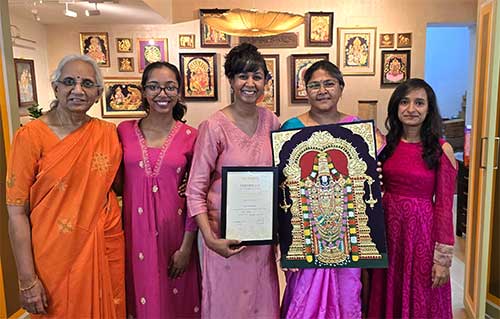
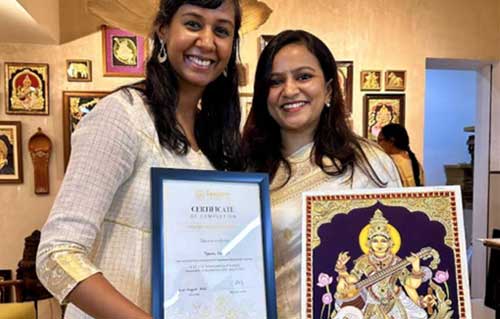
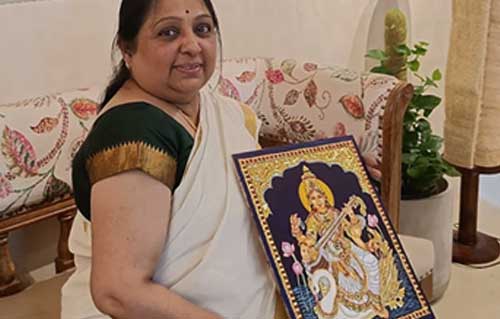
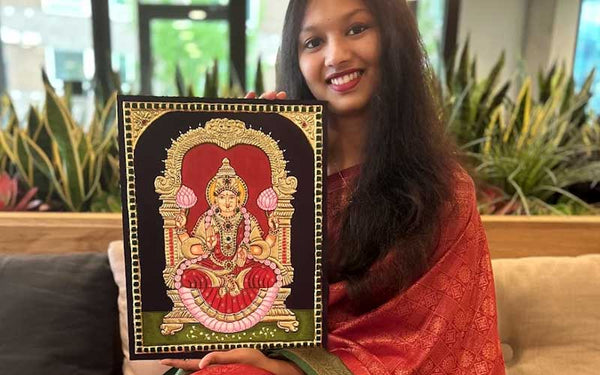
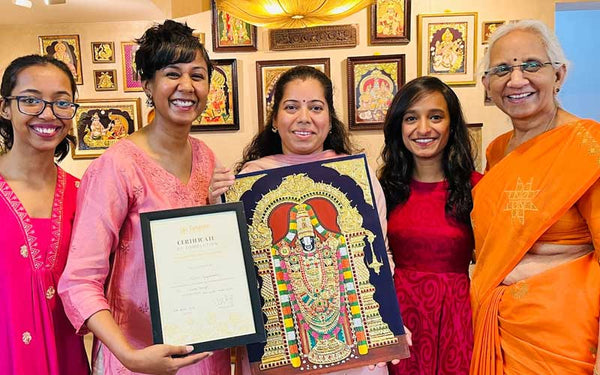
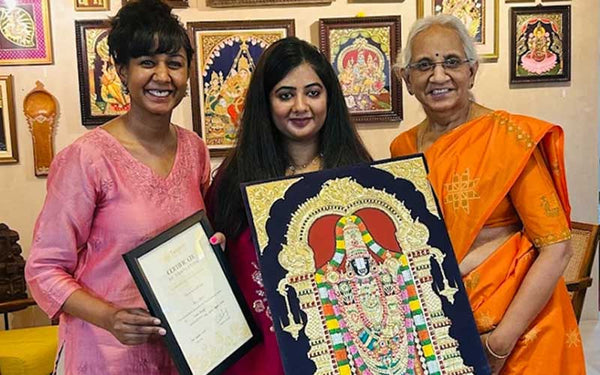
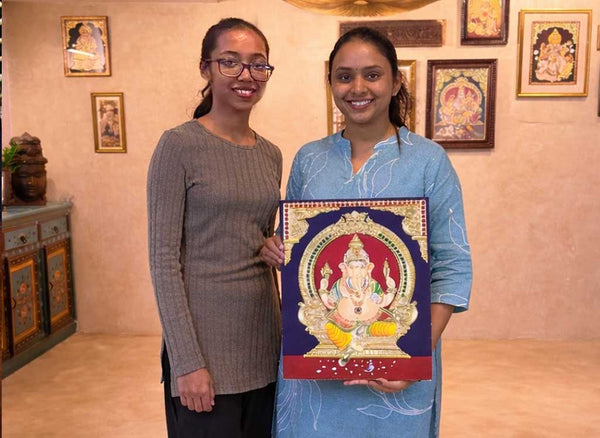
Here's something we're proud of. Every artist and teacher on our team trained in our studio. Our Head Teacher, Yashaswini, first sat at our boards as a student, just as you might today. And the paintings our patrons commission are created by our professional commissioned artists, who learned the craft here and now paint to the standard our patrons rely on.
That says something about what's possible. The path from a first nervous class to professional work is real, and we've watched many people walk it. It starts the same way for everyone: one deity, one board, a lot of patience, and teachers who'll break each step down until it feels natural.
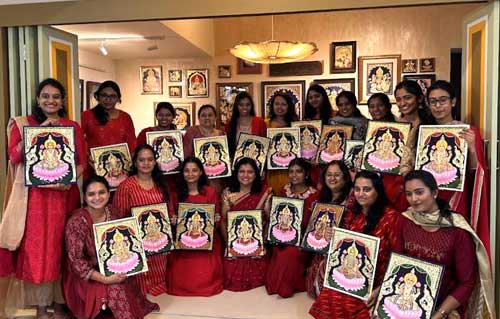
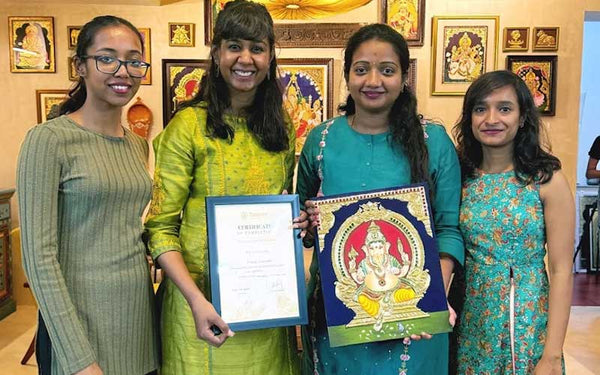
In 40 years we've taught more than 5,000 students across 100+ batches, in three formats: studio classes in Bangalore, live online classes over Zoom, and self-paced DIY video courses. Most of our students arrive as complete beginners, and more than 95% finish their painting.
Where to start
- Learn the full traditional process properly. Start with a single central deity. Our guide to learning Tanjore painting as a beginner is a gentle first step.
- Choose the format that lets you keep going. Studio, live online or DIY video. Our comparison of class formats can help.
- Paint again, and again. Move on to larger, more detailed deities as your skill grows.
- Build your body of work, and begin developing your own designs.
Frequently asked questions
Can I make money from Tanjore painting?
Yes. People earn by selling original work, taking commissions, teaching and supplying materials. It takes real skill, a body of finished work and patience to build. We don't publish earnings figures, because every artist's path is different.
Do I need my own designs to sell?
To sell your work, use designs that are yours to use: your own sketches, or ones you've bought or licensed. The sketches in our courses and kits are made for your learning, so please don't reuse them in paintings you sell.
Does Tanjore Collective hire artists?
Our teachers and commissioned artists all trained in our studio. Commissioned paintings are created by these professional artists, not by students in class. If you'd like to work with us one day, learning the craft properly with us is the first step.
How long does it take to become good enough to paint professionally?
It depends on how much you paint. A first painting takes about 6.5 weeks in our standard courses. Reaching professional consistency takes many paintings across different deities and sizes, so think in terms of steady practice rather than a fixed date.
Do I need an art background?
No. Most of our students have never painted before, and our kits come pre-sketched so you can focus on the technique. What matters most is patience and practice.
Whenever you're ready, we'd love to help you take the first step. Every one of our artists started with a single painting, and a little courage. To see the full process ahead of you, read how a Tanjore painting is made.
More blog articles
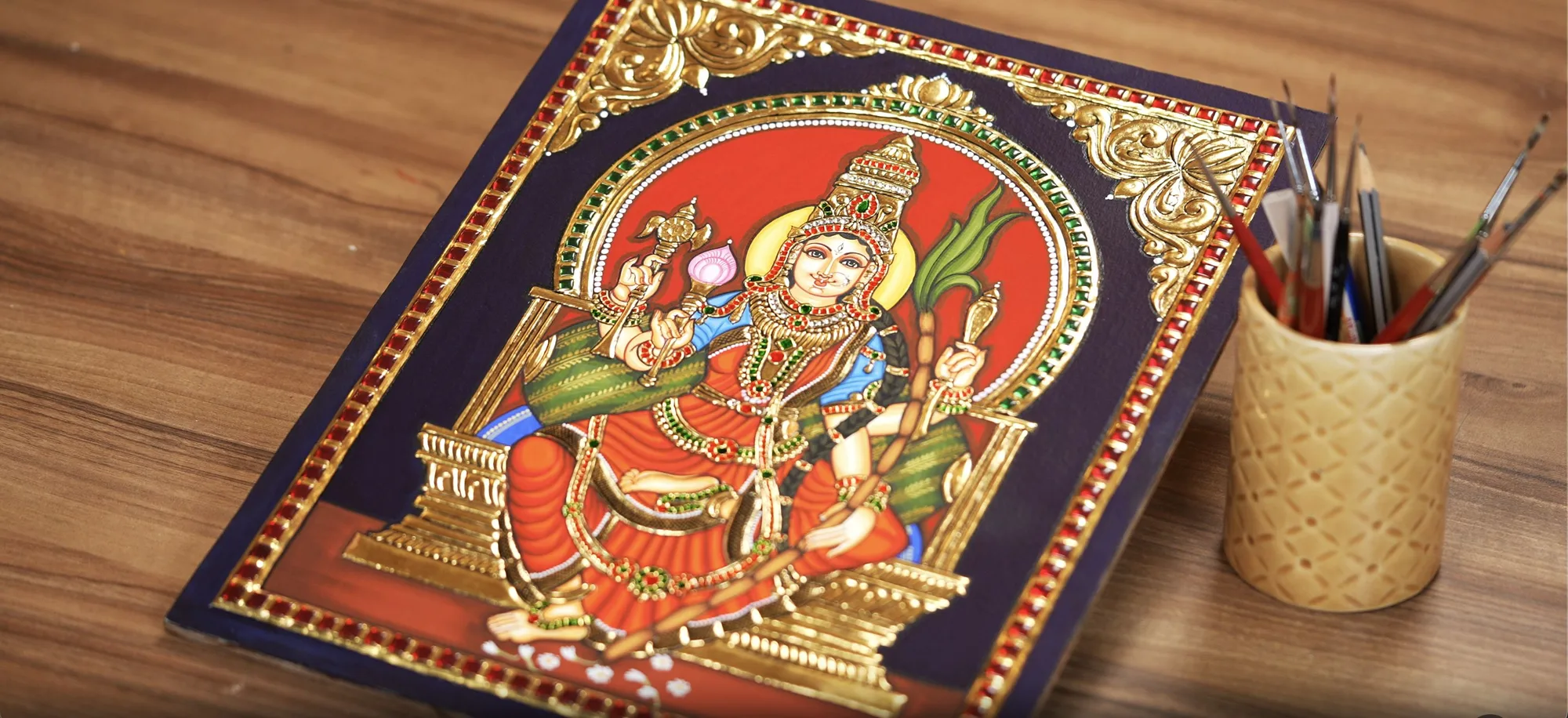
How to Start Selling Tanjore Paintings (With Your Own Designs)
Ready to sell your Tanjore paintings? Your own designs, where to start, and how to think about pricing.
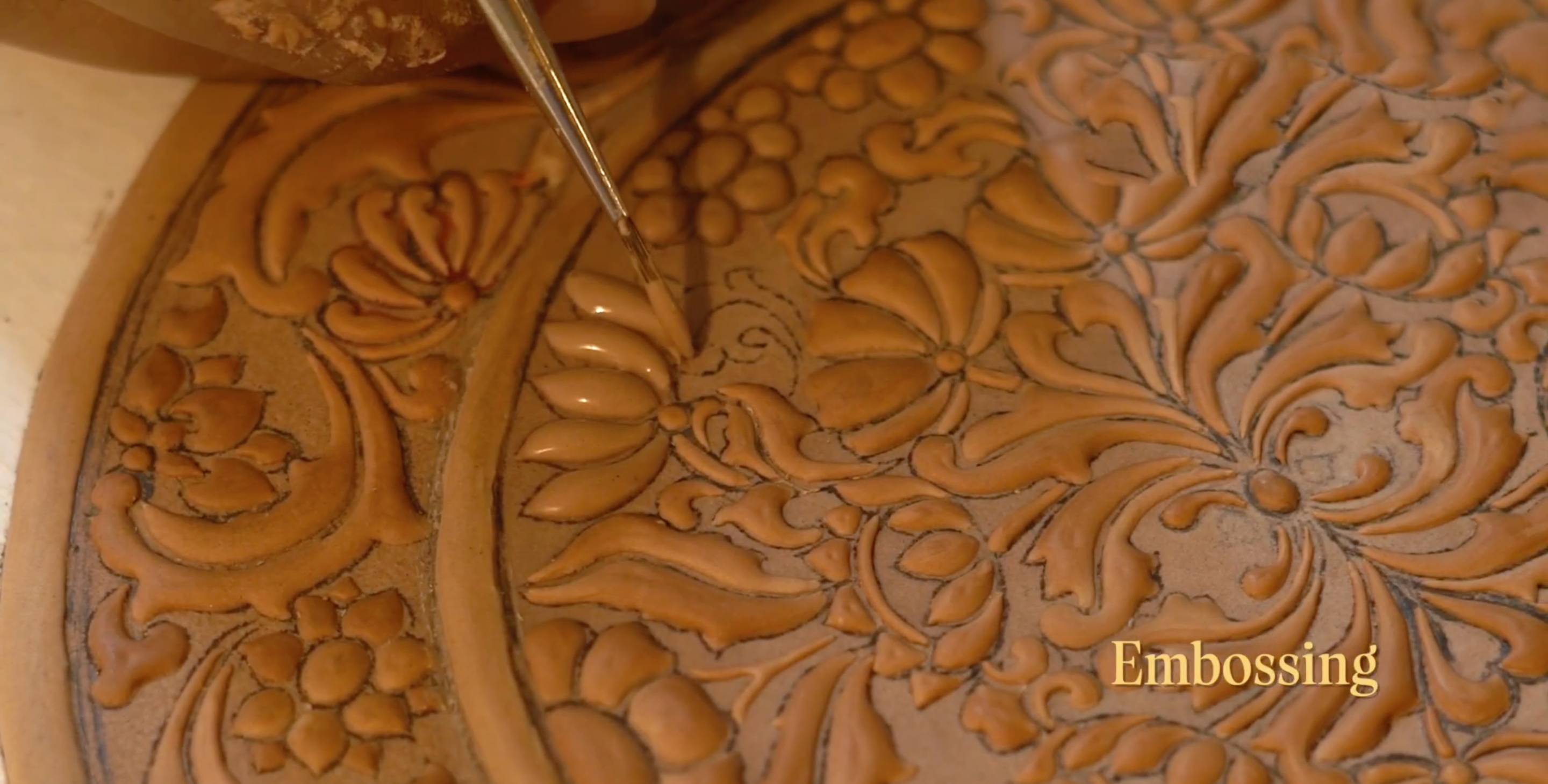
Tanjore Painting Gesso: What It Is and How It's Made
What gesso is, what it's made of, and how we build the raised relief of a Tanjore painting, step by step.
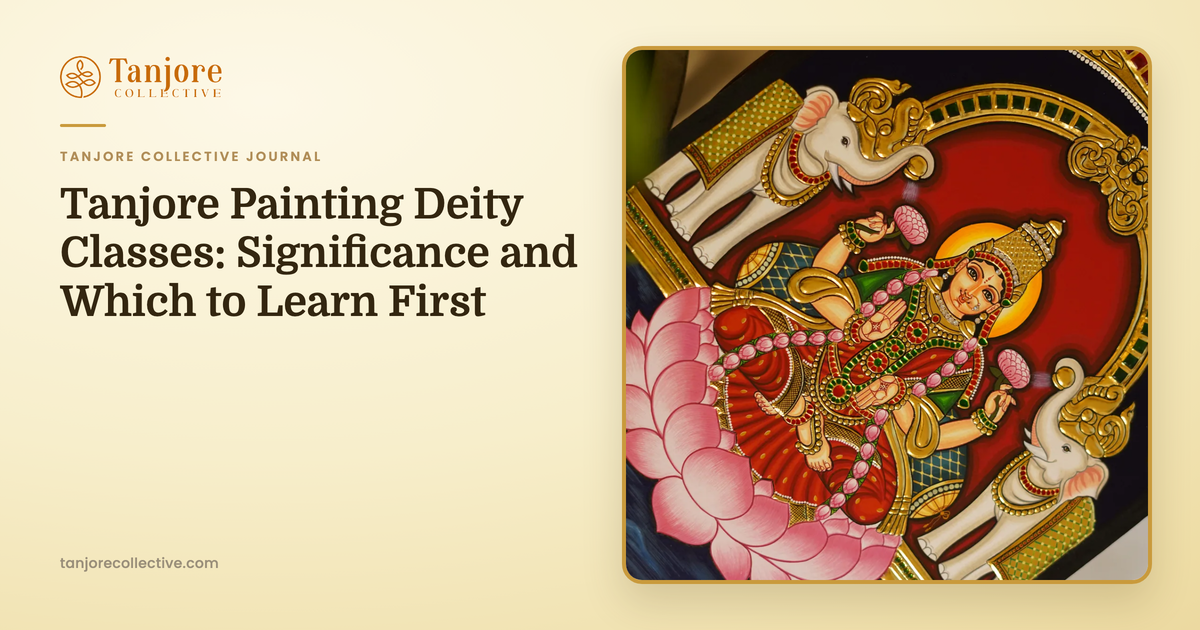
Tanjore Painting Deity Classes: Significance and Which to Learn First
The deities of Tanjore painting, what each represents, the festival it is loved at, and which is a gentle place to begin.
What our students say
Hear from students who've learned the art of Tanjore painting with us.