Tanjore Painting Sketches and Copyright: What You Can and Cannot Do
Written by
Vibha Raj
A clear, kind explainer on Tanjore painting sketches and copyright: why our designs are protected, what you can do commercially with your own or licensed sketches, and why it protects your work too.
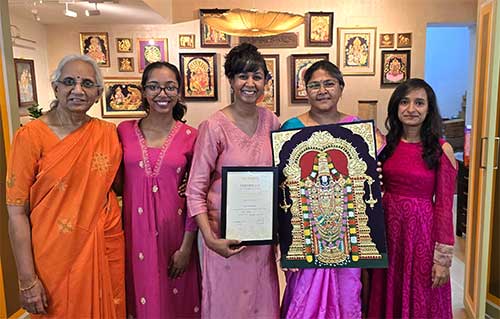
By Vibha Raj, Founder and Tanjore Artist at Tanjore Collective. Vibha learned the art from her mother, master artist Vani Bhaskar, and leads our studio and its teaching.
Key takeaways
- The sketches in our courses and kits are our own original, copyrighted designs, created over years of studio work.
- They're for your learning and your personal paintings. You're welcome to keep what you paint or give it as a gift.
- To sell your work, use sketches you've created yourself, or ones you've bought or licensed for that purpose.
- The traditional deities belong to everyone. What makes a painting yours is your own composition.
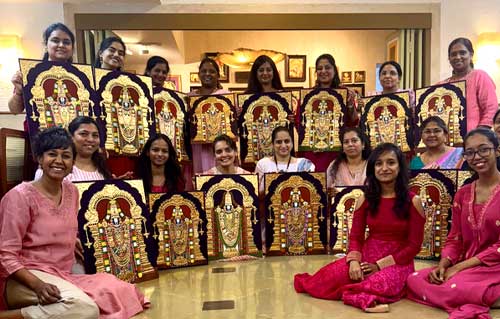
- We'd love to see you sell your work. Every artist and teacher on our team trained in our studio.
Sooner or later, many of our students ask us a version of the same question, often a little hesitantly. "I've finished my painting and people love it. Can I sell one like it?" It's a lovely question, because it means you've fallen for this art enough to want to share it. And it deserves a clear, kind answer.
So here it is. This guide explains why our sketches are protected, what you can do commercially, and why respecting the designs of other artists protects your own work too. If you're thinking about selling, our guide on how to sell Tanjore paintings picks up where this leaves off.
Can you copy or sell Tanjore painting sketches?
You can paint our sketches for yourself, but you can't copy them or sell paintings made from them, because they're our copyrighted designs. You can sell paintings made from your own sketches, or from sketches you've bought or licensed for commercial use.
| What you want to do | Is it okay? |
|---|---|
| Paint our course sketch for your home or pooja room | Yes, that's what it's for |
| Give your finished course painting as a gift | Yes |
| Use the techniques you learned in any of your own work | Yes, the skills are yours to keep |
| Paint the same deity from your own composition and sell it | Yes |
| Sell paintings using a sketch you've bought or licensed for that purpose | Yes, within the terms of that licence |
| Sell paintings made from our course sketch | No |
| Copy, trace or share our sketch for others to use | No |
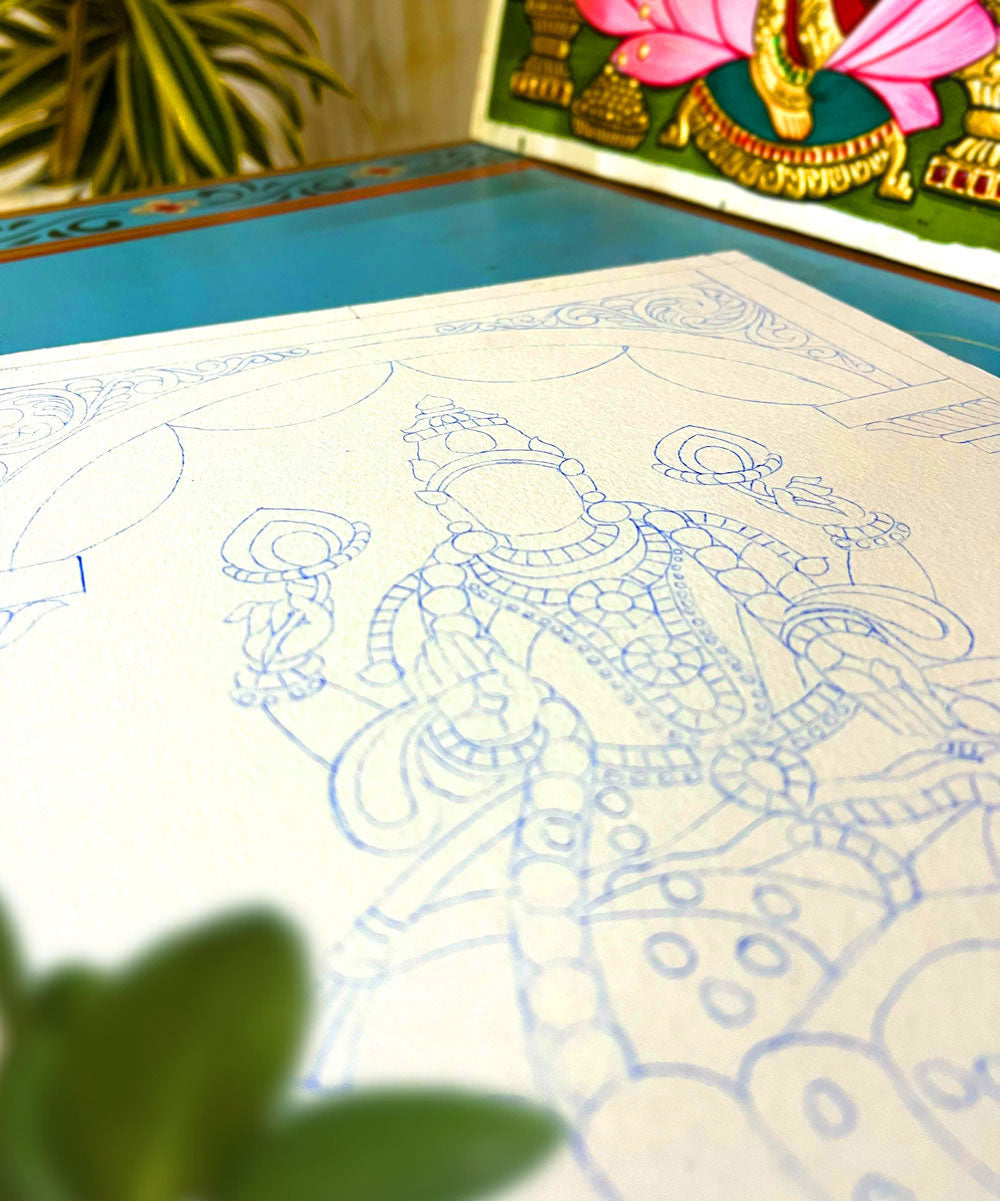
We teach the art, not a sketch to resell
When you learn with us, the deity is the subject, but the techniques are what you take home. You leave with skills that work on any painting you'll ever make.
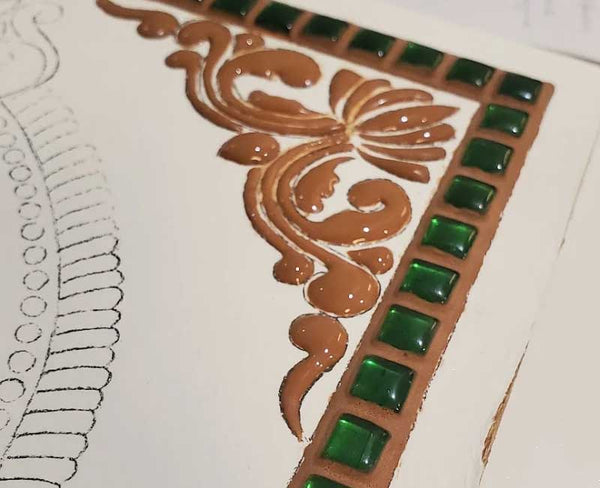
Our kits come with a pre-sketched board for a simple reason. Drawing a deity accurately, with the right proportions, is the single biggest hurdle that stops beginners before they even start. By giving you the sketch, we let you focus on what makes Tanjore painting distinctive: setting the kundan stones, building the gesso relief, laying 24 karat gold, painting and, finally, the face.
Those techniques don't belong to any one design. Once you've learned to raise crisp relief and lay gold smoothly on one deity, you can do it on any deity, in any composition you create. That's the real thing we're teaching.
Why are our sketches protected?
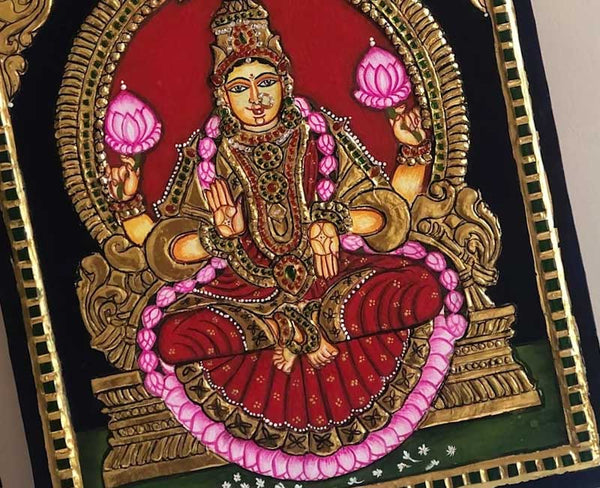
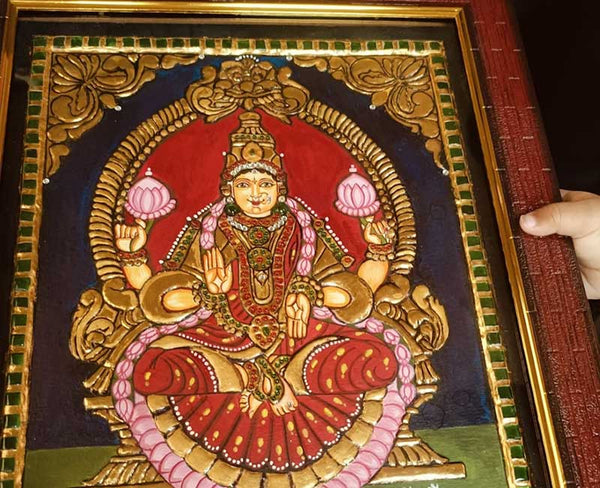
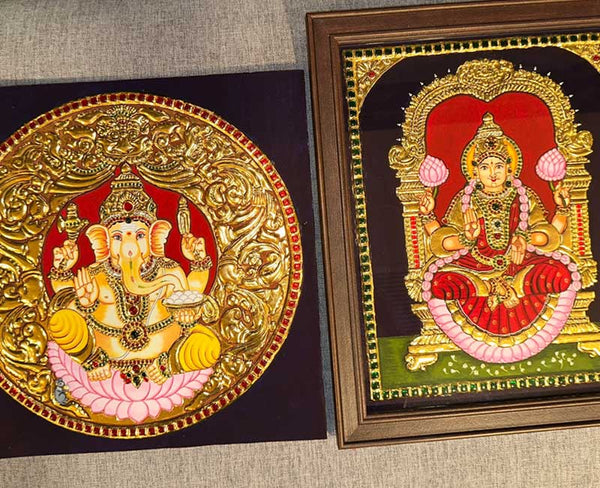
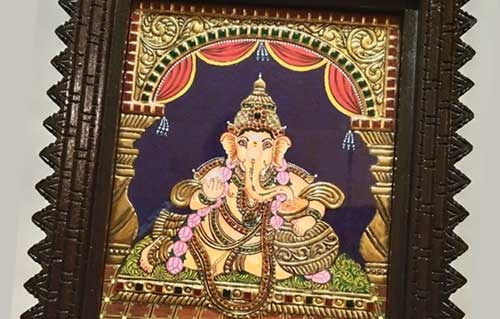
Our sketches are our own original designs, and they're protected by copyright. Each one is the result of years of studio work: choosing how the deity sits, how the arch frames the figure, where the ornaments, stones and gold go, and how it all comes together on the board.
A good Tanjore composition is a careful piece of design. The balance of the figure, the placement of the relief and the flow of the ornaments all affect how the finished painting looks and how it can be taught step by step. Our designs are shaped for both: to be beautiful, and to be learnable by complete beginners.
So when we ask students not to reuse our sketches in paintings they sell, it isn't about holding anyone back. It's about respecting the work that went into each design, in the same way any artist's original work deserves respect.
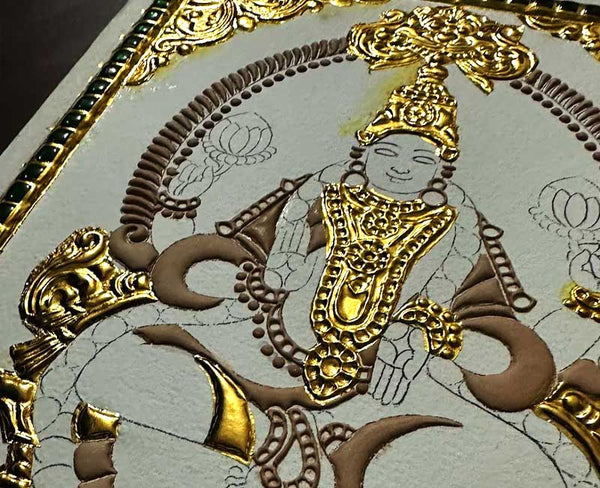
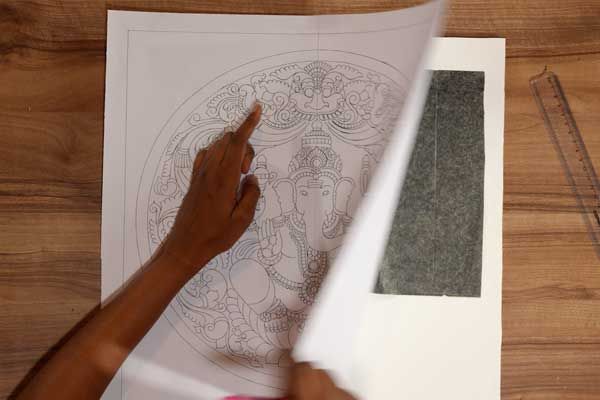
Watch: from sketched board to gold
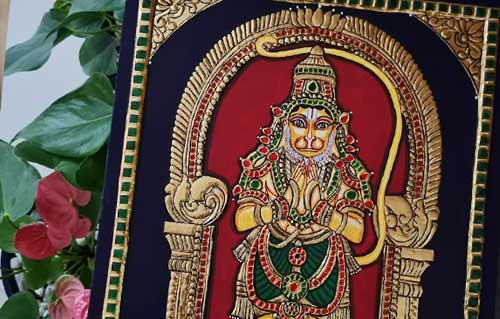
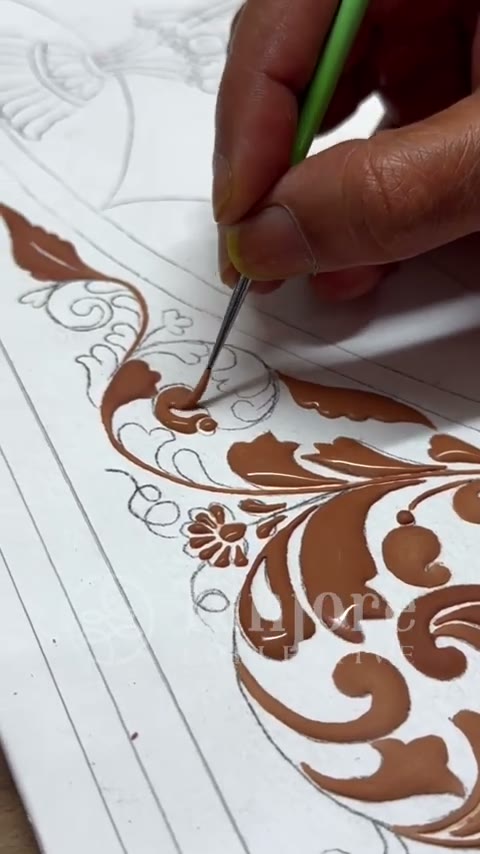
Here's how a sketched board begins to come alive in our studio, with stones and gold built on the outline.
What can you do commercially?
You can sell paintings made from your own designs, or from sketches you've bought or licensed for that purpose. That's the whole rule, and it opens up a lot.
Create your own designs
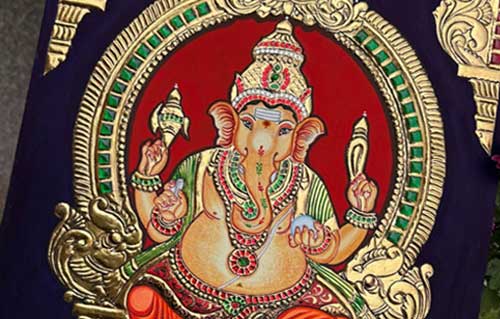
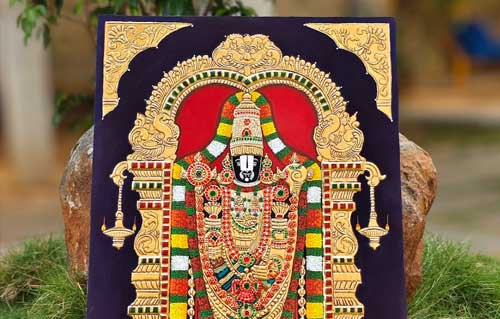
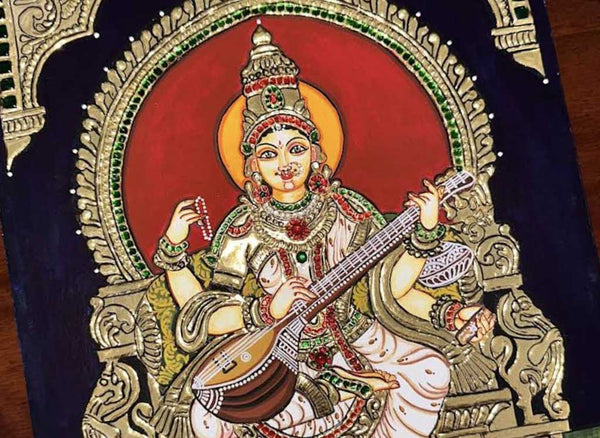
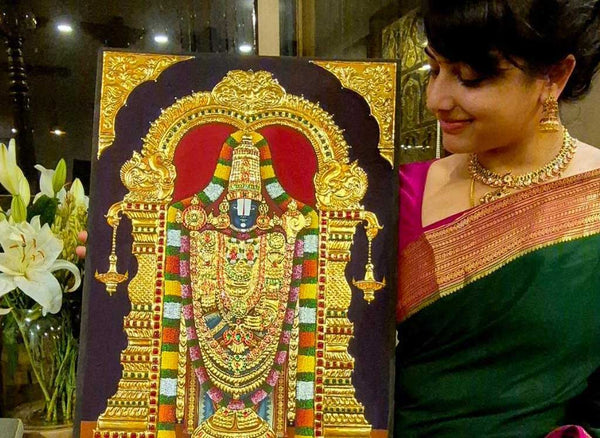
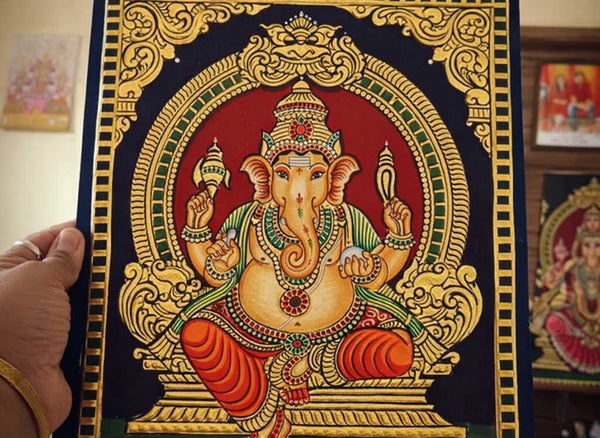
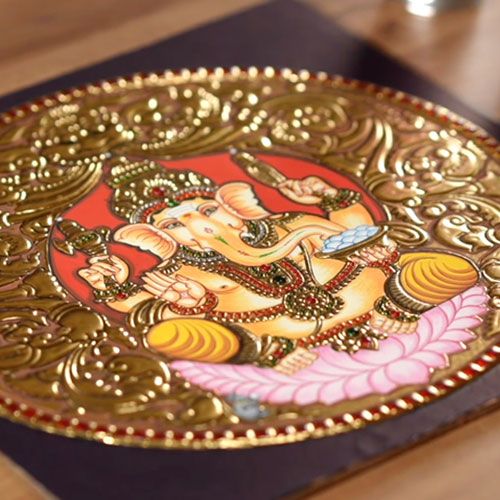
The traditional deities, Ganesha, Lakshmi, Saraswati, Balaji and the others, belong to everyone. What makes a painting yours is your composition: how you arrange the deity, the arch, the ornaments and the background. Start simple, with a single central figure in a composition you've drawn yourself. Your designs will grow with your confidence, and they're what turn a skilled painter into an artist with a recognisable hand.
Buy or license sketches
If you'd rather not draw your own yet, you can use sketches that are sold or licensed for commercial use. Read the terms, and keep a record of where each design came from. If you're ever unsure whether a sketch can be used in paintings you sell, assume it can't until you've checked. Our guide to owning your art and selling ethically covers creating, commissioning and licensing designs in more detail.
Keep your course paintings close
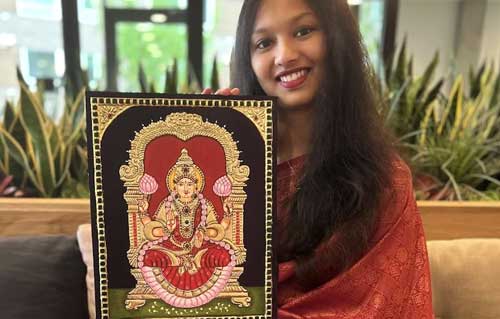
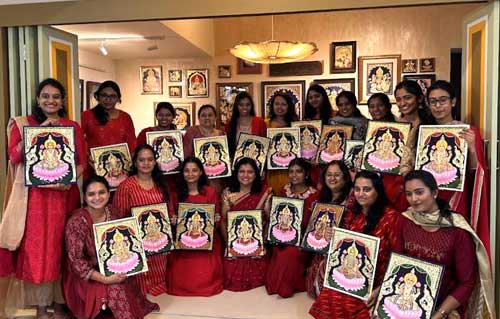
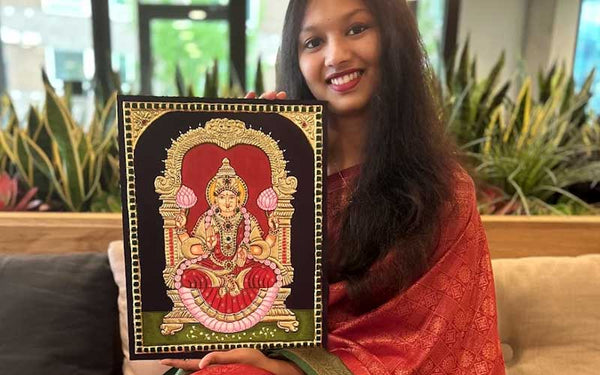
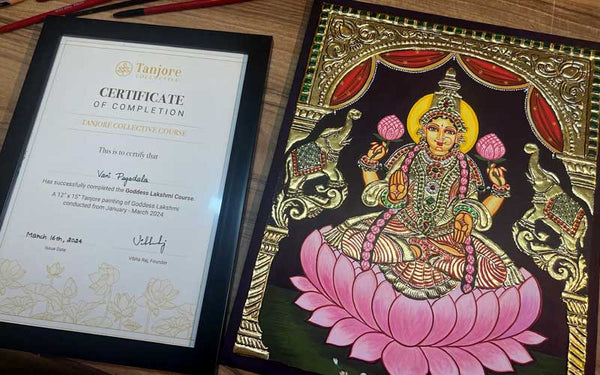
The paintings you make from our course sketches are wonderful to keep. Many students place them in their pooja room, or give them to someone they love. Those first paintings often mean the most, precisely because they're where your journey began.
Why this protects you too
The respect you give other artists' designs is the same respect you'll want for your own. As you start creating original compositions, they'll become part of your reputation. You'll want them to be yours.
There's a practical side too. Buyers of a Tanjore painting are making a considered, often devotional purchase, and they want to trust the artist. Being able to say "this design is my own" builds exactly that trust. And when you sell only work that's yours to sell, you never have to worry about where a design came from.
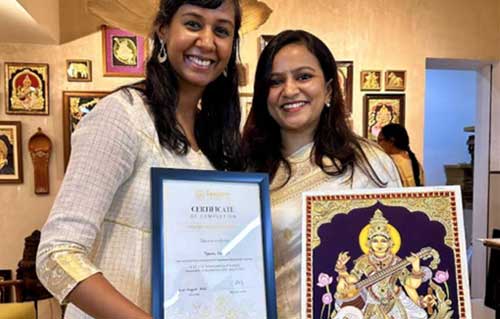
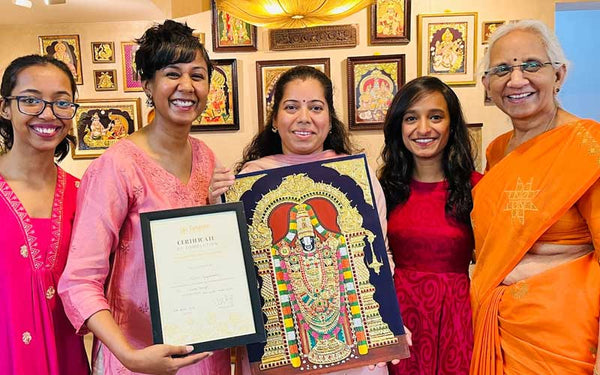
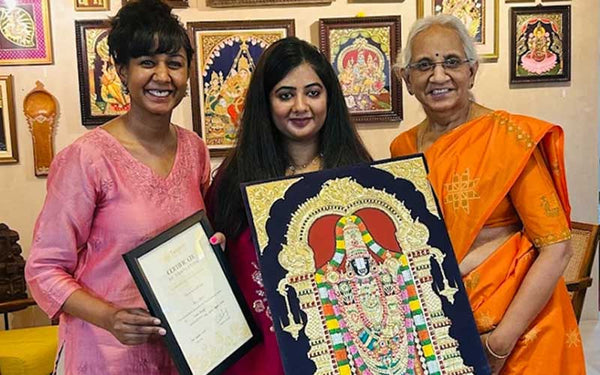
We'd genuinely love to see you sell your work. Every artist and teacher on our team trained in our studio, and the paintings our patrons commission are created by our professional commissioned artists. The path from student to professional is real. To see how it unfolds, read our guides on how to become a Tanjore artist and building a Tanjore painting career.
Frequently asked questions
Can I sell a painting using your sketch?
No. Our sketches are our copyrighted designs, made for your learning. You're welcome to keep your painting or give it as a gift. To sell, use a sketch you've created yourself, or one you've bought or licensed for commercial use.
Why are the sketches protected?
Each sketch is an original design that reflects years of studio work, shaped to be beautiful and to be learnable by beginners. Copyright protects that work, in the same way it would protect your own original designs.
Do you want students to sell their work?
Yes, very much. We'd love to see you build a practice with your own designs. Every artist and teacher on our team began as a student in our studio. Our guide on how to sell Tanjore paintings is a good place to start.
Can I sell a painting of the same deity?
Yes, as long as the composition is your own, or comes from a sketch you've bought or licensed for selling. The traditional deities belong to everyone.
Are Tanjore Collective's sketches trademarked or copyrighted?
They're our original, copyrighted designs.
More blog articles
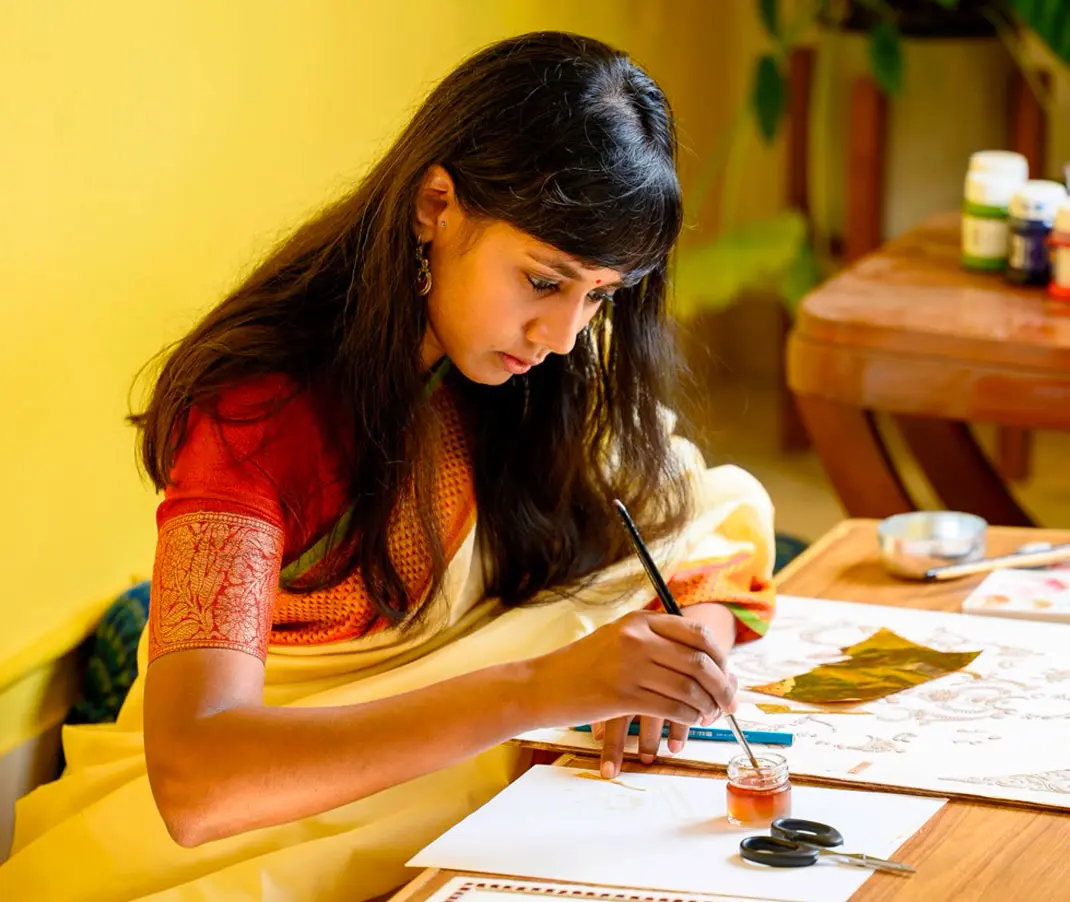
From Student to Commissioned Artist at Tanjore Collective
Who paints our commissioned Tanjore paintings, how commissions work, and the path to painting at that level.
What You Need to Start a Tanjore Painting Practice: Skills, Materials and Mindset
The skills, materials, mindset and set-up you need to start painting Tanjore seriously.
Tanjore Painting Colours and Brushes: What We Use and Why
Which paints and brushes go into a Tanjore painting, and the order a deity is coloured in.
What our students say
Hear from students who've learned the art of Tanjore painting with us.