Online vs Studio vs DIY Tanjore Painting Classes

Written by
Swathi Katta
Online, studio or self paced DIY? Here is an honest look at each, so you choose the right fit.
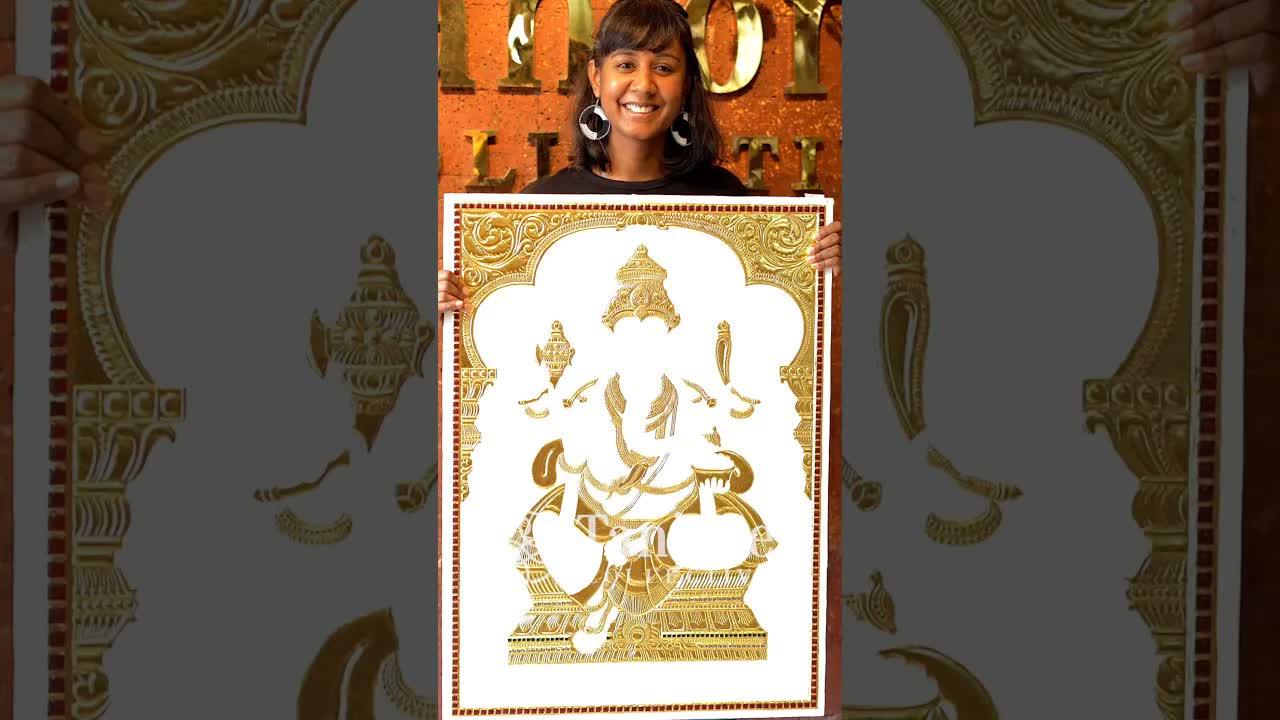
There are three ways to learn Tanjore painting with us: live online classes, in person studio classes, and self paced DIY video courses. All three teach the same techniques from the same lineage of master artists, and beginners do beautifully in each. The right one for you really comes down to three things: your schedule, your location, and the pace you enjoy working at. Here is an honest look at each format so you can choose with confidence.
Live online classes
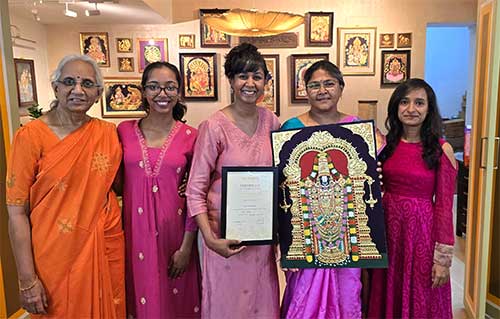
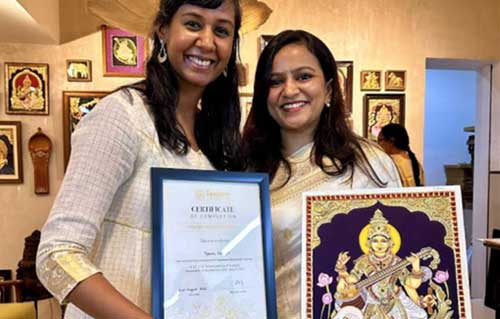
These are twice weekly live sessions over Zoom with a master artist guiding you in real time. The great advantage is that you get direct, live guidance from anywhere in the world, and you can ask questions and get corrections as you work. Every session is recorded and shared with you, and you keep access to the recordings for up to one month after the course ends, so a missed class or a stage you want to revisit is never a problem. The course is designed to take you from scratch, an optional materials kit ships to your door, and you receive a certificate on completion. This format suits people who want accountability and expert eyes on their work but cannot travel to a studio. Explore our online classes.
Studio classes in Bangalore
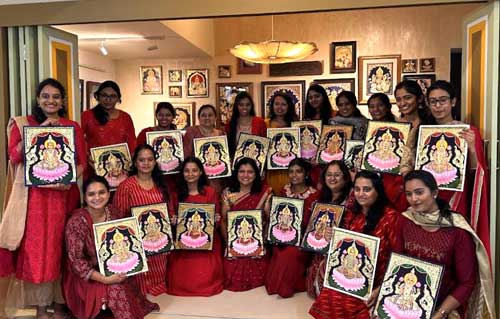
These are in person, hands on classes at our studio in Basavangudi, Bangalore. If you are local to the city and you love the energy of a shared table, with a teacher at your shoulder and other students working alongside you, this is the traditional way to learn. Many students find the in person setting the most calming and immersive of all, with no screen between them and the teacher. The trade off is simply location and a fixed schedule, so it suits people in and around Bangalore who can come in person.
Self paced DIY video courses
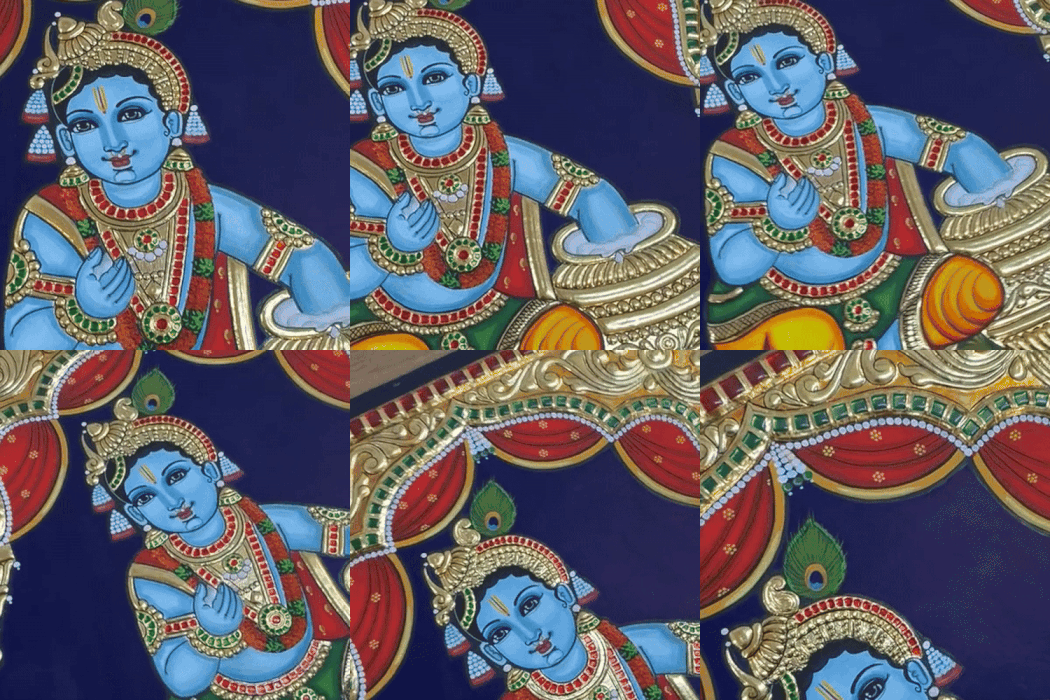
These are pre recorded video courses that you follow entirely on your own schedule. They are popular with international students and busy professionals who want to pause, rewind and paint whenever it suits them, without committing to a fixed class time. You trade the live guidance of an online or studio class for complete flexibility and the ability to learn at your own speed. For self motivated learners this is often the ideal fit. See our DIY courses.
So which should you choose?
- Want live guidance and a bit of accountability, from anywhere in the world? Choose live online.
- Local to Bangalore and drawn to the in person, shared table experience? Choose studio.
- Want full flexibility to learn at your own pace, on your own time? Choose DIY.
Whichever you pick, you are learning the same techniques from the same master artists, and every format is built to take a complete beginner all the way to a finished painting. If you are still deciding what to paint first, our beginner's guide will help.
If it helps to think in terms of people rather than features: the working professional in another city who wants real feedback tends to thrive in live online classes; the Bangalore resident who loves company and the feel of a shared studio table gravitates to in person classes; and the independent, self motivated learner who wants to paint at midnight if the mood strikes is happiest with a DIY course. None of these is a lesser path. They are simply different routes to the same finished painting, and plenty of students who start in one format come back later for another.
What is included in a Tanjore painting course
Across our formats a course is built to take you from nothing to a finished, framed worthy painting, and the practical inclusions matter when you are comparing options. Live online courses run as twice weekly sessions with a master artist, every session is recorded and shared, and you keep access to those recordings for up to one month after the course ends, so you can revisit any stage. An optional materials kit ships to your door, which means you paint with the correct gold, gesso, stones and brushes rather than sourcing them yourself. On completion you receive a certificate. Studio courses give you the same teaching in person in Bangalore, and DIY video courses give you the same techniques to follow at your own pace. In every case the destination is the same: a complete Tanjore painting you made yourself.
What the learning journey looks like
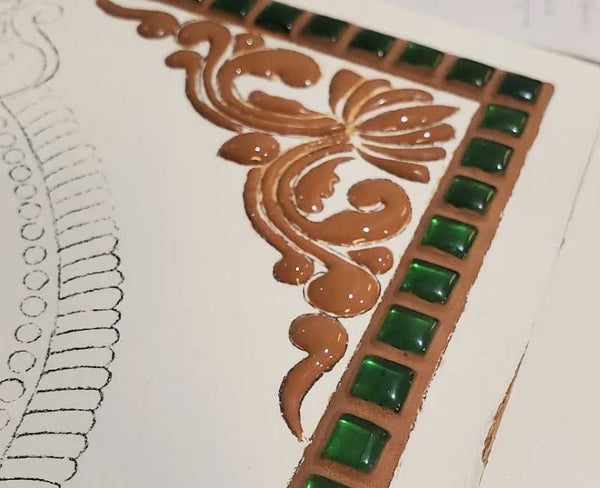
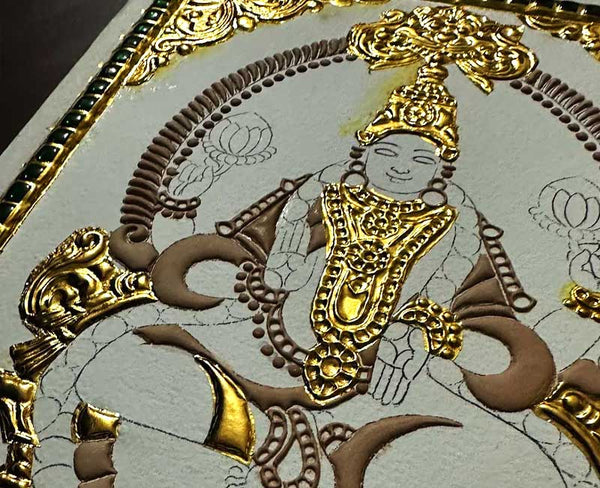
Whichever format you choose, the arc of a course is the same, because the painting itself dictates the order. You begin with the prepared, pre sketched board, build the gesso relief, set the kundan stones, lay the 24 karat gold foil, mix your colours and paint the deity, and finish with the face and the Swarovski crystals. A course painting takes about 6.5 weeks at an unhurried pace, and each session builds on the last. The difference between the formats is not what you learn but how you are supported while you learn it, live and in real time, in person, or on your own schedule. If you would like the full step by step, read how to make a Tanjore painting.
A closer look at live online classes
Live online classes have become the way many of our students learn, and it is worth understanding how they actually work. You join twice weekly sessions over Zoom, painting in real time alongside a master artist who can see your work, answer your questions and correct you as you go. Because the sessions are live, you get the immediacy of a real class without needing to travel. Every session is recorded and shared with you, and you keep access to those recordings for up to one month after the course ends, so if you miss a class or want to revisit the gold stage, it is always there. An optional materials kit ships to your door so you paint with the correct materials, and you receive a certificate on completion. For students who want expert guidance and a little accountability but cannot come to Bangalore, this format offers the best of both worlds.
A closer look at studio classes
For those who can come to us, our in person studio classes in Basavangudi, Bangalore, offer the most traditional way to learn. There is something about learning a centuries old craft in a shared physical space that many students find deeply calming and immersive: the teacher at your shoulder, other students working alongside you, and no screen between you and the work. You can watch the master artist's own hands demonstrate a technique, and get hands on correction in the moment. The trade offs are simply practical ones of location and a fixed schedule. If you live in or near Bangalore and are drawn to the shared table experience, studio classes are hard to beat.
A closer look at DIY video courses
Self paced DIY video courses give you the same techniques to follow entirely on your own schedule. Everything is pre recorded, so you can pause, rewind and repeat any stage as many times as you like, and paint whenever suits you, whether that is early mornings before work or late at night. This makes them especially popular with international students and busy professionals, for whom a fixed class time is difficult. The trade off, of course, is that there is no live teacher to ask in the moment, so DIY suits self motivated learners who are comfortable working independently. For many people that independence is exactly the appeal.
How to prepare for your first class
Whichever format you choose, a little preparation makes the first session smoother. Have your materials ready and organised, ideally the Essentials Kit so nothing is missing, and set up a clean, well lit table where your board can rest undisturbed between sessions. For online classes, test your Zoom setup in advance and position your camera so your teacher can see your work if needed. Come without pressure or any expectation of perfection: the first sessions are about preparation and the gesso, and the work builds gradually from there. Most of all, arrive ready to slow down and enjoy the process, because that unhurried attention is the heart of the practice.
Combining and continuing
The three formats are not mutually exclusive, and many students move between them over time. Someone might start with a DIY course to test the waters, then join a live online class for a more ambitious painting where real time guidance helps, while a Bangalore student might take a studio course and later use DIY videos to paint independently at home. Because every format teaches the same techniques from the same lineage of artists, skills carry over completely from one to another. There is no wrong order and no wrong combination. The right path is simply the one that fits your life at each stage, and it is perfectly normal for that to change as your confidence grows.
Which format is best for beginners?
A question we hear constantly is whether beginners can really succeed in each format, and the honest answer is yes, all three are built to take a complete beginner to a finished painting. That said, if you value having an expert catch small mistakes as you make them, a live online or studio class gives you that reassurance in real time. If you are self motivated and like working at your own pace, a DIY course serves you just as well. None of the formats assumes prior experience, none of them requires you to know how to draw, since the boards come pre sketched, and all of them move through the same patient, learnable sequence. Choose based on how you like to learn, not on any worry about your skill level.
What you receive on completion
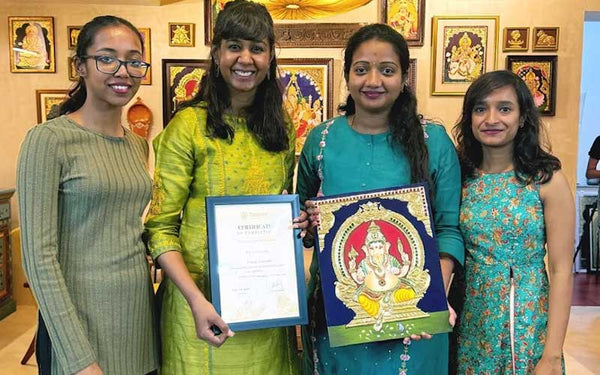
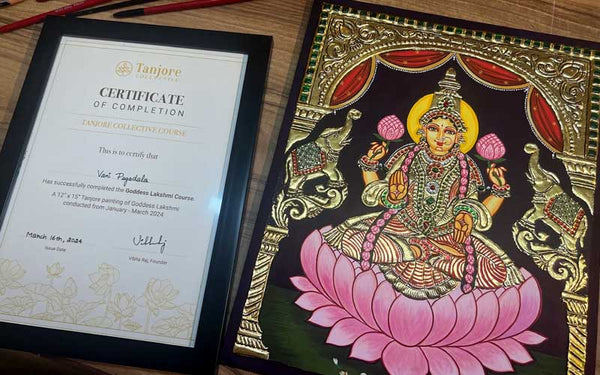
Finishing a course leaves you with more than memories. You will have a complete Tanjore painting made by your own hands, with real 24 karat gold, ready to hang or to place in your pooja room. From our live online courses you also receive a certificate on completion, and you keep access to the recorded sessions for up to a month afterward to revisit anything you wish. Perhaps most valuable of all, you take away the beginnings of a genuine skill in a centuries old art, and a calming practice you can return to again and again. For a great many of our students, the first course is only the beginning.
Fitting a course into your life
One of the reasons Tanjore painting suits so many different people is that it does not demand a great deal of time all at once. A guided course runs on twice weekly sessions over about six and a half weeks, with drying time built into the process between stages, so it fits comfortably alongside a job or a household. If even that fixed rhythm is difficult, a DIY course lets you set the work down and pick it up entirely on your own terms. Whichever way you learn, the pace is meant to be unhurried, and that gentleness is part of what makes the practice restorative rather than one more thing to rush through.
Frequently asked questions
Can beginners learn Tanjore painting online?
Yes. Our online courses take you from scratch, sessions are recorded, and an optional kit ships to you.
Do I get materials with an online class?
The materials kit is optional and ships to your door. You also receive a certificate on completion.
How long do I keep access to the online recordings?
You keep access to the recorded sessions for up to one month after the course ends.
Is DIY harder than live classes?
Not harder, just more independent. You control the pace, which many students prefer, but there is no live teacher to ask in the moment.
Still deciding? See Tanjore painting for beginners, or read what is Tanjore painting for the full picture.
More blog articles
What is Tanjore Painting? A Complete Guide
A clear, first-hand guide to Tanjore painting: what it is, how it is made, and why it glows.
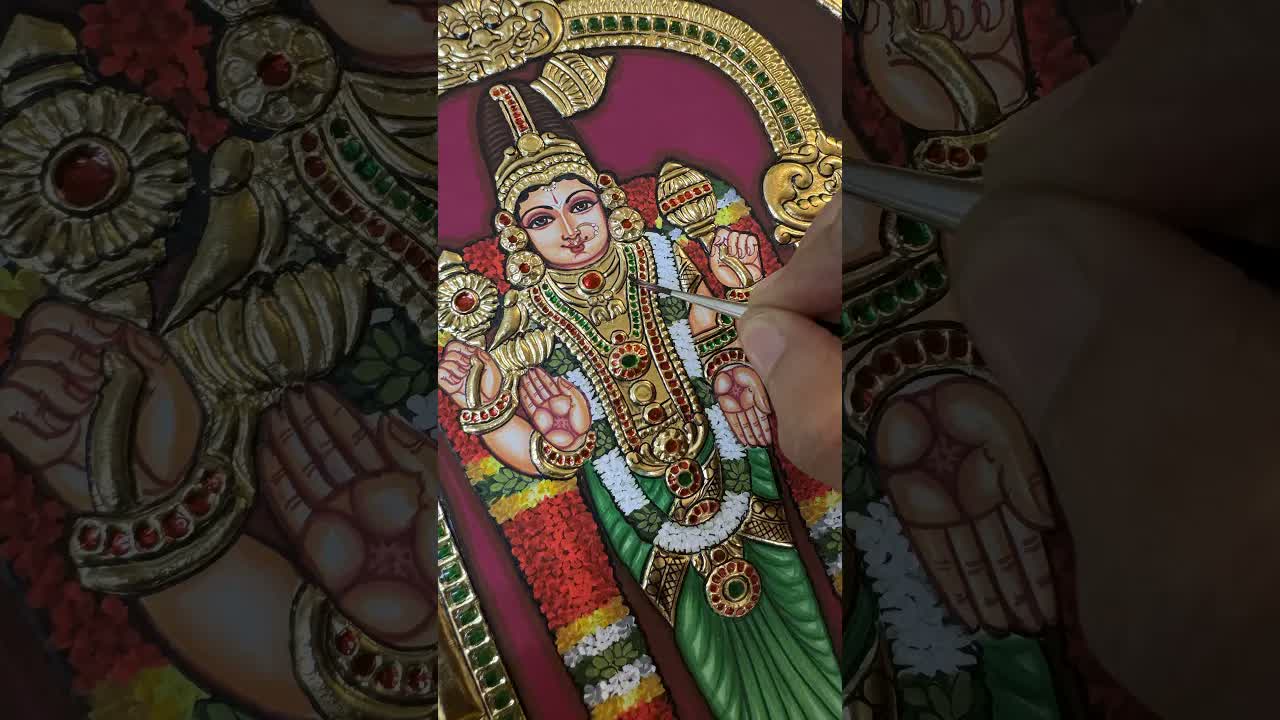
Tanjore Painting for Beginners: Where to Start
A gentle starting point for complete beginners, even if you have never held a brush.
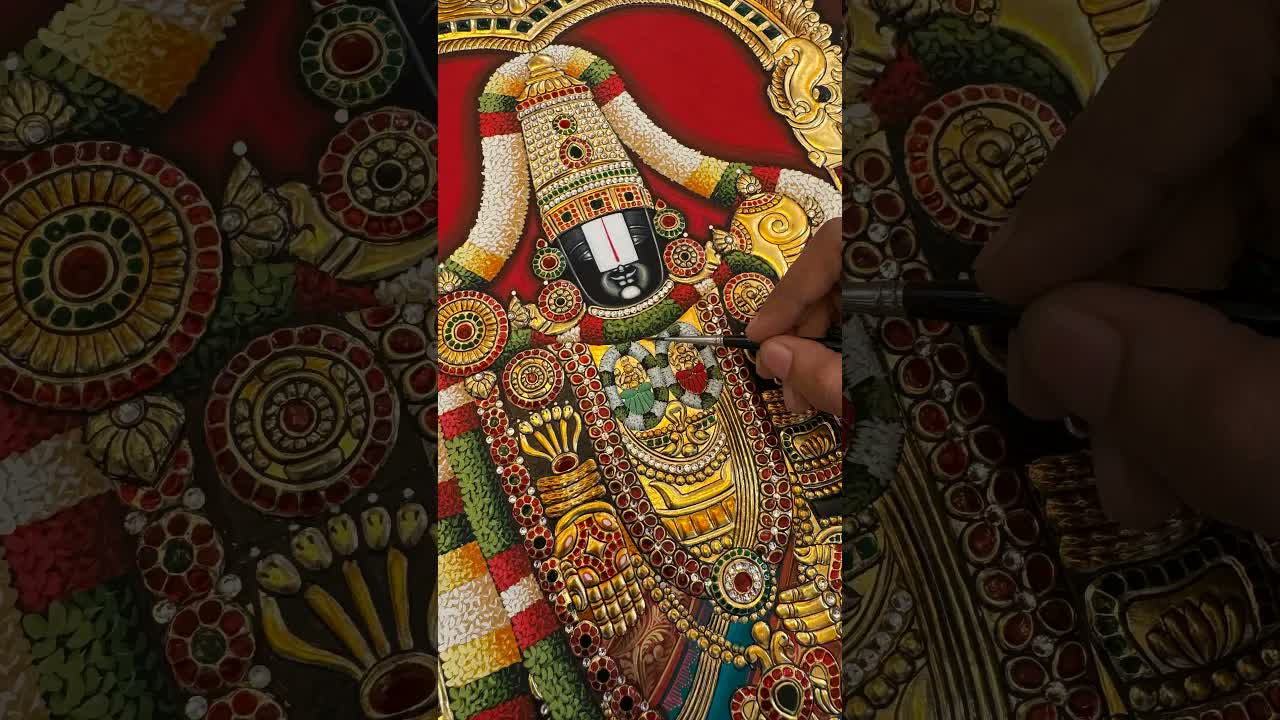
How to Make a Tanjore Painting: Step by Step
The real step-by-step process we teach, from a prepared board to the final face.
What our students say
Hear from students who've learned the art of Tanjore painting with us.