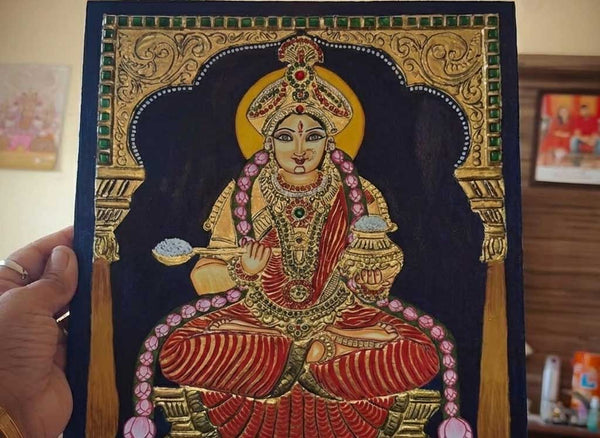
Tanjore Painting for Beginners: Where to Start

Written by
Swathi Katta
If you have always wanted to try Tanjore painting but felt it was too hard, this is for you.
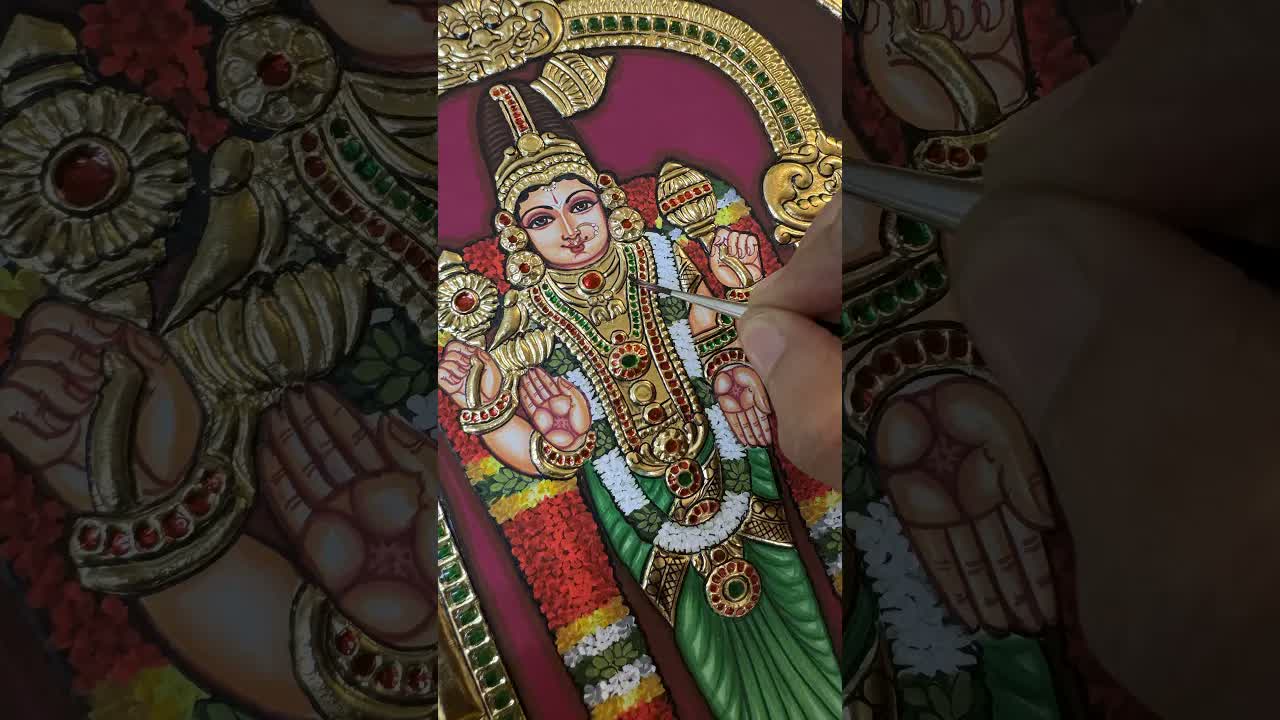
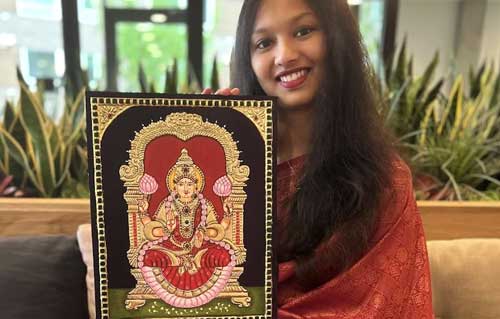
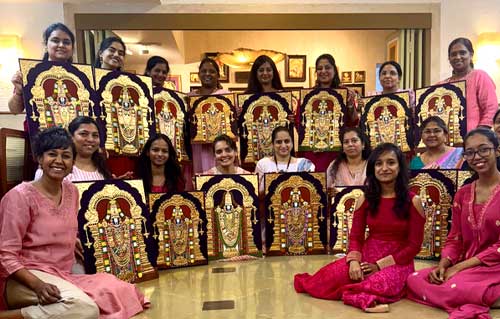
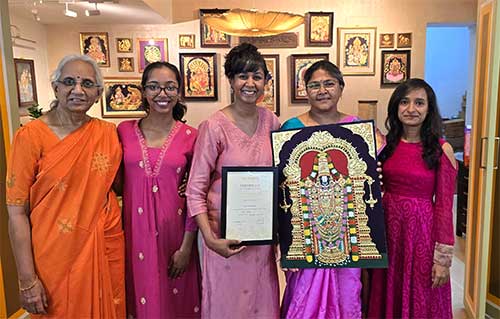
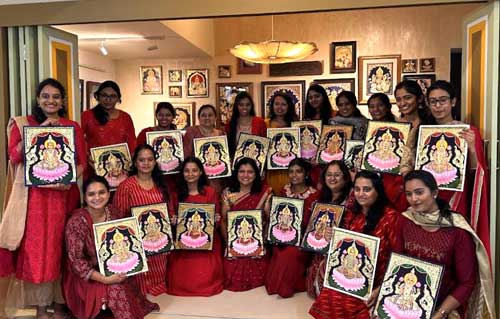
If you have looked at a Tanjore painting and thought it was beautiful but far beyond you, we understand the feeling completely. Most of our students felt exactly that on their first day. And most of them had never painted anything before. Here is the honest and encouraging truth: you can learn Tanjore painting as a complete beginner, and you can finish a real deity you will be proud to hang. Over more than 40 years we have taught this to over 4,000 students, and the great majority started with no art background at all.
Do I need to be able to draw?
No. This is the question we hear most often, and the answer is a clear no. Our kits arrive with the board already sketched, so the deity is drawn for you before you begin, and the technique itself is taught step by step. What you actually bring to the table is patience and a willingness to work carefully, not a natural gift for drawing. Removing the drawing hurdle is deliberate, because it is the thing that stops most people before they even start, and once it is out of the way the real craft of Tanjore painting is very learnable.
What will my first weeks look like?
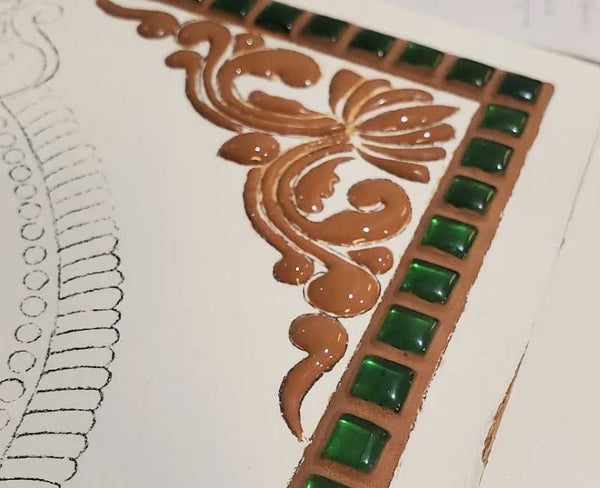
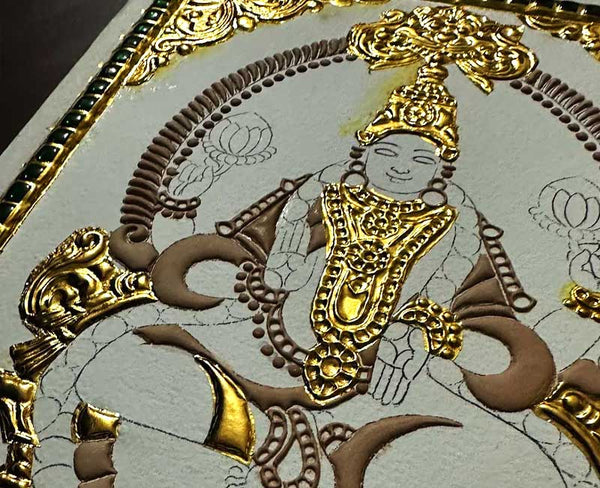
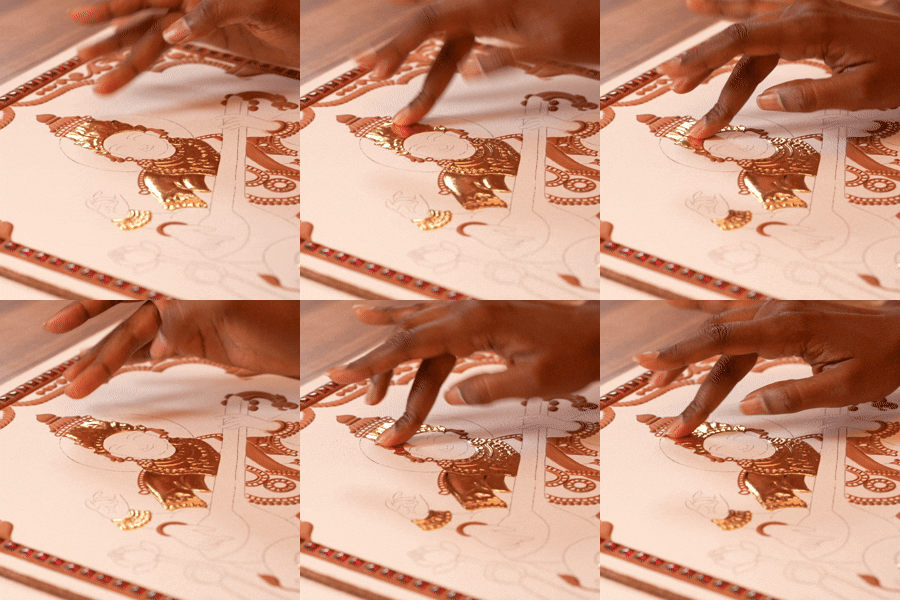
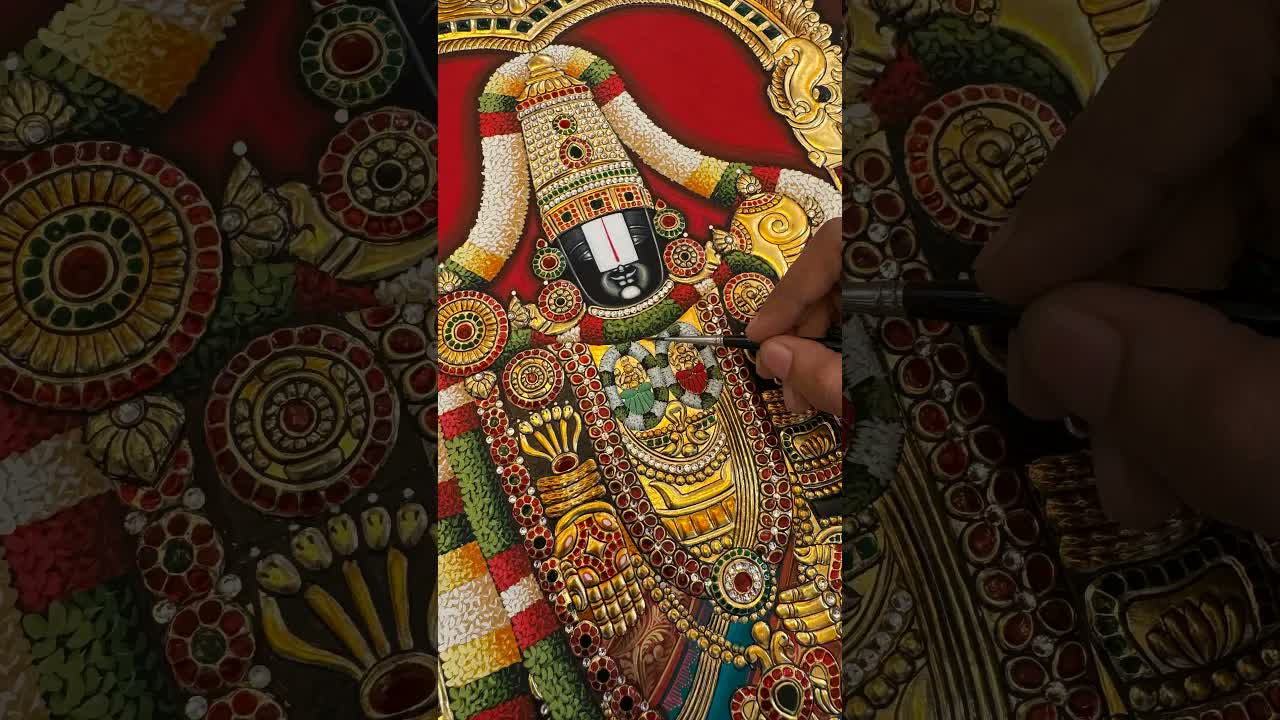
You will move through a clear sequence. First you prepare or work on the sketched board, then you build the raised ornaments in gesso, set the kundan stones, lay the 24 karat gold foil, and finally paint, with the face saved for the very last. Each step builds the skill and the confidence for the next, so the work never feels like a leap. A first painting in a guided course takes about 6.5 weeks of sessions, at an unhurried pace. We walk through the whole thing stage by stage in how to make a Tanjore painting.
Which deity should I paint first?
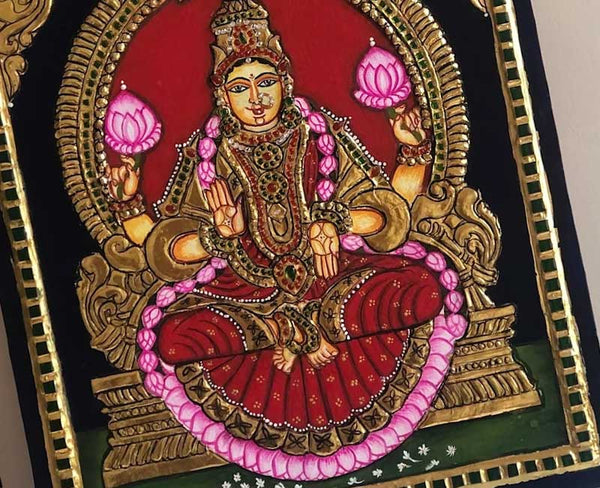
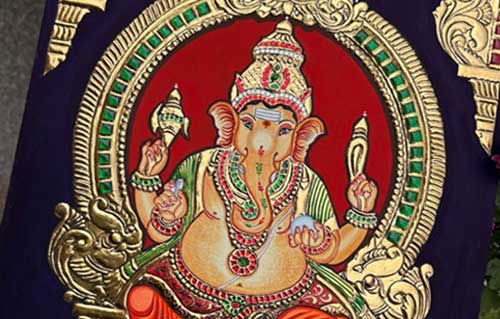
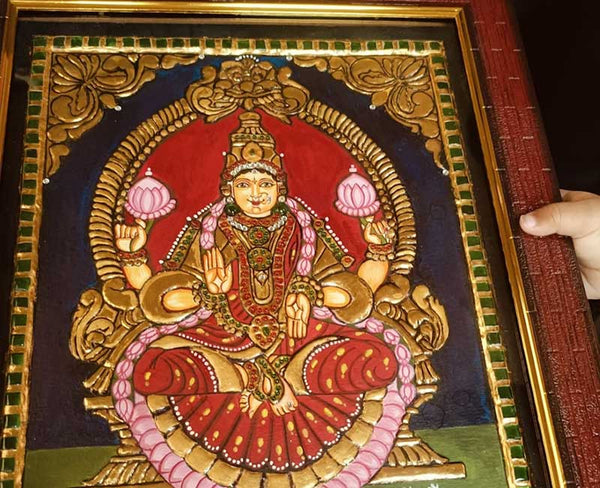
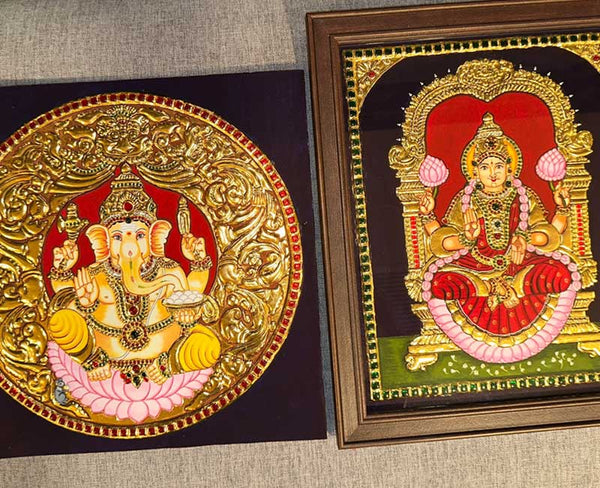
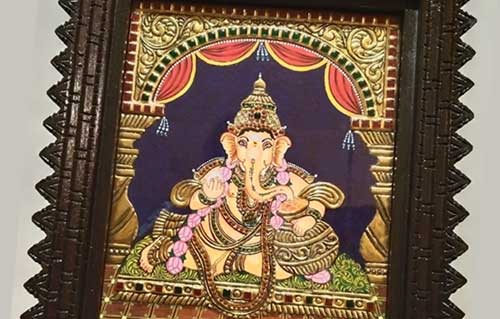
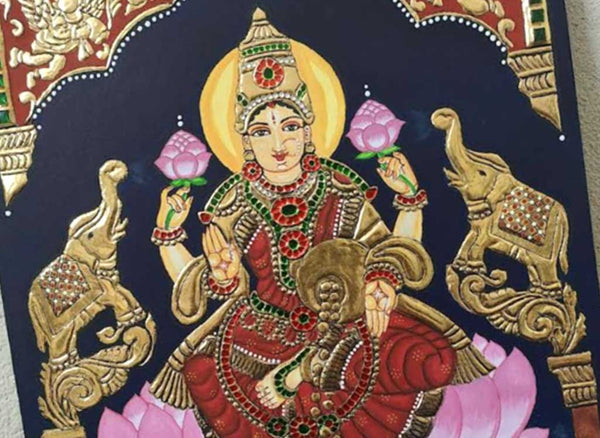
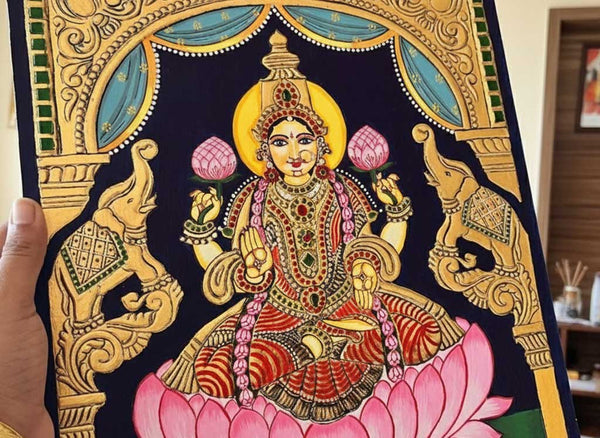
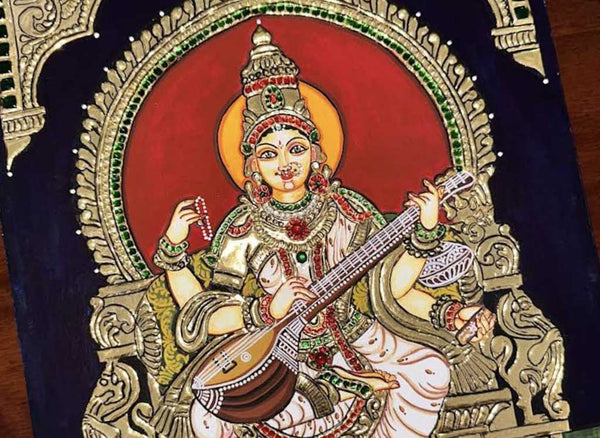
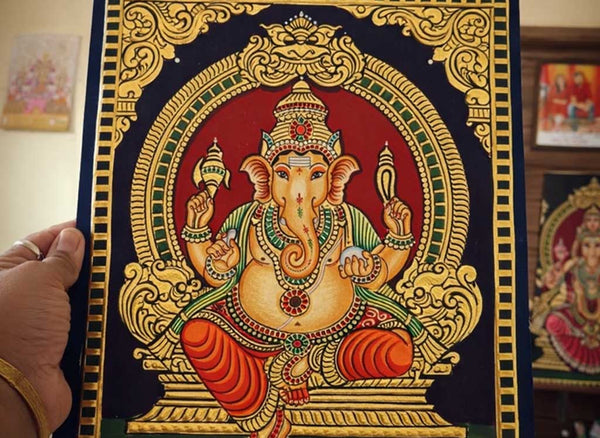
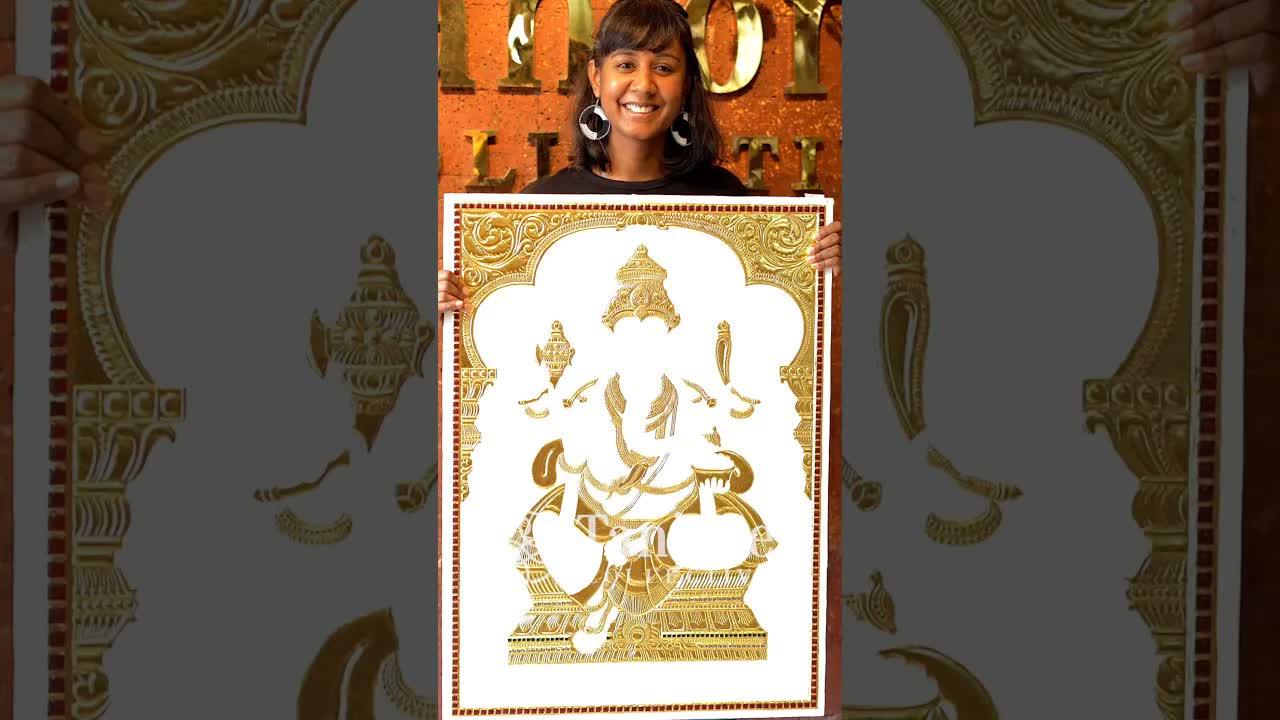
Choose one that means something to you, because that bond is what carries you through the patient stretches of the work. Ganesha is a much loved first painting, both for his significance as the remover of obstacles and because his form is forgiving for a beginner. Lakshmi and Saraswati are gentle, graceful choices too, and very popular for the home. There is no single correct answer here. The deity you feel drawn to is usually the right one to start with.
How should I learn: on my own or with a teacher?
You have three good options, and beginners do beautifully in all of them. You can take a self paced DIY video course and work entirely on your own schedule. You can join live online classes over Zoom, twice a week, with a master artist guiding you in real time. Or you can attend in person studio classes at our studio in Basavangudi, Bangalore. The right choice depends on your schedule, your location and the pace you enjoy. We compare all three honestly, with their trade offs, in online vs studio vs DIY classes.
What materials will I need?
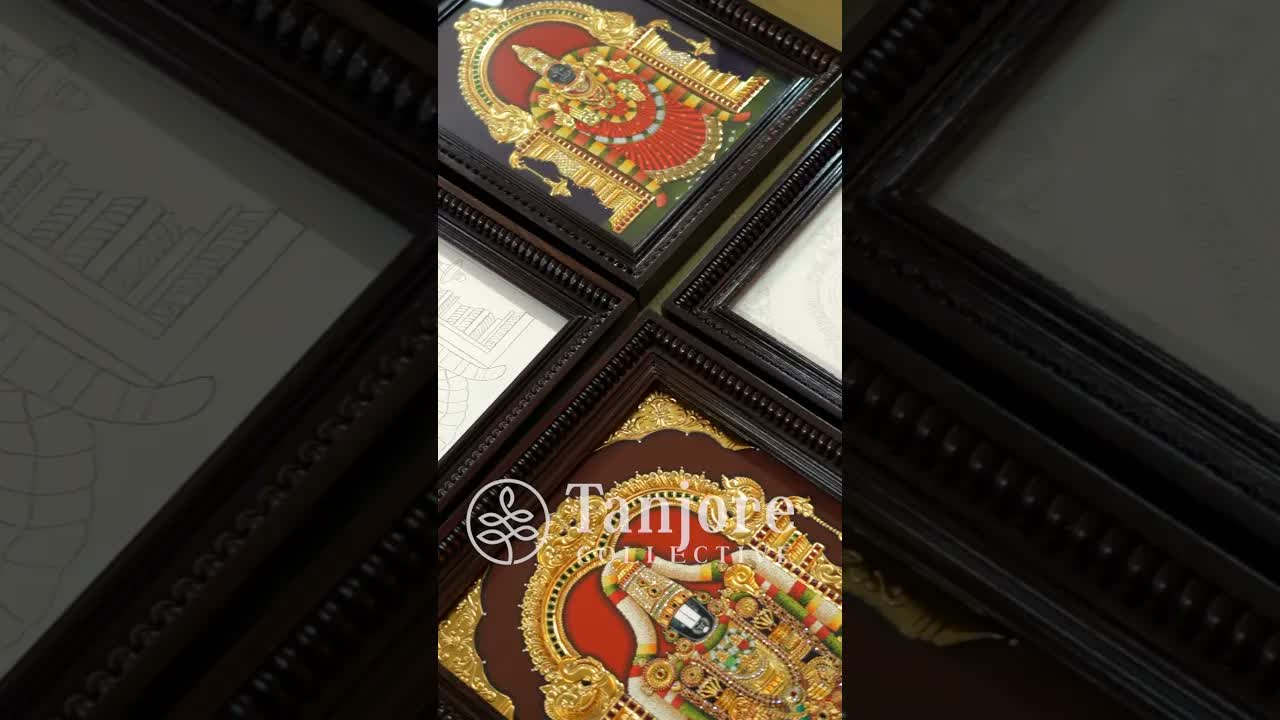
You will need a pre sketched board and the right materials: 24 karat gold foil, chalk powder and Arabic gum for the gesso, kundan stones, Swarovski crystals and good brushes. The simplest way to get everything correct and in the right quality is our Essentials Kit, which brings all of it together and ships to your door. If you would like to understand what each material does before you buy, read the materials guide, or see the material kit itself.
Is it stressful or relaxing?
Students describe it again and again as calming, even meditative. Many people come to Tanjore painting for exactly that reason: a quiet, absorbing practice that gives them a couple of hours away from a busy life and a screen. It does ask for patience, especially through the gesso and gold stages, but that slowness is the point, and what it gives back is a real sense of peace along with a finished heirloom.
How much time and space do I need?
Less than most people expect. A guided course runs on twice weekly sessions over about 6.5 weeks, so it fits comfortably alongside a job or a household. You do not need a dedicated studio either. A clean, well lit table where you can leave your board undisturbed between sessions is enough, since the painting is built up in stages with drying time in between. The main thing the practice asks for is a little regular, unhurried time, rather than a big block of it all at once.
What if I make a mistake?
Nearly every beginner worries about this, and it is far less of a problem than it feels. Because the work is built in stages, most early missteps can be corrected before you move on, and your teacher, whether live online or in the studio, will catch and guide you through them. The most important habit is simply to work in order and not rush, especially through the gesso and gold stages. Mistakes are part of learning any craft, and Tanjore painting is forgiving enough that a first painting still comes out as something you are genuinely proud to hang.
Your first painting, week by week
It helps to know what the six and a half weeks of a first course actually feel like from the inside. The early sessions are about preparation and the gesso relief, learning to build the raised ornaments patiently and letting them dry. This is where you first feel the painting becoming three dimensional under your hands. The middle stretch brings the kundan stones and then the gold foil, which is the part almost everyone falls in love with, watching the crown and jewellery turn to gold. After that comes colour: mixing the palette and painting the deity's garments and background over a few sessions, building depth layer by layer. And finally, the face, painted last and slowest of all. Knowing this arc in advance takes away a great deal of the anxiety, because you can see that the work is a steady, understandable progression rather than one overwhelming task.
What skills you actually build
You may be surprised by what learning Tanjore painting teaches you, and by how little of it is about natural artistic talent. The real skills are patience, a steady hand, an eye for placing stones and detail, and the discipline of working in order and letting each stage finish before the next begins. You learn to mix colour consistently, to handle delicate gold foil, and to slow down enough to do fine work well. These are all learnable skills, built through the sequence of the painting itself, which is precisely why complete beginners succeed at it. Nobody is born knowing how to lay gold leaf. It is taught, step by step, and it is very much within reach of anyone willing to be patient.
Getting past the fear of the hard stages
Almost every beginner feels a flutter of nerves before the gesso and the gold, because these feel like the stages where things could go wrong. The reassuring truth is that both are far more forgiving than they look, especially with guidance. The gesso is built up gradually and can be corrected before it dries. The gold is laid patiently, and small imperfections are a normal part of learning rather than a disaster. Your teacher, whether live online or in the studio, is there precisely to steer you through these moments. The trick is simply to work slowly and in order, and to trust the process. Students who felt most daunted by the gold stage are very often the ones who end up loving it the most.
Setting yourself up to succeed
A few simple things make a first painting go well. Give yourself a clean, well lit table where the board can rest undisturbed between sessions, since the work is built up in stages with drying time in between. Keep your materials organised and in good condition, especially your fine brushes, which are what let you achieve a clean face and detailing. Treat your session time as something to look forward to rather than something to rush through. And choose a deity you feel genuinely connected to. None of this requires a studio or special talent, just a little regular, unhurried time and the willingness to follow the steps in order.
Do I need to buy everything separately?
No, and this is one of the things that makes starting easier than people expect. Rather than tracking down gold foil, chalk powder, Arabic gum, kundan stones, crystals and the right brushes one by one, our Essentials Kit brings all of it together in the correct quality, with the board already sketched, and ships it to your door. That means you can begin with confidence that nothing is missing and nothing will let your first painting down. If you would like to understand what each material does before you start, our materials guide explains them all in plain terms.
Can I learn if I am not in India?
Yes. A great many of our students live outside India, and Tanjore painting travels well. Our live online classes run over Zoom, the sessions are recorded so time zones need not be a barrier, and the materials kit ships to your door wherever you are. Self paced DIY video courses suit international learners especially well, because you can paint whenever it fits your day. Distance is no obstacle to learning this art properly, and our guide to online, studio and DIY classes will help you pick the format that fits your life.
What you will have at the end
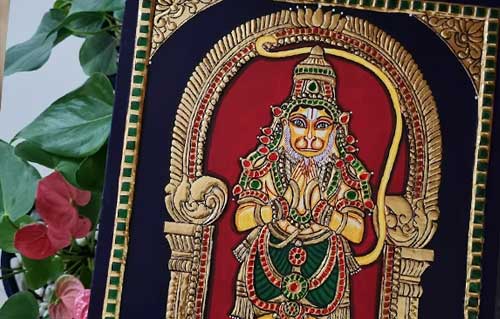
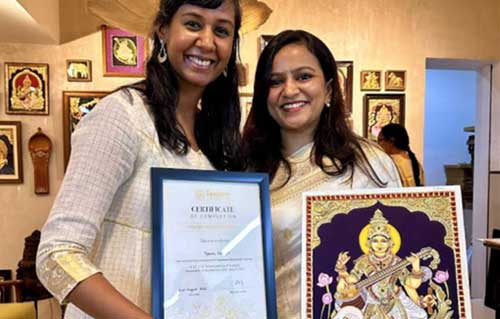
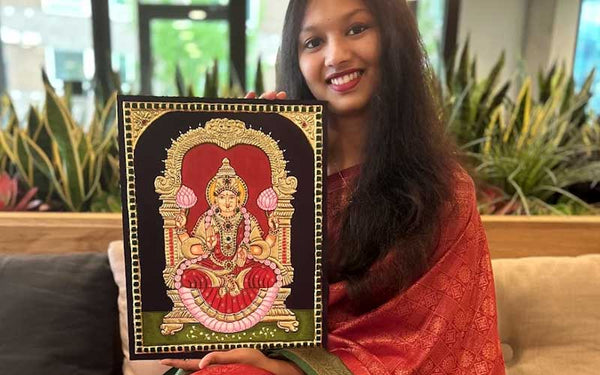
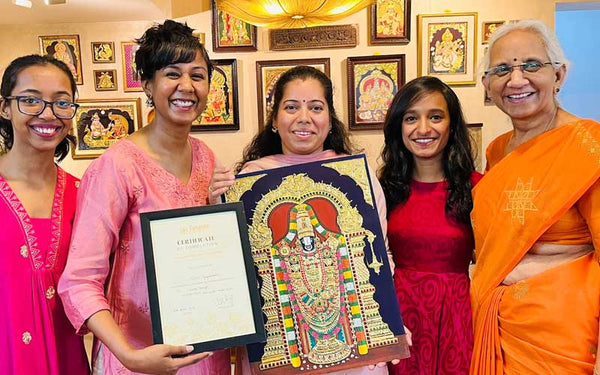
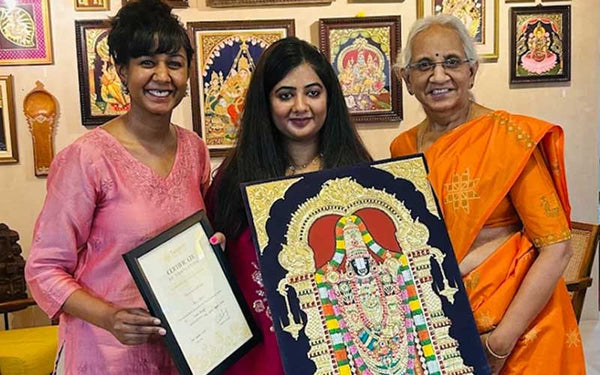
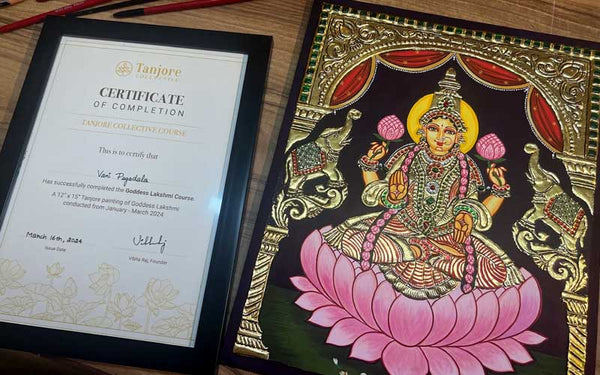
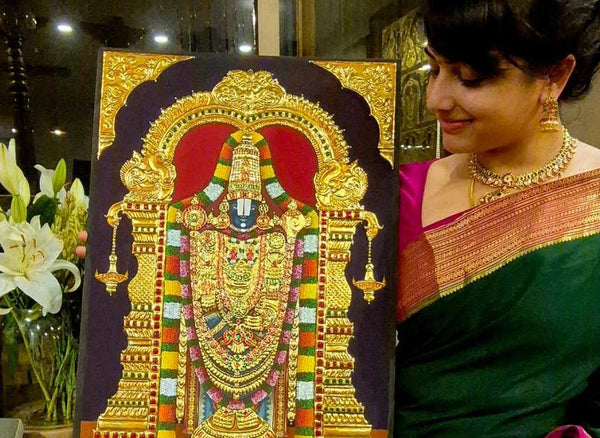
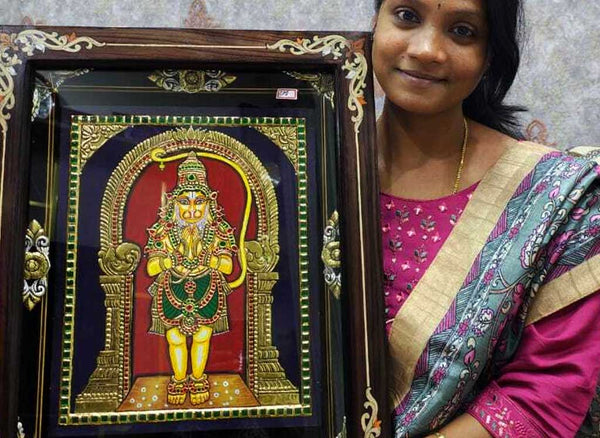
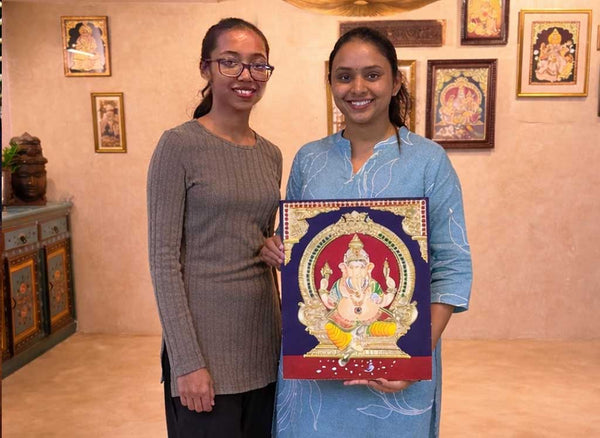
At the end of your first course you will have something genuinely rare: a complete Tanjore painting, made by your own hands, with real 24 karat gold, that you can hang in your home or place in your pooja room. Many students are surprised by how proud they feel, and by how quickly a second painting follows the first. Beyond the finished piece, you take away a calming practice you can return to, and the beginnings of a real skill in a centuries old art. That combination, a beautiful object and a peaceful practice, is what keeps so many of our students painting long after their first course ends.
Is there a right age to start?
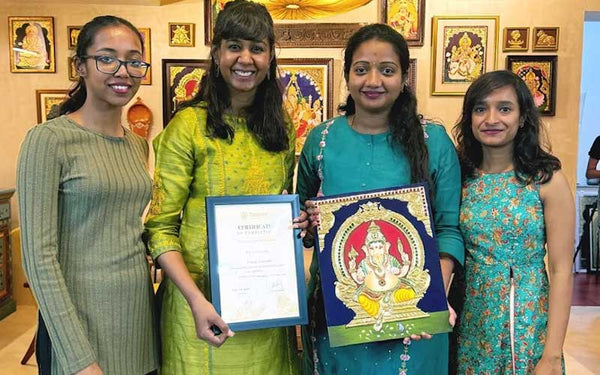
There is no right or wrong age to take up Tanjore painting. Our students span a wide range, from young adults to retirees, and the craft rewards patience and attention far more than youth or quick reflexes. Some come to it looking for a calming practice alongside a demanding career, others in retirement as something meaningful to fill their days, and others simply because they have always admired the art and finally decided to try. Because the technique is taught step by step and the boards come pre sketched, none of these students is at a disadvantage. If you feel drawn to it, that is reason enough to begin, whatever your age or background.
Frequently asked questions
Can a complete beginner learn Tanjore painting?
Yes. Our courses are built to take you from scratch, and most of our students have never painted before.
What do I need to start?
A pre sketched board and the right materials, both of which come in our Essentials Kit. See the materials guide for what each one does.
How long before I finish my first painting?
About 6.5 weeks with a guided course. You are never rushed through it.
Do I need any special talent for art?
No. What the work rewards is patience and attention, not innate talent, which is why beginners consistently finish pieces they are proud of.
Ready to begin? Read what is Tanjore painting for the full picture, then explore our classes.
More blog articles
What is Tanjore Painting? A Complete Guide
A clear, first-hand guide to Tanjore painting: what it is, how it is made, and why it glows.
How to Make a Tanjore Painting: Step by Step
The real step-by-step process we teach, from a prepared board to the final face.
Tanjore Painting Materials Explained
What goes into a Tanjore painting, and what each material actually does.
What our students say
Hear from students who've learned the art of Tanjore painting with us.