Shiva Parivar Tanjore Painting Class: An Advanced Subject to Aspire To
Written by
Vibha Raj
Shiva Parivar is the divine family of Shiva, Parvati, Ganesha and Kartikeya, and one of the most loved advanced subjects in Tanjore painting. Here is what it means and how to learn it with us.
Key takeaways
- Shiva Parivar is the divine family of Lord Shiva, Parvati, Ganesha and Kartikeya, a picture of family, balance and cosmic harmony.
- It is an advanced Tanjore subject: several figures and many faces, so we gently suggest a painting or two of experience first.
- We teach it over about 9.5 weeks at a size of 15 x 20 inches.
- It is especially meaningful around Maha Shivaratri (February to March) and the holy month of Shravana.
- Beginners can absolutely get here. It just rewards a little practice first, and we will tell you when the next batch opens.
Some paintings you choose for your first step. Others you quietly set your heart on and work toward. Shiva Parivar belongs to the second kind. It is one of the most loved compositions in our tradition, the whole family of Shiva gathered together, and finishing one is a milestone many of our students remember for years. If it has caught your eye, this guide will tell you what it means, when it is worshipped, and the honest best way to reach it.
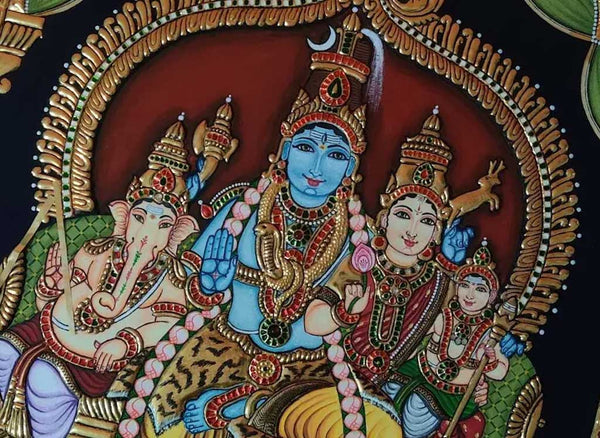
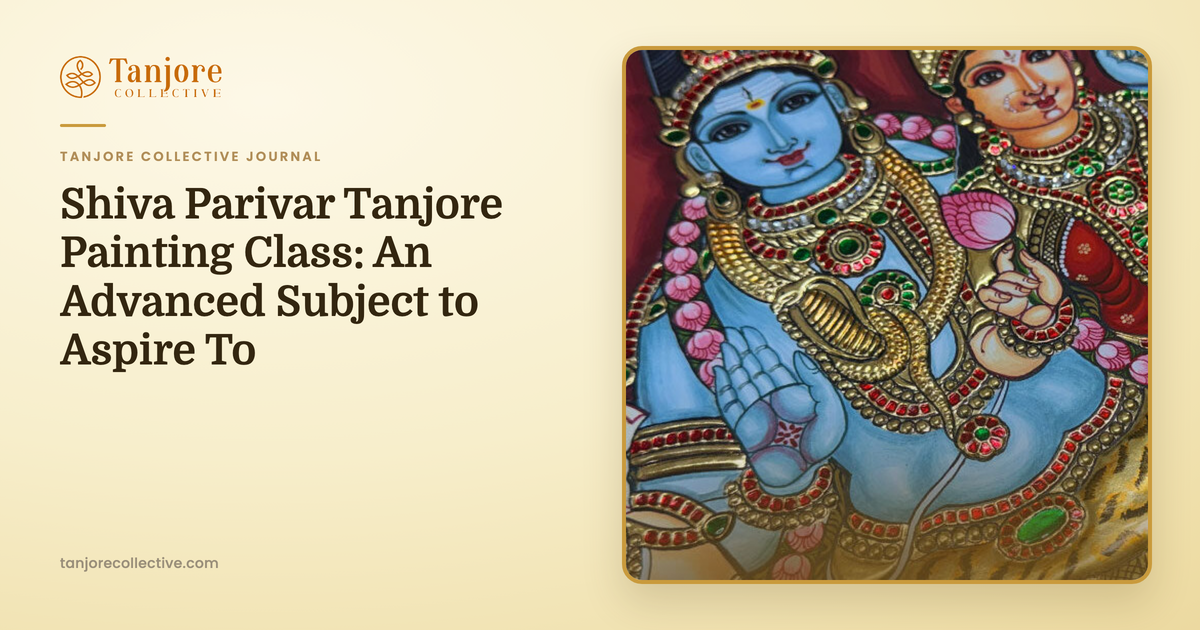
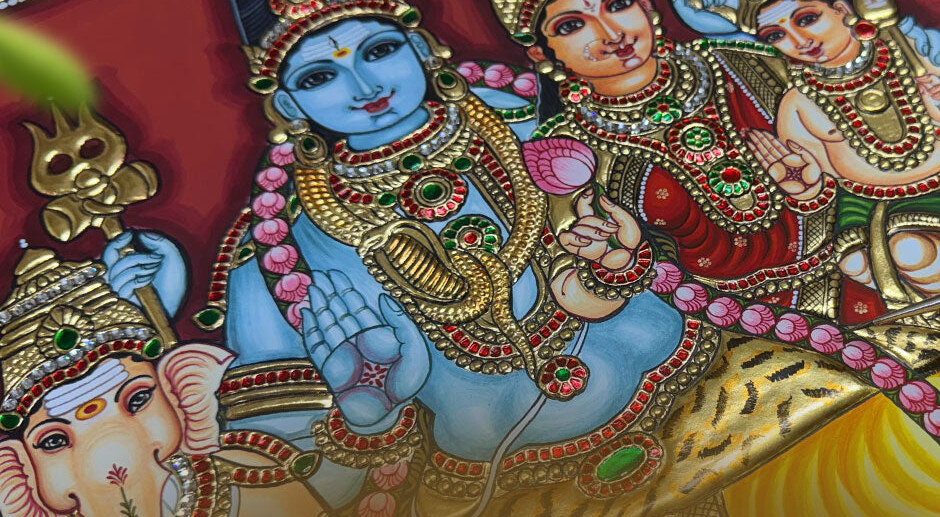
Watch: our Shiva Parivar painting, with Lord Shiva, Goddess Parvati and Lord Ganesha in gold and colour.
Who is Shiva Parivar?
Shiva Parivar is the divine family of Lord Shiva, gathered together in one composition. It brings together Shiva himself, his consort Parvati, and their two sons, Ganesha and Kartikeya (also known as Murugan or Subramanya), usually with Nandi, the sacred bull, resting nearby. Together they are a picture of family, the union of strength and compassion, and the harmony that holds the universe in balance.
Each figure carries its own meaning. Shiva is the great ascetic and the lord of transformation, calm and all-powerful at once. Parvati is Shakti, the divine mother, the energy and tenderness that completes him. Ganesha, the elephant-headed remover of obstacles, is the beloved first son invoked before every beginning. Kartikeya is the warrior son, the commander of the divine forces. Shown as one family, they remind us that devotion and daily life, power and gentleness, belong together.
In the painting itself, each figure is drawn with the signs that identify them. Shiva carries his trident, the trishul, with the crescent moon set in his matted hair, the river Ganga flowing from it, a serpent coiled at his throat and sacred ash marking his brow above a half-open third eye. Parvati sits beside him in quiet grace, often holding a lotus. The young Ganesha is round and gentle, and Kartikeya stands with his spear, the vel, his peacock close by. Nandi, the bull, rests at Shiva’s feet. The whole family is usually framed by a decorated arch, the prabhavali, which in Tanjore work becomes a glorious band of gold and colour around them.
It is this togetherness that makes Shiva Parivar such a cherished painting for the home. To keep the whole family in your puja room is to invite a sense of wholeness, protection and balance into the house, which is why so many of our students set their heart on painting it one day.
When Shiva Parivar is worshipped
Shiva and his family are honoured through the year, but a few times stand out. Maha Shivaratri, the great night of Shiva, usually falls in February or March and is the most significant occasion for devotees, kept with night-long prayer and fasting. The holy month of Shravana (around July to August) is also dedicated to Shiva, and the Mondays of that month, known as Shravan Somvar, are especially auspicious for his worship. Pradosham, observed twice a month at dusk, is another time devotees turn to Shiva.
We share this as cultural context, to help you understand the painting you are making, rather than as a schedule. Our batches run when our teachers have the bandwidth to do this detailed subject justice, so a Shiva Parivar you finish at any time of year is a gift to your home whenever a festival next comes around.
Learn to paint Shiva Parivar
When a batch is open, you can join it below. Because this is an advanced subject we run it less often than our simpler courses, so if nothing is listed right now, it simply means the next batch has not been scheduled yet. Explore our other courses in the meantime, and you will be more than ready when it opens.
What you learn and create
Shiva Parivar is taught over about 9.5 weeks and finished at a generous 15 x 20 inches, large enough to give each member of the family their due. You build the whole composition the traditional way, one careful stage at a time, with your teachers guiding you through each.
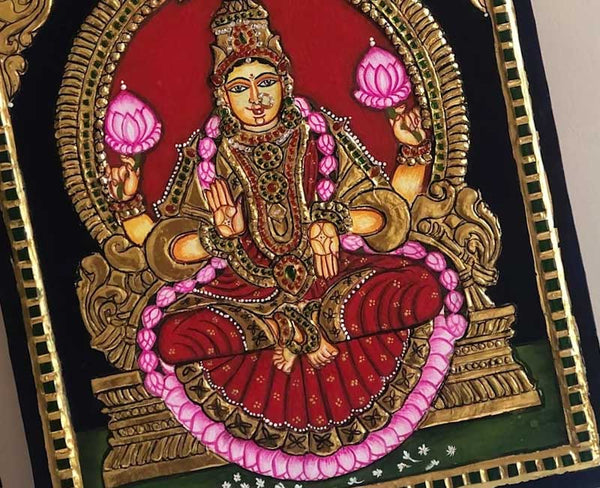
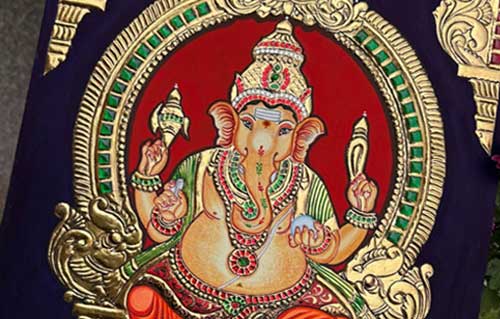
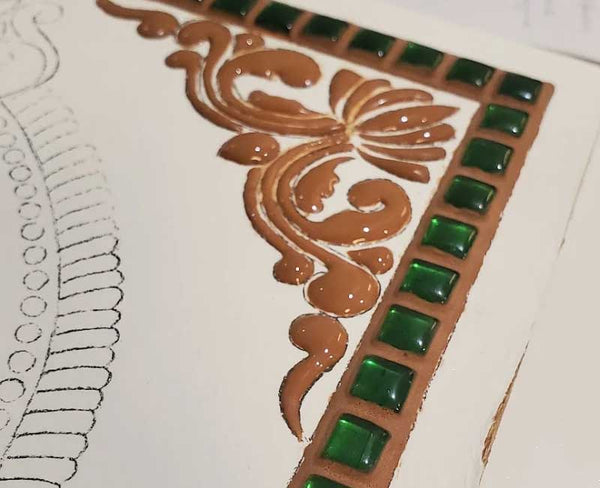
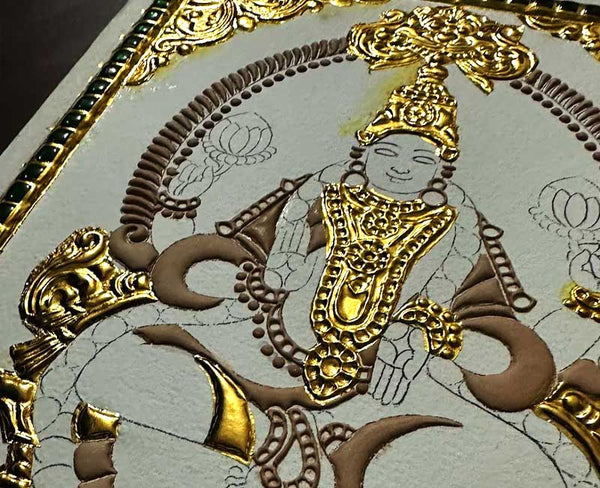
You begin by preparing the canvas and transferring the sketch, then raise the ornaments and architecture with gesso relief and embossing so they stand proud of the surface. Next comes the part Tanjore is famous for: laying genuine 24 karat gold foil, and setting kundan stones. Only then do you paint, and here is where an advanced subject asks the most of you, because there are several faces to bring to life, each with its own expression and proportion, from Shiva's serene gaze to the roundness of the young Ganesha and Kartikeya.
It is the faces and the fine detailing, the part Vibha Raj teaches herself, that make this painting demanding and deeply rewarding. By the end you will not only have a Shiva Parivar for your home, you will have grown noticeably as an artist.
There is also the architecture to build. The prabhavali arch and the throne that hold the family together are raised in gesso and gilded, so a large part of this painting is gold work carried cleanly across a 15 by 20 inch surface. And where a single-deity piece asks you to get one face right, Shiva Parivar asks you to balance several, each a different age and mood, in proportion to one another. This is exactly the kind of practice that turns a confident beginner into a seasoned painter, which is why we think of it as the culmination of the subjects we teach.
Why this one rewards a little practice first
We say this with love, not to put you off: Shiva Parivar is an advanced painting. More figures mean more faces, more proportion to balance, and more intricate work than a single-deity piece. Students who have already finished one or two simpler paintings find they can enjoy this one rather than feel overwhelmed by it. If you are just starting, that is wonderful news, not a closed door. Begin with a simpler subject, build your hand and your confidence, and come to Shiva Parivar when it will feel like a joy. You can see how complete beginners learn with us in our beginner's guide, and compare our online, studio and DIY formats to pick where to start.
Your materials are provided, so you are never left hunting for supplies. The kit carries everything the painting asks for, from the pre-sketched canvas to the 24 karat gold, and for live courses it is shipped to you before class begins.
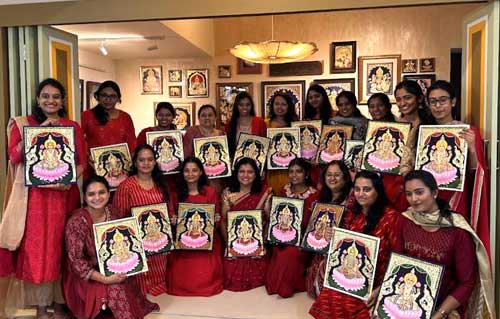
"Vibha, her mom and the entire team is amazing. They are very patient and make sure you learn at your pace."
Why keep Shiva Parivar in your home
To bring the whole family of Shiva into your puja room is to invite a particular kind of blessing: not the gift of one deity alone, but the wholeness of a family together. Devotees keep Shiva Parivar for harmony in the household, for the removal of obstacles through Ganesha, for strength and protection through Kartikeya, and for the union of power and compassion that Shiva and Parvati represent. Painted by your own hand, it becomes more than a picture on the wall. It is a daily reminder of balance, patience and devotion, the very qualities the painting asked of you while you made it.
A milestone worth working toward
There is a particular pride in finishing a Shiva Parivar. Students who began nervous, unsure they could even paint one face, find themselves months later having painted a whole family, gold gleaming, every expression their own work. It becomes the piece they show visitors first, the one that sits at the centre of the puja room. That is the promise of this subject: it asks more of you, and it gives more back. If you are not there yet, you will be, and we will be with you at every stage when you are.
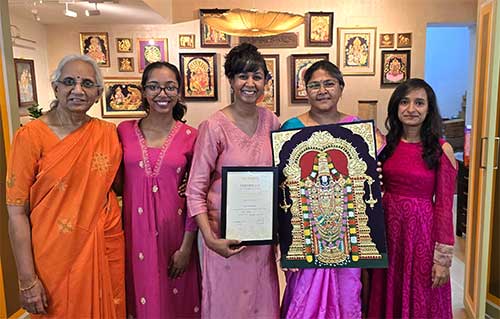
Whichever way you learn, you are in experienced hands. Tanjore Collective was founded by Vibha Raj, an award-winning Tanjore artist who learned this art from her mother, the master artist Vani Bhaskar, and who teaches the hardest parts herself, the faces and the fine detailing. Spurthy GB, trained at the Karnataka Chitrakala Parishath, leads the gold-foil work, and Yashaswini Jaishankar, who began here as a student, guides the embossing and intricate detailing.
It is work our students trust us with: we hold a 5.0 rating from more than 450 Google reviews, and our studio and teaching have been featured in Deccan Herald, Hindustan Times, Deccan Chronicle and Incredible India.
To plan ahead, keep an eye on our course calendar, and explore the other deities we teach in our guide to Tanjore painting deities, including Ganesha and Lalitha Devi.
Frequently asked questions
Is Shiva Parivar a good painting for beginners?
It is an advanced subject with several figures and faces, so we suggest finishing a simpler painting or two first. Beginners are very welcome to work up to it, and we will guide you every step of the way.
How long does the Shiva Parivar course take?
About 9.5 weeks, since it has more detail than a single-deity painting.
What size is the finished painting?
It is painted at 15 x 20 inches, giving room for the whole family.
When is the next batch?
We run this advanced course less often. If no batch is listed above, it has not been scheduled yet. Check the course calendar or write to us and we will let you know.
Do I need to buy materials separately?
No. Your materials are provided, including genuine 24 karat gold foil, and shipped to you before a live course begins.
Which paintings should I do before Shiva Parivar?
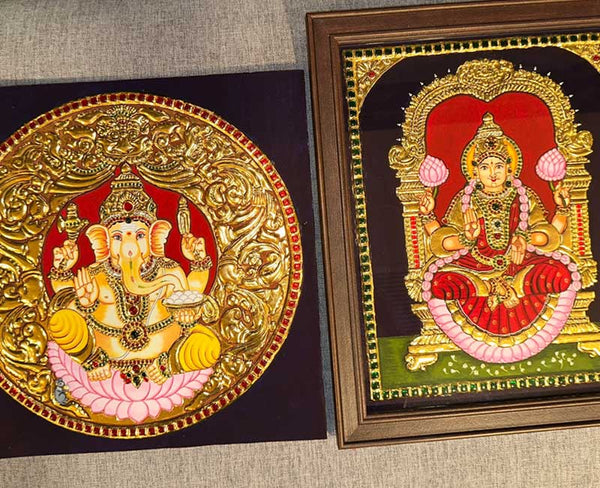
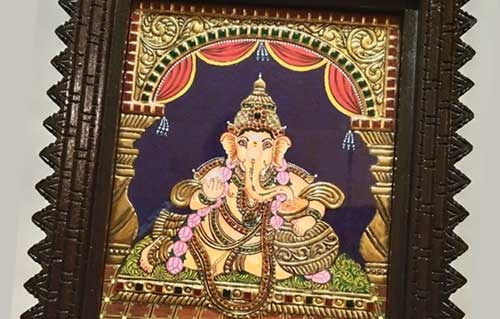
Any single-deity subject is good preparation, for example Ganesha, Lakshmi or Saraswati. They build the same core skills, sketching, embossing, gold work and face painting, on a simpler composition, so Shiva Parivar feels like a joyful step up rather than a leap.
Can I learn Shiva Parivar online, or only in the studio?
We run it as a live online course so you can learn it from anywhere, with every session recorded for you to revisit. See our guide to choosing between online, studio and DIY formats.
What makes Shiva Parivar harder than a single deity?
Mainly the faces. A single-deity painting has one face to perfect, while Shiva Parivar has several, each a different age and expression, along with more ornamentation and a larger gold surface. The individual techniques are the same ones you learn on simpler subjects, so it is the number and density of them, not any new skill, that makes it advanced.
More blog articles
Lakshmi Narasimha Tanjore Painting Class: An Advanced Subject to Grow Into
Lakshmi Narasimha's meaning, his festival, and whether our advanced 10-week course is right for you.
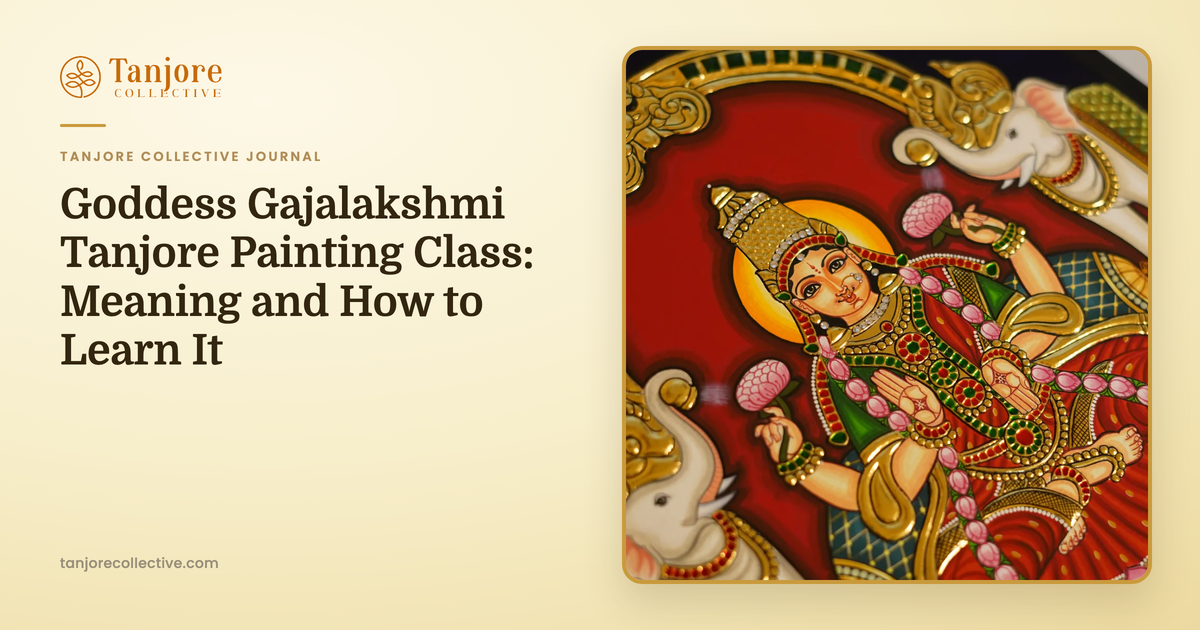
Goddess Gajalakshmi Tanjore Painting Class: Meaning and How to Learn It
Who Goddess Gajalakshmi is, the festivals she is worshipped at, and how to paint her with us in a 6.5-week online or Bangalore studio course.
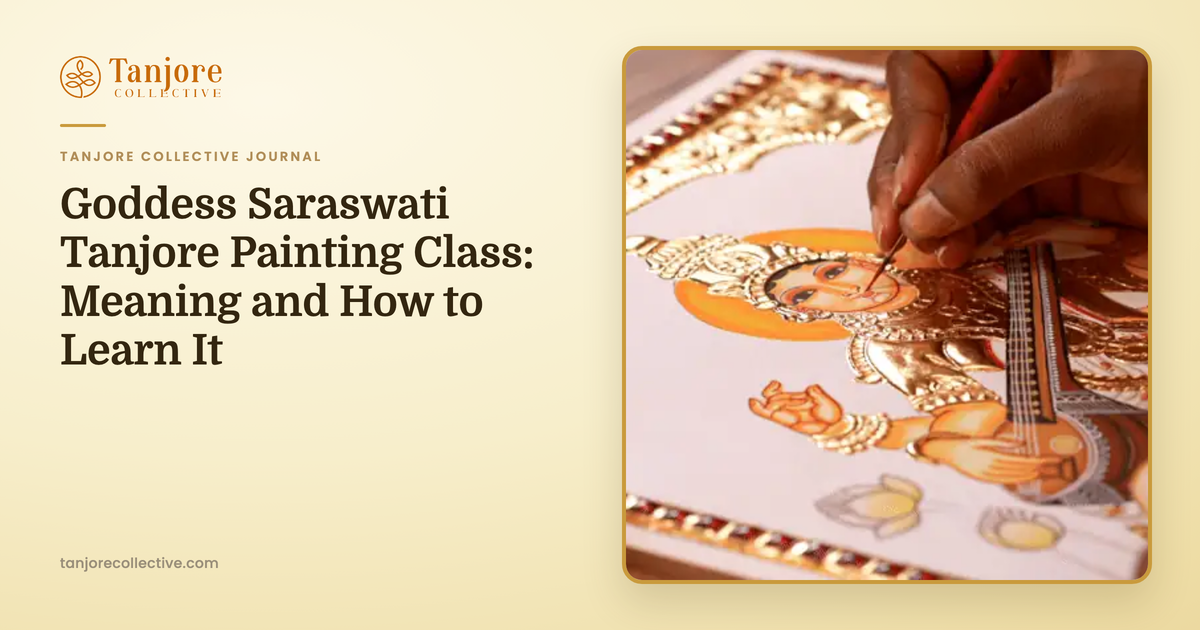
Goddess Saraswati Tanjore Painting Class: Meaning and How to Learn It
The meaning of Goddess Saraswati, her festivals, and how to paint her in the Tanjore style, step by step, as a complete beginner.
What our students say
Hear from students who've learned the art of Tanjore painting with us.