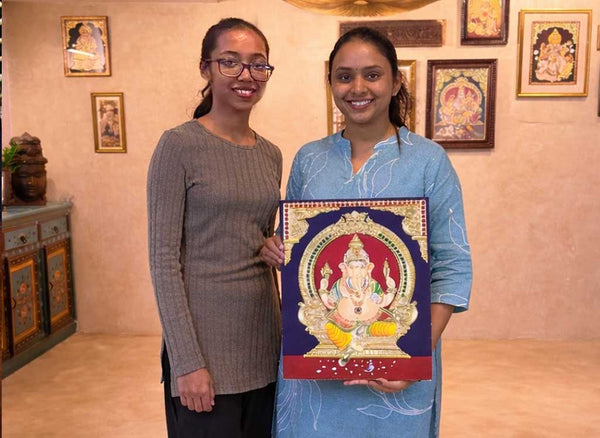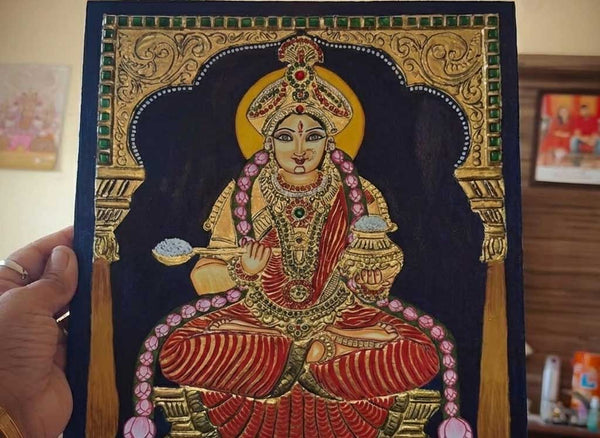
From Student to Commissioned Artist at Tanjore Collective
Written by
Yashaswini Jaishankar
A transparent look at how Tanjore Collective's commissioned paintings are created by professional artists who trained in our studio, and the path from your first course to that standard.
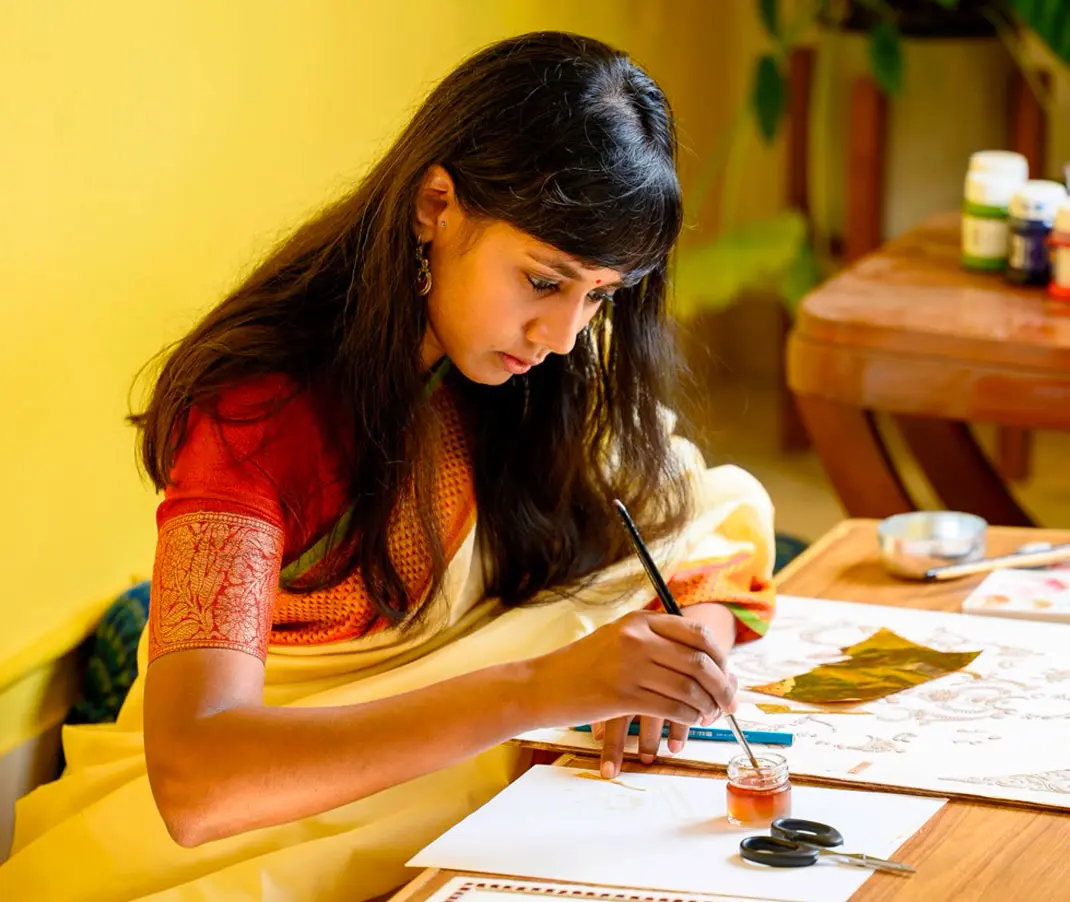
By Yashaswini Jaishankar, Head Teacher at Tanjore Collective. Yashaswini began as one of our students and now leads our classes.
Key takeaways
- Every artist and teacher at Tanjore Collective trained in our studio.
- The paintings our patrons commission are created by our professional commissioned artists, never by students in class.
- Our artists reached that level the same way: finishing many paintings, building range across deities and sizes, and painting to a consistent professional standard.
- The path starts with your first course. A standard painting takes about 6.5 weeks; advanced subjects take 2.5 months or more.
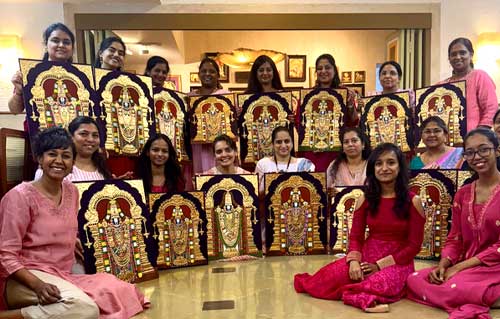
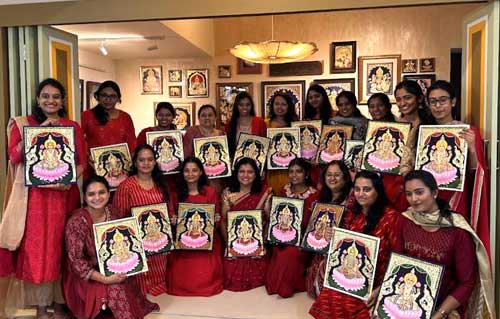
- In 40 years we've taught more than 5,000 students.
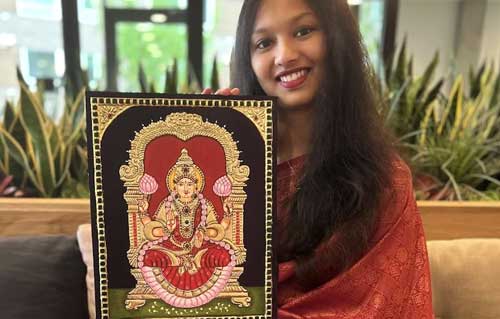
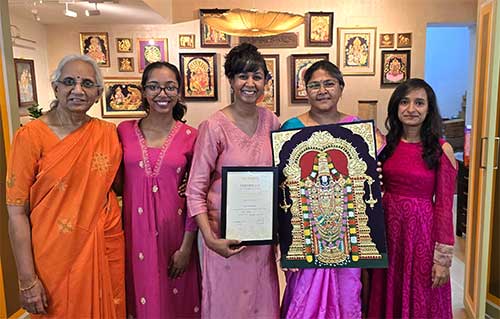
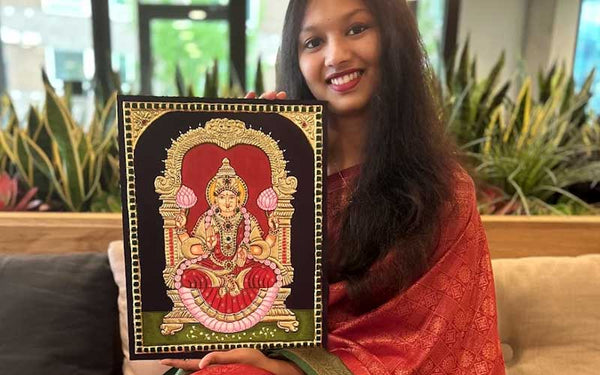
When a family commissions a Tanjore painting from us, they're trusting us with something precious: their chosen deity, for their pooja room, perhaps to hand down one day. We take that trust seriously. So it means a great deal to us that the artists who paint those commissions are people we've known since their very first lesson.
Every artist and teacher on our team trained in our studio. This guide is a transparent look at how our commissioned work is created, what it takes to paint at that level, and how the path from student to commissioned artist really works. If you're thinking about Tanjore painting as more than a hobby, our guide to a Tanjore painting career covers the wider picture.
Who paints Tanjore Collective's commissioned paintings?
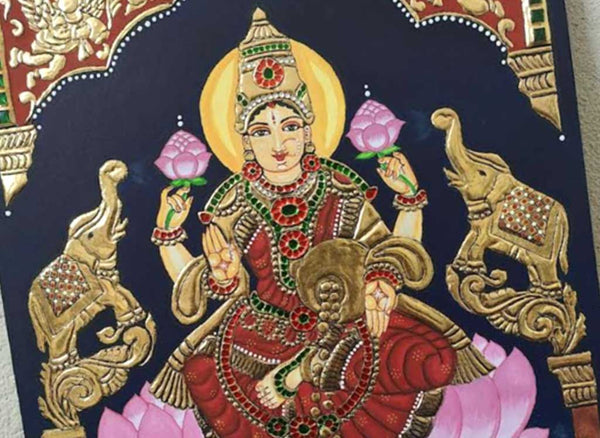
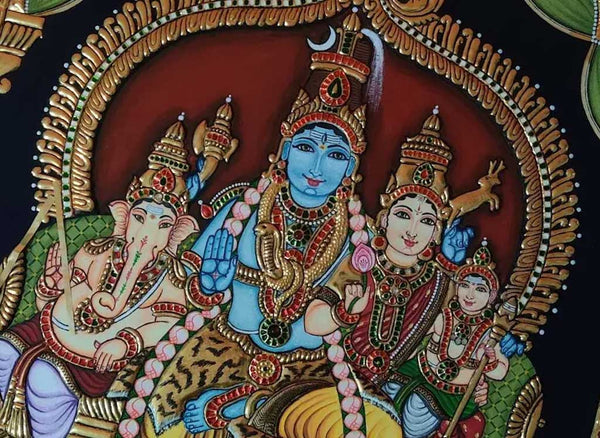
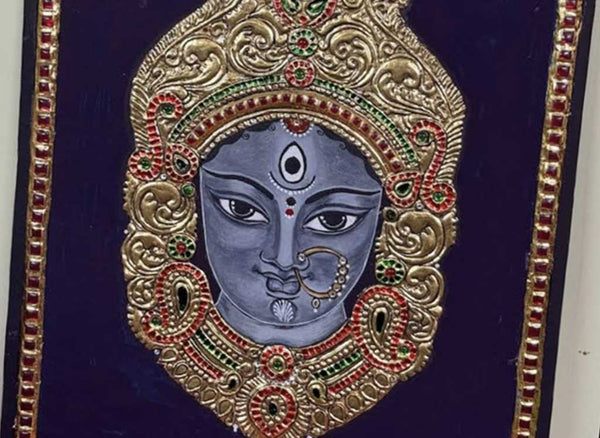
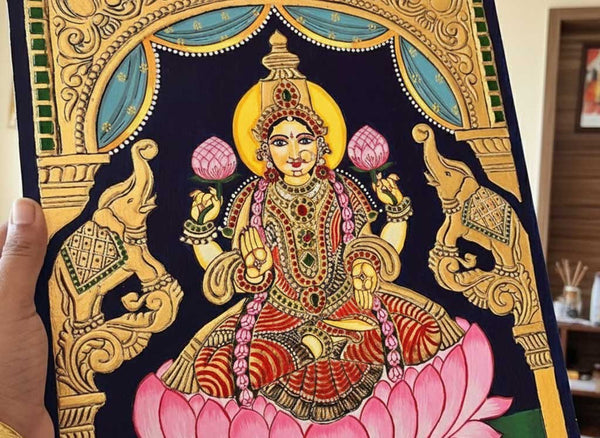
Our commissioned paintings are created by our own professional commissioned artists, every one of whom trained in our studio. They're never painted by students in class.
That distinction matters, and patrons sometimes ask about it, so we like to be clear. Learning and professional work are separate. In class, you paint for yourself, guided step by step. A commission is made by an experienced artist who has painted many deities, at many sizes, to the standard our patrons rely on.
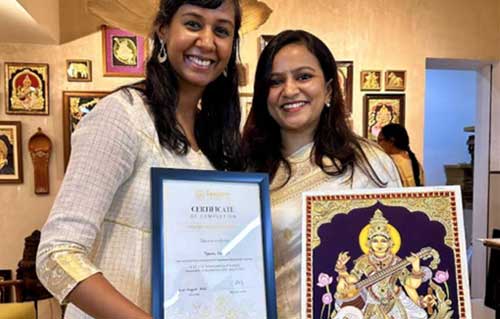
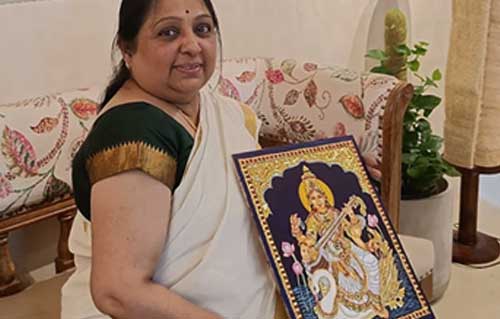
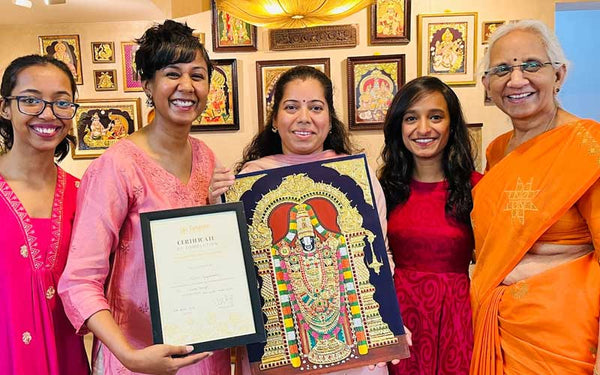
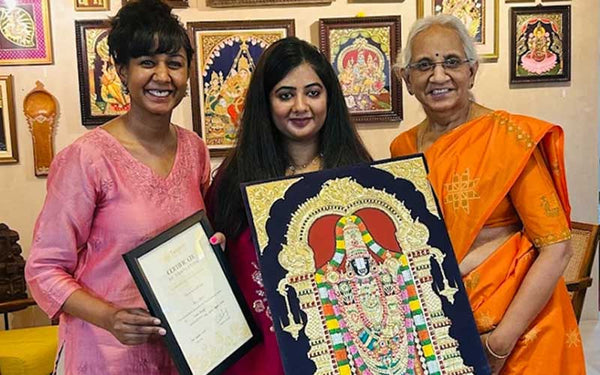
What connects the two is the path. Our Head Teacher started at our boards as a beginner. So did the artists who now paint for our patrons. We've watched each of them grow into professionals, which is why we can trust their work completely.
How does a Tanjore Collective commission work?
A commission is a painting made to order for a patron: their deity, their size, their level of ornamentation. It follows a clear process, from first enquiry to delivery.
| Stage | What happens |
|---|---|
| 1. Enquiry | A patron tells us the deity, a rough size and where the painting will live |
| 2. Planning | We agree the subject, size, composition and budget together |
| 3. Quote | We share a price made for that painting |
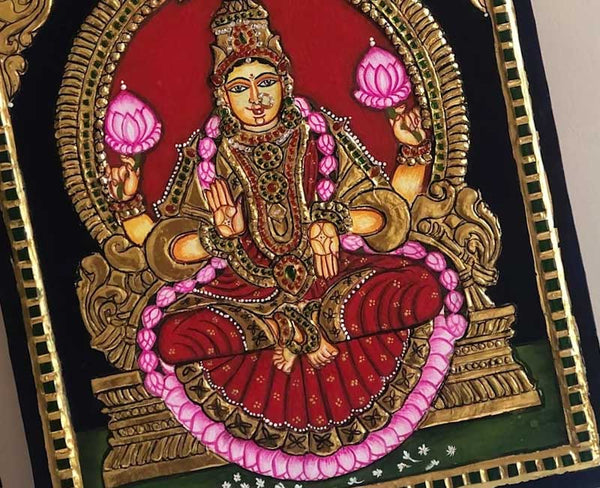
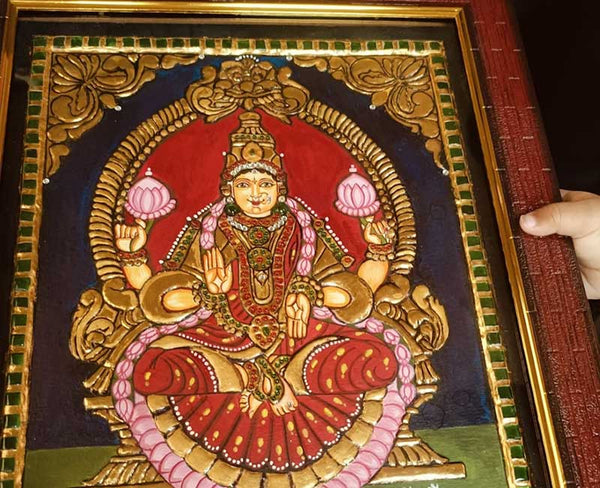
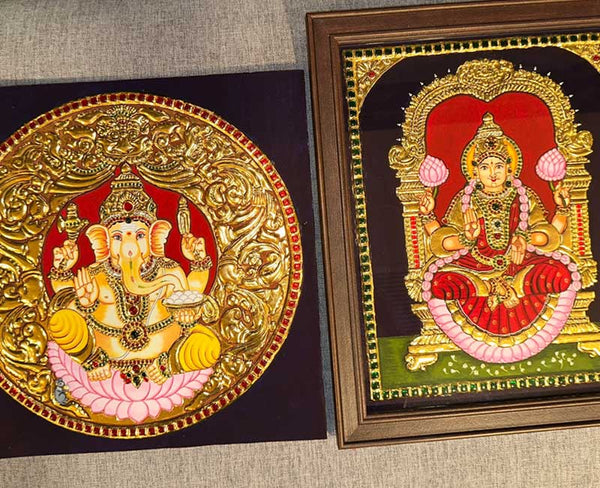
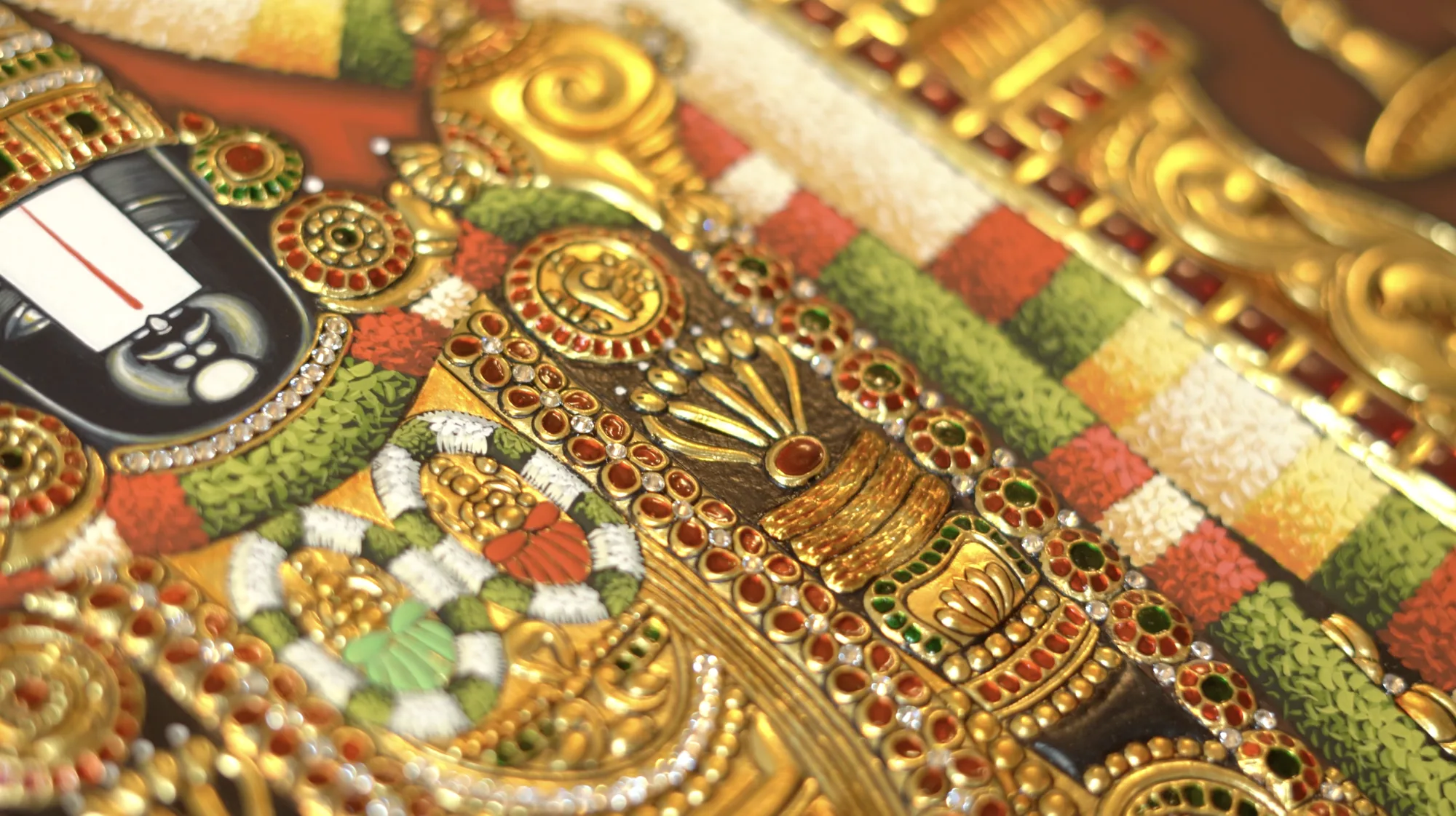
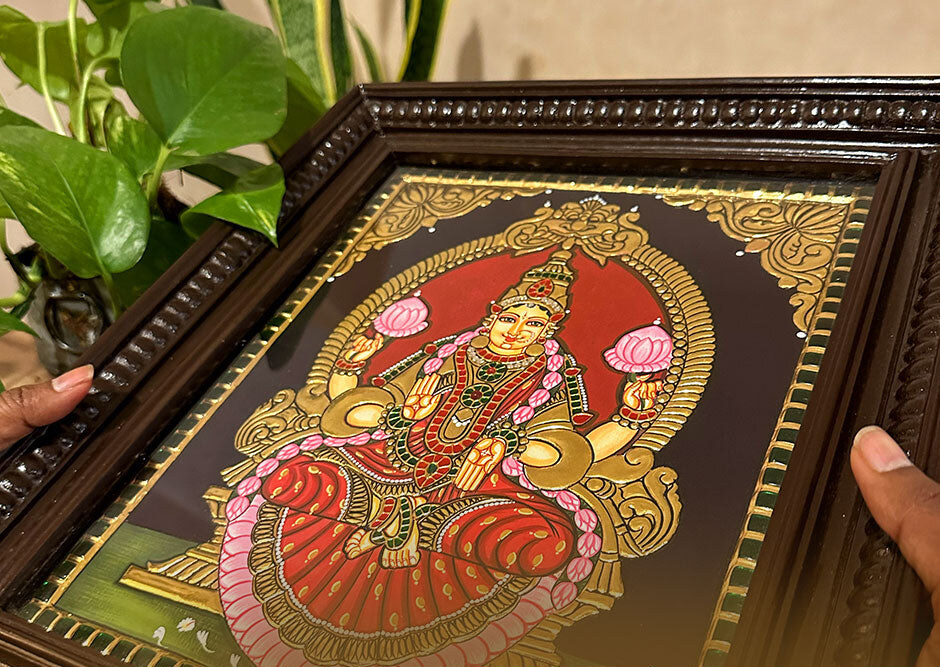
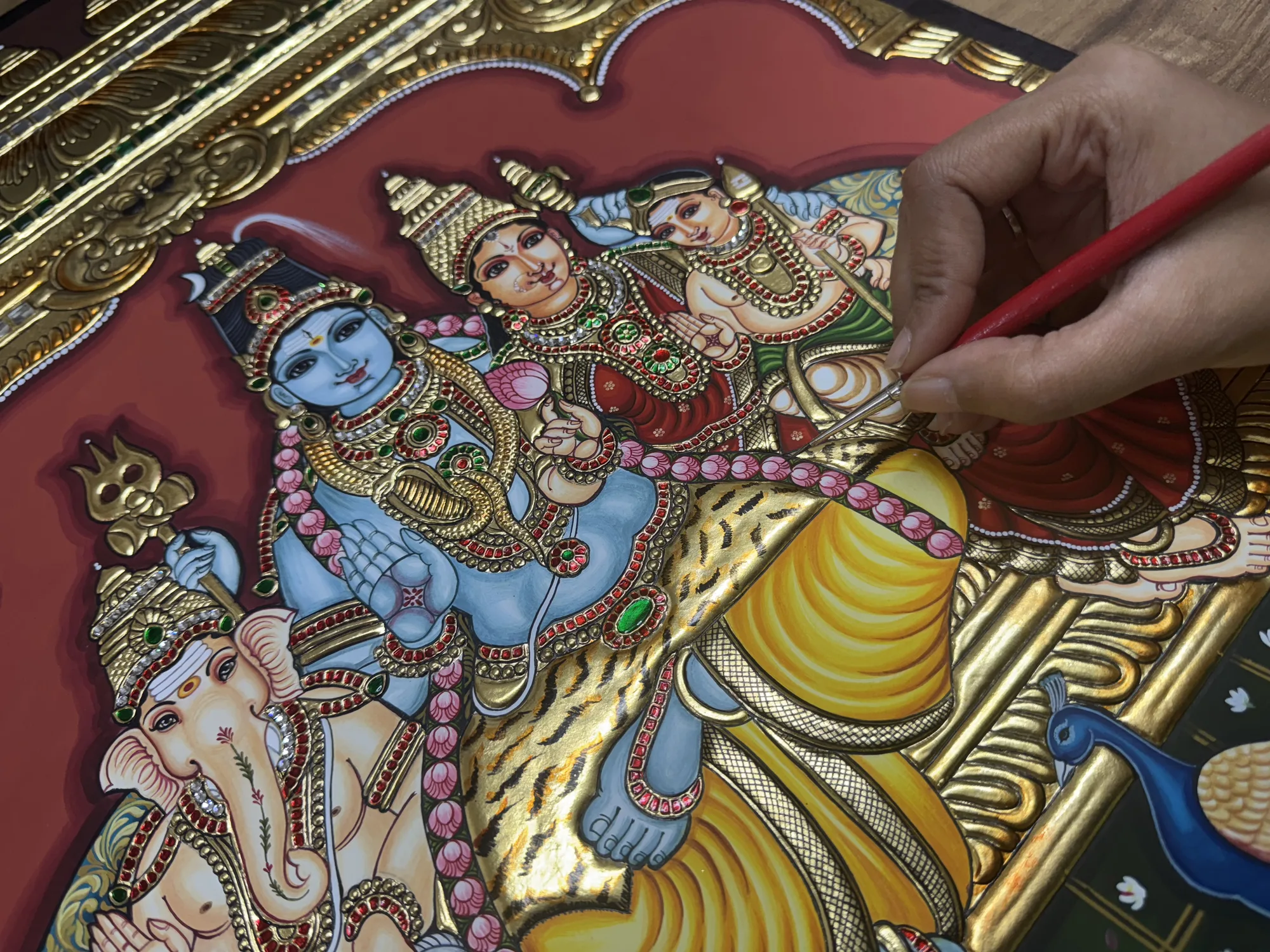
| 4. Creation | Our professional commissioned artists create the painting by hand, with real 24 karat gold and genuine kundan stones |
| 5. Approval and delivery | The patron sees the finished piece, then it goes to its new home |
Most commissions take a few weeks to a couple of months, depending on size and detail. Patrons can read the full process in our guide to commissioning a custom Tanjore painting.
What a commission asks of the artist
For the artist, a commission is a promise. The patron has chosen a deity that means something to them, and they're trusting that the finished painting will be right in every detail. That means:
- Consistency. The same crisp relief, smooth gold and serene face, every single time.
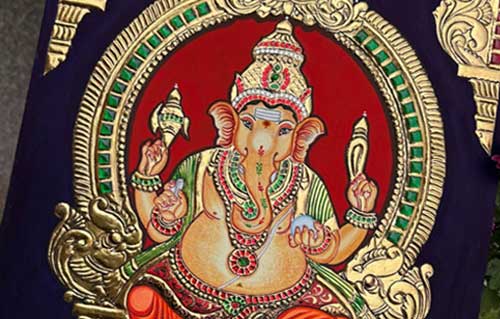
- Range. The confidence to paint whichever deity the patron chooses, at whichever size, from a single figure to a whole parivar.
- Reliability. Delivering on the timeline that was agreed.
- Honest materials. Real 24 karat gold, genuine kundan stones and original Swarovski crystals, as promised.
Watch: what our paintings mean to patrons
Here, one of our patrons shares what the paintings make them feel. It's the reason we hold our commissioned work to such a careful standard.
What does it take to paint at a commission standard?
It takes many finished paintings, range across deities and sizes, and a consistent professional standard. Our own artists got there through steady practice, not shortcuts.
Finish, and keep finishing
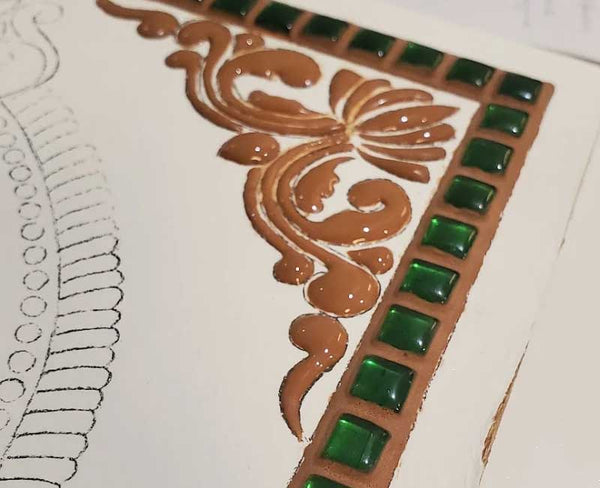
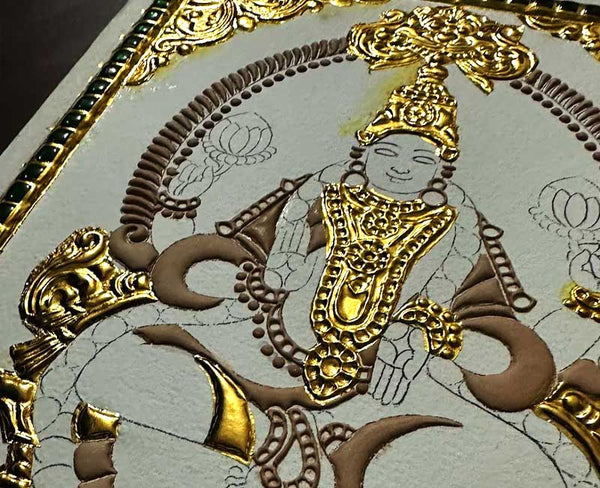
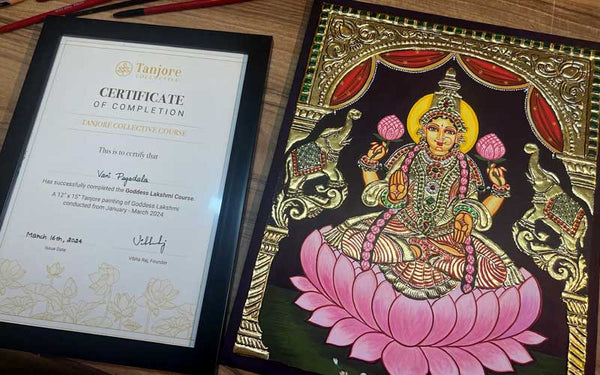
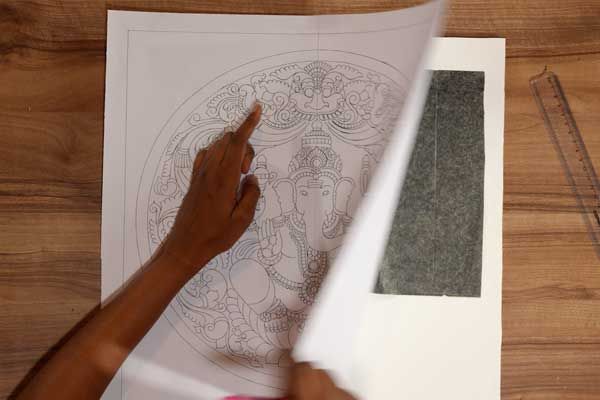
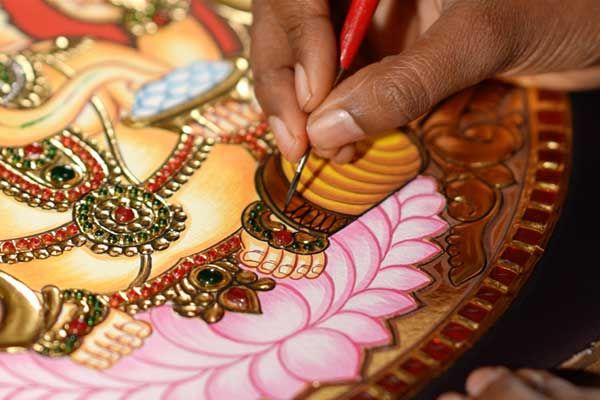
Your first painting teaches you the full sequence: preparing the canvas, transferring the sketch, setting the kundan stones, building the gesso relief around them, laying 24 karat gold, painting, and finally the face. Every painting after that refines it. Many of our students come back for a second and third deity, and that repetition is how skill becomes reliable.
Build range
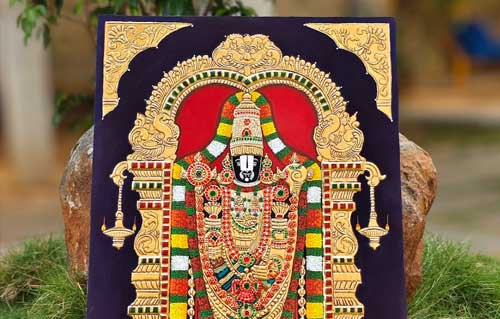
Commissions can be any deity, at any size. So range matters. Standard courses run about 6.5 weeks, usually with a single central figure. Larger subjects such as Lord Balaji and Goddess Padmavathi run about 2.5 months, and Lakshmi Narasimha is taught as an advanced 10-week course. Sizes in our courses run from 10 x 12 up to 18 x 24 inches.
Hold every painting to the same standard
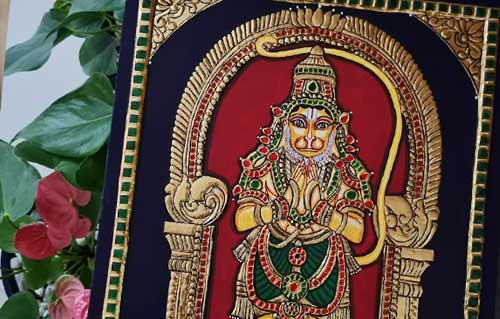
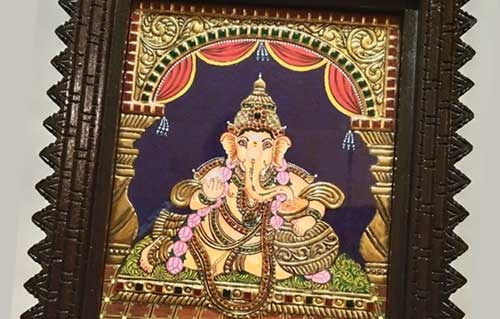
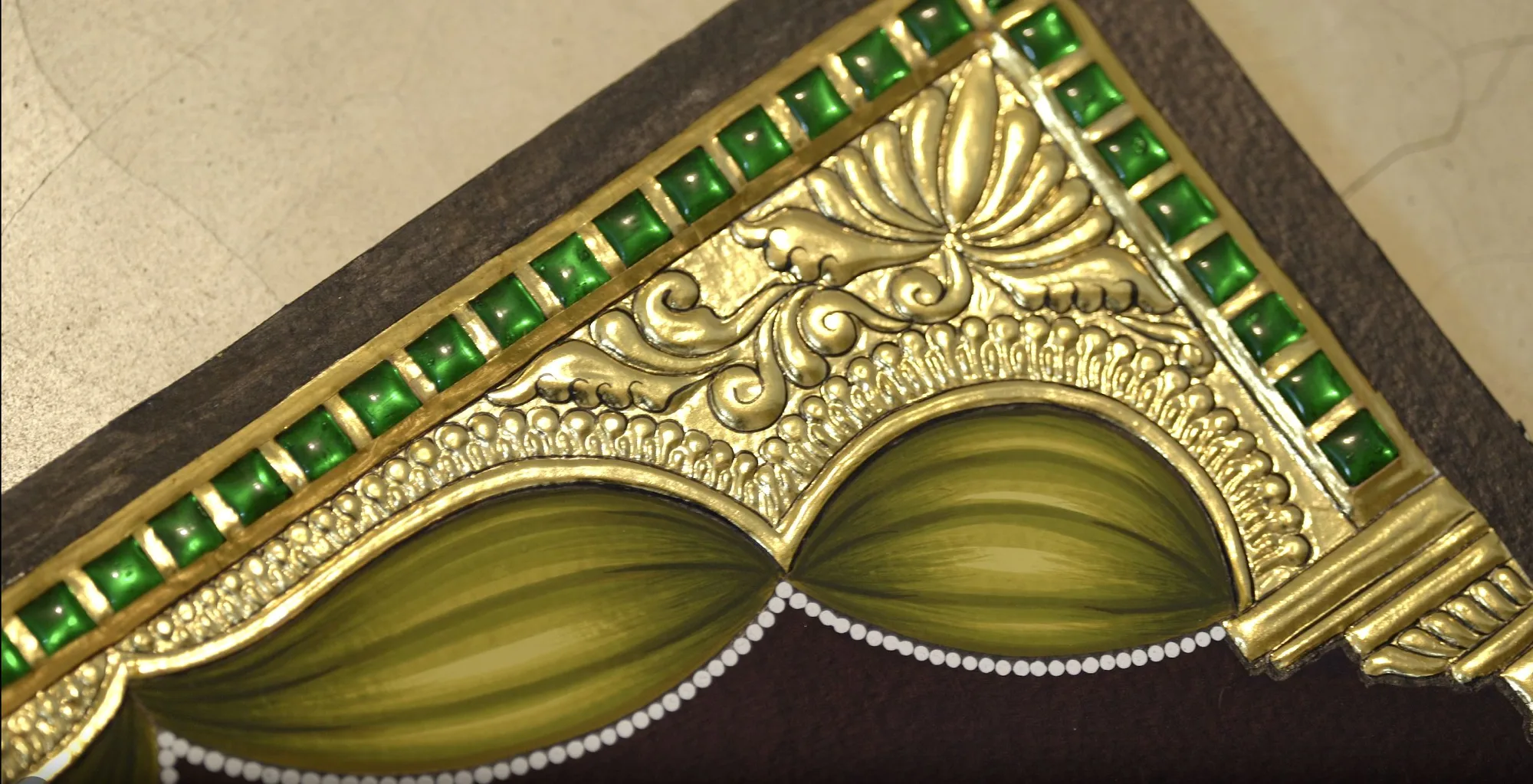
A painting made for a patron needs crisp gesso around neatly set stones, smooth gold with no tears or gaps, clean colour right up to the gold, a serene and even face, and careful outlines and finishing. When every painting you make meets that standard, regardless of deity or size, you're working at a professional level.
Keep learning with a teacher's eye
Even skilled painters improve fastest with feedback. Small corrections to your relief or your face early on save months of habits that are hard to undo. That's one reason the path to professional work so often runs through continued learning. Our guide on how to become a Tanjore artist lays out that journey stage by stage.
Learn with us, then work with us
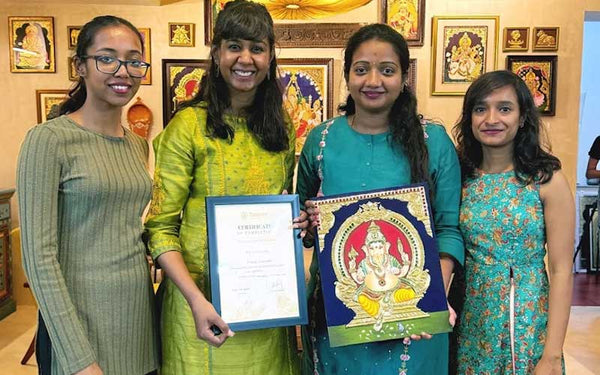
The path from student to commissioned artist is real, and every artist on our team has walked it. It starts with one painting, and it grows with patience.
- Start with your first course. A single central deity, about 6.5 weeks. Most of our students are complete beginners, and more than 95% finish their painting.
- Paint more deities. Move through larger and more detailed subjects as your hand grows steadier.
- Build consistency. Hold every painting to the same professional standard.
- Develop your own designs. Course sketches are our copyrighted designs, made for your learning. See our guide to sketches and copyright.
- Let your teachers know. If you'd love to paint professionally one day, tell us as you progress. Your teachers are the people who know your work best.
Not everyone who learns with us wants to paint professionally, and that's wonderful too. Many students paint purely for the calm and the joy of it. But if you do, you'll be following the same path as every artist who paints for our patrons today.
Frequently asked questions
Does Tanjore Collective commission artists?
Yes. The paintings our patrons commission are created by our professional commissioned artists, all of whom trained in our studio. They're never painted by students in class.
Do I need to be an ex-student?
Every artist and teacher we work with today trained in our studio. Training with us means we know your work, and you know the standard our patrons expect, so it's the natural path in.
How do I get commissioned?
Build your skill first: finish many paintings, move through larger and more detailed deities, and hold every piece to a consistent professional standard. If painting professionally is your goal, let your teachers know as you progress.
Do students' paintings get sold?
No. We never sell students' work. The paintings you make in class are yours, to keep or give as gifts. Commissioned paintings are created separately, by our professional commissioned artists.
How long does it take to reach a professional level?
It depends on how much you paint. A first painting takes about 6.5 weeks, and advanced subjects take 2.5 months or more. Professional consistency comes from many finished paintings, so think in terms of steady practice rather than a fixed date.
More blog articles
Tanjore Painting Sketches and Copyright: What You Can and Cannot Do
Can you sell a painting made from our sketch? What's protected, what you can sell, and why it helps you too.
What You Need to Start a Tanjore Painting Practice: Skills, Materials and Mindset
The skills, materials, mindset and set-up you need to start painting Tanjore seriously.
Tanjore Painting Colours and Brushes: What We Use and Why
Which paints and brushes go into a Tanjore painting, and the order a deity is coloured in.
What our students say
Hear from students who've learned the art of Tanjore painting with us.