From Student to Professional: How to Become a Tanjore Artist
Written by
Spurthy GB
How beginners become professional Tanjore artists: finishing a first painting, building range across deities and sizes, developing your own designs, and turning skill into work.
By Spurthy GB, Master Teacher at Tanjore Collective, formally trained at the Karnataka Chitrakala Parishath.
Key takeaways
- You become a Tanjore artist one painting at a time: finish your first, then build range and control across many subjects.
- A first painting in our courses takes about 6.5 weeks. Larger, advanced subjects take 2.5 months or more.
- Professionals paint varied deities and sizes, from 10 x 12 up to 18 x 24 inches, and in time develop their own designs.
- Skill turns into work through commissions, selling and teaching.
- Every artist and teacher on our team trained in our studio. In 40 years we've taught more than 5,000 students.
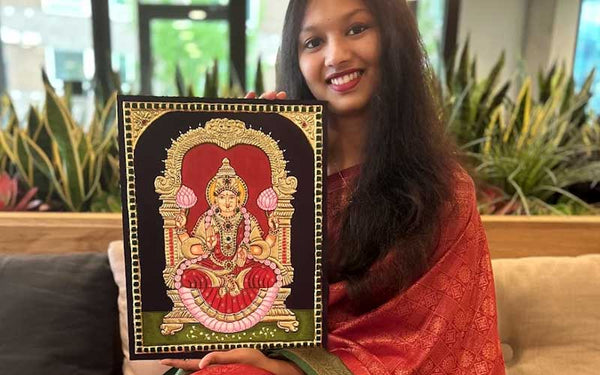
Every professional Tanjore artist was once a nervous beginner, sitting in front of a pre-sketched board and wondering whether they'd ever get the gold to lie flat. We know this for certain, because every artist and teacher on our team started exactly there, in our studio.
So if you've been quietly wondering whether you could become a Tanjore artist yourself, this is the path, as we've watched it unfold for the people who now teach and paint alongside us. It isn't quick, and it isn't magic. But it is real, and it's open to you. For the bigger picture of the different ways people work in this art, see our guide to a Tanjore painting career.
How do you become a Tanjore artist?
You become a Tanjore artist by finishing your first painting, then painting again and again across more subjects and sizes, developing your own designs, and finally turning that skill into commissions, sales or teaching. Here's how the journey usually unfolds:
| Stage | What you're doing | What you're building |
|---|---|---|
| 1. Your first painting | A single central deity, about 6.5 weeks in our courses | The full traditional sequence, start to finish |
| 2. More deities | Different subjects and larger sizes | Control: crisper relief, smoother gold, better faces |
| 3. Advanced subjects | Balaji, Padmavathi, Lakshmi Narasimha, Shiva Parivar | Range, patience and confidence with complex work |
| 4. Your own designs | Composing your own sketches | A recognisable hand, and work that's yours to sell |
| 5. Professional work | Commissions, selling, teaching | Reliability, reputation and repeat patrons |
It starts with one painting
The first step is simply to finish one painting, properly, from a blank board to a framed deity. Nothing teaches the craft like completing the whole thing once.
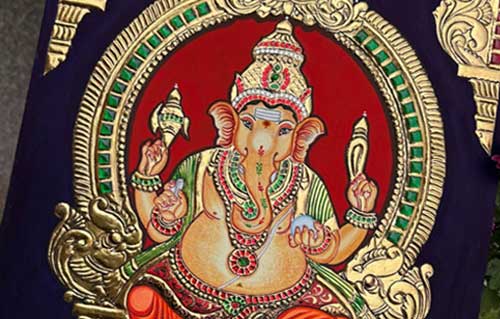
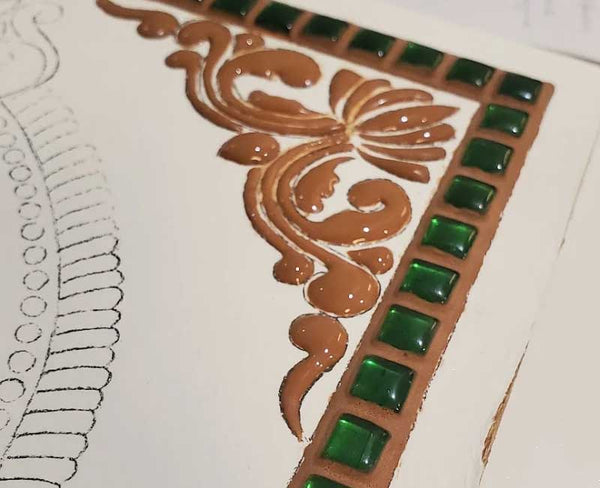
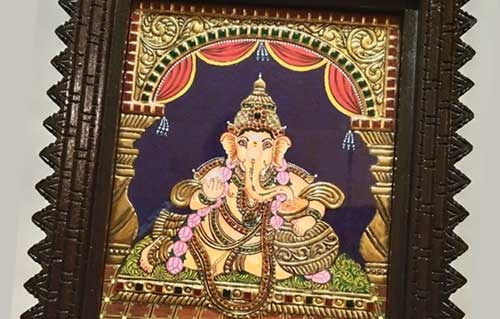
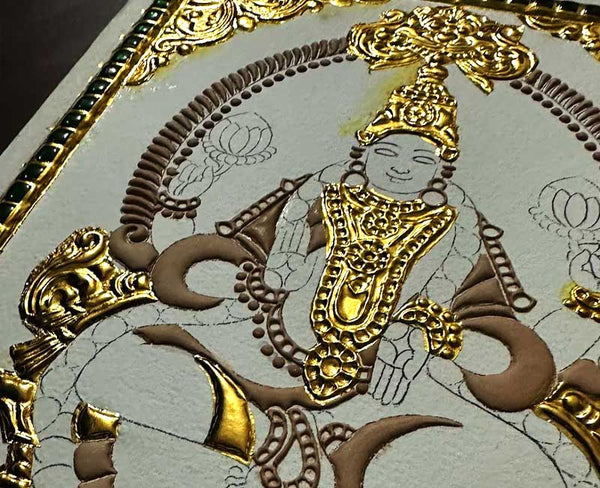
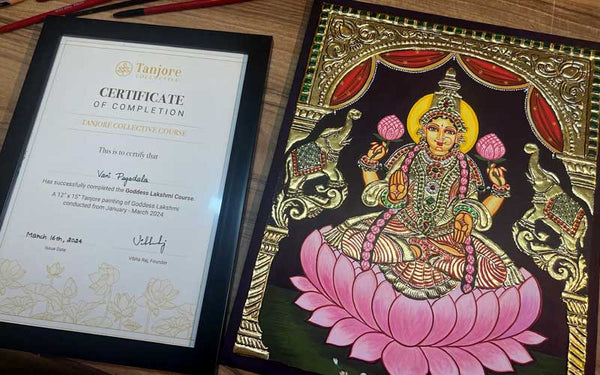
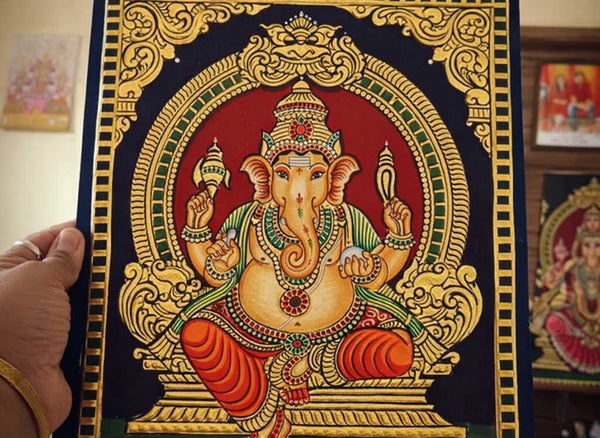
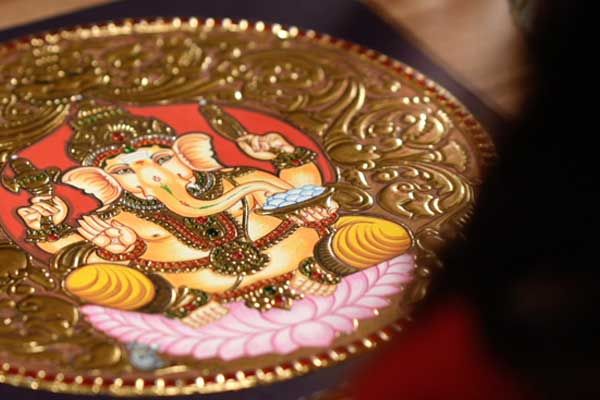
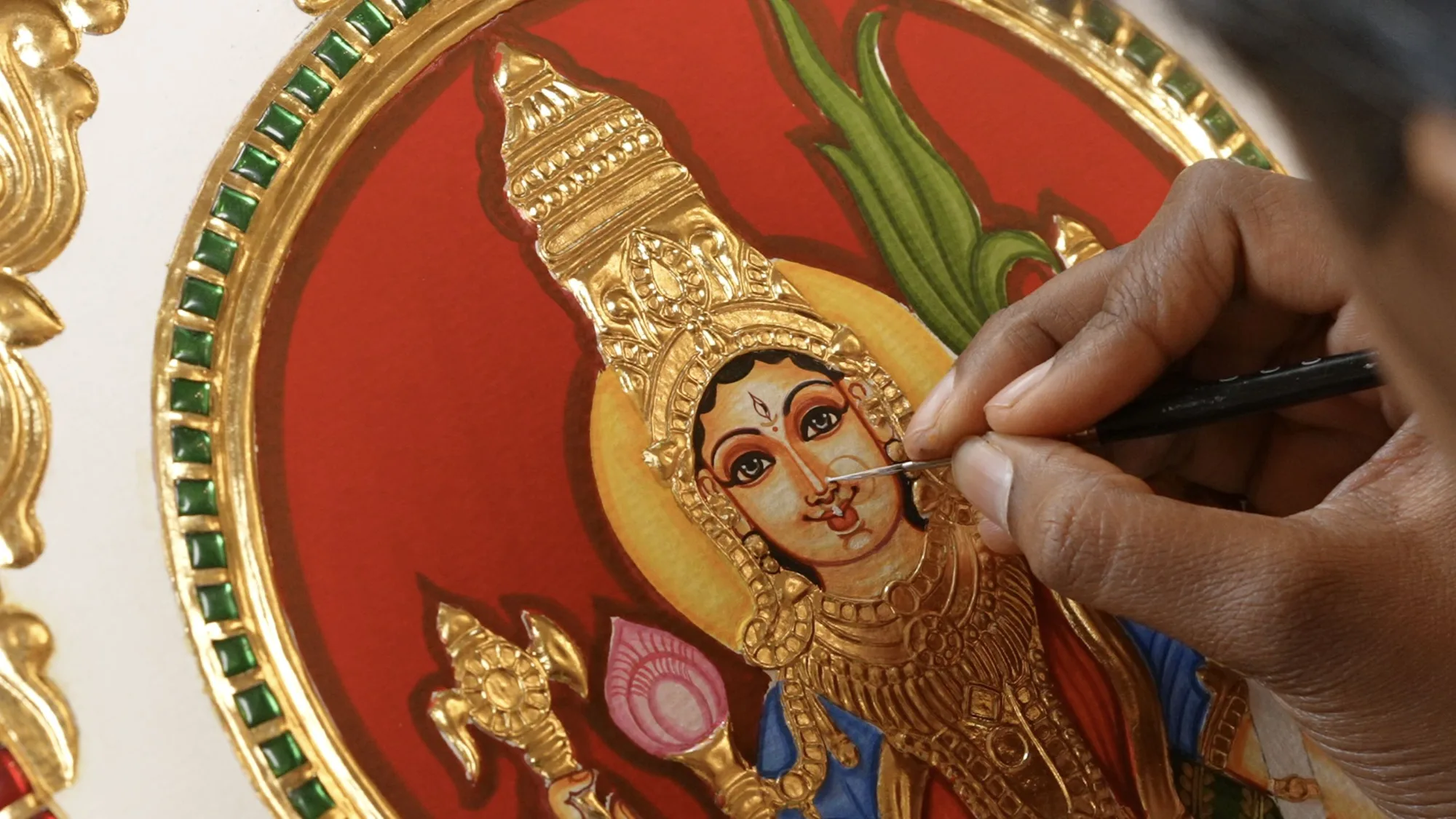
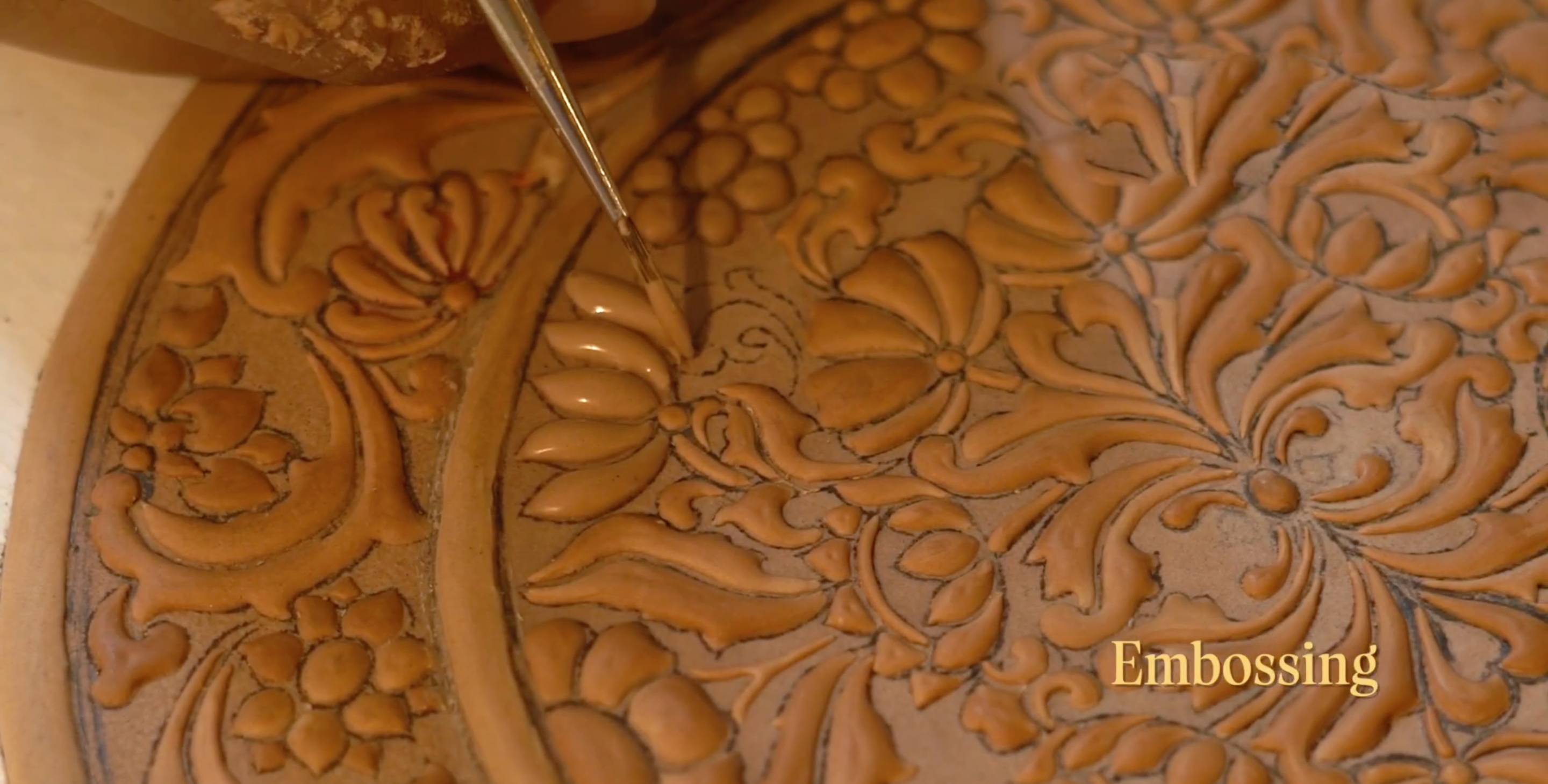
Most people begin with a single central figure. Lord Ganesha is a popular first painting, and a standard course with us runs about 6.5 weeks, with two sessions a week. Over those weeks you learn the full traditional sequence: preparing the canvas, transferring the sketch, setting the kundan stones, building the gesso relief around them, laying 24 karat gold, painting, and finally the face.
If you're worried that you can't draw, you're in good company. It's the fear we hear most often, and our kits come pre-sketched for exactly that reason. Most of our students have never painted before, and more than 95% of them finish their painting. If you're still unsure whether this is for you, read can a complete beginner learn Tanjore painting.
How do you build range and control?
You build range and control by painting different subjects, moving from simpler deities to more complex ones as your hands grow steadier. Each new painting refines a skill the last one introduced.
Your second painting will feel different from your first. You'll know what's coming, so you can pay more attention to the details: keeping the gesso even, laying the gold without wrinkles, softening the shading on the body. By the third or fourth, the faces begin to change. They become calmer, more alive. Many of our students come back for a second and third deity, and that's exactly how control grows.
Simpler before advanced
Move up gently. Single-figure deities come first. Then larger, more detailed subjects, which take longer to learn:
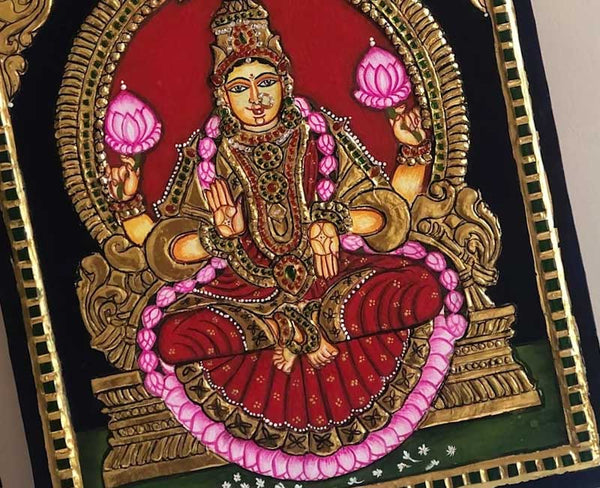
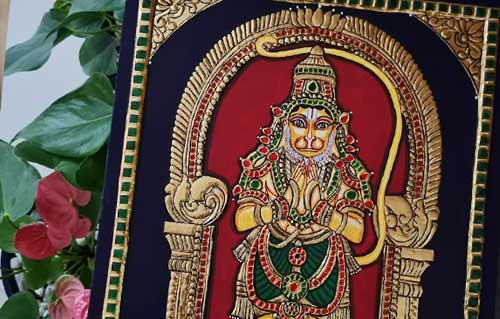
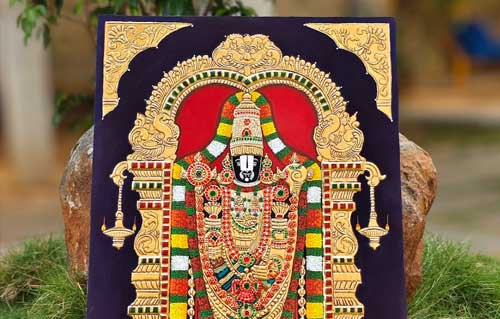
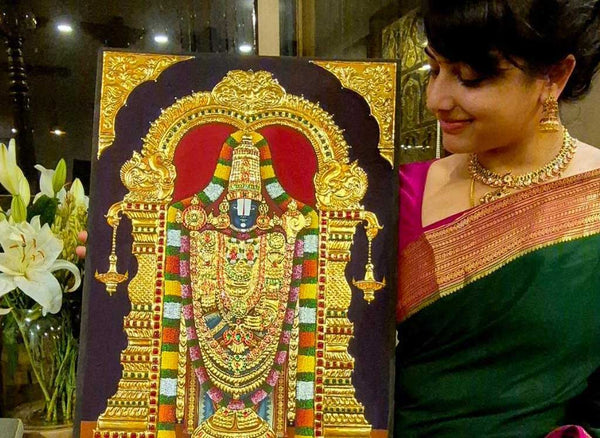
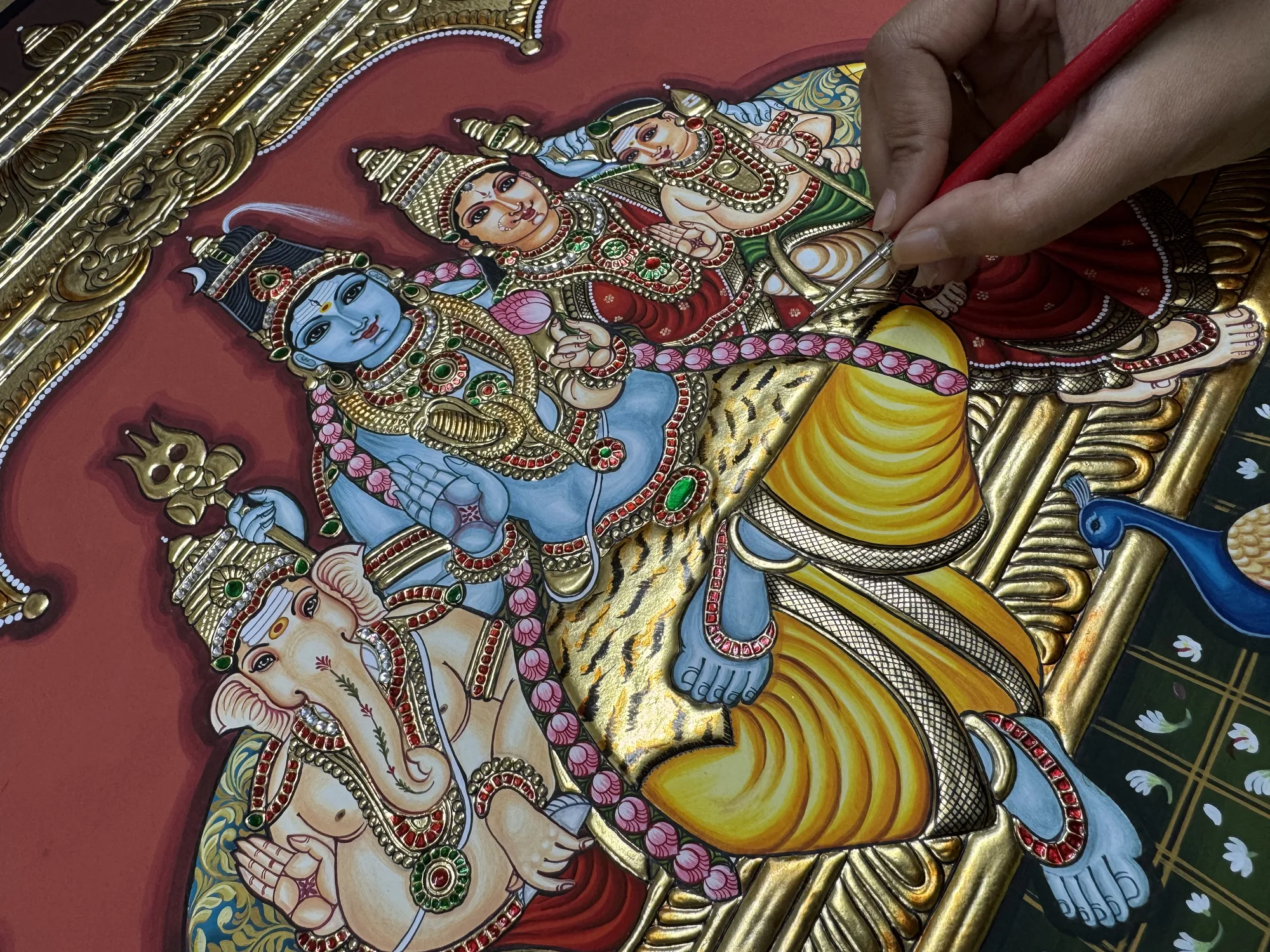
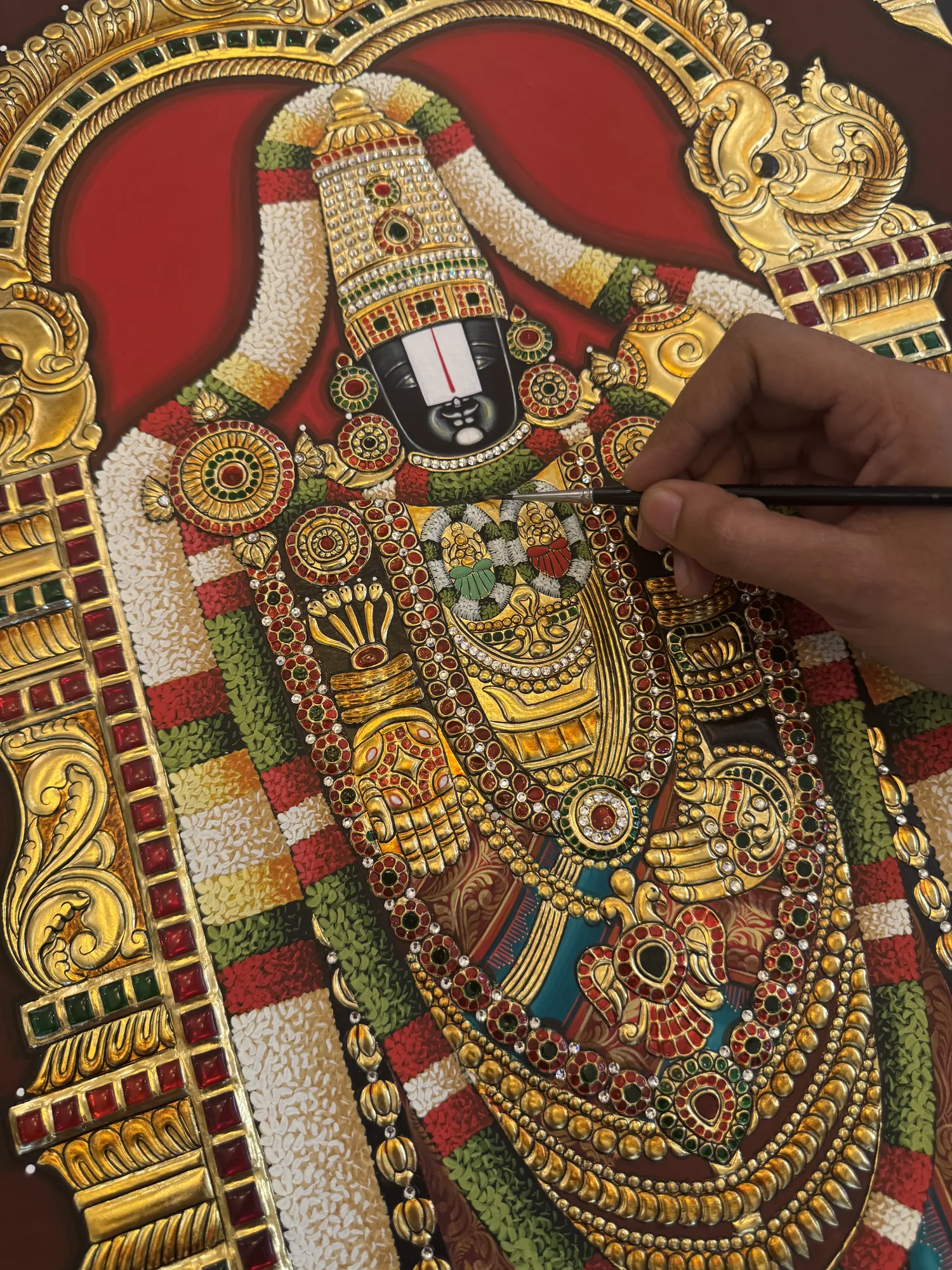
- Lord Balaji and Goddess Padmavathi run about 2.5 months, with rich ornamentation and larger boards.
- Lakshmi Narasimha is taught as an advanced 10-week course, with two figures and a demanding lion face.
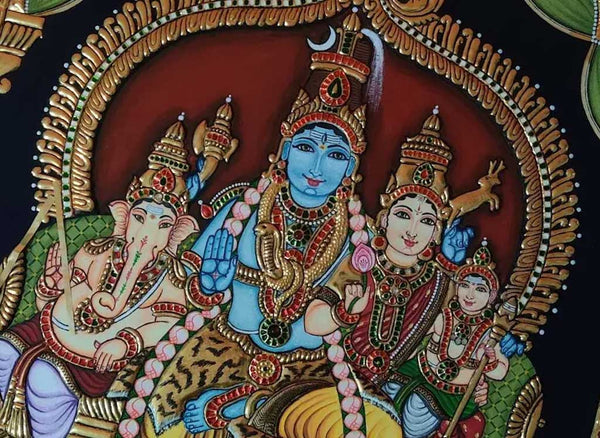
- Shiva Parivar is another advanced, multi-figure subject.
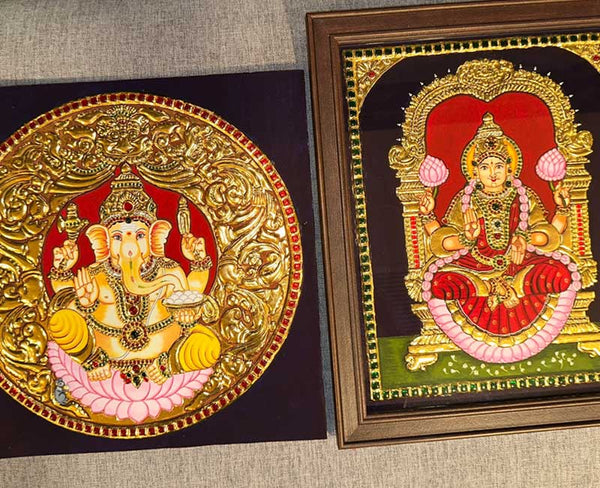
Sizes grow too, from 10 x 12 and 12 x 15 inches up to 15 x 20 and 18 x 24. A professional needs to be comfortable across that whole range, because patrons will ask for all of it. Our guide to the deities we teach shows how the subjects build on one another.
Watch where students get to
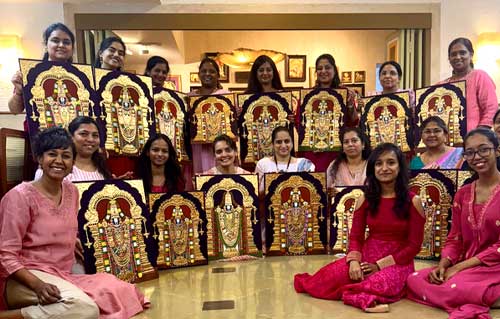
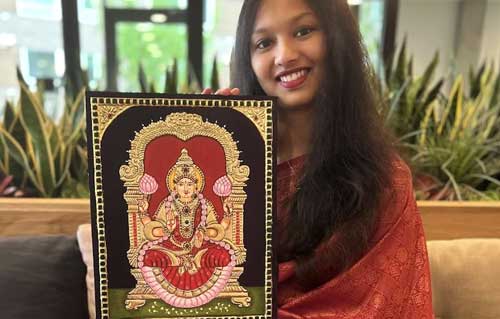
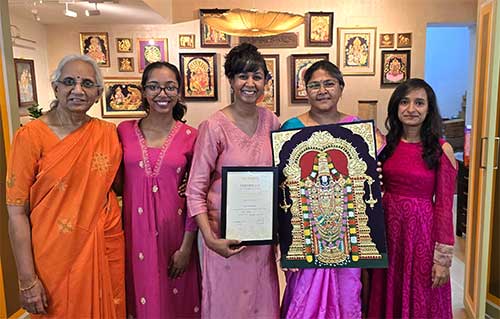
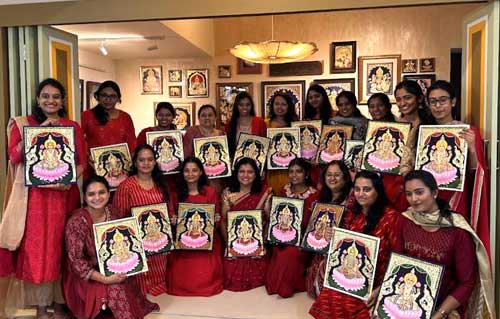
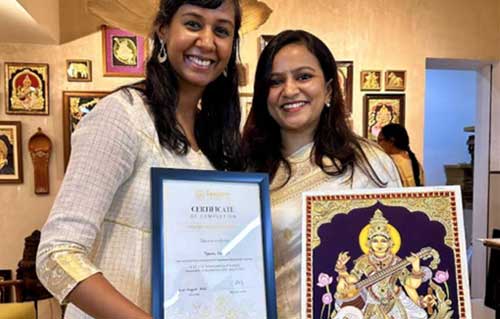
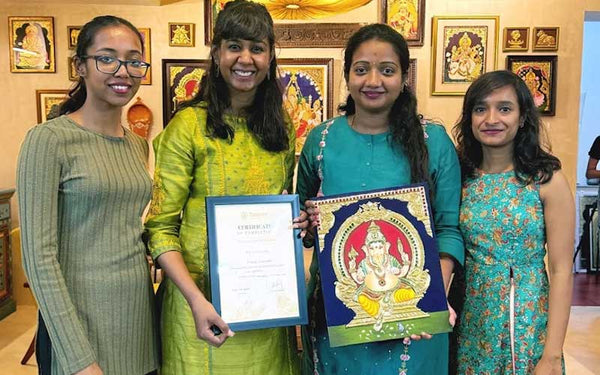
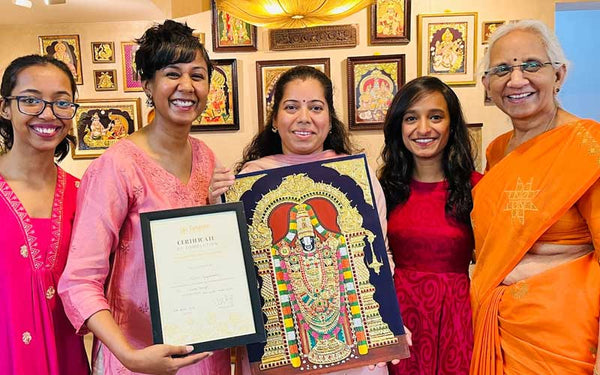
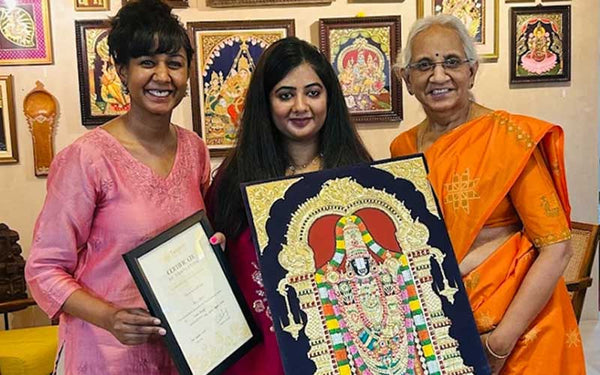
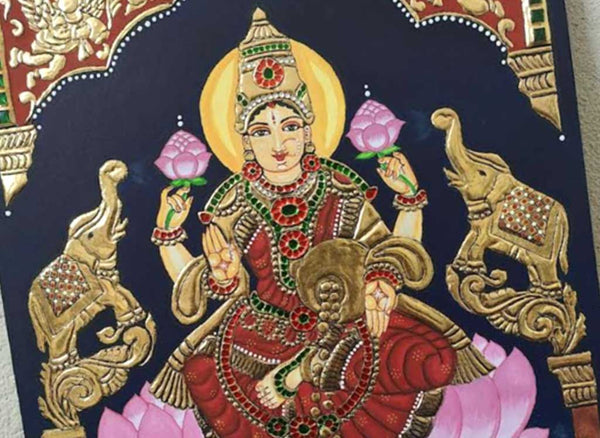
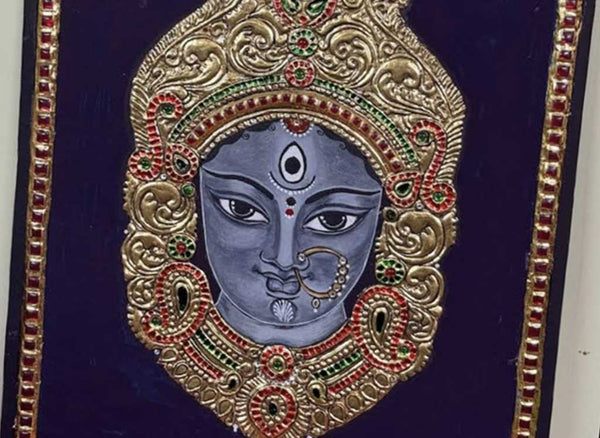
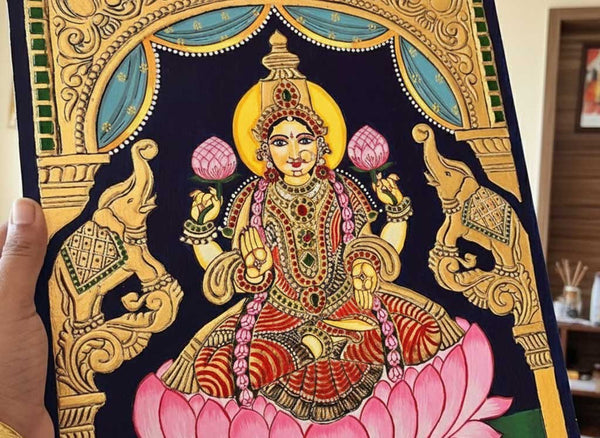
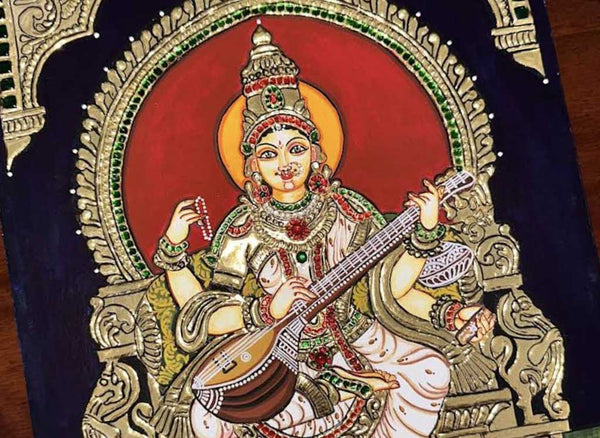
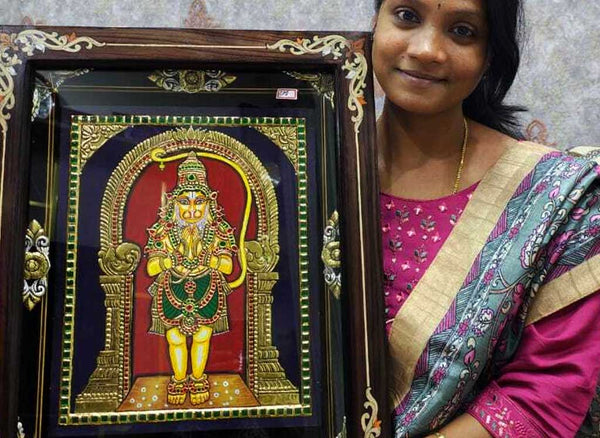
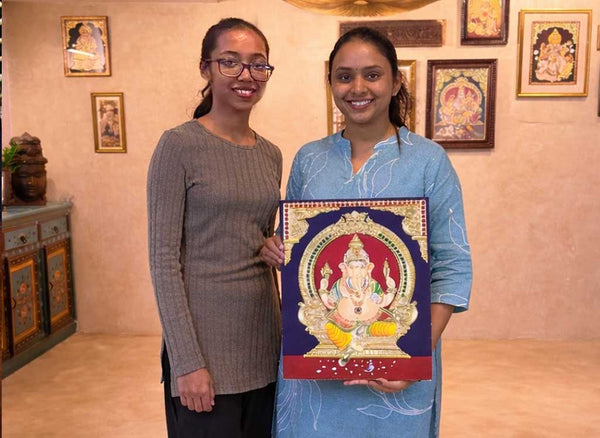
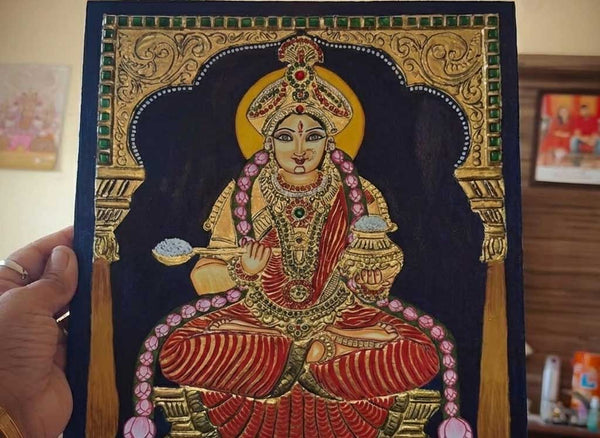
Here are some of our students with paintings they finished in class, including the larger, more detailed subjects.
How do you develop your own voice and designs?
You develop your own voice by composing your own sketches: arranging the deity, the arch, the ornaments and the background in a way that's recognisably yours. It's the step that turns a skilled painter into an artist.
Learning starts with pre-sketched boards, so you can master the technique first. Those course sketches are our own designs, made for your learning, so they're for the paintings you keep or give as gifts. As you grow toward professional work, you'll want designs that are yours to use: sketches you create yourself, or ones you've bought or licensed.
Start small. Try a familiar deity in a simple composition of your own. Then let your designs grow with your confidence. The traditional deities belong to everyone; your interpretation of them is what makes your work distinct.
How do you turn skill into work?
Skill turns into work through three main paths: commissions, selling your own paintings, and teaching. Most professionals combine more than one.
- Commissions. Painting a family's chosen deity at the size they need. Patrons want an artist they can trust to get the face, relief and gold right every time. You can see how a commission works in our guide to commissioning a custom Tanjore painting.
- Selling your work. Building a body of finished paintings from your own designs and finding homes for them. Our guide on how to sell Tanjore paintings covers the first steps.
- Teaching. Breaking hard steps into simple, repeatable ones so that beginners can finish a real painting. It asks for deep practice and a great deal of patience.
This is the path our own team has walked. Every artist and teacher at Tanjore Collective trained in our studio, and the paintings our patrons commission are created by our professional commissioned artists. Our Head Teacher, Yashaswini, first sat at our boards as a student. That's the clearest proof we can offer that the journey from beginner to professional is real.
Which way of learning suits each stage?
Any of our three formats can take you along this path, and many people mix them as their needs change. We teach the same techniques in the same order in all of them.
- Studio classes in Basavangudi, Bangalore, are the traditional, hands-on way. Having a teacher at your shoulder is invaluable early on, when small corrections to your relief or face make the biggest difference.
- Live online classes run twice a week over Zoom with a master artist. Every session is recorded and shared with you, with access for a month after the course ends, so you can rewatch a tricky step as often as you need.
- DIY video courses are self-paced and pre-recorded, with WhatsApp guidance from our Guru. They suit people with unpredictable weeks, and they're a good way to keep painting between live courses.
Our students come from every walk of life: working professionals fitting painting around full-time jobs, learners joining online from the USA, the UK, Canada and Germany, and people starting in their 50s and beyond. None of that stands in the way. What matters is that you keep finishing paintings, in whichever format lets you do that. If you're unsure which suits you, our comparison of online, studio and DIY classes can help you decide.
What makes the difference along the way?
Patience matters more than talent. Our founding belief is that "there is an artist in all of us," and that passion is the only prerequisite. What separates people who become professionals is rarely a natural gift. It's the willingness to keep painting.
- Finishing. Every completed painting teaches more than ten half-finished ones.
- Working in order. Letting each stage settle before the next is a habit professionals never drop.
- Good materials. Real 24 karat gold and genuine kundan stones behave differently from substitutes. Learn on the real thing. Our materials guide explains why.
- Good teachers. Someone to correct your relief or your face early saves months of bad habits.
Frequently asked questions
How long until I can go professional?
It depends on how much you paint. A first painting takes about 6.5 weeks in our courses, and advanced subjects take 2.5 months or more. Professional consistency comes from many finished paintings across different deities and sizes, so think in terms of steady practice rather than a fixed date.
Do I need to be naturally talented?
No. We believe there is an artist in all of us, and that passion is the only prerequisite. Most of our students have never painted before. Patience and practice matter far more than talent.
Can I eventually paint for Tanjore Collective?
Every teacher and commissioned artist on our team trained in our studio, so learning with us is where that path begins. The paintings our patrons commission are created by these professional artists, not by students in class.
Which deity should I paint first?
A single central figure, such as Lord Ganesha, is a lovely first painting. It lets you learn every core technique on one composition before moving to multi-figure subjects.
More blog articles
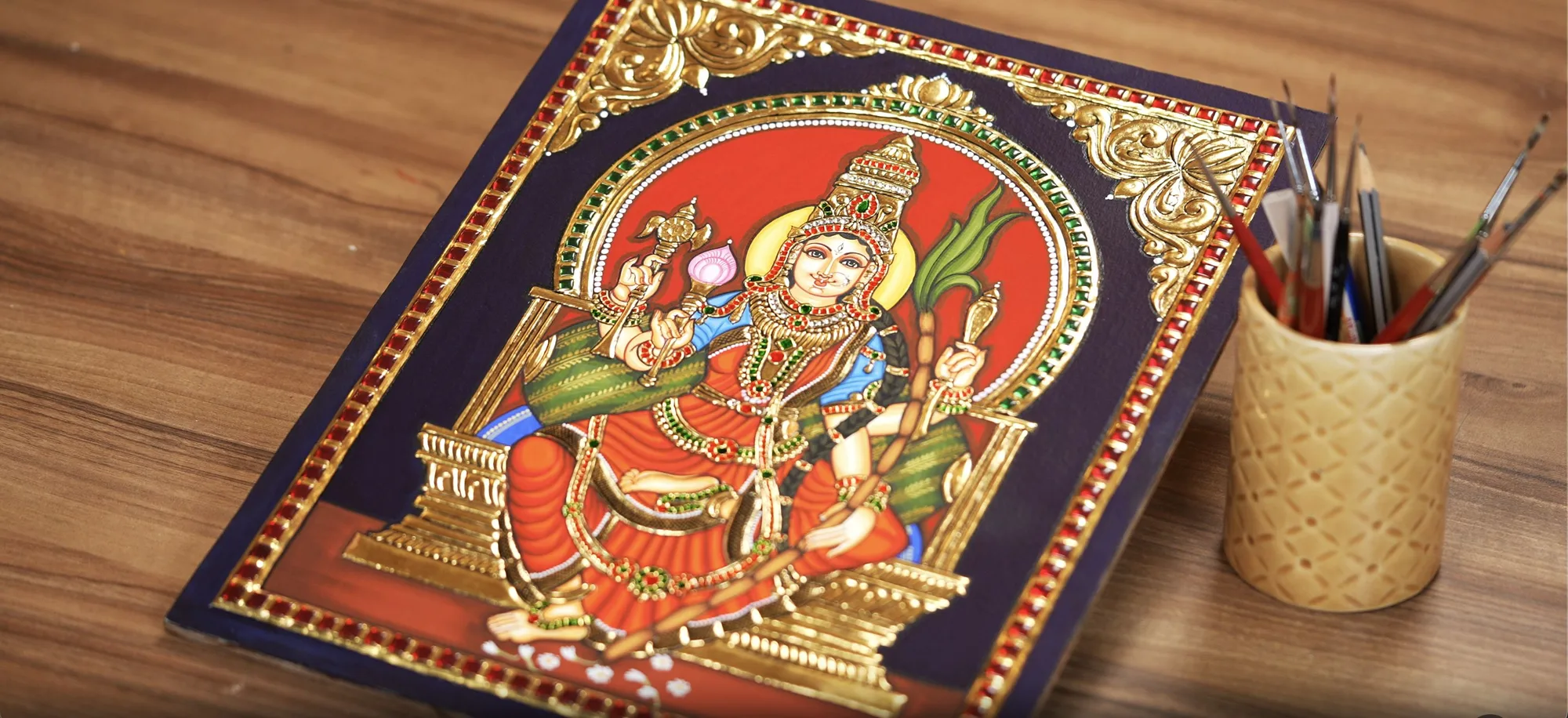
How to Start Selling Tanjore Paintings (With Your Own Designs)
Ready to sell your Tanjore paintings? Your own designs, where to start, and how to think about pricing.
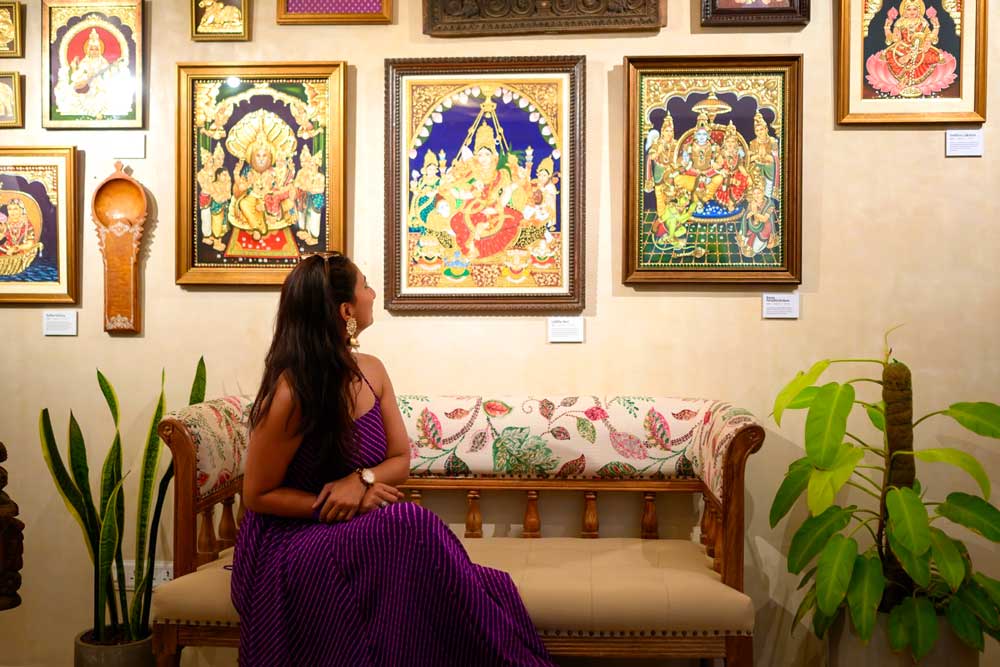
Can You Build a Career in Tanjore Painting? An Honest Guide
Can Tanjore painting become your work? The real paths, what it takes, and how our own artists started.
Tanjore Painting Gesso: What It Is and How It's Made
What gesso is, what it's made of, and how we build the raised relief of a Tanjore painting, step by step.
What our students say
Hear from students who've learned the art of Tanjore painting with us.