How Much Does a Tanjore Painting Cost? The Complete Cost Guide (2026)
Written by
Vibha Raj
Our studio breaks down the cost of a Tanjore painting: price ranges by size, the gold, gesso, stones and artist hours behind them, and how buying, commissioning and making your own compare.
Key takeaways
- A genuine Tanjore painting costs about Rs 20,000–40,000 (small), Rs 40,000–80,000 (medium), and Rs 80,000 into the lakhs (large or ornate).
- Prefer to make your own? The Essentials Material Kit starts at Rs 4,000, plus a DIY, online or studio course.
- The biggest cost drivers are 24 karat gold foil, gesso relief depth, set stones, size, subject and artist hours.
- Two paintings that look alike can hide very different amounts of gold, relief and time — which is why prices vary so widely.
- Prices checked September 2026. Our own paintings are made to order and priced on enquiry.
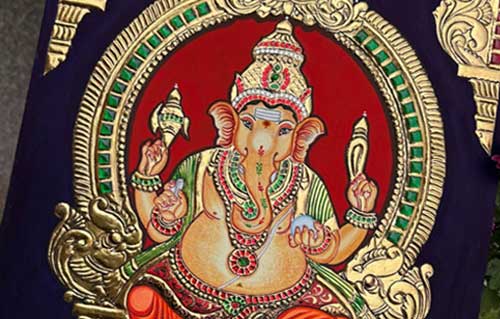
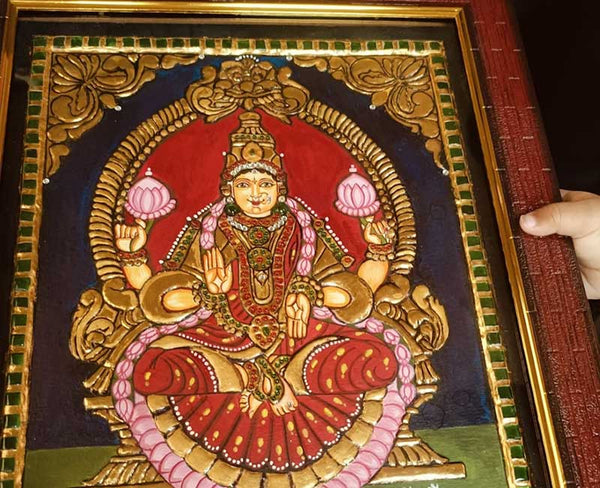
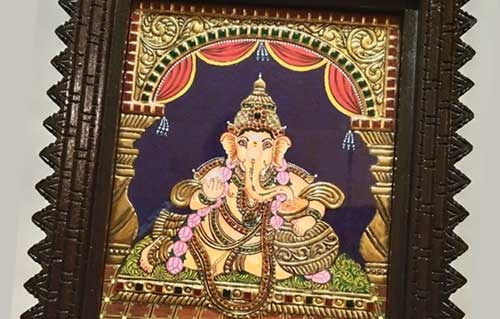
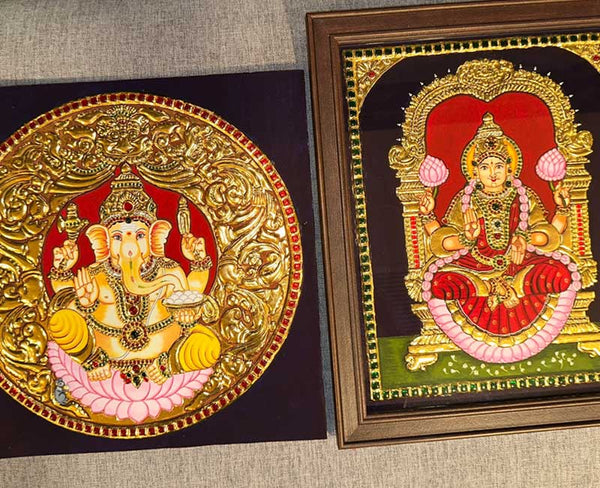
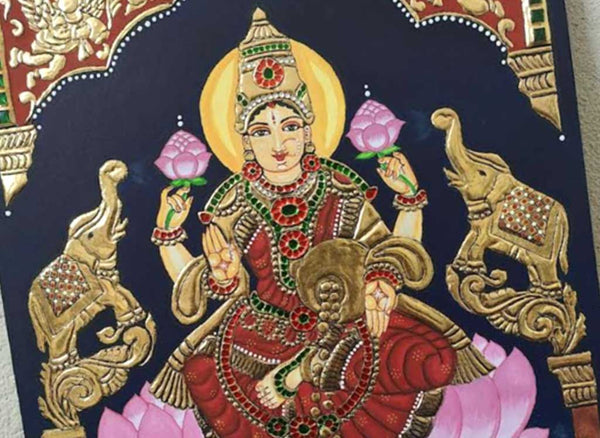
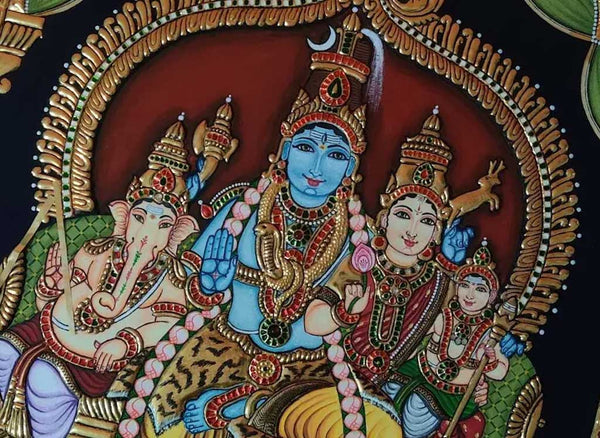
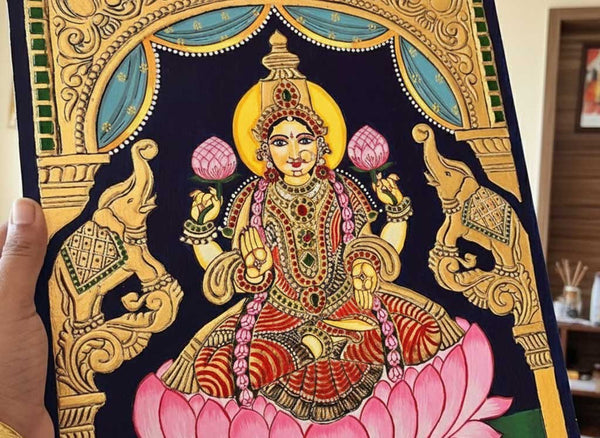
A genuine Tanjore painting with real 24 karat gold foil, hand built gesso relief and set stones usually costs about Rs 20,000 to Rs 40,000 for a small piece, Rs 40,000 to Rs 80,000 for a medium one, and Rs 80,000 into the lakhs for a large or ornate deity. What moves the number is size, how much real gold goes on, how deep the relief work is, the stones, the subject and the weeks of skilled work behind it. And if you'd rather make one yourself, a proper material kit starts at Rs 4,000, with a class or video course on top.
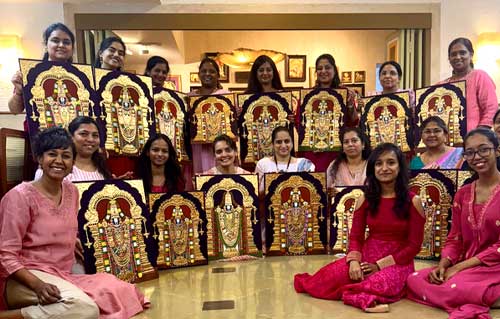
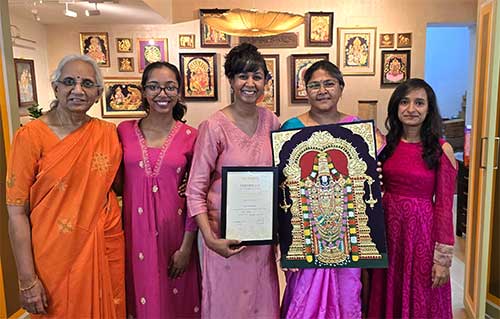
We get asked about Tanjore paintings cost almost every week, and we understand why. The market rarely explains its numbers. We're a studio in Basavangudi, Bangalore, that has made, commissioned and taught this art for more than 35 years, so we'd like to show you every rupee from the inside. Then you can decide which way of owning one feels right for you.
How much does a Tanjore painting cost?
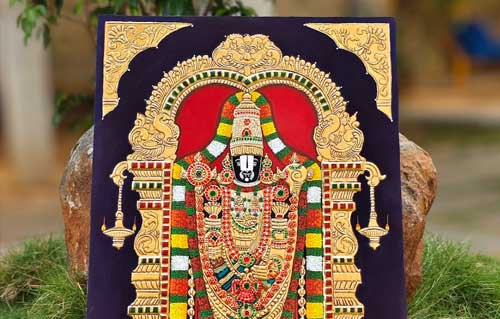
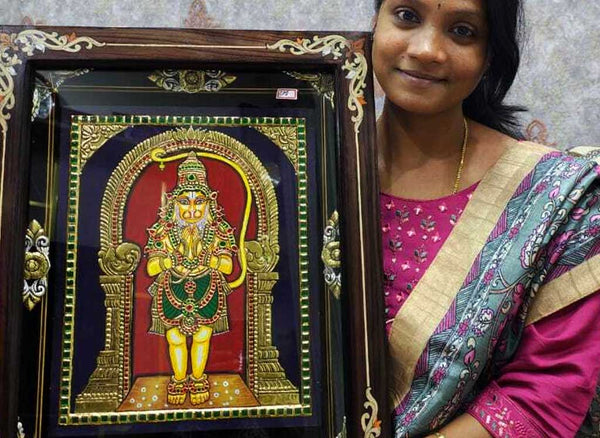
For an authentic, handmade piece, expect to pay from around Rs 20,000 for something small up to a few lakh for a large, heavily jewelled deity. The spread is wide because two paintings that look similar in a photo can hide very different amounts of gold, relief and time.
You'll also see listings for a few thousand rupees. Those aren't impossible, but at that price something has usually been swapped out, most often the gold or the hand built relief. We'll come back to that below, because it's the single most useful thing to understand before you spend.
Tanjore painting cost by size
Size is the easiest factor to see, so it's where most people start. A bigger board needs more gesso, more gold, more stones and many more hours.
| Size band | Typical authentic range | What changes at this size |
|---|---|---|
| Small (roughly 10 x 12 to 12 x 15 inches) | Rs 20,000 to Rs 40,000 | A single deity, simpler arch, fewer stones. A popular first piece for a pooja room. |
| Medium (roughly 15 x 20 to 18 x 24 inches) | Rs 40,000 to Rs 80,000 | Fuller ornaments, more gilded area, richer background detail. |
| Large or ornate (24 inches and up) | Rs 80,000 to Rs 2,00,000+ | Multiple figures, deep relief, heavy gold and stone work, months of skilled hands. |
These are indicative bands, not a rate card. If you want to go deeper into sizes and how to read a quote, our price ranges by size guide walks through it slowly.
Where the money goes: the anatomy of a Tanjore painting
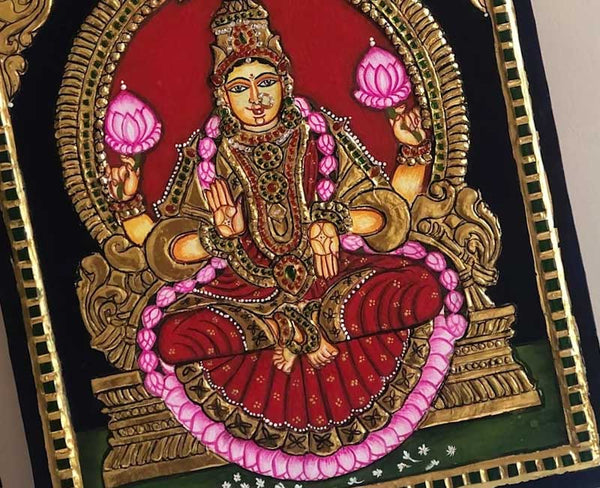
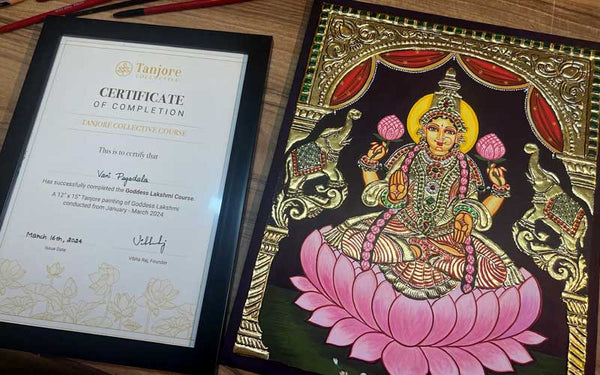
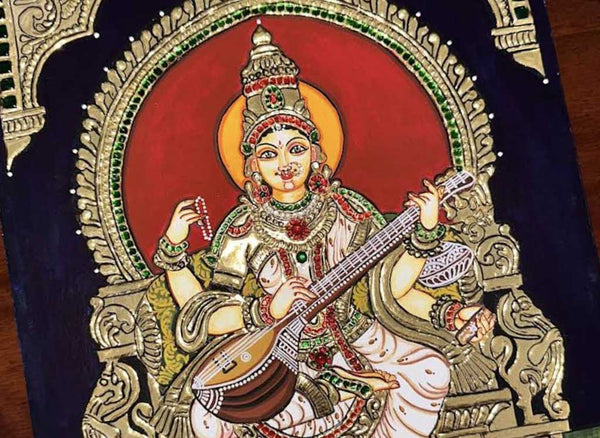
A Tanjore painting isn't paint on a board. It's built up in layers, and every layer is either a real material or real time. Here's what you're paying for, in the order we make it.
The board and its preparation
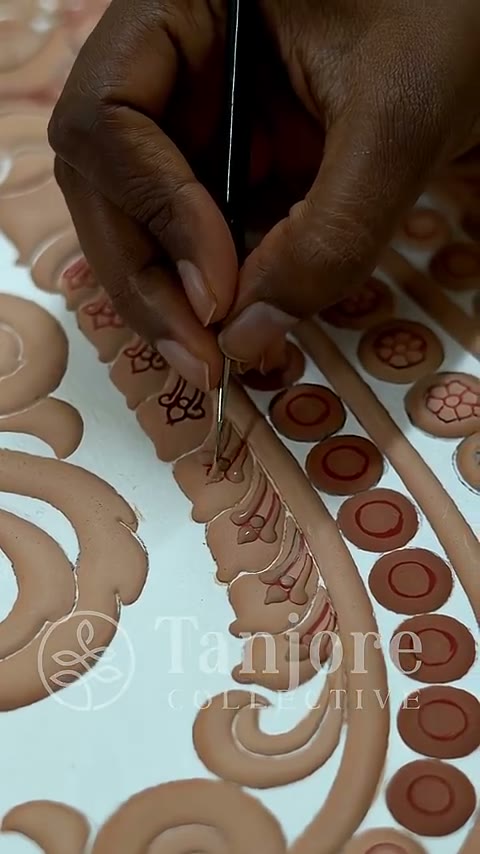
Every piece starts on a board, typically plywood, which is prepared with chalk powder and Arabic gum so the later layers grip and last. It's quiet, unglamorous work. It's also the foundation everything else sits on.
Gesso relief, built by hand
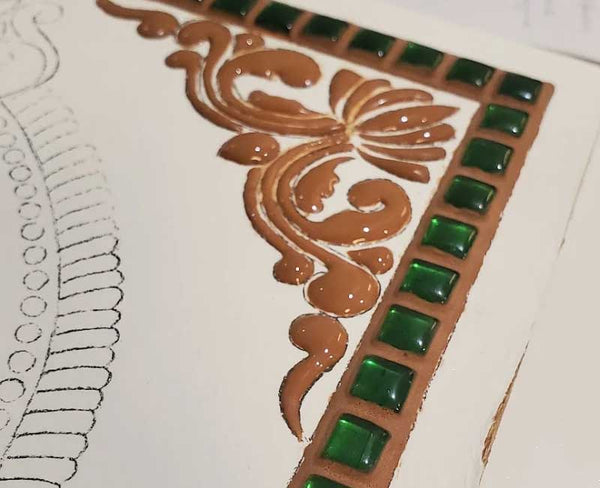
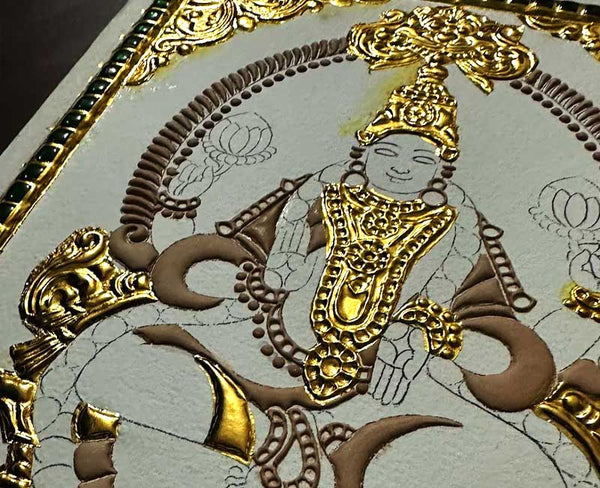
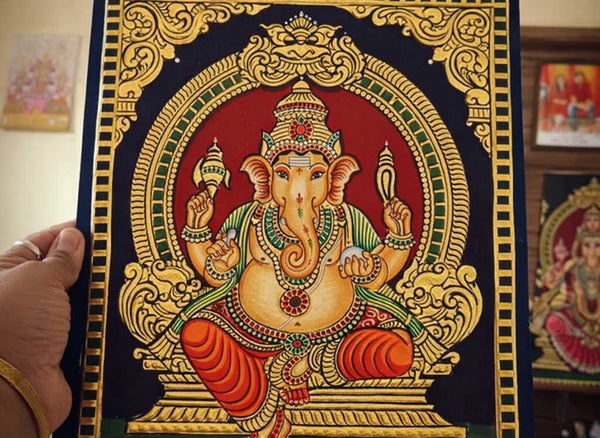
Next the deity's outline goes on, and then the gesso. It's a paste made from chalk powder and Arabic gum, built up by hand into raised arches, crowns and jewellery. In our classes this stage alone takes two to three sessions. It's slow because it has to be even, crisp and strong enough to carry gold.
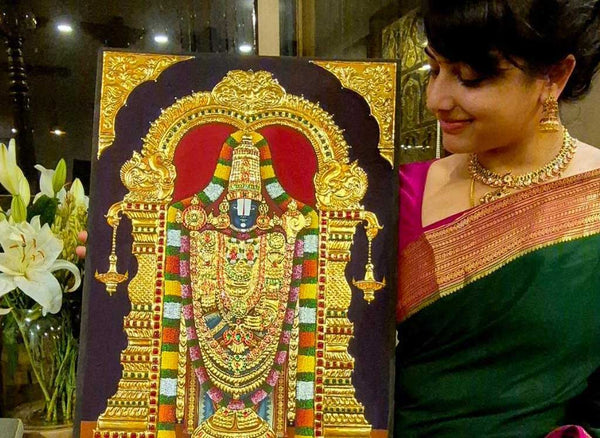
24 karat gold foil
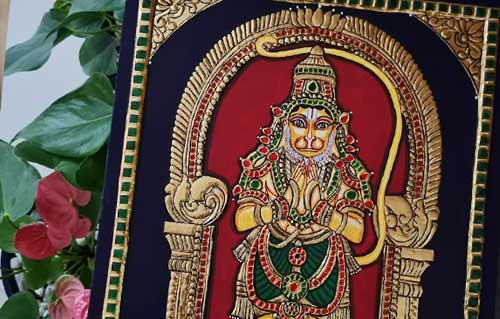
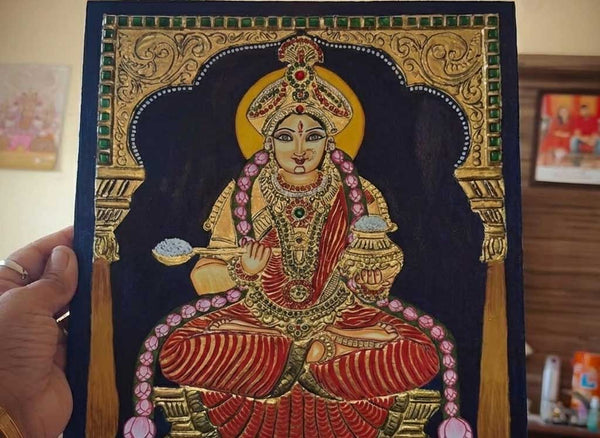
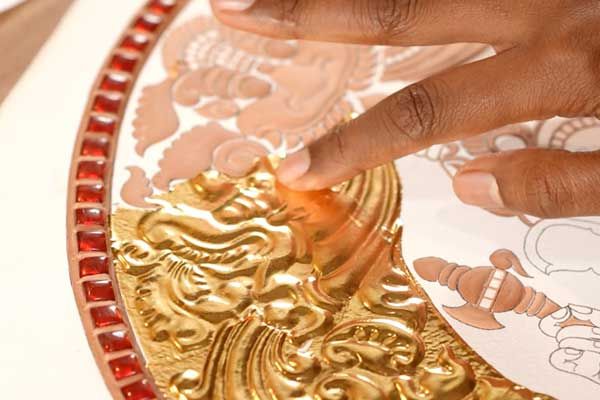
Real gold leaf is laid over the raised areas. This is where much of the material cost lives, and where the painting gets its warm, living shine. We use 24 karat gold because purity of gold matters for the shine and longevity of a painting. More gilded area means more gold, which is why a large, ornate deity costs so much more than a small one. Our post on 22K vs 24K gold foil and what it adds to the price goes into this in detail.
Stones and crystals
Kundan stones are set into the relief for jewelled ornaments, and Swarovski crystals add the final sparkle. Real stones cost more than plastic, and setting them neatly takes patience.
Painting, the face and the finishing
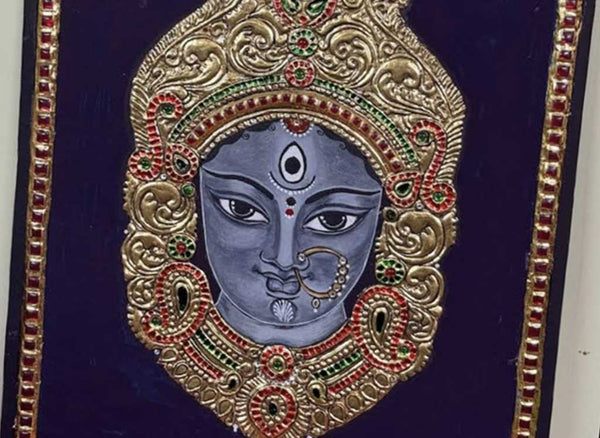
Then comes colour: the body, garments and background, and finally the face. Painting the face of the Devi is the most sacred part of the journey, and it's where an experienced hand shows most. After cleanup and detailing, a finished piece is framed, and framing adds its own cost.
Time: the cost you can't see
Put together, even a small piece takes weeks. In our classes a standard painting runs about 6.5 weeks of twice weekly sessions, and larger pieces like Balaji or Padmavathi run about 2.5 months. A skilled artist's time is a large part of what you pay for, even though you never see it on a label. We break this down stage by stage in why authentic Tanjore paintings cost more.
Watch the value being built
It's easier to understand a price once you've seen the work. This short clip from our studio shows a traditional Thanjavur painting coming together: relief, gold and stones.
Why are some Tanjore paintings so cheap?
Because the expensive parts have been replaced. A painting priced at a few thousand rupees usually uses imitation foil or gold paint instead of real gold, printed or moulded relief instead of hand built gesso, and plastic stones instead of kundan. Some are prints with a little texture added on top.
That doesn't make them bad decorations. But they aren't the same object as a real painting, and they won't age the same way.
Questions to ask any seller
- Is the gold real gold foil, and what karat?
- Is the relief hand built gesso, or moulded?
- Are the stones kundan, and are any crystals genuine?
- What's the board, and is framing included?
- Who painted it, and how long did it take?
A good seller will answer all five without hesitating. For a fuller checklist you can keep open while shopping, see how to spot an authentic Tanjore painting.
Buy, commission or make your own: three ways to own one
This is the part nobody else talks about. There isn't one Tanjore painting cost, because there are three quite different ways to bring one home.
| Buy ready-made | Commission | Make it yourself | |
|---|---|---|---|
| Typical cost | By size band (Rs 20,000 upwards for authentic work) | Usually the upper end of a size band; on enquiry | Rs 4,000 kit plus course fee (roughly Rs 19,000 to Rs 31,000 for a first painting) |
| Time to own it | Fastest | Weeks to months of studio time | About 6.5 weeks for a first piece |
| Choice of deity and size | What's available | Fully yours to decide | Chosen from our course deities |
| What you keep | A finished painting | A painting made only for you | Your own painting, and the skill to make more |
Buying ready-made
The simplest route. You see the piece, you know what you're getting, and it can be on your wall soon. You can enquire about a painting from our current work.
Commissioning a piece
If you have a particular deity, size or detail in mind, a commission means an artist builds that painting just for you. It often sits at the higher end of a size band, because nothing is standard. Here's how to commission a custom piece step by step.
Making it yourself
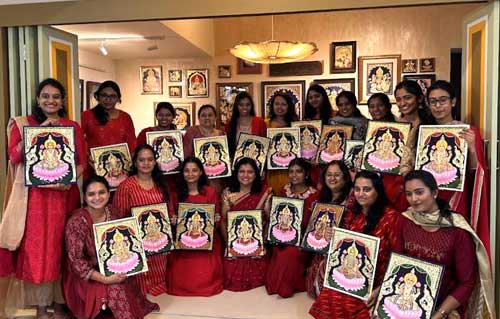
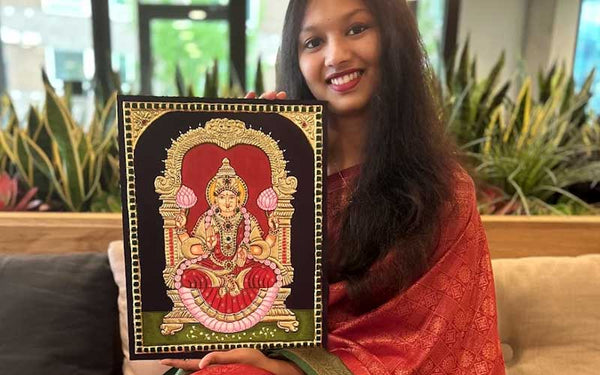
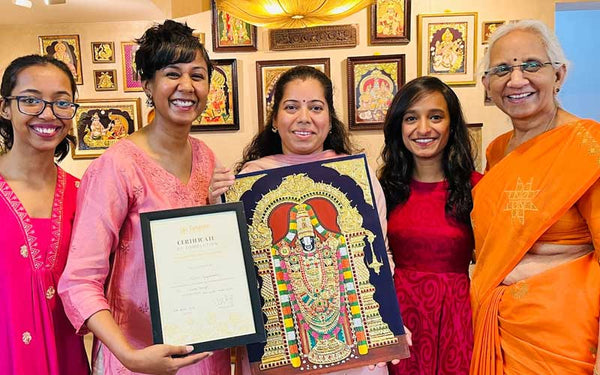
This is the route we love most, because it's how most of our students first fell for the art. Our Essentials Material Kit costs Rs 4,000 and comes with a pre-sketched board, 24 karat gold sheets, Arabic gum, chalk powder, kundan stones, Swarovski crystals and four brushes. Add a DIY video course, live online classes or studio classes, and a complete beginner can finish a real painting in about 6.5 weeks.
We've put the full budget in what it costs to make your own Tanjore painting, and every fee by format in Tanjore painting class fees.
What about old and antique Tanjore paintings?
Antiques are a different market with different value drivers, such as age, condition and history, and they're best valued by a specialist. We make new paintings and teach, and we don't sell or appraise antiques. If you have an old piece at home, our guide on how to judge the value of an old Tanjore painting explains what to look at and who to ask.
Is a Tanjore painting worth the cost?
We're biased, of course. But here's what we see again and again. Real gold keeps its warm shine for a very long time, which is why purity matters so much to us. A well made piece isn't something you replace. It goes into the pooja room, it's there for festivals and family moments, and it's often passed on.
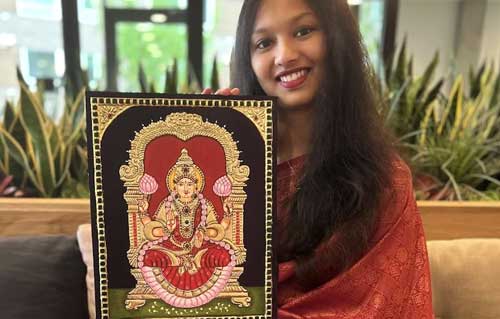
And for the people who make their own, the value is different again. Many of our students tell us the weeks of quiet work felt meditative, even like therapy, and that painting the deity's face was the moment they'll remember. A Rs 4,000 kit and a course won't buy you a large, ornate heirloom. But it will give you a painting you made with your own hands, and that's hard to put a price on.
Frequently asked questions
How much does a Tanjore painting cost in India?
An authentic, handmade Tanjore painting usually costs about Rs 20,000 to Rs 40,000 for a small piece, Rs 40,000 to Rs 80,000 for a medium piece and Rs 80,000 into the lakhs for a large or ornate one. Price depends mostly on size, real gold foil, relief detail, stones, subject and artist time.
Why do Tanjore paintings cost so much?
Because they're built from real materials and a lot of skilled time. Hand built gesso relief, 24 karat gold foil, kundan stones and careful painting take weeks, even for a small piece. You're paying for gold and for hands.
Is it cheaper to make my own Tanjore painting?
The materials alone are much cheaper: our Essentials Material Kit is Rs 4,000. Add a course and the total for a first painting is similar to buying a small authentic piece, but you also keep the skill and the experience of making it.
Does a real Tanjore painting use real gold?
Yes. Authentic Tanjore paintings use real gold foil over the raised relief. We use 24 karat gold, because purity matters for the shine and longevity of the painting.
How much does a custom Tanjore painting cost?
It depends on the deity, size and level of detail you choose, and it usually sits at the upper end of a size band. Commissions are quoted on enquiry after we understand what you have in mind.
Keep reading
- Why are Tanjore paintings so expensive? A look inside the making
- Tanjore painting gold foil: 22K vs 24K and why it changes the price
- What does it cost to make your own Tanjore painting?
- Tanjore painting class fees: online, studio and DIY
- What is an old Tanjore painting worth?
- Buy Tanjore paintings online: the complete buyer's guide
More blog articles
Goddess Lalitha Devi Tanjore Painting Class: Meaning and How to Learn It
Who Goddess Lalitha Devi is, when she is worshipped, and how to paint her yourself, even as a complete beginner.
Lord Balaji (Venkateshwara) Tanjore Painting Class: Meaning and How to Learn It
The meaning of Lord Balaji, his festivals, and how to paint Venkateshwara in the Tanjore style over our detailed 2.5-month course.
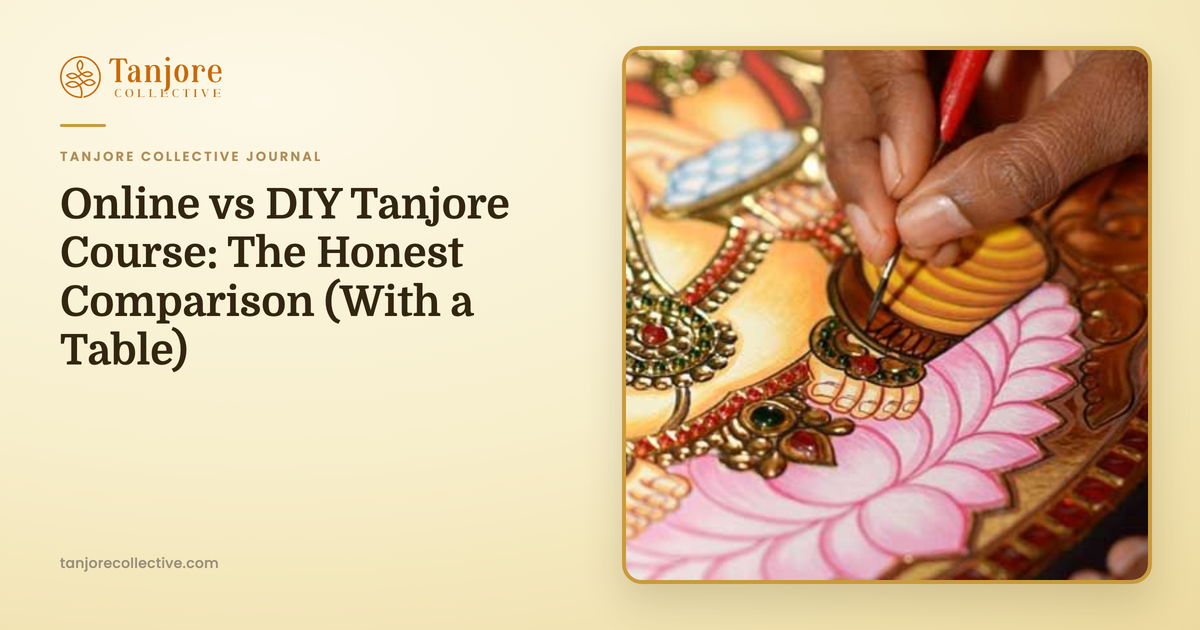
Online vs DIY Tanjore Course: The Honest Comparison (With a Table)
Online or DIY Tanjore course? An honest, side-by-side comparison so you can choose structure or flexibility.
What our students say
Hear from students who've learned the art of Tanjore painting with us.