Why Are Tanjore Paintings So Expensive? A Look Inside the Making

Written by
Swathi Katta
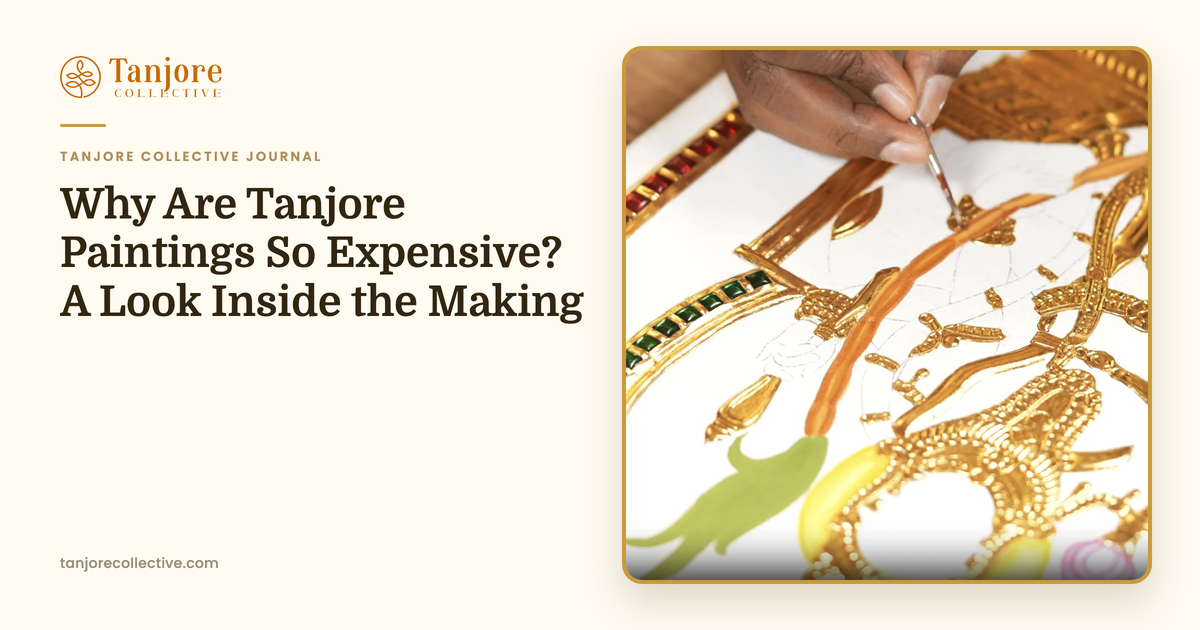
A master teacher walks through a Tanjore painting stage by stage, from board and gesso to gold, stones and the face, to show exactly why authentic pieces cost more.
Key takeaways
- Tanjore paintings are expensive because they are built, not just painted — real 24 karat gold foil, hand-built gesso relief, set kundan stones and crystals, and weeks of skilled work.
- An authentic small piece starts around Rs 20,000; take away any of those materials or steps and the price drops, but so does the painting.
- The three cost drivers are real materials, hand-built layers and time — gold leaf costs money, and relief and stone-setting cannot be rushed.
- Very cheap listings (a few thousand rupees) have usually swapped out the gold, the relief or the handwork.
- Our own paintings are made to order and priced on enquiry.
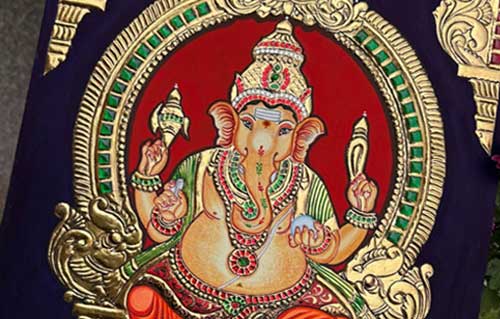
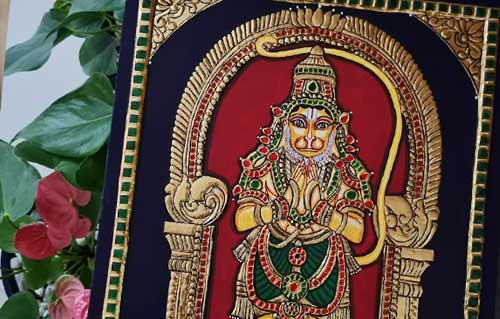
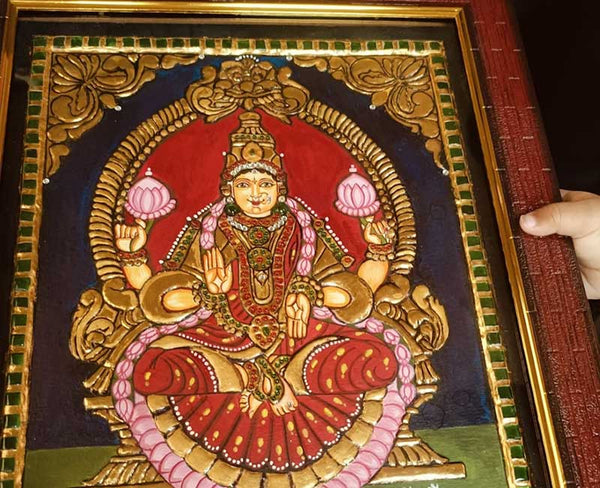
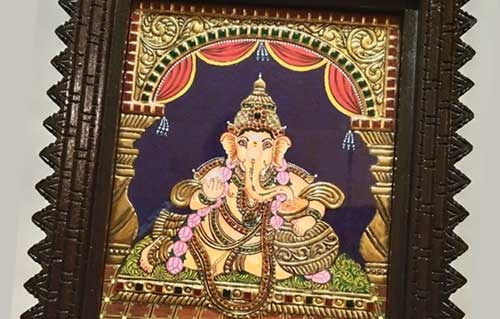
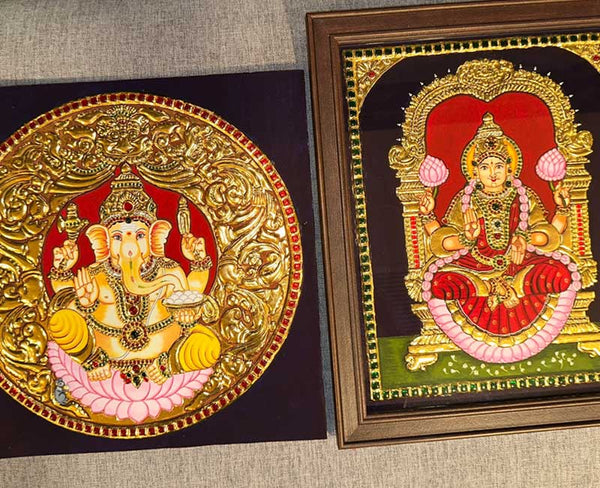
Tanjore paintings are expensive because they're built, not just painted. Every piece carries real 24 karat gold foil, raised gesso relief shaped by hand, set kundan stones and crystals, and weeks of careful work by a trained artist, which is why an authentic small piece starts around Rs 20,000. Take any of those away and the price drops, but so does the painting.
If you've seen one listing at a few thousand rupees and another at Rs 60,000 and wondered what on earth the difference is, you're not alone. This post walks you through a painting the way we make it in our studio, stage by stage, so you can see the price being built. For the full picture of what you'll pay and the ways to own one, start with our complete Tanjore painting cost guide.
Why are Tanjore paintings so expensive? The short answer
Three things: real materials, hand built layers and time. Gold leaf costs money. Gesso relief and stone setting can't be rushed. And a painting that looks simple from across the room has usually taken a trained artist many weeks.
Where the cost is built, stage by stage
This is the same sequence we teach in our classes. We've listed how many class sessions each stage takes, because it's the most honest way we know to show you where the hours go.
| Stage | Materials | Time in our classes |
|---|---|---|
| Board and canvas preparation | Plywood board, chalk powder, Arabic gum | Early sessions |
| Sketch transfer | The deity's outline | Kits arrive pre-sketched |
| Gesso relief (embossing) | Chalk powder and Arabic gum paste | 2 to 3 sessions |
| Kundan stone placement | Kundan stones | 2 sessions |
| Gold foil application | 24 karat gold sheets | 2 to 3 sessions |
| Deity painting | Paints, fine brushes | 2 to 3 sessions |
| Face painting | Fine brushes | 1 to 2 sessions |
| Crystal finishing and final touches | Swarovski crystals, framing | Final sessions |
Preparing the board
Before any beauty appears, the board is prepared with chalk powder and Arabic gum. Nobody photographs this part. But if it's rushed, everything above it suffers.
Gesso relief: the slow heart of the painting
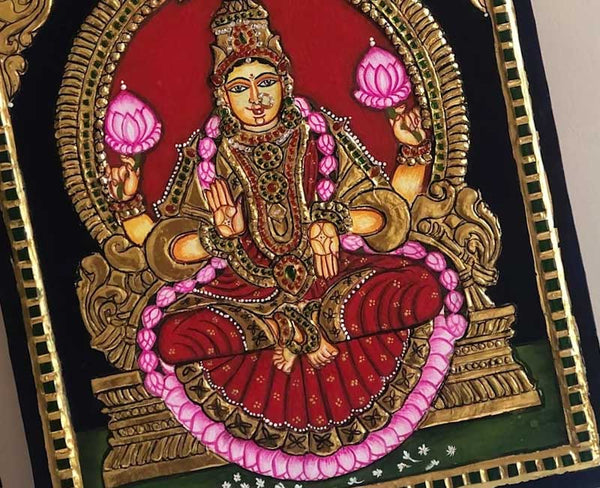
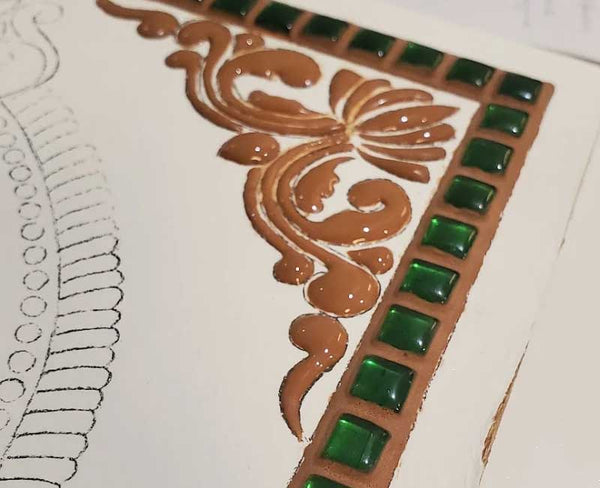
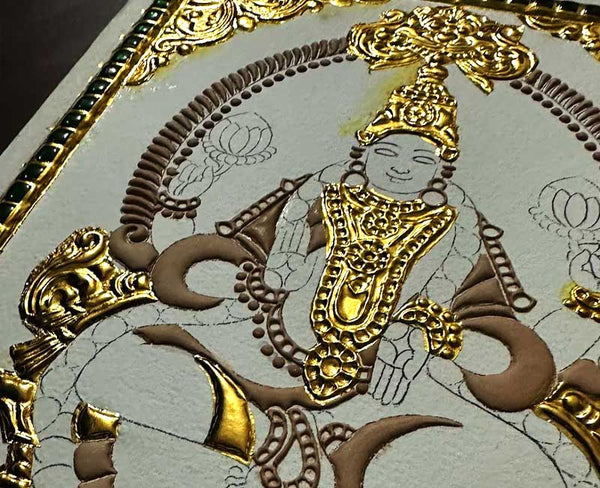
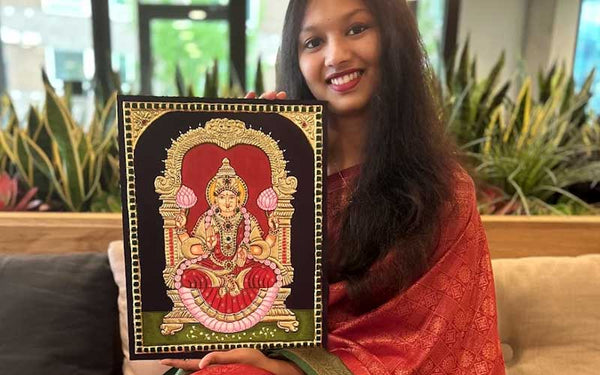
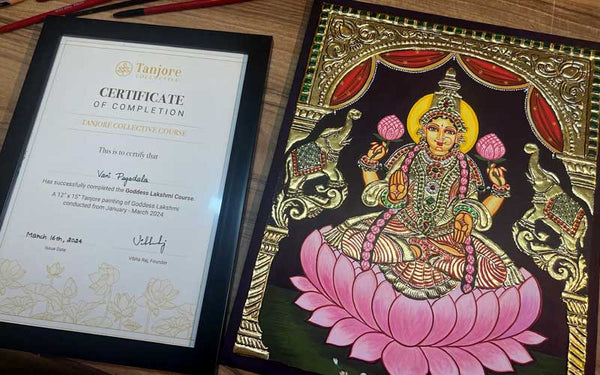
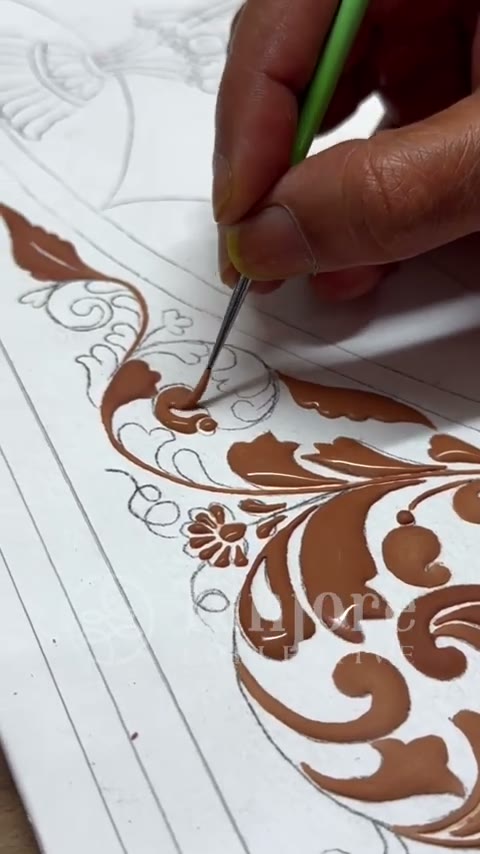
Gesso is a paste of chalk powder and Arabic gum, built up by hand into the raised arches, crowns and jewellery that make a Tanjore painting look three dimensional. It needs a steady hand and patience, and it has to be crisp enough to hold gold later. In class it takes two to three sessions, and that's with a pre-sketched board and a teacher beside you.
Intricate gesso work in our studio. Every raised line here is shaped by hand.
Stones and gold
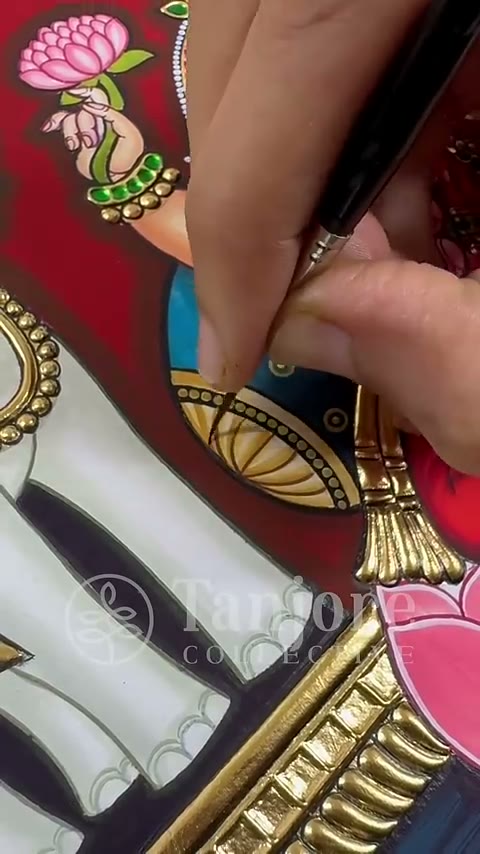
Kundan stones are set into the relief for jewelled ornaments. Then real gold leaf goes over the raised areas. Gold is where much of the material cost sits, and more gilded area means more gold. We use 24 karat, because purity of gold matters for the shine and longevity of the painting. If you're curious how the grade changes the price, read how gold foil grade affects price.
Painting and the face
Colour comes last: body, garments, background. Then the face. We always say painting the face of the Devi is the most sacred part of the journey. It's also where years of practice show, and where a rushed painting gives itself away.
How long does a Tanjore painting take?
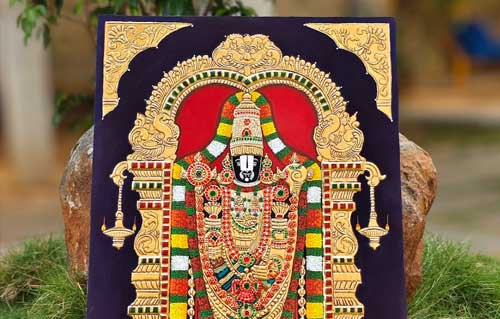
A standard painting takes about 6.5 weeks in our classes, with two sessions a week, and larger pieces such as Balaji or Padmavathi take about 2.5 months. A professional working on a commission isn't learning as they go, of course. But the stages are the same, the drying and layering are the same, and the care is the same. That time is a big part of the price.
The skill premium: why the artist matters
Two artists can use identical materials and produce very different paintings. Proportion, the smoothness of the relief, how cleanly the gold is laid, the expression on the face. These come from years of practice, not from the materials list.
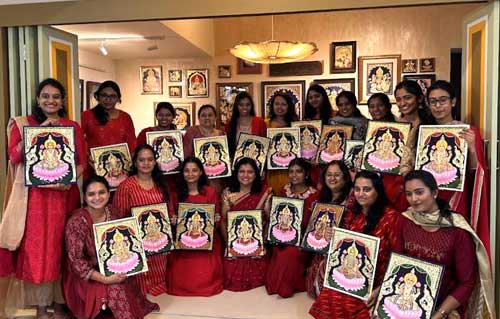
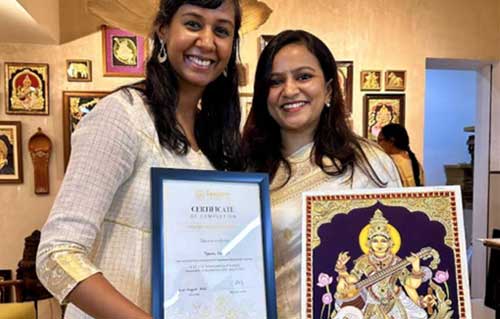
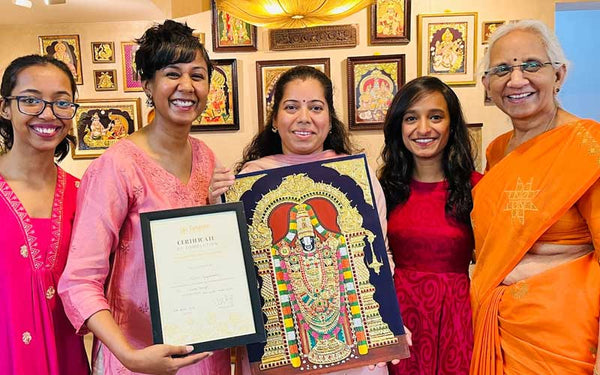
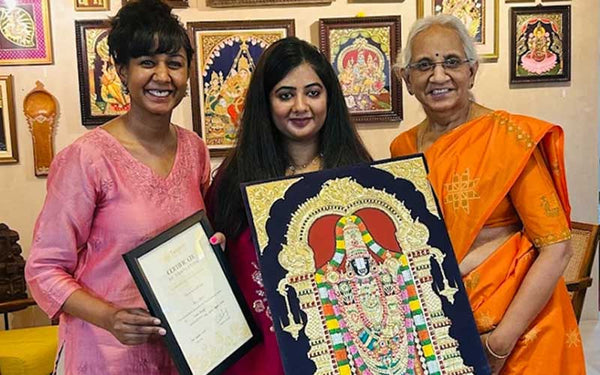
At our studio that practice runs deep. Our guru, Vani Bhaskar, has 35 years of experience and has taught over 2,000 students, and her teaching lineage runs through her daughter Vibha Raj to the teachers who work alongside them. When you pay for an experienced artist, you're paying for all the paintings that came before yours.
So what does a cheaper piece leave out?
Usually one or more of the expensive stages. Imitation foil or gold paint in place of real gold. Moulded or printed relief in place of hand built gesso. Plastic in place of kundan. Less time on the face and the fine detail.
We don't say this to knock anyone. A decorative piece can be lovely on its own terms. But if you're paying for a Tanjore painting, it helps to know what should be in it. Keep our checklist to spot an authentic Tanjore painting handy when you shop.
A thought from our studio
Most people stop asking why Tanjore paintings are expensive the day they lay their own first sheet of gold. If you'd like to feel that for yourself, see how a Tanjore painting is made, or look at our classes.
Frequently asked questions
Why are Tanjore paintings so expensive?
Because they use real 24 karat gold foil, hand built gesso relief, set kundan stones and crystals, and many weeks of a trained artist's time. Each of those adds real cost, and none can be rushed without the painting showing it.
How long does it take to make a Tanjore painting?
In our classes, a standard painting takes about 6.5 weeks with two sessions a week. Larger pieces such as Balaji or Padmavathi take about 2.5 months.
Is a cheap Tanjore painting fake?
Not always, but a very low price usually means something expensive has been replaced, most often the gold or the hand built relief. Ask the seller what the gold is, how the relief was made and what the stones are.
What is the most expensive part of a Tanjore painting?
Real gold foil is usually the biggest material cost, and the artist's weeks of work make up a large share of the rest. A large, heavily gilded painting uses more of both.
Still weighing it up? Our Tanjore painting cost guide brings sizes, price ranges and the buy, commission or make choice together in one place.
More blog articles
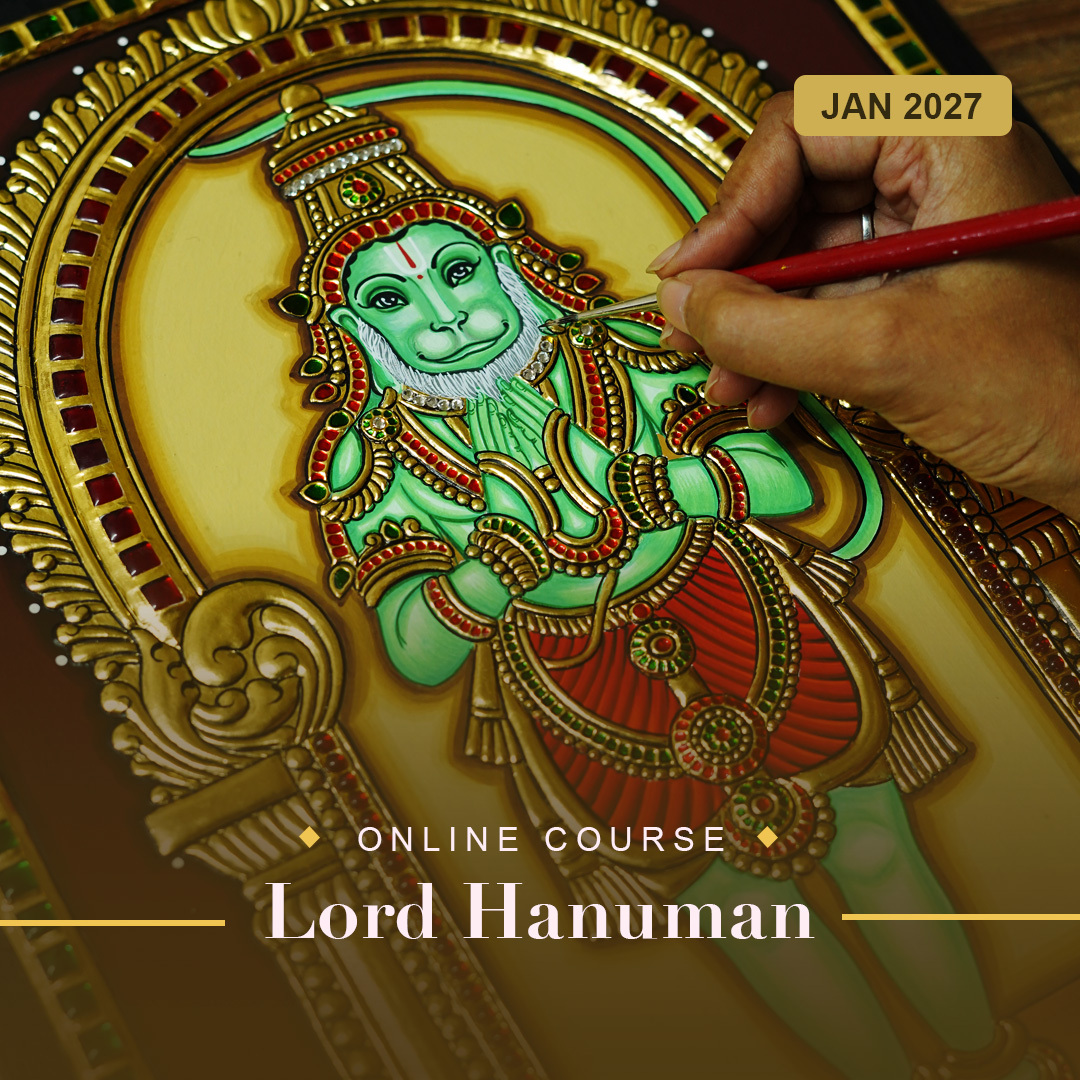
Lord Hanuman Tanjore Painting Class: Meaning and How to Learn It
Who Lord Hanuman is, when he is worshipped, and how to paint him yourself, even as a complete beginner.
Tanjore Painting Course Details: Everything Included in Our Courses
Everything you receive in a Tanjore Collective course: teaching, recordings, app access, materials, feedback and a certificate.

Tanjore Painting Course Registration: How to Register, Step by Step
How to register for a Tanjore painting course, from choosing your batch to receiving your kit and starting class.
What our students say
Hear from students who've learned the art of Tanjore painting with us.