The History and Origins of Tanjore Painting
Written by
Vibha Raj
A short, respectful look at the roots of Tanjore painting and its signature style.
Tanjore painting takes its name from Thanjavur, also written Tanjore, in Tamil Nadu, and that is where its story begins. It grew as a devotional art under royal patronage, and the visual language it developed there, built on real gold, raised relief and inlaid stones, is still the language it speaks today. Understanding where the style comes from makes it easier to appreciate why it looks the way it does and why it has endured for so long.
A note on accuracy: we keep this history general on purpose. We would rather state clearly what we know about the tradition than repeat contested or precise dates we cannot stand behind.
Where Tanjore painting began
The art form is named for Thanjavur in Tamil Nadu, a region with a deep and living temple culture. That devotional setting shaped everything about the style, from the choice of subjects, almost always Hindu deities, to the way the finished piece was intended for the home shrine and for daily worship. The art did not develop as decoration first and devotion second. It was devotional from the beginning, and that purpose is written into every convention of the form.
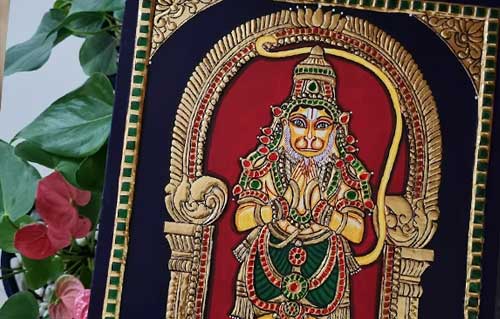
That origin explains a great deal about how the paintings look and feel. The serene, rounded faces are meant to be gazed upon in prayer, not merely admired. The ornate arch that so often frames the deity echoes the shrine itself. Even the richness of the gold and the jewelled ornamentation follows from the purpose: this was an image made to honour the divine, and so it was made with the most precious materials at hand. Once you see the style as devotion first, its every choice starts to make sense.
Royal patronage and the classical style
Tanjore painting flourished under the patronage of the courts at Thanjavur. That royal support is a large part of why the style leans so rich and regal, using genuine gold and jewelled ornamentation rather than modest materials. When art is made to honour deities under the eye of a court, it tends toward splendour, and Tanjore painting embraced that fully. The gold foil, the embossed relief and the inlaid stones are the visible legacy of that patronage.
What makes the style unmistakable
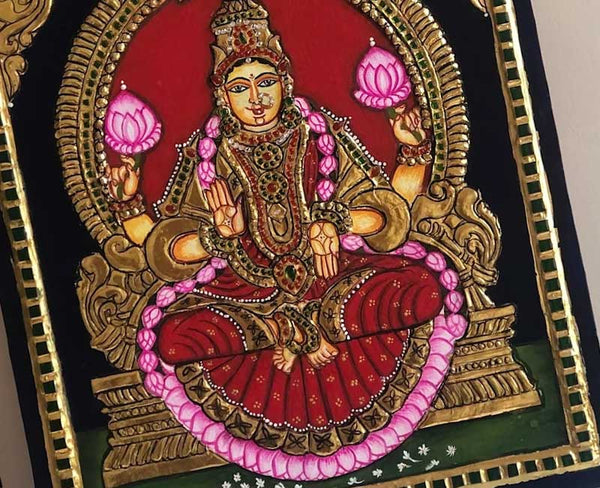
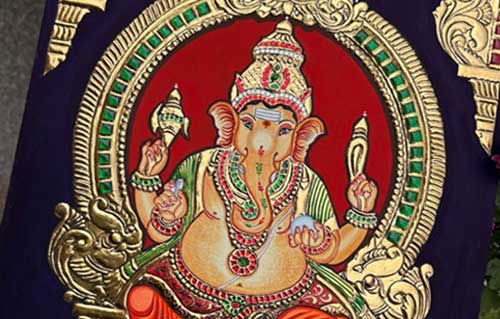
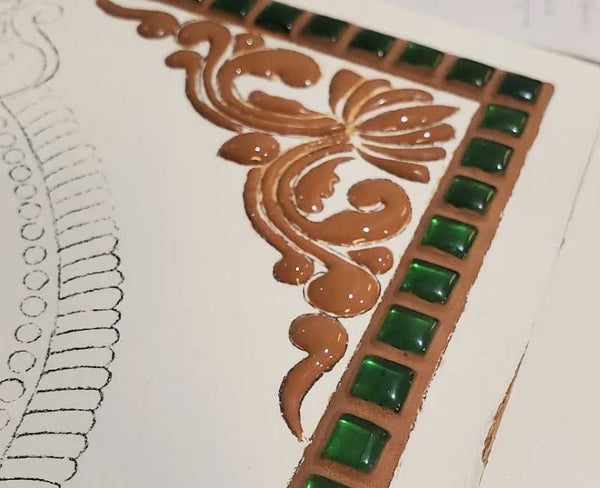
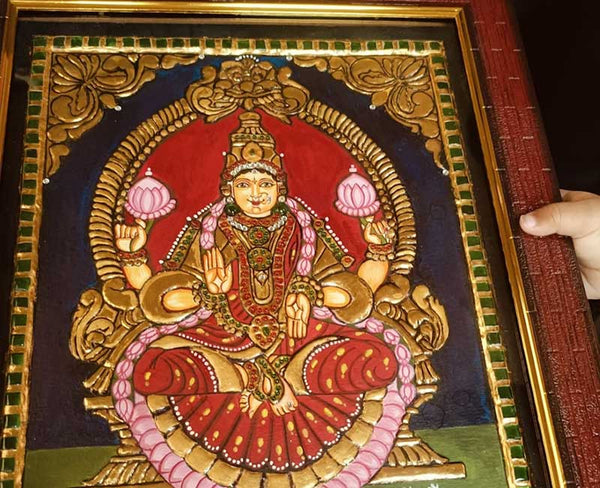
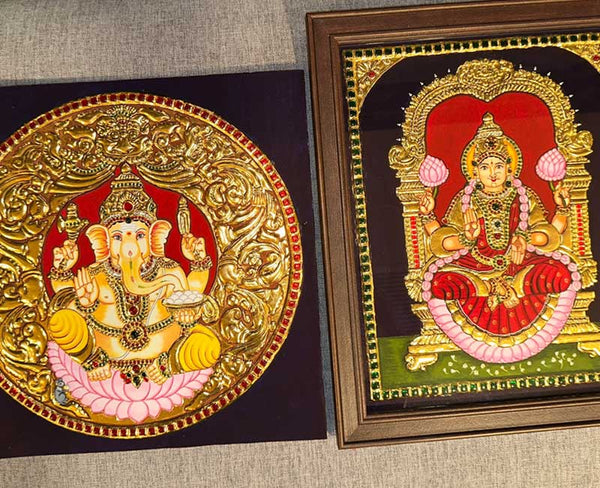
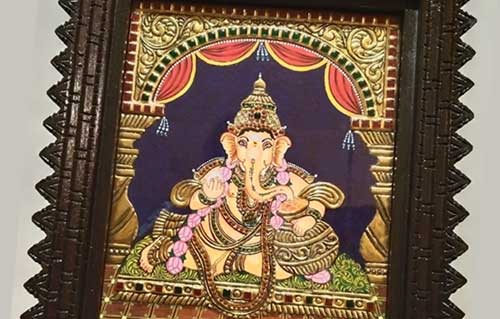
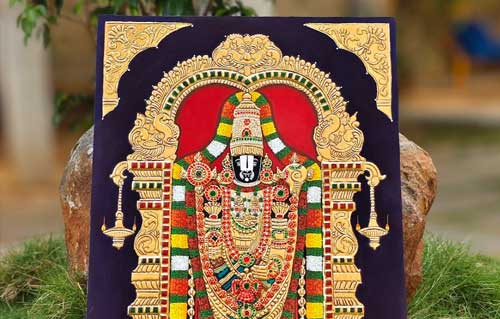
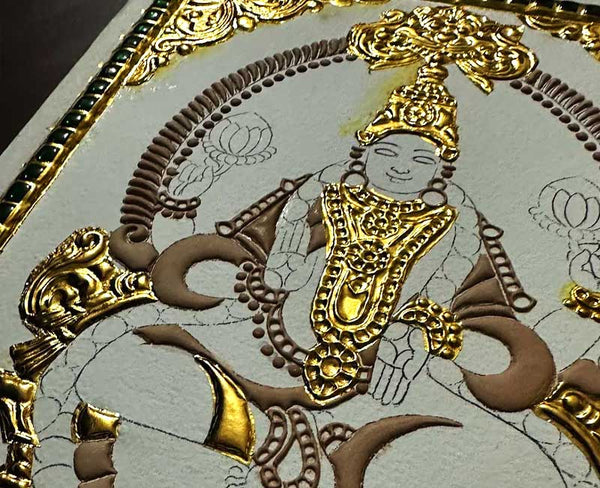
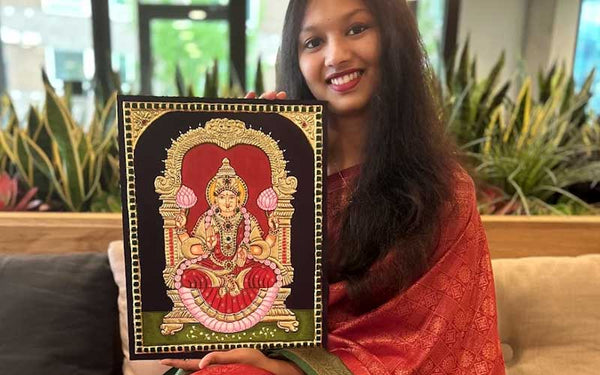
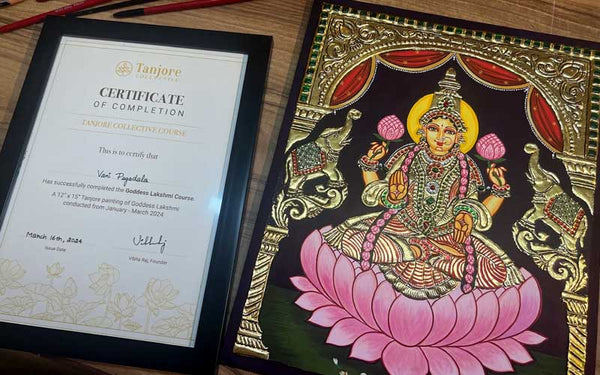
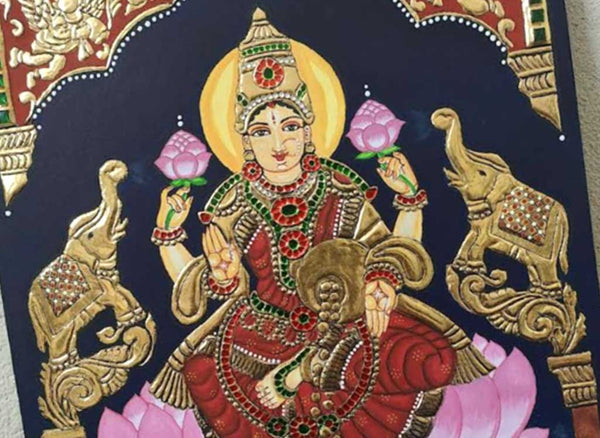
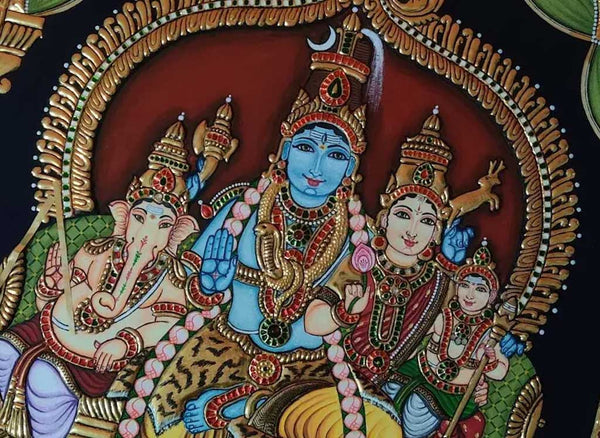
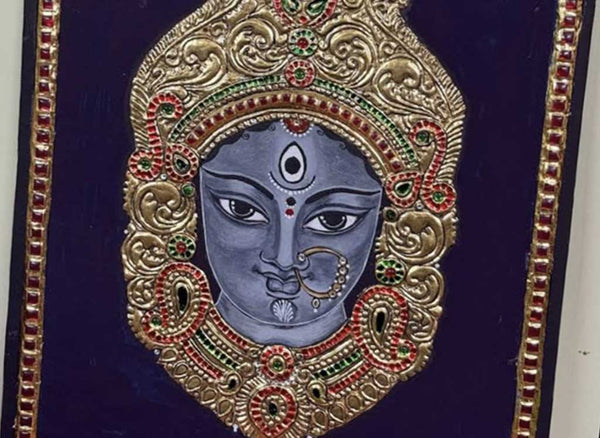
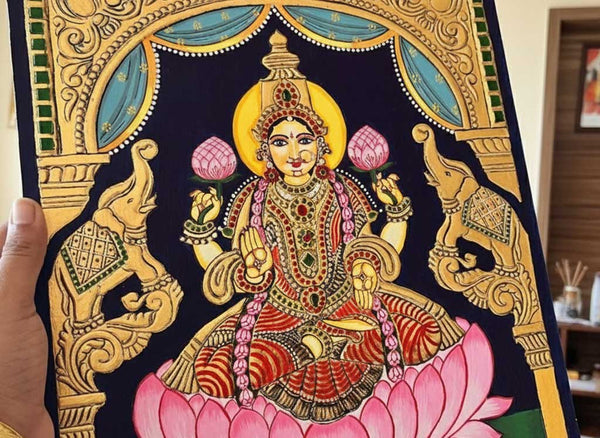
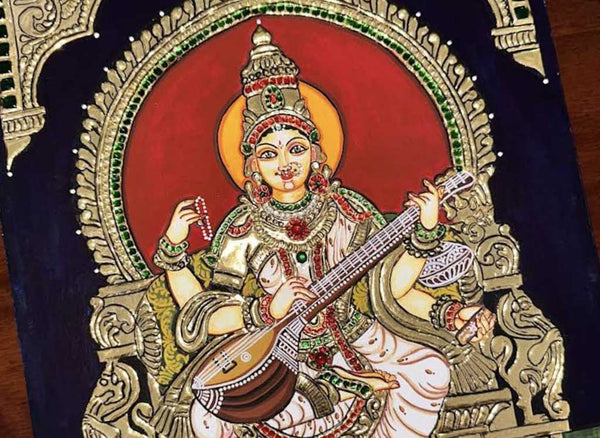
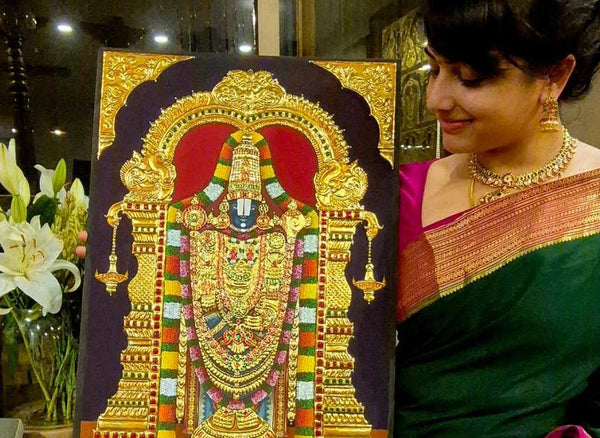
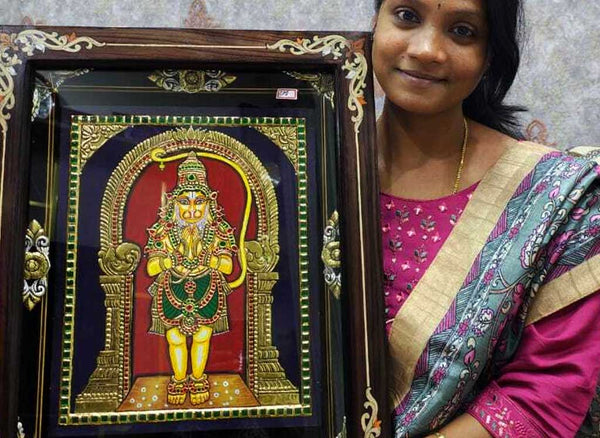
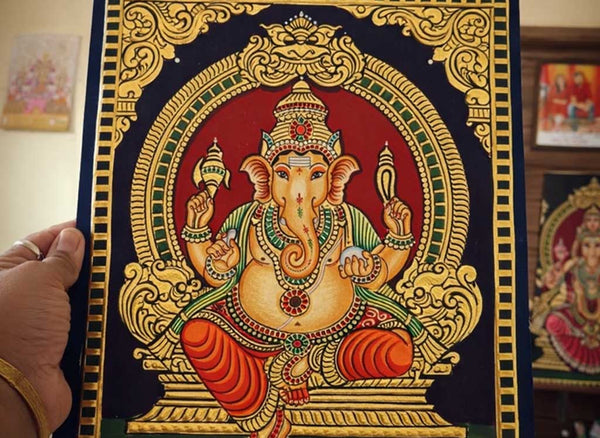
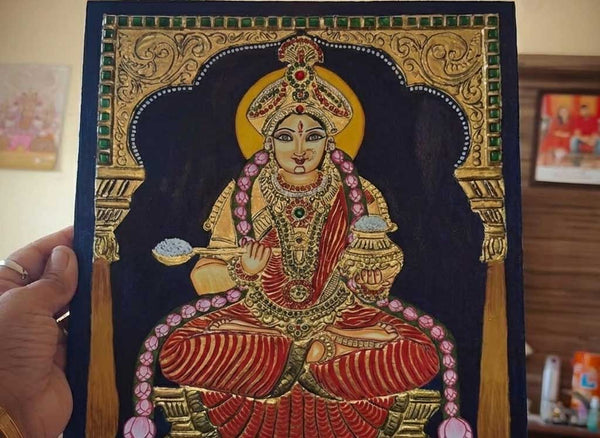
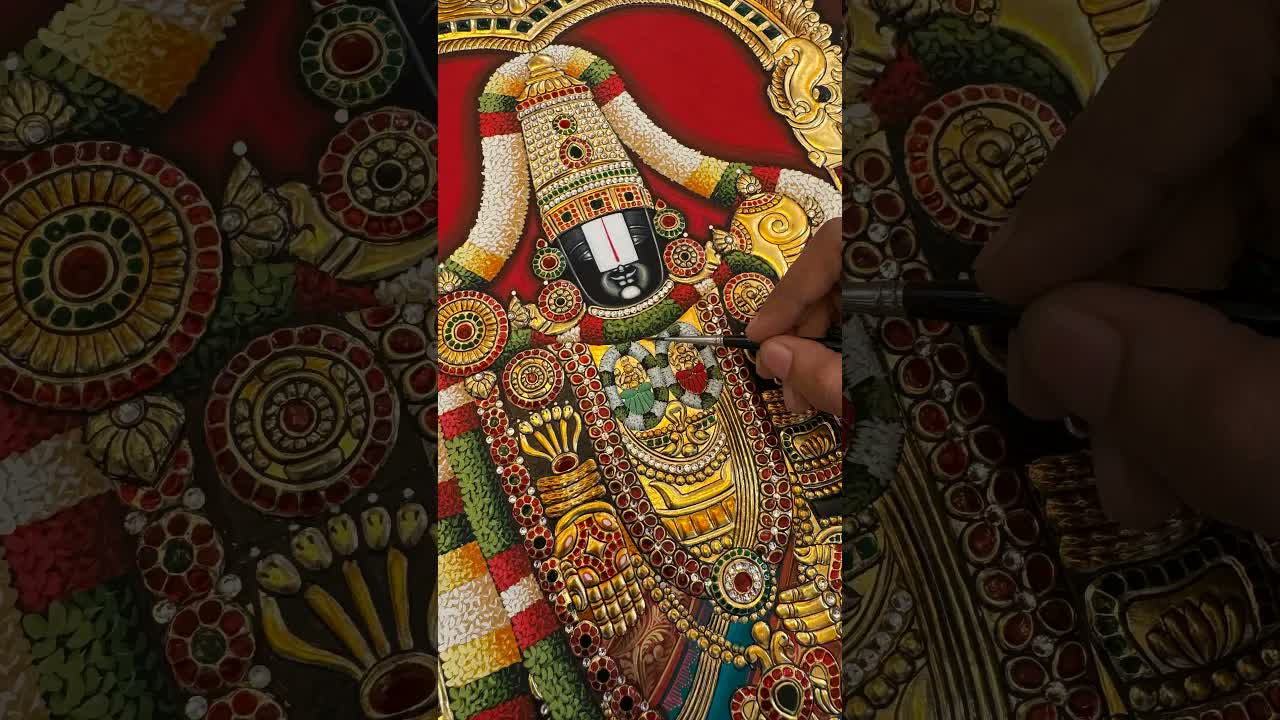
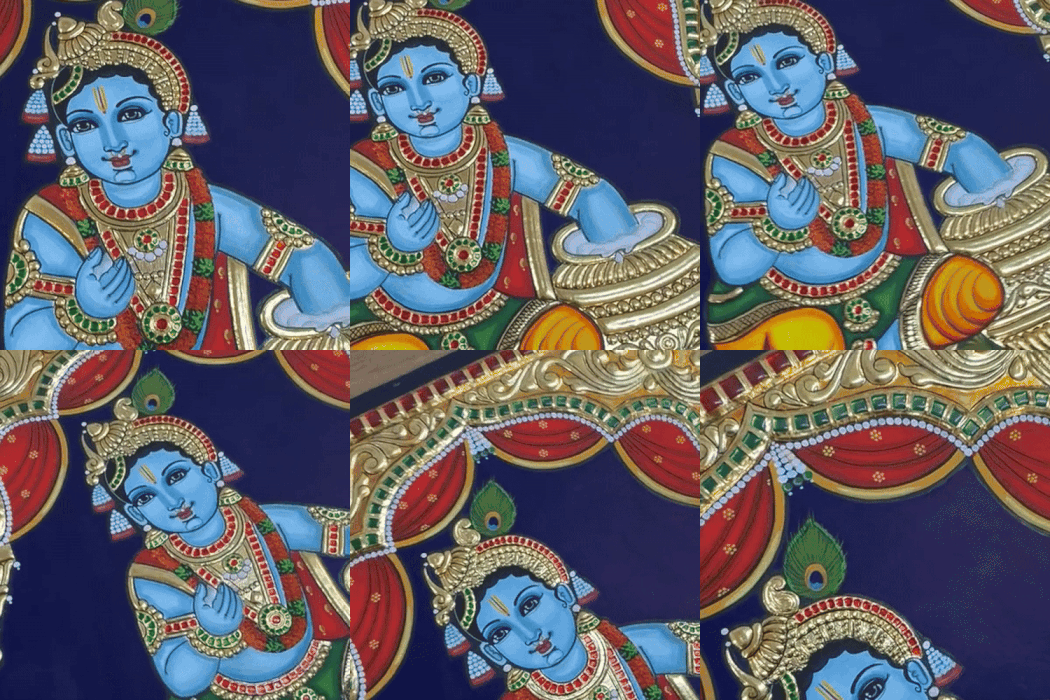
Across the centuries, the signature of Tanjore painting has stayed remarkably consistent. You will recognise it by its use of 24 karat gold foil laid over a raised gesso relief, by kundan stones and crystals set into the surface, by rounded and serene figures, and by saturated devotional colour, usually showing a Hindu deity seated within an ornate arch. Each of these elements has a specific role, and we explain them in detail in the materials guide. It is the combination of all of them together, not any single one, that makes a painting recognisably Tanjore.
Tanjore painting today
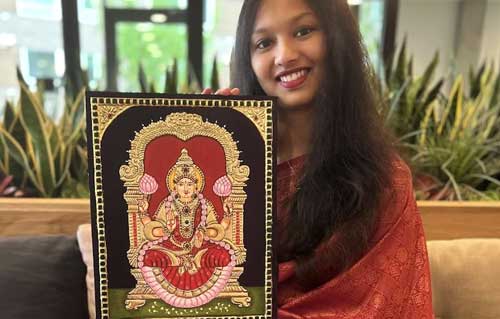
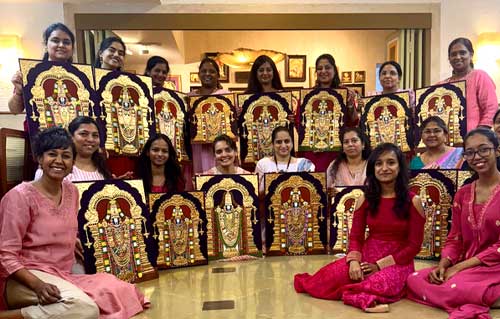
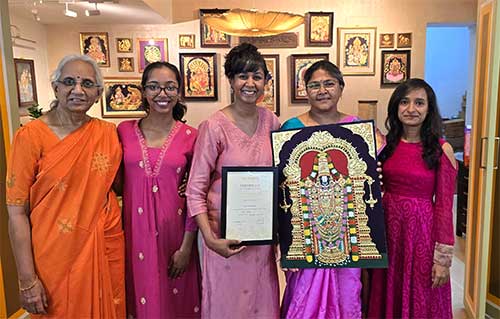
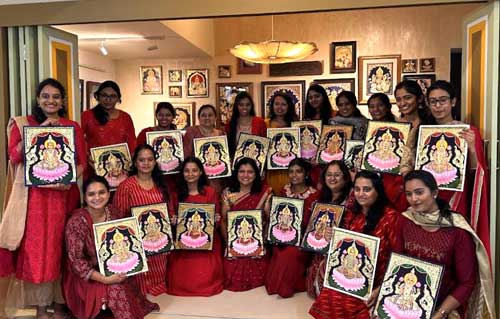
The tradition is very much alive. At our studio we still make these paintings by hand, the traditional way, with the same materials and the same patient sequence of steps that the style has always used. We have painted more than a thousand pieces over four decades, and we teach the same techniques to over 4,000 students, many of them far from Tamil Nadu and even outside India. Keeping this craft going, and passing it on to a new generation of painters, is a large part of why Tanjore Collective exists.
Why the style has stayed so consistent
One of the most striking things about Tanjore painting is how little its essential character has changed. A great deal of art evolves quickly with fashion, but the core of this style, real gold over raised relief, inlaid stones, serene deities in saturated colour, has held steady across generations. Part of the reason is its devotional purpose. When a painting is made to honour a deity for the home shrine, there is a natural conservatism to it, a wish to keep faith with how it has always been done. Another part is simply that the method works. The sequence of preparing the board, building the gesso, setting the stones, laying the gold and painting last has proven itself over a very long time, and artists have had little reason to abandon it. That continuity is exactly why a painting made today can sit so naturally beside one made long ago.
The place of Tanjore painting in the home
To understand the tradition it helps to picture where these paintings actually live. In many South Indian homes a Tanjore painting sits in the pooja room as a devotional icon, present for daily prayer, its gold catching the light of a single lamp. This is not a painting made to be viewed once and forgotten. It is made to be lived with, prayed before and passed down, which is why so much care goes into making it durable and why families treat these pieces as heirlooms. That intimate, everyday place in the home is a direct continuation of the art's devotional origins, and it is a large part of why the style has never become a mere museum piece.
Preserving the tradition
A living craft survives only as long as it is practised and taught, and that is the work we take most seriously. Every painting we make by hand and every student we teach is a small act of preservation, carrying the techniques forward rather than letting them fade into museums. Teaching students well beyond Tamil Nadu, and beyond India, widens the circle of people who can keep the art alive. The gold, the gesso and the stones are the visible legacy of Thanjavur's devotional and courtly past, and keeping that legacy in living hands, rather than only in history books, is the point of passing it on.
The temple culture that shaped it
To understand Tanjore painting it helps to picture the world it grew from. Thanjavur and its region in Tamil Nadu have a deep and living temple culture, and art there has long been inseparable from devotion. In that setting, an image was not primarily a decorative object. It was a focus for worship, a way of honouring and drawing near to the divine. Tanjore painting emerged from and served that culture, which is why its subjects are deities, why its faces are serene and made to be gazed upon in prayer, and why it was created for the shrine as much as for the wall. The art carries the atmosphere of the temple into the home, and that is a large part of its enduring appeal even today.
The materials as a legacy of patronage
The richness of a Tanjore painting is itself a piece of history you can see. Under royal patronage, artists had access to the finest materials, and it was natural to offer the most precious of them to the divine. That is why the tradition settled on real gold, on jewelled ornamentation with stones, and on an embossed relief that makes the deity look regally adorned. These were not arbitrary stylistic choices but the marks of an art made to honour deities in a courtly, devotional world. When you use 24 karat gold and set kundan stones into a raised relief today, you are, in a very real sense, continuing the material language that patronage established long ago.
An art meant to endure
One quiet fact about Tanjore painting tells you much about its character: it was always made to last. The care taken over the board, the gesso and the gold, and the choice of durable, precious materials, all point to an art intended to be passed down rather than consumed and replaced. This is why genuine Tanjore paintings so often become family heirlooms, moving from one generation to the next while keeping their glow. In an age of disposable images, that permanence feels almost radical, and it is one of the reasons the tradition continues to draw people who want to make something lasting with their own hands.
Passed from teacher to student
A tradition like this survives in a very particular way: not mainly through books or museums, but through people teaching people. The techniques of Tanjore painting, how to build the gesso, how to lay the gold, how to paint the face, are learned by doing, under the eye of someone who already knows them. This is how the art has travelled across generations, and it is how it travels still. Every student who learns the full sequence becomes another link in that chain, capable in turn of passing it on. When we teach, we are conscious that we are not only helping someone make a beautiful painting, but handing forward a living craft, intact, to the next pair of hands.
The tradition beyond Thanjavur
Though it is named for and rooted in Thanjavur, the art is no longer confined to it. Today students learn Tanjore painting across India and well beyond it, many of them far from Tamil Nadu and outside the country altogether. Modern teaching, including live online classes and self paced video courses, has widened the circle of people who can take up the craft without needing to live near a traditional studio. Far from diluting the tradition, this reach helps keep it alive, because a living art needs living practitioners. The gold, the gesso and the stones remain exactly what they always were. What has changed is simply how many hands are now learning to work with them.
Making one today as an act of connection
For many people who take up Tanjore painting now, part of the draw is precisely this sense of connection to something older than themselves. To prepare a board, build a relief, set stones and lay real gold, in the same order and with the same materials the tradition has always used, is to participate in a lineage rather than merely to make a picture. That is a quiet but real reason the art continues to find new students. In a fast and disposable world, the chance to make something by hand that is both beautiful and lasting, and that carries centuries of devotion behind it, is rare and valuable. To learn the craft yourself, see our guide to online, studio and DIY classes, or start with how a Tanjore painting is made.
Recognising a genuine Tanjore painting
Because the style is so admired, it is worth knowing what genuinely belongs to the tradition, especially now that the name is widely used. A true Tanjore painting shows real gold, ideally 24 karat, that keeps its shine rather than dulling. Its raised areas are actual gesso relief you can feel standing off the surface, not a printed imitation of relief. Its stones are set into that relief rather than glued flat onto a picture. And it carries the small, living variations of hand work rather than the uniform flatness of a print. These are the same marks the tradition has always been known by, and recognising them is the best way to appreciate a genuine piece, whether you are looking at an heirloom or judging your own first painting.
Frequently asked questions
Where did Tanjore painting originate?
In Thanjavur, also called Tanjore, in Tamil Nadu, South India.
Why is it called Tanjore painting?
It is named after Thanjavur, the region where the style developed and was patronised by the courts.
What makes Tanjore painting different from other Indian art?
Its use of real 24 karat gold foil, a raised gesso relief and inlaid stones, almost always on a devotional subject.
Is Tanjore painting still made today?
Yes. It is a living tradition, still made by hand the traditional way and actively taught to new students.
For the complete picture, read what is Tanjore painting, or see how one is made.
More blog articles
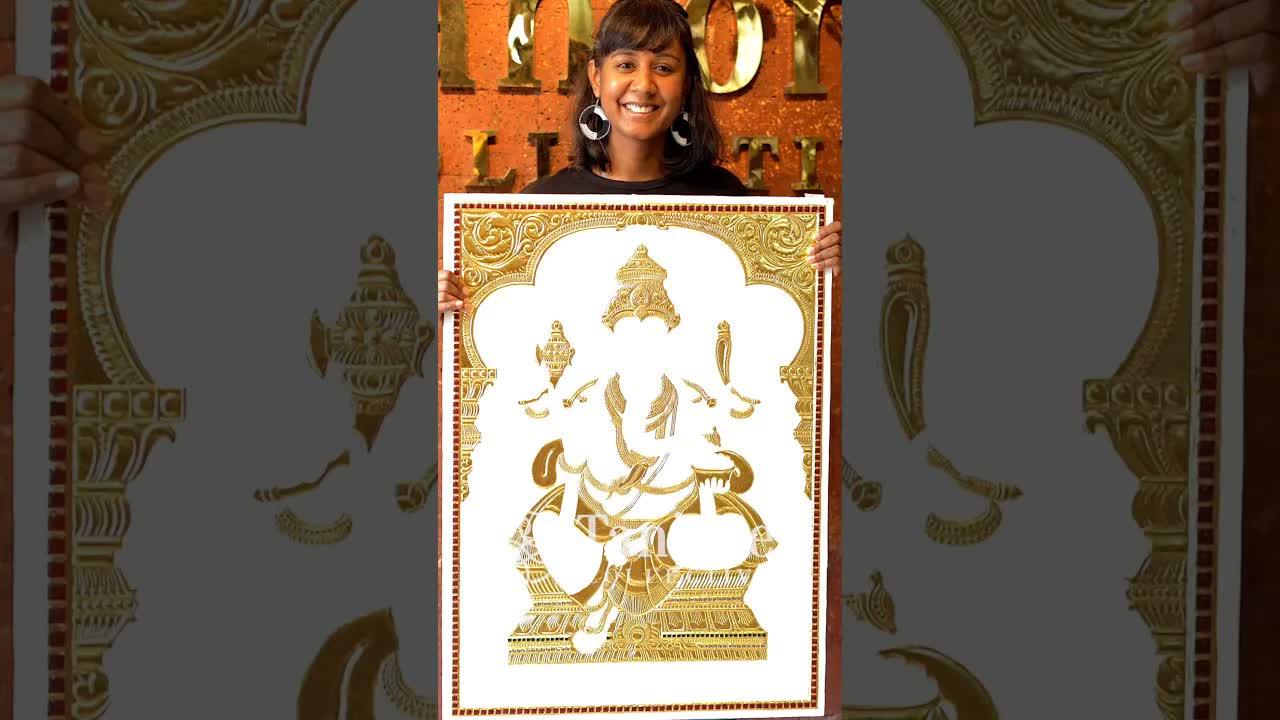
What is Tanjore Painting? A Complete Guide
A clear, first-hand guide to Tanjore painting: what it is, how it is made, and why it glows.
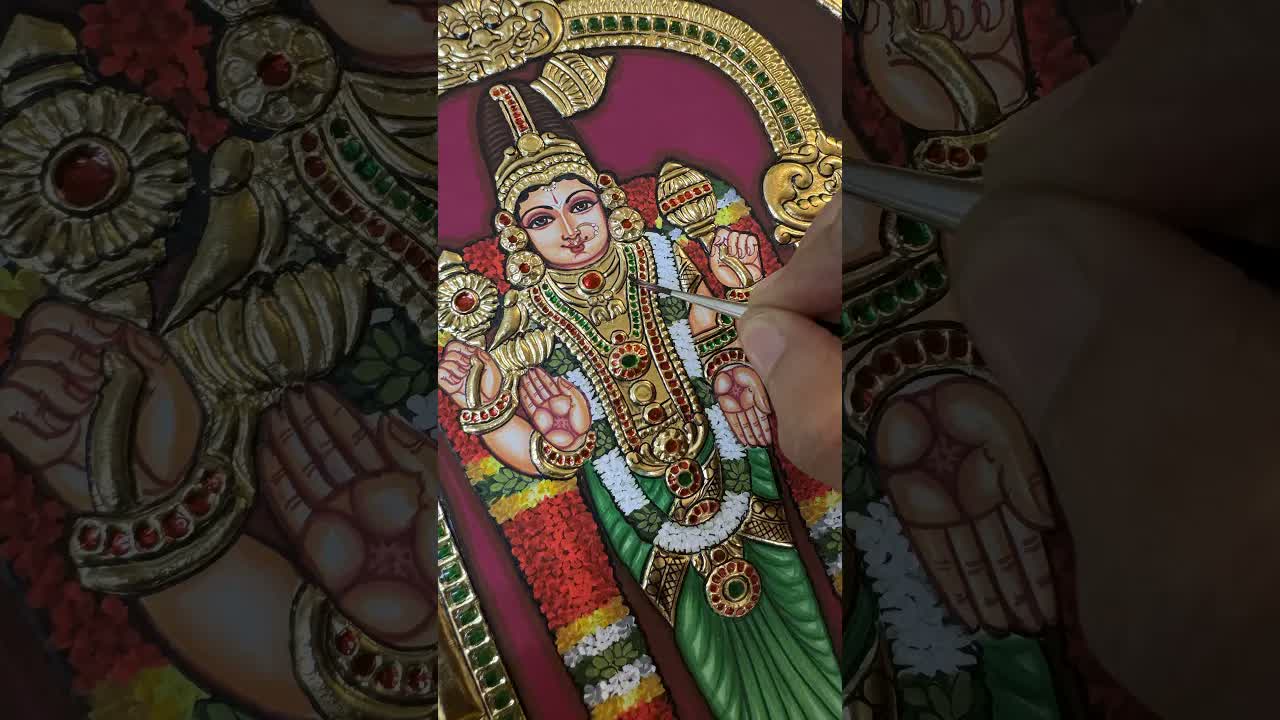
Tanjore Painting for Beginners: Where to Start
A gentle starting point for complete beginners, even if you have never held a brush.
How to Make a Tanjore Painting: Step by Step
The real step-by-step process we teach, from a prepared board to the final face.
What our students say
Hear from students who've learned the art of Tanjore painting with us.